



STF-62247
Based on 2 publication(s) in Google Scholar
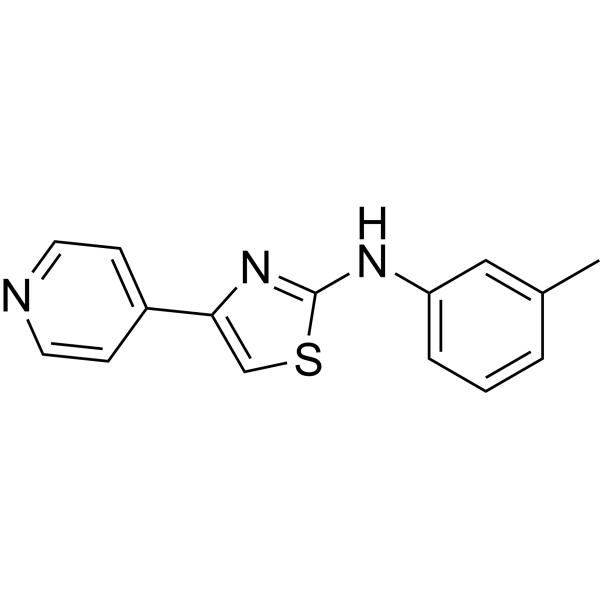
STF-62247 is an autophagy inducer that selectively cytotoxic to VHL-deficient renal cell carcinoma (IC50 of 0.625 μM and 16 μM in RCC4 and RCC4/VHL cells, respectively).
Nos produits utilisent uniquement pour la recherche. Nous ne vendons pas aux patients.
- Pureté : 98.69%
- CAS No.: 315702-99-9
- Formule: C15H13N3S
- Masse moléculaire:267.35
-
Stockage:Powder -20°C, 3 years , 4°C, 2 years ; In solvent -80°C, 2 years , -20°C, 1 year

To place orders, for customer services and technical support, please contact: MedChemExpress USA
Tel: 609-228-6898 E-mail: [email protected] [email protected]


-
 Activité biologique
-
Chemical Information
-
Solvant et solubilité
- Protocole
- Pureté et documentation
- Références
-
 Help & FAQs


-
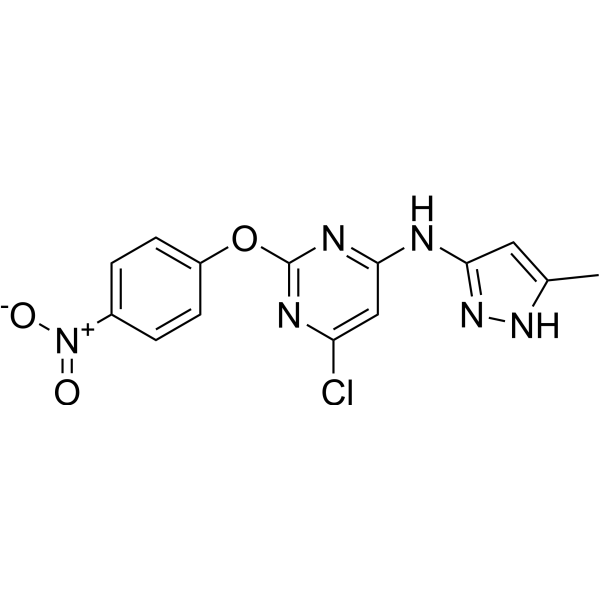
HY-101920
AutophinibVPS34 Inhibitor -
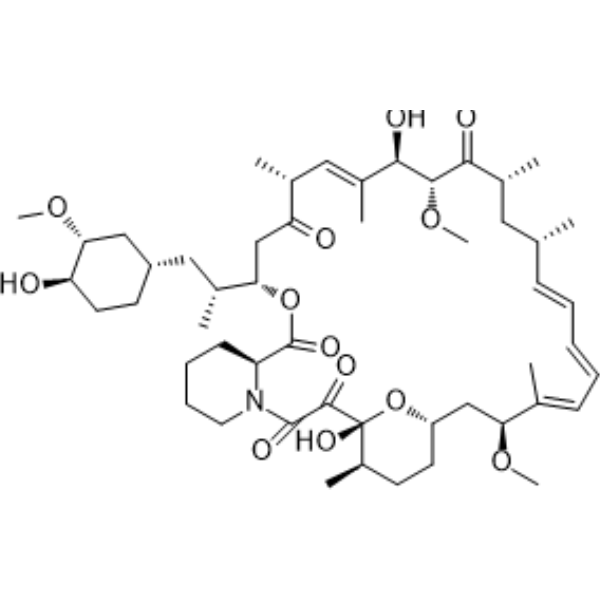
HY-10219
RapamycinmTOR Inhibitor -
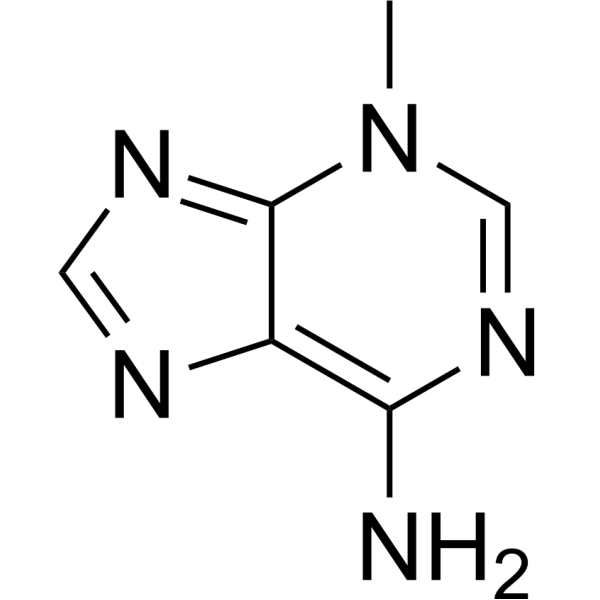
HY-19312
3-MethyladenineAutophagy/PI3K Inhibitor -
HY-17353
BIBR 1532Apoptosis Inducer -
HY-100200
SMER28Autophagy Positive Regulator -
HY-128892
EN6Autophagy Activator -
HY-112483
QX77CMA activator -
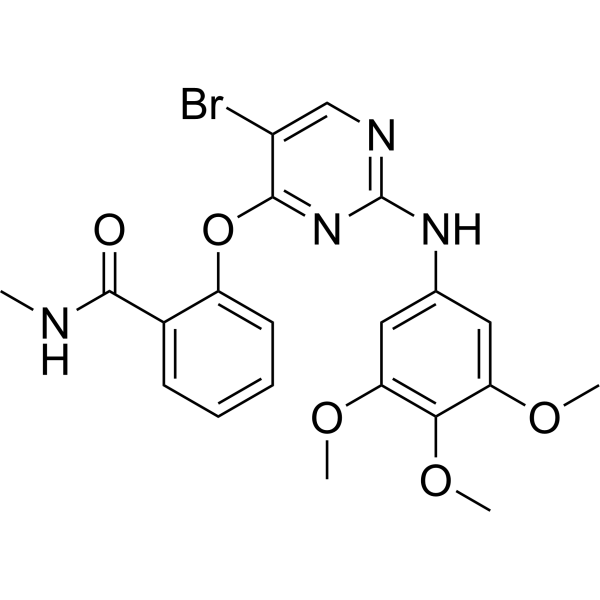
HY-16966
SBI-0206965ULK1/AMPK Inhibitor -
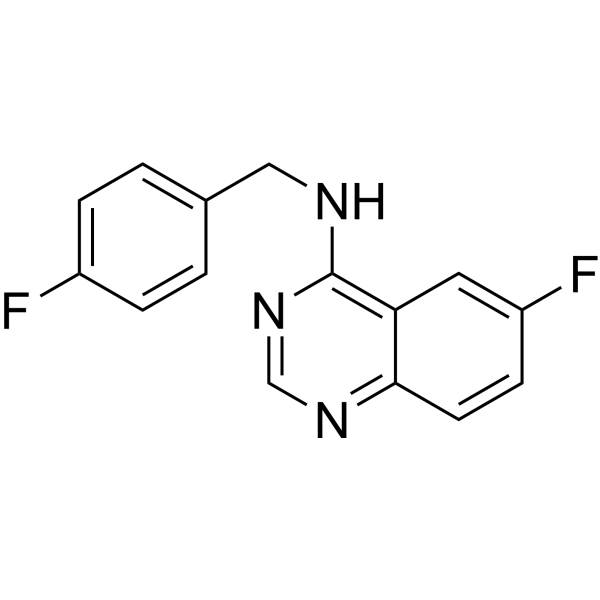
HY-12990
Spautin-1Autophagy Inhibitor -
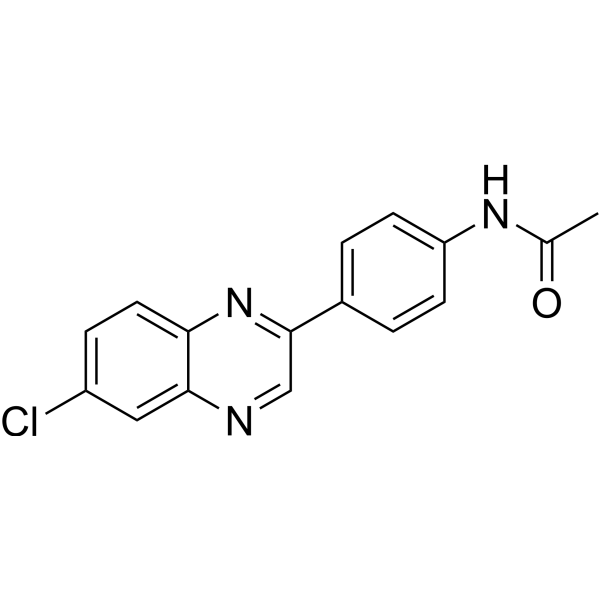
HY-134923
CA77.1CMA Activator -
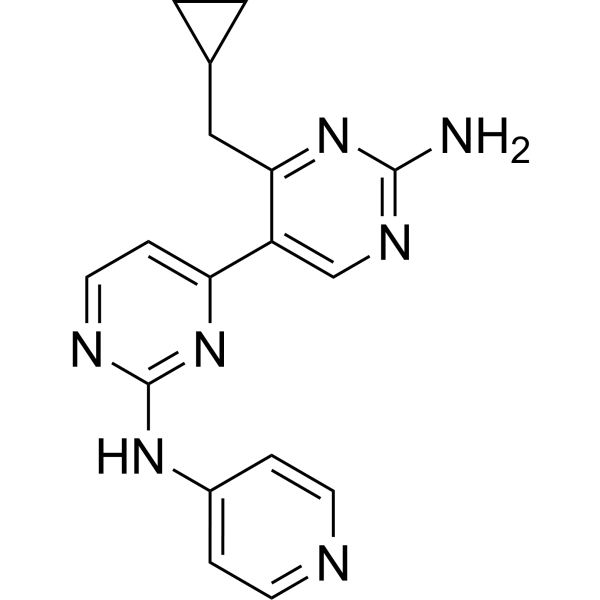
HY-12794
Vps34-PIK-IIIVps35 Inhibitor -
HY-103706
ROC-325Autophagy Inhibitor
Publications Citing Use of MedChemExpress (MCE) STF-62247
More

Activité biologique
Description
Cellular Effect
|
Cell Line

|
Type | Value | Description | References |
|---|---|---|---|---|
| 786-0 | IC50 |
5.7 μM
Compound: 3; STF-62247
|
Cytotoxicity against VHL-deficient human 786-0 cells assessed as reduction in cell viability incubated for 4 days by XTT assay
Cytotoxicity against VHL-deficient human 786-0 cells assessed as reduction in cell viability incubated for 4 days by XTT assay
|
[PMID: 31260889] |
| 786-0 | IC50 |
6.9 μM
Compound: 3; STF-62247
|
Cytotoxicity against VHL-positive human 786-0 cells assessed as reduction in cell viability incubated for 4 days by XTT assay
Cytotoxicity against VHL-positive human 786-0 cells assessed as reduction in cell viability incubated for 4 days by XTT assay
|
[PMID: 31260889] |
| RCC4 | GI50 |
2.1 μM
Compound: 11
|
Growth inhibition of VHL-null human RCC4 cells after 4 days by XTT assay
Growth inhibition of VHL-null human RCC4 cells after 4 days by XTT assay
|
[PMID: 19994864] |
| RCC4 | IC50 |
1.2 μM
Compound: 3; STF-62247
|
Cytotoxicity against VHL-deficient human RCC4 cells assessed as reduction in cell viability incubated for 4 days by XTT assay
Cytotoxicity against VHL-deficient human RCC4 cells assessed as reduction in cell viability incubated for 4 days by XTT assay
|
[PMID: 31260889] |
| RCC4 | IC50 |
2.1 μM
Compound: 1
|
Cytotoxicity against human RCC4 cells after 4 days by XTT assay
Cytotoxicity against human RCC4 cells after 4 days by XTT assay
|
[PMID: 24387866] |
| RCC4 | IC50 |
2.1 μM
Compound: 2
|
Growth inhibition of human RCC4 cells after 4 days by XTT assay
Growth inhibition of human RCC4 cells after 4 days by XTT assay
|
[PMID: 21561782] |
| RCC4/VHL | IC50 |
40 μM
Compound: 1
|
Cytotoxicity against human RCC4/VHL cells after 4 days by XTT assay
Cytotoxicity against human RCC4/VHL cells after 4 days by XTT assay
|
[PMID: 24387866] |
| RCC4/VHL | IC50 |
40 μM
Compound: 2
|
Growth inhibition of human RCC4/VHL cells after 4 days by XTT assay
Growth inhibition of human RCC4/VHL cells after 4 days by XTT assay
|
[PMID: 21561782] |
| RCC4/VHL | IC50 |
5.3 μM
Compound: 3; STF-62247
|
Cytotoxicity against VHL-positive human RCC4/VHL cells assessed as reduction in cell viability incubated for 4 days by XTT assay
Cytotoxicity against VHL-positive human RCC4/VHL cells assessed as reduction in cell viability incubated for 4 days by XTT assay
|
[PMID: 31260889] |
In Vitro
In RCC4, RCC4/VHL, SN12C, SN12C-VHL shRNA cells, STF-62247 (0-30 μM) is selectively toxic to VHL-deficient cells compared to their VHL wild-type counterparts[1].
STF-62247-treated cells accumulated intracytoplasmic vacuoles characteristic of cells undergoing autophagy. Moreover, these vacuoles are larger in VHL-deficient RCC4 and SN12C-VHL shRNA cells than in wild-type VHL cells[1].
MedChemExpress (MCE) has not independently confirmed the accuracy of these methods. They are for reference only.
In Vivo
MedChemExpress (MCE) has not independently confirmed the accuracy of these methods. They are for reference only.
-
Animal Model:SCID mice implanted with SN12C-VHL shRNA cells[1]
-
Dosage:2.7 mg/kg, or 8 mg/kg
-
Administration:Intraperitoneal injection; daily; for 9 days
-
Result:Significantly reduced tumor growth of VHL-deficient cells.


Chemical Information
-
CAS No. 315702-99-9
-
Appearance Solid
-
Masse moléculaire 267.35
-
Formule C15H13N3S
-
Color Light yellow to yellow
-
SMILES
CC1=CC(NC2=NC(C3=CC=NC=C3)=CS2)=CC=C1
-
Livraison
Room temperature in continental US; may vary elsewhere.
-
Stockage
Powder -20°C 3 years 4°C 2 years In solvent -80°C 2 years -20°C 1 year


Publications (2)
-
Journal Impact Factor
-
Most Recent
-
J Nanobiotechnology
Autophagy-amplifying nanoparticles evoke immunogenic cell death combined with anti-PD-1/PD-L1 for residual tumors immunotherapy after RFA. [Abstract]2023 Oct 3;21(1):360. PMID: 37789342 -
Cell Rep Med
HIF-activated priming of TRAIL-induced cell death determines epigenetic vulnerability in kidney cancer. [Abstract]2026 Feb 18:102630. PMID: 41713410


Solvant et solubilité
In Vitro:
DMSO : 50 mg/mL (187.02 mM; Need ultrasonic; Hygroscopic DMSO has a significant impact on the solubility of product, please use newly opened DMSO)
Please refer to the solubility information to select the appropriate solvent. Once prepared, please aliquot and store the solution to prevent product inactivation from repeated freeze-thaw cycles.
Storage method and period of stock solution: -80°C, 2 years; -20°C, 1 year. When stored at -80°C, please use it within 2 years. When stored at -20°C, please use it within 1 year.
Please refer to the solubility information to select the appropriate solvent. Once prepared, please aliquot and store the solution to prevent product inactivation from repeated freeze-thaw cycles.
Storage method and period of stock solution: -80°C, 2 years; -20°C, 1 year. When stored at -80°C, please use it within 2 years. When stored at -20°C, please use it within 1 year.
Concentration (start) × Volume (start) = Concentration (final) × Volume (final)
In Vivo:
Select the appropriate dissolution method based on your experimental animal and administration route.
- For the following dissolution methods, please ensure to first prepare a clear stock solution using an In Vitro approach and then sequentially add co-solvents:
- To ensure reliable experimental results, the clarified stock solution can be appropriately stored based on storage conditions. As for the working solution for In Vivo experiments, it is recommended to prepare freshly and use it on the same day.
- The percentages shown for the solvents indicate their volumetric ratio in the final prepared solution. If precipitation or phase separation occurs during preparation, heat and/or sonication can be used to aid dissolution.
Add each solvent one by one: 10% DMSO 40% PEG300 5% Tween-80 45% Saline
Solubility: ≥ 2.5 mg/mL (9.35 mM); Clear solution
This protocol yields a clear solution of ≥ 2.5 mg/mL (saturation unknown).
Taking 1 mL working solution as an example, add 100 μL DMSO stock solution (25.0 mg/mL) to 400 μL PEG300, and mix evenly; then add 50 μL Tween-80 and mix evenly; then add 450 μL Saline to adjust the volume to 1 mL.
Preparation of Saline: Dissolve 0.9 g sodium chloride in ddH₂O and dilute to 100 mL to obtain a clear Saline solution.
Add each solvent one by one: 10% DMSO 90% (20% SBE-β-CD in Saline)
Solubility: ≥ 2.5 mg/mL (9.35 mM); Clear solution
This protocol yields a clear solution of ≥ 2.5 mg/mL (saturation unknown).
Taking 1 mL working solution as an example, add 100 μL DMSO stock solution (25.0 mg/mL) to 900 μL 20% SBE-β-CD in Saline, and mix evenly.
Preparation of 20% SBE-β-CD in Saline (4°C, storage for one week): 2 g SBE-β-CD powder is dissolved in 10 mL Saline, completely dissolve until clear.
In Vivo Dissolution Calculator
Please enter the basic information of animal experiments:
-
-
-
-
Recommended: Prepare an additional quantity of animals to account for potential losses during experiments.
Please enter your animal formula composition:
-
%DMSO +
Recommended: Keep the proportion of DMSO in working solution below 2% if your animal is weak.
-
%+
-
+%Tween-80 + +
-
%Saline +
The co-solvents required include: DMSO, . All of co-solvents are available by MedChemExpress (MCE). , Tween 80. All of co-solvents are available by MedChemExpress (MCE).
Working solution concentration: 0.22 mg/mL
Method for preparing stock solution: mg drug dissolved in μL DMSO. Stock solution concentration: mg/mL.
1. Take μL DMSO stock solution;
2. Add μL .
μL , mix evenly;
3. Then add μL Tween 80, mix evenly;
4. Then add μL
Please ensure that the stock solution in the first step is dissolved to a clear state, and add co-solvents in sequence. You can use ultrasonic heating (ultrasonic cleaner, recommended frequency 20-40 kHz), vortexing, etc. to assist dissolution.


Pureté et documentation
-
Fiche technique (273 KB)
-
SDS (393 KB)
- English - EN (393 KB)
- Français - FR (393 KB)
- Deutsch - DE (393 KB)
- Norwegian - NO (393 KB)
- Español - ES (393 KB)
- Swedish - SV (393 KB)
- Italian - IT (393 KB)
- Korean - KR (393 KB)
- Portuguese - PT (393 KB)
-
Instruction de manipulation (2659 KB)
Références


Complete Stock Solution Preparation Table
Please refer to the solubility information to select the appropriate solvent. Once prepared, please aliquot and store the solution to prevent product inactivation from repeated freeze-thaw cycles.
Storage method and period of stock solution: -80°C, 2 years; -20°C, 1 year. When stored at -80°C, please use it within 2 years. When stored at -20°C, please use it within 1 year.
| Optional Solvent | Concentration Solvent Mass | 1 mg | 5 mg | 10 mg | 25 mg |
|---|---|---|---|---|---|
| DMSO | 1 mM | 3.7404 mL | 18.7021 mL | 37.4042 mL | 93.5104 mL |
| 5 mM | 0.7481 mL | 3.7404 mL | 7.4808 mL | 18.7021 mL | |
| 10 mM | 0.3740 mL | 1.8702 mL | 3.7404 mL | 9.3510 mL | |
| 15 mM | 0.2494 mL | 1.2468 mL | 2.4936 mL | 6.2340 mL | |
| 20 mM | 0.1870 mL | 0.9351 mL | 1.8702 mL | 4.6755 mL | |
| 25 mM | 0.1496 mL | 0.7481 mL | 1.4962 mL | 3.7404 mL | |
| 30 mM | 0.1247 mL | 0.6234 mL | 1.2468 mL | 3.1170 mL | |
| 40 mM | 0.0935 mL | 0.4676 mL | 0.9351 mL | 2.3378 mL | |
| 50 mM | 0.0748 mL | 0.3740 mL | 0.7481 mL | 1.8702 mL | |
| 60 mM | 0.0623 mL | 0.3117 mL | 0.6234 mL | 1.5585 mL | |
| 80 mM | 0.0468 mL | 0.2338 mL | 0.4676 mL | 1.1689 mL | |
| 100 mM | 0.0374 mL | 0.1870 mL | 0.3740 mL | 0.9351 mL |


STF-62247 Related Classifications
HY-100746 Related Classifications
 Powered by Bioz