



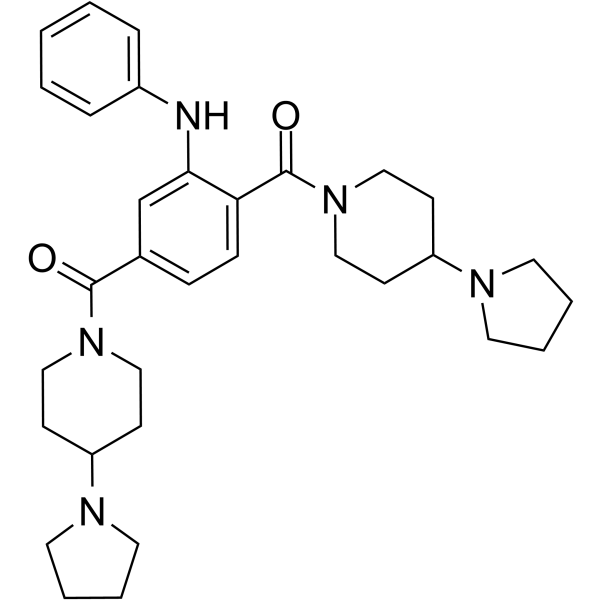
UNC1215
Based on 4 publication(s) in Google Scholar
UNC1215, a chemical probe, is a potent and selective inhibitor for the methyllysine (Kme) reading domain function of L3MBTL3 with a Kd value of 120 nM and an IC50 of 40 nM. UNC1215 has the potential to treat malignant brain tumor.
For research use only. We do not sell to patients.
- Purity : 99.80%
- CAS No.: 1415800-43-9
- Formula: C32H43N5O2
- Molecular Weight:529.72
-
Storage:Powder -20°C, 3 years , 4°C, 2 years ; In solvent -80°C, 2 years , -20°C, 1 year

To place orders, for customer services and technical support, please contact: MedChemExpress USA
Tel: 609-228-6898 E-mail: [email protected] [email protected]


-
 Biological Activity
-
Chemical Information
-
Solvent & Solubility
- Protocols
- Purity & Documentation
- References
-
 Help & FAQs


-
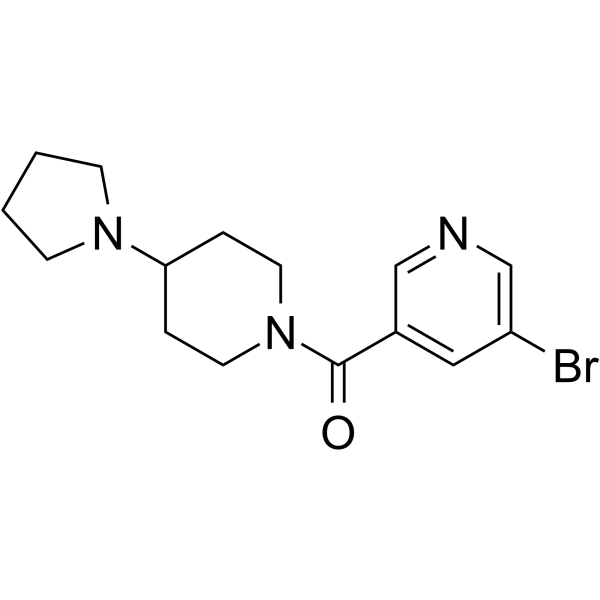
HY-15839
UNC 669L3MBTL1/L3MBTL3 Inhibitor -
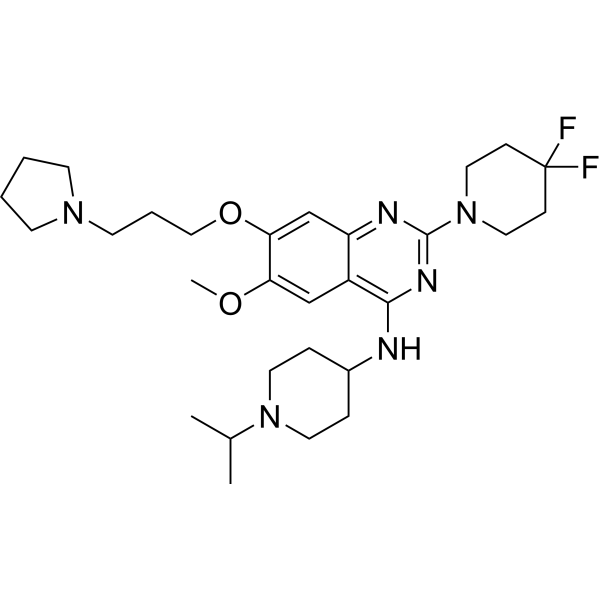
HY-13980
UNC0642G9a/GLP Inhibitor -
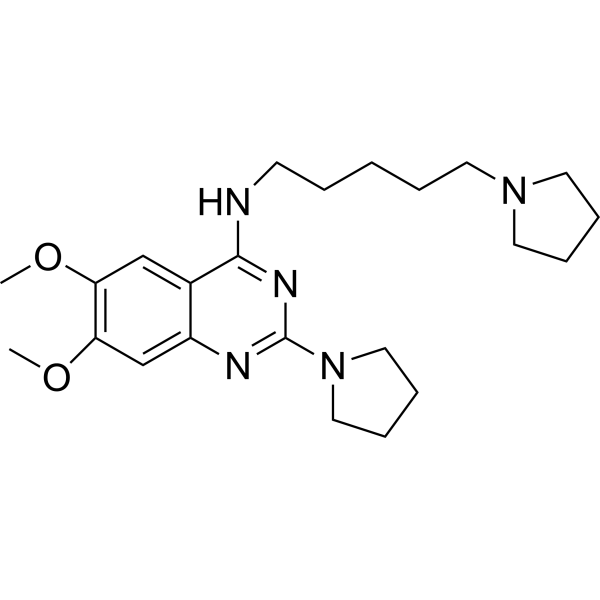
HY-12335
UNC0379SETD8 Inhibitor -
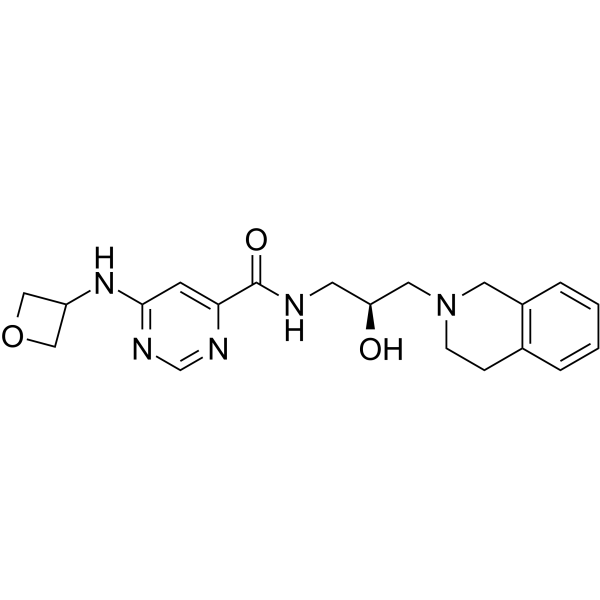
HY-12727
EPZ015666PRMT5 Inhibitor -
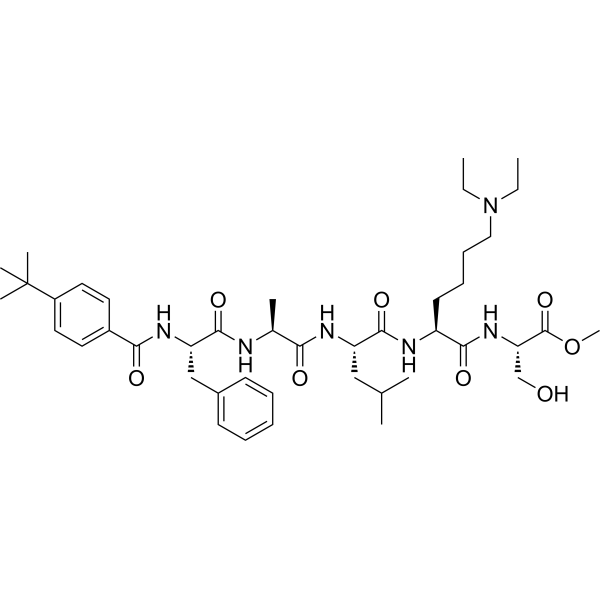
HY-100832
UNC3866CBX7 Antagonist -
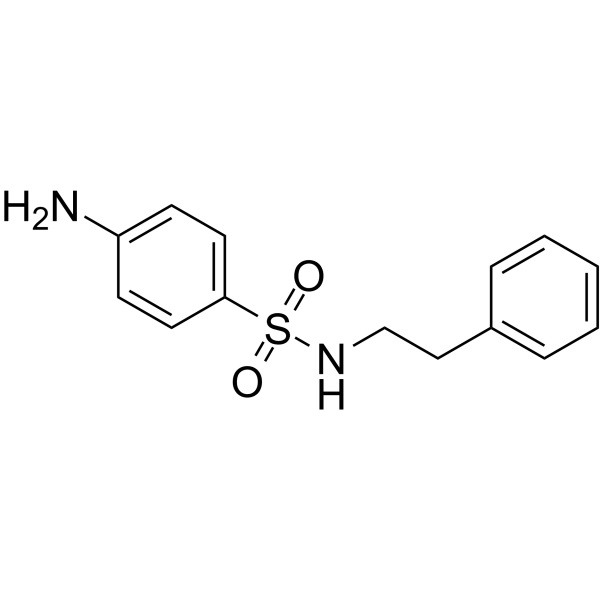
HY-15890
C-7280948PRMT1 Inhibitor -
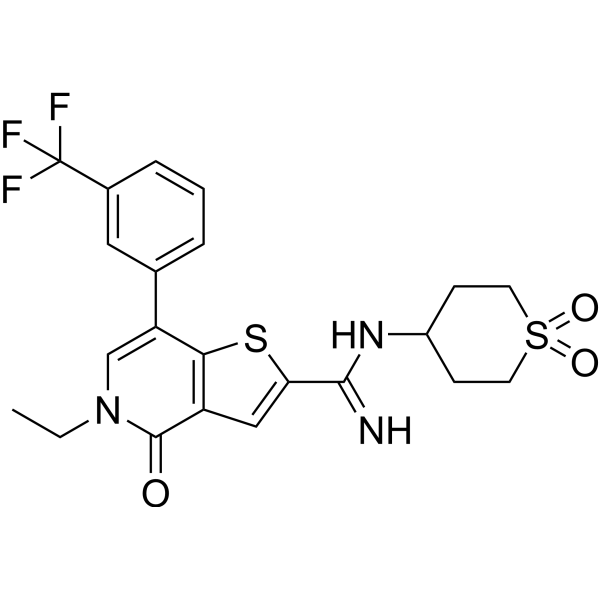
HY-18975
I-BRD9Chemical Probe -
HY-B1322
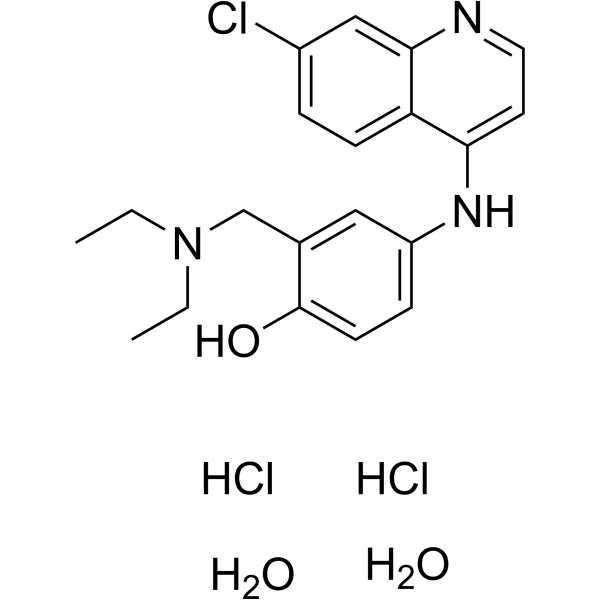
Amodiaquine dihydrochloride dihydrateAntimalarial Agent -
HY-101938
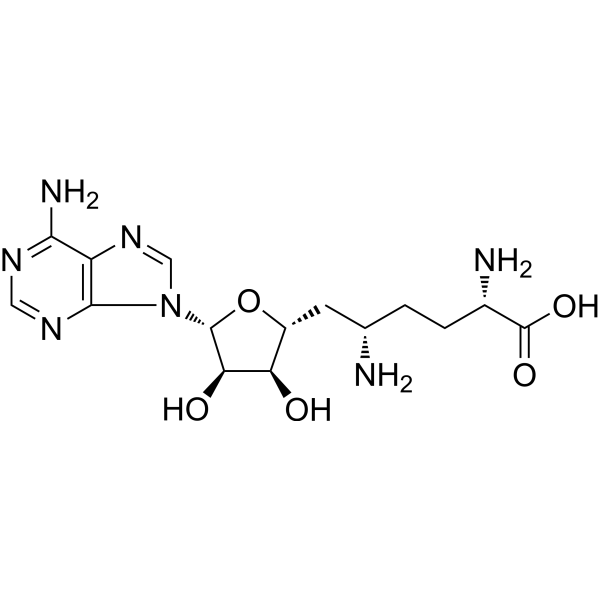
SinefunginSET7/9 Inhibitor -
HY-145103
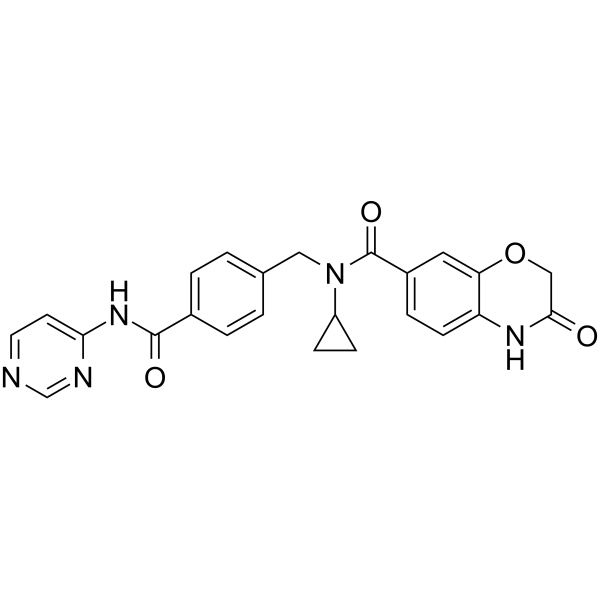
UNC6934NSD2-PWWP1 Antagonist -
HY-13030
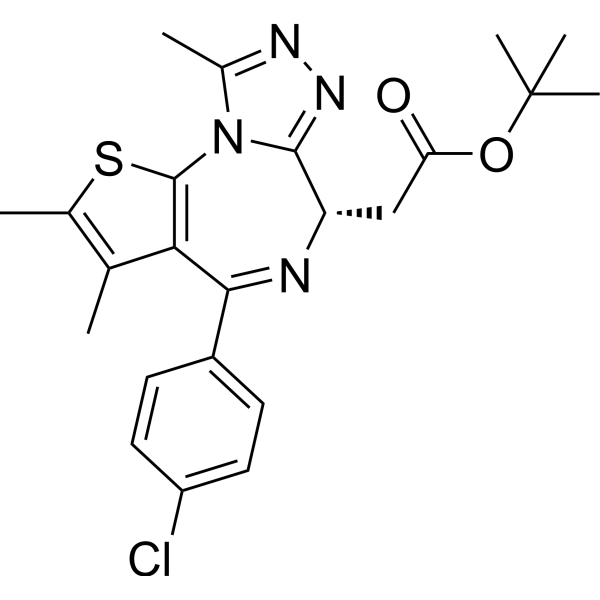
(+)-JQ-1BET Inhibitor -
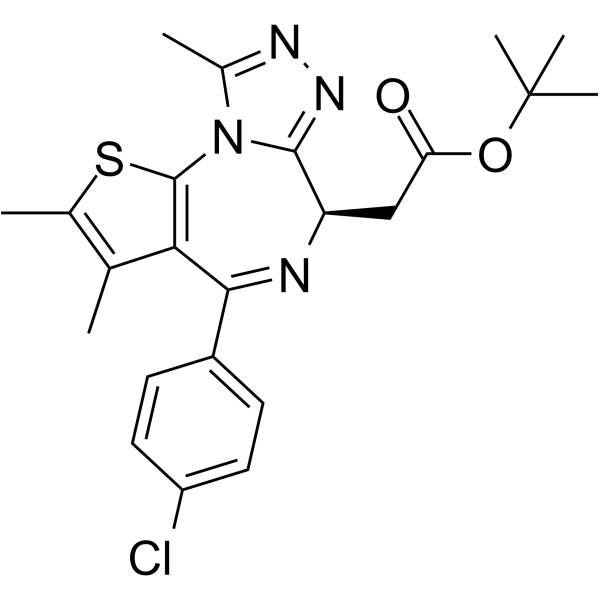
HY-13030A
(R)-(-)-JQ1 EnantiomerStereoisomer of (+)-JQ1
Publications Citing Use of MedChemExpress (MCE) UNC1215
MoreAll Histone Methyltransferase Isoforms
More

Biological Activity
Description
IC50 & Target
IC50: 40 nM (L3MBTL3).
Kd: 120 nM (L3MBTL3).
Cellular Effect
|
Cell Line

|
Type | Value | Description | References |
|---|---|---|---|---|
| HEK-293T | IC50 |
3.5 μM
Compound: 1, UNC1215
|
Antagonist activity at muscarinic M1 receptor (unknown origin) expressed in HEK293T cells assessed as inhibition of UNC1679 calcium mobilization
Antagonist activity at muscarinic M1 receptor (unknown origin) expressed in HEK293T cells assessed as inhibition of UNC1679 calcium mobilization
|
[PMID: 24040942] |
In Vitro
UNC1215 binds L3MBTL3 with a d of 120 nM, competitively displacing mono- or dimethyllysine-containing peptides, and is greater than 50-fold more potent toward L3MBTL3 than other members of the MBT family while also demonstrating selectivity against more than 200 other reader domains examined. X-ray crystallography identified a unique 2:2 polyvalent mode of interaction between UNC1215 and L3MBTL3. In cells, UNC1215 is nontoxic and directly binds L3MBTL3 via the Kme-binding pocket of the MBT domains. UNC1215 increases the cellular mobility of GFP-L3MBTL3 fusion proteins, and point mutants that disrupt the Kme-binding function of GFP-L3MBTL3 phenocopy the effects of UNC1215 on localization[1].
MedChemExpress (MCE) has not independently confirmed the accuracy of these methods. They are for reference only. Further protocols information, click here.


Chemical Information
-
CAS No. 1415800-43-9
-
Appearance Solid
-
Molecular Weight 529.72
-
Formula C32H43N5O2
-
Color White to off-white
-
SMILES
O=C(C1=CC=C(C(N2CCC(N3CCCC3)CC2)=O)C=C1NC4=CC=CC=C4)N5CCC(N6CCCC6)CC5
-
Shipping
Room temperature in continental US; may vary elsewhere.
-
Storage
Powder -20°C 3 years 4°C 2 years In solvent -80°C 2 years -20°C 1 year


Publications (4)
-
Journal Impact Factor
-
Most Recent
-
Nat Commun
Human iPSC-based Modeling of Pulmonary Fibrosis Reveals p300/CBP Inhibition Suppresses Alveolar Transitional Cell State. [Abstract]2026 Feb 12;17(1):1214. PMID: 41680175 -
J Exp Med
2022 Jan 3;219(1):e20210789. PMID: 34825915 -
Cell Syst
A Library of Phosphoproteomic and Chromatin Signatures for Characterizing Cellular Responses to Drug Perturbations. [Abstract]2018 Apr 25;6(4):424-443.e7. PMID: 29655704 -


Solvent & Solubility
In Vitro:
DMSO : 7.69 mg/mL (14.52 mM; ultrasonic and warming and adjust pH to 5 with HCl and heat to 60°C; Hygroscopic DMSO has a significant impact on the solubility of product, please use newly opened DMSO)
Please refer to the solubility information to select the appropriate solvent. Once prepared, please aliquot and store the solution to prevent product inactivation from repeated freeze-thaw cycles.
Storage method and period of stock solution: -80°C, 2 years; -20°C, 1 year. When stored at -80°C, please use it within 2 years. When stored at -20°C, please use it within 1 year.
Please refer to the solubility information to select the appropriate solvent. Once prepared, please aliquot and store the solution to prevent product inactivation from repeated freeze-thaw cycles.
Storage method and period of stock solution: -80°C, 2 years; -20°C, 1 year. When stored at -80°C, please use it within 2 years. When stored at -20°C, please use it within 1 year.
Concentration (start) × Volume (start) = Concentration (final) × Volume (final)
In Vivo:
Select the appropriate dissolution method based on your experimental animal and administration route.
- For the following dissolution methods, please ensure to first prepare a clear stock solution using an In Vitro approach and then sequentially add co-solvents:
- To ensure reliable experimental results, the clarified stock solution can be appropriately stored based on storage conditions. As for the working solution for In Vivo experiments, it is recommended to prepare freshly and use it on the same day.
- The percentages shown for the solvents indicate their volumetric ratio in the final prepared solution. If precipitation or phase separation occurs during preparation, heat and/or sonication can be used to aid dissolution.
Add each solvent one by one: 10% DMSO 40% PEG300 5% Tween-80 45% Saline
Solubility: ≥ 0.83 mg/mL (1.57 mM); Clear solution
This protocol yields a clear solution of ≥ 0.83 mg/mL (saturation unknown).
Taking 1 mL working solution as an example, add 100 μL DMSO stock solution (8.3 mg/mL) to 400 μL PEG300, and mix evenly; then add 50 μL Tween-80 and mix evenly; then add 450 μL Saline to adjust the volume to 1 mL.
Preparation of Saline: Dissolve 0.9 g sodium chloride in ddH₂O and dilute to 100 mL to obtain a clear Saline solution.
Add each solvent one by one: 10% DMSO 90% (20% SBE-β-CD in Saline)
Solubility: ≥ 0.83 mg/mL (1.57 mM); Clear solution
This protocol yields a clear solution of ≥ 0.83 mg/mL (saturation unknown).
Taking 1 mL working solution as an example, add 100 μL DMSO stock solution (8.3 mg/mL) to 900 μL 20% SBE-β-CD in Saline, and mix evenly.
Preparation of 20% SBE-β-CD in Saline (4°C, storage for one week): 2 g SBE-β-CD powder is dissolved in 10 mL Saline, completely dissolve until clear.
In Vivo Dissolution Calculator
Please enter the basic information of animal experiments:
-
-
-
-
Recommended: Prepare an additional quantity of animals to account for potential losses during experiments.
Please enter your animal formula composition:
-
%DMSO +
Recommended: Keep the proportion of DMSO in working solution below 2% if your animal is weak.
-
%+
-
+%Tween-80 + +
-
%Saline +
The co-solvents required include: DMSO, . All of co-solvents are available by MedChemExpress (MCE). , Tween 80. All of co-solvents are available by MedChemExpress (MCE).
Working solution concentration: 0.22 mg/mL
Method for preparing stock solution: mg drug dissolved in μL DMSO. Stock solution concentration: mg/mL.
1. Take μL DMSO stock solution;
2. Add μL .
μL , mix evenly;
3. Then add μL Tween 80, mix evenly;
4. Then add μL
Please ensure that the stock solution in the first step is dissolved to a clear state, and add co-solvents in sequence. You can use ultrasonic heating (ultrasonic cleaner, recommended frequency 20-40 kHz), vortexing, etc. to assist dissolution.

Protocols
-
Glioma/Brain Tumor 3D Invasion Assay
The glioma/brain tumor 3D invasion assay measures outward migration and matrix invasion from multicellular tumor spheroids into a 3D extracellular matrix or organotypic brain slice. The readout is generated by time-lapse brightfield, fluorescence, confocal, or high-content imaging and quantified as invasion distance, invasion area, migration index, single-cell velocity, directionality, cumulative sprout length, or Z-direction invasion into brain tissue. Classic in vitro versions embed glioma or GBM spheroids in collagen I, Matrigel, collagen I/Matrigel, or collagen I/Matrigel/hyaluronic acid matrices, while ex vivo versions implant fluorescent GBM spheroids onto organotypic brain slices to model invasion in a preserved brain microenvironment.


Purity & Documentation
-
Data Sheet (278 KB)
-
SDS (393 KB)
- English - EN (393 KB)
- Français - FR (393 KB)
- Deutsch - DE (393 KB)
- Norwegian - NO (393 KB)
- Español - ES (393 KB)
- Swedish - SV (393 KB)
- Italian - IT (393 KB)
- Korean - KR (393 KB)
- Portuguese - PT (393 KB)
-
Handling Instructions (2659 KB)
References


Complete Stock Solution Preparation Table
Please refer to the solubility information to select the appropriate solvent. Once prepared, please aliquot and store the solution to prevent product inactivation from repeated freeze-thaw cycles.
Storage method and period of stock solution: -80°C, 2 years; -20°C, 1 year. When stored at -80°C, please use it within 2 years. When stored at -20°C, please use it within 1 year.
| Optional Solvent | Concentration Solvent Mass | 1 mg | 5 mg | 10 mg | 25 mg |
|---|---|---|---|---|---|
| DMSO | 1 mM | 1.8878 mL | 9.4389 mL | 18.8779 mL | 47.1947 mL |
| 5 mM | 0.3776 mL | 1.8878 mL | 3.7756 mL | 9.4389 mL | |
| 10 mM | 0.1888 mL | 0.9439 mL | 1.8878 mL | 4.7195 mL |


UNC1215 Related Classifications
HY-15649 Related Classifications
 Powered by Bioz