



BBS-4

Based on 1 Customer Validation
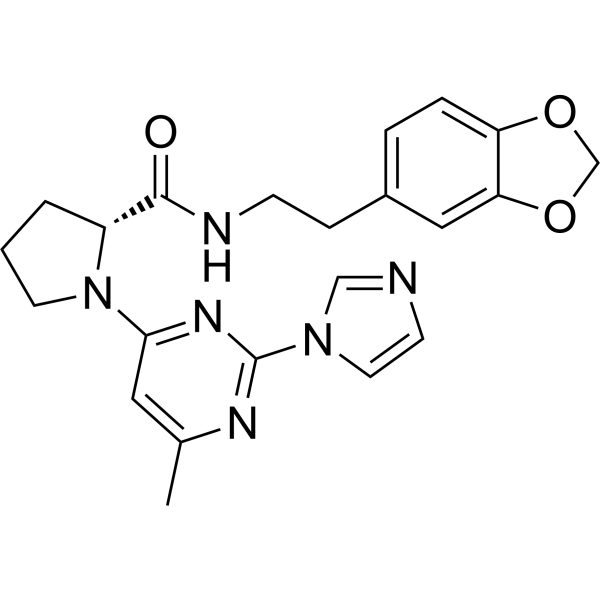
BBS-4 is a potent and selective inducible nitric oxide synthase (NOS2) dimerization inhibitor, with an IC50 of 0.49 nM. BBS-4 can protect mice from the cardiovascular dysfunction of sepsis.
For research use only. We do not sell to patients.
- Purity : 99.49%
- CAS No.: 402934-09-2
- Formula: C22H24N6O3
- Molecular Weight:420.46
-
Storage:Powder -20°C, 3 years , 4°C, 2 years ; In solvent -80°C, 6 months , -20°C, 1 month

To place orders, for customer services and technical support, please contact: MedChemExpress USA
Tel: 609-228-6898 E-mail: [email protected] [email protected]


-
 Biological Activity
-
Chemical Information
-
Solvent & Solubility
- Protocols
- Purity & Documentation
- References
-
 Help & FAQs


-
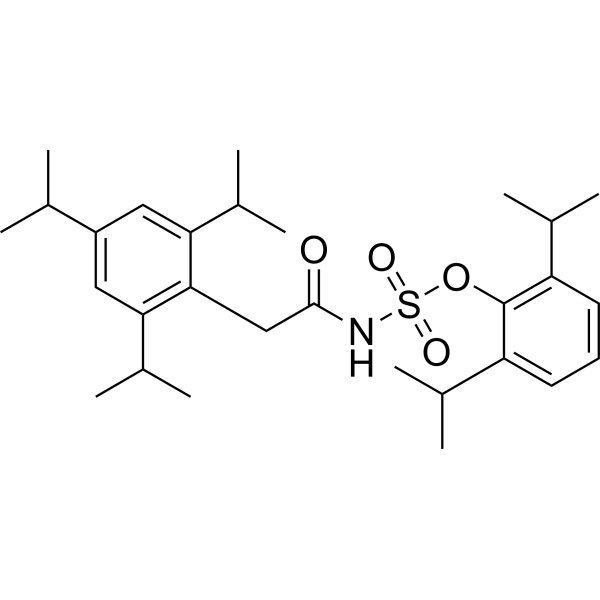
HY-13215
AvasimibeACAT/SOAT Inhibitor -
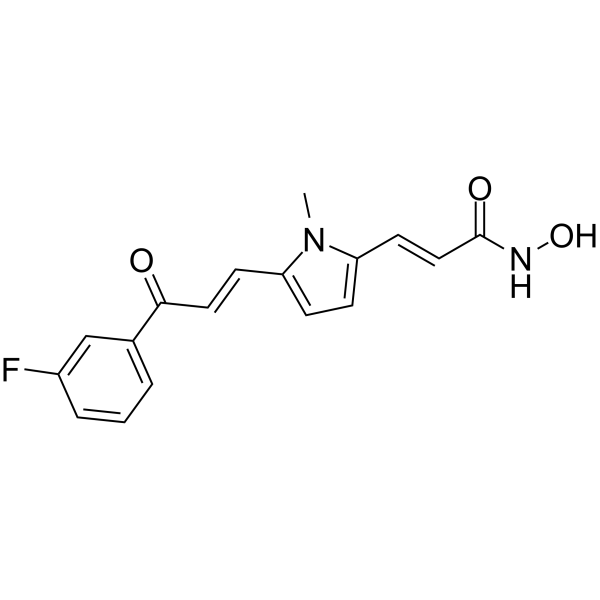
HY-16914
MC1568HDAC Inhibitor -
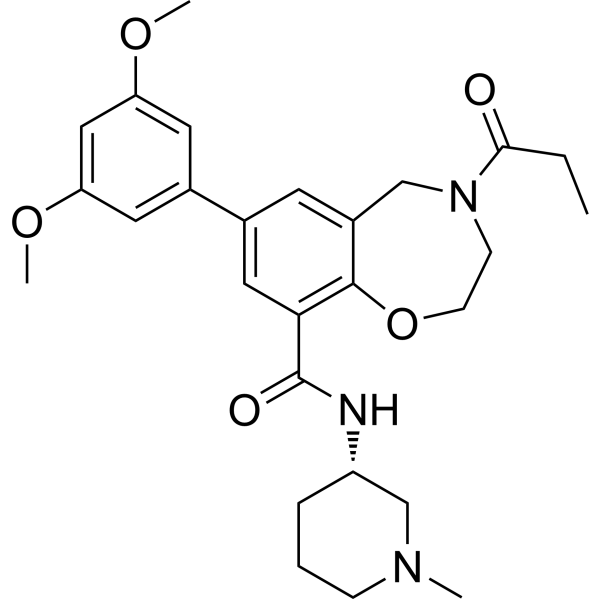
HY-100697
TPOP146CBP/P300 Inhibitor -
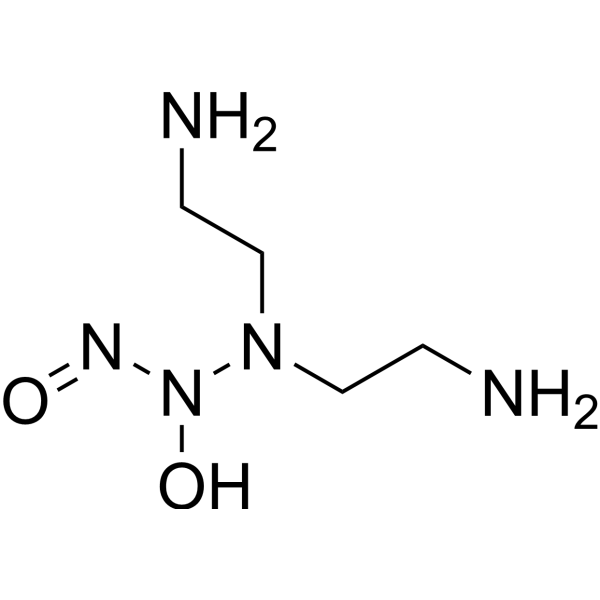
HY-136278
DETA NONOateNO Donor -
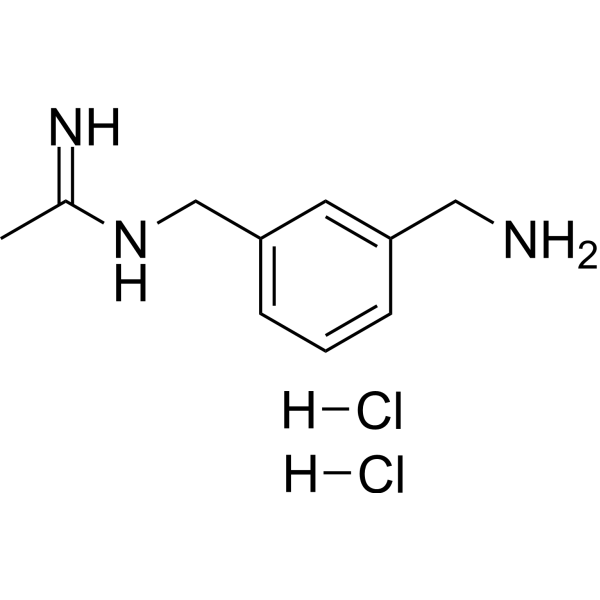
HY-18731
1400W DihydrochlorideNO Synthase Inhibitor -
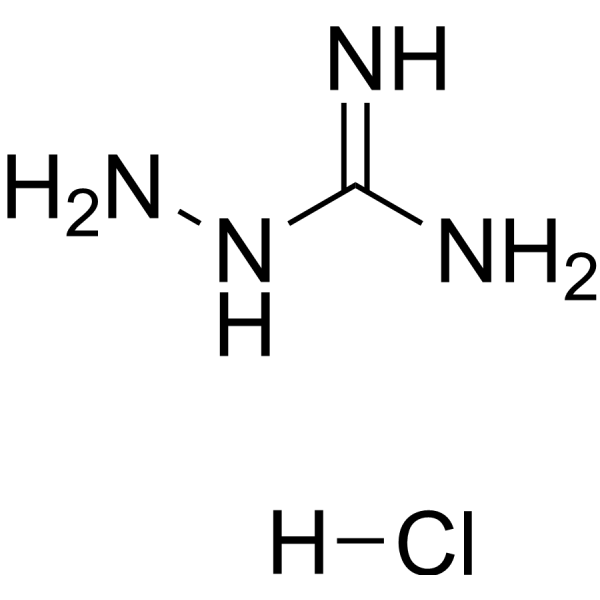
HY-B1041
Aminoguanidine hydrochlorideDiamine Oxidase/NO Synthase Inhibitor -
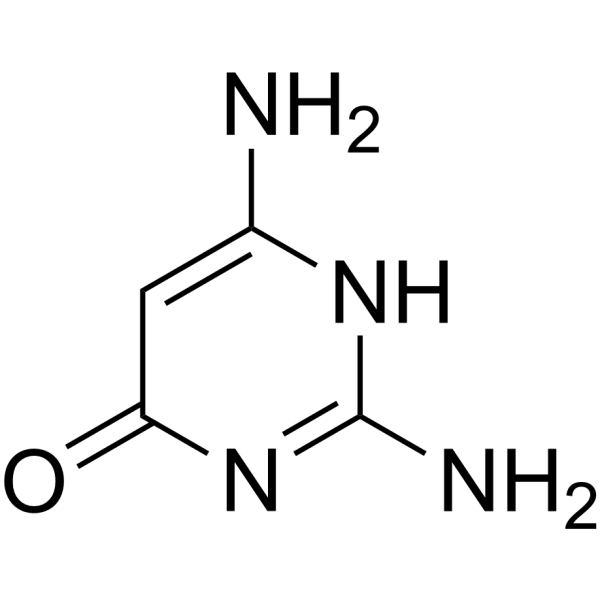
HY-100954
2,4-Diamino-6-hydroxypyrimidineGTP Cyclohydrolase I Inhibitor -
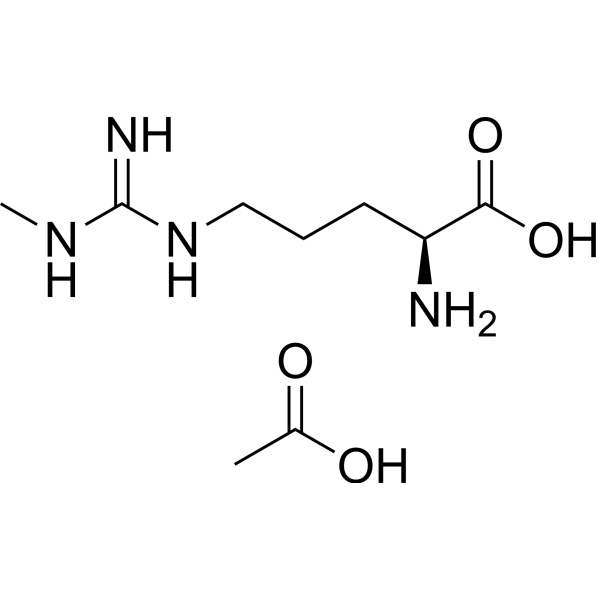
HY-18732A
L-NMMA acetateEndogenous Metabolite -
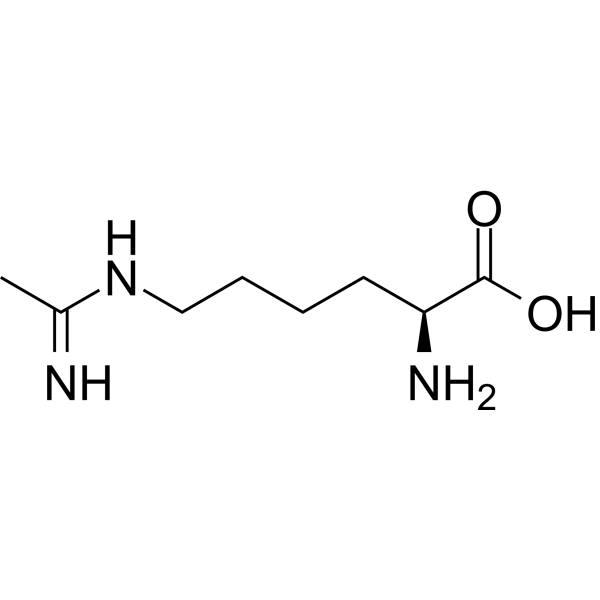
HY-12116
L-NILNO Synthase Inhibitor -
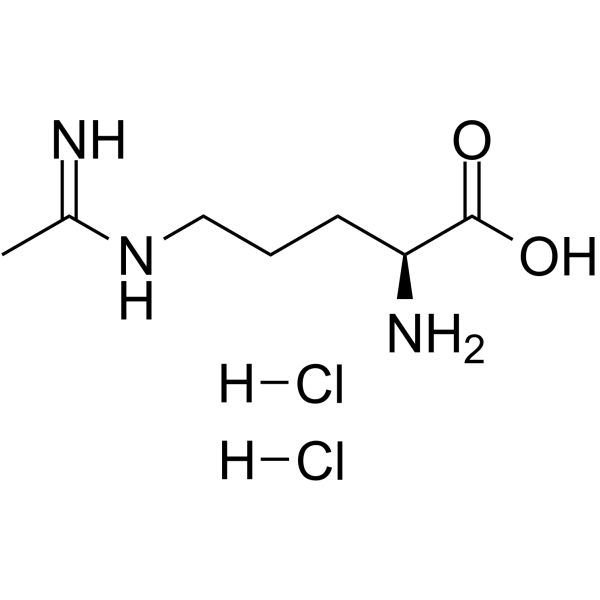
HY-100986
L-NIO dihydrochlorideNOS Inhibitor -
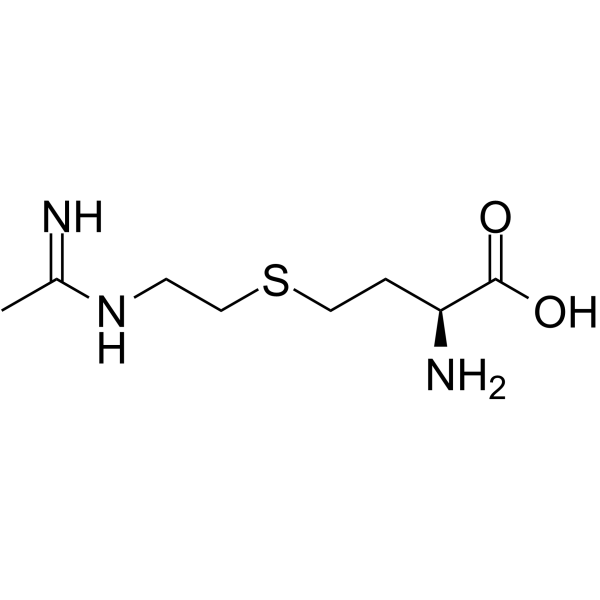
HY-12119
GW274150iNOS Inhibitor -
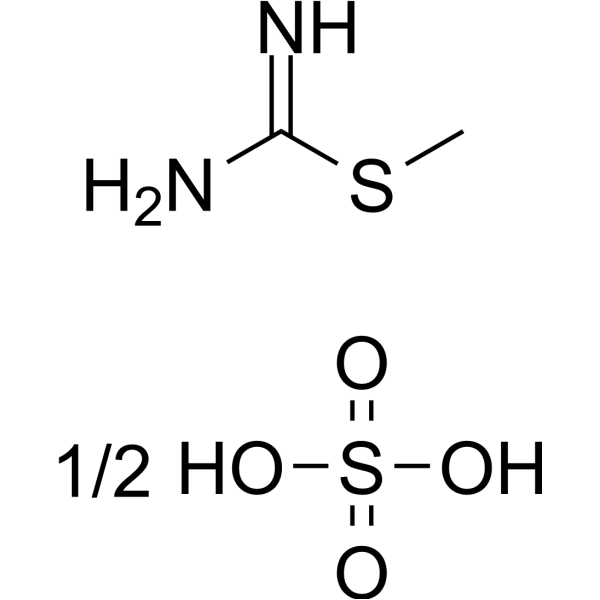
HY-79457
S-Methylisothiourea sulfateiNOS Inhibitor


Biological Activity
Description
IC50 & Target
|
iNOS |
Cellular Effect
|
Cell Line

|
Type | Value | Description | References |
|---|---|---|---|---|
| A 172 | IC50 |
0.29 nM
Compound: 21b
|
Inhibition of cytokine-induced iNOS expressed in human A172 cells assessed as inhibition of NO formation
Inhibition of cytokine-induced iNOS expressed in human A172 cells assessed as inhibition of NO formation
|
[PMID: 17315988] |
| BSC-1 | IC50 |
20 nM
Compound: 21b
|
Inhibition of vaccinia virus system-induced human NOS expressed in BSC1 cells
Inhibition of vaccinia virus system-induced human NOS expressed in BSC1 cells
|
[PMID: 17315988] |
| Sf9 | IC50 |
14 nM
Compound: 21b
|
Inhibition of tetracycline system-induced human NOS expressed in SF9 cells
Inhibition of tetracycline system-induced human NOS expressed in SF9 cells
|
[PMID: 17315988] |
In Vitro
BBS-4 exhibits ∼300–2000-fold selective for inhibiting iNOS dimerization in cells versus CYP-3A4 (∼150 nM in a microsomal benzyloxyresorufin assay; ∼1 μM in a cell-based testosterone hydroxylase assay)[2].
MedChemExpress (MCE) has not independently confirmed the accuracy of these methods. They are for reference only.
In Vivo
BBS-4 (30 mg/kg; i.p.; 1 h after endotoxin administration) prevents endotoxin-induced myocardial dysfunction in mice[1].
BBS-4 (10 mg/kg; i.p.; 1 and 8 h after endotoxin administration) prevents endotoxin-induced impairment of murine hypoxic pulmonary vasoconstriction (HPV)[1].
BBS-4 (10 mg/kg; i.p.; 1 and 8 h after endotoxin administration) does not affect the endotoxin-induced increase in pulmonary NOS2 gene expression, but it (30 mg/kg) prevents cardiac and pulmonary NOS2 protein dimerization and increases plasma nitrate and nitrite (NOx) concentration in mice[1].
BBS-2 (30 mg/kg; s.c. twice daily for 10 d) does not affect agonist-stimulated NOS3-dependent aortic relaxation ex vivo[1].
BBS-4 (10-30 mg/kg; i.p.) does not improve mortality rate in endotoxemic mice[1].
MedChemExpress (MCE) has not independently confirmed the accuracy of these methods. They are for reference only.


Chemical Information
-
CAS No. 402934-09-2
-
Appearance Solid
-
Molecular Weight 420.46
-
Formula C22H24N6O3
-
Color White to off-white
-
SMILES
O=C([C@@H]1N(C2=NC(N3C=CN=C3)=NC(C)=C2)CCC1)NCCC4=CC=C(OCO5)C5=C4
-
Shipping
Room temperature in continental US; may vary elsewhere.
-
Storage
Powder -20°C 3 years 4°C 2 years In solvent -80°C 6 months -20°C 1 month


Solvent & Solubility
In Vitro:
DMSO : 100 mg/mL (237.83 mM; Need ultrasonic; Hygroscopic DMSO has a significant impact on the solubility of product, please use newly opened DMSO)
Please refer to the solubility information to select the appropriate solvent. Once prepared, please aliquot and store the solution to prevent product inactivation from repeated freeze-thaw cycles.
Storage method and period of stock solution: -80°C, 6 months; -20°C, 1 month. When stored at -80°C, please use it within 6 months. When stored at -20°C, please use it within 1 month.
Please refer to the solubility information to select the appropriate solvent. Once prepared, please aliquot and store the solution to prevent product inactivation from repeated freeze-thaw cycles.
Storage method and period of stock solution: -80°C, 6 months; -20°C, 1 month. When stored at -80°C, please use it within 6 months. When stored at -20°C, please use it within 1 month.
Concentration (start) × Volume (start) = Concentration (final) × Volume (final)
In Vivo:
Select the appropriate dissolution method based on your experimental animal and administration route.
- For the following dissolution methods, please ensure to first prepare a clear stock solution using an In Vitro approach and then sequentially add co-solvents:
- To ensure reliable experimental results, the clarified stock solution can be appropriately stored based on storage conditions. As for the working solution for In Vivo experiments, it is recommended to prepare freshly and use it on the same day.
- The percentages shown for the solvents indicate their volumetric ratio in the final prepared solution. If precipitation or phase separation occurs during preparation, heat and/or sonication can be used to aid dissolution.
Add each solvent one by one: 10% DMSO 40% PEG300 5% Tween-80 45% Saline
Solubility: 2.5 mg/mL (5.95 mM); Clear solution; Need ultrasonic
This protocol yields a clear solution of 2.5 mg/mL.
Taking 1 mL working solution as an example, add 100 μL DMSO stock solution (25.0 mg/mL) to 400 μL PEG300, and mix evenly; then add 50 μL Tween-80 and mix evenly; then add 450 μL Saline to adjust the volume to 1 mL.
Preparation of Saline: Dissolve 0.9 g sodium chloride in ddH₂O and dilute to 100 mL to obtain a clear Saline solution.
Add each solvent one by one: 10% DMSO 90% (20% SBE-β-CD in Saline)
Solubility: 2.5 mg/mL (5.95 mM); Clear solution; Need ultrasonic
This protocol yields a clear solution of 2.5 mg/mL.
Taking 1 mL working solution as an example, add 100 μL DMSO stock solution (25.0 mg/mL) to 900 μL 20% SBE-β-CD in Saline, and mix evenly.
Preparation of 20% SBE-β-CD in Saline (4°C, storage for one week): 2 g SBE-β-CD powder is dissolved in 10 mL Saline, completely dissolve until clear.
In Vivo Dissolution Calculator
Please enter the basic information of animal experiments:
-
-
-
-
Recommended: Prepare an additional quantity of animals to account for potential losses during experiments.
Please enter your animal formula composition:
-
%DMSO +
Recommended: Keep the proportion of DMSO in working solution below 2% if your animal is weak.
-
%+
-
+%Tween-80 + +
-
%Saline +
The co-solvents required include: DMSO, . All of co-solvents are available by MedChemExpress (MCE). , Tween 80. All of co-solvents are available by MedChemExpress (MCE).
Working solution concentration: 0.22 mg/mL
Method for preparing stock solution: mg drug dissolved in μL DMSO. Stock solution concentration: mg/mL.
1. Take μL DMSO stock solution;
2. Add μL .
μL , mix evenly;
3. Then add μL Tween 80, mix evenly;
4. Then add μL
Please ensure that the stock solution in the first step is dissolved to a clear state, and add co-solvents in sequence. You can use ultrasonic heating (ultrasonic cleaner, recommended frequency 20-40 kHz), vortexing, etc. to assist dissolution.


Purity & Documentation
-
Data Sheet (278 KB)
-
SDS (251 KB)
- English - EN (251 KB)
- Français - FR (251 KB)
- Deutsch - DE (251 KB)
- Norwegian - NO (251 KB)
- Español - ES (251 KB)
- Swedish - SV (251 KB)
- Italian - IT (251 KB)
- Korean - KR (251 KB)
- Portuguese - PT (251 KB)
-
Handling Instructions (2659 KB)
References
[1]. Ichinose F, et, al. A selective inducible NOS dimerization inhibitor prevents systemic, cardiac, and pulmonary hemodynamic dysfunction in endotoxemic mice. Am J Physiol Heart Circ Physiol. 2003 Dec; 285(6): H2524-30. [Content Brief]
[2]. https://pubmed.ncbi.nlm.nih.gov/12907425/ [Content Brief]


Complete Stock Solution Preparation Table
Please refer to the solubility information to select the appropriate solvent. Once prepared, please aliquot and store the solution to prevent product inactivation from repeated freeze-thaw cycles.
Storage method and period of stock solution: -80°C, 6 months; -20°C, 1 month. When stored at -80°C, please use it within 6 months. When stored at -20°C, please use it within 1 month.
| Optional Solvent | Concentration Solvent Mass | 1 mg | 5 mg | 10 mg | 25 mg |
|---|---|---|---|---|---|
| DMSO | 1 mM | 2.3783 mL | 11.8917 mL | 23.7835 mL | 59.4587 mL |
| 5 mM | 0.4757 mL | 2.3783 mL | 4.7567 mL | 11.8917 mL | |
| 10 mM | 0.2378 mL | 1.1892 mL | 2.3783 mL | 5.9459 mL | |
| 15 mM | 0.1586 mL | 0.7928 mL | 1.5856 mL | 3.9639 mL | |
| 20 mM | 0.1189 mL | 0.5946 mL | 1.1892 mL | 2.9729 mL | |
| 25 mM | 0.0951 mL | 0.4757 mL | 0.9513 mL | 2.3783 mL | |
| 30 mM | 0.0793 mL | 0.3964 mL | 0.7928 mL | 1.9820 mL | |
| 40 mM | 0.0595 mL | 0.2973 mL | 0.5946 mL | 1.4865 mL | |
| 50 mM | 0.0476 mL | 0.2378 mL | 0.4757 mL | 1.1892 mL | |
| 60 mM | 0.0396 mL | 0.1982 mL | 0.3964 mL | 0.9910 mL | |
| 80 mM | 0.0297 mL | 0.1486 mL | 0.2973 mL | 0.7432 mL | |
| 100 mM | 0.0238 mL | 0.1189 mL | 0.2378 mL | 0.5946 mL |


BBS-4 Related Classifications
HY-12124 Related Classifications
 Powered by Bioz