



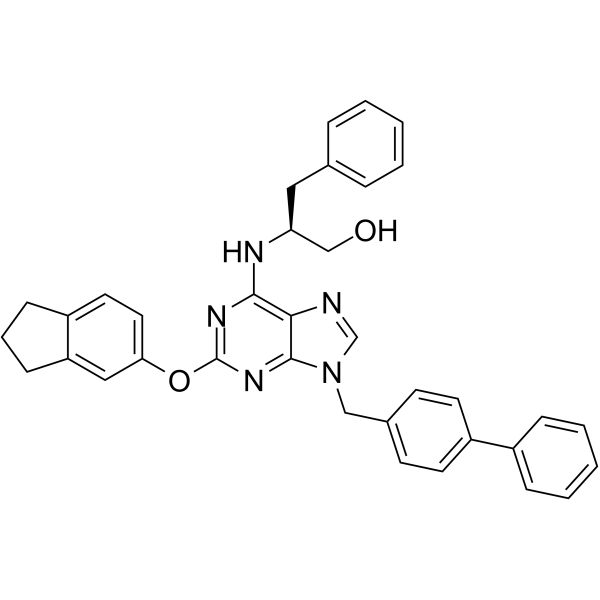
QS11
Based on 2 publication(s) in Google Scholar
QS11 is an inhibitor of ARFGAP1 (ADP-ribosylation factor GTPase-activating protein 1), with an EC50 of 1.5 μM. QS11 activates Wnt/β-catenin signaling through an effect on protein trafficking. QS11 inhibits migration of ARFGAP overexpressing breast cancer cells.
Para uso exclusivo en investigación. No vendemos a pacientes.
- Pureza : 99.10%
- No. CAS: 944328-88-5
- Fòrmula: C36H33N5O2
- Peso molecular:567.68
-
Almacenamiento:Powder -20°C, 3 years , 4°C, 2 years ; In solvent -80°C, 2 years , -20°C, 1 year

To place orders, for customer services and technical support, please contact: MedChemExpress USA
Tel: 609-228-6898 E-mail: [email protected] [email protected]


-
 Actividad biológica
-
Chemical Information
-
Solvente y solubilidad
- Protocolo
- Pureza y Documentación
- Referencias
-
 Help & FAQs


-
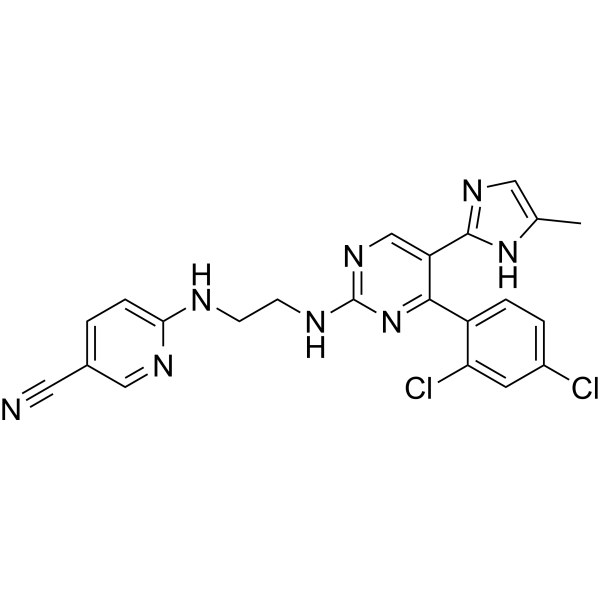
HY-10182
LaduviglusibGSK-3 Inhibitor -
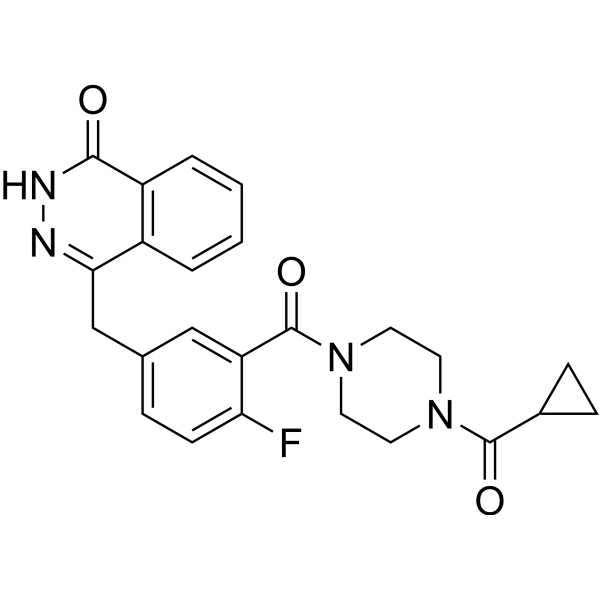
HY-10162
OlaparibPARP Inhibitor -
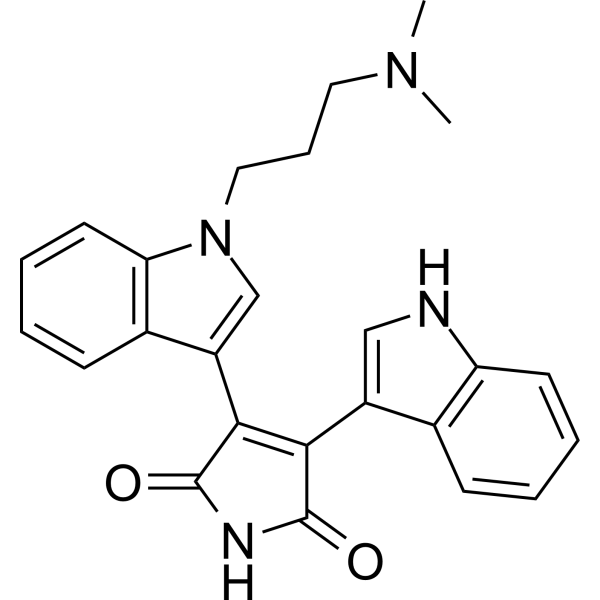
HY-13867
Bisindolylmaleimide IPKC Inhibitor -
HY-114657A
Benproperine phosphateARPC2 Inhibitor -
HY-15597
SalinomycinPotassium Ionophore Antibiotic -
HY-13912
IWP-2Wnt Production Inhibitor -
HY-13815
KY02111WNT Signaling/β-catenin Inhibitor -
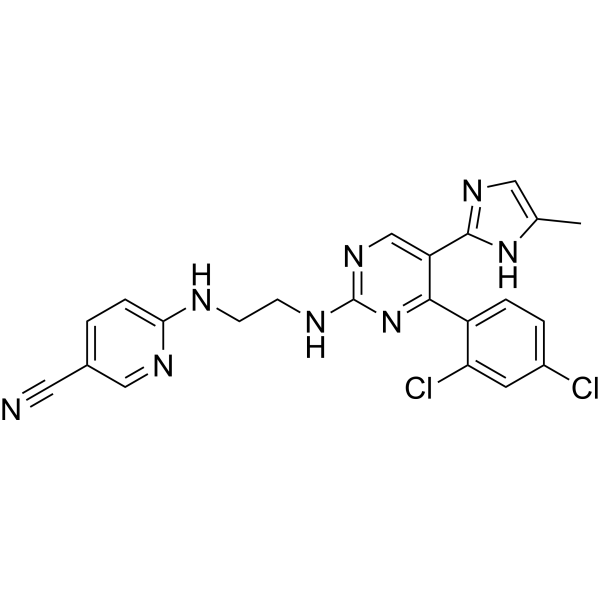
HY-10182G
Laduviglusib (GMP)GSK-3α/β Inhibitor (GMP) -
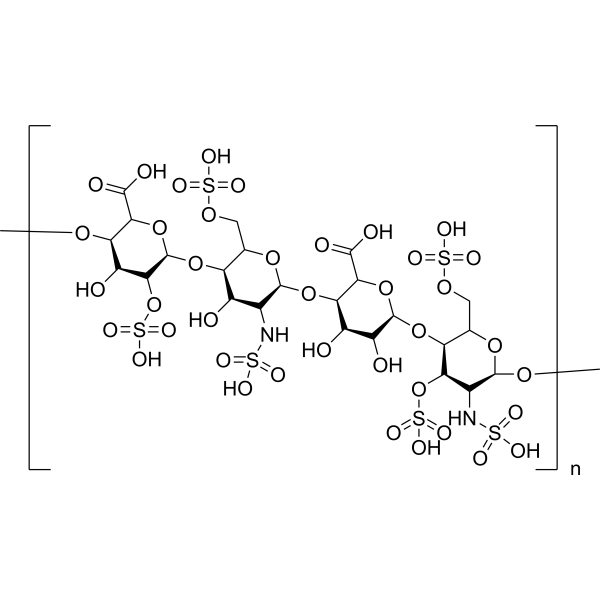
HY-101916
Heparan SulfateLinear Polysaccharide -
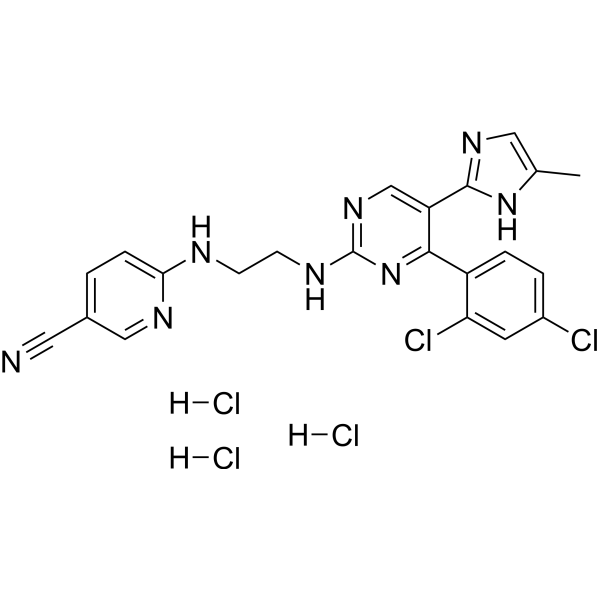
HY-10182B
Laduviglusib trihydrochlorideGSK-3α/β Inhibitor -
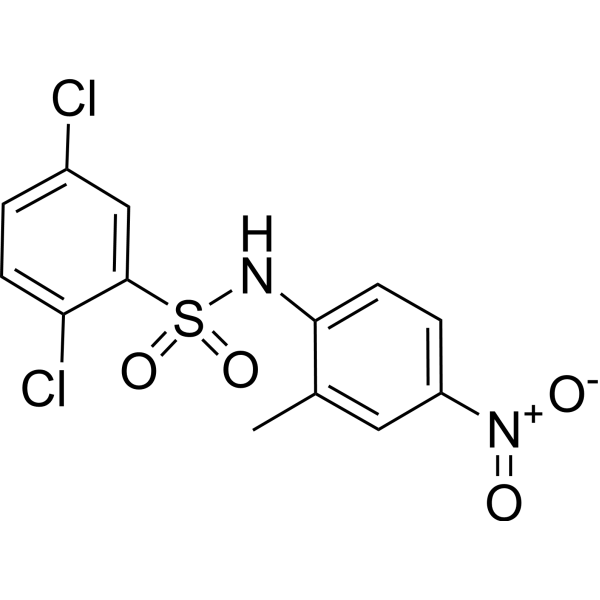
HY-15721
FH535Wnt/β-catenin/PPAR Inhibitor -
HY-10593
IQ 1Wnt/β-catenin/CBP Signaling Sustainer
Publications Citing Use of MedChemExpress (MCE) QS11
More

Actividad biológica
Descripciòn
IC50 & Target
EC50: 1.5 µM (ARFGAP1)[1]
Cellular Effect
|
Cell Line

|
Type | Value | Description | References |
|---|---|---|---|---|
| HEK293 | EC50 |
0.5 μM
Compound: 3, QS11
|
Effect on Wnt/beta-casein reporter pathway in HEK293 cells expressing super(8X)TOPFlash reporter assessed as luciferase activity in presence of Wnt-3a
Effect on Wnt/beta-casein reporter pathway in HEK293 cells expressing super(8X)TOPFlash reporter assessed as luciferase activity in presence of Wnt-3a
|
[PMID: 17460038] |
| HEK293 | EC50 |
1.5 μM
Compound: 3a
|
Synergistic agonist activity at Wnt/beta-catenin (unknown origin) expressed in Wnt-3A conditioned media stimulated with HEK293 cells incubated for 24 hrs by firefly luciferase based TOPflash reporter assay
Synergistic agonist activity at Wnt/beta-catenin (unknown origin) expressed in Wnt-3A conditioned media stimulated with HEK293 cells incubated for 24 hrs by firefly luciferase based TOPflash reporter assay
|
[PMID: 26152429] |
In Vitro
QS11 binds and inhibits the GTPase activating protein of ARFGAP1, suggesting that QS11 modulates Wnt/β-catenin signaling through an effect on protein trafficking[1].
QS11 (2.5 μM) activates the Super(8X)TOPFlash reporter 200-fold in the presence of Wnt-3a conditioned medium, whereas Wnt-3a treatment alone increases reporter activity 40-fold[2].
QS11 shows potent activity (EC50=0.5 μM) with little cytotoxicity toward HEK293 and human primary fibroblast cells[2].
QS11 effectively reduces in vitro migration of metastatic human breast cancer cells[2].
MedChemExpress (MCE) has not independently confirmed the accuracy of these methods. They are for reference only.


Chemical Information
-
No. CAS 944328-88-5
-
Appearance Solid
-
Peso molecular 567.68
-
Fòrmula C36H33N5O2
-
Color White to off-white
-
SMILES
OC[C@H](CC1=CC=CC=C1)NC2=C3C(N(CC4=CC=C(C5=CC=CC=C5)C=C4)C=N3)=NC(OC6=CC=C(CCC7)C7=C6)=N2
-
Envío
Room temperature in continental US; may vary elsewhere.
-
Almacenamiento
Powder -20°C 3 years 4°C 2 years In solvent -80°C 2 years -20°C 1 year


Publications (2)
-
Journal Impact Factor
-
Most Recent
-
Cancer Lett
Mutant p53 activates hnRNPA2B1-AGAP1-mediated exosome formation to promote esophageal squamous cell carcinoma progression. [Abstract]2023 May 28:562:216154. PMID: 37030635 -
Virol J
ARFGAP1 serves as a critical host factor during E30 infection: QS11 inhibits viral pathogenesis in hFcRn-IFNAR-/- mice. [Abstract]2025 Oct 29;22(1):351. PMID: 41163005


Solvente y solubilidad
In Vitro:
DMSO : ≥ 100 mg/mL (176.16 mM; Hygroscopic DMSO has a significant impact on the solubility of product, please use newly opened DMSO)
* "≥" means soluble, but saturation unknown.
Please refer to the solubility information to select the appropriate solvent. Once prepared, please aliquot and store the solution to prevent product inactivation from repeated freeze-thaw cycles.
Storage method and period of stock solution: -80°C, 2 years; -20°C, 1 year. When stored at -80°C, please use it within 2 years. When stored at -20°C, please use it within 1 year.
Please refer to the solubility information to select the appropriate solvent. Once prepared, please aliquot and store the solution to prevent product inactivation from repeated freeze-thaw cycles.
Storage method and period of stock solution: -80°C, 2 years; -20°C, 1 year. When stored at -80°C, please use it within 2 years. When stored at -20°C, please use it within 1 year.
Concentration (start) × Volume (start) = Concentration (final) × Volume (final)
In Vivo:
Select the appropriate dissolution method based on your experimental animal and administration route.
- For the following dissolution methods, please ensure to first prepare a clear stock solution using an In Vitro approach and then sequentially add co-solvents:
- To ensure reliable experimental results, the clarified stock solution can be appropriately stored based on storage conditions. As for the working solution for In Vivo experiments, it is recommended to prepare freshly and use it on the same day.
- The percentages shown for the solvents indicate their volumetric ratio in the final prepared solution. If precipitation or phase separation occurs during preparation, heat and/or sonication can be used to aid dissolution.
Add each solvent one by one: 10% DMSO 40% PEG300 5% Tween-80 45% Saline
Solubility: ≥ 2.5 mg/mL (4.40 mM); Clear solution
This protocol yields a clear solution of ≥ 2.5 mg/mL (saturation unknown).
Taking 1 mL working solution as an example, add 100 μL DMSO stock solution (25.0 mg/mL) to 400 μL PEG300, and mix evenly; then add 50 μL Tween-80 and mix evenly; then add 450 μL Saline to adjust the volume to 1 mL.
Preparation of Saline: Dissolve 0.9 g sodium chloride in ddH₂O and dilute to 100 mL to obtain a clear Saline solution.
In Vivo Dissolution Calculator
Please enter the basic information of animal experiments:
-
-
-
-
Recommended: Prepare an additional quantity of animals to account for potential losses during experiments.
Please enter your animal formula composition:
-
%DMSO +
Recommended: Keep the proportion of DMSO in working solution below 2% if your animal is weak.
-
%+
-
+%Tween-80 + +
-
%Saline +
The co-solvents required include: DMSO, . All of co-solvents are available by MedChemExpress (MCE). , Tween 80. All of co-solvents are available by MedChemExpress (MCE).
Working solution concentration: 0.22 mg/mL
Method for preparing stock solution: mg drug dissolved in μL DMSO. Stock solution concentration: mg/mL.
1. Take μL DMSO stock solution;
2. Add μL .
μL , mix evenly;
3. Then add μL Tween 80, mix evenly;
4. Then add μL
Please ensure that the stock solution in the first step is dissolved to a clear state, and add co-solvents in sequence. You can use ultrasonic heating (ultrasonic cleaner, recommended frequency 20-40 kHz), vortexing, etc. to assist dissolution.


Pureza y Documentación
-
Ficha de datos (277 KB)
-
SDS (393 KB)
- English - EN (393 KB)
- Français - FR (393 KB)
- Deutsch - DE (393 KB)
- Norwegian - NO (393 KB)
- Español - ES (393 KB)
- Swedish - SV (393 KB)
- Italian - IT (393 KB)
- Korean - KR (393 KB)
- Portuguese - PT (393 KB)
-
Instrucciones de manejo (2659 KB)
Referencias
[1]. Manish K. Singh, et al. Structure-activity Relationship Studies of QS11, a Small Molecule Wnt Synergistic Agonist. Bioorg Med Chem Lett. 2015 Nov 1; 25(21): 4838–4842. [Content Brief]
[2]. Zhang Q, et al. Small-molecule synergist of the Wnt/beta-catenin signaling pathway. Proc Natl Acad Sci U S A. 2007 May 1;104(18):7444-8. [Content Brief]


Complete Stock Solution Preparation Table
Please refer to the solubility information to select the appropriate solvent. Once prepared, please aliquot and store the solution to prevent product inactivation from repeated freeze-thaw cycles.
Storage method and period of stock solution: -80°C, 2 years; -20°C, 1 year. When stored at -80°C, please use it within 2 years. When stored at -20°C, please use it within 1 year.
| Optional Solvent | Concentration Solvent Mass | 1 mg | 5 mg | 10 mg | 25 mg |
|---|---|---|---|---|---|
| DMSO | 1 mM | 1.7616 mL | 8.8078 mL | 17.6156 mL | 44.0389 mL |
| 5 mM | 0.3523 mL | 1.7616 mL | 3.5231 mL | 8.8078 mL | |
| 10 mM | 0.1762 mL | 0.8808 mL | 1.7616 mL | 4.4039 mL | |
| 15 mM | 0.1174 mL | 0.5872 mL | 1.1744 mL | 2.9359 mL | |
| 20 mM | 0.0881 mL | 0.4404 mL | 0.8808 mL | 2.2019 mL | |
| 25 mM | 0.0705 mL | 0.3523 mL | 0.7046 mL | 1.7616 mL | |
| 30 mM | 0.0587 mL | 0.2936 mL | 0.5872 mL | 1.4680 mL | |
| 40 mM | 0.0440 mL | 0.2202 mL | 0.4404 mL | 1.1010 mL | |
| 50 mM | 0.0352 mL | 0.1762 mL | 0.3523 mL | 0.8808 mL | |
| 60 mM | 0.0294 mL | 0.1468 mL | 0.2936 mL | 0.7340 mL | |
| 80 mM | 0.0220 mL | 0.1101 mL | 0.2202 mL | 0.5505 mL | |
| 100 mM | 0.0176 mL | 0.0881 mL | 0.1762 mL | 0.4404 mL |


QS11 Related Classifications
HY-12762 Related Classifications
 Powered by Bioz