



Theobromine
Based on 1 publication(s) in Google Scholar
Theobromine is a methylxanthine found in cacao beans which can inhibit adenosine receptor A1 (AR1) signaling.
Para uso exclusivo en investigación. No vendemos a pacientes.
- Pureza : 99.60%
- No. CAS: 83-67-0
- Fòrmula: C7H8N4O2
- Peso molecular:180.17
-
Almacenamiento:Powder -20°C, 3 years , 4°C, 2 years ; In solvent -80°C, 2 years , -20°C, 1 year

To place orders, for customer services and technical support, please contact: MedChemExpress USA
Tel: 609-228-6898 E-mail: [email protected] [email protected]


-
 Actividad biológica
-
Chemical Information
-
Solvente y solubilidad
- Pureza y Documentación
- Referencias
-
 Help & FAQs


-
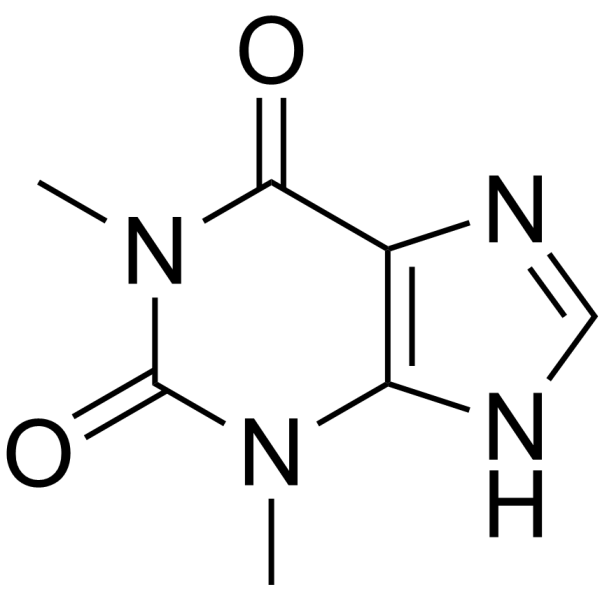
HY-B0809
TheophyllinePDE Inhibitor -
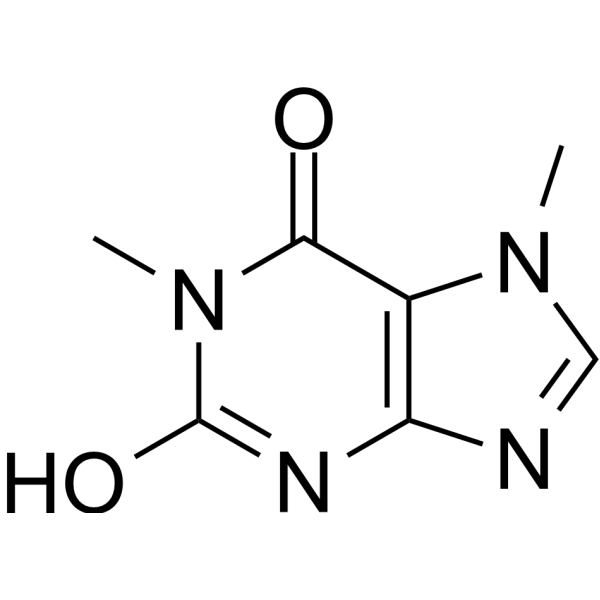
HY-W016498
Paraxanthine -
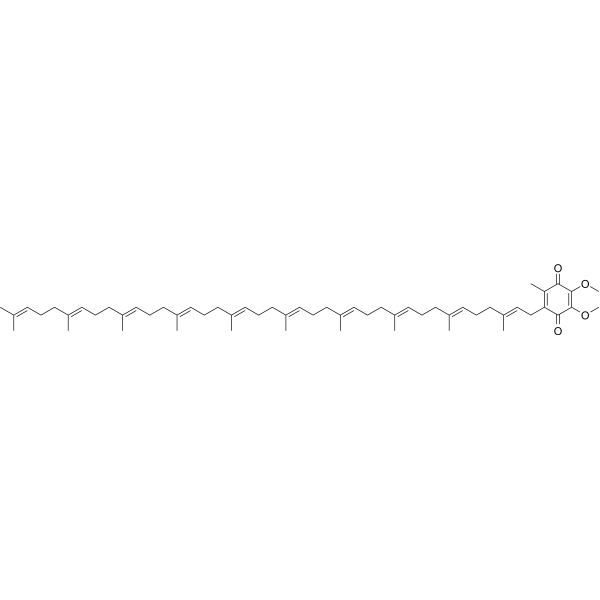
HY-N0111
Coenzyme Q10Antioxidant -
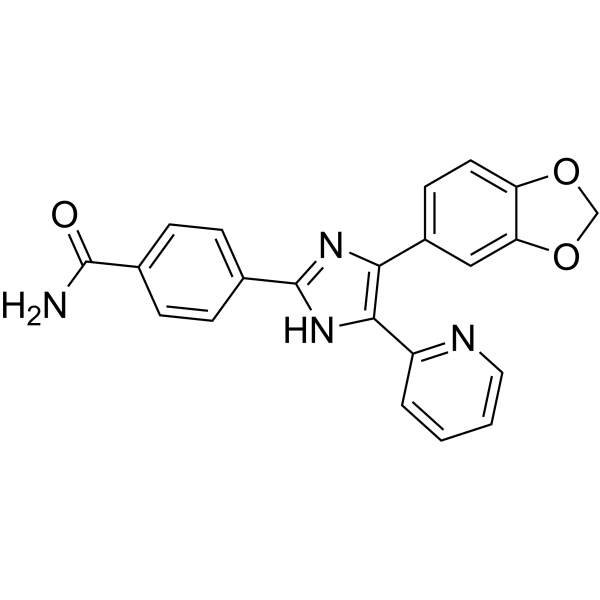
HY-10431
SB-431542TGF-β Receptor Kinase Inhibitor -
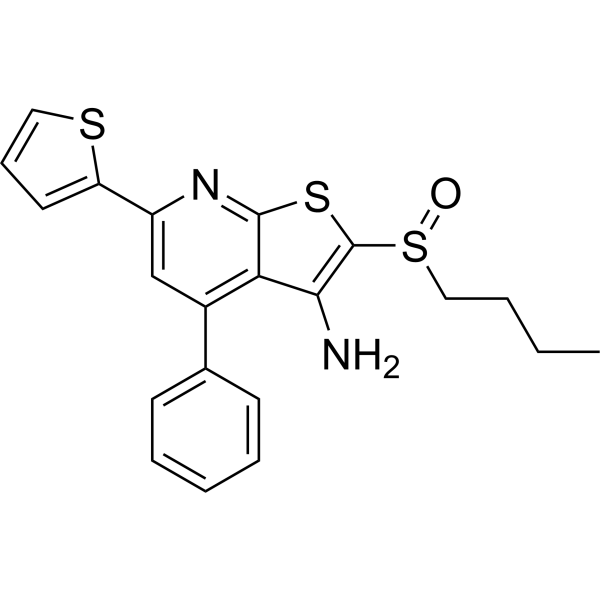
HY-16968
SW03329115-PGDH Inhibitor -
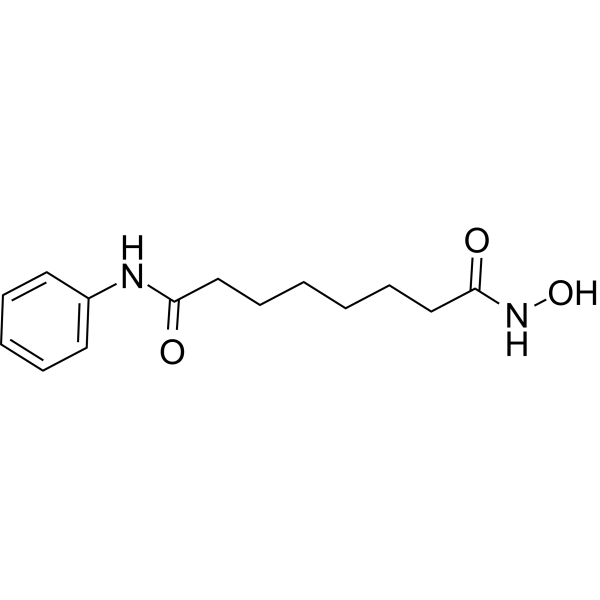
HY-10221
VorinostatHDAC Inhibitor -

HY-N0138R
Theobromine (Standard)Endogenous Metabolite -
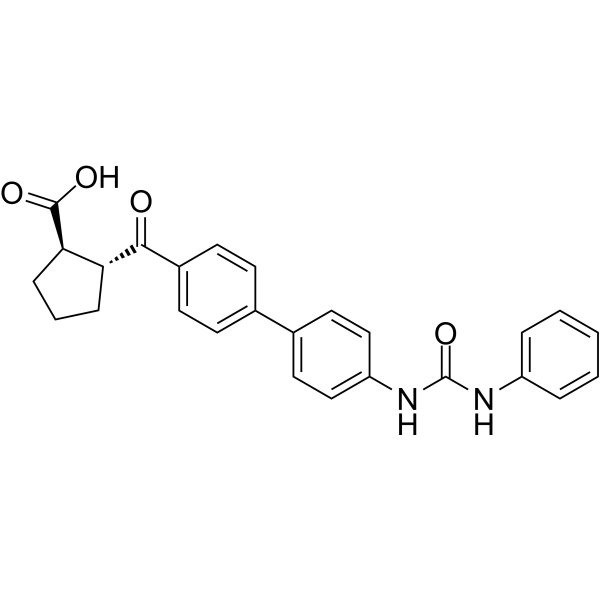
HY-10038
A 922500DGAT-1 Inhibitor -
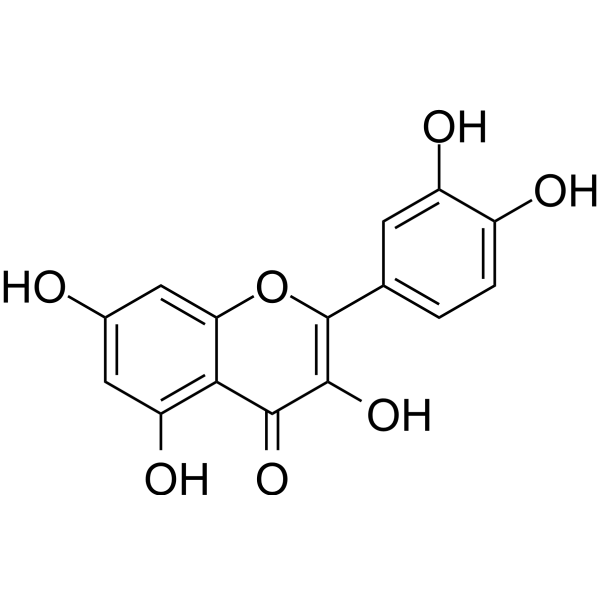
HY-18085
QuercetinFlavonoid Antioxidant -
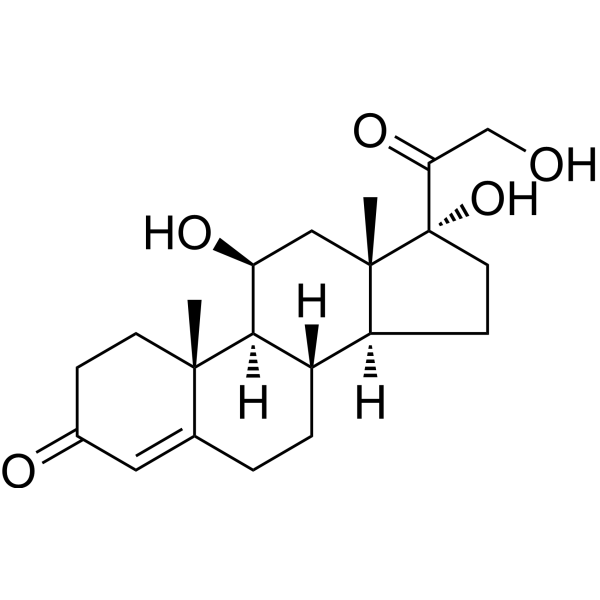
HY-N0583
HydrocortisoneGlucocorticoid Receptor Agonist -
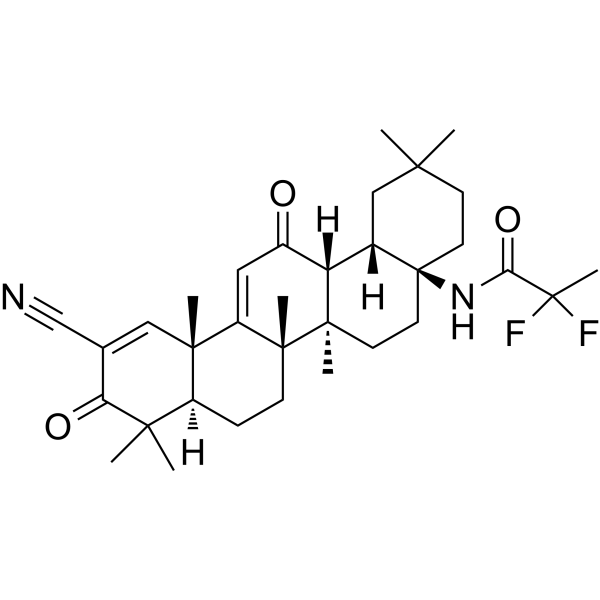
HY-12212
OmaveloxoloneNrf2 Activator -
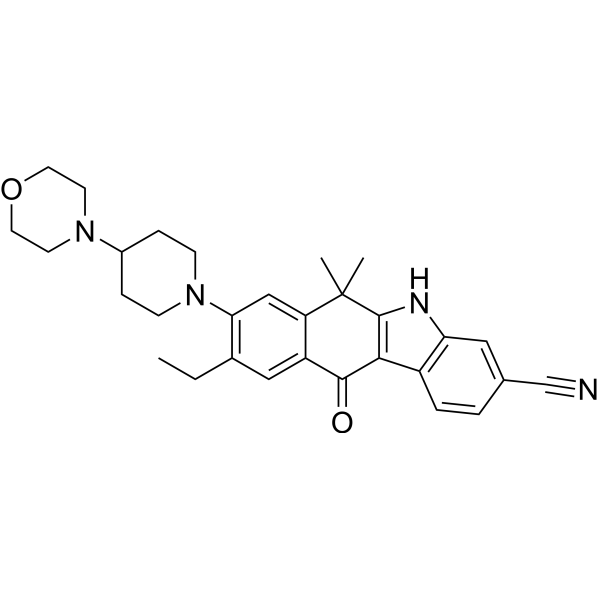
HY-13011
AlectinibALK Inhibitor
Publications Citing Use of MedChemExpress (MCE) Theobromine
MoreVer todos los productos específicos de isoformas Adenosine Receptor
MoreVer todos los productos específicos de isoformas Endogenous Metabolite
More

Actividad biológica
Descripciòn
IC50 & Target
AR1[1]
In Vitro
Theobromine, at concentrations above 25 μM, decreases lipid accumulation in these cells. Cell viability is not affected by Theobromine. Theobromine, at concentrations above 25 μM, suppresses protein expression of PPARγ, C/EBPα and adipogenic genes. The mRNA levels of these genes are also decreased by Theobromine[1].
MedChemExpress (MCE) has not independently confirmed the accuracy of these methods. They are for reference only. .
In Vivo
MedChemExpress (MCE) has not independently confirmed the accuracy of these methods. They are for reference only.
Ensayo clínico
| NCT Number | Sponsor | Condition | Start Date |
Phase

|
|---|---|---|---|---|
| NCT01329991 | Plexxikon| | 2011-05 | PHASE1 |


Chemical Information
-
No. CAS 83-67-0
-
Appearance Solid
-
Peso molecular 180.17
-
Fòrmula C7H8N4O2
-
Color White to off-white
-
SMILES
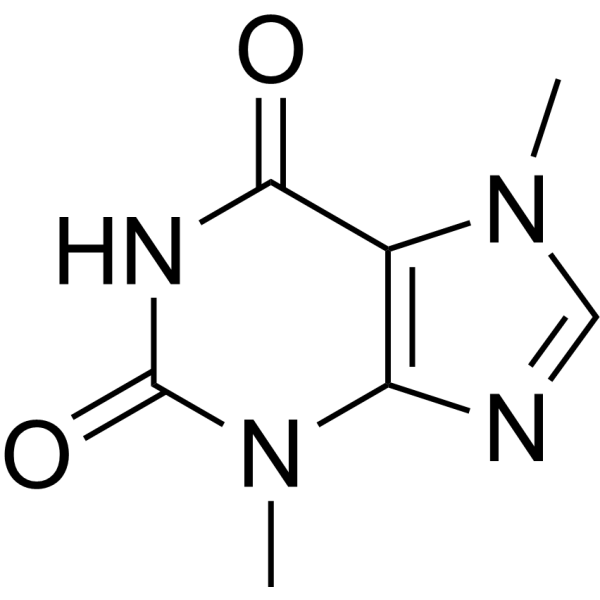
O=C(N1)N(C)C2=C(N(C)C=N2)C1=O
-
Synonyms
3,7-Dimethylxanthine
-
Structure Classification
-
Initial Source
-
Envío
Room temperature in continental US; may vary elsewhere.
-
Almacenamiento
Powder -20°C 3 years 4°C 2 years In solvent -80°C 2 years -20°C 1 year


Publications (1)
-
Journal Impact Factor
-
Most Recent
-
Microbiol Immunol
2023 Sep;67(9):404-412. PMID: 37415325


Solvente y solubilidad
In Vitro:
0.5 M NaOH : 20 mg/mL (111.01 mM; Need ultrasonic)
DMSO : 1.1 mg/mL (6.11 mM; Need ultrasonic; Hygroscopic DMSO has a significant impact on the solubility of product, please use newly opened DMSO)
H2O : < 0.1 mg/mL (insoluble)
Please refer to the solubility information to select the appropriate solvent. Once prepared, please aliquot and store the solution to prevent product inactivation from repeated freeze-thaw cycles.
Storage method and period of stock solution: -80°C, 2 years; -20°C, 1 year. When stored at -80°C, please use it within 2 years. When stored at -20°C, please use it within 1 year.
Please refer to the solubility information to select the appropriate solvent. Once prepared, please aliquot and store the solution to prevent product inactivation from repeated freeze-thaw cycles.
Storage method and period of stock solution: -80°C, 2 years; -20°C, 1 year. When stored at -80°C, please use it within 2 years. When stored at -20°C, please use it within 1 year.
Concentration (start) × Volume (start) = Concentration (final) × Volume (final)


Pureza y Documentación
-
Ficha de datos (293 KB)
-
SDS (557 KB)
- English - EN (557 KB)
- Français - FR (557 KB)
- Deutsch - DE (557 KB)
- Norwegian - NO (557 KB)
- Español - ES (557 KB)
- Swedish - SV (557 KB)
- Italian - IT (557 KB)
- Korean - KR (557 KB)
- Portuguese - PT (557 KB)
-
Instrucciones de manejo (2659 KB)
Referencias
[1]. Mitani T, et al. Theobromine suppresses adipogenesis through enhancement of CCAAT-enhancer-binding protein β degradation by adenosine receptor A1. [Content Brief]
[2]. Martín-Peláez S, et al. Effect of cocoa's theobromine on intestinal microbiota of rats. Mol Nutr Food Res. 2017 Oct;61(10). [Content Brief]


Complete Stock Solution Preparation Table
Please refer to the solubility information to select the appropriate solvent. Once prepared, please aliquot and store the solution to prevent product inactivation from repeated freeze-thaw cycles.
Storage method and period of stock solution: -80°C, 2 years; -20°C, 1 year. When stored at -80°C, please use it within 2 years. When stored at -20°C, please use it within 1 year.
| Optional Solvent | Concentration Solvent Mass | 1 mg | 5 mg | 10 mg | 25 mg |
|---|---|---|---|---|---|
| DMSO / 0.5 M NaOH | 1 mM | 5.5503 mL | 27.7516 mL | 55.5031 mL | 138.7578 mL |
| 5 mM | 1.1101 mL | 5.5503 mL | 11.1006 mL | 27.7516 mL | |
| 0.5 M NaOH | 10 mM | 0.5550 mL | 2.7752 mL | 5.5503 mL | 13.8758 mL |
| 15 mM | 0.3700 mL | 1.8501 mL | 3.7002 mL | 9.2505 mL | |
| 20 mM | 0.2775 mL | 1.3876 mL | 2.7752 mL | 6.9379 mL | |
| 25 mM | 0.2220 mL | 1.1101 mL | 2.2201 mL | 5.5503 mL | |
| 30 mM | 0.1850 mL | 0.9251 mL | 1.8501 mL | 4.6253 mL | |
| 40 mM | 0.1388 mL | 0.6938 mL | 1.3876 mL | 3.4689 mL | |
| 50 mM | 0.1110 mL | 0.5550 mL | 1.1101 mL | 2.7752 mL | |
| 60 mM | 0.0925 mL | 0.4625 mL | 0.9251 mL | 2.3126 mL | |
| 80 mM | 0.0694 mL | 0.3469 mL | 0.6938 mL | 1.7345 mL | |
| 100 mM | 0.0555 mL | 0.2775 mL | 0.5550 mL | 1.3876 mL |


Theobromine Related Classifications
HY-N0138 Related Classifications
 Powered by Bioz