



Piperacillin sodium
Based on 16 publication(s) in Google Scholar
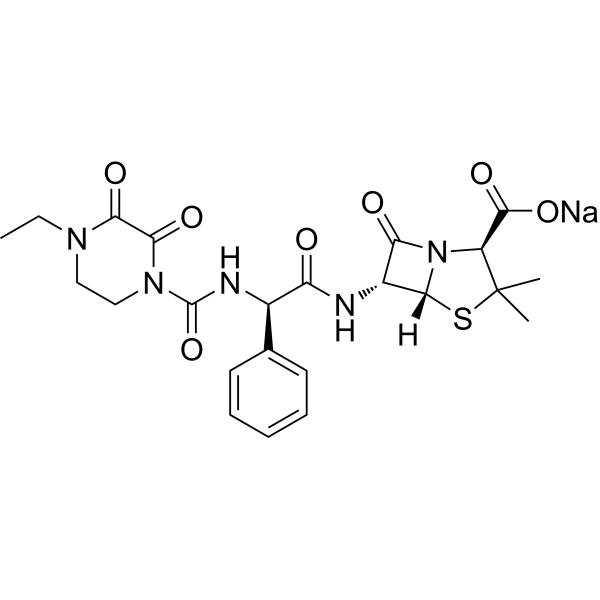
Piperacillin sodium is a semisynthetic broad-spectrum β-lactam antibiotic which exhibits potent bactericidal activity against Gram-negative bacteria as well as select Gram-positive strains through penicillin-binding proteins. Piperacillin is most commonly used in combination with the β-lactamase inhibitor Tazobactam.
For research use only. We do not sell to patients.
- Purity: 98.22%
- CAS No.: 59703-84-3
- Formula: C23H26N5NaO7S
- Molecular Weight:539.54
-
Storage:
4°C, sealed storage, away from moisture
* In solvent : -80°C, 6 months; -20°C, 1 month (sealed storage, away from moisture)

To place orders, for customer services and technical support, please contact: MedChemExpress USA
Tel: 609-228-6898 E-mail: [email protected] [email protected]


-
 Biological Activity
-
Chemical Information
-
Solvent & Solubility
- Purity & Documentation
- References
-
 Help & FAQs


-
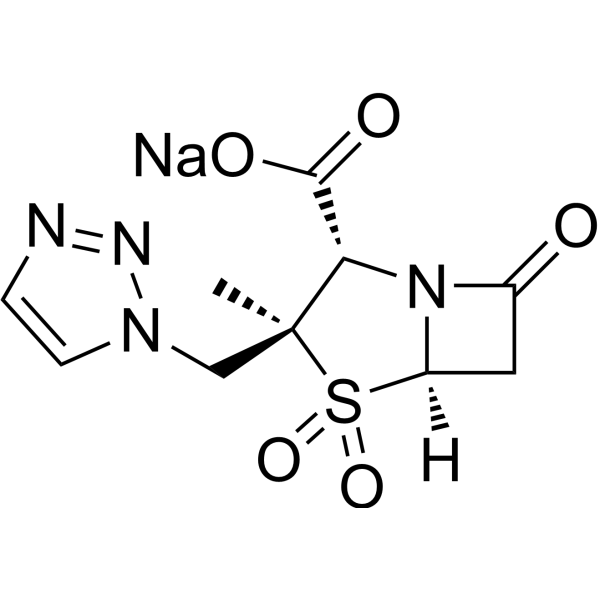
HY-W009168
Tazobactam sodium
-
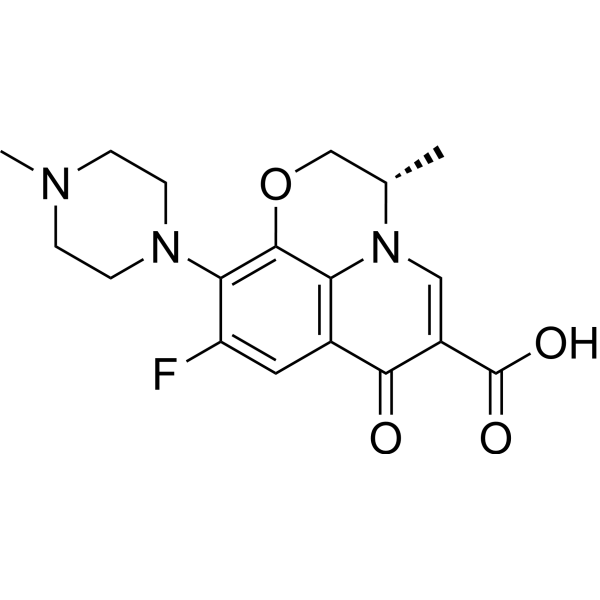
HY-B0330
Levofloxacin
-
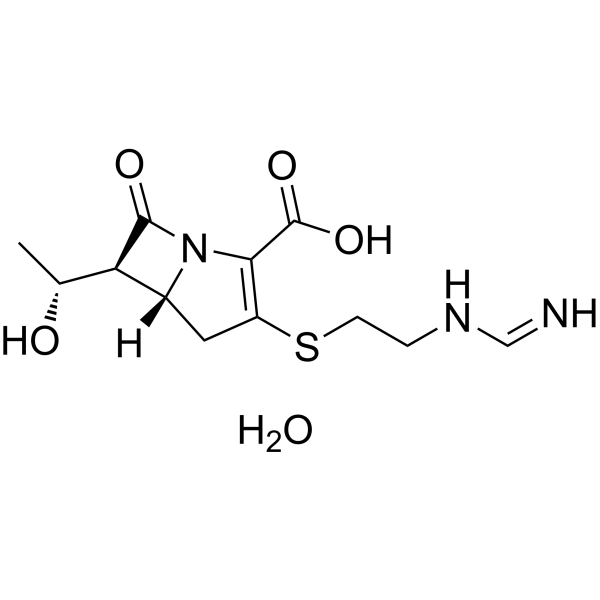
HY-B1369
Imipenem monohydrate
-
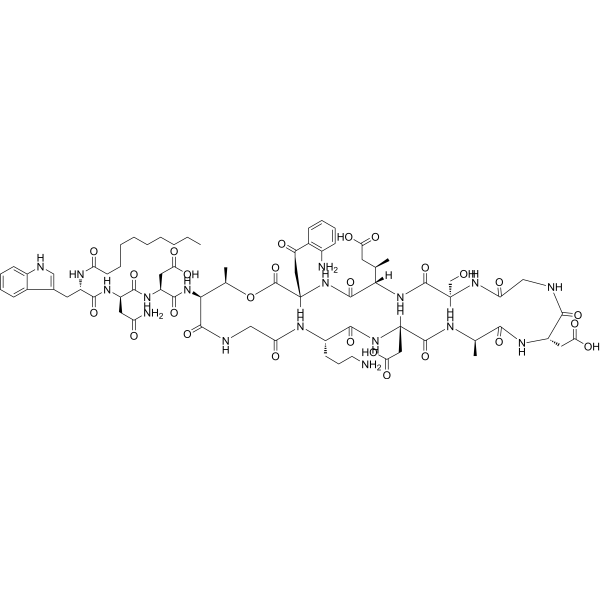
HY-B0108
Daptomycin
-
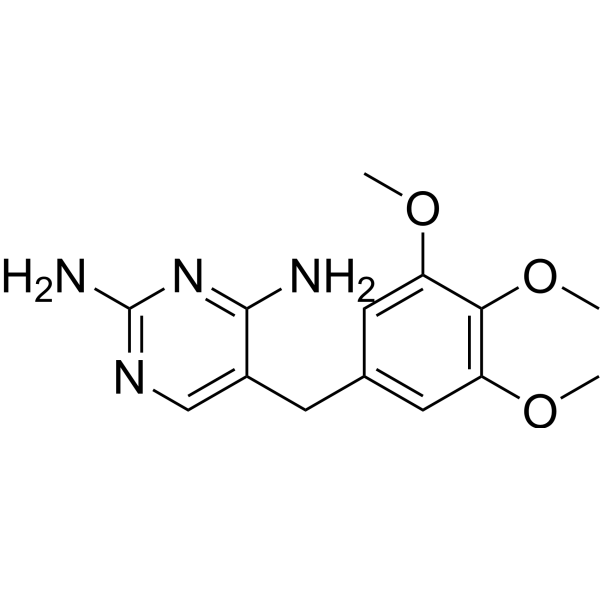
HY-B0510
Trimethoprim
-
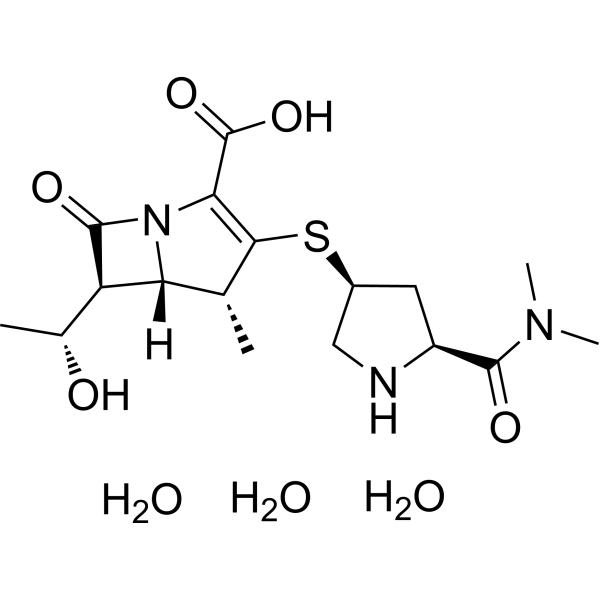
HY-13678A
Meropenem trihydrate
-
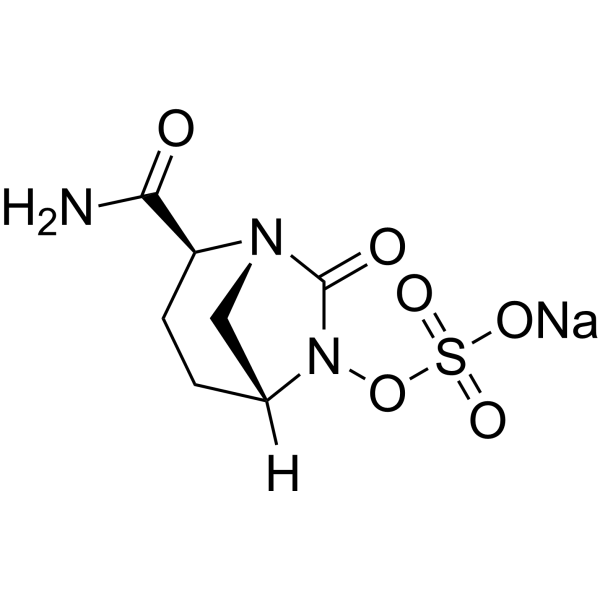
HY-14879A
Avibactam sodium
-

HY-B1286R
Piperacillin sodium (Standard)
-
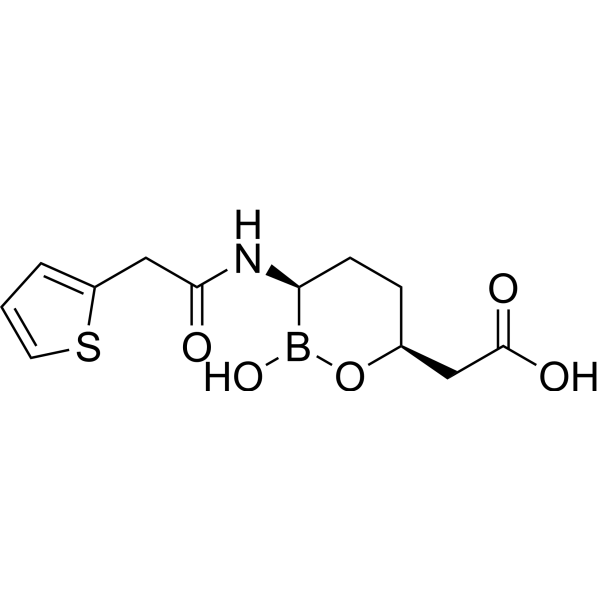
HY-19930
Vaborbactam
-
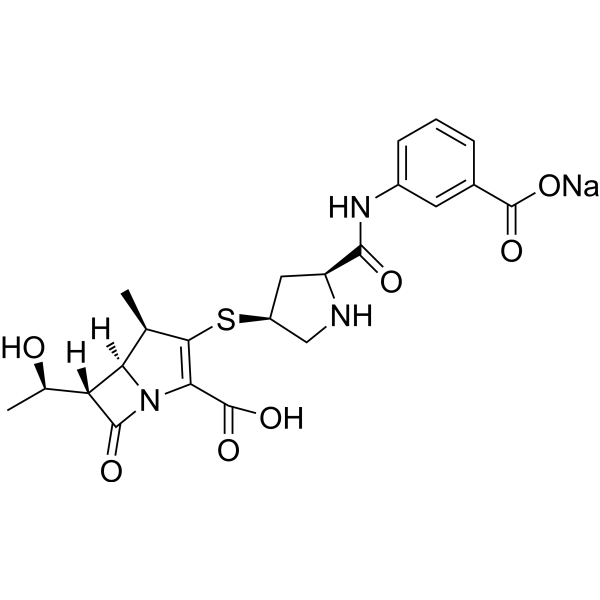
HY-13625
Ertapenem sodium
-
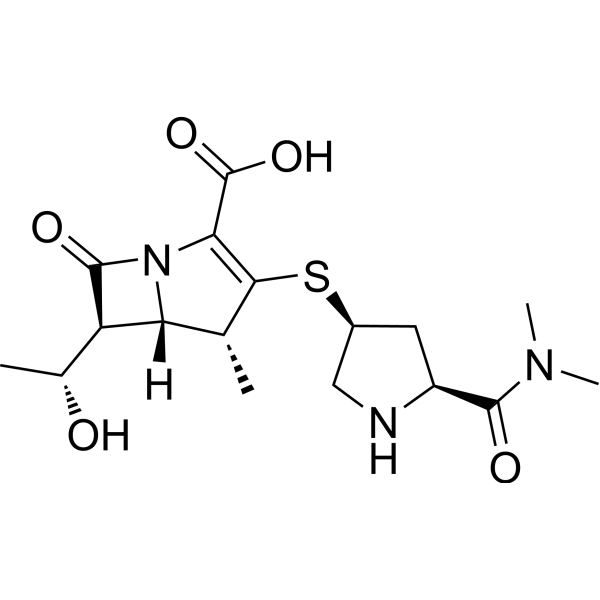
HY-13678
Meropenem
-
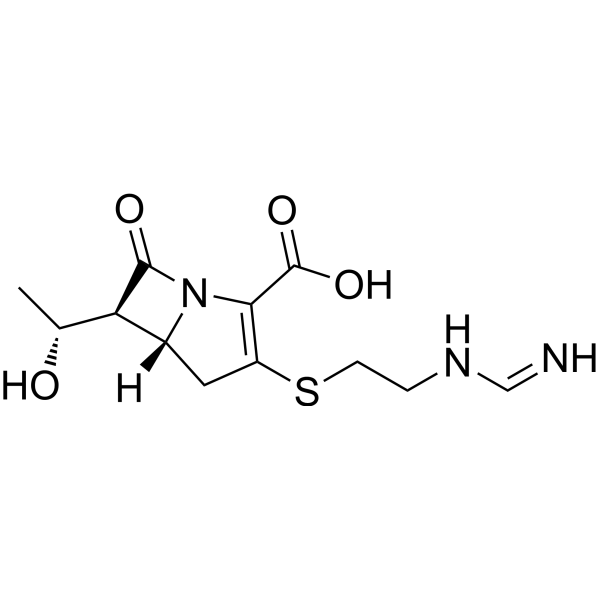
HY-B1369A
Imipenem
Publications Citing Use of MedChemExpress (MCE) Piperacillin sodium
More- Signal Transduct Target Ther. 2025 Dec 15;10(1):406. [Abstract]
- Nat Commun. 2022 Mar 2;13(1):1116. [Abstract]
- J Exp Med. 2026 Mar 2;223(3):e20241287. [Abstract]
- Virulence. 2026 Dec 31;17(1):2646808. [Abstract]
- Molecules. 2025 Mar 9;30(6):1224. [Abstract]
- Int J Antimicrob Agents. 2025 Oct;66(4):107551. [Abstract]
- PLoS Pathog. 2024 Dec 31;20(12):e1012783. [Abstract]
- Antimicrob Agents Chemother. 2023 Jun 15;67(6):e0160322. [Abstract]
- J Antimicrob Chemother. 2026 Feb 2;81(3):dkag034. [Abstract]
- J Antimicrob Chemother. 2025 Nov 5:dkaf408. [Abstract]
- Microbiol Spectr. 2023 Jun 15;11(3):e0069223. [Abstract]
- Microbiol Spectr. 2023 Feb 14;11(1):e0303822. [Abstract]
- Infect Drug Resist. 2026 May 8;19.
- Biomed Res Int. 2018 Jul 2:2018:3579832. [Abstract]
- medRxiv. 2025 Mar 13:2025.03.11.25323422. [Abstract]
- bioRxiv. 2024 May 10.
 Customer Validation & Images

-
Microbiological Assay
All Antibiotic Isoforms
More

Biological Activity
|
β-lactam |
Piperacillin (12.5 μg/mL, 24h) inhibits 92% of isolates of Pseudomonas aeruginosa, 82% of Serratia marcescens, 73% of Escherichia coli, 61% of Klebsiella spp, and 42% of Enterobacter spp, most Proteus spp. were extremely susceptible. Piperacillin fails to inhibit the growth of gram-negative bacilli when large inocula were used (minimum inhibitory concentration > 25 μg/ml) [2].
MedChemExpress (MCE) has not independently confirmed the accuracy of these methods. They are for reference only.
MedChemExpress (MCE) has not independently confirmed the accuracy of these methods. They are for reference only.
-
Animal Model:BALB/c low inoculum model of K. pneumoniae, KEN-11 strain [3]
-
Dosage:100 mg/kg
-
Administration:Intravenous injection (i.v.), 4 times a day, 5 d, in combination with Tazobactam (12.5 mg/kg, i.v., 4 times a day, 5 d)
-
Result:Enabled all mice survived whereas all control mice died by 5 d, decreased the number of bacteria in lungs compared with control group[.
Observed no bacteria in the blood of most mice (except for two mice at the early phase) while bacteria were observed in the blood of control group.
Observed few inflammatory cells in the alveoli whereas an influx of numerous inflammatory cells were observed in the control group.
| NCT Number | Sponsor | Condition | Start Date |
Phase

|
|---|---|---|---|---|
| NCT01329991 | Plexxikon| | 2011-05 | PHASE1 |


Chemical Information
-
CAS No. 59703-84-3
-
Appearance Solid
-
Molecular Weight 539.54
-
Formula C23H26N5NaO7S
-
Color White to off-white
-
SMILES
O=C([C@@H](C(C)(C)S[C@]1([H])[C@@H]2NC([C@H](NC(N3C(C(N(CC)CC3)=O)=O)=O)C4=CC=CC=C4)=O)N1C2=O)O[Na]
-
Synonyms
Sodium piperacillin
-
Shipping
Room temperature in continental US; may vary elsewhere.
-
Storage
4°C, sealed storage, away from moisture
* In solvent : -80°C, 6 months; -20°C, 1 month (sealed storage, away from moisture)


Publications (16)
-
Journal Impact Factor
-
Most Recent
-
Signal Transduct Target Ther
Selective depletion of tumor-associated SAMHD1 enhances chemotherapeutic efficacy and antitumor immune responses. [Abstract]2025 Dec 15;10(1):406. PMID: 41392286 -
Nat Commun
Antimicrobial resistance and population genomics of multidrug-resistant Escherichia coli in pig farms in mainland China. [Abstract]2022 Mar 2;13(1):1116. PMID: 35236849 -
J Exp Med
2026 Mar 2;223(3):e20241287. PMID: 41400657
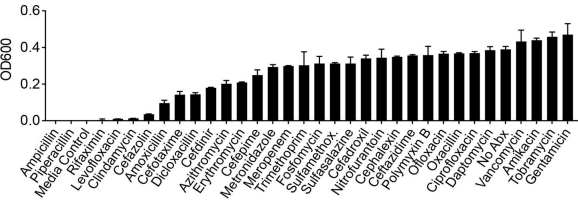
Piperacillin sodium purchased from MedChemExpress. Usage Cited in: J Exp Med. 2026 Mar 2;223(3):e20241287. [Abstract]
Piperacillin strongly inhibited microbial growth in riboflavin-synthesizing bacteria. Cecal and colonic microbiota from 2.5–3-week-old WT mice were anaerobically collected and cultured in Chopped Meat Carbohydrate Broth with the indicated antibiotics or no antibiotic (No Abx) for 24 hours at 37°C.
-
Virulence
Antibacterial efficacy and mechanism of the novel antimicrobial peptide lachnospirin-1 against Acinetobacter baumannii. [Abstract]2026 Dec 31;17(1):2646808. PMID: 41838520 -
Molecules
Seeking Correlation Among Porin Permeabilities and Minimum Inhibitory Concentrations Through Machine Learning: A Promising Route to the Essential Molecular Descriptors. [Abstract]2025 Mar 9;30(6):1224. PMID: 40142001 -
Int J Antimicrob Agents
Elucidating adaptive compensatory tigecycline resistance mechanisms of RamA, RarA and SoxS in Klebsiella pneumoniae. [Abstract]2025 Oct;66(4):107551. PMID: 40499596 -
PLoS Pathog
Differential contribution of PBP occupancy and efflux on the effectiveness of β-lactams at their target site in clinical isolates of Neisseria gonorrhoeae. [Abstract]2024 Dec 31;20(12):e1012783. PMID: 39739989 -
Antimicrob Agents Chemother
Penicillin-Binding Protein 5/6 Acting as a Decoy Target in Pseudomonas aeruginosa Identified by Whole-Cell Receptor Binding and Quantitative Systems Pharmacology. [Abstract]2023 Jun 15;67(6):e0160322. PMID: 37199612 -
J Antimicrob Chemother
Comparative activity of established versus new-generation β-lactams against AmpC-hyperproducing clinical isolates of Enterobacter cloacae complex and Klebsiella aerogenes: a multicentre study. [Abstract]2026 Feb 2;81(3):dkag034. PMID: 41648989 -
J Antimicrob Chemother
Unravelling the triad of penicillin-binding proteins, β-lactamase activity, and mRNA dynamics in Pseudomonas aeruginosa AmpC induction. [Abstract]2025 Nov 5:dkaf408. PMID: 41206063 -
Microbiol Spectr
Penicillin-Binding Protein Occupancy Dataset for 18 β-Lactams and 4 β-Lactamase Inhibitors in Neisseria gonorrhoeae. [Abstract]2023 Jun 15;11(3):e0069223. PMID: 37093051 -
Microbiol Spectr
PBP Target Profiling by β-Lactam and β-Lactamase Inhibitors in Intact Pseudomonas aeruginosa: Effects of the Intrinsic and Acquired Resistance Determinants on the Periplasmic Drug Availability. [Abstract]2023 Feb 14;11(1):e0303822. PMID: 36475840 -
-
Biomed Res Int
In Vitro Activity of β-Lactams in Combination with β-Lactamase Inhibitors against Mycobacterium tuberculosis Clinical Isolates. [Abstract]2018 Jul 2:2018:3579832. PMID: 30065936 -
medRxiv
The association between undetected heteroresistance and antibiotic treatment failure in complicated urinary tract infection. [Abstract]2025 Mar 13:2025.03.11.25323422. PMID: 40162257 -


Solvent & Solubility
DMSO : 100 mg/mL (185.34 mM; Need ultrasonic; Hygroscopic DMSO has a significant impact on the solubility of product, please use newly opened DMSO)
Please refer to the solubility information to select the appropriate solvent. Once prepared, please aliquot and store the solution to prevent product inactivation from repeated freeze-thaw cycles.
Storage method and period of stock solution: -80°C, 6 months; -20°C, 1 month (sealed storage, away from moisture). When stored at -80°C, please use it within 6 months. When stored at -20°C, please use it within 1 month.
Please refer to the solubility information to select the appropriate solvent. Once prepared, please aliquot and store the solution to prevent product inactivation from repeated freeze-thaw cycles.
Storage method and period of stock solution: -80°C, 6 months; -20°C, 1 month (sealed storage, away from moisture). When stored at -80°C, please use it within 6 months. When stored at -20°C, please use it within 1 month.
Concentration (start) × Volume (start) = Concentration (final) × Volume (final)
Select the appropriate dissolution method based on your experimental animal and administration route.
- For the following dissolution methods, please ensure to first prepare a clear stock solution using an In Vitro approach and then sequentially add co-solvents:
- To ensure reliable experimental results, the clarified stock solution can be appropriately stored based on storage conditions. As for the working solution for In Vivo experiments, it is recommended to prepare freshly and use it on the same day.
- The percentages shown for the solvents indicate their volumetric ratio in the final prepared solution. If precipitation or phase separation occurs during preparation, heat and/or sonication can be used to aid dissolution.
Add each solvent one by one: 10% DMSO 40% PEG300 5% Tween-80 45% Saline
Solubility: ≥ 2.5 mg/mL (4.63 mM); Clear solution
This protocol yields a clear solution of ≥ 2.5 mg/mL (saturation unknown).
Taking 1 mL working solution as an example, add 100 μL DMSO stock solution (25.0 mg/mL) to 400 μL PEG300, and mix evenly; then add 50 μL Tween-80 and mix evenly; then add 450 μL Saline to adjust the volume to 1 mL.
Preparation of Saline: Dissolve 0.9 g sodium chloride in ddH₂O and dilute to 100 mL to obtain a clear Saline solution.
Add each solvent one by one: 10% DMSO 90% (20% SBE-β-CD in Saline)
Solubility: ≥ 2.5 mg/mL (4.63 mM); Clear solution
This protocol yields a clear solution of ≥ 2.5 mg/mL (saturation unknown).
Taking 1 mL working solution as an example, add 100 μL DMSO stock solution (25.0 mg/mL) to 900 μL 20% SBE-β-CD in Saline, and mix evenly.
Preparation of 20% SBE-β-CD in Saline (4°C, storage for one week): 2 g SBE-β-CD powder is dissolved in 10 mL Saline, completely dissolve until clear.
For the following dissolution methods, please prepare the working solution directly:
It is recommended to prepare fresh solutions and use them promptly within a short period of time.
The percentages shown for the solvents indicate their volumetric ratio in the final prepared solution. If precipitation or phase separation occurs during preparation, heat and/or sonication can be used to aid dissolution.
Add each solvent one by one: PBS
Solubility: 100 mg/mL (185.34 mM); Clear solution; Need ultrasonic
Please enter the basic information of animal experiments:
-
-
-
-
Recommended: Prepare an additional quantity of animals to account for potential losses during experiments.
Please enter your animal formula composition:
-
%DMSO +
Recommended: Keep the proportion of DMSO in working solution below 2% if your animal is weak.
-
%+
-
+%Tween-80 + +
-
%Saline +
The co-solvents required include: DMSO, . All of co-solvents are available by MedChemExpress (MCE). , Tween 80. All of co-solvents are available by MedChemExpress (MCE).
Working solution concentration: 0.22 mg/mL
Method for preparing stock solution: mg drug dissolved in μL DMSO. Stock solution concentration: mg/mL. * In solvent : -80°C, 6 months; -20°C, 1 month (sealed storage, away from moisture)
1. Take μL DMSO stock solution;
2. Add μL .
μL , mix evenly;
3. Then add μL Tween 80, mix evenly;
4. Then add μL
Please ensure that the stock solution in the first step is dissolved to a clear state, and add co-solvents in sequence. You can use ultrasonic heating (ultrasonic cleaner, recommended frequency 20-40 kHz), vortexing, etc. to assist dissolution.


Purity & Documentation
-
Data Sheet (280 KB)
-
SDS (480 KB)
- English - EN (480 KB)
- Français - FR (480 KB)
- Deutsch - DE (480 KB)
- Norwegian - NO (480 KB)
- Español - ES (480 KB)
- Swedish - SV (480 KB)
- Italian - IT (480 KB)
- Korean - KR (480 KB)
- Portuguese - PT (480 KB)
-
Handling Instructions (2659 KB)
References
[1]. Fu KP, et al. Piperacillin, a new penicillin active against many bacteria resistant to other penicillins. Antimicrob Agents Chemother. 1978,13(3):358-67. [Content Brief]
[2]. Bodey GP, et al. Piperacillin: In Vitro Evaluation. Antimicrob Agents Chemother. 1978,14(1):78-87. [Content Brief]
[3]. Harada Y, et al. In vitro and in vivo activities of piperacillin-tazobactam and meropenem at different inoculum sizes of ESBL-producing Klebsiella pneumoniae. Clin Microbiol Infect. 2014,20(11):O831-9. [Content Brief]
[4]. Tan JS, et al. Antipseudomonal penicillins. Med Clin North Am. 1995 Jul;79(4):679-93. [Content Brief]
[5]. Lau WK, et al. Randomized, open-label, comparative study of piperacillin-tazobactam administered by continuous infusion versus intermittent infusion for treatment of hospitalized patients with complicated intra-abdominal infection. Antimicrob Agents Chemother. 2006 Nov;50(11):3556-61. [Content Brief]
[6]. Fu KP, et al. Piperacillin, a new penicillin active against many bacteria resistant to other penicillins. Antimicrob Agents Chemother. 1978 Mar;13(3):358-67. [Content Brief]


Complete Stock Solution Preparation Table
Please refer to the solubility information to select the appropriate solvent. Once prepared, please aliquot and store the solution to prevent product inactivation from repeated freeze-thaw cycles.
Storage method and period of stock solution: -80°C, 6 months; -20°C, 1 month (sealed storage, away from moisture). When stored at -80°C, please use it within 6 months. When stored at -20°C, please use it within 1 month.
| Optional Solvent | Concentration Solvent Mass | 1 mg | 5 mg | 10 mg | 25 mg |
|---|---|---|---|---|---|
| DMSO | 1 mM | 1.8534 mL | 9.2672 mL | 18.5343 mL | 46.3358 mL |
| 5 mM | 0.3707 mL | 1.8534 mL | 3.7069 mL | 9.2672 mL | |
| 10 mM | 0.1853 mL | 0.9267 mL | 1.8534 mL | 4.6336 mL | |
| 15 mM | 0.1236 mL | 0.6178 mL | 1.2356 mL | 3.0891 mL | |
| 20 mM | 0.0927 mL | 0.4634 mL | 0.9267 mL | 2.3168 mL | |
| 25 mM | 0.0741 mL | 0.3707 mL | 0.7414 mL | 1.8534 mL | |
| 30 mM | 0.0618 mL | 0.3089 mL | 0.6178 mL | 1.5445 mL | |
| 40 mM | 0.0463 mL | 0.2317 mL | 0.4634 mL | 1.1584 mL | |
| 50 mM | 0.0371 mL | 0.1853 mL | 0.3707 mL | 0.9267 mL | |
| 60 mM | 0.0309 mL | 0.1545 mL | 0.3089 mL | 0.7723 mL | |
| 80 mM | 0.0232 mL | 0.1158 mL | 0.2317 mL | 0.5792 mL | |
| 100 mM | 0.0185 mL | 0.0927 mL | 0.1853 mL | 0.4634 mL |


Piperacillin sodium Related Classifications
HY-B1286 Related Classifications
 Powered by Bioz