



Perphenazine
Based on 3 publication(s) in Google Scholar
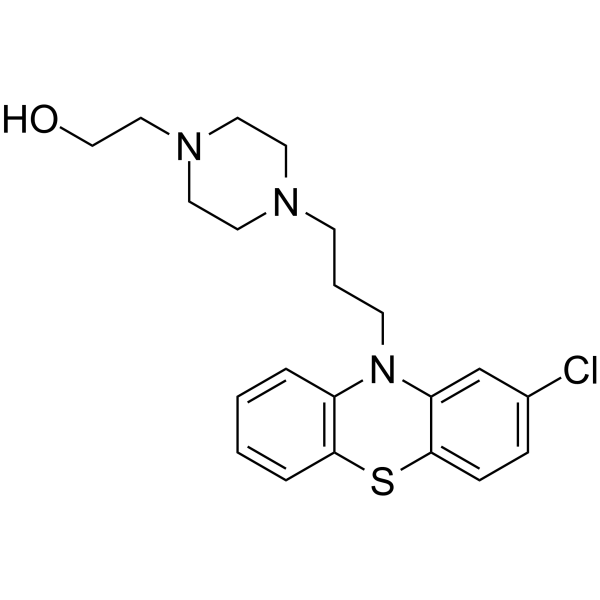
Perphenazine is an orally active dopamine receptor and histamine-1 receptor antagonist, with Ki values of 0.56 nM (D2), 0.43 nM (D3), 6 nM (5-HT2A), respectively. Perphenazine also binds to Alpha-1A adrenergic receptor. Perphenazine inhibits cancer cell proliferation, and induces apoptosis. Perphenazine can be used in the research of mental disease, cancer, inflammation.
연구목적의 판매만을 진행합니다. 환자를 대상으로 한 판매는 하지 않습니다.
- Purity : 99.81%
- CAS No.: 58-39-9
- 화학식: C21H26ClN3OS
- 분자량:403.97
-
보관:
4°C, protect from light
* In solvent : -80°C, 6 months; -20°C, 1 month (protect from light)

To place orders, for customer services and technical support, please contact: MedChemExpress USA
Tel: 609-228-6898 E-mail: [email protected] [email protected]


-
 Biological Activity
-
Chemical Information
-
용액&용해도
- Protocol
- 순도&문서
- References
-
 Help & FAQs


-
HY-14546
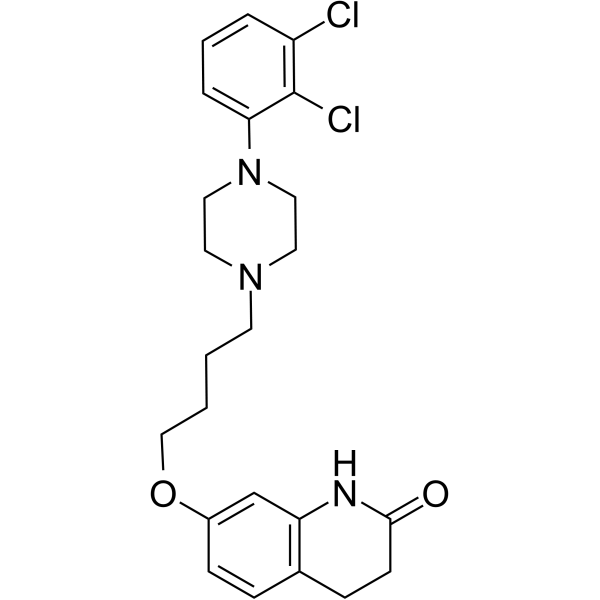
AripiprazoleD2/5-HT1A Agonist -
HY-14541
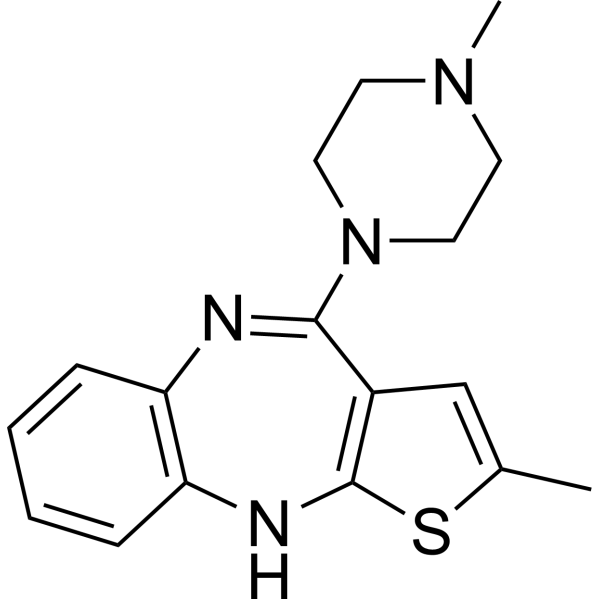
Olanzapine5-HT2/D1/D2 Antagonist -
HY-14538
HaloperidolDopamine Receptor Antagonist -
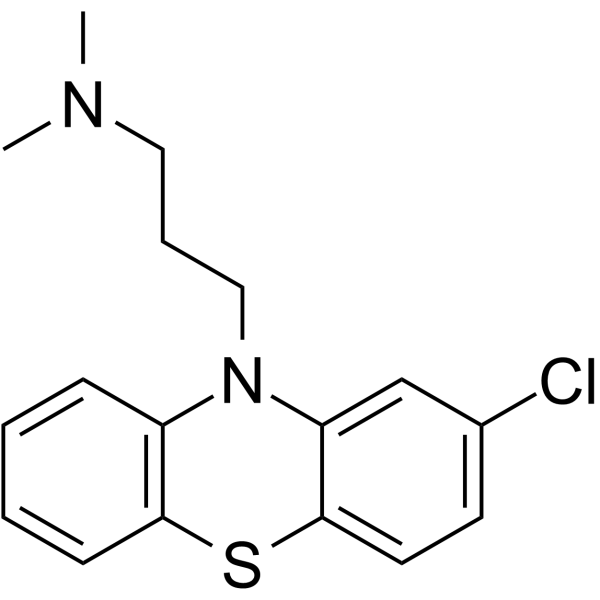
HY-12708
ChlorpromazineAntipsychotic Agent -
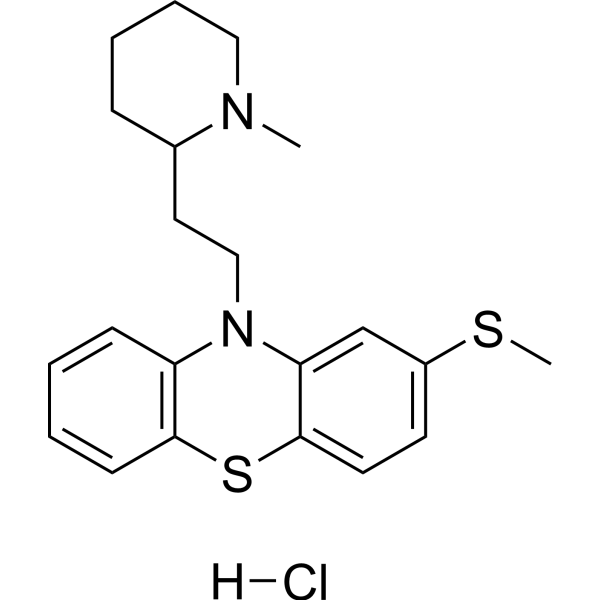
HY-B0965
Thioridazine hydrochlorideDopamine Receptor Antagonist -
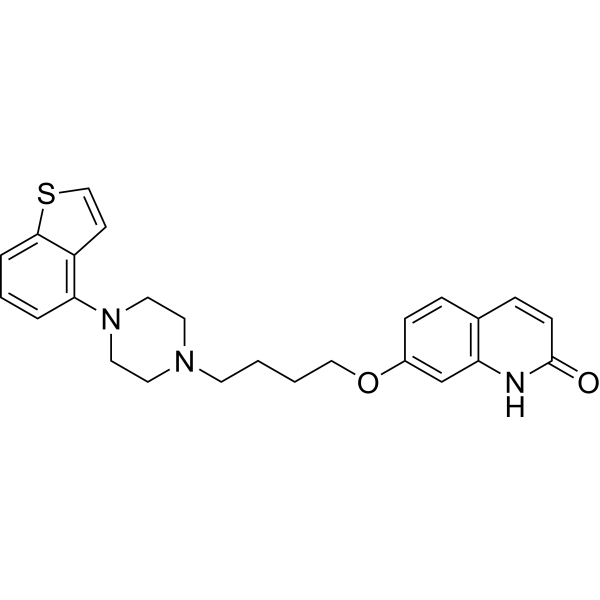
HY-15780
BrexpiprazoleAntipsychotic Agent -
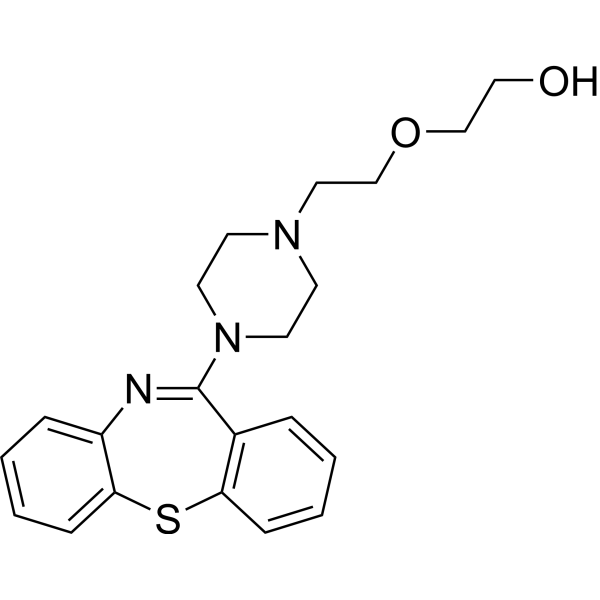
HY-14544
Quetiapine5-HT Agonist/D2 Antagonist -

HY-B0807A
Prochlorperazine dimaleateD2R Antagonist -
HY-B0274
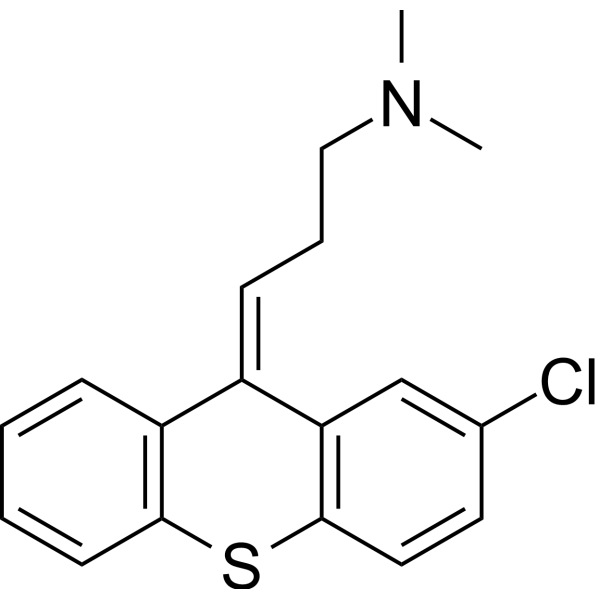
ChlorprothixeneNeuroprotective Agent -
HY-14539
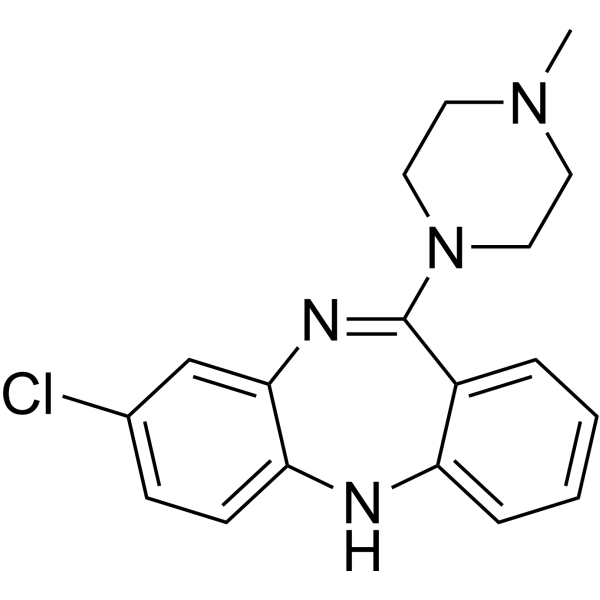
ClozapineAntipsychotic Agent -

HY-B1225
Promazine hydrochlorideDopamine Receptor D2 Antagonist
Publications Citing Use of MedChemExpress (MCE) Perphenazine
MoreAll Dopamine Receptor Isoforms
MoreAll Histamine Receptor Isoforms
MoreAll 5-HT Receptor Isoforms
MoreAll Adrenergic Receptor Isoforms
More

Biological Activity
제품 설명
IC50 & Target
[1]|
5-HT2A Receptor |
D2 Receptor 0.56 nM (Ki) |
D3 Receptor 0.43 nM (Ki) |
D4 Receptor 28.5 nM (Ki) |
5-HT2A Receptor 5.6 nM (Ki) |
5-HT6 Receptor 17 nM (Ki) |
5-HT7 Receptor 23 nM (Ki) |
H2 Receptor 132 nM (Ki) |
5-HT1A Receptor 421 nM (Ki) |
Cellular Effect
|
Cell Line

|
Type | Value | Description | References |
|---|---|---|---|---|
| AN3-CA | IC50 |
25.4 μM
Compound: PPZ
|
Antiproliferative activity against human AN3CA cells assessed as inhibition of cell viability by CCK8 assay
Antiproliferative activity against human AN3CA cells assessed as inhibition of cell viability by CCK8 assay
|
[PMID: 32527541] |
| CHO-K1 | IC50 |
0.3 nM
Compound: Perphenazine
|
Antagonist activity at dopamine D2 receptor (unknown origin) expressed in CHOK1 cells coexpressing Galpha15 assessed as inhibition of agonist-induced response incubated for 60 mins in incubator followed by 15 mins at room temperature by FLIPR assay
Antagonist activity at dopamine D2 receptor (unknown origin) expressed in CHOK1 cells coexpressing Galpha15 assessed as inhibition of agonist-induced response incubated for 60 mins in incubator followed by 15 mins at room temperature by FLIPR assay
|
[PMID: 23675993] |
| FL5.12 | IC50 |
4.8 μM
Compound: 4
|
Inhibition of protein phosphatase 2A in mouse FL5.12 cells assessed as reduction in cell viability incubated for 48 hrs by propidium iodide staining based flow cytometric analysis
Inhibition of protein phosphatase 2A in mouse FL5.12 cells assessed as reduction in cell viability incubated for 48 hrs by propidium iodide staining based flow cytometric analysis
|
[PMID: 31383588] |
| HEC-1-A | IC50 |
23.3 μM
Compound: PPZ
|
Antiproliferative activity against human Hec1A cells assessed as inhibition of cell viability by CCK8 assay
Antiproliferative activity against human Hec1A cells assessed as inhibition of cell viability by CCK8 assay
|
[PMID: 32527541] |
| HEC-1B cell line | IC50 |
29.8 μM
Compound: PPZ
|
Antiproliferative activity against human HEC1B cells assessed as inhibition of cell viability by CCK8 assay
Antiproliferative activity against human HEC1B cells assessed as inhibition of cell viability by CCK8 assay
|
[PMID: 32527541] |
| HUVEC | IC50 |
97.76 μM
Compound: Perphenazine
|
Antiproliferative activity against human HUVEC cells assessed as inhibition of cell growth in measured after 72 hrs by MTT assay
Antiproliferative activity against human HUVEC cells assessed as inhibition of cell growth in measured after 72 hrs by MTT assay
|
[PMID: 34435487] |
| Ishikawa | IC50 |
19.4 μM
Compound: PPZ
|
Antiproliferative activity against human Ishikawa cells assessed as inhibition of cell viability by CCK8 assay
Antiproliferative activity against human Ishikawa cells assessed as inhibition of cell viability by CCK8 assay
|
[PMID: 32527541] |
| KLE | IC50 |
30.8 μM
Compound: PPZ
|
Antiproliferative activity against human KLE cells assessed as inhibition of cell viability by CCK8 assay
Antiproliferative activity against human KLE cells assessed as inhibition of cell viability by CCK8 assay
|
[PMID: 32527541] |
| L02 | IC50 |
>160 μM
Compound: SYSU-20611S
|
Cytotoxicity against human LO2 cells assessed as reduction in cell viability after 48 hrs by CCK8 assay
Cytotoxicity against human LO2 cells assessed as reduction in cell viability after 48 hrs by CCK8 assay
|
10.1039/C3MD00397C |
| MCF7 | IC50 |
35.81 μM
Compound: Perphenazine
|
Antiproliferative activity against human MCF7 cells assessed as inhibition of cell growth measured after 72 hrs by MTT assay
Antiproliferative activity against human MCF7 cells assessed as inhibition of cell growth measured after 72 hrs by MTT assay
|
[PMID: 34435487] |
| MDA-MB-231 | IC50 |
30.37 μM
Compound: Perphenazine
|
Antiproliferative activity against human MDA-MB-231 cells assessed as inhibition of cell growth measured after 72 hrs by MTT assay
Antiproliferative activity against human MDA-MB-231 cells assessed as inhibition of cell growth measured after 72 hrs by MTT assay
|
[PMID: 34435487] |
| MDA-MB-231 | IC50 |
31.77 μM
Compound: Perphenazine
|
Antiproliferative activity against human drug tolerant MDA-MB-231/lapatinib cells assessed as inhibition of cell growth in measured after 72 hrs by MTT assay
Antiproliferative activity against human drug tolerant MDA-MB-231/lapatinib cells assessed as inhibition of cell growth in measured after 72 hrs by MTT assay
|
[PMID: 34435487] |
In Vitro
Perphenazine (40 μM, 48 h) inhibits cell viability, and induces cell apoptosis mediated by CTSD (Cathepsin D) in L02 cells[2].
Perphenazine (30 μM, 24 h) induces intense lysosome vacuolation, impaired lysosomal membrane, and induces lysosomal membrane permeabilization (LMP), ultimately triggering lysosomal cell death in L02 cells[2].
Perphenazine (10-40 μM, 24 h) inhibits autophagic flux in L02 cells[2].
Perphenazine (1 μM, 24 h) decreases glioblastoma U-87 MG cell migration and invasion[4].
MedChemExpress (MCE) has not independently confirmed the accuracy of these methods. They are for reference only.
-
Cell Line:L02 cells
-
Concentration:10-100 μM
-
Incubation Time:12, 24, 48 h
-
Result:Inhibited cell viability in a concentration and time-dependent manner.
-
Cell Line:L02 cells
-
Concentration:10, 20, 30, and 40 μM
-
Incubation Time:24 h
-
Result:Increased LC3 I/II and P62/SQSTM1 levels
-
Cell Line:U-87 MG cells
-
Concentration:1 µM
-
Incubation Time:0, 3, 6, 9, 12, and 24 h
-
Result:Increased the wound closure in human glioblastoma cell cultures from 24.6 to 62.7%.
In Vivo
Perphenazine (oral administration, 10 mg/kg, every other day for 6 days) attenuates morphological phenotype in mouse models of Th2-type allergic dermatitis[3].
MedChemExpress (MCE) has not independently confirmed the accuracy of these methods. They are for reference only.
-
Animal Model:ICR mice[2]
-
Dosage:10, 30, 60, 120, 180 mg/kg
-
Administration:Oral gavage, every other day for 21 days.
-
Result:Increased histological injury and aminotransferases compared with control.
-
Animal Model:Oxazolone-treated animal model of dermatitis[3]
-
Dosage:10 mg/kg
-
Administration:Oral administration, every other day for 6 days
-
Result:Decreased The levels of mice ear swelling.
- Annexin V plus membrane-impermeant dye apoptosis staining
- BrdU Incorporation Assay
- Somatic Cell Culture
- CFSE Dye Dilution Proliferation Assay
- Dye-dilution cell tracking and proliferation staining
- CCK-8/WST-8 Cell Proliferation Assay
- Protocol for Cell Cycle
- Cell Counting-Based Growth Curve Assay
- Research Protocol for Inflammation-related Diseases
- Colony Formation (Clonogenic) Assay
- Cell Viability Determination by MTT Colorimetric Assay
- EdU Incorporation Assay (Click Chemistry-Based DNA Synthesis Measurement)
- Ki-67 Immunostaining Proliferation Assay
- Detection of Apoptosis
- TUNEL staining for apoptotic DNA fragmentation
- PCNA Immunodetection Proliferation Assay
- Protocol for Cell Counting and Cell Density Analysis
- Apoptosis Solutions
- MTT Cell Proliferation Assay


Chemical Information
-
CAS No. 58-39-9
-
Appearance Solid
-
분자량 403.97
-
화학식 C21H26ClN3OS
-
Color White to off-white
-
SMILES
OCCN1CCN(CCCN2C3=C(C=CC=C3)SC4=CC=C(Cl)C=C24)CC1
-
선적
Room temperature in continental US; may vary elsewhere.
-
보관
4°C, protect from light
* In solvent : -80°C, 6 months; -20°C, 1 month (protect from light)


Publications (3)
-
Journal Impact Factor
-
Most Recent
-
Adv Sci (Weinh)
Detachment-Induced FAK-STAT3-NNMT Inhibits CTCs Anoikis to Promote Breast Cancer Metastasis by Enhancing Fatty Acid Oxidation. [Abstract]2026 Mar 12:e22837. PMID: 41816955 -
ACS Environ Au
Machine Learning-Assisted Recognition of Environmental Sulfur-Containing Chemicals in Nontargeted Mass Spectrometry Analysis of Inadequate Mass Resolution. [Abstract]2025 Aug 5;5(6):573-582. PMID: 41277996 -
Toxicol Lett
Lysosomal membrane permeabilization mediated apoptosis involve in perphenazine-induced hepatotoxicity in vitro and in vivo. [Abstract]2022 Aug 15:367:76-87. PMID: 35914675


용액&용해도
In Vitro:
DMSO : 100 mg/mL (247.54 mM; Need ultrasonic; Hygroscopic DMSO has a significant impact on the solubility of product, please use newly opened DMSO)
H2O : < 0.1 mg/mL (insoluble)
Please refer to the solubility information to select the appropriate solvent. Once prepared, please aliquot and store the solution to prevent product inactivation from repeated freeze-thaw cycles.
Storage method and period of stock solution: -80°C, 6 months; -20°C, 1 month (protect from light). When stored at -80°C, please use it within 6 months. When stored at -20°C, please use it within 1 month.
Please refer to the solubility information to select the appropriate solvent. Once prepared, please aliquot and store the solution to prevent product inactivation from repeated freeze-thaw cycles.
Storage method and period of stock solution: -80°C, 6 months; -20°C, 1 month (protect from light). When stored at -80°C, please use it within 6 months. When stored at -20°C, please use it within 1 month.
Concentration (start) × Volume (start) = Concentration (final) × Volume (final)
In Vivo:
Select the appropriate dissolution method based on your experimental animal and administration route.
- For the following dissolution methods, please ensure to first prepare a clear stock solution using an In Vitro approach and then sequentially add co-solvents:
- To ensure reliable experimental results, the clarified stock solution can be appropriately stored based on storage conditions. As for the working solution for In Vivo experiments, it is recommended to prepare freshly and use it on the same day.
- The percentages shown for the solvents indicate their volumetric ratio in the final prepared solution. If precipitation or phase separation occurs during preparation, heat and/or sonication can be used to aid dissolution.
Add each solvent one by one: 10% DMSO 40% PEG300 5% Tween-80 45% Saline
Solubility: ≥ 2.5 mg/mL (6.19 mM); Clear solution
This protocol yields a clear solution of ≥ 2.5 mg/mL (saturation unknown).
Taking 1 mL working solution as an example, add 100 μL DMSO stock solution (25.0 mg/mL) to 400 μL PEG300, and mix evenly; then add 50 μL Tween-80 and mix evenly; then add 450 μL Saline to adjust the volume to 1 mL.
Preparation of Saline: Dissolve 0.9 g sodium chloride in ddH₂O and dilute to 100 mL to obtain a clear Saline solution.
Add each solvent one by one: 10% DMSO 90% (20% SBE-β-CD in Saline)
Solubility: 2.5 mg/mL (6.19 mM); Suspended solution; Need ultrasonic
This protocol yields a suspended solution of 2.5 mg/mL. Suspended solution can be used for oral and intraperitoneal injection.
Taking 1 mL working solution as an example, add 100 μL DMSO stock solution (25.0 mg/mL) to 900 μL 20% SBE-β-CD in Saline, and mix evenly.
Preparation of 20% SBE-β-CD in Saline (4°C, storage for one week): 2 g SBE-β-CD powder is dissolved in 10 mL Saline, completely dissolve until clear.
In Vivo Dissolution Calculator
Please enter the basic information of animal experiments:
-
-
-
-
Recommended: Prepare an additional quantity of animals to account for potential losses during experiments.
Please enter your animal formula composition:
-
%DMSO +
Recommended: Keep the proportion of DMSO in working solution below 2% if your animal is weak.
-
%+
-
+%Tween-80 + +
-
%Saline +
The co-solvents required include: DMSO, . All of co-solvents are available by MedChemExpress (MCE). , Tween 80. All of co-solvents are available by MedChemExpress (MCE).
Working solution concentration: 0.22 mg/mL
Method for preparing stock solution: mg drug dissolved in μL DMSO. Stock solution concentration: mg/mL. * In solvent : -80°C, 6 months; -20°C, 1 month (protect from light)
1. Take μL DMSO stock solution;
2. Add μL .
μL , mix evenly;
3. Then add μL Tween 80, mix evenly;
4. Then add μL
Please ensure that the stock solution in the first step is dissolved to a clear state, and add co-solvents in sequence. You can use ultrasonic heating (ultrasonic cleaner, recommended frequency 20-40 kHz), vortexing, etc. to assist dissolution.


순도&문서
-
Data Sheet (280 KB)
-
SDS (393 KB)
- English - EN (393 KB)
- Français - FR (393 KB)
- Deutsch - DE (393 KB)
- Norwegian - NO (393 KB)
- Español - ES (393 KB)
- Swedish - SV (393 KB)
- Italian - IT (393 KB)
- Korean - KR (393 KB)
- Portuguese - PT (393 KB)
-
Handling Instructions (2659 KB)
References
[1]. Richtand NM, et al. Dopamine and serotonin receptor binding and antipsychotic efficacy. Neuropsychopharmacology. 2007 Aug;32(8):1715-26. [Content Brief]
[2]. Lei Tao, et al. Lysosomal membrane permeabilization mediated apoptosis involve in perphenazine-induced hepatotoxicity in vitro and in vivo. Toxicol Lett. 2022 Jul 29;367:76-87. [Content Brief]
[3]. Min-Jeong Heo, et al. Perphenazine Attenuates the Pro-Inflammatory Responses in Mouse Models of Th2-Type Allergic Dermatitis. Int J Mol Sci. 2020 May 3;21(9):3241. [Content Brief]
[4]. Michał Otręba, et al. Perphenazine and prochlorperazine decrease glioblastoma U-87 MG cell migration and invasion: Analysis of the ABCB1 and ABCG2 transporters, E-cadherin, α-tubulin and integrins (α3, α5, and β1) levels. Oncol Lett. 2022 Jun;23(6):182. [Content Brief]
[5]. Michał Otręba, et al. n vitro anticancer activity of fluphenazine, perphenazine and prochlorperazine. A review. J Appl Toxicol. 2021 Jan;41(1):82-94. [Content Brief]


Complete Stock Solution Preparation Table
Please refer to the solubility information to select the appropriate solvent. Once prepared, please aliquot and store the solution to prevent product inactivation from repeated freeze-thaw cycles.
Storage method and period of stock solution: -80°C, 6 months; -20°C, 1 month (protect from light). When stored at -80°C, please use it within 6 months. When stored at -20°C, please use it within 1 month.
| Optional Solvent | Concentration Solvent Mass | 1 mg | 5 mg | 10 mg | 25 mg |
|---|---|---|---|---|---|
| DMSO | 1 mM | 2.4754 mL | 12.3772 mL | 24.7543 mL | 61.8858 mL |
| 5 mM | 0.4951 mL | 2.4754 mL | 4.9509 mL | 12.3772 mL | |
| 10 mM | 0.2475 mL | 1.2377 mL | 2.4754 mL | 6.1886 mL | |
| 15 mM | 0.1650 mL | 0.8251 mL | 1.6503 mL | 4.1257 mL | |
| 20 mM | 0.1238 mL | 0.6189 mL | 1.2377 mL | 3.0943 mL | |
| 25 mM | 0.0990 mL | 0.4951 mL | 0.9902 mL | 2.4754 mL | |
| 30 mM | 0.0825 mL | 0.4126 mL | 0.8251 mL | 2.0629 mL | |
| 40 mM | 0.0619 mL | 0.3094 mL | 0.6189 mL | 1.5471 mL | |
| 50 mM | 0.0495 mL | 0.2475 mL | 0.4951 mL | 1.2377 mL | |
| 60 mM | 0.0413 mL | 0.2063 mL | 0.4126 mL | 1.0314 mL | |
| 80 mM | 0.0309 mL | 0.1547 mL | 0.3094 mL | 0.7736 mL | |
| 100 mM | 0.0248 mL | 0.1238 mL | 0.2475 mL | 0.6189 mL |


Perphenazine Related Classifications
HY-A0077 Related Classifications
 Powered by Bioz