



IMT1
Based on 12 publication(s) in Google Scholar
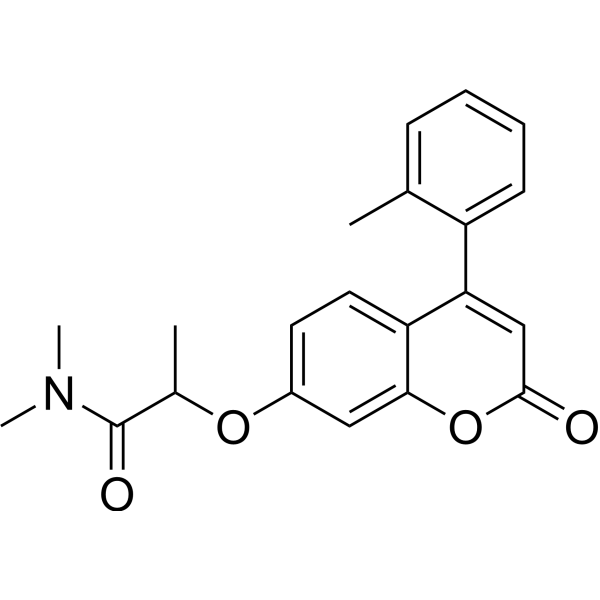
IMT1 is a first-in-class specific and noncompetitive human mitochondrial RNA polymerase (POLRMT) inhibitor. IMT1 causes a conformational change of POLRMT, which blocks substrate binding and transcription in a dose-dependent way in vitro. IMT1 reduces deoxynucleoside triphosphate levels and citric acid cycle intermediates, resulting in a marked depletion of cellular amino acid levels. IMT1 has the potential for mitochondrial transcription disorders related diseases.
연구목적의 판매만을 진행합니다. 환자를 대상으로 한 판매는 하지 않습니다.
- Purity : 99.86%
- CAS No.: 2304621-31-4
- 화학식: C21H21NO4
- 분자량:351.40
-
보관:Powder -20°C, 3 years , 4°C, 2 years ; In solvent -80°C, 2 years , -20°C, 1 year

To place orders, for customer services and technical support, please contact: MedChemExpress USA
Tel: 609-228-6898 E-mail: [email protected] [email protected]


-
 Biological Activity
-
Chemical Information
-
용액&용해도
- 순도&문서
- References
-
 Help & FAQs


-
HY-B0627
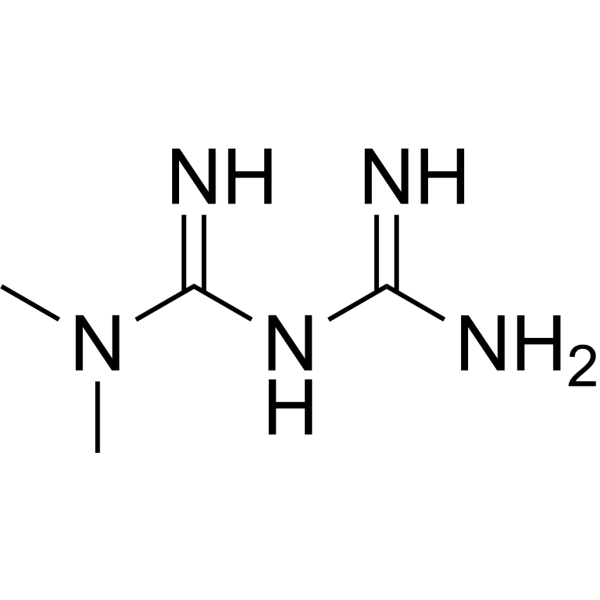
MetforminAntihyperglycemic Agent -
HY-123986
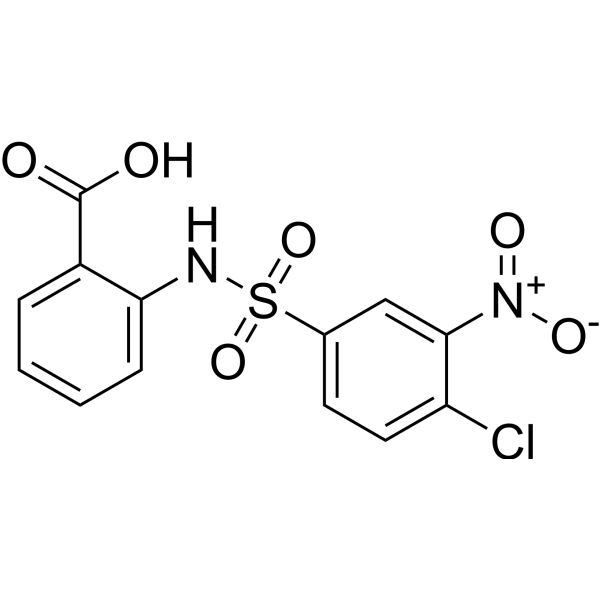
CTPI-2SLC25A1 Inhibitor -
HY-100004
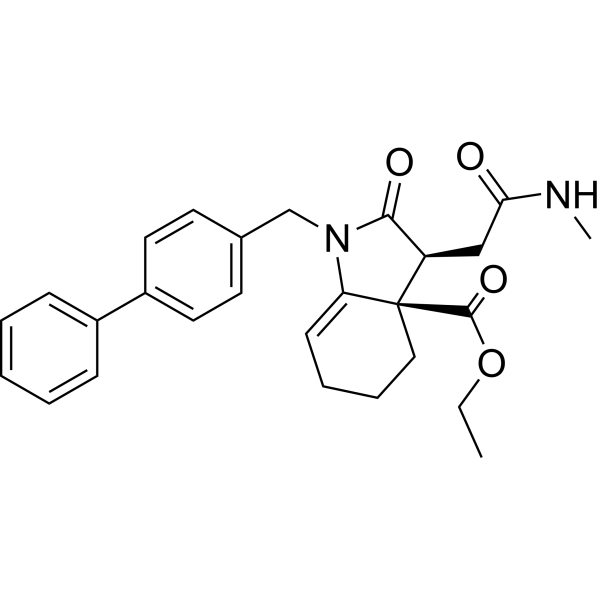
Fumarate hydratase-IN-1Fumarate Hydratase Inhibitor -
HY-150031
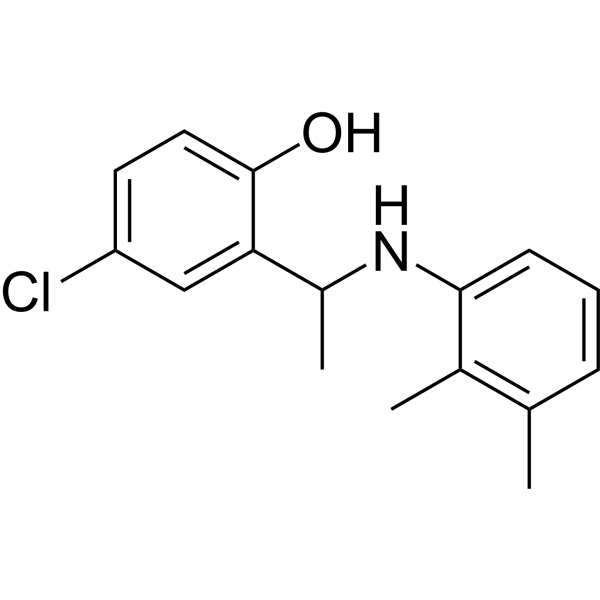
MFI8Mitochondrial Fusion Inhibitor -
HY-112037A
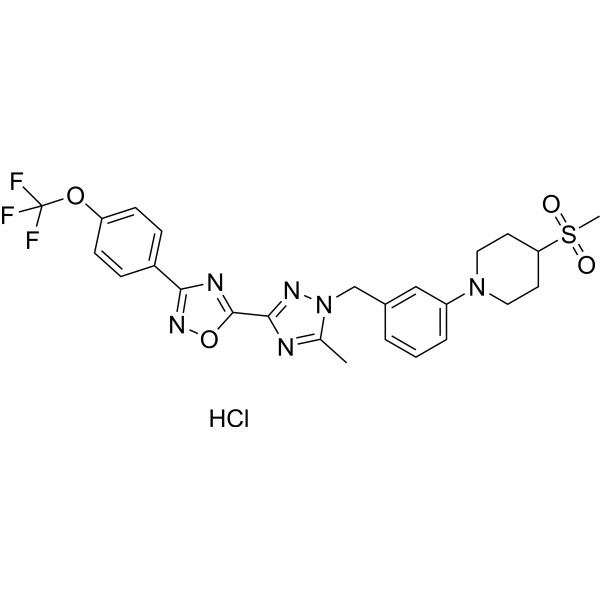
IACS-010759 hydrochlorideOXPHOS Inhibitor -
HY-B1756
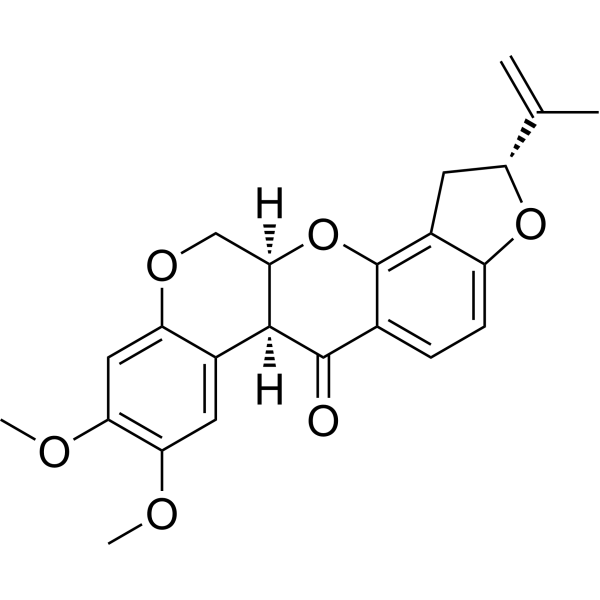
RotenoneMitochondrial Complex I Inhibitor -
HY-13966
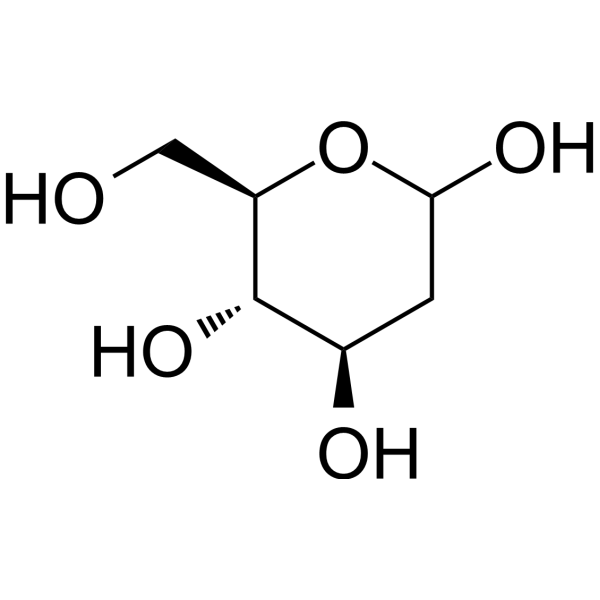
2-Deoxy-D-glucoseGlycolysis Inhibitor -
HY-137067
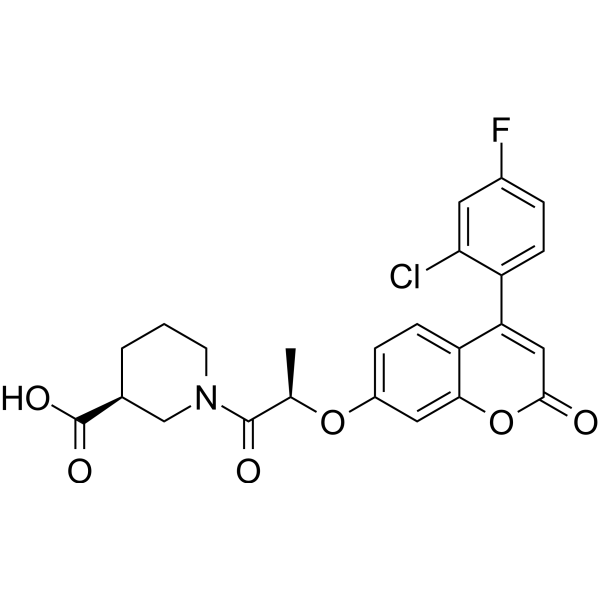
IMT1BPOLRMT Inhibitor -
HY-13259
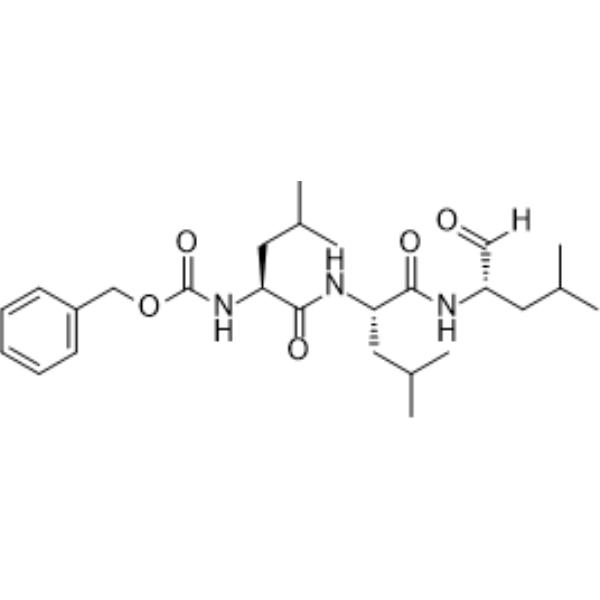
MG-132Proteasome Inhibitor -
HY-10162
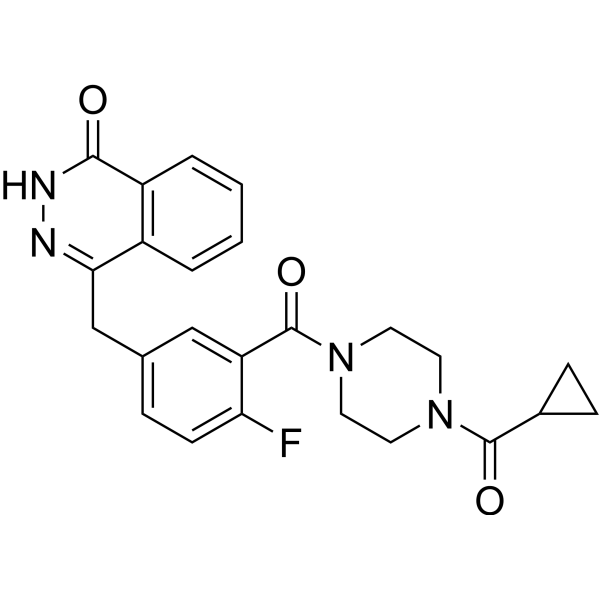
OlaparibPARP Inhibitor -
HY-100558
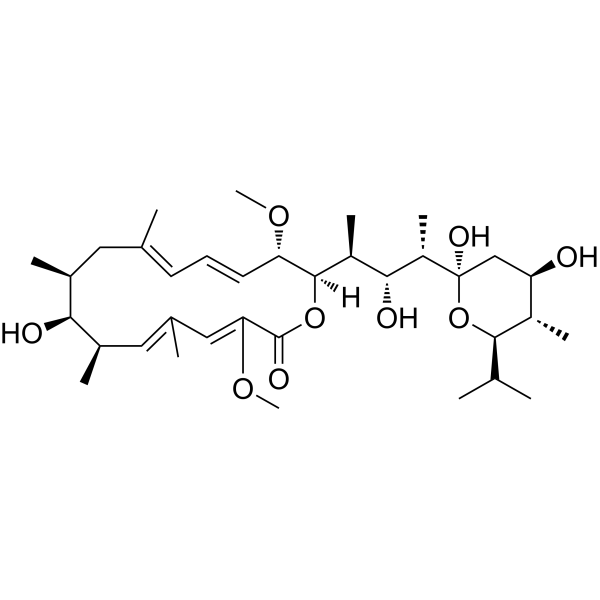
Bafilomycin A1V-ATPase Inhibitor -
HY-10999
TrametinibMEK Inhibitor
Publications Citing Use of MedChemExpress (MCE) IMT1
More- Nature. 2023 Mar;615(7952):490-498. [Abstract]
- Nat Commun. 2025 Nov 20;16(1):10222. [Abstract]
- Nat Commun. 2025 Oct 8;16(1):8932. [Abstract]
- Nat Commun. 2023 Feb 16;14(1):872. [Abstract]
- Theranostics. 2023 May 29;13(10):3330-3345. [Abstract]
- Cell Death Differ. 2026 Jul 15.
- Cell Rep. 2026 Mar 6;45(3):117026. [Abstract]
- Cell Prolif. 2026 Apr 27:e70216. [Abstract]
- bioRxiv. 2026 Jan 7.
- bioRxiv. 2025 Sep 6.
- Patent. US20250018019A1.
- University of Cambridge. 2025.
 Customer Validation & Images

-
RT-PCR
-
RT-PCR
-
ELISA
-
WB
-
RT-PCR
All DNA/RNA Synthesis Isoforms
More

Biological Activity
제품 설명
IC50 & Target
|
RNA Polymerase |
In Vitro
IMT1 (0.00001-10 μM; 0-168 h) has a dose-dependent decrease in cell viability in A2780, A549 and HeLa cells. IMT1 shows a strong decrease in cell viability in about one third of the cancer cell lines, 89 cancer cell lines and primary cells (IMR90 lung fibroblasts and human peripheral blood mononuclear cells (PBMCs)), whereas primary cells remained unresponsive[1].
IMT1 (0.01-10 μM; for 24-200 h) causes a dose-dependent decrease in the levels of mitochondrial transcripts and gradual depletion of mtDNA in HeLa cells. There is a dose-dependent decrease in the levels of subunits (NDUFB8, UQCRC2 and COXI) of respiratory chain complexes I, III and IV[1].
IMT1 reveals a time-dependent and marked increase in the levels of mono- and diphosphate nucleotides that results in a considerable increase in the AMP/ATP ratio and levels of phosphorylated AMPK in A2780 cells[1].
IMT1 severely impairs mtDNA gene expression in A2780 cells that express wild-type POLRMT, whereas cells that express mutant POLRMT (L796Q or L816Q) are resistant[1].
POLRMT is essential for mtDNA transcription and biogenesis of the oxidative phosphorylation (OXPHOS) system[1].
MedChemExpress (MCE) has not independently confirmed the accuracy of these methods. They are for reference only. .
-
Cell Line:A2780, A549 and HeLa cells
-
Concentration:0.00001-10 μM
-
Incubation Time:0-168 hours
-
Result:Had a dose-dependent decrease in cell viability in A2780, A549 and HeLa cells, but had not cytotoxic to human PBMCs or pooled primary human hepatocytes.


Chemical Information
-
CAS No. 2304621-31-4
-
Appearance Solid
-
분자량 351.40
-
화학식 C21H21NO4
-
Color White to off-white
-
SMILES
CC(OC1=CC=C(C(O2)=C1)C(C3=CC=CC=C3C)=CC2=O)C(N(C)C)=O
-
선적
Room temperature in continental US; may vary elsewhere.
-
보관
Powder -20°C 3 years 4°C 2 years In solvent -80°C 2 years -20°C 1 year


Publications (12)
-
Journal Impact Factor
-
Most Recent
-
Nature
2023 Mar;615(7952):490-498. PMID: 36890227
IMT1 purchased from MedChemExpress. Usage Cited in: Nature. 2023 Mar;615(7952):490-498. [Abstract]
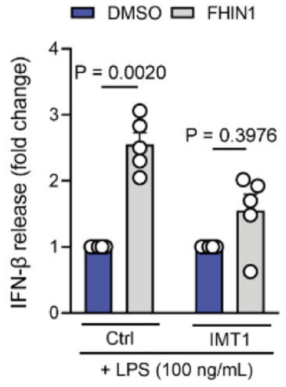
IFN-β release (fold change over DMSO control) in LPS-stimulated macrophages pre-treated (3 h) with DMSO or FHIN1 in the presence of absence of IMT1 (10 μM, 7 h).
-
Nat Commun
An inherited mitochondrial DNA mutation remodels inflammatory cytokine responses in macrophages and in vivo in mice. [Abstract]2025 Nov 20;16(1):10222. PMID: 41266309
IMT1 purchased from MedChemExpress. Usage Cited in: Nat Commun. 2025 Nov 20;16(1):10222. [Abstract]
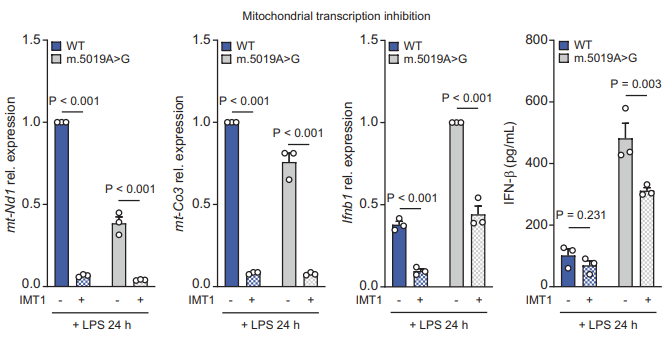
mt-Nd1, mt-Co3, Ifnb1 expression and IFN-β release in LPS-stimulated WT and m.5019A>G macrophages pre-treated with inhibitor of mitochondrial transcription 1 (IMT1, 10 μM) or vehicle control (DMSO) for 24 h (n = 3; LPS 24 h).
-
Nat Commun
Non-canonical dihydrolipoyl transacetylase promotes chemotherapy resistance via mitochondrial tetrahydrofolate signaling. [Abstract]2025 Oct 8;16(1):8932. PMID: 41062483
IMT1 purchased from MedChemExpress. Usage Cited in: Nat Commun. 2025 Oct 8;16(1):8932. [Abstract]
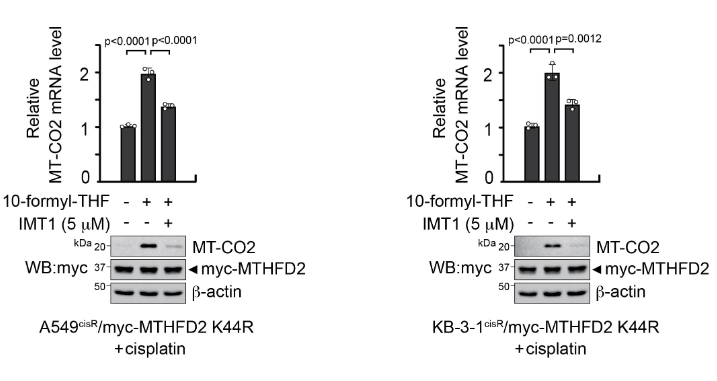
Effect of 10-formyl-THF and the POLRMT inhibitor IMT1 on MT-CO2 expression. Cells were treated with 10-formyl-THF (10 μM) andIMT1 (5 μM) for 24 h. MT-CO2 mRNA and protein levels were assessed by quantitative RT-PCR and immunoblotting, respectively.
-
Nat Commun
Oxidized mitochondrial DNA induces gasdermin D oligomerization in systemic lupus erythematosus. [Abstract]2023 Feb 16;14(1):872. PMID: 36797275
IMT1 purchased from MedChemExpress. Usage Cited in: Nat Commun. 2023 Feb 16;14(1):872. [Abstract]
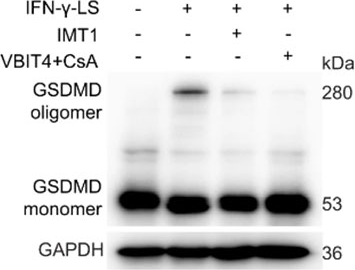
Both IMT1 (10 μM; 24 h) and CsA (1 μM; 2 h) with VBIT-4 (10 μM; 2 h) inhibits GSDMD oligomerization in PBMCs.
-
Theranostics
Intranasal delivery of mitochondrial protein humanin rescues cell death and promotes mitochondrial function in Parkinson's disease. [Abstract]2023 May 29;13(10):3330-3345. PMID: 37351170
IMT1 purchased from MedChemExpress. Usage Cited in: Theranostics. 2023 May 29;13(10):3330-3345. [Abstract]
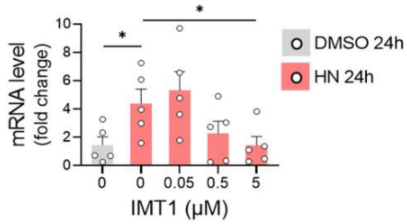
Real-time qPCR analysis by co-treating IMT1 (0-5 μM) inhibiting mitochondrial gene expression with HN in SH-SY5Y cells.
-
-
Cell Rep
ADAR1 regulates dsRNA formation in nuclear and mitochondrial transcripts through editing-dependent and -independent mechanisms. [Abstract]2026 Mar 6;45(3):117026. PMID: 41800619 -
Cell Prolif
Dissection of Mitochondrial Function via Chemical Perturbation and Single-Cell Profiling. [Abstract]2026 Apr 27:e70216. PMID: 42044679 -
-
-
-


용액&용해도
In Vitro:
DMSO : 50 mg/mL (142.29 mM; Need ultrasonic; Hygroscopic DMSO has a significant impact on the solubility of product, please use newly opened DMSO)
Please refer to the solubility information to select the appropriate solvent. Once prepared, please aliquot and store the solution to prevent product inactivation from repeated freeze-thaw cycles.
Storage method and period of stock solution: -80°C, 2 years; -20°C, 1 year. When stored at -80°C, please use it within 2 years. When stored at -20°C, please use it within 1 year.
Please refer to the solubility information to select the appropriate solvent. Once prepared, please aliquot and store the solution to prevent product inactivation from repeated freeze-thaw cycles.
Storage method and period of stock solution: -80°C, 2 years; -20°C, 1 year. When stored at -80°C, please use it within 2 years. When stored at -20°C, please use it within 1 year.
Concentration (start) × Volume (start) = Concentration (final) × Volume (final)
In Vivo:
Select the appropriate dissolution method based on your experimental animal and administration route.
- For the following dissolution methods, please ensure to first prepare a clear stock solution using an In Vitro approach and then sequentially add co-solvents:
- To ensure reliable experimental results, the clarified stock solution can be appropriately stored based on storage conditions. As for the working solution for In Vivo experiments, it is recommended to prepare freshly and use it on the same day.
- The percentages shown for the solvents indicate their volumetric ratio in the final prepared solution. If precipitation or phase separation occurs during preparation, heat and/or sonication can be used to aid dissolution.
Add each solvent one by one: 10% DMSO 40% PEG300 5% Tween-80 45% Saline
Solubility: ≥ 2.5 mg/mL (7.11 mM); Clear solution
This protocol yields a clear solution of ≥ 2.5 mg/mL (saturation unknown).
Taking 1 mL working solution as an example, add 100 μL DMSO stock solution (25.0 mg/mL) to 400 μL PEG300, and mix evenly; then add 50 μL Tween-80 and mix evenly; then add 450 μL Saline to adjust the volume to 1 mL.
Preparation of Saline: Dissolve 0.9 g sodium chloride in ddH₂O and dilute to 100 mL to obtain a clear Saline solution.
Add each solvent one by one: 10% DMSO 90% (20% SBE-β-CD in Saline)
Solubility: ≥ 2.5 mg/mL (7.11 mM); Clear solution
This protocol yields a clear solution of ≥ 2.5 mg/mL (saturation unknown).
Taking 1 mL working solution as an example, add 100 μL DMSO stock solution (25.0 mg/mL) to 900 μL 20% SBE-β-CD in Saline, and mix evenly.
Preparation of 20% SBE-β-CD in Saline (4°C, storage for one week): 2 g SBE-β-CD powder is dissolved in 10 mL Saline, completely dissolve until clear.
For the following dissolution methods, please prepare the working solution directly:
It is recommended to prepare fresh solutions and use them promptly within a short period of time.
The percentages shown for the solvents indicate their volumetric ratio in the final prepared solution. If precipitation or phase separation occurs during preparation, heat and/or sonication can be used to aid dissolution.
Add each solvent one by one: 50% PEG300 50% Saline
Solubility: 3 mg/mL (8.54 mM); Suspended solution; Need ultrasonic
In Vivo Dissolution Calculator
Please enter the basic information of animal experiments:
-
-
-
-
Recommended: Prepare an additional quantity of animals to account for potential losses during experiments.
Please enter your animal formula composition:
-
%DMSO +
Recommended: Keep the proportion of DMSO in working solution below 2% if your animal is weak.
-
%+
-
+%Tween-80 + +
-
%Saline +
The co-solvents required include: DMSO, . All of co-solvents are available by MedChemExpress (MCE). , Tween 80. All of co-solvents are available by MedChemExpress (MCE).
Working solution concentration: 0.22 mg/mL
Method for preparing stock solution: mg drug dissolved in μL DMSO. Stock solution concentration: mg/mL.
1. Take μL DMSO stock solution;
2. Add μL .
μL , mix evenly;
3. Then add μL Tween 80, mix evenly;
4. Then add μL
Please ensure that the stock solution in the first step is dissolved to a clear state, and add co-solvents in sequence. You can use ultrasonic heating (ultrasonic cleaner, recommended frequency 20-40 kHz), vortexing, etc. to assist dissolution.


순도&문서
-
Data Sheet (276 KB)
-
SDS (254 KB)
- English - EN (254 KB)
- Français - FR (254 KB)
- Deutsch - DE (254 KB)
- Norwegian - NO (254 KB)
- Español - ES (254 KB)
- Swedish - SV (254 KB)
- Italian - IT (254 KB)
- Korean - KR (254 KB)
- Portuguese - PT (254 KB)
-
Handling Instructions (2659 KB)
References


Complete Stock Solution Preparation Table
Please refer to the solubility information to select the appropriate solvent. Once prepared, please aliquot and store the solution to prevent product inactivation from repeated freeze-thaw cycles.
Storage method and period of stock solution: -80°C, 2 years; -20°C, 1 year. When stored at -80°C, please use it within 2 years. When stored at -20°C, please use it within 1 year.
| Optional Solvent | Concentration Solvent Mass | 1 mg | 5 mg | 10 mg | 25 mg |
|---|---|---|---|---|---|
| DMSO | 1 mM | 2.8458 mL | 14.2288 mL | 28.4576 mL | 71.1440 mL |
| 5 mM | 0.5692 mL | 2.8458 mL | 5.6915 mL | 14.2288 mL | |
| 10 mM | 0.2846 mL | 1.4229 mL | 2.8458 mL | 7.1144 mL | |
| 15 mM | 0.1897 mL | 0.9486 mL | 1.8972 mL | 4.7429 mL | |
| 20 mM | 0.1423 mL | 0.7114 mL | 1.4229 mL | 3.5572 mL | |
| 25 mM | 0.1138 mL | 0.5692 mL | 1.1383 mL | 2.8458 mL | |
| 30 mM | 0.0949 mL | 0.4743 mL | 0.9486 mL | 2.3715 mL | |
| 40 mM | 0.0711 mL | 0.3557 mL | 0.7114 mL | 1.7786 mL | |
| 50 mM | 0.0569 mL | 0.2846 mL | 0.5692 mL | 1.4229 mL | |
| 60 mM | 0.0474 mL | 0.2371 mL | 0.4743 mL | 1.1857 mL | |
| 80 mM | 0.0356 mL | 0.1779 mL | 0.3557 mL | 0.8893 mL | |
| 100 mM | 0.0285 mL | 0.1423 mL | 0.2846 mL | 0.7114 mL |


IMT1 Related Classifications
HY-134539 Related Classifications
 Powered by Bioz