
2438 Results for "

decrease

" in MedChemExpress (MCE) Product Catalog:
Products (2438)

2438 Results for "decrease" in MCE Product Catalog:

Cat. No.: HY-P1694
CAS No.: 103412-37-9
Target:  

Bradykinin Receptor

연구분야:  

Cardiovascular Disease

B4148 is a selective competitive bradykinin (BK) antagonist that significantly inhibits BK-induced hypotension in rats. In a rat model of endotoxin shock induced by Escherichia coli lipopolysaccharide, B4148 significantly attenuated the decrease in mean arterial blood pressure compared with the control group .
loading...
    loading...
Cat. No.: HY-W750404
(-)-Carvone-d4 is the deuterium labeled (-)-Carvone (HY-W017423). (-)-Carvone is an insect neurotoxin and a irreversible acetylcholinesterase (AChE) inhibitor. (-)-Carvone can be used as a bird repellent, inhibits larval growth, decreases pupatation rate, and increases mortality of larvae .
loading...
    loading...
Cat. No.: HY-122022R
CAS No.: 2411853-34-2
JR-AB2-011 (Standard) is the analytical standard of JR-AB2-011 (HY-122022). This product is intended for research and analytical applications. JR-AB2-011 is a selective mTORC2 inhibitor with an IC50 value of 0.36 μM. JR-AB2-011 inhibits mTORC2 activity by blocKing Rictor-mTOR association (Ki: 0.19 μM) .JR-AB2-011 decreases the phosphorylation level of Akt, decreases MMP2 activity, thereby reducing the ability of tumor cells to migrate and invade. JR-AB2-011 also induces non-apoptotic cell death .
loading...
    loading...
Cat. No.: HY-N0859
CAS No.: 69363-14-0
Synonyms: Schizanhenol; Gomisin-K3
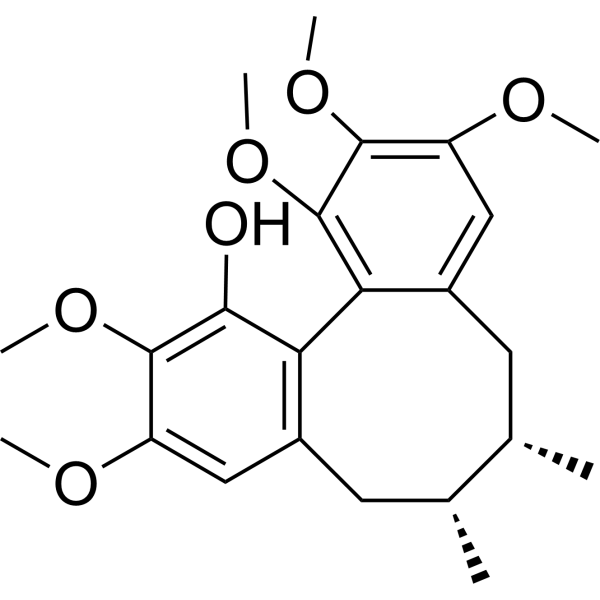
Schisanhenol (Schizanhenol), a lignan, is an orally active antioxidant. Schisanhenol reduces AChE activity, increases SIRT1 and PGC-1α expression, and decreases phosphorylated Tau (Ser 396) levels. Schisanhenol increases SOD and glutathione peroxidase activity, decreases malondialdehyde (MDA) content, and inhibits UGT2B7 activitY. Schisanhenol attenuates ox-LDL-induced apoptosis, intracellular reactive oxygen species generation, and cytotoxicity in endothelial cells. Schisanhenol inhibits LDL oxidation, brain mitochondrial and membrane peroxidative damage, and brain mitochondrial swelling and disintegration. Schisanhenol can be used for the research of Alzheimer’s disease, atherosclerosis, brain ischemia, and age-related brain deterioration .
loading...
    loading...
Cat. No.: HY-106751
CAS No.: 56470-64-5
Target:  

Progesterone Receptor

연구분야:  

Endocrinology

Anordrin is a contraceptive agent. Anordrin exhibits estrogenicites and can induce decrease in serum progesterone levels in rat models. Anordrin inhibits endometrial epithelial cell mitosis and NAFLD induced by Tamoxifen (HY-13757A) in mouse uterus and liver as an anti-estrogenic and estrogenic agent .
loading...
    loading...
Cat. No.: HY-107339
CAS No.: 131-01-1
Purity:  98.78%
Synonyms: Harmonyl
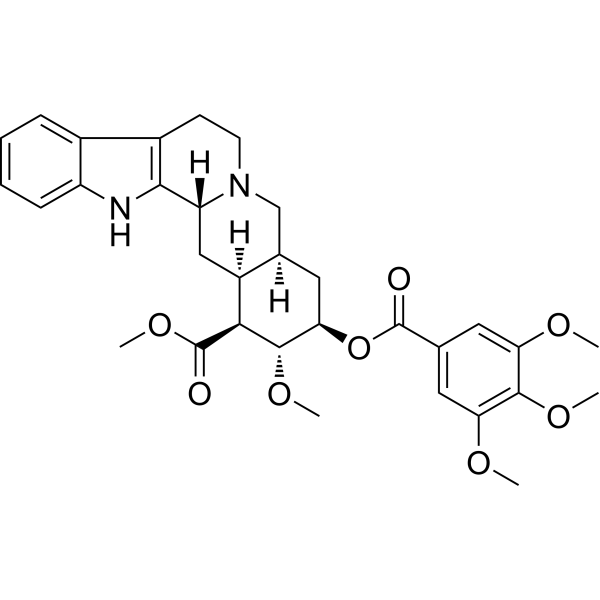
Deserpidine (Harmonyl) is an alkaloid isolated from the root of Rauwolfia canescens related to Reserpine. Deserpidine is used as an antihypertensive agent and a tranquilizer. Deserpidine is a competitive angiotensin converting enzyme (ACE) inhibitor. Deserpidine also decreases angiotensin II-induced aldosterone secretion by the adrenal cortex .
loading...
    loading...
Cat. No.: HY-119203
CAS No.: 757183-18-9
Purity:  99.84%
Target:  

Histamine Receptor

연구분야:  

Metabolic Disease

NNC 38-1049 is an orally active, potent and competitive histamine H3 receptor antagonist. NNC 38-1049 produced an increase in extracellular levels of histamine in the paraventricular nucleus. NNC 38-1049 decreases food intake and body weight, which is promising for research of obesity .
loading...
    loading...
Cat. No.: HY-122241
CAS No.: 328069-91-6
Target:  

PKC

연구분야:  

Cancer

MT477 is a potent protein kinase C (PKC) inhibitor. MT477 induces apoptosis and necrosis. MT477 decreases the protein expression of Ras-GTP, p-Erk1/2, p-Elk1. MT477 shows antitumor activity .
loading...
    loading...
Cat. No.: HY-12444R
CAS No.: 4506-66-5
Synonyms: FAK Inhibitor 14 (Standard)
Target:  

Reference Standards FAK

연구분야:  

Cancer

Y15 (Standard) is the analytical standard of Y15 (HY-12444). This product is intended for research and analytical applications. Y15 is a potent and specific inhibitor of focal adhesion Kinase (FAK) that inhibits its autophosphorylation activity, decreases the viability of cancer cells, and blocks tumor growth.
loading...
    loading...
Cat. No.: HY-136346S
CAS No.: 265989-50-2
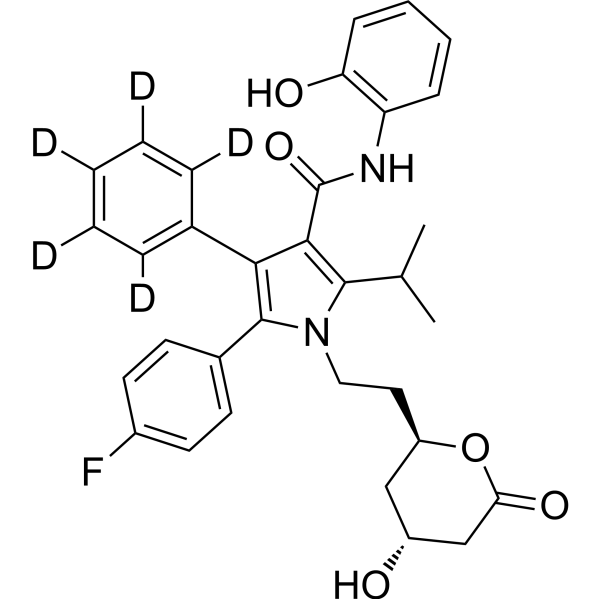
Ortho-hydroxy atorvastatin lactone-d5 is deuterium labeled 2-Hydroxy atorvastatin lactone. 2-Hydroxy atorvastatin lactone is a metabolite of Atorvastatin. Atorvastatin is an orally active HMG-CoA reductase inhibitor, has the ability to effectively decrease blood lipids .
loading...
    loading...
Cat. No.: HY-137479
CAS No.: 2412761-57-8
Target:  

YAP

연구분야:  

Cancer

TEAD-IN-1 (Compound 2) is potent TEAD autopalmitoylation inhibitor, with an IC50 of 603 nM. TEAD-IN-1 increases the interaction of TEAD and VGLL4. TEAD-IN-1 decreases the interaction of YAP and TEAD. TEAD-IN-1 can be used for the research of cancer .
loading...
    loading...
Cat. No.: HY-148411
CAS No.: 167362-48-3
Synonyms: LJP 394 free base
Target:  

DNA/RNA Synthesis

연구분야:  

Inflammation/Immunology

Abetimus (LJP 394 free base) is an immunosuppressant consisting of four double-stranded DNA (dsDNA) oligonucleotides. Abetimus is capable of crosslinking anti-dsDNA antibodies on the surface of B cells, and decreases anti-dsDNA antibodies levels. Abetimus has the potential for research of systemic lupus erythematosus .
loading...
    loading...
Cat. No.: HY-19478
CAS No.: 263248-16-4
Target:  

Cholinesterase (ChE)

연구분야:  

Neurological Disease

TAK-802 is an orally active and potent acetylcholinesterase inhibitor. TAK-802’s distribution in red blood cells has a significant concentration dependence, with the distribution ratio decreasing as the concentration increases. TAK-802 exhibits significant nonlinear pharmacokinetic behavior .
loading...
    loading...
Cat. No.: HY-B0259R
CAS No.: 26807-65-8
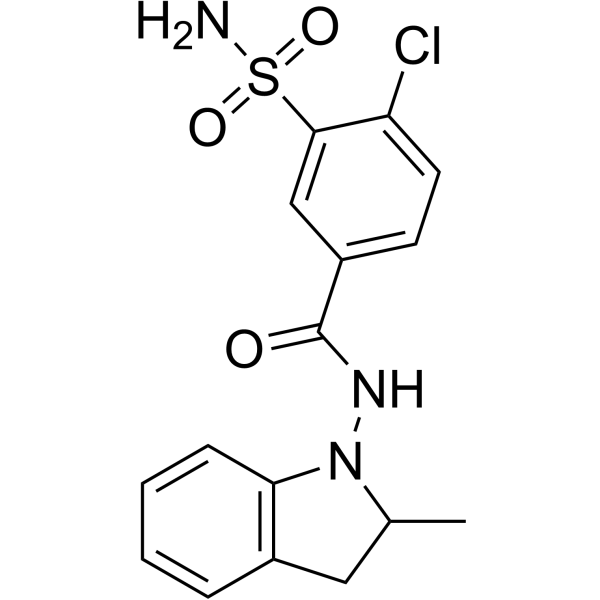
Indapamide (Standard) is the analytical standard of Indapamide. This product is intended for research and analytical applications. Indapamide is an orally active sulphonamide diuretic agent, that can reduce blood pressure by decreasing vascular reactivity and peripheral vascular resistance. Indapamide is also can reduce left ventricular hypertrophy .
loading...
    loading...
Cat. No.: HY-D0186S
CAS No.: 478510-85-9
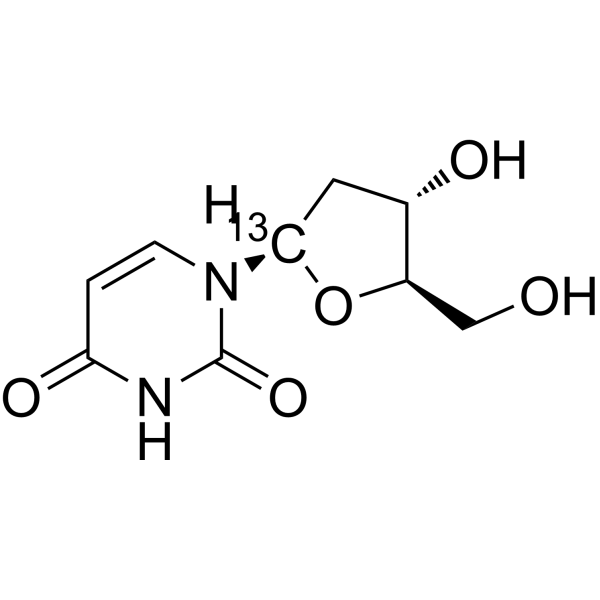
2'-Deoxyuridine-1′- 13C is the 13C labeled 2'-Deoxyuridine. 2'-Deoxyuridine could increase chromosome breakage and results in a decreased thymidylate synthetase activity. A known use of 2'-Deoxyuridine is as a precursor in the synthesis of Edoxud[1]
loading...
    loading...
Cat. No.: HY-D0186S1
CAS No.: 478510-87-1
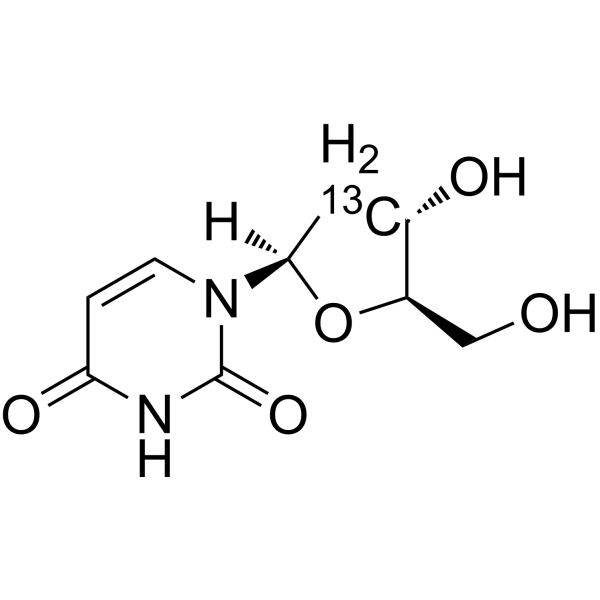
2'-Deoxyuridine-2′- 13C is the 13C labeled 2'-Deoxyuridine. 2'-Deoxyuridine could increase chromosome breakage and results in a decreased thymidylate synthetase activity. A known use of 2'-Deoxyuridine is as a precursor in the synthesis of Edoxud[1]
loading...
    loading...
Cat. No.: HY-D0186S2
CAS No.: 478510-89-3
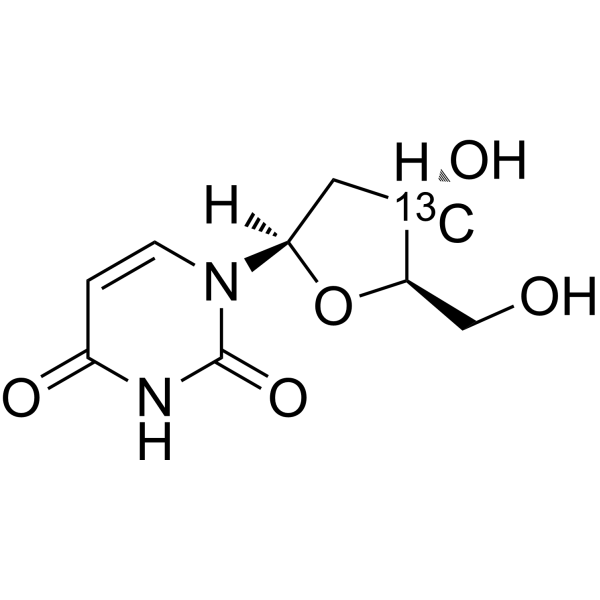
2'-Deoxyuridine-3′- 13C is the 13C labeled 2'-Deoxyuridine. 2'-Deoxyuridine could increase chromosome breakage and results in a decreased thymidylate synthetase activity. A known use of 2'-Deoxyuridine is as a precursor in the synthesis of Edoxud[1]
loading...
    loading...
Cat. No.: HY-D0186S3
CAS No.: 478510-91-7
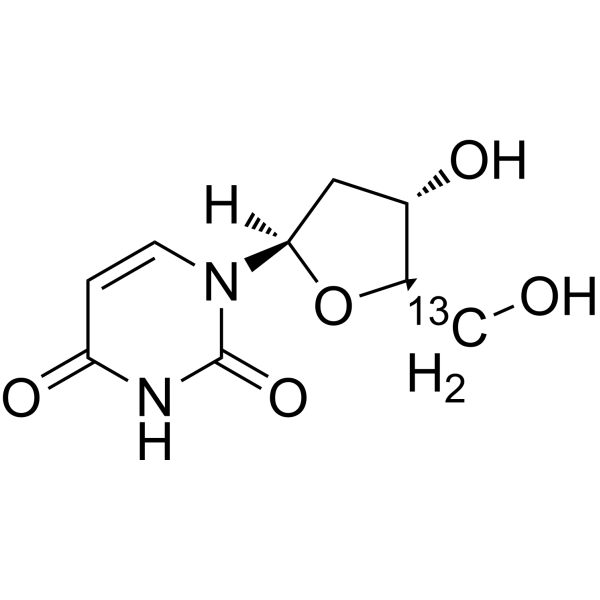
2'-Deoxyuridine-5′- 13C is the 13C labeled 2'-Deoxyuridine. 2'-Deoxyuridine could increase chromosome breakage and results in a decreased thymidylate synthetase activity. A known use of 2'-Deoxyuridine is as a precursor in the synthesis of Edoxud[1]
loading...
    loading...
Cat. No.: HY-N18386
CAS No.: 1384897-64-6
Altissimacoumarin F (Compound 4) is a terpenylated coumarin. Altissimacoumarin F can be isolated from the stem bark of Ailanthus altissima. Altissimacoumarin F enhances SIRT1 activity, decreases p53 transcriptional activity. Altissimacoumarin F can be used for the research of age-related disorders .
loading...
    loading...
Cat. No.: HY-W077242
CAS No.: 635-12-1
Target:  

DNA/RNA Synthesis

연구분야:  

Cancer

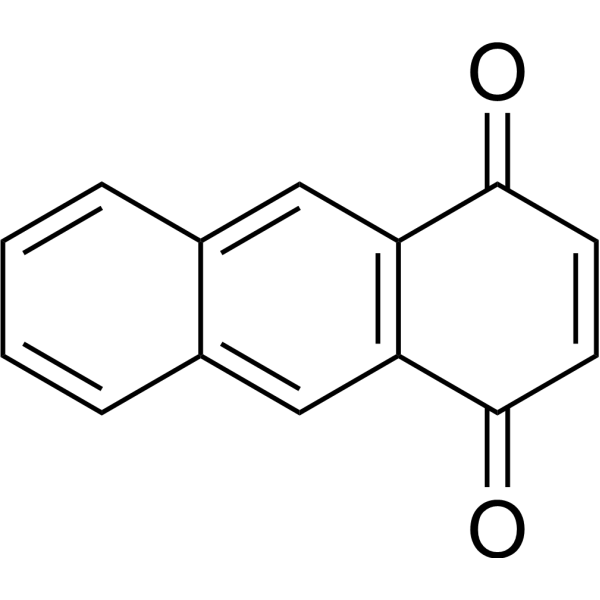
1,4-Anthraquinone is a potent anticancer agent. 1,4-Anthraquinone blocks nucleoside transport, inhibits macromolecule synthesis, induces DNA fragmentation, and decreases the growth and viability of cancer cells. 1,4-Anthraquinone can be used to research anti-leukemia .
loading...
    loading...

