



ML-SA1
Based on 11 publication(s) in Google Scholar
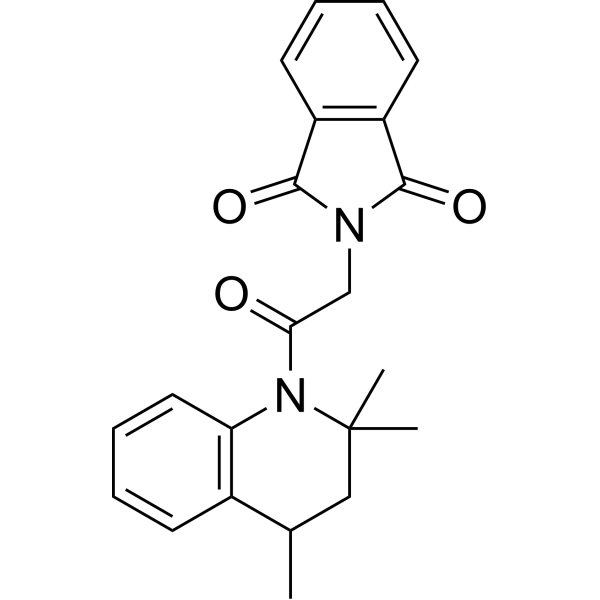
ML-SA1, as a selective TRPML agonist, inhibits Dengue virus 2 (DENV2) and Zika virus (ZIKV) by promoting lysosomal acidification and protease activity. The IC50 value of ML-SA1 against DENV2 RNA and ZIKV RNA is 8.3 μM and 52.99 μM, respectively. ML-SA1 induces autophagy. ML-SA1 can be used for the research of broad-spectrum antiviral.
For research use only. We do not sell to patients.
- Purity : 99.44%
- CAS No.: 332382-54-4
- Formula: C22H22N2O3
- Molecular Weight:362.42
-
Storage:Powder -20°C, 3 years , 4°C, 2 years ; In solvent -80°C, 1 year , -20°C, 6 months

To place orders, for customer services and technical support, please contact: MedChemExpress USA
Tel: 609-228-6898 E-mail: [email protected] [email protected]


-
 Biological Activity
-
Chemical Information
-
Solvent & Solubility
- Protocols
- Purity & Documentation
- References
-
 Help & FAQs


-
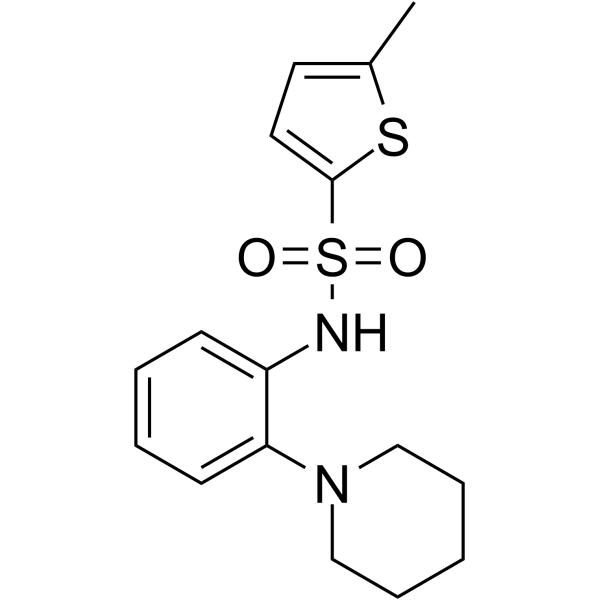
HY-110238
MK6-83TRPML1 Agonist -
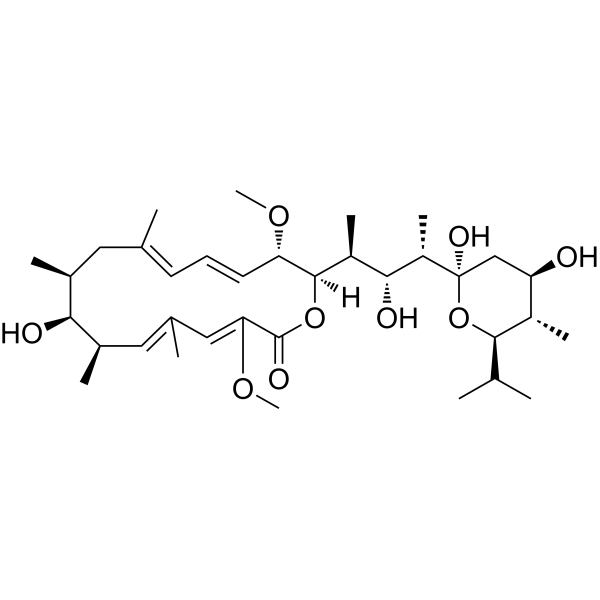
HY-100558
Bafilomycin A1V-ATPase Inhibitor -
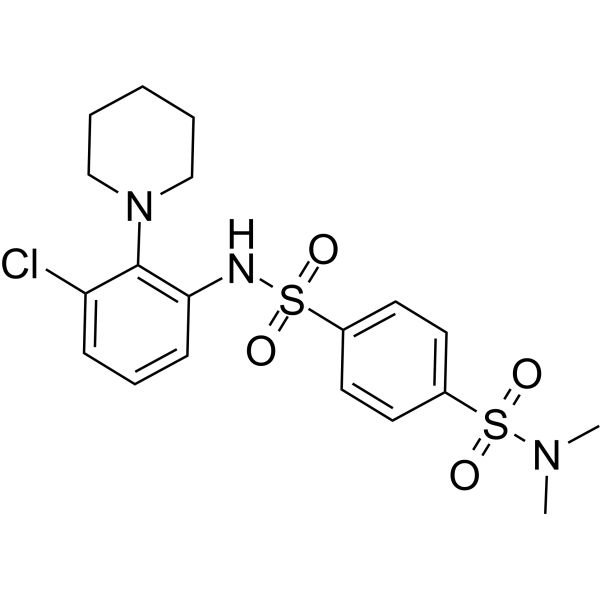
HY-152182
ML-SA5TRPML1 Agonist -
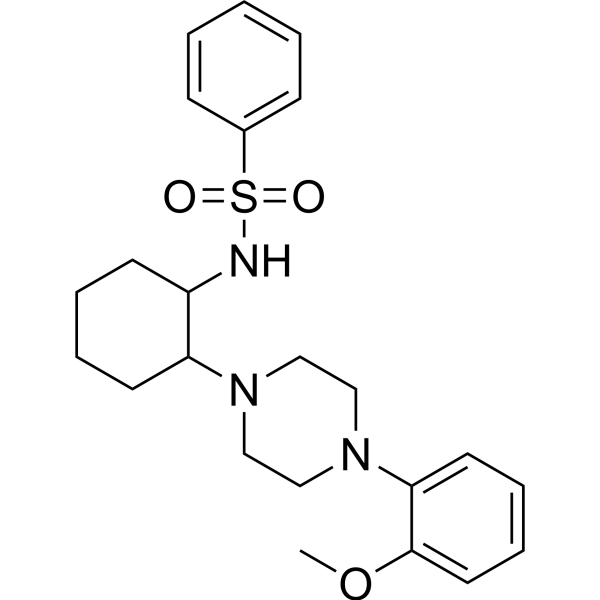
HY-139426
ML-SI3TRPML Modulator -
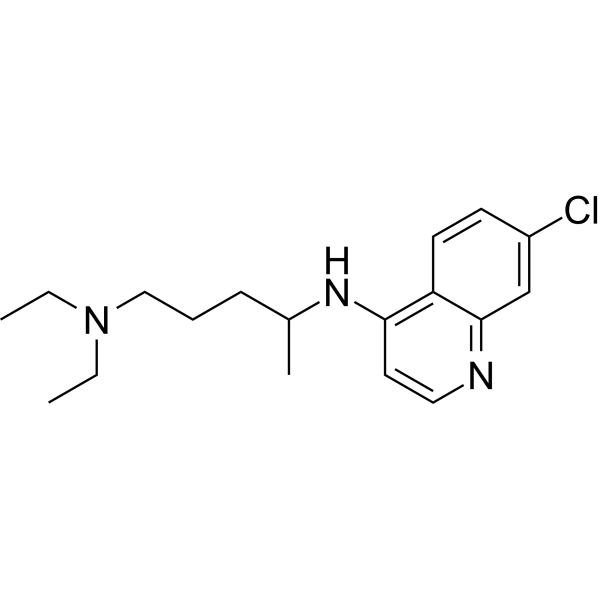
HY-17589A
ChloroquineAntimalarial Agent -
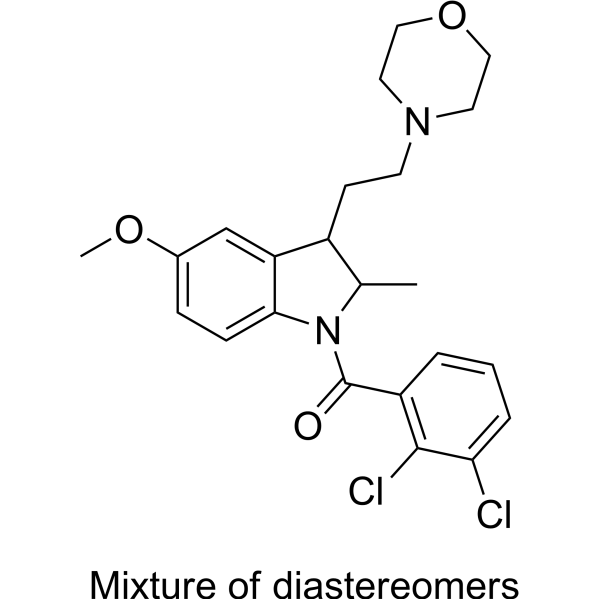
HY-134818
ML-SI1TRPML1 Inhibitor -
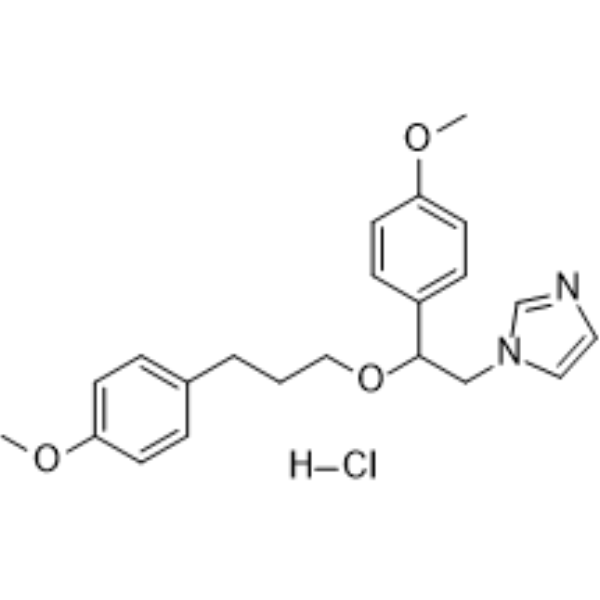
HY-100001
SKF-96365 (hydrochloride)TRPC Channel Antagonist, SOCE Inhibitor -
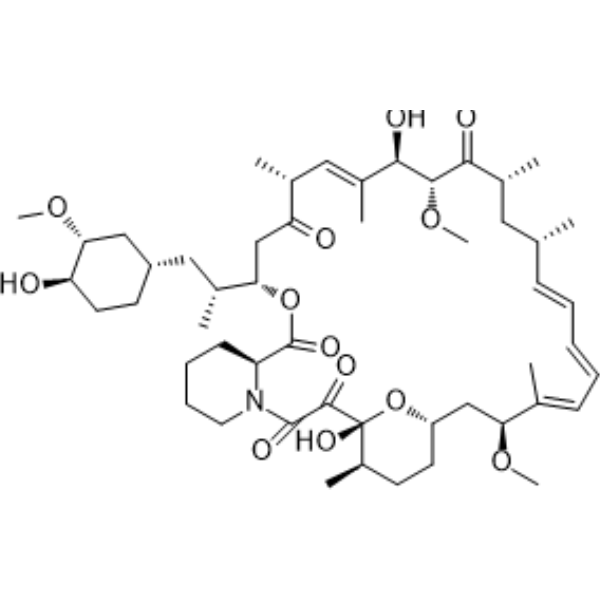
HY-10219
RapamycinmTOR Inhibitor -
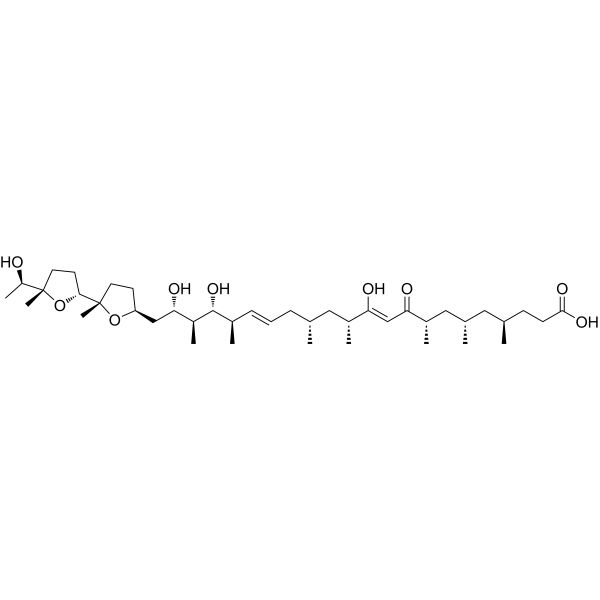
HY-13434
IonomycinCalcium Ionophore -
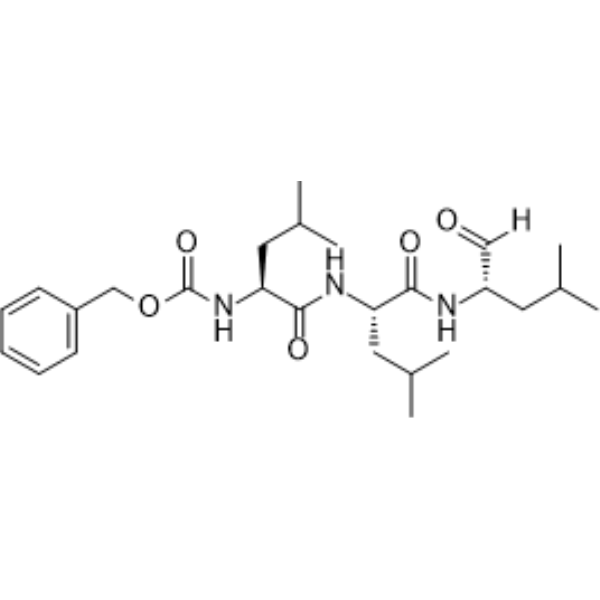
HY-13259
MG-132Proteasome Inhibitor -
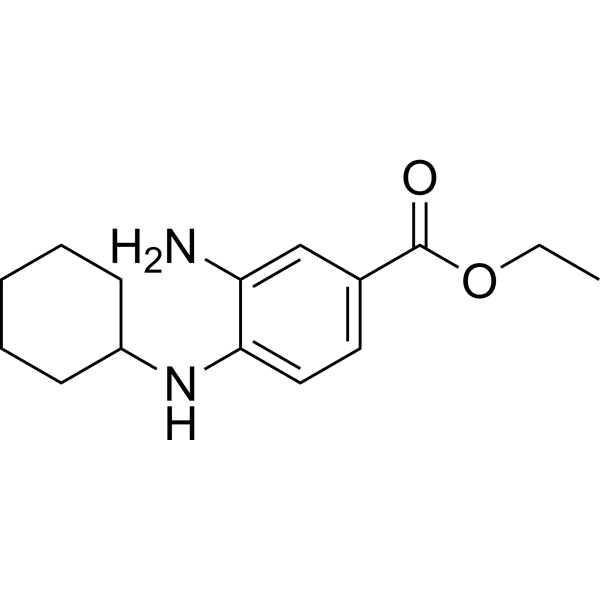
HY-100579
Ferrostatin-1Ferroptosis Inhibitor -
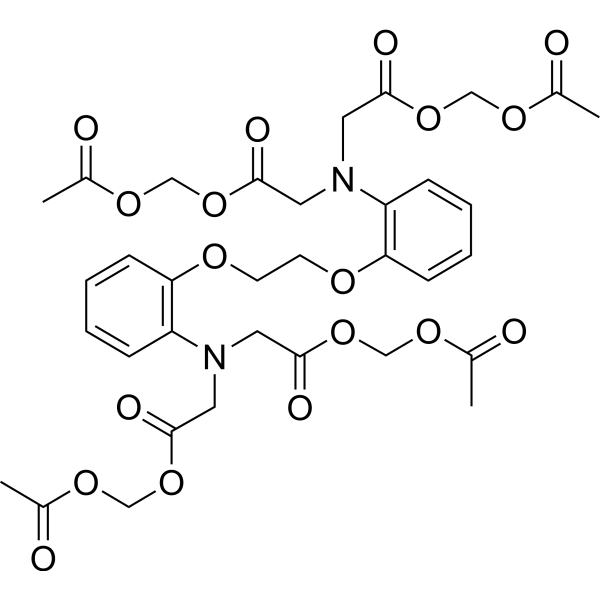
HY-100545
BAPTA-AMCa2+ Chelator
Publications Citing Use of MedChemExpress (MCE) ML-SA1
More- Autophagy. 2023 Apr;19(4):1128-1143. [Abstract]
- Adv Sci (Weinh). 2025 Sep 25:e12407. [Abstract]
- Engineering. 2025 Nov 14.
- Free Radic Biol Med. 2026 Aug 16:252:166-183. [Abstract]
- Cell Calcium. 2026 Mar:134:103125. [Abstract]
- Cell Signal. 2024 Jul:119:111167. [Abstract]
- FASEB J. 2026 Jan 15;40(1):e71421. [Abstract]
- Pest Manag Sci. 2025 Nov 3. [Abstract]
- Mol Biol Cell. 2024 May 1;35(5):ar70. [Abstract]
- Dresden University of Technology. 2026.
- Res Sq. 2026 Jan 9.
 Customer Validation & Images

-
Cell Imaging/Staining
-
Bio/Physico-chemical Assay
-
WB
-
WB
-
Cell Imaging/Staining


Biological Activity
Description
IC50 & Target
In Vitro
ML-SA1 (25 μM; 0~14 hours; A549 cells) possibly affects the entry of DENV2 into host cells[1].
ML-SA1 (0~200 μM; A549 cells) shows that there is no cytotoxicity to the cell line observed, even at concentrations up to 200 μM. ML-SA1 (0~50 μM; A549 cells) significantly suppresses DENV2 at the RNA levels and the IC50 is 8.93 μM[1].
ML-SA1 results in a dose-dependent decrease in ZIKV in A549 cells at both the RNA and protein levels, and the IC50 value of ML-SA1 against ZIKV RNA is 52.99 μM. ML-SA1, as an activator of TRPMLs, appears to be a potent inhibitor of DENV2 and ZIKV in vitro. ML-SA1 promotes lysosomal acidification and protease activity to inhibit viral infection. ML-SA1 can induce autophagy in Huh7 cells or A549 cells[1].
MedChemExpress (MCE) has not independently confirmed the accuracy of these methods. They are for reference only. Further protocols information, click here.
-
Cell Line:A549 cells
-
Concentration:25 μM
-
Incubation Time:0~14 hours
-
Result:Possibly affected the entry of DENV2 into host cells.


Chemical Information
-
CAS No. 332382-54-4
-
Appearance Solid
-
Molecular Weight 362.42
-
Formula C22H22N2O3
-
Color White to off-white
-
SMILES
O=C1N(CC(N2C(C)(C)CC(C)C3=C2C=CC=C3)=O)C(C4=C1C=CC=C4)=O
-
Shipping
Room temperature in continental US; may vary elsewhere.
-
Storage
Powder -20°C 3 years 4°C 2 years In solvent -80°C 1 year -20°C 6 months


Publications (11)
-
Journal Impact Factor
-
Most Recent
-
Autophagy
A plant virus hijacks phosphatidylinositol-3,5-bisphosphate to escape autophagic degradation in its insect vector. [Abstract]2023 Apr;19(4):1128-1143. PMID: 36093594
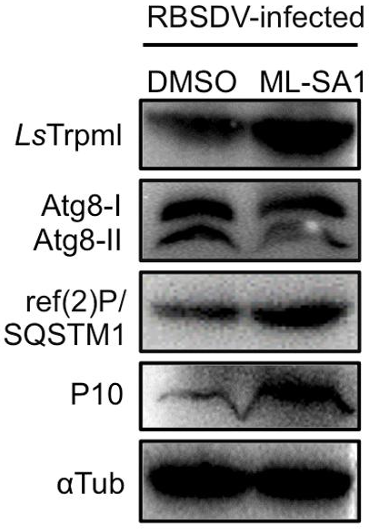
ML-SA1 purchased from MedChemExpress. Usage Cited in: Autophagy. 2023 Apr;19(4):1128-1143. [Abstract]
ML-SA1 (20 nM; 10 days). The abundance of RBSDV, Atg8, and ref(2)P/SQTSM1 was analyzed by western blotting.
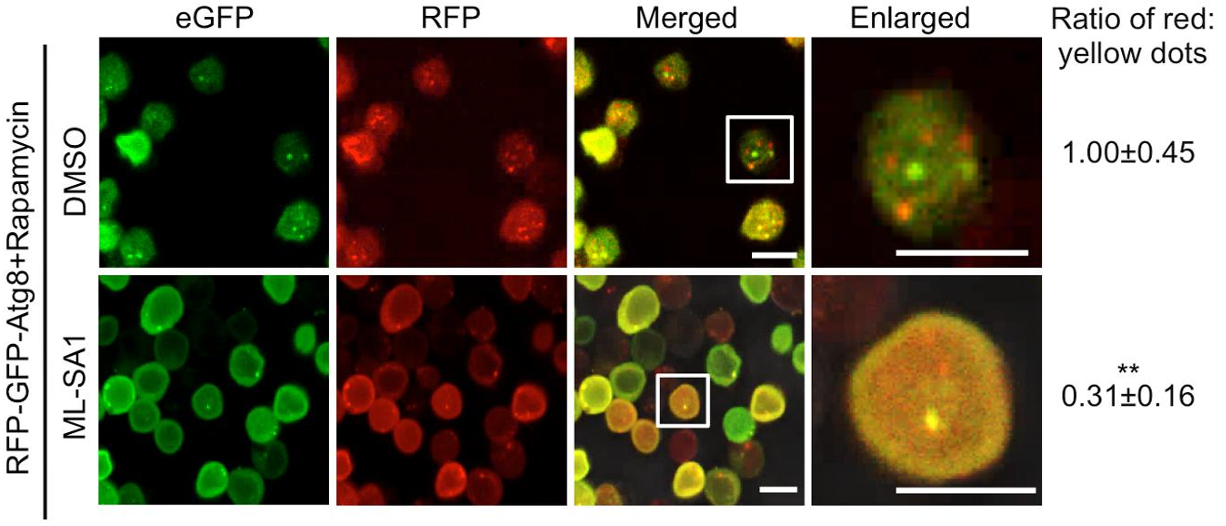
ML-SA1 purchased from MedChemExpress. Usage Cited in: Autophagy. 2023 Apr;19(4):1128-1143. [Abstract]
ML-SA1 inhibited the lysosome-autophagosome fusion in Sf9 cells. Sf9 cells were infected with RFP-eGFP-Atg8 bacmids for 6 h, treated with Rapamycin (20 μM) for 6 h, and then incubated with DMSO or ML-SA1 (10 nM) for 24 h. The cells were analyzed by confocal microscopy.
-
Adv Sci (Weinh)
Nortriptyline Inhibits Lysosomal Exocytosis-Mediated SASP During Gastric Cancer Progression via Targeting HOXA1-PITX2 Phase Separation. [Abstract]2025 Sep 25:e12407. PMID: 40995693
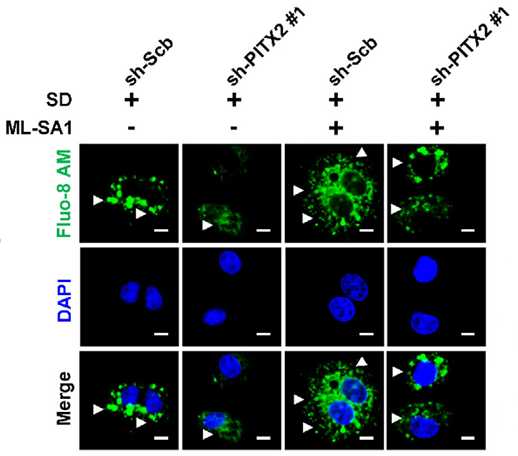
ML-SA1 purchased from MedChemExpress. Usage Cited in: Adv Sci (Weinh). 2025 Sep 25:e12407. [Abstract]
Representative images of Fluo 8‐AM staining (arrowheads) in HGC‐27 cells stably transfected withscramble shRNA (sh‐Scb), sh‐PITX2 #1, or sh‐PITX2 #2 under SD condition, and those treated with ML‐SA1 (20 µM), with nuclei staining by DAPI.
-
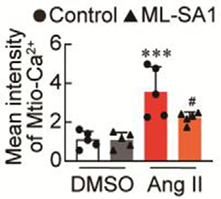
ML-SA1 purchased from MedChemExpress. Usage Cited in: Engineering. 2025 Nov 14.
ML-SA1 (20 μM; 24 h). Lv-CMV-Mito-Gcamp6f-WPRE was used to measure mitochondrial Ca2+ in NMCMs after treatment with Ang II and ML-SA1 for 24 h.
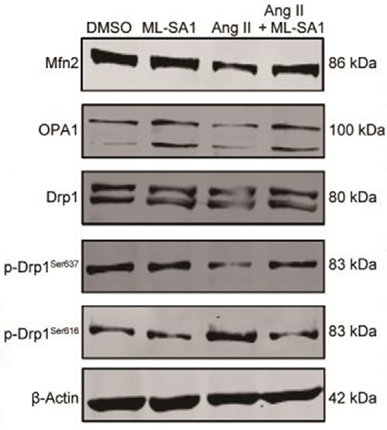
ML-SA1 purchased from MedChemExpress. Usage Cited in: Engineering. 2025 Nov 14.
ML-SA1 (20 μM; 24 h). Western blot analysis of Mfn2, OPA1, total-dynamin-related protein 1 (T-Drp1), p-Drp1Ser637, and p-Drp1Ser616 expression in NMCMs treated with Ang II and ML-SA1 for 24 h.
-
Free Radic Biol Med
Macrophage TRPML1 ameliorates post-myocardial infarction inflammation by blocking VDAC1 oligomerization to prevent ferroptosis and cGAS-STING activation. [Abstract]2026 Aug 16:252:166-183. PMID: 42092410 -
Cell Calcium
MONNA alleviates MPTP-induced Parkinson's disease in zebrafish by activating TFEB dependently on ER Calcium. [Abstract]2026 Mar:134:103125. PMID: 41637953 -
Cell Signal
Transient stimulation of TRPMLs enhance the functionality of hDPCs and facilitate hair growth in mice. [Abstract]2024 Jul:119:111167. PMID: 38604341 -
FASEB J
TRPML1 in Cisplatin-Induced Acute Kidney Injury: A New Target for Renal Tubular Epithelial Protection by Regulating Lysosomal Calcium Homeostasis. [Abstract]2026 Jan 15;40(1):e71421. PMID: 41499332 -
Pest Manag Sci
The calcium ion channel protein TRPML is indispensable to the reproduction of Nilaparvata lugens and the transovarial transmission of its yeast-like symbionts. [Abstract]2025 Nov 3. PMID: 41178823 -
Mol Biol Cell
Stress-induced microautophagy is coordinated with lysosome biogenesis and regulated by PIKfyve. [Abstract]2024 May 1;35(5):ar70. PMID: 38536415 -
-


Solvent & Solubility
In Vitro:
DMSO : 20.83 mg/mL (57.47 mM; ultrasonic and warming and heat to 65°C; Hygroscopic DMSO has a significant impact on the solubility of product, please use newly opened DMSO)
Please refer to the solubility information to select the appropriate solvent. Once prepared, please aliquot and store the solution to prevent product inactivation from repeated freeze-thaw cycles.
Storage method and period of stock solution: -80°C, 1 year; -20°C, 6 months. When stored at -80°C, please use it within 1 year. When stored at -20°C, please use it within 6 months.
Please refer to the solubility information to select the appropriate solvent. Once prepared, please aliquot and store the solution to prevent product inactivation from repeated freeze-thaw cycles.
Storage method and period of stock solution: -80°C, 1 year; -20°C, 6 months. When stored at -80°C, please use it within 1 year. When stored at -20°C, please use it within 6 months.
Concentration (start) × Volume (start) = Concentration (final) × Volume (final)
In Vivo:
Select the appropriate dissolution method based on your experimental animal and administration route.
- For the following dissolution methods, please ensure to first prepare a clear stock solution using an In Vitro approach and then sequentially add co-solvents:
- To ensure reliable experimental results, the clarified stock solution can be appropriately stored based on storage conditions. As for the working solution for In Vivo experiments, it is recommended to prepare freshly and use it on the same day.
- The percentages shown for the solvents indicate their volumetric ratio in the final prepared solution. If precipitation or phase separation occurs during preparation, heat and/or sonication can be used to aid dissolution.
Add each solvent one by one: 10% DMSO 40% PEG300 5% Tween-80 45% Saline
Solubility: ≥ 2.08 mg/mL (5.74 mM); Clear solution
This protocol yields a clear solution of ≥ 2.08 mg/mL (saturation unknown).
Taking 1 mL working solution as an example, add 100 μL DMSO stock solution (20.8 mg/mL) to 400 μL PEG300, and mix evenly; then add 50 μL Tween-80 and mix evenly; then add 450 μL Saline to adjust the volume to 1 mL.
Preparation of Saline: Dissolve 0.9 g sodium chloride in ddH₂O and dilute to 100 mL to obtain a clear Saline solution.
In Vivo Dissolution Calculator
Please enter the basic information of animal experiments:
-
-
-
-
Recommended: Prepare an additional quantity of animals to account for potential losses during experiments.
Please enter your animal formula composition:
-
%DMSO +
Recommended: Keep the proportion of DMSO in working solution below 2% if your animal is weak.
-
%+
-
+%Tween-80 + +
-
%Saline +
The co-solvents required include: DMSO, . All of co-solvents are available by MedChemExpress (MCE). , Tween 80. All of co-solvents are available by MedChemExpress (MCE).
Working solution concentration: 0.22 mg/mL
Method for preparing stock solution: mg drug dissolved in μL DMSO. Stock solution concentration: mg/mL.
1. Take μL DMSO stock solution;
2. Add μL .
μL , mix evenly;
3. Then add μL Tween 80, mix evenly;
4. Then add μL
Please ensure that the stock solution in the first step is dissolved to a clear state, and add co-solvents in sequence. You can use ultrasonic heating (ultrasonic cleaner, recommended frequency 20-40 kHz), vortexing, etc. to assist dissolution.

Protocols
-
Research Protocol for Infectious Diseases
Infectious-disease experiments test how pathogens interact with host barriers, innate immune receptors, inflammatory signaling, pathogen replication, and tissue injury; pattern-recognition receptors such as TLRs, RIG-I-like receptors, NOD-like receptors, and inflammasomes detect microbial molecules and activate NF-κB, interferon, and cytokine responses. The central hypothesis is that infection severity reflects the balance between pathogen burden and host response: protective inflammation restricts pathogen growth, whereas excessive or mislocalized inflammation contributes to tissue damage and disease phenotype. Unresolved questions include which host pathways are protective versus pathogenic, why some infection models fail to translate to human disease, and which combined readouts best predict clinically relevant infection outcomes.
-
Cell Cytotoxicity Assay
Cytotoxicity assays are usually based on the assessment of cell membrane damage, which can also be indirectly detected by measuring cell viability. Detection methods include MTT assay, CKK-8 assay, LDH assay and ATP assay, etc.
-
Autophagy
Autophagy is a process in which eukaryotic cells use lysosomes to degrade their own cytoplasmic proteins and damaged organelles under the regulation of autophagy related gene (Atg). Microtubule-associated proteins light chain 3 (LC3) is recognized as autophagy marker, which transfers from cytoplasmic LC3 (LC3-I) to membrane type (LC3-II). LC3-II/I ratio could be detected by Western Blot and fluorescence microscopy.
-
Lysosome and acidic-vesicle live-cell staining
Lysosome and acidic-vesicle live-cell staining detects acidic intracellular compartments by using membrane-permeant acidotropic probes that accumulate in low-pH vesicles, including lysosomes, late endosomes, autolysosomes, and acidic phagosomes. LysoTracker staining is commonly used as an intensity-based readout of acidic lysosomal compartment abundance or enlargement, while acridine orange produces green fluorescence in less concentrated compartments and red fluorescence after concentration-dependent accumulation in acidic vesicular organelles. Loss or reduction of acridine-orange red signal can be used as a readout of lysosomal membrane permeabilization or reduced acidic-vesicle integrity. This protocol is designed for live cultured cells and can be adapted for fluorescence microscopy, high-content imaging, plate-reader readout, or flow cytometry when the selected literature supports the readout. Because these dyes report acidotropic accumulation rather than lysosome identity alone,
-
Macroautophagy Solutions
Macroautophagy is a conserved lysosome-dependent degradation pathway in which cytoplasmic material is sequestered into double-membrane autophagosomes and delivered to lysosomes for degradation and recycling. The pathway supports cellular homeostasis during nutrient limitation, organelle stress, protein-aggregate accumulation, infection, differentiation, and tissue remodeling by coupling cargo sequestration, autophagosome maturation, lysosomal fusion, and degradation of cargo-derived macromolecules. The core molecular sequence includes initiation by nutrient- and stress-regulated autophagy machinery, autophagosome nucleation, LC3/ATG8-family conjugation to autophagosomal membranes, cargo selection through receptors such as SQSTM1/p62, autophagosome-lysosome fusion, and lysosomal degradation. LC3 was identified as a mammalian homolog of yeast Atg8 that localizes to autophagosomal membranes after processing, and p62/SQSTM1 was shown to connect ubiquitinated cargo with autophagic degradati


Purity & Documentation
-
Data Sheet (277 KB)
-
SDS (623 KB)
- English - EN (623 KB)
- Français - FR (623 KB)
- Deutsch - DE (623 KB)
- Norwegian - NO (623 KB)
- Español - ES (623 KB)
- Swedish - SV (623 KB)
- Italian - IT (623 KB)
- Korean - KR (623 KB)
- Portuguese - PT (623 KB)
-
Handling Instructions (2659 KB)
References


Complete Stock Solution Preparation Table
Please refer to the solubility information to select the appropriate solvent. Once prepared, please aliquot and store the solution to prevent product inactivation from repeated freeze-thaw cycles.
Storage method and period of stock solution: -80°C, 1 year; -20°C, 6 months. When stored at -80°C, please use it within 1 year. When stored at -20°C, please use it within 6 months.
| Optional Solvent | Concentration Solvent Mass | 1 mg | 5 mg | 10 mg | 25 mg |
|---|---|---|---|---|---|
| DMSO | 1 mM | 2.7592 mL | 13.7961 mL | 27.5923 mL | 68.9807 mL |
| 5 mM | 0.5518 mL | 2.7592 mL | 5.5185 mL | 13.7961 mL | |
| 10 mM | 0.2759 mL | 1.3796 mL | 2.7592 mL | 6.8981 mL | |
| 15 mM | 0.1839 mL | 0.9197 mL | 1.8395 mL | 4.5987 mL | |
| 20 mM | 0.1380 mL | 0.6898 mL | 1.3796 mL | 3.4490 mL | |
| 25 mM | 0.1104 mL | 0.5518 mL | 1.1037 mL | 2.7592 mL | |
| 30 mM | 0.0920 mL | 0.4599 mL | 0.9197 mL | 2.2994 mL | |
| 40 mM | 0.0690 mL | 0.3449 mL | 0.6898 mL | 1.7245 mL | |
| 50 mM | 0.0552 mL | 0.2759 mL | 0.5518 mL | 1.3796 mL |


ML-SA1 Related Classifications
HY-108462 Related Classifications
 Powered by Bioz