



PQA-18

Based on 1 Customer Validation
PQA-18 is a unique PAK2 inhibitor (IC50: 10 nM). PQA-18 has immunosuppressing effects. PQA-18 suppresses IL2, IL4, IL6, and TNFα. PQA-18 inhibits the population of a subset of regulatory T cells and the immunoglobulin (Ig) production against T cell-dependent antigens as well as alleviates dermatitis in mice.
For research use only. We do not sell to patients.
- Purity : 99.62%
- CAS No.: 1604678-82-1
- Formula: C25H31NO4
- Molecular Weight:409.52
-
Storage:
4°C, sealed storage, away from moisture and light
* In solvent : -80°C, 6 months; -20°C, 1 month (sealed storage, away from moisture and light)


To place orders, for customer services and technical support, please contact: MedChemExpress USA
Tel: 609-228-6898 E-mail: [email protected] [email protected]


-
 Biological Activity
-
Chemical Information
-
Solvent & Solubility
- Protocols
- Purity & Documentation
- References
-
 Help & FAQs


-
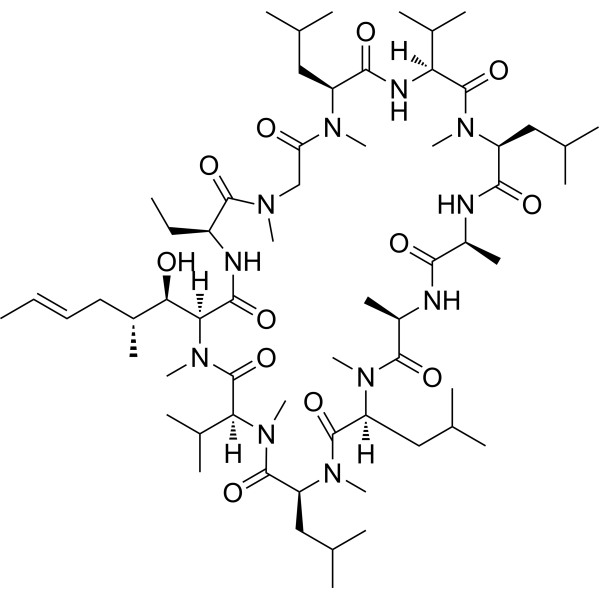
HY-B0579
Cyclosporin ACalcineurin Inhibitor -

HY-B0579R
Cyclosporin A (Standard)Reference Standard -
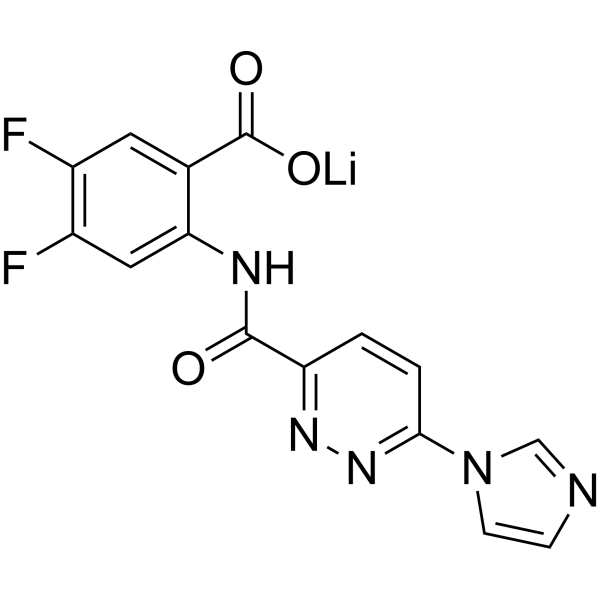
HY-131454
SR-717STING Agonist -
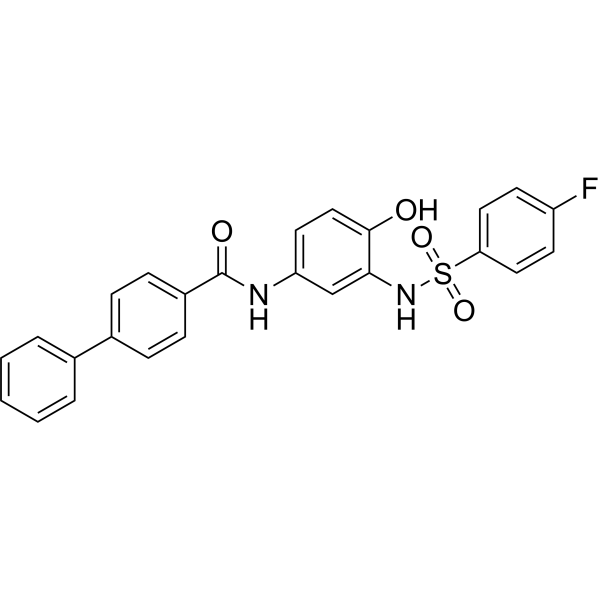
HY-145010
SN-011STING Inhibitor -
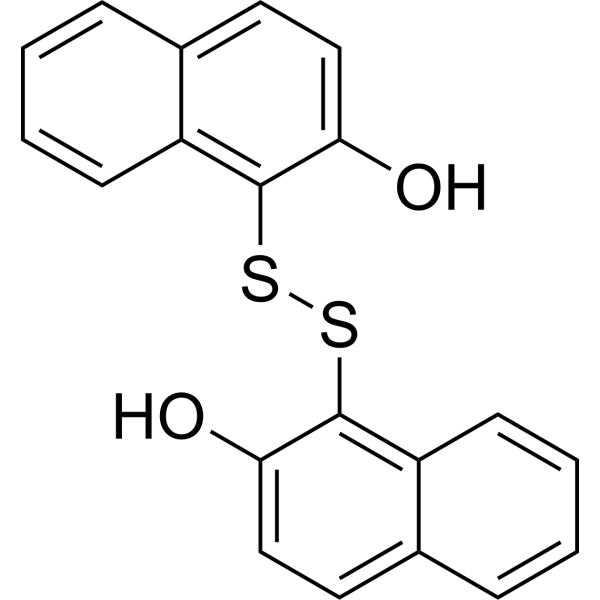
HY-15663
IPA-3PAK Inhibitor -
HY-18300S
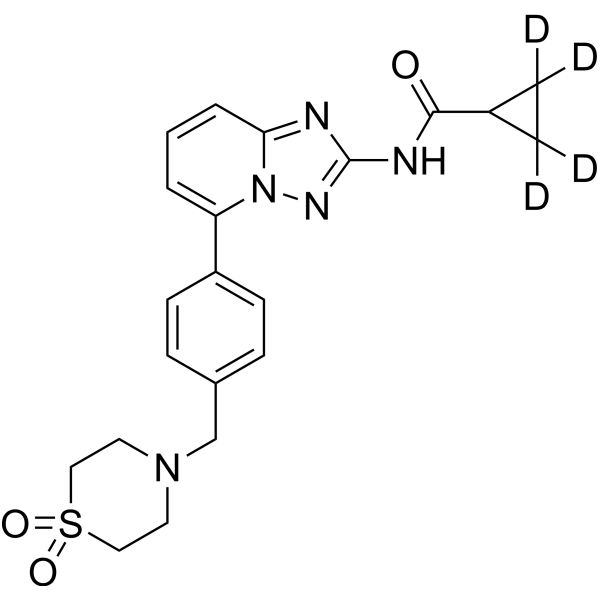
Filgotinib-d4Stable Isotope -
HY-13007
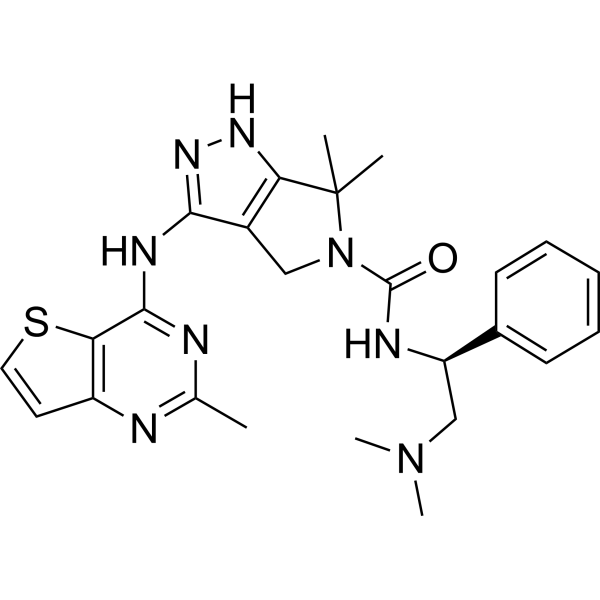
PF-3758309PAK4 Inhibitor -

HY-130757
Remisporine BImmunosuppressive Agent -

HY-132221
CU-32cGAS Inhibitor -

HY-134919
CU-76cGAS Inhibitor -
HY-151264
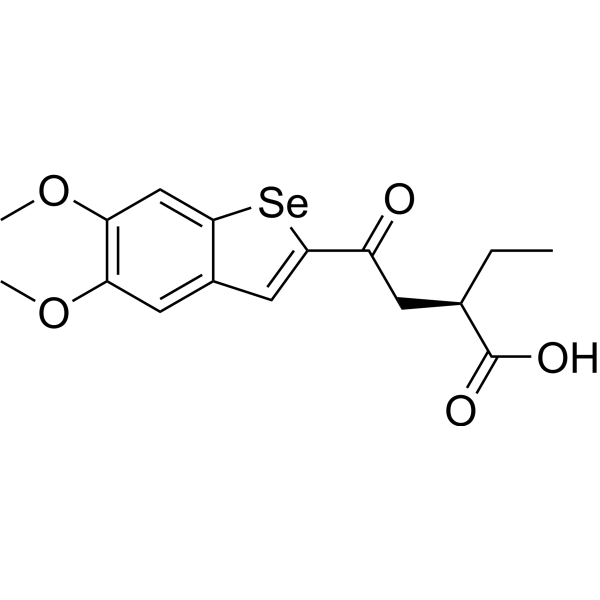
BSP16STING Agonist -

HY-115566
S1PL-IN-1Sphingosine-1-phosphate Lyase Inhibitor


Biological Activity
Description
IC50 & Target
[1]|
PAK2 10 nM (IC50) |
IL-6 |
IL4 |
IL-2 |
In Vitro
PQA-18 (0.1-20 μM, 6-24 h) markedly inhibits ConA (HY-P2149)-induced production of IL2, IL4, IL6 and TNFα in human peripheral lymphocytes (IC50: 450, 650, 580 and 460 nM, respectively) and IL2 production at protein (IC50: 400 nM) and mRNA levels in Jurkat cells[1].
PQA-18 (10 μM) attenuates the phosphorylation of cofilin-1 and histone H4 by inhibiting the corresponding kinases[1].
PQA-18 (0.1 nM-1 μM) inhibits PAK2 kinase activity in a non-competitive and concentration-dependent manner by its autophosphorylation at Ser141(IC50 of 10 nM, Km of 2.1 μM)[1].
MedChemExpress (MCE) has not independently confirmed the accuracy of these methods. They are for reference only. Further protocols information, click here.
-
Cell Line:Jurkat cells cultured with ConA
-
Concentration:1, 10, 20 μM
-
Incubation Time:6 h
-
Result:Suppressed IL2 mRNA level in ConA-stimulated Jurkat cells.
Affected ∼50% of IL2 transcripts at a high dose (10 μM).
In Vivo
PQA-18 ointment (100 mg/mouse, contains 0.05%-0.1% PQA-18, three times a week, 17 weeks) improves dermatitis and IgE levels in Nc/Nga mice[1].
MedChemExpress (MCE) has not independently confirmed the accuracy of these methods. They are for reference only.
-
Animal Model:Male C57BL/6J mice (10 weeks old) immunized by intraperitoneal injection of 50 μg NP-CGG[1]
-
Dosage:0.5 mg/kg
-
Administration:Intraperitoneal injection (i.p.); three times a week
-
Result:Suppressed the NP-specific responses (IgM, IgG1, and IgG3) in peripheral blood.
Significantly suppressed the number of Foxp3+CD4+CD25+ cells in spleens.


Chemical Information
-
CAS No. 1604678-82-1
-
Appearance Solid
-
Molecular Weight 409.52
-
Formula C25H31NO4
-
Color Light yellow to yellow
-
SMILES
O=C(C1=NC2=C(OC/C=C(C)/C)C=CC=C2C(OC/C=C(C)/C)=C1)OC/C=C(C)\C
-
Shipping
Room temperature in continental US; may vary elsewhere.
-
Storage
4°C, sealed storage, away from moisture and light
* In solvent : -80°C, 6 months; -20°C, 1 month (sealed storage, away from moisture and light)


Solvent & Solubility
In Vitro:
DMSO : 20 mg/mL (48.84 mM; Need ultrasonic; Hygroscopic DMSO has a significant impact on the solubility of product, please use newly opened DMSO)
Please refer to the solubility information to select the appropriate solvent. Once prepared, please aliquot and store the solution to prevent product inactivation from repeated freeze-thaw cycles.
Storage method and period of stock solution: -80°C, 6 months; -20°C, 1 month (sealed storage, away from moisture and light). When stored at -80°C, please use it within 6 months. When stored at -20°C, please use it within 1 month.
Please refer to the solubility information to select the appropriate solvent. Once prepared, please aliquot and store the solution to prevent product inactivation from repeated freeze-thaw cycles.
Storage method and period of stock solution: -80°C, 6 months; -20°C, 1 month (sealed storage, away from moisture and light). When stored at -80°C, please use it within 6 months. When stored at -20°C, please use it within 1 month.
Concentration (start) × Volume (start) = Concentration (final) × Volume (final)
In Vivo:
Select the appropriate dissolution method based on your experimental animal and administration route.
- For the following dissolution methods, please ensure to first prepare a clear stock solution using an In Vitro approach and then sequentially add co-solvents:
- To ensure reliable experimental results, the clarified stock solution can be appropriately stored based on storage conditions. As for the working solution for In Vivo experiments, it is recommended to prepare freshly and use it on the same day.
- The percentages shown for the solvents indicate their volumetric ratio in the final prepared solution. If precipitation or phase separation occurs during preparation, heat and/or sonication can be used to aid dissolution.
Add each solvent one by one: 10% DMSO 40% PEG300 5% Tween-80 45% Saline
Solubility: ≥ 2 mg/mL (4.88 mM); Clear solution
This protocol yields a clear solution of ≥ 2 mg/mL (saturation unknown).
Taking 1 mL working solution as an example, add 100 μL DMSO stock solution (20.0 mg/mL) to 400 μL PEG300, and mix evenly; then add 50 μL Tween-80 and mix evenly; then add 450 μL Saline to adjust the volume to 1 mL.
Preparation of Saline: Dissolve 0.9 g sodium chloride in ddH₂O and dilute to 100 mL to obtain a clear Saline solution.
Add each solvent one by one: 10% DMSO 90% (20% SBE-β-CD in Saline)
Solubility: 2 mg/mL (4.88 mM); Suspended solution; Need ultrasonic
This protocol yields a suspended solution of 2 mg/mL. Suspended solution can be used for oral and intraperitoneal injection.
Taking 1 mL working solution as an example, add 100 μL DMSO stock solution (20.0 mg/mL) to 900 μL 20% SBE-β-CD in Saline, and mix evenly.
Preparation of 20% SBE-β-CD in Saline (4°C, storage for one week): 2 g SBE-β-CD powder is dissolved in 10 mL Saline, completely dissolve until clear.
In Vivo Dissolution Calculator
Please enter the basic information of animal experiments:
-
-
-
-
Recommended: Prepare an additional quantity of animals to account for potential losses during experiments.
Please enter your animal formula composition:
-
%DMSO +
Recommended: Keep the proportion of DMSO in working solution below 2% if your animal is weak.
-
%+
-
+%Tween-80 + +
-
%Saline +
The co-solvents required include: DMSO, . All of co-solvents are available by MedChemExpress (MCE). , Tween 80. All of co-solvents are available by MedChemExpress (MCE).
Working solution concentration: 0.22 mg/mL
Method for preparing stock solution: mg drug dissolved in μL DMSO. Stock solution concentration: mg/mL. * In solvent : -80°C, 6 months; -20°C, 1 month (sealed storage, away from moisture and light)
1. Take μL DMSO stock solution;
2. Add μL .
μL , mix evenly;
3. Then add μL Tween 80, mix evenly;
4. Then add μL
Please ensure that the stock solution in the first step is dissolved to a clear state, and add co-solvents in sequence. You can use ultrasonic heating (ultrasonic cleaner, recommended frequency 20-40 kHz), vortexing, etc. to assist dissolution.

Protocols
-
Cell Cytotoxicity Assay
Cytotoxicity assays are usually based on the assessment of cell membrane damage, which can also be indirectly detected by measuring cell viability. Detection methods include MTT assay, CKK-8 assay, LDH assay and ATP assay, etc.
-
TPA/Croton Oil Ear Edema and Dermatitis
The TPA (12-O-tetradecanoylphorbol-13-acetate) and croton oil-induced mouse ear edema model is a well-established acute cutaneous inflammation system used to evaluate topical anti-inflammatory activity by measuring edema formation, neutrophil infiltration, vascular permeability, and cytokine-mediated skin responses in vivo. The inflammatory response is triggered by topical application of phorbol esters (TPA) or croton oil constituents, leading to rapid activation of protein kinase C signaling, leukocyte recruitment, and increased vascular permeability, which can be quantified by ear thickness, weight, dye extravasation, and biochemical markers such as myeloperoxidase (MPO) activity and pro-inflammatory mediators in ear tissue homogenates. This model is widely used for screening anti-inflammatory agents, where reductions in edema and inflammatory biomarkers reflect suppression of acute dermal inflammation and immune cell infiltration. Histological evaluation typically confirms epidermal
-
Research Protocol for Cancer Immunology
Cancer immunology studies how the immune system recognizes, suppresses, edits, or fails to eliminate malignant cells through tumor antigen release, antigen presentation, T-cell priming, immune trafficking, tumor-cell killing, and feedback inhibition in the tumor microenvironment. The cancer-immunity cycle links tumor antigenicity, dendritic-cell priming, CD8+ T-cell infiltration, cytotoxic function, and immune-checkpoint regulation to tumor rejection or immune escape. Immune-checkpoint pathways such as PD-1/PD-L1 and CTLA-4 suppress antitumor T-cell activity and can be therapeutically blocked, but many tumors remain resistant because of poor antigen presentation, weak T-cell infiltration, suppressive myeloid cells, regulatory T cells, and tumor-intrinsic immune-exclusion programs. Unresolved questions include which immune-cell states predict response, how tumor-intrinsic pathways exclude immune cells, how myeloid suppression limits checkpoint blockade, and which combination strategies


Purity & Documentation
-
Data Sheet (275 KB)
-
SDS (252 KB)
- English - EN (252 KB)
- Français - FR (252 KB)
- Deutsch - DE (252 KB)
- Norwegian - NO (252 KB)
- Español - ES (252 KB)
- Swedish - SV (252 KB)
- Italian - IT (252 KB)
- Korean - KR (252 KB)
- Portuguese - PT (252 KB)
-
Handling Instructions (2659 KB)
References


Complete Stock Solution Preparation Table
Please refer to the solubility information to select the appropriate solvent. Once prepared, please aliquot and store the solution to prevent product inactivation from repeated freeze-thaw cycles.
Storage method and period of stock solution: -80°C, 6 months; -20°C, 1 month (sealed storage, away from moisture and light). When stored at -80°C, please use it within 6 months. When stored at -20°C, please use it within 1 month.
| Optional Solvent | Concentration Solvent Mass | 1 mg | 5 mg | 10 mg | 25 mg |
|---|---|---|---|---|---|
| DMSO | 1 mM | 2.4419 mL | 12.2094 mL | 24.4188 mL | 61.0471 mL |
| 5 mM | 0.4884 mL | 2.4419 mL | 4.8838 mL | 12.2094 mL | |
| 10 mM | 0.2442 mL | 1.2209 mL | 2.4419 mL | 6.1047 mL | |
| 15 mM | 0.1628 mL | 0.8140 mL | 1.6279 mL | 4.0698 mL | |
| 20 mM | 0.1221 mL | 0.6105 mL | 1.2209 mL | 3.0524 mL | |
| 25 mM | 0.0977 mL | 0.4884 mL | 0.9768 mL | 2.4419 mL | |
| 30 mM | 0.0814 mL | 0.4070 mL | 0.8140 mL | 2.0349 mL | |
| 40 mM | 0.0610 mL | 0.3052 mL | 0.6105 mL | 1.5262 mL |


PQA-18 Related Classifications
HY-171034 Related Classifications
 Powered by Bioz