



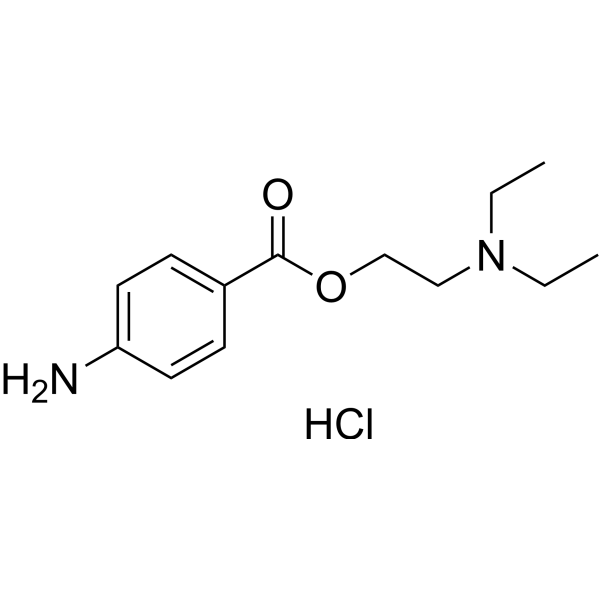
Procaine hydrochloride
Based on 2 publication(s) in Google Scholar
Procaine hydrochloride is a DNA-demethylating agent. Procaine hydrochloride acts through multiple targets and has a slow onset and a short duration of action.
Para uso exclusivo en investigación. No vendemos a pacientes.
- Pureza : 97.92%
- No. CAS: 51-05-8
- Fòrmula: C13H21ClN2O2
- Peso molecular:272.78
-
Almacenamiento:
RT, sealed storage, away from moisture and light
* The compound is unstable in solutions, freshly prepared is recommended.

To place orders, for customer services and technical support, please contact: MedChemExpress USA
Tel: 609-228-6898 E-mail: [email protected] [email protected]


-
 Actividad biológica
-
Chemical Information
-
Solvente y solubilidad
- Pureza y Documentación
- Referencias
-
 Help & FAQs


-
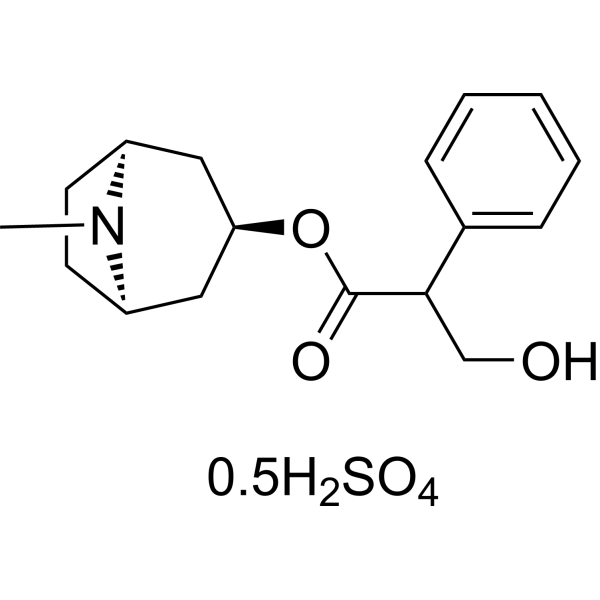
HY-B1205A
Atropine sulfatemAChR Antagonist -
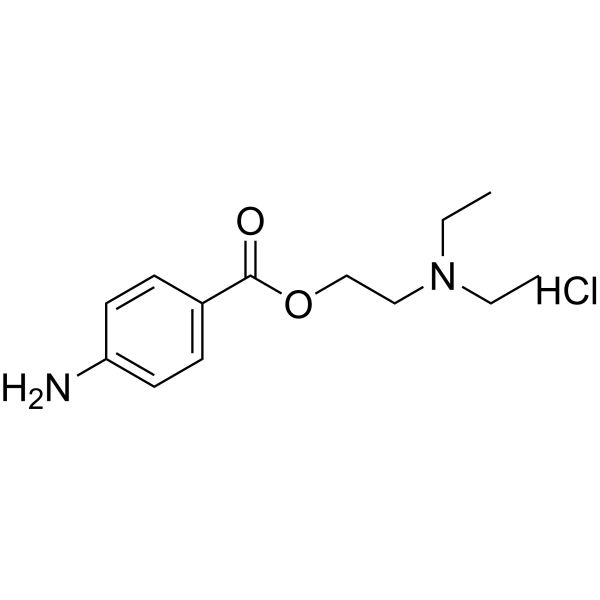
HY-B0546AR
Procaine hydrochloride (Standard) -
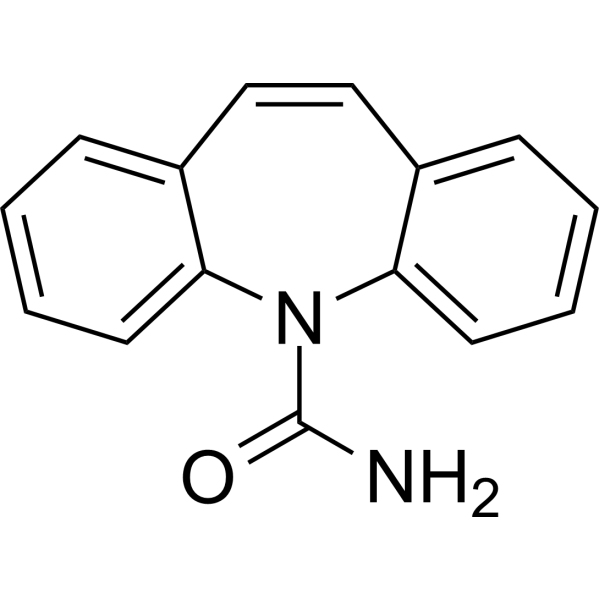
HY-B0246
CarbamazepineAnticonvulsant -
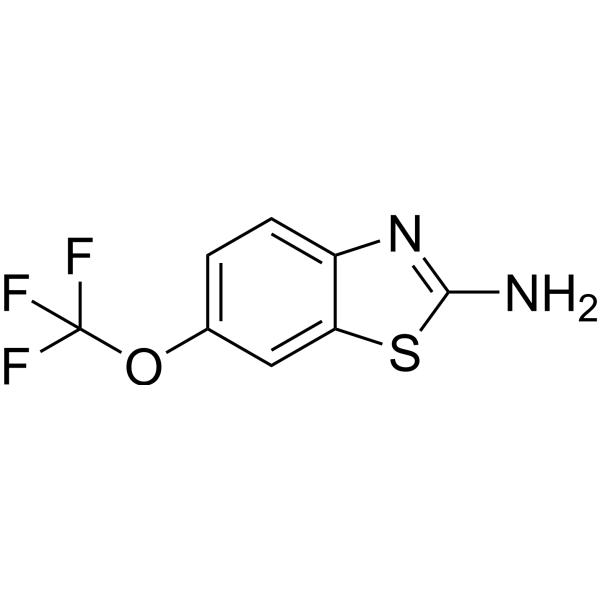
HY-B0211
RiluzoleAnticonvulsant Agent -
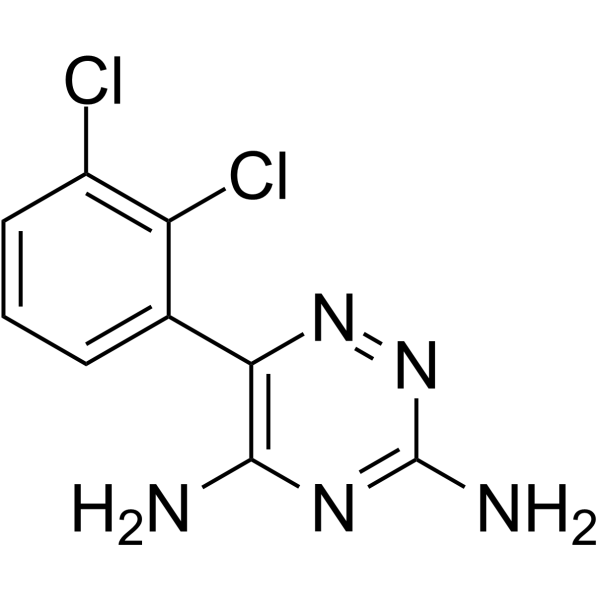
HY-B0495
LamotrigineAnticonvulsant Agent -
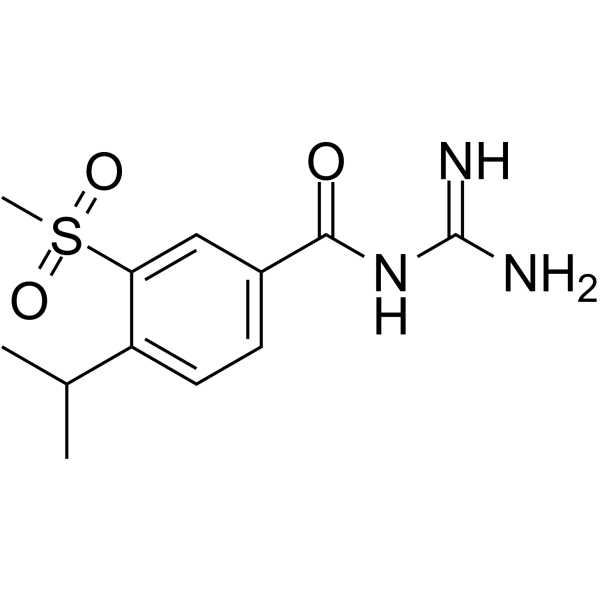
HY-19693
CariporideNa+/H+ Exchange Inhibitor -
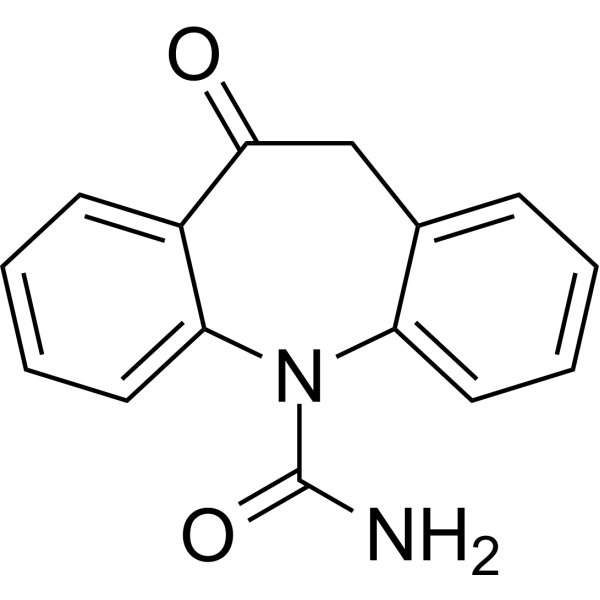
HY-B0114
OxcarbazepineAnti-Epileptic Agent -

HY-B0246R
Carbamazepine (Standard)Anticonvulsant -
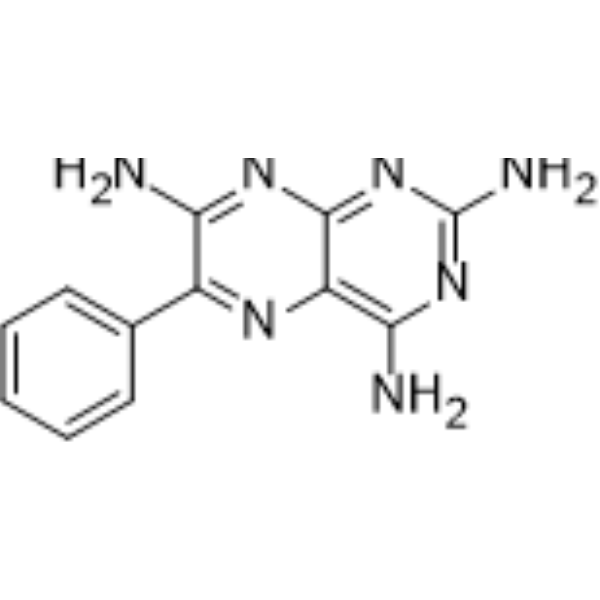
HY-B0575
TriamtereneSodium Channel Inhibitor -
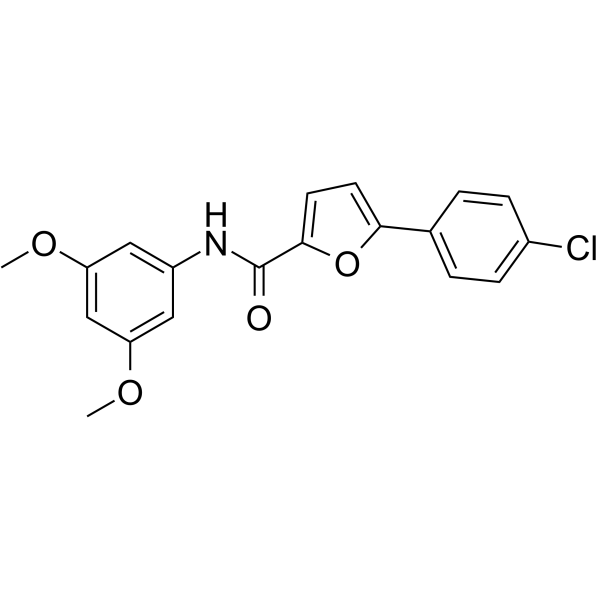
HY-11079
A-803467Nav1.8 Sodium Channel Blocker -
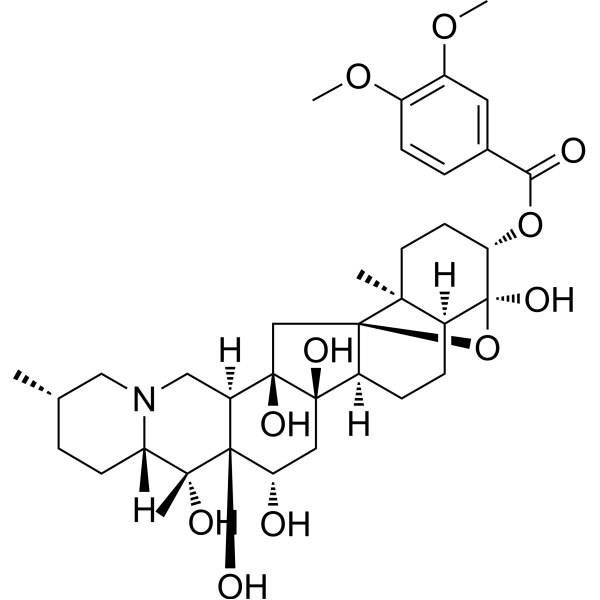
HY-N6691
VeratridineVGSCs Agonist -
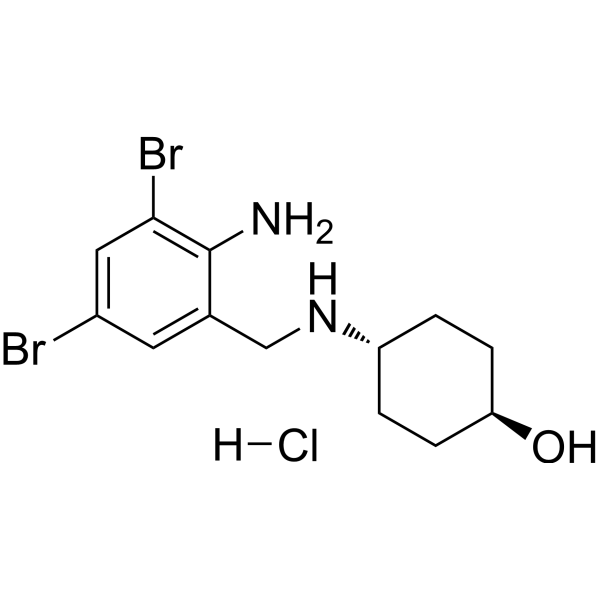
HY-B1039A
Ambroxol hydrochlorideAutophagy Inducer
Publications Citing Use of MedChemExpress (MCE) Procaine hydrochloride
MoreVer todos los productos específicos de isoformas DNA/RNA Synthesis
More

Actividad biológica
Descripciòn
In Vitro
Procaine hydrochloride (0.01-100 microM) inhibited the 5-HT3 receptor-mediated inward current in the whole-cell patch clamp recording. Procaine appears to produce a competitive inhibition on 5-HT3 receptors with a KD of 1.7 microM[1]. Procaine is a DNA-demethylating agent that produces a 40% reduction in 5-methylcytosine DNA content as determined by high-performance capillary electrophoresis or total DNA enzyme digestion. Procaine can also demethylate densely hypermethylated CpG islands. Procaine also has growth-inhibitory effects in these cancer cells, causing mitotic arrest[2]. Procaine functions as an excitant of limbic system cells, and that procaine alters synaptic transmission in some, but not all, output pathways from the amygdale[3].
MedChemExpress (MCE) has not independently confirmed the accuracy of these methods. They are for reference only. .


Chemical Information
-
No. CAS 51-05-8
-
Appearance Solid
-
Peso molecular 272.78
-
Fòrmula C13H21ClN2O2
-
Color White to off-white
-
SMILES
O=C(OCCN(CC)CC)C1=CC=C(N)C=C1.Cl
-
Envío
Room temperature in continental US; may vary elsewhere.
-
Almacenamiento
RT, sealed storage, away from moisture and light
* The compound is unstable in solutions, freshly prepared is recommended.


Publications (2)
-
Journal Impact Factor
-
Most Recent
-
Stem Cell Res Ther
Local anesthetics impair the growth and self-renewal of glioblastoma stem cells by inhibiting ZDHHC15-mediated GP130 palmitoylation. [Abstract]2021 Feb 4;12(1):107. PMID: 33541421 -
Ecotoxicol Environ Saf
PPARγ-responsive luciferase reporter system for high-throughput screening of chemical toxins with potential pulmonary fibrosis effects. [Abstract]2025 Nov 15:307:119433. PMID: 41273832


Solvente y solubilidad
In Vitro:
H2O : ≥ 50 mg/mL (183.30 mM)
DMSO : 50 mg/mL (183.30 mM; Need ultrasonic; Hygroscopic DMSO has a significant impact on the solubility of product, please use newly opened DMSO)
* "≥" means soluble, but saturation unknown.
Please refer to the solubility information to select the appropriate solvent. The compound is unstable in solutions, freshly prepared is recommended.
* Note: If you choose water as the stock solution, please dilute it to the working solution, then filter and sterilize it with a 0.22 μm filter before use.
Please refer to the solubility information to select the appropriate solvent. The compound is unstable in solutions, freshly prepared is recommended.
* Note: If you choose water as the stock solution, please dilute it to the working solution, then filter and sterilize it with a 0.22 μm filter before use.
Concentration (start) × Volume (start) = Concentration (final) × Volume (final)
In Vivo:
For the following dissolution methods, please prepare the working solution directly:
It is recommended to prepare fresh solutions and use them promptly within a short period of time.
The percentages shown for the solvents indicate their volumetric ratio in the final prepared solution. If precipitation or phase separation occurs during preparation, heat and/or sonication can be used to aid dissolution.
Add each solvent one by one: PBS
Solubility: 130 mg/mL (476.58 mM); Clear solution; Need ultrasonic


Pureza y Documentación
-
Ficha de datos (272 KB)
-
SDS (480 KB)
- English - EN (480 KB)
- Français - FR (480 KB)
- Deutsch - DE (480 KB)
- Norwegian - NO (480 KB)
- Español - ES (480 KB)
- Swedish - SV (480 KB)
- Italian - IT (480 KB)
- Korean - KR (480 KB)
- Portuguese - PT (480 KB)
-
Instrucciones de manejo (2659 KB)
Referencias
[1]. Fan, P. and F.F. Weight, Procaine impairs the function of 5-HT3 receptor-ion channel complex in rat sensory ganglion neurons. Neuropharmacology, 1994. 33(12): p. 1573-9. [Content Brief]
[2]. Villar-Garea, A., et al., Procaine is a DNA-demethylating agent with growth-inhibitory effects in human cancer cells. Cancer Res, 2003. 63(16): p. 4984-9. [Content Brief]
[3]. Adamec, R.E. and C. Stark-Adamec, The effects of procaine HCl on population cellular and evoked response activity within the limbic system of the cat. Evidence for differential excitatory action of procaine in a variety of limbic circuits. Prog Neuropsychopharmacol Biol Psychiatry, 1987. 11(4): p. 345-64. [Content Brief]


Complete Stock Solution Preparation Table
Please refer to the solubility information to select the appropriate solvent. The compound is unstable in solutions, freshly prepared is recommended.
| Optional Solvent | Concentration Solvent Mass | 1 mg | 5 mg | 10 mg | 25 mg |
|---|---|---|---|---|---|
| H2O / DMSO | 1 mM | 3.6660 mL | 18.3301 mL | 36.6601 mL | 91.6503 mL |
| 5 mM | 0.7332 mL | 3.6660 mL | 7.3320 mL | 18.3301 mL | |
| 10 mM | 0.3666 mL | 1.8330 mL | 3.6660 mL | 9.1650 mL | |
| 15 mM | 0.2444 mL | 1.2220 mL | 2.4440 mL | 6.1100 mL | |
| 20 mM | 0.1833 mL | 0.9165 mL | 1.8330 mL | 4.5825 mL | |
| 25 mM | 0.1466 mL | 0.7332 mL | 1.4664 mL | 3.6660 mL | |
| 30 mM | 0.1222 mL | 0.6110 mL | 1.2220 mL | 3.0550 mL | |
| 40 mM | 0.0917 mL | 0.4583 mL | 0.9165 mL | 2.2913 mL | |
| 50 mM | 0.0733 mL | 0.3666 mL | 0.7332 mL | 1.8330 mL | |
| 60 mM | 0.0611 mL | 0.3055 mL | 0.6110 mL | 1.5275 mL | |
| 80 mM | 0.0458 mL | 0.2291 mL | 0.4583 mL | 1.1456 mL | |
| 100 mM | 0.0367 mL | 0.1833 mL | 0.3666 mL | 0.9165 mL |
* Note: If you choose water as the stock solution, please dilute it to the working solution, then filter and sterilize it with a 0.22 μm filter before use.


Procaine hydrochloride Related Classifications
HY-B0546A Related Classifications
 Powered by Bioz