294 Results for "

dermatitis

" in MedChemExpress (MCE) Product Catalog:
Products (294)

294 Results for "dermatitis" in MCE Product Catalog:

Cat. No.: HY-114354
CAS No.: 302795-84-2
Purity:  98.41%
Synonyms: BOD FL alkyne
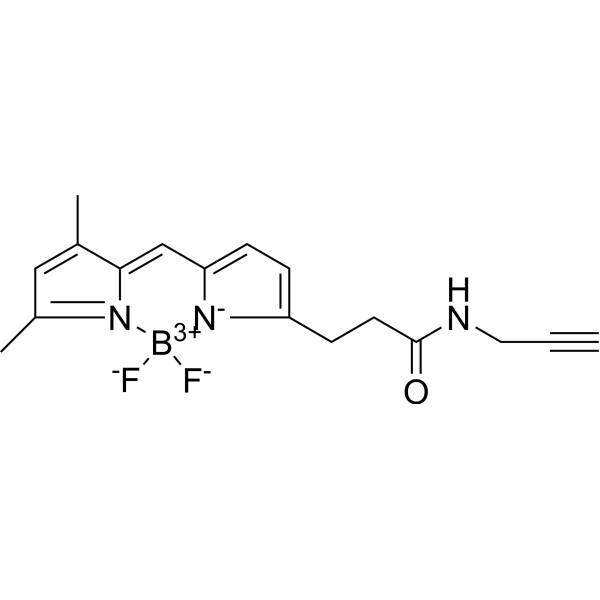
BODIPY (BOD) FL alkyne is an alkyne-containing BODIPY fluorophore derivative. BODIPY FL alkyne is a bioorthogonal labeling reagent with low toxicity and extremely low non-specific reactivity, and it is widely used in fluorescent bioimaging. BODIPY FL alkyne specifically labels azide groups on intracellular glycoconjugates mainly via strain-promoted azide-alkyne cycloaddition (SPAAC), or mediates site-specific conjugation with proteins such as IL-33, and supports positive cross-linking with other probes (e.g., DBCO-SCy5) for dual labeling. With the advantages of high specificity and low background interference, BODIPY FL alkyne can be used in the research of related diseases such as asthma, atopic dermatitis and inflammatory bowel disease .
loading...
    loading...
Cat. No.: HY-132187
CAS No.: 1670-26-4
Purity:  99.50%
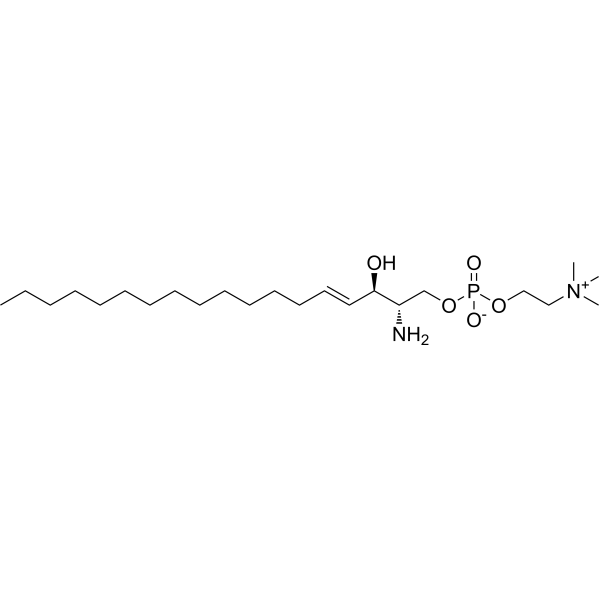
Sphingosylphosphorylcholine is a bioactive lipid and a major component of plasma high-density lipoprotein that binds to OGR1 with a Kd of 33.3 nM. Sphingosylphosphorylcholine triggers delayed phosphorylation of Smad2, upregulates α-SMA expression, and activates TRPM3. Sphingosylphosphorylcholine reduces Apoptosis and upregulates the expression of uPA and its receptor uPA-R. Sphingosylphosphorylcholine exerts anti-apoptotic, anti-cardiac hypertrophy and pro-wound healing effects. Sphingosylphosphorylcholine induces scratching behavior in mice. Sphingosylphosphorylcholine is used in studies related to atopic dermatitis, promyelocytic leukemia, heart failure, myocardial ischemia/reperfusion injury, ovarian cancer, breast cancer, pancreatic cancer, and skin wound healing disorders in genetically impaired healing diabetes .
loading...
    loading...
Cat. No.: HY-170977
Target:  

JAK STAT

Research Areas:  

Inflammation/Immunology

JAK1/STAT3-IN-1 (compound 4f) is an anti-AD (atopic dermatitis) agent by inhibiting JAK1/STAT3 signaling pathway. JAK1/STAT3-IN-1 inhibits NO generation with an IC50 of 2.17 μM. JAK1/STAT3-IN-1 improves the skin condition of AD-like mice, reduces inflammatory infiltration, inhibits the expressions of p-JAK1/JAK1 and p-STAT3/STAT3, and mitigates the excessive immune response on Calcipotriol (HY-10001) (MC903)-induced AD-like mice .
loading...
    loading...
Cat. No.: HY-175022
CAS No.: 2432992-21-5
PROTAC IRAK4 degrader-13 (Degrader 1) is a selective IRAK4 PROTAC degrader with DC50s of 0.86 and 1.1 nM for monocytes and lymphocytes in PBMCs, respectively. PROTAC IRAK4 degrader-13 significantly induces TIR signal activation, and inhibits the expression of circulating proinflammatory cytokines in Imiquimod (HY-B0180) induced psoriasis mice model. PROTAC IRAK4 degrader-13 can be used for TLR- and IL-1R-driven driven neutrophilic inflammation diseases like hidradenitis suppurativa (HS) and atopic dermatitis (AD) research . Pink: IRAK4 ligand; Blue: E3 ligase ligand; Black: linker
loading...
    loading...
Cat. No.: HY-189433
Keap1-Nrf2 PPI-IN-2 is a Keap1-Nrf2 PPI inhibitor with an EC50 of 14.2 μM. Keap1-Nrf2 PPI-IN-2 covalently binds to Keap1 cysteine residues through its electrophilic itaconate moiety, disrupts the Keap1-Nrf2 protein-protein interaction, releases Nrf2, and promotes its nuclear translocation and antioxidant gene expression, thereby reducing ROS and inhibiting IL-13 production . Keap1-Nrf2 PPI-IN-2 can be used for research on atopic dermatitis .
loading...
    loading...
Cat. No.: HY-76711R
CAS No.: 16590-41-3
Naltrexone (Standard) is the analytical standard of Naltrexone (HY-76711). This product is intended for research and analytical applications. Naltrexone is an orally active, long-acting opioid receptor (opioid receptor) antagonist. Naltrexone blocks the euphoric effects of exogenous opioids and reduces alcohol craving by blocking opioid receptors (μ, κ, and δ) as well as opioid growth factor receptors. Low doses of Naltrexone are used to relieve chronic pain, treat inflammatory diseases and inhibit tumor growth, while high doses or continuous administration exert pro-inflammatory or pro-proliferative effects. Naltrexone relieves intractable pruritus caused by psoriasis, atopic dermatitis and other conditions, and its combination with Bupropion (HY-B0403) inhibits food craving, thereby reducing body weight.
loading...
    loading...
Cat. No.: HY-76711S
CAS No.: 2070009-29-7
Naltrexone-d4 is deuterium labeled Naltrexone (HY-76711). Naltrexone is an orally active, long-acting opioid receptor (opioid receptor) antagonist. Naltrexone blocks the euphoric effects of exogenous opioids and reduces alcohol craving by blocking opioid receptors (μ, κ, and δ) as well as opioid growth factor receptors. Low doses of Naltrexone are used to relieve chronic pain, treat inflammatory diseases and inhibit tumor growth, while high doses or continuous administration exert pro-inflammatory or pro-proliferative effects. Naltrexone relieves intractable pruritus caused by psoriasis, atopic dermatitis and other conditions, and its combination with Bupropion (HY-B0403) inhibits food craving, thereby reducing body weight.
loading...
    loading...
Cat. No.: HY-P10580
CAS No.: 1359657-45-6
Vasculotide is a blood-brain barrier (BBB)-penetrant Tie2 agonist. Vasculotide binds to a unique domain of Tie2, induces receptor clustering to drive phosphorylation, activates downstream PI3K/Akt and eNOS pathways, enhances inter-endothelial cell junctions (such as VE-cadherin and claudin-5), and inhibits inflammatory adhesion molecules, ultimately stabilizing the vascular endothelial barrier and reducing its permeability . Vasculotide alleviates pulmonary microvascular leakage and microcirculatory dysfunction caused by cardiopulmonary bypass, acts as an adjuvant radioprotective agent to reduce acute radiation dermatitis, and promotes BBB recovery after focused ultrasound (FUS). Combination of Vasculotide with antibiotics reduces lung injury .
loading...
    loading...
Cat. No.: HY-P10580A
Vasculotide TFA is a blood-brain barrier (BBB)-penetrant Tie2 agonist. Vasculotide TFA binds to a unique domain of Tie2, induces receptor clustering to drive phosphorylation, activates downstream PI3K/Akt and eNOS pathways, enhances inter-endothelial cell junctions (such as VE-cadherin and claudin-5), and inhibits inflammatory adhesion molecules, ultimately stabilizing the vascular endothelial barrier and reducing its permeability . Vasculotide TFA alleviates pulmonary microvascular leakage and microcirculatory dysfunction caused by cardiopulmonary bypass, acts as an adjuvant radioprotective agent to reduce acute radiation dermatitis, and promotes BBB recovery after focused ultrasound (FUS). Combination of Vasculotide TFA with antibiotics reduces lung injury .
loading...
    loading...
Cat. No.: HY-P990281

Target:  

Interleukin Related

Research Areas:  

Inflammation/Immunology

Anti-Mouse CD25/IL-2Rα Antibody (PC-61.5.3) is a rat-derived IgG1 λ type antibody inhibitor, targeting to mouse CD25/IL-2Rα. Anti-Mouse CD25/IL-2Rα Antibody (PC-61.5.3) can deplete CD25+ T cells. Anti-Mouse CD25/IL-2Rα Antibody (PC-61.5.3) can be used for the researches of immunology and inflammation, such as atopic dermatitis .
loading...
    loading...
Cat. No.: HY-P990735
CAS No.: 2765066-99-5
Synonyms: UCB-1381

Target:  

Interleukin Related

Research Areas:  

Inflammation/Immunology

Donzakimig is a trispecific anti-IL-13/IL-22/HSA antibody. Donzakimig adopts a Fab-scFv-scFv structural format (without an Fc region), in which the Fab domain is linked to the scFv domains via a S (G4S)2 linker. Donzakimig binds to and inhibits the activities of IL-13 and IL-22, thereby blocking the signal transduction of these two cytokines. Donzakimig can extend its serum half-life by binding to human serum albumin, enhancing its in vivo stability and achieving long-acting efficacy. Donzakimig can be used in research on moderate-to-severe atopic dermatitis, moderate-to-severe asthma (especially eosinophilic type), psoriasis, inflammatory bowel disease, and other conditions .
loading...
    loading...
Cat. No.: HY-184965
CAS No.: 2020058-38-0
Target:  

Calcium Channel

Research Areas:  

Inflammation/Immunology

S-Y048 is an orally active OXE receptor-selective antagonist with picomolar-level IC50 values (0.02-30 nM) and pIC50 values of (10.47-10.81) against human receptors. S-Y048 selectively blocks the 5-oxo-ETE signaling pathway, inhibits actin polymerization, calcium mobilization, leukocyte migration, as well as allergen-induced leukocyte infiltration in skin and lung tissues, and reduces mucin-producing bronchial epithelial cells. S-Y048 undergoes benzyl, N-methyl and α-hydroxylation reactions to form metabolites in monkeys. S-Y048 can be used in research related to asthma, allergic asthma, allergic eosinophilic diseases, atopic dermatitis and allergic rhinitis .
loading...
    loading...
Cat. No.: HY-19205B
CAS No.: 205654-37-1
(2S,5S)-CMI-392 is the absolute configuration of CMI-392 (HY-19205A). CMI-392 is an orally active dual 5-lipoxygenase inhibitor and platelet-activating factor receptor (PAFR) antagonist, with an IC50 of 10 nM for human PAF receptor and an IC50 of 100 nM for rat 5-lipoxygenase. CMI-392 blocks PAF receptor binding, inhibits leukotriene synthesis, attenuates PAF-induced hemoconcentration, and suppresses arachidonic acid- and TPA-induced ear swelling in mice. CMI-392 reduces inflammatory cell infiltration, decreases MPO levels, alleviates ocular inflammation, and improves dextran sulfate sodium-induced colitis. CMI-392 can be used in the research of inflammatory and immune-related diseases such as colitis and atopic dermatitis .
loading...
    loading...
Cat. No.: HY-N10093
CAS No.: 69618-96-8
Synonyms: Chamaejasmin
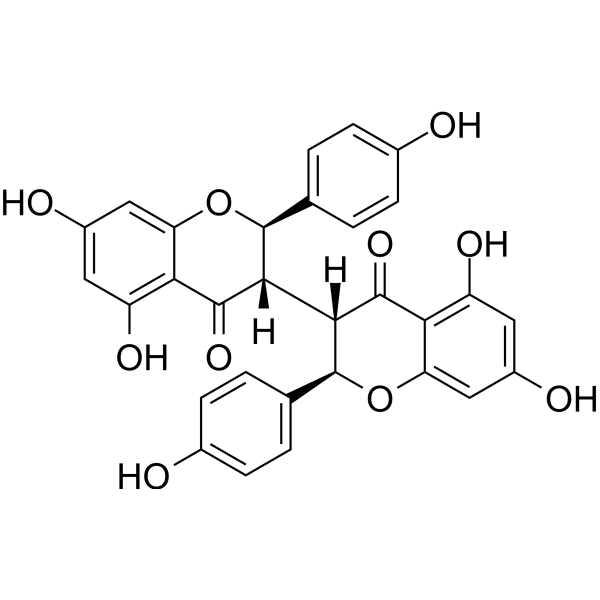
Chamaejasmine (Chamaejasmin) is a natural biflavonoid found in the roots of Stellera chamaejasme, exhibiting antitumor activity. Chamaejasmine inhibits Bcl-2, upregulates Bax, and induces cleavage of caspase-9/-3 and PARP. Chamaejasmine induces ROS production, Δψm loss, cytochrome c release, G2/M arrest, apoptosis, and autophagy. Chamaejasmine induces apoptosis and autophagy through activation of AMPK and inhibition of mTOR, and inhibits microtubule depolymerization by binding to β-tubulin. Chamaejasmine inhibits IL-4, IgE, β-hexosaminidase, and mast cell infiltration, and improves skin barrier function in AD models. Chamaejasmine exhibits cytotoxicity against various cancer cells. Chamaejasmine can be used in research related to various cancers such as lung adenocarcinoma and osteosarcoma, as well as atopic dermatitis .
loading...
    loading...
Cat. No.: HY-NP229
DNP-BSA is a multivalent antigen and protein-binding reagent. DNP-BSA binds to subdomain IIA (Site I) of bovine serum albumin via predominantly hydrophobic forces, with spontaneous complex formation via combined dynamic and static quenching. DNP-BSA induces cross-linking of IgE-bound FceRI, triggering tyrosine phosphorylation of FceRI β and γ subunits. DNP-BSA binds to anti-DNP IgE via its DNP groups, forming cross-links between IgE-FceRI complexes, with most DNP groups initially unavailable but transiently exposed for binding. DNP-BSA induces FITC fluorescence quenching in FITC-labeled anti-DNP IgE, proportional to occupied IgE Fab binding sites. DNP-BSA can be used for the research of allergy, inflammation, and contact sensitivity (allergic contact dermatitis) .
loading...
    loading...
Cat. No.: HY-167597S
C18:0-d7 GD1b Ceramide (d18:1/18:0-d7) is the deuterated-labeled C18:0 GD1b Ceramide (d18:1/18:0), synthetic (HY-167597). C18:0 GD1b Ceramide (d18:1/18:0), synthetic is a synthetic ganglioside. C18:0 GD1b Ceramide (d18:1/18:0), synthetic is a Ganglioside GD1b derivative and a high-purity research standard. C18:0 GD1b Ceramide (d18:1/18:0), synthetic can be used for research on atopic dermatitis and Alzheimer's disease .
loading...
    loading...
Cat. No.: HY-DY1007
CAS No.: 3326-32-7
Target:  

Fluorescent Dye

Research Areas:  

Inflammation/Immunology

FITC (Fluorescein Isothiocyanate) (solution) , is one of the green fluorescein derivatives widely used in biology. FITC has the characteristics of high absorptivity and excellent fluorescence quantum yield. The isothiocyanate group of FITC can be combined with amino, sulfhydryl, imidazole, tyrosyl, carbonyl and other groups on the protein, so as to achieve protein labeling including antibodies and lectins. In addition to its use as a protein marker, FITC can also be used as a fluorescent protein tracer to rapidly identify pathogens by labeling antibodies, or for microsequencing of proteins and peptides (HPLC). The maximum excitation wavelength of FITC is 494 nm. Once excited, it fluoresces yellow-green at a maximum emission wavelength of 520 nm. In addition, FITC is also a hapten that can induce contact hypersensitivity (CHS) and induce an atopic dermatitis model .
Solvent and concentration: DMSO: 20 mM
The 1 mL volume is defined as the base specification. All larger sizes correspond to incremental volumes of this base.
loading...
    loading...
Cat. No.: HY-N3963
CAS No.: 82425-45-4
Synonyms: (+)-Gomisin M2
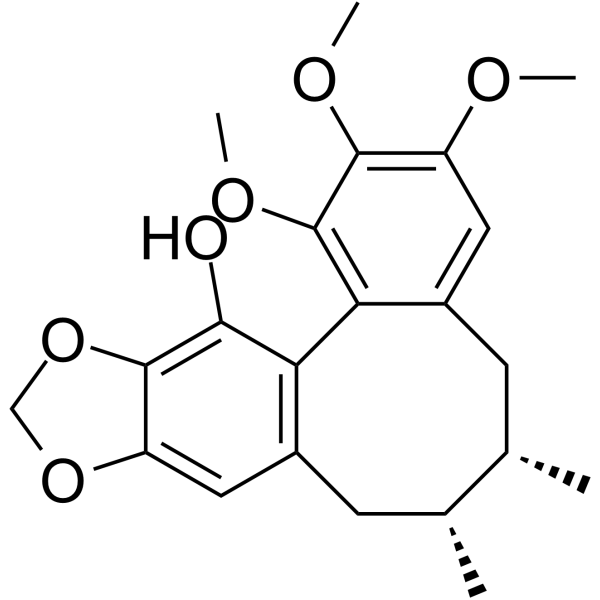
Gomisin M2 ((+)-Gomisin M2) is a lignan isolated from the fruits of Schisandra chinensis with oral availability. Gomisin M2 inhibits STAT1 phosphorylation as well as NF-κB p65 phosphorylation and nuclear translocation. Gomisin M2 reduces inflammatory cell infiltration, cytokine and chemokine expression, and serum IgE and IgG2a levels. Gomisin M2 inhibits MAPK phosphorylation, IκBα degradation, and NF-κB nuclear translocation in keratinocytes. Gomisin M2 induces apoptosis, mitochondrial membrane potential disruption, and cytochrome c release, and inhibits DNA synthesis and mammosphere formation through downregulation of Wnt/β-catenin. Gomisin M2 can be used for research on atopic dermatitis, psoriasis, breast cancer, liver injury, and multidrug-resistant mammary adenocarcinoma .
loading...
    loading...
Cat. No.: HY-N4226R
CAS No.: 3719-45-7
1-Methyl-6-oxo-1,6-dihydropyridine-3-carboxylic acid (Standard) is the analytical standard of 1-Methyl-6-oxo-1,6-dihydropyridine-3-carboxylic acid (HY-N4226). This product is intended for research and analytical applications. 1-Methyl-6-oxo-1,6-dihydropyridine-3-carboxylic acid is an AP-1 inhibitor which can be found in Cordyceps bassiana. 1-Methyl-6-oxo-1,6-dihydropyridine-3-carboxylic acid downregulates the expression of COX-2. 1-Methyl-6-oxo-1,6-dihydropyridine-3-carboxylic acid can be used for the study of atopic dermatitis.
loading...
    loading...
Cat. No.: HY-W017982
CAS No.: 55965-84-9
Synonyms: CMI/MI
CMIT/MIT (14.5% in water) (CMI/MI) is a mixture of CMIT and MIT, and is also a preservative and skin sensitizer. CMIT/MIT (14.5% in water) increases the levels of phosphorylated ERK1/2, p38, JNK1/2, p53, p21 and Bax, decreases the level of Bcl-2, and activates the Nrf-2/HO-1 signaling pathway. CMIT/MIT (14.5% in water) increases LDH release and lipid peroxidation levels, impairs antioxidant defense capacity, promotes pro-inflammatory cytokine release, induces apoptosis, triggers cell cycle arrest, exhibits neurotoxicity in neuroblastoma cells, and causes dysregulation of Th2/Th17 immune responses. CMIT/MIT (14.5% in water) can be used in studies related to allergy, atopic dermatitis and lung injury .
loading...
    loading...

