281 Results for "

Fluorescent substrate

" in MedChemExpress (MCE) Product Catalog:
Products (281)

281 Results for "Fluorescent substrate" in MCE Product Catalog:

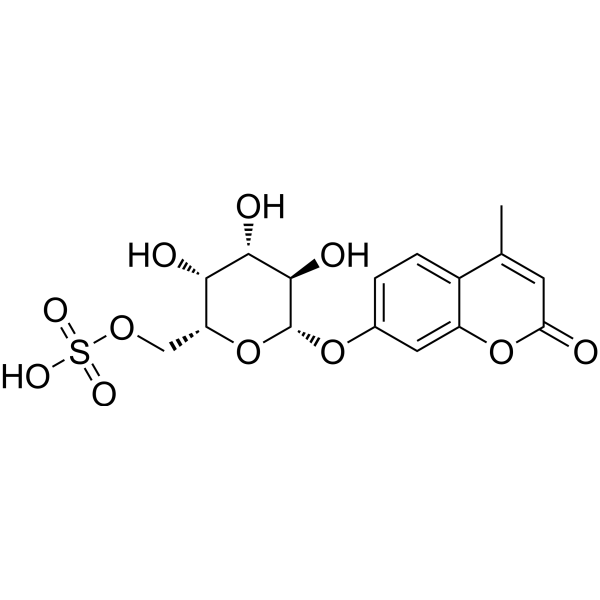
Cat. No.: HY-D1633
CAS No.: 126938-14-5
4-Methylumbelliferyl-β-D-galactopyranoside 6-sulfate is a fluorescent dye. 4-Methylumbelliferyl-β-D-galactopyranoside 6-sulfate undergoes desulphation by galactose-6-sulphate sulphatase to form 4-methylumbelliferyl-β-D-galactopyranoside, which is cleaved by β-galactosidase to release fluorescent 4-methylumbelliferone. 4-Methylumbelliferyl-β-D-galactopyranoside 6-sulfate interacts with N-acetylgalactosamine-6-sulfate sulfatase (GALNS) via hydrogen bonds, electrostatic interactions, and steric interactions. 4-Methylumbelliferyl-β-D-galactopyranoside 6-sulfate serves as a substrate in assays measuring galactose-6-sulphate sulphatase and GALNS activity. 4-Methylumbelliferyl-β-D-galactopyranoside 6-sulfate can be used for the research of Morquio disease type A (mucopolysaccharidosis IV A) .
loading...
    loading...
Cat. No.: HY-D0820A
Synonyms: Sulfo-Cyanine5-alkyne triethylamine
Research Areas:  

Others

CY5-YNE triethylamine (Sulfo-Cyanine5-alkyne triethylamine) is a class of near-infrared fluorescent dye derivatives used in research related to the labeling of proteins, peptides, nucleic acids, and nanomaterials. CY5-YNE triethylamine is a click chemistry reagent. It contains an Alkyne group and can undergo copper-catalyzed azide-alkyne cycloaddition (CuAAc) with molecules containing Azide groups. CY5-YNE triethylamine exhibits photostable emission properties in imaging applications, enabling covalent labeling of azide-modified substrates .
loading...
    loading...
Cat. No.: HY-DY1034
CAS No.: 76204-02-9
4-MUNANA (solution) is a substrate of influenza virus neuraminidase (NA) with high selectivity and irreversible reaction. In the enzymatic reaction, 4-MUNANA is hydrolyzed by NA to generate fluorescent 4-methylumbelliferone (4-MU). By detecting the fluorescence intensity of 4-MU, quantitative analysis of NA activity can be achieved. 4-MUNANA can be used in influenza-related research, such as screening NA inhibitors, developing new anti-influenza drugs, and studying the infection mechanism of influenza viruses .
Solvent and Concentration: Sterile water: 10 mM
loading...
    loading...
Cat. No.: HY-131586
CAS No.: 492-00-2
Synonyms: Resogalangin
3,7-Dihydroxyflavone (Resogalangin) is a flavonoid phytoestrogen, which can be isolated from Adenophora species. 3,7-Dihydroxyflavone is a modulator of estrogen receptors and an inhibitor of human progesterone metabolizing enzyme AKR1C1 and fungal 17β-hydroxysteroid dehydrogenase and a redox inhibitor (IC50=0.6 and 6.0 μM, respectively). 3,7-Dihydroxyflavone is a fluorescent binding substrate for human serum albumin (HSA) with excitation wavelengths of 370 nm (pH 7.4) and 350 nm (pH 3.5), respectively, and emission wavelength of 515 nm .
loading...
    loading...
Cat. No.: HY-D3141
DR probe is a "dual-key-and-lock" fluorescent probe designed based on the Resorufin (HY-123533) scaffold (Ex/Em = 647 nm/663-738 nm). DR probe can be sequentially activated by hydrogen peroxide to form the intermediate SR, which acts as a tyrosinase substrate to trigger a fluorescence turn-on signal. DR probe can distinguish normal melanocytes from melanoma cells. DR probe supports cell imaging and can be applied to mouse melanoma models to achieve melanoma diagnosis with higher accuracy and lower false-positive rates. DR probe is applicable to relevant research on melanoma .
loading...
    loading...
Cat. No.: HY-D3182
CAS No.: 2252329-12-5
AldeRed 588-A is a fluorescent labeling reagent and a substrate for aldehyde dehydrogenase (ALDH). AldeRed 588-A is metabolized by functionally active ALDH enzymes, thereby specifically labeling viable ALDH bright cell populations with red-shifted fluorescence. AldeRed 588-A supports one-step isolation and sorting of ALDH-expressing cells (including normal stem cells and cancer stem cells), and can be used in combination with green fluorophores for multicolor experimental applications. AldeRed 588-A is widely applicable to research related to various cancers such as bladder cancer, breast cancer, and head and neck cancer .
loading...
    loading...
Cat. No.: HY-N1181R
CAS No.: 603-61-2
Synonyms: 4'-O-Methyl Quercetin (Standard)
Tamarixetin (Standard) is the analytical standard of Tamarixetin. This product is intended for research and analytical applications. Tamarixetin (4'-O-Methyl Quercetin) is an orally active natural flavonoid derivative of quercetin and caseinolytic protease p (ClpP) inhibitor with anti-inflammatory, antioxidant and antitumor effects. Tamarixetin inhibits the hydrolytic activity of ClpP to the fluorescent substrate Suc-LY-AMC with an IC50 of 49.73 μM, which can be used for the study of Staphylococcus aureus infection. Tamarixetin inhibits tumor cell growth, induces apoptosis, and cell cycle arrest. Tamarixetin prevents cardiac hypertrophy by inhibiting the NFAT and AKT pathways .
loading...
    loading...
Cat. No.: HY-110210R
CAS No.: 146616-66-2
Synonyms: BODIPY FL,SE (Standard)
Research Areas:  

Others

BODIPY-FL NHS ester (Standard) is the analytical standard of BODIPY-FL NHS ester (HY-110210). This product is intended for research and analytical applications. BODIPY FL NHS ester (BODIPY FL, SE) is a cell membranes-penatrable amine-reactive fluorescent probe. The maximum excitation/emission wavelength of the BODIPY-FL NHS ester are 502/511 nm, respectively. BODIPY-FL NHS ester has high stability and is insensitive to the polarity, pH and type of solvent, and can maintain stable fluorescence properties under different environmental conditions. BODIPY-FL NHS ester can be used for the synthesis of protease substrates, live cell imaging, protein labeling and immunoassay .
loading...
    loading...
Cat. No.: HY-D3170
C-HBrO-GGT is a dual-target fluorescent indicator with specificity for γ-glutamyl transpeptidase (GGT) and hypobromous acid (HBrO). C-HBrO-GGT acts as a substrate for GGT and HBrO, undergoing enzymatic or chemical modification to trigger channel-specific fluorescence, with sequential activation requiring initial GGT hydrolysis. C-HBrO-GGT enables simultaneous in vitro and in vivo fluorescence detection of GGT and HBrO. C-HBrO-GGT identifies mature atherosclerotic plaque positions and provides early warning of plaque formation before visual or classical immunofluorescent detection. C-HBrO-GGT can be used for the research of atherosclerosis (Ex/Em = 370 nm/500 nm) .
loading...
    loading...
Cat. No.: HY-D3187
CAS No.: 2484831-02-7
HMRef-αMan is a substrate-based green fluorescent probe (Ex/Em=465 nm/515 nm) targeting MAN2C1 (α-mannosidase). HMRef-αMan can be specifically cleaved by MAN2C1 to generate a highly fluorescent product, which thus gets activated to produce green fluorescence in malignant breast tissues, benign lesions and living cancer cells. The signal intensity of HMRef-αMan is directly correlated with MAN2C1 activity, and it can effectively detect tiny breast cancer lesions with a diameter of less than 1 mm. When used in combination with the red-emitting γ-glutamyl transpeptidase (GGT) probe gGlu-2OMe SiR600 (HY-D3188), HMRef-αMan enables precise optical differentiation of breast tissue types via a dual-color imaging strategy. HMRef-αMan has been widely used in the research of breast diseases such as breast cancer, fibroadenoma, phyllodes tumor and various types of papilloma .
loading...
    loading...
Cat. No.: HY-D2738
CAS No.: 2791287-15-3
BP Fluor 532 NHS ester is an amine reactive, yellow-emitting dye routinely used to label proteins or antibodies through primary amines (Lys), amine-modified oligonucleotides, and other amine-containing biomolecules. The labeling occurs most efficiently at pH 7-9 and forms a stable, covalent amide bond. BP Fluor 532 is a bright yellow-fluorescent dye with pH insensitive emission from pH 4 to pH 10. The excitation of BP Fluor 532 is ideally suited for the frequency-doubled Nd:YAG laser line. BP Fluor 532 can be conjugated to a variety of antibodies, peptides, proteins, tracers, and amplification substrates, and is often used for the generation of stable signals in imaging and flow cytometry.
loading...
    loading...
Cat. No.: HY-187338
Target:  

Ligands for E3 Ligase

Research Areas:  

Others

CRBN ligand-908 is a cereblon (CRBN) ligand and also a HaloTag-binding degrader. CRBN ligand-908 competes with fluorescent lenalidomide ligands for binding to full-length CRBN protein. CRBN ligand-908 contains a chlorohexyl group that covalently reacts with HaloTag fused to target proteins. CRBN ligand-908 induces degradation of HaloTag-fused FAK, endogenous MARC1, and BRD4 proteins. CRBN ligand-908 is a proteasome- and Cullin-dependent degrader. CRBN ligand-908 does not induce degradation of the novel CRBN substrates GSPT1, SALL4, or CSNK1α. CRBN ligand-908 can be used to synthesize PROTACs, such as HaloPROTAC 4 (HY-187337) .
loading...
    loading...
Cat. No.: HY-182383
CAS No.: 1209002-42-5
Target:  

CDK Apoptosis

Research Areas:  

Cancer

VMY-1-101 is a fluorescent cyclin-dependent kinase (CDK) inhibitor, with an excitation of 410 nm and emission of 512 nm. VMY-1-101 competitively inhibits ATP binding to CDKs. VMY-1-101 induces G2/M cell cycle arrest in human breast cancer cells. VMY-1-101 induces modest apoptosis in human breast cancer cells. VMY-1-101 blocks proliferation of human breast cancer cells, including multidrug resistance-positive cells, and is not a substrate for p-glycoprotein. VMY-1-101 localizes to the cytoplasm of human breast cancer cells. VMY-1-101 shows increased binding to human breast cancer tissue compared to fluorophore alone. VMY-1-101 can be used for the research of breast cancer .
loading...
    loading...
Cat. No.: HY-D2763
CAS No.: 890928-51-5
BP Fluor 532 maleimide is a photostable, bright yellow-fluorescent dye with pH insensitive emission from pH 4 to pH 10. The excitation of BP Fluor 532 is ideally suited for the frequency-doubled Nd:YAG laser line. BP Fluor 532 dye can be conjugated to a variety of antibodies, peptides, proteins, tracers, and amplification substrates, and is often used for the generation of stable signals in imaging and flow cytometry. Maleimide is the most popular sulfhydryl-reactive group for conjugating the dye to a thiol group on a protein, oligonucleotide thiophosphate, or low molecular weight ligand. The maleimide group specifically and efficiently reacts with reduced thiols (sulfhydryl groups, –SH) at pH 6.5 to 7.5 to form a stable thioether bond. The resulting conjugates exhibit brighter fluorescence and greater photostability than the conjugates of many other spectrally similar fluorophores.
loading...
    loading...
Cat. No.: HY-D3186
CAS No.: 2163840-29-5
HMRef-βGal is a fluorescent probe and a substrate responsive to β-galactosidase (β-galactosidase) (Ex/Em=498 nm/505-600 nm). After being cleaved by β-galactosidase, HMRef-βGal triggers significant fluorescence enhancement via intramolecular spirocyclic function regulation. HMRef-βGal generates bright fluorescence in cancer cells with elevated β-galactosidase activity, enabling visualization of tiny peritoneal metastases in mouse models. HMRef-βGal exhibits low in vitro cytotoxicity and low acute in vivo toxicity in mice. HMRef-βGal can be used for preclinical fluorescence-guided diagnosis and cytoreductive surgery of peritoneal metastases, including compatibility with real-time naked-eye detection and endoscopic imaging, as well as for studies related to peritoneal metastases of ovarian cancer .
loading...
    loading...
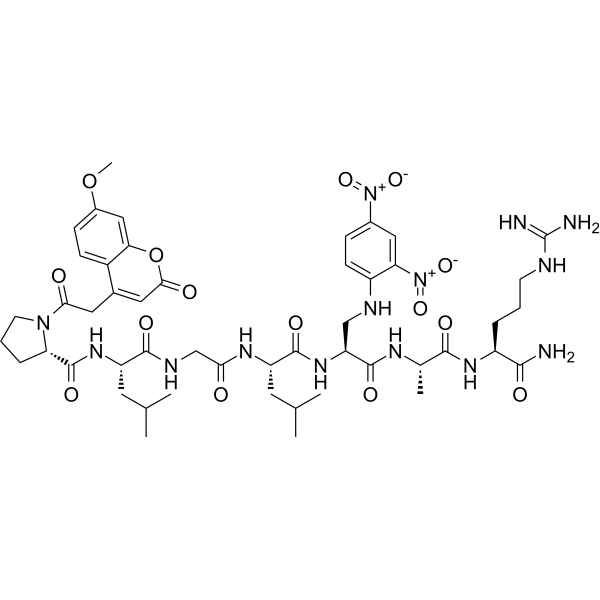
Cat. No.: HY-131498
CAS No.: 140430-53-1
Purity:  99.67%
Synonyms: Mca-Pro-Leu-Gly-Leu-Dpa-Ala-Arg-NH2
Target:  

Fluorescent Dye MMP

Research Areas:  

Cancer

MOCAc-PLGL (Dpa) AR (Mca-Pro-Leu-Gly-Leu-Dpa-Ala-Arg-NH2) is a synthetic fluorescent substrate mainly used for in vitro enzymatic activity assays of MMP-7 (detection at 393 nm after excitation at 328 nm). MOCAc-PLGL (Dpa) AR is specifically cleaved and hydrolyzed by MMP-7 at the Gly-Leu peptide bond, allowing enzymatic activity to be monitored via fluorometry or HPLC (DMSO is usually added to ensure sufficient dissolution when determining kinetic parameters). MOCAc-PLGL (Dpa) AR is used to accurately evaluate the catalytic activity and pH dependence of recombinant mature human MMP-7 in vitro. MOCAc-PLGL (Dpa) AR is suitable for research on the mechanisms of tumor metastasis and invasion, particularly in fields such as prostate cancer, colon cancer, lung cancer and breast cancer .\n
loading...
    loading...
Cat. No.: HY-D2745
CAS No.: 1638544-48-5
BP Fluor 594 NHS ester is the most popular tool for modifying proteins or antibodies through the primary amines (Lys), amine-modified oligonucleotides, and other amine-containing biomolecules with BP Fluor 594 label. The labeling occurs most efficiently at pH 7-9 and forms a stable, covalent amide bond. BP Fluor 594 dye can be used for proteins labeling at high molar ratios without significant self-quenching, enabling brighter conjugates and more sensitive detection. BP Fluor 594 is bright, water-soluble, and pH-insensitive from pH 4 to pH 10 red-fluorescent dye with absorption and emission maxima at 590 and 617 nm, respectively. It can be used with the 561 nm and 594 nm laser lines. BP Fluor 594 dye conjugated to a variety of antibodies, peptides, proteins, tracers, and amplification substrates often used for generation of stable signal in imaging and flow cytometry.
loading...
    loading...
Cat. No.: HY-D2984
CAS No.: 1308789-62-9
Synonyms: SNAP-PEG-NH2
Target:  

Fluorescent Dye

Research Areas:  

Others

BG-PEG-NH2 (SNAP-PEG-NH2) is an amino-terminal fluorescent probe building block and a precursor for site-specific labeling of SNAP-tag fusion proteins. BG-PEG-NH2 undergoes one-step coupling with activated carboxyl esters to form customized SNAP-tag substrates, which covalently bind to SNAP tags via a thioether bond formed at the Cys145 site. After coupling with a caged carboxyfluorescein, BG-PEG-NH2 forms a probe with Ex/Em = 500/524 nm following ultraviolet uncaging. Coupling of BG-PEG-NH2 with SeTau-647-NHS enables visualization of GPCR signal transduction. BG-PEG-NH2 is suitable for coupling reactions in aqueous phases or buffers, conjugation of labels, and labeling of intracellular or cell-surface proteins .
loading...
    loading...
Cat. No.: HY-W048513
CAS No.: 60129-59-1
7-Deaza-2'-deoxyadenosine is an isosteric dATP analog of 2'-deoxyadenosine. 7-Deaza-2'-deoxyadenosine is recognized by various DNA polymerases and incorporated into DNA strands as a substrate. 7-Deaza-2'-deoxyadenosine undergoes a bioorthogonal inverse electron demand Diels-Alder reaction with tetrazine-modified molecules, enabling site-specific labeling of DNA, surface antibody immobilization and intracellular fluorescent labeling. 7-Deaza-2'-deoxyadenosine reduces the DNA curvature of d(A6)·d(T6) fragments and the stability of DNA/RNA double helices, and leads to decreased antisense activity against SV40 T Antigen. 7-Deaza-2'-deoxyadenosine finds application in the research field of SV40 T Antigen-related cancers .
loading...
    loading...
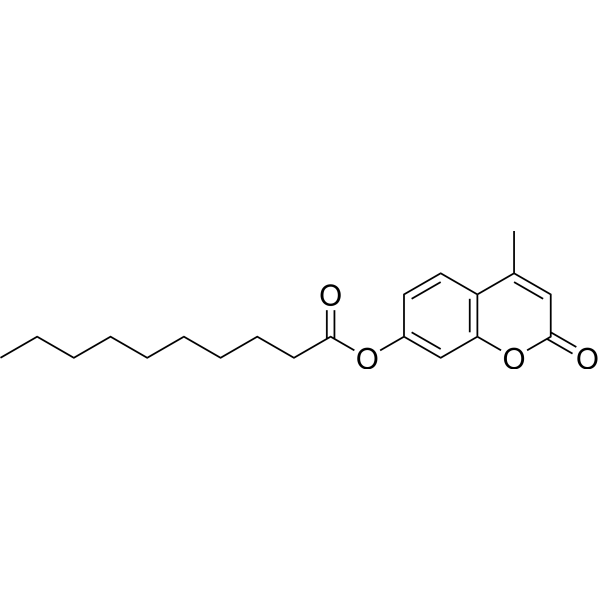
Cat. No.: HY-W354821
CAS No.: 66185-70-4
Synonyms: 4-MUD
4-Methyl-2-oxo-2H-1-benzopyran-7-yl decanoate is a fluorogenic substrate used to follow the hydrolytic activity of carboxylesterases .
loading...
    loading...

