
308 Results for "

wheat brown rust

" in MedChemExpress (MCE) Product Catalog:
Products (308)

308 Results for "wheat brown rust" in MCE Product Catalog:

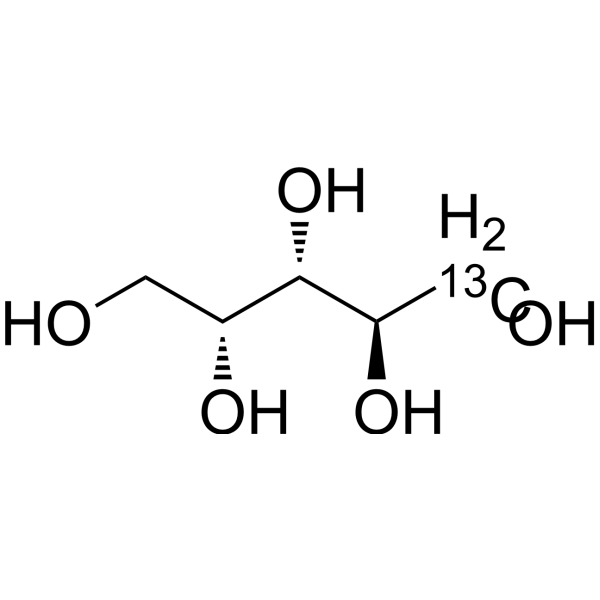
Cat. No.: HY-N3686S2
D-Arabitol- 13C-2 is the 13C labeled D-Arabitol. D-Arabitol is an orally active D-enantiomer of arabitol. D-Arabitol modulates the composition of gut microbiota, increases short-chain fatty acids, and promotes AMPK-PGC-1α-related browning of white adipose tissue. D-Arabitol improves weight gain, fat accumulation, insulin resistance, lipid deposition and inflammatory responses. D-Arabitol serves as the sole carbon/energy source for Bacillus methanolicus MGA3, a strain that can co-utilize it with mannitol. D-Arabitol is applicable to obesity-related research.
loading...
    loading...
Cat. No.: HY-189346
Target:  

Myosin Fungal

Research Areas:  

Infection

Myosin I-IN-1 is an Antifungal agent and Myosin I inhibitor with a Kd of 0.14 μM for FgMyoI. Myosin I-IN-1 inhibits mycelial growth, sporulation, spore germination, and Deoxynivalenol (HY-N6684) biosynthesis. Myosin I-IN-1 disrupts cell wall and cell membrane integrity and induces hyphal morphological changes. Myosin I-IN-1 exhibits broad-spectrum antifungal activity against plant pathogenic fungi. Myosin I-IN-1 shows protective efficacy against Fusarium head blight in wheat and maize. Myosin I-IN-1 can be used for research on Fusarium head blight .
loading...
    loading...
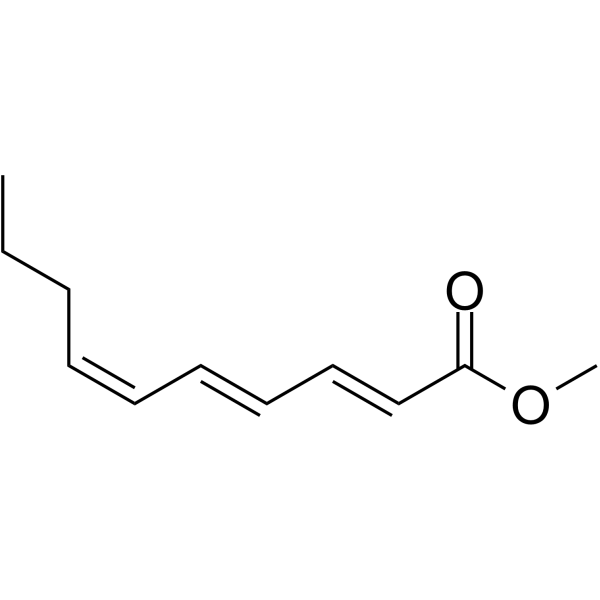
Cat. No.: HY-100072
CAS No.: 51544-64-0
Synonyms: Methyl (2E,4E,6Z)-decatrienoate
Target:  

Sex Pheromone

Research Areas:  

Infection

(2E,4E,6Z)-Methyl deca-2,4,6-trienoate (Methyl (2E,4E,6Z)-decatrienoate) is the aggregation pheromone of the brown-winged green bug, Plautia stali. (2E,4E,6Z)-Methyl deca-2,4,6-trienoate exposed to daylight in solutions and/or on dispensers used for field trapping can readily isomerize to form complex mixtures of isomers, thus causing a concern about lure stability and longevity .
loading...
    loading...
Cat. No.: HY-182413
CAS No.: 849020-48-0
Target:  

Phospholipase

Research Areas:  

Infection

SMases D-IN-1 is an inhibitor of SMase D (sphingomyelinase D) from Loxosceles (brown recluse spider), with a Ki value of 0.54 μM. SMases D-IN-1 inhibits the hydrolysis of sphingomyelin substrates by recombinant and native SMases D, reduces the binding ability of SMases D to human red blood cells, and prevents the shedding of glycophorin C from the surface of human red blood cells. SMases D-IN-1 partially inhibits Loxosceles venom-induced death of human keratinocytes and also suppresses systemic reactions triggered by Loxosceles venom. SMases D-IN-1 can be used in studies related to recluse spider envenomation .
loading...
    loading...
Cat. No.: HY-N3686R
CAS No.: 488-82-4
D-Arabitol (Standard) is the analytical standard of D-Arabitol (HY-N3686). This product is intended for research and analytical applications. D-Arabitol is an orally active D-enantiomer of arabitol. D-Arabitol modulates the composition of gut microbiota, increases short-chain fatty acids, and promotes AMPK-PGC-1α-related browning of white adipose tissue. D-Arabitol improves weight gain, fat accumulation, insulin resistance, lipid deposition and inflammatory responses. D-Arabitol serves as the sole carbon/energy source for Bacillus methanolicus MGA3, a strain that can co-utilize it with mannitol. D-Arabitol is applicable to obesity-related research .
loading...
    loading...
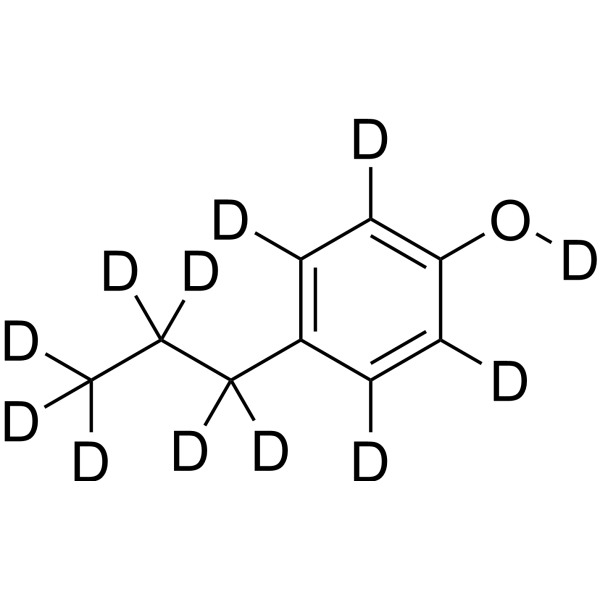
Cat. No.: HY-W017611S
CAS No.: 352431-21-1
4-Propylphenol-d12 is the deuterium labeled 4-Propylphenol. 4-Propylphenol is a plant-derived phenolic compound. 4-Propylphenol causes an increase in ROS within the Fusarium graminearum cells, leading to damage to the DNA and cell membranes of the mycelia, effectively inhibiting the growth of the mycelia. 4-Propylphenol also has a growth inhibitory effect on walnut pathogenic fungi (C. gloeosporioides, C. siamense, A. alternata), with its EC50 ranging from 29.11 to 31.89 mg/L, and it also inhibits spore germination, with EC50 being 55.04-71.85 mg/L. 4-Propylphenol can be used in the research of fungal diseases in walnuts and wheat Fusarium head blight.
loading...
    loading...
Cat. No.: HY-B0710R
CAS No.: 107-43-7
Synonyms: Trimethylglycine (Standard); carboxy-N,N,N-trimethylmethanaminium (Standard)
Betaine (Standard) is the analytical standard of Betaine. This product is intended for research and analytical applications. Betaine (Trimethylglycine) is a natural compound found in many foods and also an active methyl-donor which can maintain normal DNA methylation patterns [1,2]. Betaine is found ubiquitously in plants, animals, microorganisms, and rich dietary sources including seafood, spinach, and wheat bran. Betaine also acts as an osmolyte, to maintain the avian’s cellular water and ion balance to improve the avian’s capacity against heat stress via preventing dehydration and osmotic inactivation. It helps in maintaining the protective osmolytic activity, especially in heat-stressed birds. Betaine may promote various intestinal microbes against osmotic variations and thus improve microbial fermentation activity .
loading...
    loading...
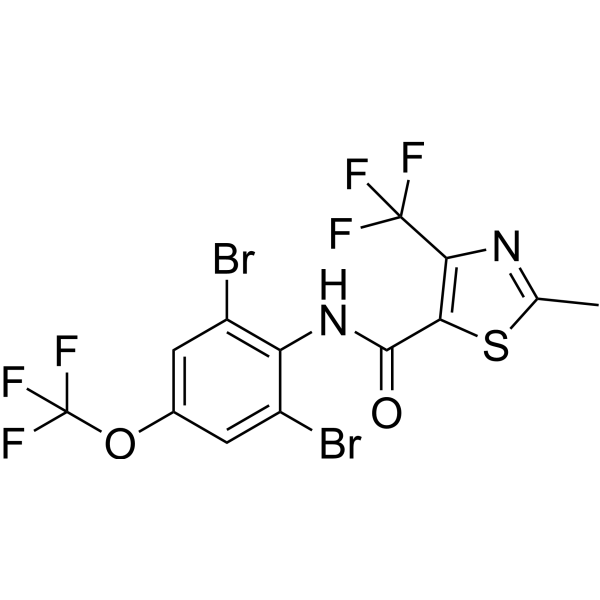
Cat. No.: HY-B2004
CAS No.: 130000-40-7
Thifluzamide is a fungicide that inhibits fungal respiration by blocking the ubiquinone-binding site in mitochondrial complex II. Thifluzamide exhibits significant activity against Basidiomycota pathogens (such as Rhizoctonia cerealis, Ustilago and Puccinia genera) and is commonly used in studies on wheat sharp eyespot. Thifluzamide displays a dual mechanism in regulating lipid metabolism: it reduces fatty acid synthase activity to inhibit endogenous fatty acid synthesis, and increases carnitine palmitoyltransferase-I activity to accelerate fatty acid β-oxidation, thereby reducing total cholesterol and triglyceride levels in the liver. Thifluzamide also induces hepatotoxicity in zebrafish models and carries a risk of developmental toxicity. Thifluzamide inhibition of Rhizoctonia cerealis may result in low to moderate levels of drug resistance, leading to the generation of stable drug-resistant mutants .
loading...
    loading...
Cat. No.: HY-D1991
CAS No.: 906664-68-4
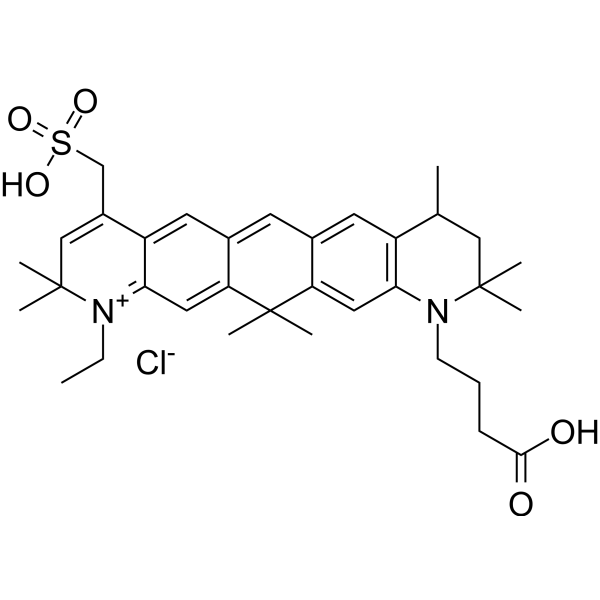
ATTO 647 is a carborhodamine fluorophore and imaging tracer with photostable properties. ATTO 647 serves as a fluorescent probe to investigate cell membrane structure and diffusion characteristics. When conjugated with wheat germ agglutinin, ATTO 647 specifically binds to N-acetyl-β-D-glucosamine and sialic acid residues on membrane glycoproteins, enabling single-molecule tracing of glycoprotein diffusion. ATTO 647 exhibits highly stable fluorescence properties with significantly reduced blinking in mounting media such as ROXS (AA/MV) and ROXS (TX/TQ), whereas its brightness properties vary in Ibidi-MM and Vectashield. ATTO 647 can also be used to label histone H2B-GFP in fixed cells for confocal microscopy photobleaching experiments .
loading...
    loading...
Cat. No.: HY-126969
CAS No.: 870095-15-1
Target:  

PPAR

Research Areas:  

Metabolic Disease

C333H is a selective PPARγ modulator with insulin-sensitizing and hypoglycemic activities. C333H exhibits similar insulin-sensitizing effects to thiazolidinediones (TZDs) in diabetic mouse models without significantly increasing body weight or adipose tissue weight. C333H increases circulating high molecular weight adiponectin isoform levels in diabetic db/db mice, reduces serine phosphorylation of PPARγ 273 in brown adipose tissue, and selectively modulates the expression of specific PPARγ target genes in adipose tissue. Express. C333H exhibits weak recruitment of co-activators and weak dissociation of co-repressors in vitro. These properties suggest that C333H may be a potential inhibitor of type 2 diabetes .
loading...
    loading...
Cat. No.: HY-P2917
CAS No.: 9030-66-4
Synonyms: GyK
Glycerol kinase, microorganism (GyK) acts as a NR4A1 inhibitor with enzymatic activity. It directly binds to and inhibits the transcription factor NR4A1, thereby negatively regulating hepatic gluconeogenesis and reducing blood glucose levels. Glycerol kinase, microorganism positively regulates UCP1 expression via partial dependence on the β-adrenergic receptor-cAMP-CREB pathway, promotes browning of white adipose tissue and thermogenesis, and further modulates intracellular fatty acid composition and energy metabolism. In diabetic mouse models, overexpression of Glycerol kinase effectively antagonizes NR4A1-induced hyperglycemia, demonstrating potential for improving glucose homeostasis. Glycerol kinase, microorganism can be used for studies on diabetes and obesity .
loading...
    loading...
Cat. No.: HY-B0710S
CAS No.: 309762-22-9
Synonyms: Trimethylglycine-13C3; Carboxy-N,N,N-trimethylmethanaminium-13C3
Betaine- 13C3 (Trimethylglycine- 13C3) is the 13C labeled isotope of Betaine (HY-B0710). Betaine (Trimethylglycine) is a natural compound found in many foods and also an active methyl-donor which can maintain normal DNA methylation patterns [1,2]. Betaine is found ubiquitously in plants, animals, microorganisms, and rich dietary sources including seafood, spinach, and wheat bran. Betaine also acts as an osmolyte, to maintain the avian’s cellular water and ion balance to improve the avian’s capacity against heat stress via preventing dehydration and osmotic inactivation. It helps in maintaining the protective osmolytic activity, especially in heat-stressed birds. Betaine may promote various intestinal microbes against osmotic variations and thus improve microbial fermentation activity .
loading...
    loading...
Cat. No.: HY-B2004R
CAS No.: 130000-40-7
Thifluzamide (Standard) is the analytical standard of Thifluzamide. This product is intended for research and analytical applications. Thifluzamide is a fungicide that inhibits fungal respiration by blocking the ubiquinone-binding site in mitochondrial complex II. Thifluzamide exhibits significant activity against Basidiomycota pathogens (such as Rhizoctonia cerealis, Ustilago and Puccinia genera) and is commonly used in studies on wheat sharp eyespot. Thifluzamide displays a dual mechanism in regulating lipid metabolism: it reduces fatty acid synthase activity to inhibit endogenous fatty acid synthesis, and increases carnitine palmitoyltransferase-I activity to accelerate fatty acid β-oxidation, thereby reducing total cholesterol and triglyceride levels in the liver. Thifluzamide also induces hepatotoxicity in zebrafish models and carries a risk of developmental toxicity. Thifluzamide inhibition of Rhizoctonia cerealis may result in low to moderate levels of drug resistance, leading to the generation of stable drug-resistant mutants .
loading...
    loading...
Cat. No.: HY-P0267A
CAS No.: 1036322-26-5
Melanotan (MT)-II acetate is a melanocortin receptor agonist. Melanotan (MT)-II acetate activates melanocortin receptor 3 and melanocortin receptor 4, and stimulates the release of central endogenous oxytocin. Melanotan (MT)-II acetate reverses recognition memory impairment, increased anxiety levels and reduced exploratory tendency in zebrafish exposed to short-term high-fat diet. Melanotan (MT)-II acetate improves impaired social behavior indicators in mouse models of autism spectrum disorder. Melanotan (MT)-II acetate induces weight loss, reduces food intake and exerts anorectic effects. Melanotan (MT)-II acetate increases intracavernous pressure and erectile activity in brown rats. Melanotan (MT)-II acetate can be used in studies related to memory impairment, anxiety, reduced exploratory behavior, autism spectrum disorder, obesity and erectile dysfunction .
loading...
    loading...
Cat. No.: HY-W018475
CAS No.: 144034-80-0
Synonyms: MK 462 free base
Target:  

5-HT Receptor

Research Areas:  

Neurological Disease

Rizatriptan (MK 462 free base) is an orally active 5-HT1B/5-HT1D receptor agonist, with BBB permeability. Rizatriptan exerts significant anti-migraine effects by constricting intracranial and extracranial blood vessels and inhibiting neuropeptide release. Rizatriptan exhibits species- and tissue-specific metabolic characteristics; for example, it undergoes oxidative deamination mainly by MAO-A in the liver of brown rats, so co-administration with MAO-A inhibitors is prohibited. Rizatriptan may also exacerbate nitroglycerin-induced cutaneous allodynia, prolong the duration of central sensitization, and increase anxiety-like behavior and active drug-seeking behavior in mice. Rizatriptan has been widely used in studies related to migraine and medication-overuse headache .
loading...
    loading...
Cat. No.: HY-120657
CAS No.: 1481636-31-0
Purity:  99.88%
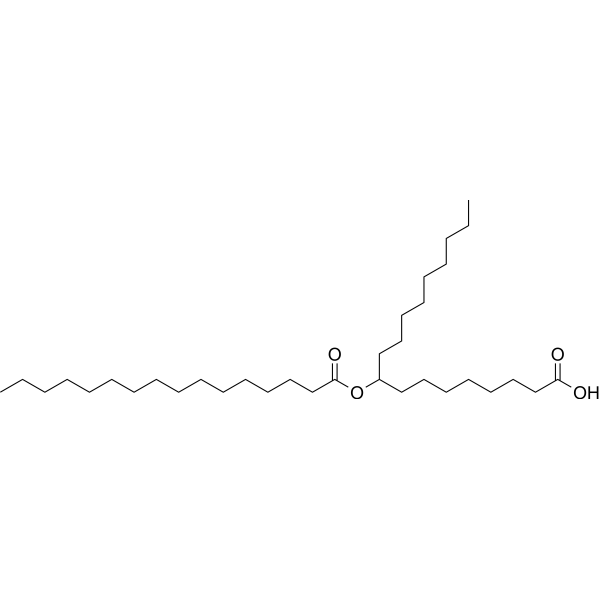
9-PAHSA is an orally active endogenous GPR120 agonist (EC50=18 μM). 9-PAHSA significantly inhibits LPS-induced inflammatory responses by blocking the NF-κB pathway. 9-PAHSA induces adipocyte browning, enhances glucose uptake and reduces lipid accumulation, while improving mitochondrial function and the survival rate of steatotic hepatocytes. In terms of neuroprotection, 9-PAHSA regulates the expression of REST and BDNF in the prefrontal cortex of diabetic mice, and effectively prevents spatial working memory deficits and abnormal social behaviors. 9-PAHSA does not directly regulate insulin secretion or improve systemic insulin sensitivity, and possesses specific anti-inflammatory, metabolic regulatory and neuroprotective properties. 9-PAHSA can be used in the research of diabetes-related cognitive impairment, obesity and non-alcoholic fatty liver disease .
loading...
    loading...
Cat. No.: HY-P4087
CAS No.: 1417221-06-7
Target:  

HIV

Research Areas:  

Infection Cancer

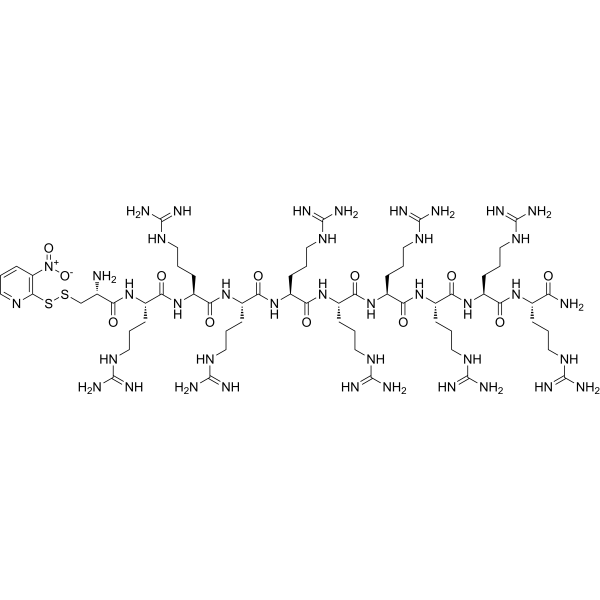
Cys(Npys)-(Arg)9 is a synthetic cationic cell-penetrating peptide with a reversible thiol-reactive nitropyridyl (Npys) group. Cys(Npys)-(Arg)9 efficiently mediates the internalization and delivery of various "cargo" such as proteins and antibodies by forming reversible disulfide bonds with surface-exposed cysteine residues. Cys(Npys)-(Arg)9 endows TALEN proteins with cell-penetrating activity, enabling gene knockout in mammalian cells and protein transduction in wheat microspores. Cys(Npys)-(Arg)9 can be conjugated with antibodies to form cationized IgG for enhancing endosomal escape of oligonucleotides, or form siRNA delivery complexes. When the molar ratio of Cys(Npys)-(Arg)9 to loaded molecules is higher than 1:1, it exerts certain cytotoxic effects on cells. Cys(Npys)-(Arg)9 can be used in studies related to oral squamous cell carcinoma and HIV infection .
loading...
    loading...
Cat. No.: HY-P4087B
Target:  

HIV

Research Areas:  

Others

Cys(Npys)-(Arg)9 acetate is a synthetic cationic cell-penetrating peptide with a reversible thiol-reactive nitropyridyl (Npys) group. Cys(Npys)-(Arg)9 acetate efficiently mediates the internalization and delivery of various "cargo" such as proteins and antibodies by forming reversible disulfide bonds with surface-exposed cysteine residues. Cys(Npys)-(Arg)9 acetate endows TALEN proteins with cell-penetrating activity, enabling gene knockout in mammalian cells and protein transduction in wheat microspores. Cys(Npys)-(Arg)9 acetate can be conjugated with antibodies to form cationized IgG for enhancing endosomal escape of oligonucleotides, or form siRNA delivery complexes. When the molar ratio of Cys(Npys)-(Arg)9 acetate to loaded molecules is higher than 1:1, it exerts certain cytotoxic effects on cells. Cys(Npys)-(Arg)9 acetate can be used in studies related to oral squamous cell carcinoma and HIV infection .
loading...
    loading...
Cat. No.: HY-W012832
CAS No.: 15707-23-0
2-Ethyl-3-methylpyrazine is a GABAA receptor potentiator, Antibacterial agent and Antifungal agent, with a Kp of 1.14 mM for GABAA. 2-Ethyl-3-methylpyrazine forms via the Maillard reaction in sunflower seeds and also exists in the crust of wheat bread. 2-Ethyl-3-methylpyrazine regulates mood or states of consciousness via central GABAA receptors. 2-Ethyl-3-methylpyrazine inhibits the growth of Ralstonia solanacearum and Magnaporthe oryzae. 2-Ethyl-3-methylpyrazine acts as an anxiolytic. 2-Ethyl-3-methylpyrazine is one of the sources of cocoa aroma, imparting nutty, corn-like, burnt, cereal, roasted and earthy flavors to foods. 2-Ethyl-3-methylpyrazine can be used in studies related to anxiety disorders and plant bacterial, fungal and oomycete infections .
loading...
    loading...
Cat. No.: HY-159494
PROTAC sEH degrader-1 is a PROTAC degrader targeting soluble epoxide hydrolase (sEH) with a DC50 of 0.5 nM, and it also possesses sEH inhibitory activity. PROTAC sEH degrader-1 has an IC50 of 3.8 nM against human sEH and an IC50 of 210 nM against mouse sEH. PROTAC sEH degrader-1 relies on the ubiquitin-proteasome system to achieve target protein degradation, and it selectively degrades cytoplasmic sEH. PROTAC sEH degrader-1 rapidly reduces endoplasmic reticulum stress in cells, downregulates the phosphorylation levels of IRE1α, PERK and eIF2α, enhances cell viability, and alleviates Thapsigargin (HY-13433)-induced apoptosis. PROTAC sEH degrader-1 effectively degrades sEH in mouse liver and brown adipose tissue. PROTAC sEH degrader-1 can be used in studies related to metabolic disorders and inflammation .
loading...
    loading...

