396 Results for "

phragmoplast assemblies

" in MedChemExpress (MCE) Product Catalog:
Products (396)

396 Results for "phragmoplast assemblies" in MCE Product Catalog:

Cat. No.: HY-168634
Research Areas:  

Cancer

SJ46421 is a BRD3BD2 PROTAC degrader. SJ46421 induces a cooperative ternary complex of KLHDC2 and BRD3BD2 with an IC50 of 7.8 nM. SJ46421 binds to the substrate-binding pocket of KLHDC2, forms cooperative ternary complexes with BRD3BD2, BRD2BD2 and BRD4BD2, disrupts the autoinhibitory tetramer assembly of KLHDC2, drives selective ubiquitination of BRD3BD2, and inhibits the ubiquitination of endogenous KLHDC2 diglycine substrates. SJ46421 can be used in cancer research .
loading...
    loading...
Cat. No.: HY-172760
CAS No.: 3104363-32-5
Target:  

SARS-CoV

Research Areas:  

Infection

CIM-834 is an orally effective inhibitor of SARS-CoV-2 membrane protein. CIM-834 can prevent the assembly of infectious virus particles without inhibiting the synthesis of viral RNA. CIM-834 can reduce the viral titer in the lungs of SCID mice infected nasally with SARS-CoV-2, block the spread of SARS-CoV-2 among Syrian hamsters, and inhibit the replication of SARS-CoV-2 (including variants) and SARS-CoV. CIM-834 can be used in related research on COVID-19 .
loading...
    loading...
Cat. No.: HY-174305
Target:  

Amyloid-β

Research Areas:  

Neurological Disease

Aβ42-IN-7 (Compound CT-01) is a brain-penetrant and selective amyloid-β42 (Aβ42) inhibitor. Aβ42-IN-7 inhibits Aβ42’s assembly into neurotoxic soluble oligomers and extracellular fibrillary aggregates. Aβ42-IN-7 exerts neuroprotective effects by reducing amyloid-mediated neuronal toxicity. Aβ42-IN-7 can be used in research on Alzheimer’s disease (AD) .
loading...
    loading...
Cat. No.: HY-176433
CAS No.: 79514-43-5
Target:  

Flavivirus

Research Areas:  

Infection

NSC-323241 is a potent STT3A-mediated mega protein complex assembly inhibitor. NSC-323241 disrupts he endoplasmic reticulum (ER) mega complex nucleated by STT3A during dengue virus (DENV) and Zika virus (ZIKV) infection. NSC-323241 targets the binding of STT3A subcomplex with viral nonstructural proteins (e.g., NS2B, NS3) and host translocon proteins, disrupting the formation of viral replication microenvironment. NSC-323241 is promising for research of flavivirus infection, such as dengue fever and Zika virus .
loading...
    loading...
Cat. No.: HY-178898
CAS No.: 13072-74-7
7-Oxogedunin (Compound 7DG; Compound 16) is a small molecule that protects macrophages from cell pyroptosis induced by anthrax lethal toxin (LT). Its target is protein kinase R (PKR). 7-Oxogedunin can widely inhibit the assembly of various inflammasomes (NLRP1 and NLRP3) and the activation of caspase-1 by inhibiting the kinase-independent function of PKR. 7-Oxogedunin has growth inhibitory activity on European corn borer larvae. 7-Oxogedunin can be used for LT toxicity inhibition and pest control research .
loading...
    loading...
Cat. No.: HY-184651
CAS No.: 3055155-53-5
NLRP3-IN-93 is an orally active, blood-brain barrier-permeable NLRP3 inhibitor. NLRP3-IN-93 binds to the NACHT domain, blocks inflammasome assembly, and inhibits downstream IL-1β release, without significantly inhibiting various CYP isoforms. NLRP3-IN-93 demonstrates dose-dependent efficacy in mouse models of acute inflammation and Parkinson's disease, and exhibits good tolerability and an acceptable safety window in rats and dogs. NLRP3-IN-93 can be used in research on Parkinson's disease .
loading...
    loading...
Cat. No.: HY-19916
CAS No.: 1263384-43-5
Synonyms: BAL-101553
Research Areas:  

Cancer

Lisavanbulin (BAL-101553) is the prodrug of the microtubule targeting agent Avanbulin (BAL 27862) (HY-106008). Lisavanbulin is a BBB-penetrant and orally active antitumor agent, especially in tumors that express high levels of end-binding protein 1. Lisavanbulin has ability to target tumor cell proliferation and affects the tumor microenvironment by reducing tumor microvasculature. Lisavanbulin is also a spindle assembly checkpoint activator. Lisavanbulin induces cell cycle arrest and subsequent death or aberrant chromosome segregation. Lisavanbulin can be studied in research for diffuse large B cell lymphoma (DLBCL) and glioblastoma .
loading...
    loading...
Cat. No.: HY-P10669
CAS No.: 2999646-19-2
Target:  

Caspase Apoptosis

Research Areas:  

Cancer

NDI-Lyso is a lysosome-targeted anticancer agent that induces the formation of rigid long fibers in cancer cell lysosomes through an enzyme-instructed self-assembly (EISA) mechanism catalyzed by cathepsin B. This process triggers lysosomal swelling, membrane permeabilization (LMP), and membrane disruption, ultimately leading to cancer cell apoptosis via a non-classical caspase-independent pathway. NDI-Lyso exhibits significant selective anticancer activity in various cancer cell lines and drug-resistant cancer cells (IC50 ~10 μM) while showing low toxicity to normal cells (IC50 > 60 μM) .
loading...
    loading...
Cat. No.: HY-174371
CAS No.: 3032576-92-1
INNO-220 is an orally active, CRBN-dependent molecular glue degrader targeting CK1α. INNO-220 induces cell cycle arrest at G0/G1 phase and triggers apoptosis by degrading CK1α. INNO-220 disrupts the assembly and function of the CARD11/BCL10/MALT1 complex, thereby inhibiting NF-κB signaling in stimulated T cells and lymphoma cells that harbor an activating mutation in CARD11. INNO-220 provides a new direction for lymphoma research.
loading...
    loading...
Cat. No.: HY-184489
CAS No.: 328265-32-3
Research Areas:  

Cancer

PGP/FSP1-IN-1 is a dual PGP and FSP1 inhibitor and ferroptosis inducer that inhibits the oxidoreductase activity of FSP1. PGP/FSP1-IN-1 competes with NAD (P) H for binding to the pocket of FSP1 and induces FSP1 self-assembly, thereby directly blocking the catalytic function of the relevant enzyme. PGP/FSP1-IN-1 promotes lipid peroxidation and significantly enhances cellular sensitivity to ferroptosis when GPX4 activity is impaired or glutathione synthesis is inhibited. PGP/FSP1-IN-1 can be used in cancer research .
loading...
    loading...
Cat. No.: HY-W585368
CAS No.: 945921-51-7
Research Areas:  

Others

BODIPY dyes are a class of small-molecule fluorophores with strong ultraviolet absorption and sharp fluorescence emission peaks. BODIPY dyes can non-specifically label erythrocyte membranes, fail to inhibit the proliferation of Plasmodium falciparum, exhibit weak cytotoxicity against Chinese hamster ovary cells, and have extremely low hemolytic activity. BODIPY dyes serve as a universal scaffold for fluorescent compounds such as laser dyes and fluorescent probes, and can also be used to construct photoelectric and biophotonic molecular assembly units. BODIPY dyes are applicable to research related to live-cell imaging, fluorescent labeling of proteins and DNA, and various biological imaging assays .
loading...
    loading...
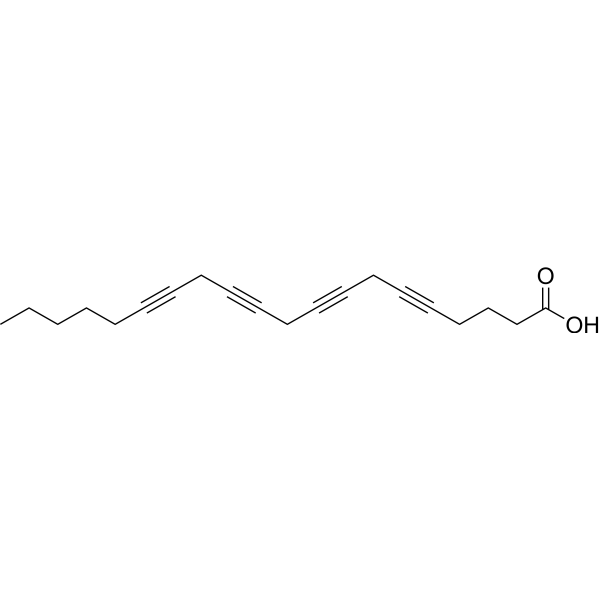
Cat. No.: HY-124108
CAS No.: 1191-85-1
Purity:  ≥99.0%
Synonyms: ETYA
Eicosatetraynoic acid (ETYA) is a non-metabolizable analog of Arachidonic acid (HY-109590) and also an inhibitor of the lipoxygenase (LOX)/cyclooxygenase (COX) pathway (ID50 = 8 μM and 4 μM). Eicosatetraynoic acid acts as a suicide substrate to inhibit the production of inflammatory mediators such as leukotrienes and prostaglandins. Eicosatetraynoic acid acts directly on cell membranes and membrane proteins to exert a wide range of effects, including blocking potassium channels, increasing cell membrane fluidity, elevating intracellular calcium levels, inhibiting DNA synthesis in tumor cells, inducing differentiation of certain cells, and specifically inhibiting the assembly and replication of orthopoxviruses. Eicosatetraynoic acid alleviates acute lung injury induced by chemicals such as phosgene .
loading...
    loading...
Cat. No.: HY-138198A
Target:  

Acyltransferase

Research Areas:  

Infection

YIC-C8-434 is an orally active ACAT inhibitor. YIC-C8-434 selectively blocks cholesterol esterification in intestinal epithelial cells and hepatocytes without affecting the production of triglycerides or phospholipids. YIC-C8-434 effectively reduces intracellular cholesteryl ester levels and induces an increase in lipid droplet volume, exhibiting excellent cholesterol-lowering activity and safety. YIC-C8-434 disrupts the assembly of hepatitis C virus (HCV) virions, reduces HCV RNA synthesis and viral particle release. YIC-C8-434 can be used in studies related to hepatitis C virus infection .
loading...
    loading...
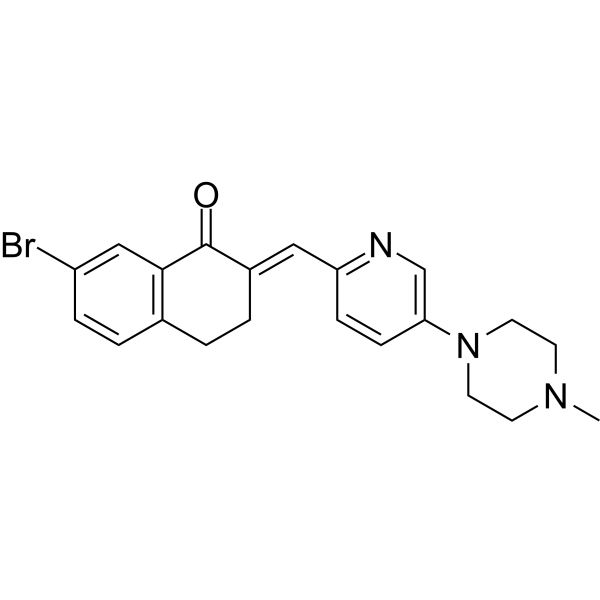
Cat. No.: HY-161329
NLRP3-IN-32 (compound 7a), a 3, 4-dihydronaphthalene-1(2H)-one derivative, is a potential NLRP3 inflammatory vesicles inhibitor. NLRP3-IN-32 can block the assembly and activation of NLRP3 inflammasome by down-regulating the expression of NLPR3 and apoptosis-associated speck-like protein containing a CARD (ASC), and inhibiting the production of reactive oxygen species (ROS) and other inflammatory mediators. NLRP3-IN-32 inhibits the phosphorylation of IκBα and NF-κB/p65 and the nuclear translocation of p65, thereby inhibiting NF-κB signaling .
loading...
    loading...
Cat. No.: HY-E70529
Research Areas:  

Infection

Ribonucleoside vanadyl complexes are a class of potent RNase and Taq polymerase inhibitors. Ribonucleoside vanadyl complexes protect RNA during RNA isolation by inhibiting ribonucleases, and also reduce the viability of bacteria and eukaryotic cells by interfering with ribosomal subunit assembly. Ribonucleoside vanadyl complexes block PCR and reverse transcription reactions templated by viral nucleic acids and enhance the effects of antibiotics against Staphylococcus aureus, but do not directly inhibit protein synthesis. Ribonucleoside vanadyl complexes can be effectively removed by phenol-chloroform extraction, thus enabling subsequent PCR analysis. Ribonucleoside vanadyl complexes can be applied in research related to chronic hepatitis C (HCV) and Staphylococcus aureus infection .
loading...
    loading...
Cat. No.: HY-N14780
CAS No.: 544712-82-5
Synonyms: (+)-Pochonin D
Pochonin D ((+)-Pochonin D) is an inhibitor of heat shock protein 90 (Hsp90) with antiviral and anti-inflammatory activities. Pochonin D inhibits Hsp90, affects the homeostasis, folding and assembly processes of viral proteins, and reduces the replication capacity of viruses. Pochonin D is a copper ion carrier that can induce cuproptosis in triple-negative breast cancer cells by targeting PRDX1. Pochonin D reduces the infiltration of inflammatory cells, decreases the secretion of inflammatory cytokines such as TNF-α and IL-1β, and alleviates inflammatory responses. Pochonin D is a promising candidate for research on human rhinovirus (HRV) infection and cancer .
loading...
    loading...
Cat. No.: HY-P3795
CAS No.: 361443-81-4
Target:  

HSV

Research Areas:  

Infection Neurological Disease

G2-Peptide is a 3-O-sulfated heparan sulfate (3-OS HS) binder and antiviral agent. G2-Peptide blocks herpesvirus attachment, entry, cell-to-cell spread and syncytium formation, and reduces viral protein translocation. G2-Peptide exhibits antiviral activity against both HSV-1 and HSV-2. G2-Peptide inhibits neural activity and impairs synapse assembly. G2-Peptide can be used in the research of genital herpes, ocular herpes infection and keratitis .
loading...
    loading...
Cat. No.: HY-W698249
CAS No.: 299-29-6
Target:  

Ferroptosis Bacterial

Research Areas:  

Cardiovascular Disease Infection

Ferrous gluconate is a highly water-soluble iron-containing agent with high bioavailability and bactericidal activity. As a non-heme iron, Ferrous gluconate is used for meat product fortification and improvement of iron deficiency anemia. Ferrous gluconate induces ferroptosis in E. coli through Fe 2+ infiltration, reactive oxygen species burst, lipid peroxidation and direct interaction with DNA. Ferrous gluconate also downregulates the SOS responsive transcriptional repressor LexA. In addition, Ferrous gluconate regulates multiple key pathways in E. coli such as fatty acid metabolism, iron-sulfur cluster assembly and pyruvate metabolism, and is applied in studies related to *E. coli* infection and iron deficiency anemia .
loading...
    loading...
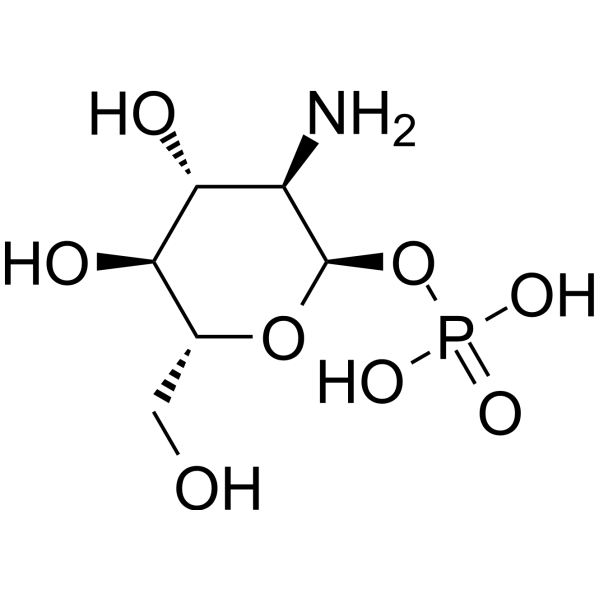
Cat. No.: HY-154871
CAS No.: 2152-75-2
α-D-Glucosamine 1-phosphate is a glycosyl donor analog of Glc-1-P. α-D-Glucosamine 1-phosphate acts as a glycosyl donor to produce α(1→4)-linked glucosamine chains in the enzyme-catalyzed polymerization reaction mediated by thermostable α-glucan phosphorylase. α-D-Glucosamine 1-phosphate serves as a glycosyl donor analog to generate a pentasaccharide with a glucosamine residue at the non-reducing end in the maltotetraose glucosamination reaction catalyzed by potato α-glucan phosphorylase. α-D-Glucosamine 1-phosphate is used for the synthesis of amphiphilic block polysaccharides with pH-responsive assembly/disassembly properties .
loading...
    loading...
Cat. No.: HY-111964R
CAS No.: 2189684-44-2
Synonyms: GS-6207 (Standard)
Target:  

Reference Standards HIV

Research Areas:  

Infection

Lenacapavir (Standard) is the analytical standard of Lenacapavir (HY-111964). This product is intended for research and analytical applications. Lenacapavir (GS-6207) is an HIV-1 capsid inhibitor. Lenacapavir binds to the interface between capsid hexamers and CA monomers, disrupts capsid assembly and viral maturation, inhibits nuclear translocation of HIV-1 DNA, interferes with CA-mediated protein-protein interactions, reduces the formation of 2-LTR circles and pre-integration proviruses, induces aberrant capsids, and decreases the production of mature HIV-1. Lenacapavir exhibits activity against a variety of HIV-1 subtypes and clinical isolates. Lenacapavir is applicable to research related to human immunodeficiency virus type 1 (HIV-1) infection .
loading...
    loading...

