964 Results for "

Necrosis

" in MedChemExpress (MCE) Product Catalog:
Products (964)

964 Results for "Necrosis" in MCE Product Catalog:

14
14 Cited Publications
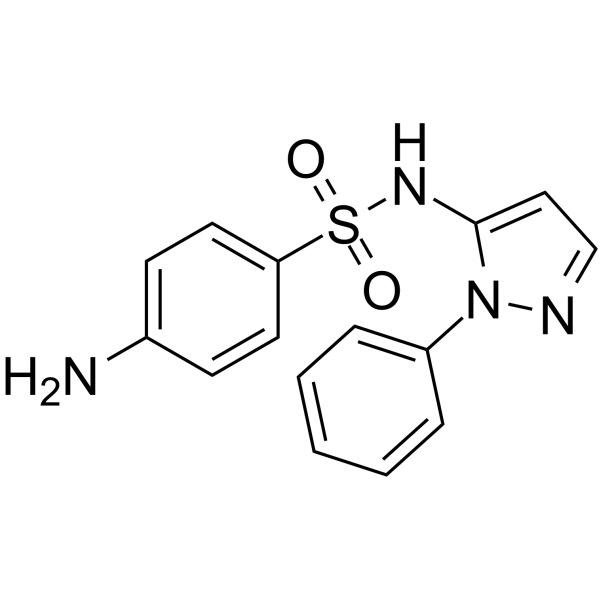
Cat. No.: HY-B1218
CAS No.: 526-08-9
Sulfaphenazole is a selective inhibitor of human cytochrome P450 (CYP) 2C9 enzyme. Sulfaphenazole is a cytoprotective agent against light-induced death of photoreceptors. Sulfaphenazole inhibits light-induced necrosis and mitochondrial stress-initiated apoptosis. Sulfaphenazole is an off patent sulfonamide antibiotic and demonstrates bactericidal activity through enhanced M1 macrophage activity. Sulfaphenazole can significantly reduce infarct size and restore post-ischemic coronary flow following ischemia and reperfusion .
loading...
    loading...
14
14 Cited Publications
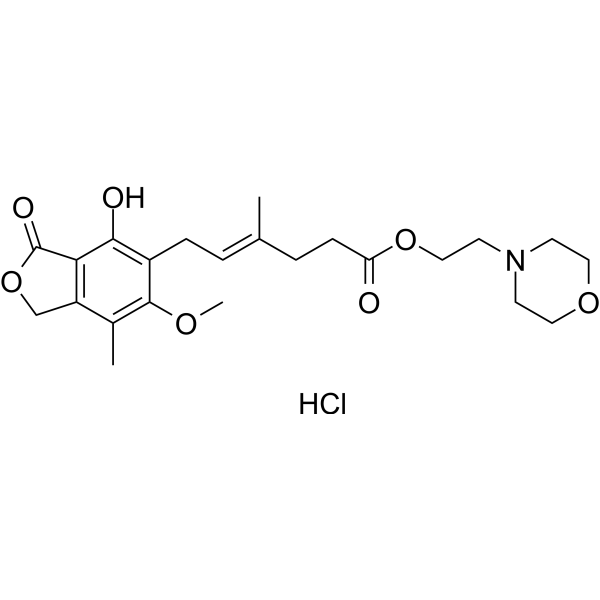
Cat. No.: HY-B0199A
CAS No.: 116680-01-4
Synonyms: RS 61443 hydrochloride; TM-MMF hydrochloride
Mycophenolate mofetil (RS 61443; TM-MMF) hydrochloride is an orally active antimetabolic immunosuppressant with antiproliferative and anti-inflammatory properties. Mycophenolate mofetil hydrochloride significantly inhibits the production of B, T lymphocytes and the proliferation of smooth muscle cells by selectively blocking the de novo purine synthesis pathway. Mycophenolate mofetil hydrochloride effectively reduces adventitial inflammation, medial necrosis and intimal thickening in rat aortic allografts, and decreases the number of lymphocytes expressing the IL-2 receptor, thereby delaying xenograft rejection. Mycophenolate mofetil hydrochloride shows certain toxicity in a hamster-to-rat limb xenotransplantation model when used in combination with FK506 (HY-13756). Mycophenolate mofetil hydrochloride is widely used in studies related to allograft arteriosclerosis (chronic rejection) .
loading...
    loading...
13
13 Cited Publications
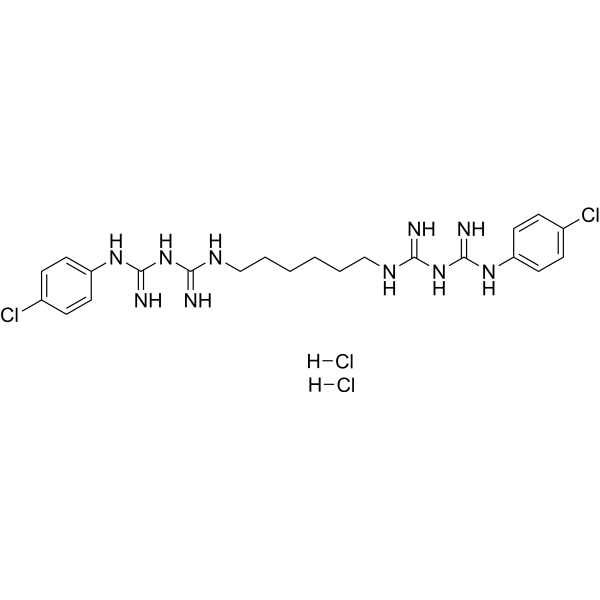
Cat. No.: HY-B1145
CAS No.: 3697-42-5
Chlorhexidine dihydrochloride is a orally active cationic antimicrobial agent that targets microbial cell membranes. Chlorhexidine dihydrochloride binds to cell membrane phospholipids non-specifically, destroys membrane structure and induces leakage of cell contents. Chlorhexidine dihydrochloride has broad-spectrum bactericidal activity against both Gram-positive and Gram-negative bacteria. Chlorhexidine dihydrochloride can interfere with membrane permeability, cause protein precipitation and energy metabolism disorders, such as rapid inhibition of microbial growth and induction of cell death (necrosis or apoptosis) .
loading...
    loading...
13
13 Cited Publications
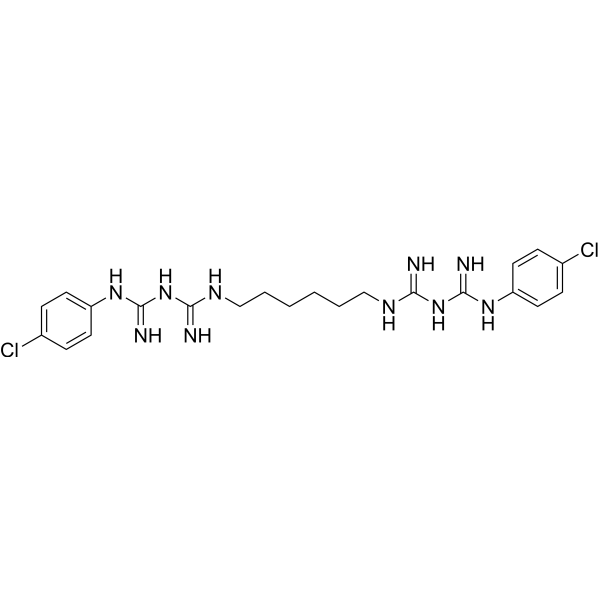
Cat. No.: HY-B1248
CAS No.: 55-56-1
Chlorhexidine is a orally active cationic antimicrobial agent that targets microbial cell membranes. Chlorhexidine binds to cell membrane phospholipids non-specifically, destroys membrane structure and induces leakage of cell contents. Chlorhexidine has broad-spectrum bactericidal activity against both Gram-positive and Gram-negative bacteria. Chlorhexidine can interfere with membrane permeability, cause protein precipitation and energy metabolism disorders, such as rapid inhibition of microbial growth and induction of cell death (necrosis or apoptosis) .
loading...
    loading...
13
13 Cited Publications
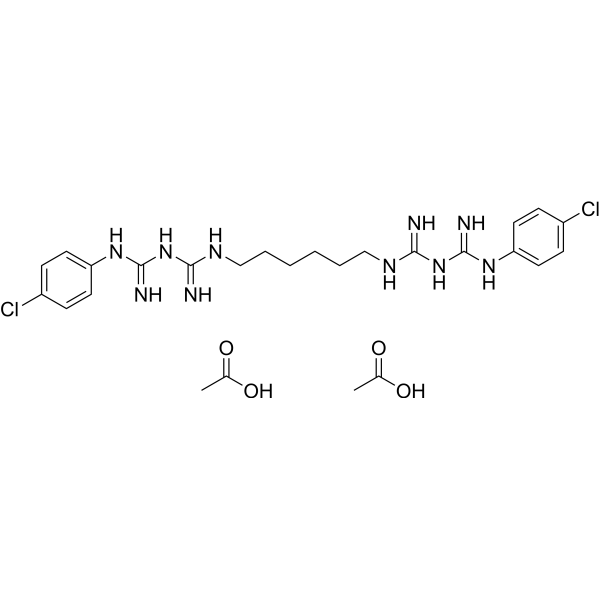
Cat. No.: HY-W013699
CAS No.: 56-95-1
Chlorhexidine diacetate is a orally active cationic antimicrobial agent that targets microbial cell membranes. Chlorhexidine diacetate binds to cell membrane phospholipids non-specifically, destroys membrane structure and induces leakage of cell contents. Chlorhexidine diacetate has broad-spectrum bactericidal activity against both Gram-positive and Gram-negative bacteria. Chlorhexidine diacetate can interfere with membrane permeability, cause protein precipitation and energy metabolism disorders, such as rapid inhibition of microbial growth and induction of cell death (necrosis or apoptosis) .
loading...
    loading...
13
13 Cited Publications
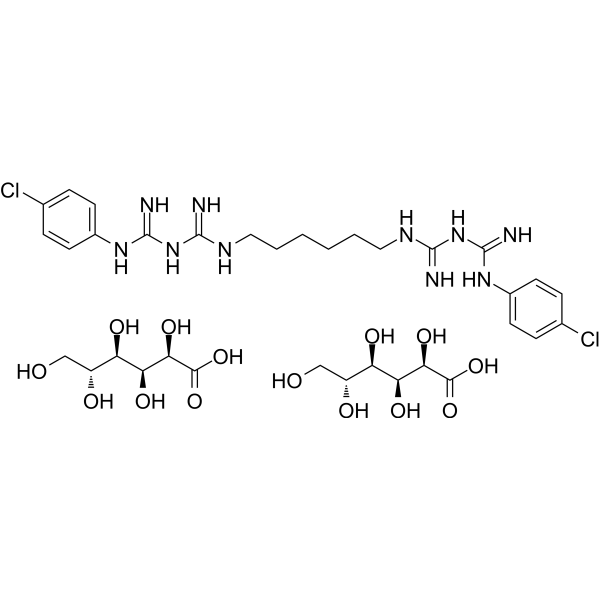
Cat. No.: HY-B0608
CAS No.: 18472-51-0
Chlorhexidine digluconate (20% in water) is a orally active cationic antimicrobial agent that targets microbial cell membranes. Chlorhexidine digluconate (20% in water) binds to cell membrane phospholipids non-specifically, destroys membrane structure and induces leakage of cell contents. Chlorhexidine digluconate (20% in water) has broad-spectrum bactericidal activity against both Gram-positive and Gram-negative bacteria. Chlorhexidine digluconate (20% in water) can interfere with membrane permeability, cause protein precipitation and energy metabolism disorders, such as rapid inhibition of microbial growth and induction of cell death (necrosis or apoptosis) .
loading...
    loading...
11
11 Cited Publications
Cat. No.: HY-P7424
Purity:  ≥ 90%, as determined by reducing SDS-PAGE.
Synonyms: TNFSF11; Tumor Necrosis Factor (Ligand) Superfamily, Member 11; TNF Superfamily Member 11; Receptor Activator Of Nuclear Factor Kappa-B Ligand; TRANCE; TNLG6B; RANKL; Receptor Activator Of Nuclear Factor Kappa B Ligand; OPGL; Tumor Necrosis Factor Ligand
Species:  
Human
Source:  
E. coli
loading...
    loading...
10
10 Cited Publications
Cat. No.: HY-P70697
Purity:  ≥ 95%, as determined by reducing SDS-PAGE.
Synonyms: TNF; Tumor Necrosis Factor (TNF Superfamily, Member 2); Prev. TNFA; Tumor Necrosis Factor-Alpha; TNF-Alpha; Tumor Necrotic Factor Alpha; TNFSF2; TNF Superfamily, Member 2; Tumor Necrosis Factor Ligand Superfamily Member 2; TNF, Macrophage-Derived; TNF-A; TNF, Monocyte-Derived; DIF; APC1 Protein; Cachectin; IMD127; TNLG1F; Tumor Necrosis Factor; Tumor Necrosis Factor Ligand 1F
Species:  
Rat
Source:  
E. coli
loading...
    loading...
10
10 Cited Publications
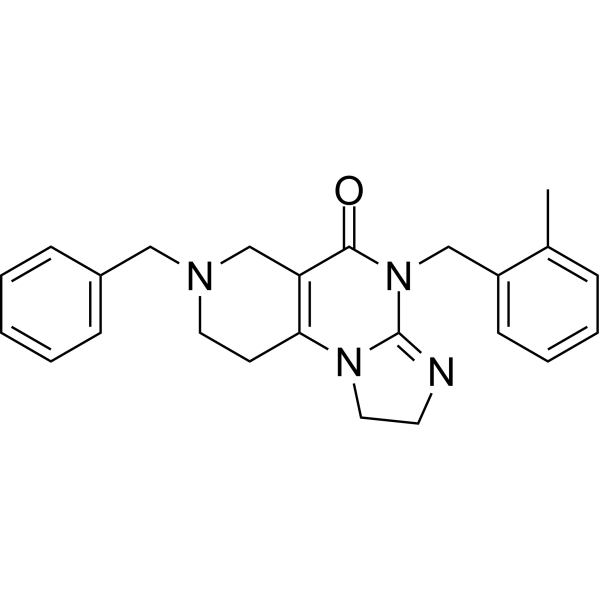
Cat. No.: HY-15615A
CAS No.: 1616632-77-9
Purity:  99.89%
Synonyms: TIC10; ONC-201
Target:  

TNF Receptor Apoptosis

Research Areas:  

Cancer

Dordaviprone (TIC10) is a potent, orally active, and stable tumor necrosis factor-related apoptosis-inducing ligand (TRAIL) inducer which acts by inhibiting Akt and ERK, consequently activating Foxo3a and significantly inducing cell surface TRAIL. Dordaviprone can cross the blood-brain barrier .
loading...
    loading...
10
10 Cited Publications
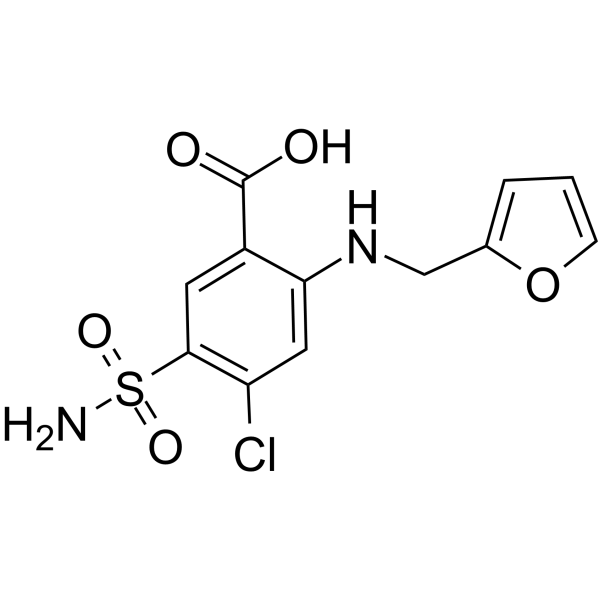
Cat. No.: HY-B0135
CAS No.: 54-31-9
Target:  

GABA Receptor

Furosemide is an orally active GABAA receptor antagonist. Furosemide inhibits carbonic anhydrase, the sodium-chloride cotransporter, sodium reabsorption, tubuloglomerular feedback, and GABA-induced chloride flux. Furosemide can be used as a diuretic reagent. Furosemide is applied in the research of hepatic necrosis, sepsis-associated acute kidney injury, hypoalbuminemia-related fluid retention, and congestive heart failure .
loading...
    loading...
10
10 Cited Publications
Cat. No.: HY-B0135A
CAS No.: 41733-55-5
Target:  

GABA Receptor

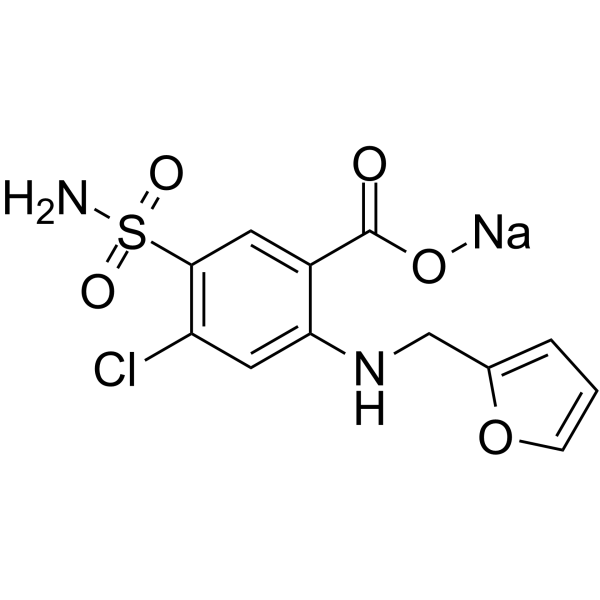
Furosemide sodium is an orally active GABAA receptor antagonist. Furosemide sodium inhibits carbonic anhydrase, the sodium-chloride cotransporter, sodium reabsorption, tubuloglomerular feedback, and GABA-induced chloride flux. Furosemide sodium can be used as a diuretic reagent. Furosemide sodium is applied in the research of hepatic necrosis, sepsis-associated acute kidney injury, hypoalbuminemia-related fluid retention, and congestive heart failure .
loading...
    loading...
10
10 Cited Publications
Cat. No.: HY-19975
CAS No.: 946387-07-1
Target:  

TRP Channel

Research Areas:  

Neurological Disease Cancer

RN-1734 is selective antagonist of the TRPV4 channel, completely antagonizes 4αPDD-mediated activation of TRPV4 with comparable, low micromolar IC50s for all three species (hTRPV4: 2.3 μM, mTRPV4: 5.9 μM, rTRPV4: 3.2 μM) . RN-1734 clearly decreases the production of tumor necrosis factor α (TNF-α) and interleukin 1β (IL-1β) without altering the number of olig2-positive cells .
loading...
    loading...
8
8 Cited Publications
Cat. No.: HY-P70426A
Purity:  ≥ 90%, as determined by reducing SDS-PAGE.
Synonyms: TNF; Tumor Necrosis Factor (TNF Superfamily, Member 2); Prev. TNFA; Tumor Necrosis Factor-Alpha; TNF-Alpha; Tumor Necrotic Factor Alpha; TNFSF2; TNF Superfamily, Member 2; Tumor Necrosis Factor Ligand Superfamily Member 2; TNF, Macrophage-Derived; TNF-A; TNF, Monocyte-Derived; DIF; APC1 Protein; Cachectin; IMD127; TNLG1F; Tumor Necrosis Factor; Tumor Necrosis Factor Ligand 1F
Species:  
Human
Source:  
E. coli
loading...
    loading...
8
8 Cited Publications
Cat. No.: HY-P80914
Synonyms: TNF; TNFA; TNFSF2; Tumor Necrosis factor; Cachectin; TNF-alpha; Tumor Necrosis factor ligand superfamily member 2; TNF-a

Host:  

Rabbit

Application:  

WB, IHC-P, ICC/IF, ELISA

Reactivity:  

Human, Mouse, Rat

loading...
    loading...
7
7 Cited Publications
Cat. No.: HY-P7224
Purity:  ≥ 95%, as determined by reducing SDS-PAGE.
Synonyms: CXCL8; Lung Giant Cell Carcinoma-Derived Chemotactic Protein; Prev. IL8; Alveolar Macrophage Chemotactic Factor I; MDNCF; Tumor Necrosis Factor-Induced Gene 1; NAP-1; Neutrophil-Activating Peptide 1; MONAP; T-Cell Chemotactic Factor; GCP-1; Interleukin 8; Monocyte-Derived Neutrophil Chemotactic Factor; Interleukin-8; Monocyte-Derived Neutrophil-Activating Peptide; Emoctakin; Granulocyte Chemotactic Protein 1; AMCF-I; Chemokine (C-X-C Motif) Ligand 8; B-ENAP; SCYB8; TSG-1; LYNAP; 3-10C; LUCT; K60; LECT; Small Inducible Cytokine Subfamily B, Member 8; IL-8; Beta-Thromboglobulin-Like Protein; GCP1; Neutrophil-Activating Protein 1; NAP1; C-X-C Motif Chemokine 8; NAF; C-X-C Motif Chemokine; Beta Endothelial Cell-Derived Neutrophil Activating Peptide; Protein 3-10C; C-X-C Motif Chemokine Ligand 8; Lymphocyte Derived Neutrophil Activating Peptide
Species:  
Human
Source:  
E. coli
loading...
    loading...
6
6 Cited Publications
Cat. No.: HY-100211
CAS No.: 187034-31-7
Purity:  97.41%
Synonyms: TNF Protease Inhibitor 2
Target:  

MMP SARS-CoV

Research Areas:  

Cancer

TAPI-2 (TNF Protease Inhibitor 2) is a broad-spectrum inhibitor of matrix metalloprotease (MMP), tumour necrosis factorα-converting enzyme (TACE) and a disintegrin and metalloproteinase (ADAM), with an IC50 of 20 μM for MMP . TAPI-2 blocks the entry of infectious SARS-CoV .
loading...
    loading...
6
6 Cited Publications
Cat. No.: HY-P70800
Purity:  ≥ 95%, as determined by reducing SDS-PAGE.
Synonyms: TNF; Tumor Necrosis Factor (TNF Superfamily, Member 2); Prev. TNFA; Tumor Necrosis Factor-Alpha; TNF-Alpha; Tumor Necrotic Factor Alpha; TNFSF2; TNF Superfamily, Member 2; Tumor Necrosis Factor Ligand Superfamily Member 2; TNF, Macrophage-Derived; TNF-A;
Species:  
Rabbit
Source:  
E. coli
loading...
    loading...
6
6 Cited Publications
Cat. No.: HY-P73388
Purity:  ≥ 90%, as determined by reducing SDS-PAGE.
Synonyms: TNFSF11; Tumor Necrosis Factor (Ligand) Superfamily, Member 11; TNF Superfamily Member 11; Receptor Activator Of Nuclear Factor Kappa-B Ligand; TRANCE; TNLG6B; RANKL; Receptor Activator Of Nuclear Factor Kappa B Ligand; OPGL; Tumor Necrosis Factor Ligand
Species:  
Mouse
Source:  
HEK293
loading...
    loading...
5
5 Cited Publications
Cat. No.: HY-Y0698
CAS No.: 62-55-5
Synonyms: Acetothioamide; TAA; Thiacetamide
Thioacetamide (TAA) is an indirect hepatotoxin and causes parenchymal cell necrosis. Thioacetamide requires metabolic activation by microsomal CYP2E1 to thioacetamide-S-oxide initially and then to thioacetamide-S-dioxide, which is a highly reactive metabolite, and its reactive metabolites covalently bind to proteins and lipids thereby causing oxidative stress and centrilobular necrosis. Thioacetamide can induce chronic liver fibrosis, encephalopathy and other events model .
loading...
    loading...
5
5 Cited Publications
Cat. No.: HY-125731
CAS No.: 360-65-6
Purity:  99.08%
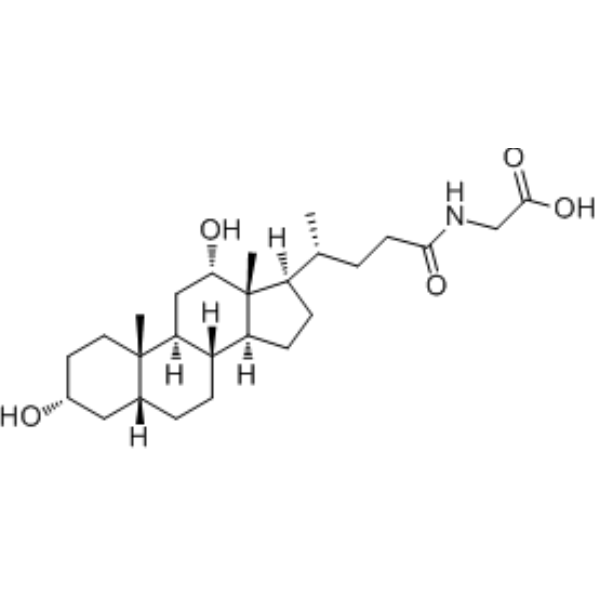
Glycodeoxycholic Acid is a natural product found in Streptomyces nigricans, Trypanosoma brucei and C. elegans. Glycodeoxycholic Acid induces hepatocyte necrosis and autophagy in patients with obstructive cholestasis .
loading...
    loading...

