




391 Results for "

P1

" in MedChemExpress (MCE) Product Catalog:
Products (391)

391 Results for "P1" in MCE Product Catalog:

Cat. No.: HY-W024615
CAS No.: 25055-86-1
Synonyms: 3-(3-Methyl-3H-diazirin-3-yl)propanoic acid
Research Areas:  

Others

Me-diazirine-cooh (3-(3-Methyl-3H-diazirin-3-yl) propanoic acid) is a molecular building block containing an aliphatic diazirine ring. Me-diazirine-cooh undergoes orthogonal coupling in solid-phase peptide synthesis to introduce the Diazirine group into collagen-mimetic peptides. Me-diazirine-cooh is used to construct the photoaffinity probe P1 [1] .
loading...
    loading...
Cat. No.: HY-P5959
Target:  

Inhibitory Antibodies

Research Areas:  

Others

PTBP1α3-helix derived peptide P1 is a polypeptide that inhibits RNA binding [1].
loading...
    loading...
Cat. No.: HY-107146
CAS No.: 371131-16-7
Purity:  99.84%
Synonyms: P1pal-7
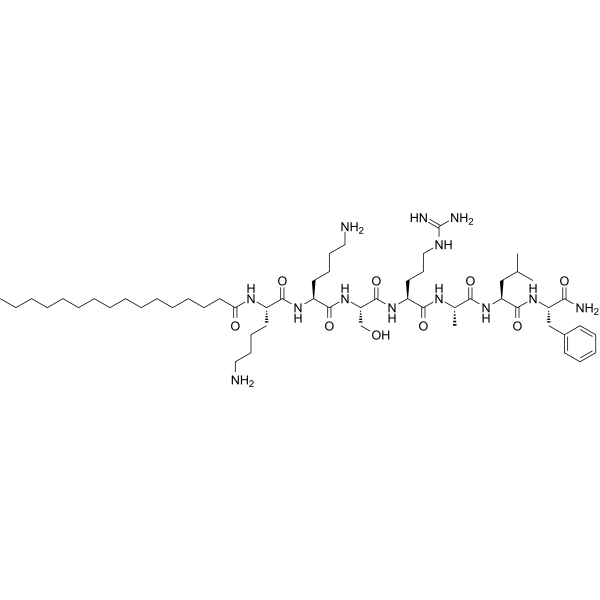
PZ-128 (P1pal-7), a cell-penetrating lipopeptide pepducin, is a first-in-class, specific and reversible protease-activated receptor-1 (PAR1) antagonist. PZ-128 targets the cytoplasmic surface of PAR1 and interrupts signaling to internally-located G (PAR1-G) proteins. PZ-128 has antiplatelet, anti-metastatic, anti-angiogenic and anticancer effects [1] .
loading...
    loading...
Cat. No.: HY-16124
CAS No.: 158382-37-7
Synonyms: TLK-286; TER286
Target:  

DNA-PK Apoptosis

Research Areas:  

Cancer

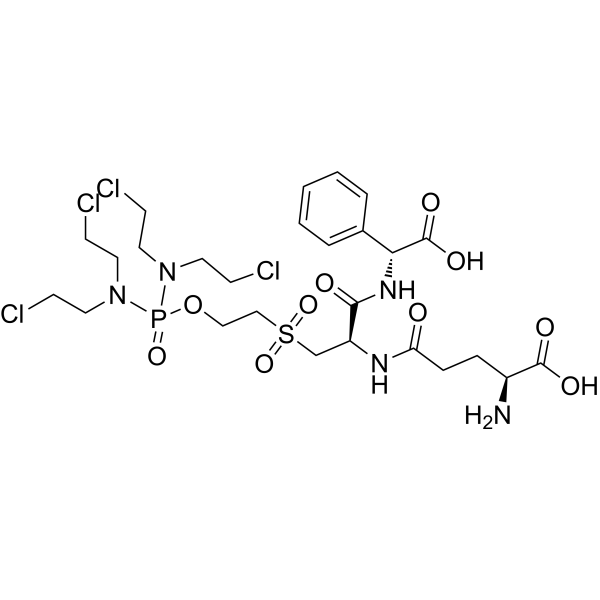
Canfosfamide (TLK-286, TER286) is a glutathione analogue prodrug that is activated by glutathione S-transferase P1-1 and induces apoptosis. Canfosfamide also inhibits the catalytic kinase activity of DNA-dependent protein kinase (DNA-PK). Canfosfamide produces an anticancer alkylating agent and a glutathione derivative after activation. Canfosfamide can be used to research malignancies [1] .
loading...
    loading...
Cat. No.: HY-E70047
CAS No.: 52725-57-2
Synonyms: A4GALT
Target:  

Glycosyltransferase

Research Areas:  

Metabolic Disease

alpha-1,4-Galactosyltransferase (LgtC) (A4GALT) is a glycosphingolipid-specific glycosyltransferase. alpha-1,4-Galactosyltransferase (LgtC) transfers a galactose to the alpha-1,4 position of lactosylceramide to form globotriaosylceramide. alpha-1,4-Galactosyltransferase (LgtC) can be used for the synthesis of P1 blood group antigens [1] .
loading...
    loading...
Cat. No.: HY-157269
CAS No.: 1069110-72-0
Target:  

Hapten

Research Areas:  

Inflammation/Immunology

J10-1 is a hapten small molecule. J10-1 accelerates peptide exchange in MHC class II molecules in an HLA-DM-independent manner, and its effect is not affected by the polymorphism of the P1 pocket of MHC class II molecules. J10-1 enhances the processes of peptide dissociation, peptide binding and peptide association of MHC class II molecules on the surface of B cells. J10-1 can be used for research on immunoregulation [1].
loading...
    loading...
Cat. No.: HY-113337
CAS No.: 5542-28-9
Synonyms: P1,P4-Di-(adenosine-5')-tetraphosphate
Ap4A (P1,P4-Di-(adenosine-5')-tetraphosphate) is a conserved second messenger in organisms ranging from bacteria to humans. Ap4A binds to the histidine triad nucleotide-binding protein 1 (HINT1) activates the transcription of genes downstream of MITF. Ap4A induces apoptosis [1] .
loading...
    loading...
Cat. No.: HY-P11316
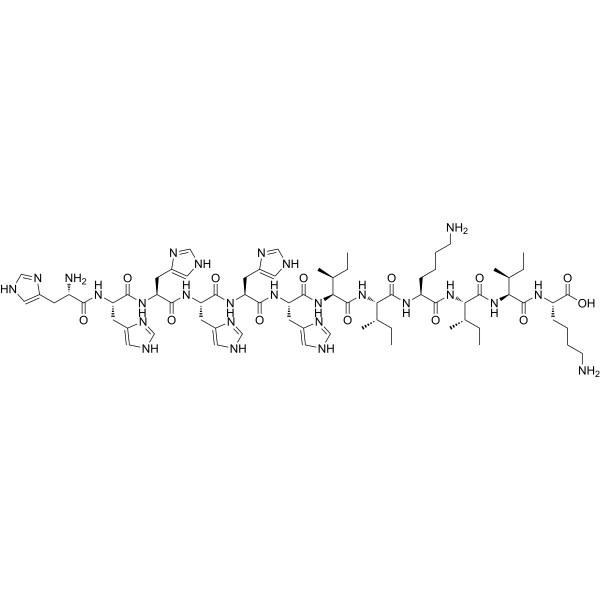
DBCO-tag peptide P1 is a cysteine-containing peptide tag. DBCO-tag peptide P1 selectively reacts with dibenzocyclooctyne (DBCO) to yield stable dibenzocyclooctenyl thioethers. DBCO-tag peptide P1 enables site-selective mEGFP labeling and antibody (such as Trastuzumab (HY-P9907)) labelling without impairing the protein binding function. DBCO-tag peptide P1 can be used for ADC synthesis and mEGFP labeling research [1].
loading...
    loading...
Cat. No.: HY-P5500
CAS No.: 959780-73-5
Target:  

Inhibitory Antibodies

Research Areas:  

Others

Peptide P1 is a biological active peptide. (commonly used to measure the degree of scrambling during ETD analysis)
loading...
    loading...
Cat. No.: HY-112026
CAS No.: 6240-11-5
Purity:  99.82%
Target:  

MHC

Research Areas:  

Inflammation/Immunology Cancer

1-Adamantaneethanol is an allele-selective MHC II class molecule loading enhancer (MHC loading enhancer, MLE) that enhances peptide loading and ligand exchange of HLA-DR molecules. 1-Adamantaneethanol targets the polymorphic P1 pocket of HLA-DR molecules and preferentially acts on HLA-DR subtypes with Gly at position β86, thereby stabilizing the peptide-receptor conformation and accelerating antigen loading. 1-Adamantaneethanol can be used in studies related to MHC II antigen presentation, peptide vaccines, adaptive immunity and tumor immunity [1] .
loading...
    loading...
Cat. No.: HY-P5062A
Synonyms: Decanoyl-Arg-Val-Arg-Lys-chloromethylketone TFA
Target:  

Furin

Research Areas:  

Infection

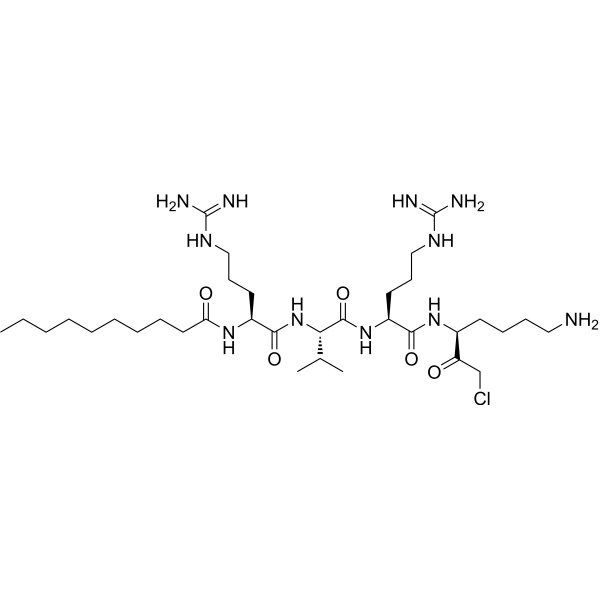
DEC-RVRK-CMK (Decanoyl-Arg-Val-Arg-Lys-chloromethylketone) TFA is a peptide-based CMK (chloromethylketone) inhibitor that targets and inactivates the secreted soluble kexin (Kex2) (Ki=8.45 μM). The yeast enzyme Kex2 (kexin, EC 3.4.21.61) is a calcium-dependent transmembrane protease and belongs to the mammalian protease family of the serine protease subtilisin family. The binding mechanism of Kex2 with different CMK inhibitors depends on substrate selectivity, particularly the selective differences between lysine and arginine at the P1 position [1].
loading...
    loading...
Cat. No.: HY-P10366
CAS No.: 652969-14-7
Target:  

Inhibitory Antibodies

Research Areas:  

Infection

WEYIPNV is a ligand for SurA, specifically binding to the P1 domain of SurA (Kd: 1-14 μM). The binding of WEYIPNV promotes the release of the P1 domain from the core domain [1].
loading...
    loading...
Cat. No.: HY-N15117
CAS No.: 37331-24-1
Polymyxin P1 is a lipopeptide antibiotic belonging to the Polymyxin family, and it is a secondary metabolite produced by the rhizosphere bacterium Paenibacillus polymyxa M-1. Polymyxin P1 binds to bacterial outer membrane lipopolysaccharides, permeabilizes cell membranes, and induces dense protrusions on the cell surface of phytopathogenic Erwinia strains. Polymyxin P1 inhibits the growth of phytopathogenic Erwinia amylovora and E. carotovora. Polymyxin P1 can be used for the research of fire blight and soft rot [1].
loading...
    loading...
Cat. No.: HY-113273
CAS No.: 41708-91-2
Synonyms: Ap5A; P1,P5-Di(adenosine-5'-)pentaphosphate
Diadenosine pentaphosphate (Ap5A; P1,P5-Di(adenosine-5'-)pentaphosphate) is an endogenous generated diadenosine polyphosphate, possessing the dual identities of intracellular alarm signal and extracellular signaling molecule. Diadenosine pentaphosphate regulates calcium signaling in the nervous, cardiac and peripheral sensory systems by activating P2X1/P2X3/P2Y receptor and RyR2 channels (EC50 = 140 μM). Diadenosine pentaphosphate can be used in studies related to intracellular calcium release channels, cardiovascular diseases and nociception (pain) [1] .
loading...
    loading...
Cat. No.: HY-179107
CAS No.: 3104477-57-5
Research Areas:  

Metabolic Disease

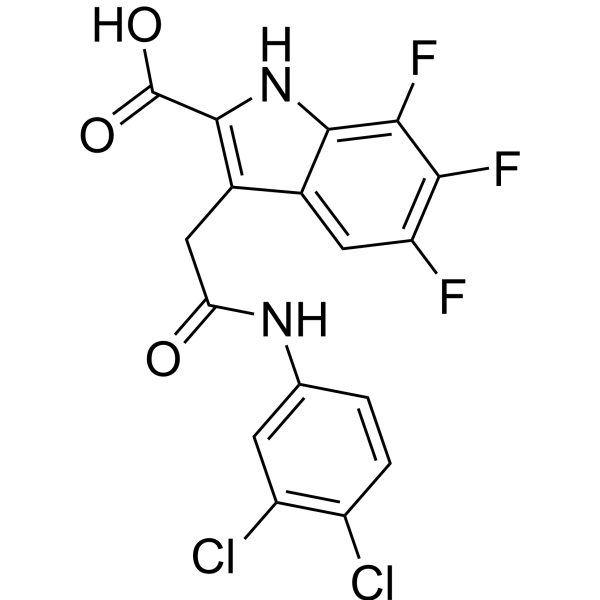
SLC6A19-IN-3 (Compound 83-P1-P2) is a potent, selective and orally active SLC6A19 inhibitor with an IC50 of 28 nM. SLC6A19-IN-3 can block SLC6A19-mediated transmembrane transport of phenylalanine, reducing intestinal absorption of phenylalanine from food and renal tubular reabsorption of phenylalanine. SLC6A19-IN-3 can be used for the research of metabolic disease, such as phenylketonuria [1].
loading...
    loading...
Cat. No.: HY-P5062
CAS No.: 534615-50-4
Synonyms: Decanoyl-Arg-Val-Arg-Lys-chloromethylketone
Target:  

Furin

Research Areas:  

Infection

DEC-RVRK-CMK (Decanoyl-Arg-Val-Arg-Lys-chloromethylketone) is a peptide-based CMK (chloromethylketone) inhibitor that targets and inactivates the secreted soluble kexin (Kex2) (Ki=8.45 μM). The yeast enzyme Kex2 (kexin, EC 3.4.21.61) is a calcium-dependent transmembrane protease and belongs to the mammalian protease family of the serine protease subtilisin family. The binding mechanism of Kex2 with different CMK inhibitors depends on substrate selectivity, particularly the selective differences between lysine and arginine at the P1 position [1].
loading...
    loading...
Cat. No.: HY-P2317A
Research Areas:  

Infection

Cecropin P1, porcine acetate is an antibacterial peptide that can be isolated from the upper part of the small intestine of the pig. Cecropin P1, porcine acetate shows antibacterial activity against Gram-negative bacteria. Cecropin P1, porcine acetate shows antiviral activity and inhibits PRRSV infection [1] .
loading...
    loading...
Cat. No.: HY-P10618
CAS No.: 845623-61-2
Target:  

Bacterial

Research Areas:  

Infection

BTM-P1 is a polycationic peptide that exhibits antibacterial activity against both Gram-positive and Gram-negative bacteria. BTM-P1 can form ion-permeable channels in the inner mitochondrial membrane to interfere with mitochondrial energy processes [1].
loading...
    loading...
Cat. No.: HY-P1832
Target:  

NF-κB Apoptosis

Research Areas:  

Inflammation/Immunology Cancer

PTD-p65-P1 Peptide is a potent, selective nuclear transcription factor NF-κB inhibitor and derives from the p65 subunit of NF-κB amino acid residues 271-282, which selectively inhibits NF-κB activation induced by various inflammatory stimulation, down-regulate NF-κB-mediated gene expression and up-regulate apoptosis [1] .
loading...
    loading...
Cat. No.: HY-144210
CAS No.: 2751718-88-2
Target:  

SOS1 Ras

Research Areas:  

Cancer

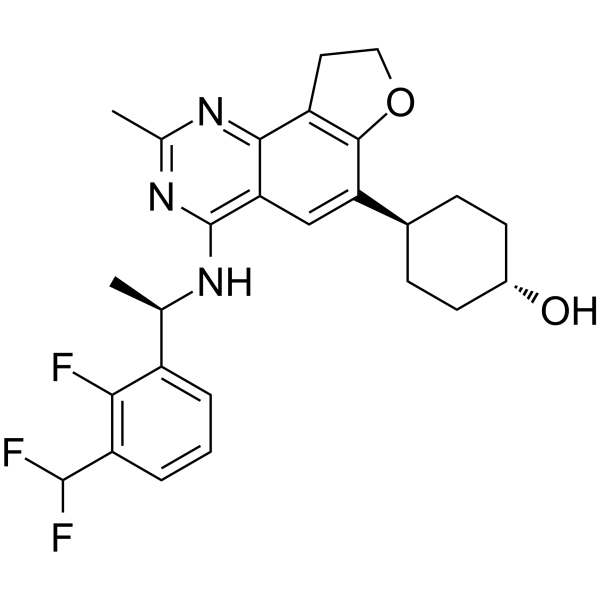
SOS1-IN-6 (compound 33-P1) is a potent SOS1 inhibitor with IC50s of 14.9 and 73.3 nM for SOS1-G12D and SOS1-G12V, respectively [1].
loading...
    loading...

