1100 Results for "

PROTAC research

" in MedChemExpress (MCE) Product Catalog:
Products (1100)

1100 Results for "PROTAC research" in MCE Product Catalog:

1
1 Cited Publications
Cat. No.: HY-111758
CAS No.: 2364367-27-9
Purity:  99.78%
Target:  

PROTACs Raf Bcl-2 Family

Research Areas:  

Cancer

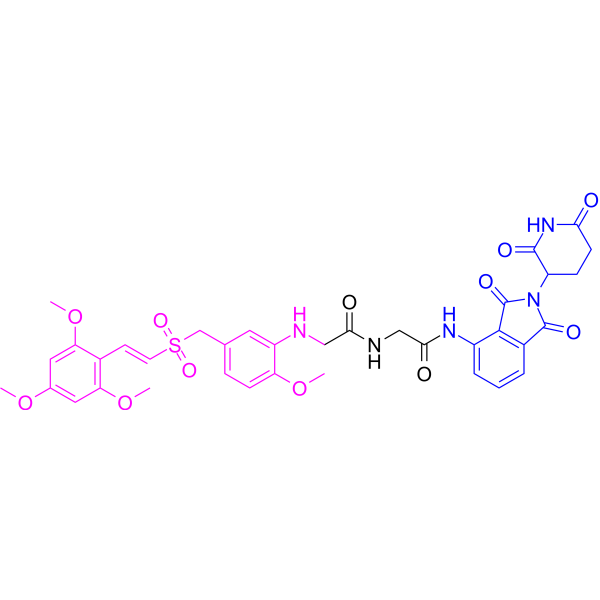
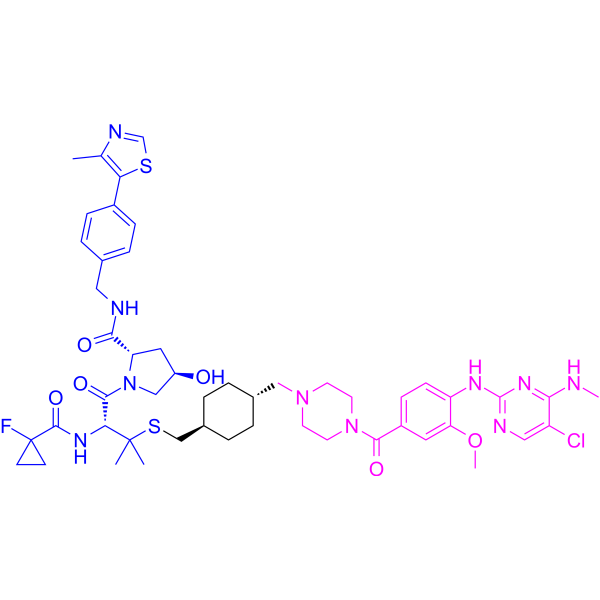
PROTAC B-Raf degrader 1 is a PROTAC degrader targeting B-Raf, which recruits the ubiquitin-proteasome system to accelerate B-Raf degradation and reduce the expression of downstream Mcl-1. PROTAC B-Raf degrader 1 inhibits cancer cell proliferation, arrests cell cycle and induces apoptosis. PROTAC B-Raf degrader 1 can be used in breast cancer-related research .
loading...
    loading...
1
1 Cited Publications
Cat. No.: HY-146393
CAS No.: 2411389-67-6
Purity:  98.09%
Target:  

PROTACs Cytochrome P450

Research Areas:  

Cancer

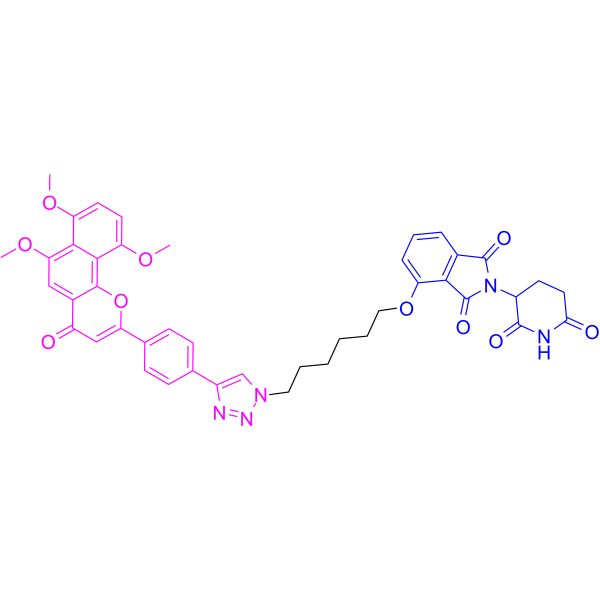
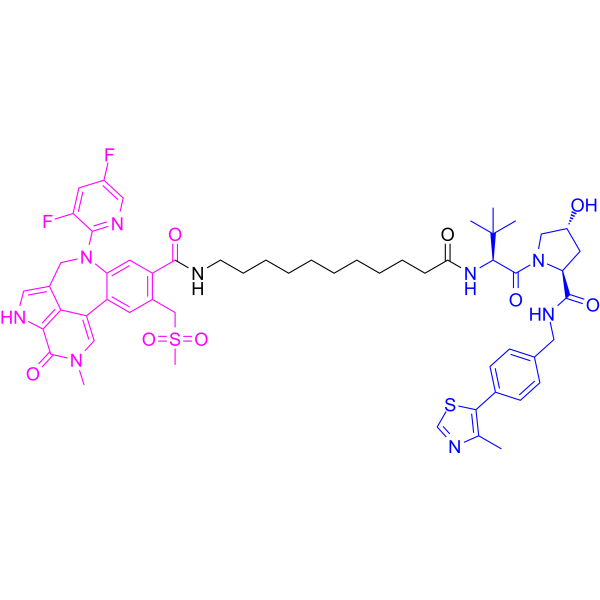
PROTAC CYP1B1 degrader-1 is a CYP1B1 PROTAC degrader with a human IC50 of 95.1 nM. PROTAC CYP1B1 degrader-1 induces concentration-dependent CYP1B1 degradation. PROTAC CYP1B1 degrader-1 can be used for the research of CYP1B1-mediated Docetaxel (HY-B0011)-resistant prostate cancer .
loading...
    loading...
1
1 Cited Publications
Cat. No.: HY-170620
Target:  

PROTACs PARP

Research Areas:  

Cancer

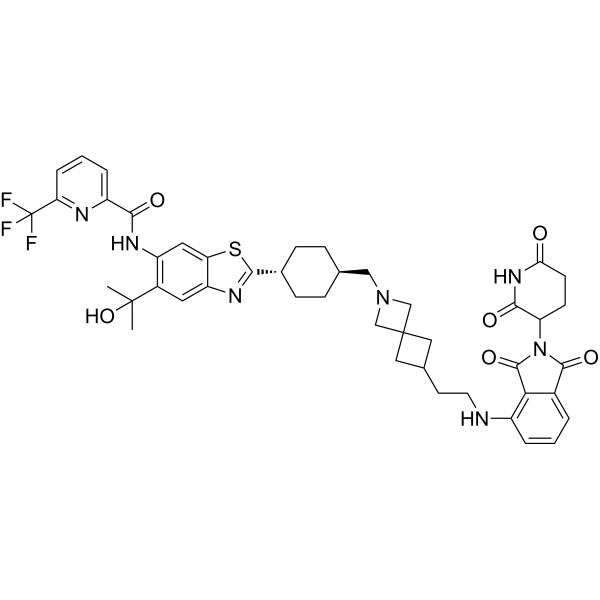
PARP1 PROTAC 180055 is a PARP1 PROTAC degrader that recruits VHL, with DC50 values of 180 nM and 240 nM in T47D and MDA-MB-231 cells, respectively. PARP1 PROTAC 180055 selectively kills BRCA-mutant tumor cells by inducing PARP1 ubiquitination and proteasomal degradation, thereby blocking PARylation, NAD + depletion and DNA trapping. PARP1 PROTAC 180055 can be used in the research of breast cancer, ovarian cancer, colorectal cancer, acute T-lymphoblastic leukemia, prostate cancer and osteosarcoma .
loading...
    loading...
1
1 Cited Publications
Cat. No.: HY-141680
CAS No.: 2756741-90-7
Purity:  99.33%
Target:  

PROTACs CDK

Research Areas:  

Cancer

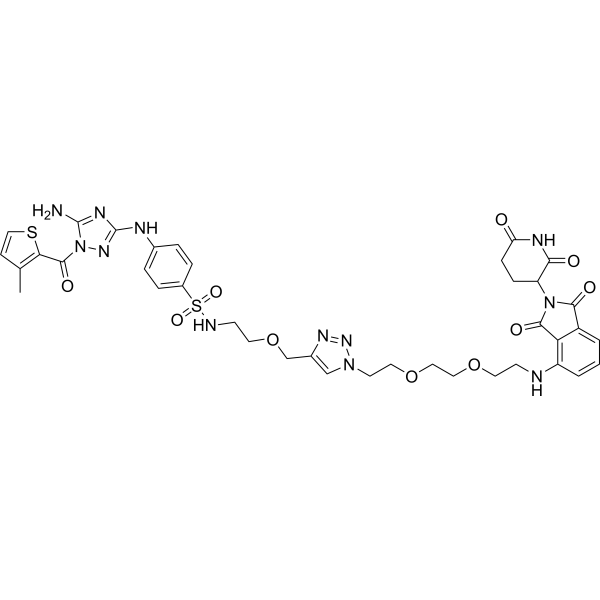
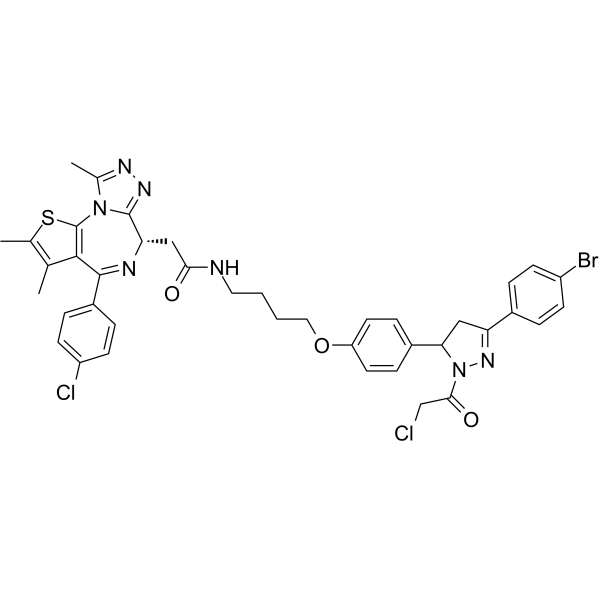
CPS2 is a first-in-class, highly potent, selective and irreversible PROTAC CDK2 degrader (IC50= 24 nM). CPS2 can be used for the research of acute myeloid leukemia .
loading...
    loading...
1
1 Cited Publications
Cat. No.: HY-151623
CAS No.: 2913161-19-8
Purity:  99.76%
Target:  

PROTACs SWI/SNF Complex

Research Areas:  

Cancer

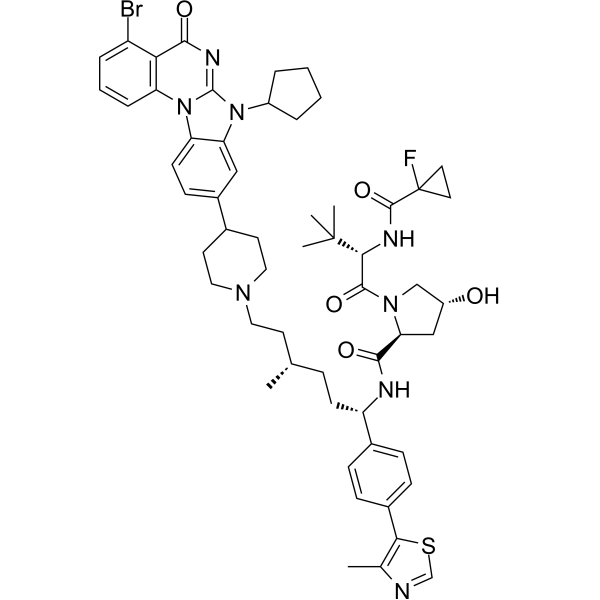
ACBI2 is a highly potent and orally active VHL PROTAC SMARCA2 degrader (EC50: 7 nM), which selectively degrades SMARCA2 with a DC50 value of 1 nM in RKO cells. ACBI2 can be used in the research of lung cancer .
loading...
    loading...
1
1 Cited Publications
Cat. No.: HY-134823
CAS No.: 2136246-72-3
Purity:  99.81%
Target:  

PROTACs MDM-2/p53

Research Areas:  

Cancer

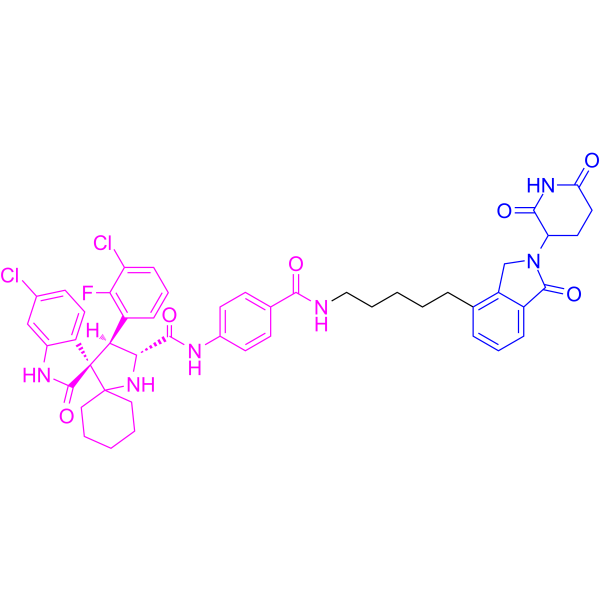
MD-222 is a potent MDM2 PROTAC degrader. MD-222 recruits the CRBN E3 ubiquitin ligase to target and degrade MDM2, and activates the wild-type p53 pathway in cells. MD-222 is used in relevant research on leukemia and breast cancer .
loading...
    loading...
1
1 Cited Publications
Cat. No.: HY-138946
CAS No.: 2229974-83-6
Purity:  98.52%
Target:  

PROTACs CDK

Research Areas:  

Cancer

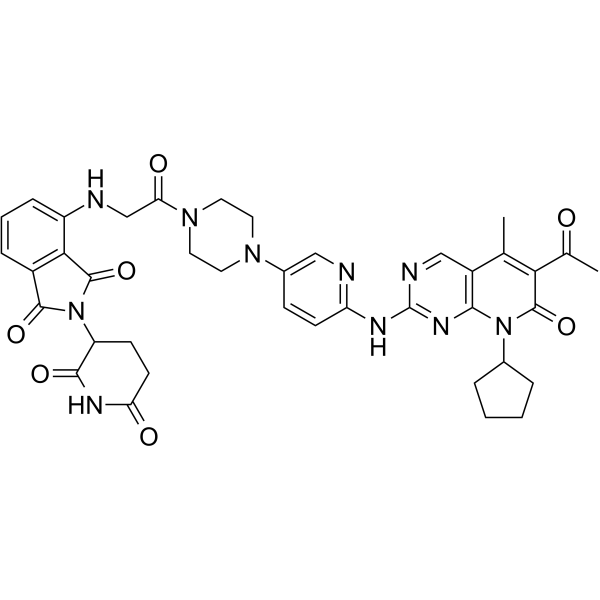
XY028-140 is a PROTAC-type degrader targeting CDK4/6, which degrades CDK4/6 by recruiting CRBN-type E3 ligase. XY028-140 can be used in CDK4/6-mediated cancer-related research .
loading...
    loading...
1
1 Cited Publications
Cat. No.: HY-132991
Purity:  99.43%
Research Areas:  

Cancer

ML 2-14 is a PROTAC targeting BRD4 with a C4 alkyl linker. ML 2-14 consists of the E3 ligase ligand EN219 (HY-115715) (bule part), the target protein ligand JQ-1 (HY-13030) (red part), and the PROTAC linker (balck part). ML 2-14 can effectively degrade BRD4 in 231MFP breast cancer cells, and this effect can be reversed by the proteasome inhibitor Bortezomib (HY-10227) and the E1 activase inhibitor TAK-243 (HY-100487). ML 2-14 can be used for breast cancer-related research .
loading...
    loading...
1
1 Cited Publications
Cat. No.: HY-117690
CAS No.: 2170679-45-3
Purity:  99.75%
Research Areas:  

Cancer

dBRD9 is a BRD9 PROTAC degrader. dBRD9 reduces the binding of the ISGF3 complex to ISG promoters, decreases the level of ISG induction downstream of IFNAR signaling, and reduces the chromatin binding of BRD4 at BRD9 co-binding sites. dBRD9 can be used in research related to acute myeloid leukemia .
loading...
    loading...
1
1 Cited Publications
Cat. No.: HY-117690A
CAS No.: 2341840-98-8
Research Areas:  

Cancer

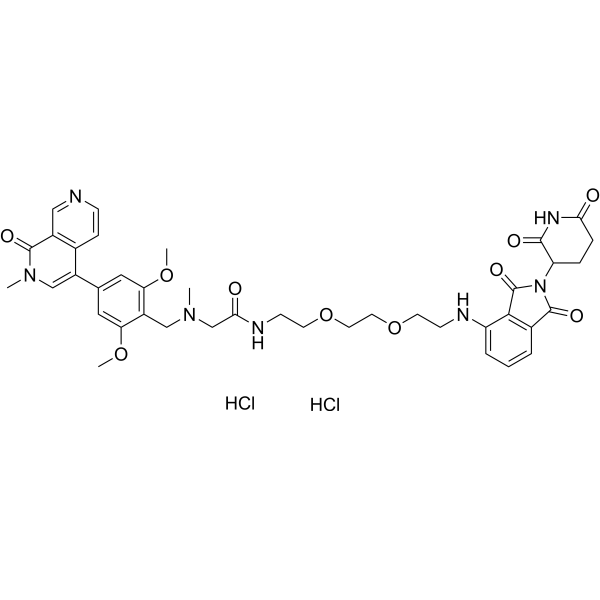
dBRD9 dihydrochloride is a BRD9 PROTAC degrader. dBRD9 dihydrochloride reduces the binding of the ISGF3 complex to ISG promoters, decreases the level of ISG induction downstream of IFNAR signaling, and reduces the chromatin binding of BRD4 at BRD9 co-binding sites. dBRD9 dihydrochloride can be used in research related to acute myeloid leukemia .
loading...
    loading...
1
1 Cited Publications
Cat. No.: HY-130665
CAS No.: 2250025-88-6
Purity:  99.63%
Research Areas:  

Cancer

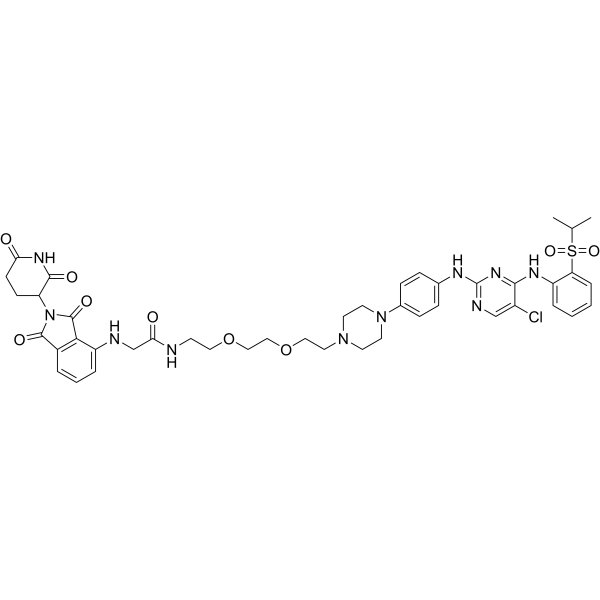
TL12-186 is a multi-kinase PROTAC degrader. TL12-186 recruits the CRBN E3 ubiquitin ligase to target and degrade a variety of distinct kinases, including FLT3, BTK, AURKA, PTK2B, and multiple cyclin-dependent kinases (CDKs). TL12-186 can be used in leukemia-related research .
loading...
    loading...
1
1 Cited Publications
Cat. No.: HY-133557
CAS No.: 2365172-19-4
Purity:  98.84%
Research Areas:  

Cancer

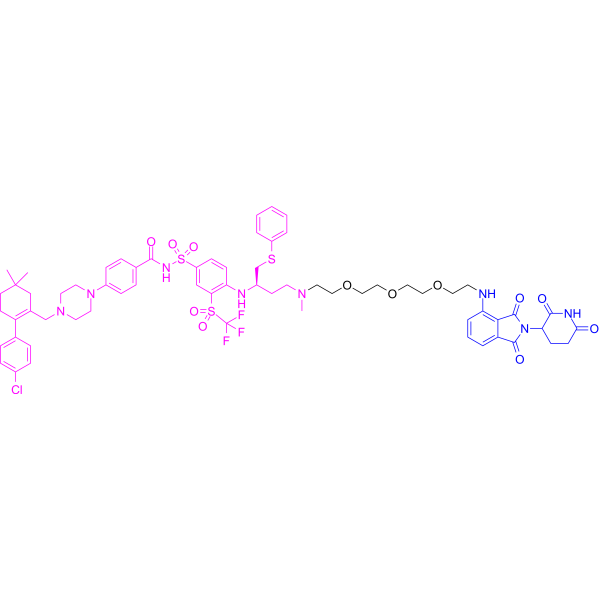
XZ739 is a potent and selective BCL-XL PROTAC degrader with a DC50 of 2.5 nM. XZ739 recruits CRBN to ubiquitinate and degrade BCL-XL via the ubiquitin-proteasome system. XZ739 also induces cell cycle arrest and caspase-mediated apoptosis. XZ739 can be used in research related to T-cell acute lymphoblastic leukemia and cholangiocarcinoma .
loading...
    loading...
1
1 Cited Publications
Cat. No.: HY-149862
CAS No.: 2632305-17-8
Purity:  98.19%
Research Areas:  

Cancer

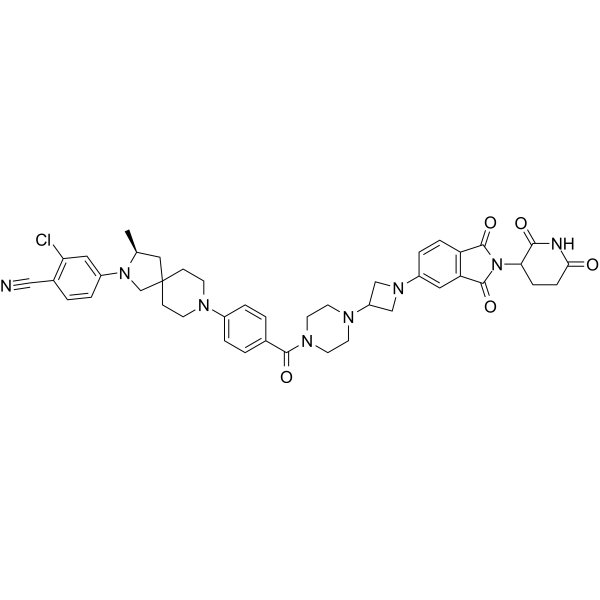
ARD-2051 is a selective and orally active androgen receptor (AR) PROTAC degrader. ARD-2051 achieves DC50 values of 0.6 nM for AR protein degradation in both the LNCaP and VCaP prostate cancer cell lines. ARD-2051 exhibits effective anti-tumor activity in VCaP xenograft mice model. ARD-2051 can be used for the research of prostate cancer .
loading...
    loading...
1
1 Cited Publications
Cat. No.: HY-148030
CAS No.: 3011029-58-3
Purity:  98.90%
Target:  

LRRK2 PROTACs Mitophagy

Research Areas:  

Neurological Disease

XL01126 is a blood-brain barrier-permeable, selective LRRK2 PROTAC degrader (DC50: 14 nM (G2019S LRRK2) and 32 nM (WT LRRK2)). XL01126 forms a positively cooperative ternary complex with VHL E3 ubiquitin ligase and LRRK2, mediating the polyubiquitination and proteasomal degradation of LRRK2. XL01126 induces Mitophagy. XL01126 is applicable to research related to Parkinson's disease .
loading...
    loading...
1
1 Cited Publications
Cat. No.: HY-162706
CAS No.: 2519823-37-9
Target:  

PROTACs CDK

Research Areas:  

Cancer

BSJ-5-63 is a potent CDK12, CDK7, CDK9 PROTAC degrader. BSJ-5-63 BSJ-5-63 decreases the protein expression of CDK12, CDK7, CDK9, RNAPII, Cyclin K. BSJ-5-63 decreases the mRNA expression of BRCA1, BRCA2. BSJ-5-63 shows anticancer activity and has the potential for the research of prostate cancer .
loading...
    loading...
1
1 Cited Publications
Cat. No.: HY-129937A
CAS No.: 2417371-71-0
Purity:  99.91%
Research Areas:  

Cancer

GNE-987 is a VHL-dependent BRD4 PROTAC degrader. GNE-987 exhibits picomolar cell BRD4 degradation activity (DC50=0.03 nM for EOL-1 AML cell line). GNE-987 binds equipotently to the BD1 and BD2 bromodomains of BRD4 with low nanomolar affinities (IC50=4.7 and 4.4 nM, respectively). GNE-987 can be used for the research of cancer .
loading...
    loading...
1
1 Cited Publications
Cat. No.: HY-153368
CAS No.: 2655656-99-6
Purity:  95.43%
Synonyms: KT-413
Zomiradomide (KT-413) is an orally active IRAK4 PROTAC degrader with a DC50 of 6 nM. Zomiradomide inhibits the NF-κB signaling pathway, while its molecular glue function mediates the degradation of Ikaros and Aiolos (with a DC50 of 1 nM for both), activates the IFN-I signaling pathway, and selectively degrades IMiD substrates. Zomiradomide inhibits cancer cell proliferation and tumor growth. Zomiradomide can be used in research related to B-cell non-Hodgkin's lymphoma and diffuse large B-cell lymphoma .
loading...
    loading...
1
1 Cited Publications
Cat. No.: HY-164233
CAS No.: 2742732-92-7
Target:  

PROTACs HDAC Apoptosis

Research Areas:  

Cancer

YX968 is a selective HDAC3/HDAC8 PROTAC dual degrader, with a DC50 value of 1.7 nM against HDAC3 and 6.1 nM against HDAC8. YX968 inhibits cancer cell growth, induces apoptosis, prevents global histone hyperacetylation, and exerts effects via antiproliferative activity. YX968 can be used in research related to triple-negative breast cancer, non-small cell lung cancer, and multiple myeloma .
loading...
    loading...
1
1 Cited Publications
Cat. No.: HY-171658
CAS No.: 3070346-91-4
R1-ICR-5 is a highly selective RIPK1 PROTAC degrader. Mediated by VHL, R1-ICR-5 induces the degradation of RIPK1, which in turn dysregulates the TNFR1 and TLR3/4 signaling hubs, enhances the signaling outputs of NF-κB, MAPK and IFN, and simultaneously promotes RIPK3 activation and necroptosis (necroptosis). R1-ICR-5 can be used in the research of triple-negative breast cancer and skin inflammation .
loading...
    loading...
1
1 Cited Publications
Cat. No.: HY-170451
CAS No.: 2713618-08-5
Synonyms: KT-253
Research Areas:  

Cancer

Seldegamadlin (KT-253) is a cereblon-recruiting PROTAC degrader of MDM2, with a DC50 of 0.4 nM. Seldegamadlin catalyzes the ubiquitination and proteasomal degradation of MDM2, disrupts the MDM2/p53 autoregulatory feedback loop, induces apoptosis, caspase activation and p53 target gene expression, and inhibits the growth of wild-type p53 hematologic tumor cells and solid tumor cells. Seldegamadlin is applicable for the research of acute myeloid leukemia, acute lymphoblastic leukemia, diffuse large B-cell lymphoma and wild-type p53 solid tumors .
loading...
    loading...

