

10266 Results for "

murine control platelets

" in MedChemExpress (MCE) Product Catalog:
Products (10266)

10266 Results for "murine control platelets" in MCE Product Catalog:

  • Categories Recommended:
    More
11
11 Cited Publications
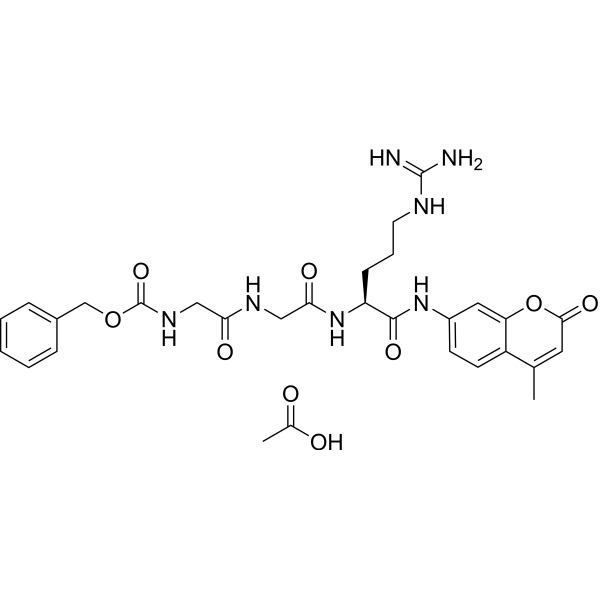
Cat. No.: HY-P0019A
CAS No.: 2070009-61-7
Research Areas:  

Others

Z-Gly-Gly-Arg-AMC acetate is a thrombin-specific fluorogenic substrate for testing of thrombin generation in PRP and platelet-poor plasma (PPP) (Ex/Em = 390/480 nm) .
loading...
    loading...
11
11 Cited Publications
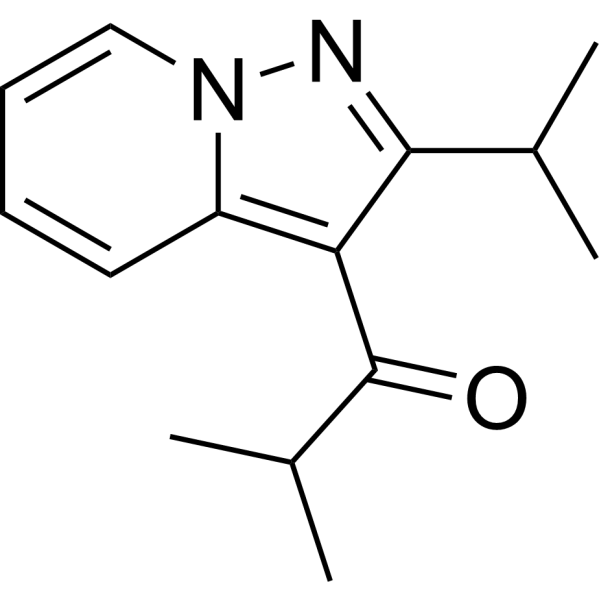
Cat. No.: HY-B0763
CAS No.: 50847-11-5
Synonyms: KC-404; AV-411; MN-166
Research Areas:  

Inflammation/Immunology Cancer

Ibudilast (KC-404; AV-411; MN-166) is a cyclic AMP phosphodiesterase (PDE) inhibitor. Ibudilast has platelet anti-aggregatory effects. Ibudilast can be used for the research of asthma for its inhibitory effects on tracheal smooth muscle contractility. Ibudilast may be a useful neuroprotective and anti-dementia agent counteracting neurotoxicity in activated microglia .
loading...
    loading...
11
11 Cited Publications
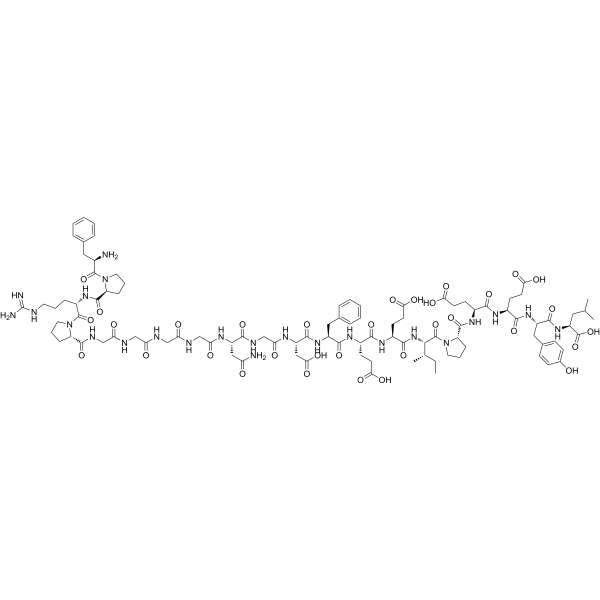
Cat. No.: HY-P1929
CAS No.: 128270-60-0
Bivalirudin, a hirudin analog and anticoagulant, is a direct thrombin inhibitor. Bivalirudin inhibits thrombin-mediated fibrinogen cleavage, coagulation factor activation, and platelet activation by reversibly binding to thrombin. In addition, Bivalirudin also has certain effects of anti-virus, anti-inflammation, and vascular endothelial barrier function protection. Bivalirudin can be used for the research of thrombotic diseases and others .
loading...
    loading...
11
11 Cited Publications
Cat. No.: HY-15664
CAS No.: 1191386-55-6
Purity:  99.89%
Bivalirudin TFA, a hirudin analog and anticoagulant, is a direct thrombin inhibitor. Bivalirudin TFA inhibits thrombin-mediated fibrinogen cleavage, coagulation factor activation, and platelet activation by reversibly binding to thrombin. In addition, Bivalirudin TFA also has certain effects of anti-virus, anti-inflammation, and vascular endothelial barrier function protection. Bivalirudin TFA can be used for the research of thrombotic diseases and others .
loading...
    loading...
10
10 Cited Publications
Cat. No.: HY-P80757

Host:  

Mouse

Application:  

WB, IHC-P, IHC-F, ICC/IF, IP, FC, ChIP, ELISA, IF-Tissue, mIHC

Reactivity:  

Species independent

loading...
    loading...
10
10 Cited Publications
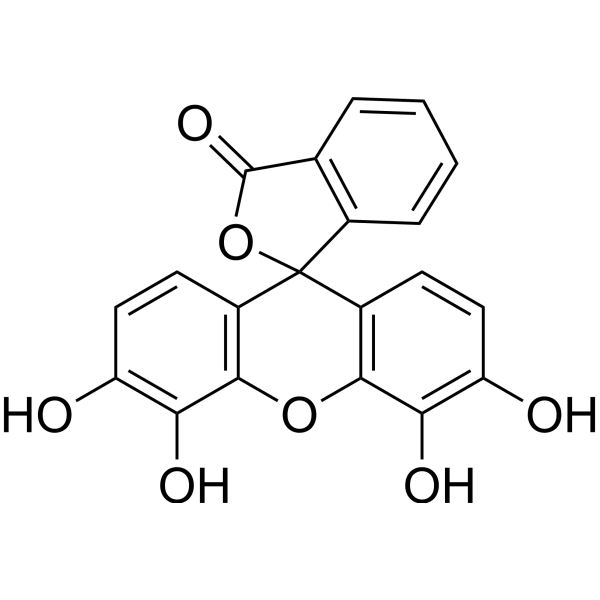
Cat. No.: HY-D0254
CAS No.: 2103-64-2
Synonyms: Pyrogallol phthalein
Target:  

PI3K

Research Areas:  

Neurological Disease Cancer

Gallein is a Gβγ subunit signaling inhibitor that can interfere with the interaction between Gβγ subunit and PI3Kγ, regulate platelet function, and exhibit anti-tumor activity [1][3].
loading...
    loading...
10
10 Cited Publications
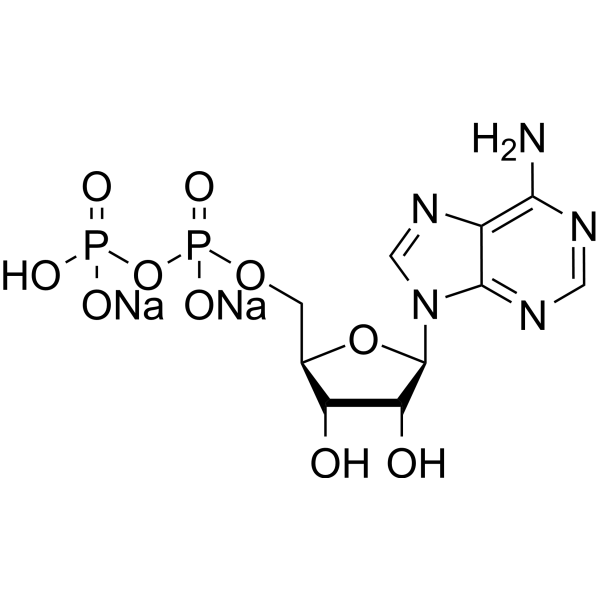
Cat. No.: HY-D0199
CAS No.: 16178-48-6
Synonyms: Adenosine diphosphate disodium; ADP disodium
Adenosine 5'-diphosphate disodium is a nucleoside diphosphate. Adenosine 5'-diphosphate disodium is the product of ATP dephosphorylation by ATPases. Adenosine 5'-diphosphate disodium is a platelet aggregation agent for hemostasis and the development and extension of arterial thrombosis .
loading...
    loading...
10
10 Cited Publications
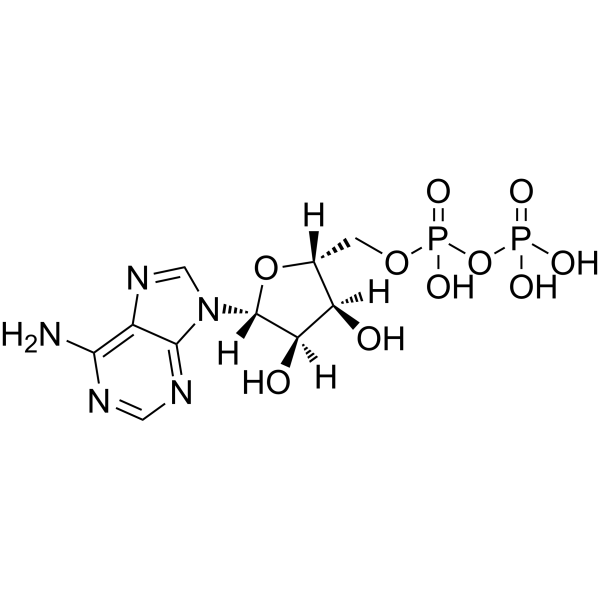
Cat. No.: HY-W010918
CAS No.: 58-64-0
Synonyms: Adenosine diphosphate; ADP
Adenosine 5'-diphosphate (Adenosine diphosphate) is a nucleoside diphosphate. Adenosine 5'-diphosphate is the product of ATP dephosphorylation by ATPases. Adenosine 5'-diphosphate induces human platelet aggregation and inhibits stimulated adenylate cyclase by an action at P2T-purinoceptors.
loading...
    loading...
10
10 Cited Publications
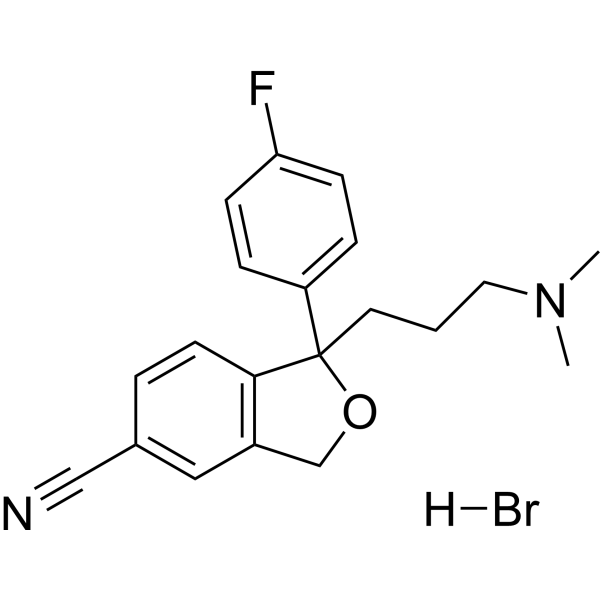
Cat. No.: HY-B1287
CAS No.: 59729-32-7
Synonyms: (±)-Citalopram hydrobromide; Lu 10-171
Citalopram hydrobromide is a selective serotonin reuptake inhibitor (SSRI), with blood-brain barrier permeability. Citalopram hydrobromide inhibits 5-HT uptake into synaptosomes with an IC50 of 1.8 nM. Citalopram hydrobromideinhibits the 5-HT uptake in rabbit blood platelets with an IC50 of 14 nM. Antidepressant effect .
loading...
    loading...
10
10 Cited Publications
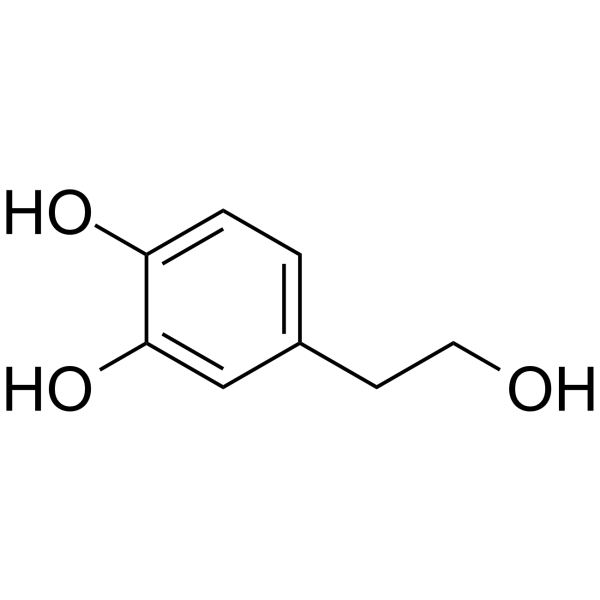
Cat. No.: HY-N0570
CAS No.: 10597-60-1
Synonyms: DOPET; 3,4-Dihydroxyphenethyl alcohol; 3-Hydroxytyrosol
Hydroxytyrosol (DOPET; 3,4-Dihydroxyphenethyl alcohol) is an orally active, blood-brain barrier-permeable multi-active compound with multiple effects including antibacterial, antioxidant, anti-platelet aggregation, and neuroprotective activities. Hydroxytyrosol not only inhibits the growth of Vibrio by increasing bacterial membrane permeability, but also interacts with DNA and mediates supercoiled DNA relaxation. Meanwhile, Hydroxytyrosol effectively reduces thrombosis and inhibits lipid oxidation by inhibiting COX activity and promoting vascular nitric oxide production. In terms of neuroprotection, Hydroxytyrosol significantly alleviates neuronal apoptosis and inflammatory responses by up-regulating the expression level of ERβ, thereby improving cognitive function in Alzheimer's disease models. Hydroxytyrosol has been widely used in scientific research related to Vibrio infection, arterial thrombosis, Alzheimer's disease and other related fields .
loading...
    loading...
9
9 Cited Publications
Cat. No.: HY-P99977

Target:  

Inhibitory Antibodies

Research Areas:  

Inflammation/Immunology

Mouse IgG1 kappa, Isotype Control is a negative control reagent/isotype control for mouse-derived IgG1κ antibodies. Mouse IgG1 kappa, Isotype Control, by maintaining the same immunoglobulin structure (including isotype, light chain, etc.) as the specific mouse IgG1κ subtype primary antibody, eliminates false positive signals caused by non-specific binding in immunological experiments, thus playing a core role in verifying the specificity of the experiment. Mouse IgG1 kappa, Isotype Control can be applied to immunolocalization experiments in the field of cell biology, such as immunofluorescence staining and immunohistochemistry, assisting in research on protein subcellular localization and cell structure analysis, ensuring the reliability of experimental results .
loading...
    loading...
9
9 Cited Publications
Cat. No.: HY-B0686
CAS No.: 188627-80-7
Target:  

Integrin

Research Areas:  

Cardiovascular Disease

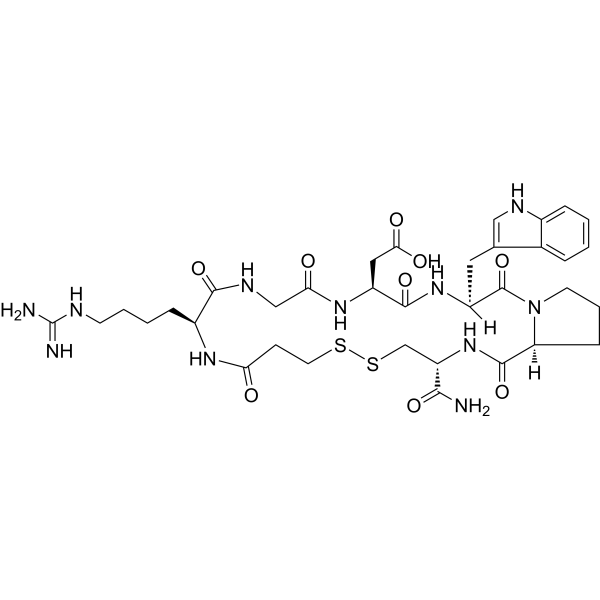
Eptifibatide is a cyclic heptapeptide, acts as a competitive antagonist for the activated platelet glycoprotein IIb/IIIa receptor, with anti-platelet activity .
loading...
    loading...
9
9 Cited Publications
Cat. No.: HY-B0686B
CAS No.: 881997-86-0
Target:  

Integrin

Research Areas:  

Cardiovascular Disease

Eptifibatide acetate is a cyclic heptapeptide, acts as a competitive antagonist for the activated platelet glycoprotein IIb/IIIa receptor, with anti-platelet activity .
loading...
    loading...
9
9 Cited Publications
Cat. No.: HY-114164H
CAS No.: 9002-04-4
Synonyms: EC 3.4.21.5 (Lyophilized); Human Alpha Thrombin (Lyophilized)
Human α-Thrombin (EC 3.4.21.5; Human Alpha Thrombin) (Lyophilized) is a terminal serine protease in the coagulation cascade, as well as a potent physiological platelet agonist and fibrin-generating enzyme in vivo. Human α-Thrombin catalyzes the conversion of fibrinogen to fibrin for blood clot formation, and activates platelet aggregation by cleaving the protease-activated receptors PAR1 (major) (Kd = 1 nM) and PAR4 (minor) on the platelet surface to expose tethered ligands. Human α-Thrombin also amplifies coagulation via positive feedback by activating coagulation factors V, VIII, XI (FV/FVIII/FXI), and switches to activate protein C to exert anticoagulant effects after binding to thrombomodulin .
This product is in a freeze-dried form.
loading...
    loading...
9
9 Cited Publications
Cat. No.: HY-W010791
CAS No.: 20398-34-9
Target:  

Endogenous Metabolite

Research Areas:  

Others

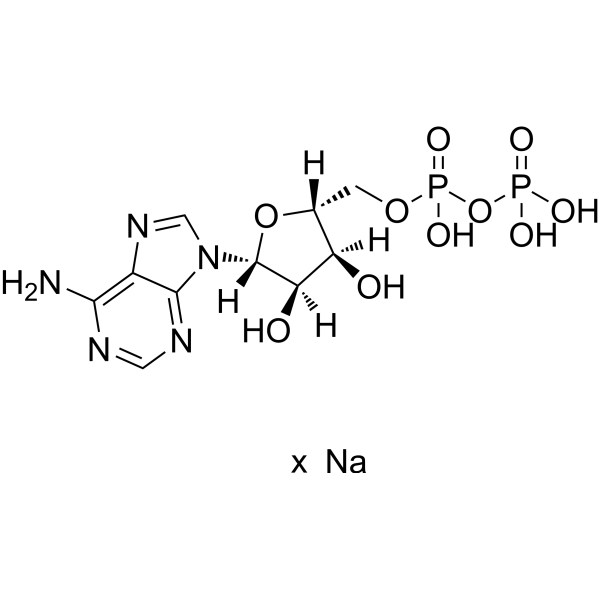
Adenosine 5'-diphosphate sodium salt is a nucleoside diphosphate and the product of ATP dephosphorylation by ATPases. Adenosine 5'-diphosphate sodium salt induces human platelet aggregation and inhibits stimulated adenylate cyclase through its action on P2T-purinergic receptors .
loading...
    loading...
9
9 Cited Publications
Cat. No.: HY-N0284
CAS No.: 305-01-1
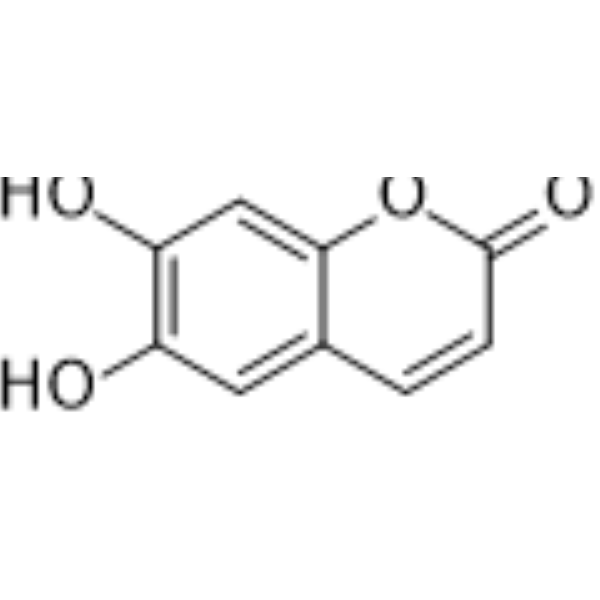
Esculetin is an active ingredient extracted mainly from the bark of Fraxinus rhynchophylla. Esculetin inhibits platelet-derived growth factor (PDGF)-induced airway smooth muscle cells (ASMCs) phenotype switching through inhibition of PI3K/Akt pathway. Esculetin has antioxidant, antiinflammatory, and antitumor activities .
loading...
    loading...
8
8 Cited Publications
Cat. No.: HY-121526
CAS No.: 67776-06-1
Purity:  98.76%
Synonyms: SNAP
Target:  

NO Synthase

Research Areas:  

Cardiovascular Disease Cancer

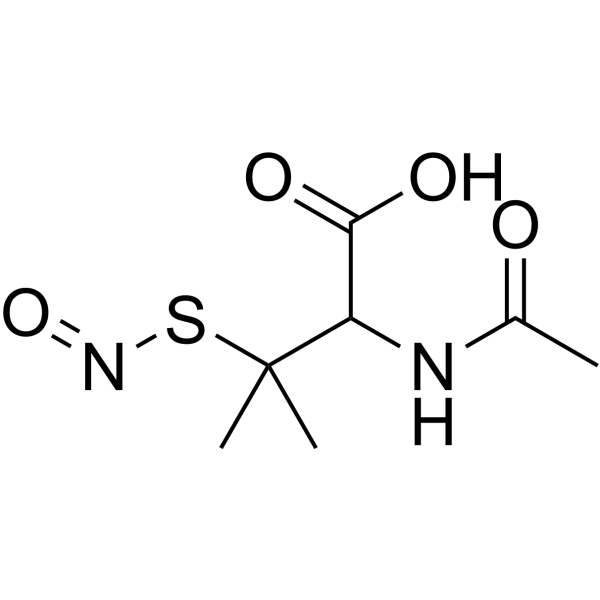
S-Nitroso-N-acetyl-DL-penicillamine (SNAP) is a nitric oxide donor and acts as a stable inhibitor of platelet aggregation .
loading...
    loading...
8
8 Cited Publications
Cat. No.: HY-130592
CAS No.: 848035-21-2
Purity:  99.95%
Synonyms: C48/80 trihydrochloride
Target:  

Phospholipase

Research Areas:  

Neurological Disease

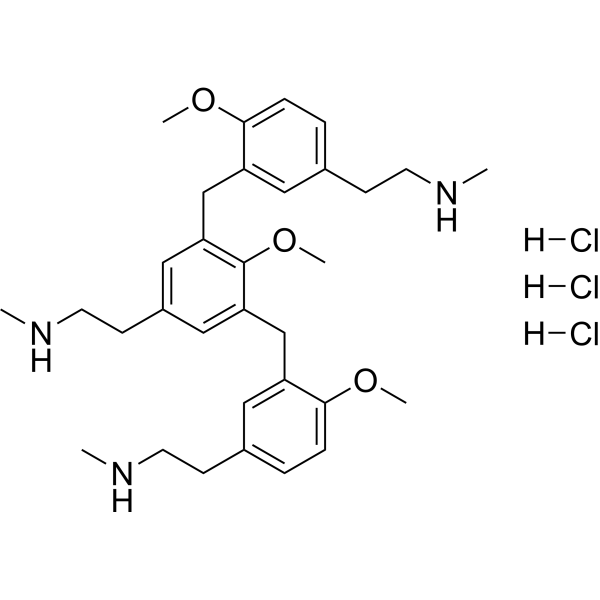
Compound 48/80 trihydrochloride (C48/80 trihydrochloride) is a mixture of condensation products of N-methyl-p-methoxyphenethylamine with formaldehyde. Compound 48/80 trihydrochloride is also a histamine releaser and a mast cell degranulator. Compound 48/80 inhibits phosphatidylinositol-specific phospholipase C activity from human platelets .
loading...
    loading...
8
8 Cited Publications
Cat. No.: HY-12341
CAS No.: 1532593-30-8
Purity:  98.11%
Synonyms: ML355
Onvoloxastat (ML355) is an orally active selective 12-LOX inhibitor with an IC50 of 0.34 μM. Onvoloxastat inhibits platelet activation by blocking thrombin- or thromboxane A2-induced phosphorylation of Akt, PI3K and Erk1/2. At low doses (1-20 μM), it mainly acts by reducing ROS levels, while at high doses (50 μM), it functions via activating the cAMP pathway. Onvoloxastat can be used in research related to thrombosis and diabetes .
loading...
    loading...
8
8 Cited Publications
Cat. No.: HY-114312
CAS No.: 2136247-12-4
Purity:  99.60%
Research Areas:  

Cancer

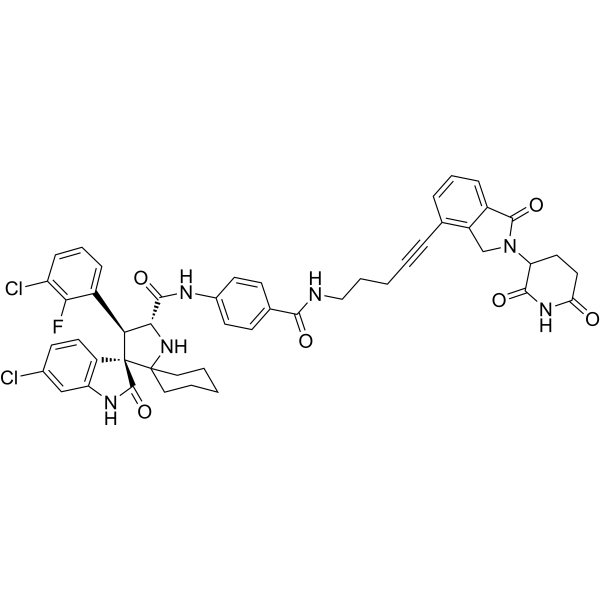
MD-224 is a first-in-class and highly potent small-molecule human murine double minute 2 (MDM2) degrader based on the proteolysistargeting chimera (PROTAC) concept. MD-224 consists of ligands for Cereblon and MDM2. MD-224 induces rapid degradation of MDM2 at concentrations <1 nM in human leukemia cells, and achieves an IC50 value of 1.5 nM in inhibition of growth of RS4;11 cells. MD-224 has the potential to be a new class of anticancer agent . MD-224 is a click chemistry reagent, it contains an Alkyne group and can undergo copper-catalyzed azide-alkyne cycloaddition (CuAAc) with molecules containing Azide groups.
loading...
    loading...

