
764 Results for "

Autoimmune

" in MedChemExpress (MCE) Product Catalog:
Products (764)

764 Results for "Autoimmune" in MCE Product Catalog:

Cat. No.: HY-184502
CAS No.: 3034295-80-9
Target:  

STING

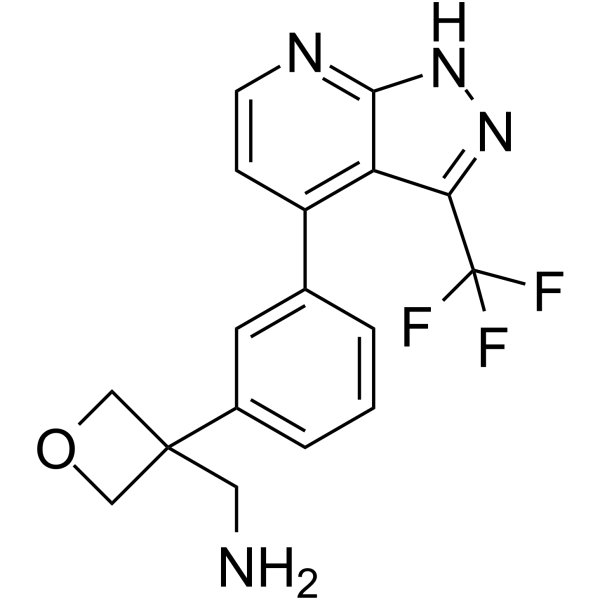
DDO-88109 is a STING inhibitor with a Kd value of 317 nM for hSTING and 0.625 μM for mSTING. DDO-88109 competitively occupies the CDN-binding pocket of STING, thereby maintaining STING in an inactive state. It inhibits cGAS-STING signaling—including STING translocation from the endoplasmic reticulum to the Golgi apparatus, STING oligomerization, and the phosphorylation of IRF3, p65, TBK1, and STING—and attenuates the production of inflammatory cytokines and tissue inflammation in mouse models of TREX1-deficiency-driven autoinflammation and cisplatin (HY-17394)-induced acute kidney injury. DDO-88109 is suitable for research on inflammatory diseases, autoimmune disorders, and acute kidney injury driven by the cGAS-STING pathway .
loading...
    loading...
Cat. No.: HY-19108
CAS No.: 104795-68-8
Target:  

Calcium Channel Actin

Research Areas:  

Inflammation/Immunology Cancer

CI-959 is an orally active cell activation inhibitor. CI-959 selectively suppresses inflammatory cell activation post-receptor signaling via inhibiting calcium influx and weak calmodulin antagonism, without targeting PLC, PKC or NADPH oxidase. CI-959 blocks lung allergic mediator release, anti-IgE bronchial contraction, neutrophil function, T-cell proliferation and DC marker expression while sparing monocytes. CI-959 provides gastric cytoprotection by inhibiting leukocyte adhesion and suppresses tumor motility through F-actin reduction. CI-959 can be used for research on allergies, inflammation, autoimmune diseases, gastric injury, and tumor metastasis .
loading...
    loading...
Cat. No.: HY-P990134

Target:  

TNF Receptor IFNAR

Research Areas:  

Inflammation/Immunology Cancer

Anti-Mouse CD40L/CD154 Antibody (MR-1) is an anti-mouse CD40L/CD154 IgG monoclonal antibody. Anti-Mouse CD40L/CD154 Antibody (MR-1) reduces the expression of IFN signaling pathway and lowers the level of IFN-β. Anti-Mouse CD40L/CD154 Antibody (MR-1) can prolong the survival time of transplants. Anti-Mouse CD40L/CD154 Antibody (MR-1) can be used for researches on cancer, inflammation conditions and xenotransplantation such as pancreatic cancer and autoimmune cholangitis .
loading...
    loading...
Cat. No.: HY-W241255
CAS No.: 27473-62-7
2-Aminoindan-2-carboxylic acid is a conformationally restricted Phenylalanine analog and molecular building block. 2-Aminoindan-2-carboxylic acid constitutes a component of allosteric LFA-1 antagonists targeting the LFA-1/ICAM-1 interaction. 2-Aminoindan-2-carboxylic acid serves as a molecular building block for various biologically active peptides, including μ-receptor-selective opioid analogs, activated protein C inhibitors, and histone deacetylase inhibitors. 2-Aminoindan-2-carboxylic acid can be used in the research of autoimmune diseases, inflammatory diseases, opioid receptor-related diseases, antidiuresis-related diseases, and cancers .
loading...
    loading...
Cat. No.: HY-W678610
CAS No.: 136715-68-9
Target:  

14-3-3 Protein

Research Areas:  

Inflammation/Immunology

14-3-3γ/SLP76 degrader-1 is a stabiliser of the 14-3-3γ/phosphorylated SLP76 protein-protein interaction. 14-3-3γ/SLP76 degrader-1 lacks stabilising activity on the unrelated IL17/IL17R protein-protein interaction. 14-3-3γ/SLP76 degrader-1 lacks stabilising activity on the 14-3-3ζ/p27 protein-protein interaction. 14-3-3γ/SLP76 degrader-1 can be used for the research of autoimmune and inflammatory conditions .
loading...
    loading...
Cat. No.: HY-100754CR
CAS No.: 2192215-81-7
Synonyms: PF-06651600 tosylate (Standard)
Ritlecitinib (tosylate) (Standard) is the analytical standard of Ritlecitinib (tosylate) (HY-100754C). This product is intended for research and analytical applications. Ritlecitinib (PF-06651600) tosylate is a highly selective, orally active, irreversible covalent JAK3 inhibitor (IC50=33 nM) without inhibitory activity towards JAK1, JAK2, and TYK2 (IC50 >10 μ M). Ritlecitinib tosylate rapidly inactivates the JAK3 kinase, and blocks signaling and downstream STAT phosphorylation mediated by common gamma chain cytokines such as IL-2 and IL-15. Ritlecitinib tosylate can inhibit Th1/Th17 cell differentiation and function, and effectively suppress preclinical animal models such as alopecia areata, adjuvant-induced arthritis (AIA), and experimental autoimmune encephalomyelitis (EAE) .
loading...
    loading...
Cat. No.: HY-100754R
CAS No.: 1792180-81-4
Synonyms: PF-06651600 (Standard)
Ritlecitinib (Standard) is the analytical standard of Ritlecitinib (HY-100754). This product is intended for research and analytical applications. Ritlecitinib (PF-06651600) is a highly selective, orally active, irreversible covalent JAK3 inhibitor (IC50=33 nM) without inhibitory activity towards JAK1, JAK2, and TYK2 (IC50 >10 μ M). Ritlecitinib rapidly inactivates the JAK3 kinase, and blocks signaling and downstream STAT phosphorylation mediated by common gamma chain cytokines such as IL-2 and IL-15. Ritlecitinib can inhibit Th1/Th17 cell differentiation and function, and effectively suppress preclinical animal models such as alopecia areata, adjuvant-induced arthritis (AIA), and experimental autoimmune encephalomyelitis (EAE) .
loading...
    loading...
Cat. No.: HY-113886
CAS No.: 104795-66-6
Target:  

Calcium Channel Actin

Research Areas:  

Inflammation/Immunology Cancer

CI-959 free acid is an orally active cell activation inhibitor. CI-959 free acid selectively suppresses inflammatory cell activation post-receptor signaling via inhibiting calcium influx and weak calmodulin antagonism, without targeting PLC, PKC or NADPH oxidase. CI-959 free acid blocks lung allergic mediator release, anti-IgE bronchial contraction, neutrophil function, T-cell proliferation and DC marker expression while sparing monocytes. CI-959 free acid provides gastric cytoprotection by inhibiting leukocyte adhesion and suppresses tumor motility through F-actin reduction. CI-959 free acid can be used for research on allergies, inflammation, autoimmune diseases, gastric injury, and tumor metastasis .
loading...
    loading...
Cat. No.: HY-126328
CAS No.: 1160501-81-4
Purity:  99.73%
Target:  

PKC Interleukin Related

Research Areas:  

Inflammation/Immunology

PKC-theta inhibitor 1 is an orally active and selective ATP-competitive inhibitor of Protein Kinase Cθ (PKCθ), with a Ki value of 6 nM. PKC-theta inhibitor 1 inhibits T-cell-mediated inflammatory responses by suppressing the release of proinflammatory cytokines (IL-2 IC50 = 0.21 μM in anti-CD3/CD28-stimulated PBMCs; IL-17 IC50 = 1 μM in CD3/CD28-stimulated Th17 cells) PKC-theta inhibitor 1 significantly reduces symptoms in mice with ongoing experimental autoimmune encephalomyelitis (EAE). PKC-theta inhibitor 1 can be used for the study of T-cell-mediated inflammatory diseases such as multiple sclerosis .
loading...
    loading...
Cat. No.: HY-175782
SMU-R39 is a TLR7 and TLR8 antagonist with IC50 values of 3.22 μM and 0.24 μM, respectively. SMU-R39 binds to recombinant mTLR7 protein (KD = 2.36 μM) and to recombinant hTLR8 protein (KD = 105 nM). SMU-R39 suppresses downstream NF-κB and MAPK signaling, and reduces secretion/transcription of pro-inflammatory cytokines (TNF-α, IL-1β, IL-6) in PBMCs and THP-1 cells. SMU-R39 demonstrates anti-inflammatory efficacy in Imiquimod (IMQ) (HY-B0180)-induced psoriasis mouse model. SMU-R39 can be used for the study of autoimmune diseases such as psoriasis .
loading...
    loading...
Cat. No.: HY-B1451
CAS No.: 89396-94-1
Synonyms: TA-6366
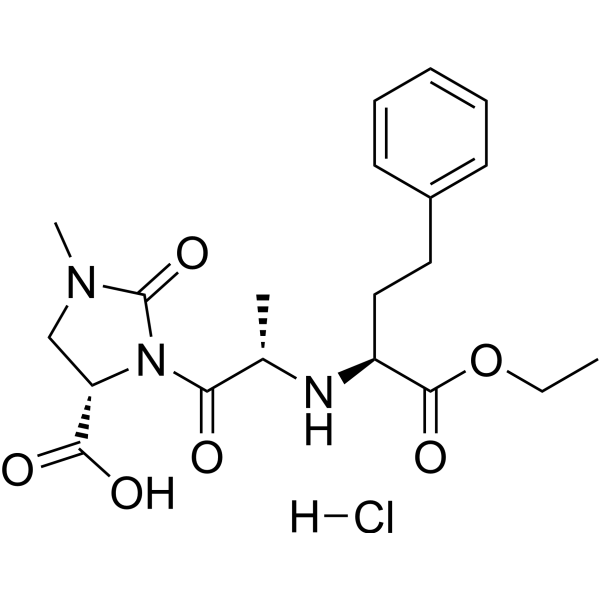
Imidapril hydrochloride (TA-6366) is an orally active dual inhibitor of angiotensin-converting enzyme (ACE) and MMP-9. Imidapril hydrochloride inhibits lipopolysaccharide-induced phosphorylation of c-Jun, MKK4 and JNK in monocytes, and downregulates the production of specific inflammatory factors such as TNF-α and IP-10, thereby exerting anti-inflammatory activity. Imidapril hydrochloride also effectively ameliorates mesangial expansion and reduces urinary albumin excretion by inhibiting angiotensin AngII production, lowering glomerular pressure and oxidative stress, thus delaying disease progression. Imidapril hydrochloride can also directly bind to the active site of MMP-9 to inhibit gelatinase activity, and suppress the enlargement of cerebral aneurysms without altering systemic blood pressure. Imidapril hydrochloride is widely applicable to related studies on autoimmune glomerulonephritis, diabetic nephropathy, cerebral aneurysms and other conditions .
loading...
    loading...
Cat. No.: HY-P3012
CAS No.: 107200-92-0
Cathepsin G is a pH-dependent serine protease. Cathepsin G hydrolyzes diverse synthetic and protein substrates and remodels extracellular matrix. Cathepsin G exerts immunomodulatory effects via recruiting phagocytes, enhancing T cell motility, activating ERK1/2 and p38 MAPK signaling, and mediating PKCζ membrane translocation. Cathepsin G regulates inflammatory responses by cleaving inflammatory mediators. Cathepsin G participates in vascular regulation by converting angiotensin I to angiotensin II. Cathepsin G induces PAR4-dependent platelet activation, facilitates platelet-neutrophil aggregation, and mediates VITT-related NETosis, thrombus formation. Cathepsin G can be used for the research of immune thrombotic thrombocytopenia, cardiovascular disease, and select autoimmune and inflammatory diseases .
loading...
    loading...
Cat. No.: HY-P5377
CAS No.: 221055-89-6
Synonyms: Cathepsin K substrate
Target:  

Ser/Thr Protease

Research Areas:  

Others

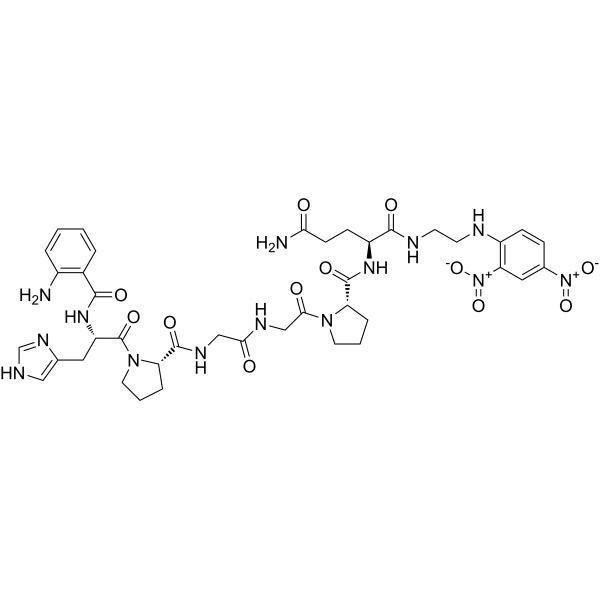
Abz-HPGGPQ-EDDnp (Cathepsin K substrate) is a biological active peptide. (Cathepsins are a class of globular lysosomal proteases, playing a vital role in mammalian cellular turnover. They degrade polypeptides and are distinguished by their substrate specificities. Cathepsin K is the lysosomal cysteine protease involved in bone remodeling and resorption. It has potential as a drug target in autoimmune diseases and osteoporosis.This FRET peptide can be used to monitor selectively cathepsin K activity in physiological fluids and cell lysates. Abz-HPGGPQ-EDDnp [where Abz represents o-aminobenzoic acid and EDDnp represents N -(2, 4-dinitrophenyl)-ethylenediamine], a substrate initially developed for trypanosomal enzymes, is efficiently cleaved at the Gly-Gly bond by cathepsin K. This peptide is resistant to hydrolysis by cathepsins B, F, H, L, S and V, Ex/Em=340 nm/420 nm.)
loading...
    loading...
Cat. No.: HY-P990154
Anti-Mouse TIM-1/CD365 Antibody (3B3) is a rat-derived IgG2a κ type agonistic antibody, targeting to mouse TIM-1/CD365. Anti-Mouse TIM-1/CD365 Antibody (3B3) enhances T-cell proliferation and responses by forming a stable TIM-1 complex and bringing TIM-1 into the T-cell receptor (TCR)-CD3 complex. Anti-Mouse TIM-1/CD365 Antibody (3B3) can be used for the researches of cancer, inflammation and immunology, such as experimental autoimmune encephalomyelitis, B16 F10 tumor and transplant .
loading...
    loading...
Cat. No.: HY-P990156

Research Areas:  

Inflammation/Immunology

Anti-Mouse Thy1.1/CD90.1 Antibody (19E12) is an anti-mouse Thy1.1/CD90.1 IgG2a monoclonal antibody. Anti-Mouse Thy1.1/CD90.1 Antibody (19E12) can deplete CD90.1 + cells. Anti-Mouse Thy1.1/CD90.1 Antibody (19E12) can clear Tregs. Anti-Mouse Thy1.1/CD90.1 Antibody (19E12) can be used for researches on inflammation conditions and immune response such as airway inflammation and experimental autoimmune encephalomyelitis (EAE) .
loading...
    loading...
Cat. No.: HY-L210
2,023 compounds

Rheumatoid Arthritis (RA) is a autoimmune disease characterized by persistent joint inflammation. The pathology of RA includes immune cell infiltration, synovial lining proliferation, pannus formation, and the destruction of joint cartilage and bone, which is highly disabling. Due to long-term chronic inflammation, RA not only severely affects the quality of life of patients but can also damage multiple organs, leading to lung diseases, cardiovascular diseases, and malignant tumors. The pathogenesis of RA is complex, involving genetic, environmental, and immune factors. With the advancement of high-throughput screening technology, screening for compounds targeting JAK, CCR, MEK, MMP targets may contribute to the development of more effective drugs against Rheumatoid Arthritis (RA).

MCE has collected 2,023 small molecule compounds with definite or potential anti-rheumatoid arthritis activity. This library is of significant value for researching the anti-RA drugs.

Cat. No.: HY-P71659
Purity:  ≥ 90%, as determined by reducing SDS-PAGE.
Synonyms: USH1C; USH1 Protein Network Component; Harmonin; DFNB18; NY-CO-37; NY-CO-38; PDZ-73; AIE-75; PDZD7C; PDZ73; Usher Syndrome 1C (Autosomal Recessive, Severe); Autoimmune Enteropathy-Related Antigen AIE-75; Renal Carcinoma Antigen NY-REN-3; Usher Syndrome Type-1C Protein; Antigen NY-CO-38/NY-CO-37; Usher Syndrome 1C (Autosomal Recessive, Severe), Isoform CRA_a; Deafness, Autosomal Recessive 18; Usher Syndrome 1C Isoform 1; Usher Syndrome 1C; PDZ-73/NY-CO-38; Protein PDZ-73; Ush1cpst; DFNB18A; PDZ-45; AIE75
Species:  
Human
Source:  
E. coli
loading...
    loading...
Cat. No.: HY-P76966
Purity:  ≥ 95%, as determined by reducing SDS-PAGE.
Synonyms: USH1C; USH1 Protein Network Component; Harmonin; DFNB18; NY-CO-37; NY-CO-38; PDZ-73; AIE-75; PDZD7C; PDZ73; Usher Syndrome 1C (Autosomal Recessive, Severe); Autoimmune Enteropathy-Related Antigen AIE-75; Renal Carcinoma Antigen NY-REN-3; Usher Syndrome Type-1C Protein; Antigen NY-CO-38/NY-CO-37; Usher Syndrome 1C (Autosomal Recessive, Severe), Isoform CRA_a; Deafness, Autosomal Recessive 18; Usher Syndrome 1C Isoform 1; Usher Syndrome 1C; PDZ-73/NY-CO-38; Protein PDZ-73; Ush1cpst; DFNB18A; PDZ-45; AIE75
Species:  
Human
Source:  
E. coli
loading...
    loading...
Cat. No.: HY-118917
CAS No.: 297730-05-3
Target:  

IMPDH

Research Areas:  

Inflammation/Immunology

VX-148 is an orally active immunosuppressant, which is a non-competitive inosine-5'-monophosphate dehydrogenase (IMPDH) inhibitor with Ki values for IMPDH Ⅱ and IMPDH Ⅰ of 6 and 14 nM respectively. VX-148 can significantly inhibit the proliferation of human peripheral blood mononuclear cells (PBMC) stimulated by T-cell mitogen (PHA) or B-cell mitogen (SPAS). VX-148 has high selectivity for lymphocytes (such as L1210, Jurkat T cells, and Raji B cells), but has no significant toxicity to non-lymphoid cells. VX-148 can inhibit antibody responses in mouse models and significantly prolong the survival time of transplanted skin in allogeneic skin transplantation models. VX-148 can be used in the research of autoimmune diseases (such as rheumatoid arthritis, psoriasis) and organ transplantation anti-rejection .
loading...
    loading...
Cat. No.: HY-14977
CAS No.: 840523-39-9
Target:  

LPL Receptor

Research Areas:  

Inflammation/Immunology

CS-0777-P, the phosphorylated form of CS-0777, acts as a potent and selective modulator of the S1P receptor-1 (S1P1). It exhibits approximately 320-fold higher agonist activity for human S1P1 compared to S1P3, with an EC50 of 1.1 nM. In pharmacological studies, CS-0777-P demonstrated significant effects in vitro as an S1P1 and S1P3 agonist, leading to lowered peripheral blood lymphocyte counts and suppressive effects on experimental autoimmune encephalomyelitis (EAE) in rats. Pharmacokinetic studies in rats revealed rapid lymphocyte count reductions following oral administration, making CS-0777 a promising candidate currently undergoing clinical trials for the treatment of multiple sclerosis (MS) .
loading...
    loading...

