
841 Results for "

peripherally

" in MedChemExpress (MCE) Product Catalog:
Products (841)

841 Results for "peripherally" in MCE Product Catalog:

Cat. No.: HY-14977
CAS No.: 840523-39-9
Target:  

LPL Receptor

Research Areas:  

Inflammation/Immunology

CS-0777-P, the phosphorylated form of CS-0777, acts as a potent and selective modulator of the S1P receptor-1 (S1P1). It exhibits approximately 320-fold higher agonist activity for human S1P1 compared to S1P3, with an EC50 of 1.1 nM. In pharmacological studies, CS-0777-P demonstrated significant effects in vitro as an S1P1 and S1P3 agonist, leading to lowered peripheral blood lymphocyte counts and suppressive effects on experimental autoimmune encephalomyelitis (EAE) in rats. Pharmacokinetic studies in rats revealed rapid lymphocyte count reductions following oral administration, making CS-0777 a promising candidate currently undergoing clinical trials for the treatment of multiple sclerosis (MS) .
loading...
    loading...
Cat. No.: HY-173447
CAS No.: 344402-39-7
Target:  

NTPDase CD73

Research Areas:  

Cancer

8-BuS-AMP is a NTPDase1 inhibitor and a CD73/CD39 inhibitor, with an IC50 of 35 μM and a Ki value of 0.292 μM against human NTPDase1; its Ki values against human CD73 and CD39 are 1.19 μM and 0.847 μM, respectively. 8-BuS-AMP binds to the substrate-binding pockets of NTPDase1 and CD73 to effectively block the conversion of ATP and AMP to adenosine, thereby enhancing the activation and proliferation of human peripheral T lymphocytes. 8-BuS-AMP possesses excellent enzymatic hydrolysis resistance and metabolic stability, resists hydrolysis by multiple NTPDase subtypes, and shows no activity against P2Y1 and P2Y12 receptors. 8-BuS-AMP can be used in purinergic signaling pathway and cancer-related studies .
loading...
    loading...
Cat. No.: HY-182047
CAS No.: 2983098-90-2
Target:  

PD-1/PD-L1

Research Areas:  

Cancer

PD-1/PD-L1-IN-61 is a PD-1/PD-L1 interaction inhibitor with a human IC50 of 5.3 nM. PD-1/PD-L1-IN-61 embeds into the hydrophobic pocket at the PD-L1 dimer interface, stabilizing binding through hydrogen bonds and π-π stacking with PD-L1 residues. PD-1/PD-L1-IN-61 acts as an immune activator, enhances immune-killing activity of peripheral blood mononuclear cells against cancer cells, restores T-cell immune function, and promotes IFN-γ secretion. PD-1/PD-L1-IN-61 can be used for the research of triple-negative breast cancer .
loading...
    loading...
Cat. No.: HY-184915
CAS No.: 3065495-08-8
APH003 is an orally active IRAK4 PROTAC degrader with a DC50 of 0.74 nM in human peripheral blood mononuclear cells (hPBMCs). APH003 recruits IRAK4 to CRBN to form a ternary complex, mediates the ubiquitination and degradation of IRAK4 via the ubiquitin-proteasome pathway, and inhibits the kinase activity of IRAK4. APH003 inhibits LPS- or IL-1β/LPS-induced phosphorylation of ERK, JNK and NF-κB. APH003 inhibits the secretion of TNF-α, IL-6, IL-8 and IL-13 by stimulated hPBMCs. APH003 exhibits anti-inflammatory activity in rat TNBS-induced intestinal inflammation models and mouse IL-33-induced skin inflammation models. APH003 can be used in research related to inflammatory bowel disease and skin inflammation .
loading...
    loading...
Cat. No.: HY-188122
CAS No.: 113960-50-2
Meglumine cyclic adenylate is a cAMP analog. Meglumine cyclic adenylate promotes STAT3 phosphorylation at Ser727 and mitochondrial translocation. Meglumine cyclic adenylate inhibits cell apoptosis by reducing cytochrome c release and caspase-3 activation. Meglumine cyclic adenylate suppresses the expression of NF-κBp65, activates adenylate cyclase 3, and inhibits phosphodiesterase 4D. Meglumine cyclic adenylate enhances myocardial contractility, increases myocardial Ca 2+ influx, dilates peripheral blood vessels, improves hypotension and bradycardia, promotes spinal cord function recovery, and regulates fear extinction and anxiety-like behaviors. Meglumine cyclic adenylate can be used in research related to cerebral ischemia/reperfusion injury, systemic inflammatory response syndrome, acute T4 thoracic spinal cord injury, and post-traumatic stress disorder (PTSD) .
loading...
    loading...
Cat. No.: HY-N0488R
CAS No.: 2068-78-2
Synonyms: Leurocristine sulfate (Standard); NSC-67574 sulfate (Standard); 22-Oxovincaleukoblastine sulfate (Standard)
Vincristine (sulfate) (Standard) is the analytical standard of Vincristine (sulfate). This product is intended for research and analytical applications. Vincristine sulfate (Leurocristine; NSC-67574; 22-Oxovincaleukoblastine) is a microtubule inhibitor that disrupts microtubule polymerization by binding to β-tubulin (with a Ki of 85 nM in bovine), arrests the cell cycle and induces apoptosis. Vincristine sulfate inhibits cell replication, tumor blood flow and the proliferation of various cancer cells, while triggering effects such as oxidative stress, inflammation, calcium overload, epithelial-mesenchymal transition and peripheral neuropathic pain. Vincristine sulfate upregulates the expression of various transporters and nuclear receptors, and enriches gastric cancer stem-like cells. Vincristine sulfate is used in research related to various tumors including acute lymphoblastic leukemia, lymphoma, melanoma, gastric cancer, solid tumors and sarcomas .
loading...
    loading...
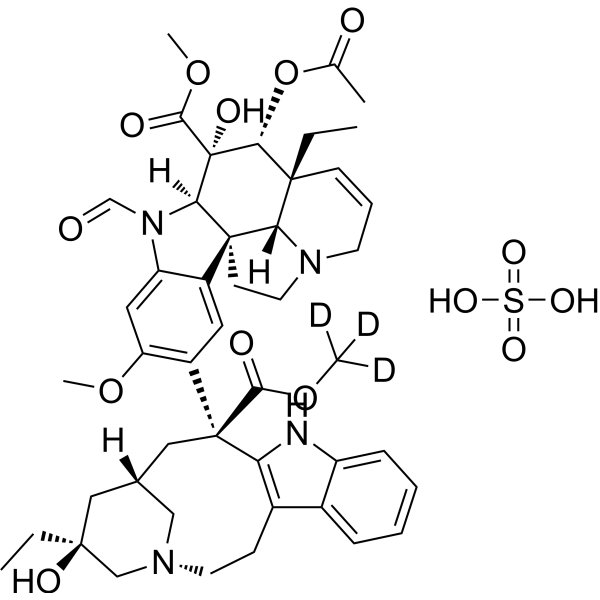
Cat. No.: HY-N0488S1
CAS No.: 1217854-24-4
Synonyms: Leurocristine-d3-1 sulfate; NSC-67574-d3-1 sulfate; 22-Oxovincaleukoblastine-d3-1 sulfate
Vincristine-d3 sulfate is the deuterium labeled Vincristine sulfate. Vincristine-1 sulfate (Leurocristine; NSC-67574; 22-Oxovincaleukoblastine) is a microtubule inhibitor that disrupts microtubule polymerization by binding to β-tubulin (with a Ki of 85 nM in bovine), arrests the cell cycle and induces apoptosis. Vincristine-1 sulfate inhibits cell replication, tumor blood flow and the proliferation of various cancer cells, while triggering effects such as oxidative stress, inflammation, calcium overload, epithelial-mesenchymal transition and peripheral neuropathic pain. Vincristine-1 sulfate upregulates the expression of various transporters and nuclear receptors, and enriches gastric cancer stem-like cells. Vincristine-1 sulfate is used in research related to various tumors including acute lymphoblastic leukemia, lymphoma, melanoma, gastric cancer, solid tumors and sarcomas .
loading...
    loading...
Cat. No.: HY-W027553R
CAS No.: 62732-44-9
Synonyms: NIK-247 free base (Standard); Amiridine free base (Standard)
Ipidacrine (Standard) is the analytical reference standard of Ipidacrine. This product is used for research and analytical applications. Ipidacrine is orally active and blood-brain-barrier-penetrant AChE and BuChE inhibitors with IC50 values of 1 μM and 1.9 μM, respectively, which is also a partial agonist of M2-cholinergic receptors and a reversible cholinesterase inhibitor. Ipidacrine has a stimulating effect on neuromuscular transmission and excitation along the nerve fibres with a moderately anti-pain effect. Ipidacrine is an aminopyridines and is structurally similar to Tacrine (HY-111338). Ipidacrine is effective in various amnesia models, improves erectile function and inhibits K + and Na +-channels in the neuronal membrane in diabetic rats. Ipidacrine is promising for research of Alzheimer’s disease, ischaemic stroke, idiopathic neuropathy of the facial nerve, diabetes mellitus-induced erectile dysfunction and other deficits in central or peripheral cholinergic deseases .
loading...
    loading...
Cat. No.: HY-W153159R
CAS No.: 13062-76-5
N-Methyltyramine (hydrochloride) (Standard) is the analytical standard of N-Methyltyramine (hydrochloride) (HY-W153159). This product is intended for research and analytical applications. N-Methyltyramine hydrochloride is an orally active α2-adrenoreceptor antagonist with an IC50 value of 5.53 μM against rat targets. N-Methyltyramine hydrochloride blocks α2-adrenoreceptors, while inhibiting lipolysis, hyperactivity responses and small intestinal peristalsis in mice. N-Methyltyramine hydrochloride promotes gastrin release and pancreatic juice secretion, upregulates appetite, blood pressure, myocardial contraction frequency and contraction intensity, and increases renal blood flow, renal vascular resistance and mean peripheral arterial resistance. N-Methyltyramine hydrochloride relaxes mouse small intestinal smooth muscle and undergoes biotransformation in vivo to produce adrenaline. N-Methyltyramine hydrochloride can be used in studies related to gastrointestinal diseases .
loading...
    loading...
Cat. No.: HY-W153897R
CAS No.: 370-98-9
N-Methyltyramine (Standard) is the analytical standard of N-Methyltyramine (HY-W153897). This product is intended for research and analytical applications. N-Methyltyramine is an orally active α2-adrenoreceptor antagonist with an IC50 value of 5.53 μM against rat targets. N-Methyltyramine blocks α2-adrenoreceptors, while inhibiting lipolysis, hyperactivity responses and small intestinal peristalsis in mice. N-Methyltyramine promotes gastrin release and pancreatic juice secretion, upregulates appetite, blood pressure, myocardial contraction frequency and contraction intensity, and increases renal blood flow, renal vascular resistance and mean peripheral arterial resistance. N-Methyltyramine relaxes mouse small intestinal smooth muscle and undergoes biotransformation in vivo to produce adrenaline. N-Methyltyramine can be used in studies related to gastrointestinal diseases .
loading...
    loading...
Cat. No.: HY-L121
430 compounds

5-HT receptors, also called Serotonin receptors, are a group of G protein-coupled receptors (GPCRs) and ligand-gated ion channels (LGICs) found in the central and peripheral nervous systems. These receptors are now classified into seven families, 5-HT1–7, comprising a total of 14 structurally and pharmacologically distinct mammalian 5-HT receptor subtypes. The 5-HT receptors influence various biological and neurological processes such as aggression, anxiety, appetite, cognition, learning, memory, mood, nausea, sleep, andthermoregulation. The serotonin receptors are the target of a variety of pharmaceutical drugs, including many antidepressants, antipsychotics, anorectics, antiemetics, gastroprokinetic agents, antimigraine agents, hallucinogens, and entactogens.

MCE 5-HT Receptor Compound Library consists of 430 5-HT receptor inhibitors and activators, which can be used for neuropsychiatric disorders drugs discovery.

Cat. No.: HY-119715
CAS No.: 486414-35-1
Target:  

CDK Apoptosis

Research Areas:  

Inflammation/Immunology Cancer

AG-012986 is a pan-CDK inhibitor with Ki values of 44 nM (CDK1), 9.2 nM (CDK4), 94 nM (CDK2), and IC50 values of 22 nM (CDK5), 4 nM (CDK9). AG-012986 causes apoptosis of T-cells by targeting upstream kinases in the p38 Mitogen-activated protein kinase (MAPK) pathway and impairing cellular survival. AG-012986 induces cell cycle arrest, retinoblastoma protein hypophosphorylation, and reduces Ki-67 expression. AG-012986 exerts antiproliferative activity in tumor cells, demonstrates antitumor efficacy in human xenograft models, and causes retinal and peripheral neurotoxicity, plus immune cell toxicity. AG-012986 can be used for the research of colon carcinoma, non-small cell lung carcinoma, lung carcinoma, breast carcinoma, ovarian tumor, pancreatic carcinoma, osteosarcoma, lymphoma, leukemia, retinotoxicity .
loading...
    loading...
Cat. No.: HY-121186R
CAS No.: 42864-78-8
Synonyms: SOM3355 (Standard)
Bevantolol hydrochloride (Standard) (SOM3355 (Standard)) is the analytical standard of Bevantolol hydrochloride (HY-121186). This product is intended for research and analytical applications. Bevantolol hydrochloride (SOM3355) is a selective β1-adrenergic receptor antagonist, with an IC50 of 35 nM for β1-adrenergic receptor and an IC50 of 60 nM for VMAT2. Bevantolol hydrochloride blocks β1-adrenergic receptors, exerts partial agonistic effects on α-adrenoceptor, inhibits calcium currents in the sinoatrial and atrioventricular nodes as well as sodium currents in cardiomyocytes, delays repolarization, and shortens the action potential duration of Purkinje cells. Bevantolol hydrochloride reduces peripheral vascular resistance, increases subendocardial blood flow, inhibits VMAT2, elevates the serum HDL/LDL ratio, and does not affect glomerular filtration rate or cause cold extremities. Bevantolol hydrochloride is applicable to research related to angina pectoris, hypertension, arrhythmia, and Huntington's disease .
loading...
    loading...
Cat. No.: HY-121186S
Synonyms: SOM3355-d7
Bevantolol-d7 hydrochloride (SOM3355-d7) is the d7-labeled Bevantolol hydrochloride (HY-121186). Bevantolol hydrochloride (SOM3355) is a selective β1-adrenergic receptor antagonist, with an IC50 of 35 nM for β1-adrenergic receptor and an IC50 of 60 nM for VMAT2. Bevantolol hydrochloride blocks β1-adrenergic receptors, exerts partial agonistic effects on α-adrenoceptor, inhibits calcium currents in the sinoatrial and atrioventricular nodes as well as sodium currents in cardiomyocytes, delays repolarization, and shortens the action potential duration of Purkinje cells. Bevantolol hydrochloride reduces peripheral vascular resistance, increases subendocardial blood flow, inhibits VMAT2, elevates the serum HDL/LDL ratio, and does not affect glomerular filtration rate or cause cold extremities. Bevantolol hydrochloride is applicable to research related to angina pectoris, hypertension, arrhythmia, and Huntington's disease .
loading...
    loading...
Cat. No.: HY-148511
CAS No.: 147063-80-7
Synonyms: CMP-001
Vidutolimod (CMP-001) is a virus-like particle containing a TLR9 activator . Vidutolimod induces human peripheral blood mononuclear cells to secrete IFNα, and upregulates the gene expression of CXCL10, PDL1, IDO and CD80. Vidutolimod activates TLR9, which in turn triggers plasmacytoid dendritic cell activation, production of IFNγ and TNFα, induction of CXCL10, and recruitment of antitumor T cells. Vidutolimod causes influenza-like symptoms, hypotension and tumor regression, and its activity depends on the presence of anti-Qβ antibodies. Vidutolimod modulates monocyte function, promotes CD4 T cell proliferation, and activates multiple immune cell types in an environment with anti-Qβ antibodies. Vidutolimod prolongs the survival of tumor-bearing mice. Vidutolimod is used in research related to advanced melanoma, head and neck squamous cell carcinoma, and advanced non-small cell lung cancer .
loading...
    loading...
Cat. No.: HY-175073
Ganglioside GT1b bovine trisodium is a trisialic acid ganglioside. Ganglioside GT1b bovine trisodium binds to botulinum toxin type A (BTxA), BTxA heavy chain, and tetanus toxin with IC50 values of 11, 0.74, and 7.2 μM, respectively. Ganglioside GT1b bovine trisodium acts as a TLR2 agonist, leading to microglial activation, increased expression of pro-inflammatory factors, and increased pain sensitivity in spinal microglia. Ganglioside GT1b bovine trisodium also reduces the production of IL-6, IL-10, IgG, IgM, and IgA in human peripheral blood mononuclear cells (PBMCs). Ganglioside GT1b bovine trisodium increases extracellular glutamate levels in neural cell models. Ganglioside GT1b bovine trisodium has potential applications in research on immune system diseases and nervous system diseases .
loading...
    loading...
Cat. No.: HY-182470
CAS No.: 486414-32-8
Target:  

CDK

AG-012986 (dihydrochloride) is a pan-CDK inhibitor with Ki values of 44 nM (CDK1), 9.2 nM (CDK4), 94 nM (CDK2), and IC50 values of 22 nM (CDK5), 4 nM (CDK9). AG-012986 (dihydrochloride) causes apoptosis of T-cells by targeting upstream kinases in the p38 Mitogen-activated protein kinase (MAPK) pathway and impairing cellular survival. AG-012986 (dihydrochloride) induces cell cycle arrest, retinoblastoma protein hypophosphorylation, and reduces Ki-67 expression. AG-012986 (dihydrochloride) exerts antiproliferative activity in tumor cells, demonstrates antitumor efficacy in human xenograft models, and causes retinal and peripheral neurotoxicity, plus immune cell toxicity. AG-012986 (dihydrochloride) can be used for the research of colon carcinoma, non-small cell lung carcinoma, lung carcinoma, breast carcinoma, ovarian tumor, pancreatic carcinoma, osteosarcoma, lymphoma, leukemia, retinotoxicity .
loading...
    loading...
Cat. No.: HY-189235
CAS No.: 3078735-55-1
Target:  

5-HT Receptor

Research Areas:  

Cancer

IHCH-8110 is a peripherally restricted, non-brain-penetrant 5-HT2AR and 5-HT2CR agonist (Ki=47.86 nM) that antagonizes 5-HT2BR. IHCH-8110 induces CXCL10 and IL-18 expression by activating 5-HT2AR on enteric glial cells, thereby promoting CD8 + T cell recruitment and effector polarization, and avoids the risk of cardiac valvulopathy associated with 5-HT2BR activation. IHCH-8110 exhibits a low risk of hERG channel inhibition (IC50=5.96 μM) and is well tolerated, sensitizing immunologically cold colorectal cancer to PD-1 blockade therapy, making it suitable for research related to colorectal cancer .
loading...
    loading...
Cat. No.: HY-N0837R
CAS No.: 60-70-8
Synonyms: NSC17821 (Standard); NSC23880 (Standard)
Veratramine (NSC17821; NSC23880) (Standard) is the analytical standard of Veratramine (HY-N0837). This product is intended for research and analytical applications. Veratramine (NSC17821; NSC23880) is an orally active inhibitor of the PI3K/Akt/mTOR signaling pathway and a SIGMAR1 modulator. Veratramine induces autophagic apoptosis of tumor cells, arrests the cell cycle at the G0/G1 phase, and inhibits epithelial-mesenchymal transition (EMT)-related proteins to reduce tumor migration. Veratramine reduces spinal cord and sciatic nerve pathological damage in a neuropathy model by inhibiting SIGMAR1 binding to NMDAR and phosphorylation of NMDAR Ser896. Veratramine has anti-tumor proliferation, apoptosis induction, anti-inflammatory and neuroprotective activities, and can be used in the study of cancers such as liver cancer and osteosarcoma, as well as diabetic peripheral neuropathy .
loading...
    loading...
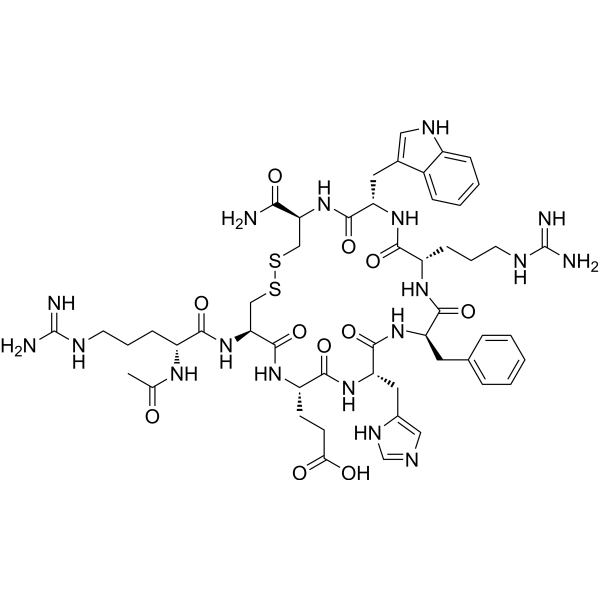
Cat. No.: HY-P4764
CAS No.: 819048-44-7
Synonyms: Ac-(d-Arg)-CEH-(d-Phe)-RWC-NH2
Research Areas:  

Metabolic Disease

LY2112688 (Ac-(d-Arg)-CEH-(d-Phe)-RWC-NH2) is a synthetic peptide selective melanocortin 4 receptor (MC4R) agonist with a Ki of 0.13 nM for human MC4R and Ki values of 165, 74, and 1713 nM for human MC1R, MC3R, and MC5R, respectively. LY2112688 activates MC4R-mediated cAMP signaling and promotes PYY and GLP-1 release by activating peripheral MC4R in enteroendocrine L cells; Kir7.1 signaling in MC4R neurons is involved in its sustained suppression of food intake. LY2112688 inhibits food intake in vivo and can elevate heart rate and blood pressure. LY2112688 is useful for research on obesity, energy homeostasis, and MC4R signaling .
loading...
    loading...

