
1154 Results for "

SARS-CoV-2 M_long

" in MedChemExpress (MCE) Product Catalog:
Products (1154)

1154 Results for "SARS-CoV-2 M_long" in MCE Product Catalog:

Cat. No.: HY-145973
CAS No.: 2089461-55-0
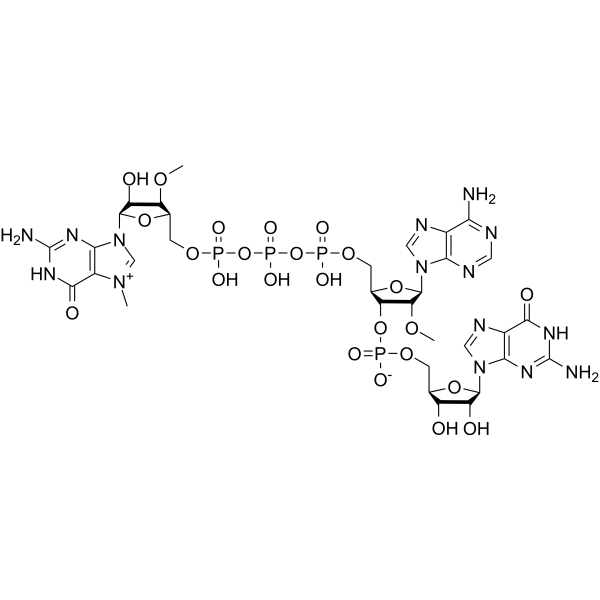
Synonyms: m7(3'OMeG)(5')ppp(5')(2'OMeA)pG
Research Areas:  

Others

3’OMe-m7GpppAmpG (m7(3'OMeG)(5')ppp(5')(2'OMeA)pG) is a trinucleotide Cap1 analog with the structure m7 (3'OMeG)(5') ppp (5')(2'OMeA) pG, and also functions as a cis-acting ligase ribozyme inhibitor. 3’OMe-m7GpppAmpG effectively reduces free 5'-triphosphate groups on RNA transcripts, thereby enabling efficient co-transcriptional capping of in vitro transcribed mRNA. 3’OMe-m7GpppAmpG is not only widely used in the preparation of modified mRNA including trivalent influenza vaccine candidates, but also applicable to studies related to SARS-CoV-2 infection and other relevant research [2] .
loading...
    loading...
Cat. No.: HY-N0891
CAS No.: 115810-12-3
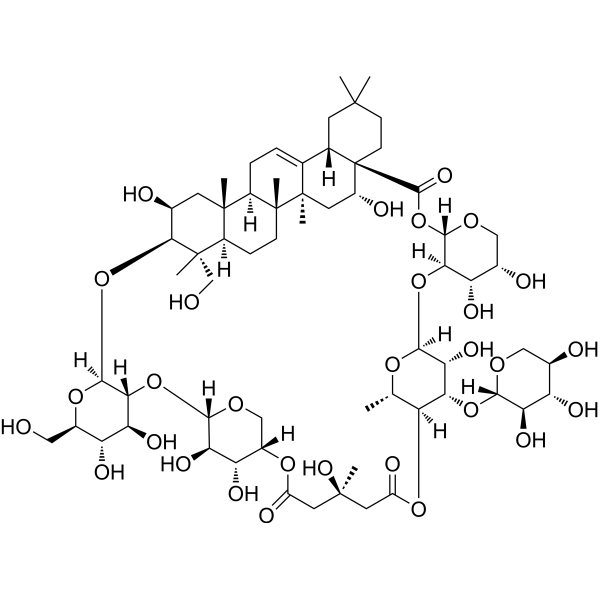
Synonyms: Tubeimoside-B
Tubeimoside II is an orally active triterpenoid saponin and antiviral agent that binds to PACT/PRKRA with Kd values of 5.37 μM and 133.1 μM, respectively. Tubeimoside II inhibits oxidase-dependent EGFR activation and reduces TGF-β1-induced oxidative stress. Tubeimoside II activates the RIG-I signaling pathway and increases IFN-β secretion. Tubeimoside II suppresses TPA-induced ear edema, mouse sarcoma 180 growth, and TPA-induced skin tumor formation. Tubeimoside II exerts broad-spectrum antiviral activity against SARS-CoV-2, HCoV-OC43, and IAV-H1N1/FM1. Tubeimoside II can be used in research related to retinoblastoma, respiratory viral infections, skin tumors, and sarcoma 180 [2] .
loading...
    loading...
Cat. No.: HY-W004812
CAS No.: 161660-94-2
Synonyms: (1S,3S)-3-[(tert-Butoxycarbonyl)amino]cyclopentanecarboxylic acid
Research Areas:  

Infection

BOC-(1R,3S)-3-aminocyclopentane carboxylic acid ((1S,3S)-3-[(tert-Butoxycarbonyl)amino]cyclopentanecarboxylic acid) is a conformationally constrained peptide building block and a key component of SARS-CoV-2 main protease (Mpro) inhibitors. When incorporated into macrocyclic peptides, BOC-(1R,3S)-3-aminocyclopentane carboxylic acid not only helps generate high-affinity Mpro inhibitors by preorganizing the secondary structure of peptides, but also exerts sequence-dependent functional inhibition on the hydrolytic activity of Mpro. BOC-(1R,3S)-3-aminocyclopentane carboxylic is widely used in COVID-19-related research .
loading...
    loading...
Cat. No.: HY-161619
CAS No.: 2258606-34-5
RMC-113 is a PIP4K2C and PIKfyve inhibitor with the Ki vaules of 46 nM and 370 nM. RMC-113 reverses SARS-CoV-2-induced impairment of autophagic flux. RMC-113 shows antiviral activity .
loading...
    loading...
Cat. No.: HY-P5827
CAS No.: 2416761-69-6
Research Areas:  

Infection

SBP1 peptide is a chemically synthesized 23-mer peptide fragment of the ACE2 PD α1 helix. SBP1 peptide associates with micromolar affinity to insect-derived SARS-CoV-2-RBD protein .
loading...
    loading...
Cat. No.: HY-112894
CAS No.: 1408077-04-2
Target:  

JNK SARS-CoV

Research Areas:  

Inflammation/Immunology

ZG-10 (JNK-IN-2) is a JNK inhibitor, with IC50 values of 809 nM, 1140 nM and 709 nM for JNK1, JNK2, and JNK3, respectively. ZG-10 (JNK-IN-2) is a potential anti-SARS-CoV-2 agent [2].
loading...
    loading...
Cat. No.: HY-138794A
CAS No.: 2417089-73-5
Target:  

Deubiquitinase

Research Areas:  

Cancer

(Rac)-XL177A is the racemic isomer of XL177A (HY-138794). XL177A is a covalent USP7 inhibitor that blocks the deubiquitinase activity of USP7. XL177A destabilizes non-canonical PRC1 complexes or KDM6A and reduces chromatin deposition of H2AK119Ub, thereby relieving the repression of neuronal differentiation programs. Meanwhile, XL177A also regulates the ELOF1-UVSSA-USP7-nuclear β-catenin axis, decreasing the transcription levels of related proteins and the accumulation of nuclear β-catenin. XL177A exerts antiviral effects by reducing the expression levels of coronavirus receptors, and exhibits inhibitory activity against APC-mutated colorectal cancer cells, neuroblastoma, and coronaviruses including SARS-CoV-2 variants. XL177A is mainly used in studies related to colorectal cancer, neuroblastoma, and coronavirus infections [2] .
loading...
    loading...
Cat. No.: HY-145973A
Purity:  ≥99.0%
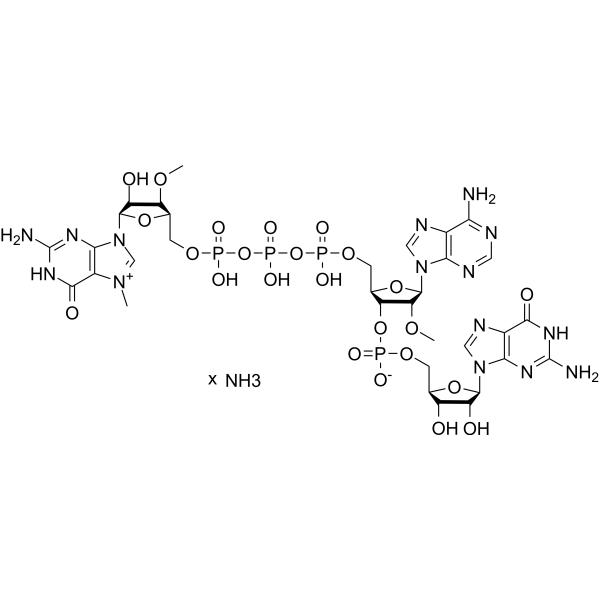
Synonyms: m7(3'OMeG)(5')ppp(5')(2'OMeA)pG ammonium solution (100 mM)
3’OMe-m7GpppAmpG (m7(3'OMeG)(5')ppp(5')(2'OMeA)pG) ammonium solution (100 mM) is a trinucleotide Cap1 analog with the structure m7 (3'OMeG)(5') ppp (5')(2'OMeA) pG, and also functions as a cis-acting ligase ribozyme inhibitor. 3’OMe-m7GpppAmpG ammonium solution (100 mM) effectively reduces free 5'-triphosphate groups on RNA transcripts, thereby enabling efficient co-transcriptional capping of in vitro transcribed mRNA. 3’OMe-m7GpppAmpG ammonium solution (100 mM) is not only widely used in the preparation of modified mRNA including trivalent influenza vaccine candidates, but also applicable to studies related to SARS-CoV-2 infection and other relevant research [2] .
loading...
    loading...
Cat. No.: HY-N0181A
CAS No.: 474-69-1
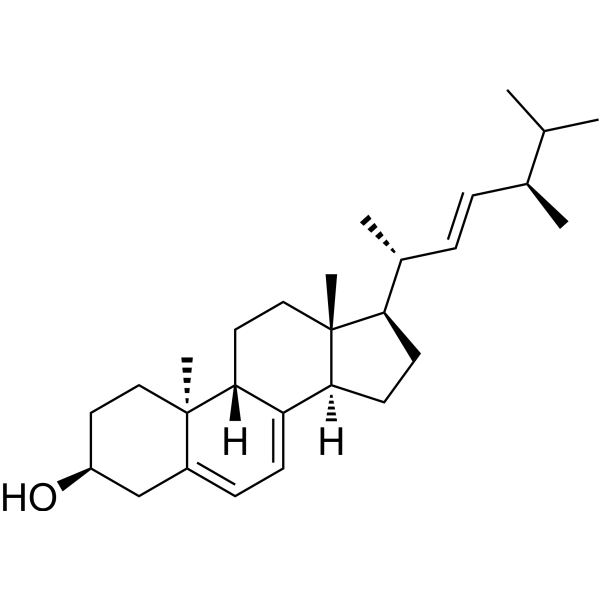
Synonyms: 9β,10α-Ergosterol
Lumisterol (9β,10α-Ergosterol) is a photoproduct of 7-dehydrocholesterol, present in the skin, and acts as an orally active VDR non-genomic modulator and ROR inverse agonist. Lumisterol binds to the SARS-CoV-2 Mpro substrate-binding pocket and the RdRP active site, inhibiting enzyme activity. Lumisterol induces NRF2-regulated antioxidant responses, p53 phosphorylation and nuclear translocation, and intracellular free radical scavenging. Lumisterol inhibits the proliferation of epidermal keratinocytes and melanoma cells, modulates cell cycle progression, and suppresses basal and TNFα-induced NFκB transcriptional activity. Lumisterol inhibits RORγ transcriptional activity and IL-17 production. Lumisterol is used in research on UVB-induced skin damage, melanoma, psoriasis, vitamin D deficiency, and COVID-19 [2] .
loading...
    loading...
Cat. No.: HY-W195509
CAS No.: 1052540-65-4
Synonyms: Debrisoquine hydroiodide; Isocaramidine hydroiodide; Ro 5-3307/1 hydroiodide
Research Areas:  

Infection

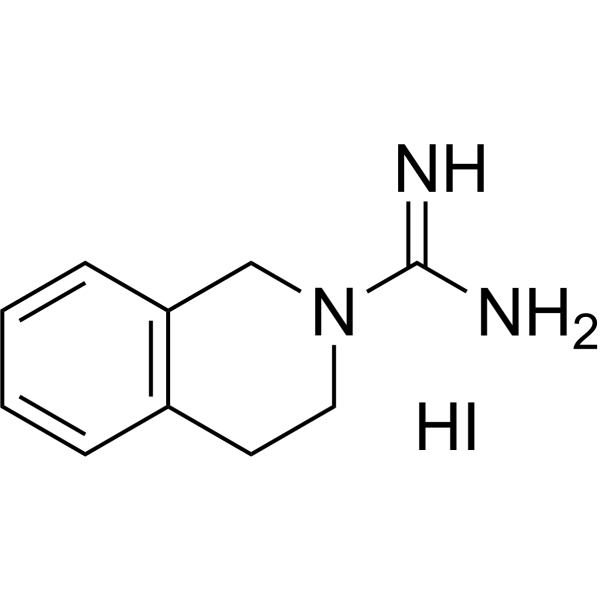
Debrisoquin (hydroiodide) is the hydrochloride form of Debrisoquin (HY-B1624). Debrisoquin is a TMPRSS2 inhibitors that inhibits SARS-CoV-2 entry into human lung cell line by a TMPRSS2-depedent manner. Debrisoquin can be used for antiviral research .
loading...
    loading...
Cat. No.: HY-N9351
CAS No.: 30021-77-3
Synonyms: Diphyllin O-glucoside
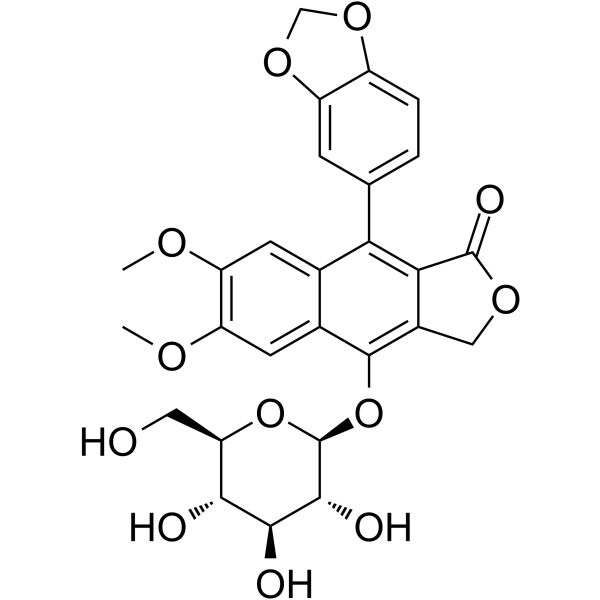
Cleistanthin B (Diphyllin O-glucoside) is an orally active arylnaphthalene lignan lactone glycoside. Cleistanthin B exhibits anti-SARS-CoV-2 effects in Vero cells, with EC50 of 6.51 µM. Cleistanthin B also exhibits antitumor, diuretic and antihypertensive effects in vivo [2] .
loading...
    loading...
Cat. No.: HY-12502AR
CAS No.: 111011-76-8
Synonyms: NZ-105 hydrochloride monoethanolate (Standard); (±)-Efonidipine hydrochloride monoethanolate (Standard)
Efonidipine (NZ-105) hydrochloride monoethanolate (Standard) is the analytical standard of Efonidipine hydrochloride monoethanolate (HY-12502AR). This product is intended for research and analytical applications. Efonidipine (NZ-105) hydrochloride monoethanolate is an orally active dual L-type and T-type calcium channel blocker (CCB) with IC50 values of 1.8 and 350 nM, respectively. Efonidipine hydrochloride monoethanolate inhibits SARS-CoV-2 main protease. Efonidipine hydrochloride monoethanolate modulates adrenal steroidogenesis by increasing the expression of steroidogenic acute regulatory protein (StAR), dbcAMP-or angiotensin II-induced StAR mRNA expression and DHEA-S production, while suppressing the biosynthesis of aldosterone and cortisol. Efonidipine hydrochloride monoethanolate reduces plasma aldosterone levels in vivo. Efonidipine hydrochloride monoethanolate improves cardiac function in heart failure models by inhibiting T-type calcium channels (via both tonic and use-dependent blockade), independently of blood pressure reduction. Efonidipine hydrochloride monoethanolate can be used for research in hypertension, heart failure, and disorders involving dysregulated steroid hormone synthesis [2] .
loading...
    loading...
Cat. No.: HY-N0891R
CAS No.: 115810-12-3
Synonyms: Tubeimoside-B (Standard)
Tubeimoside II (Standard) (Tubeimoside-B (Standard)) is the analytical standard of Tubeimoside II (HY-N0891). This product is intended for research and analytical applications. Tubeimoside II is an orally active triterpenoid saponin and antiviral agent that binds to PACT/PRKRA with Kd values of 5.37 μM and 133.1 μM, respectively. Tubeimoside II inhibits oxidase-dependent EGFR activation and reduces TGF-β1-induced oxidative stress. Tubeimoside II activates the RIG-I signaling pathway and increases IFN-β secretion. Tubeimoside II suppresses TPA-induced ear edema, mouse sarcoma 180 growth, and TPA-induced skin tumor formation. Tubeimoside II exerts broad-spectrum antiviral activity against SARS-CoV-2, HCoV-OC43, and IAV-H1N1/FM1. Tubeimoside II can be used in research related to retinoblastoma, respiratory viral infections, skin tumors, and sarcoma 180 [2] .
loading...
    loading...
Cat. No.: HY-N2076
CAS No.: 3738-70-3
Synonyms: (-)-Cephaeline hydrochloride; NSC 32944 monohydrochloride
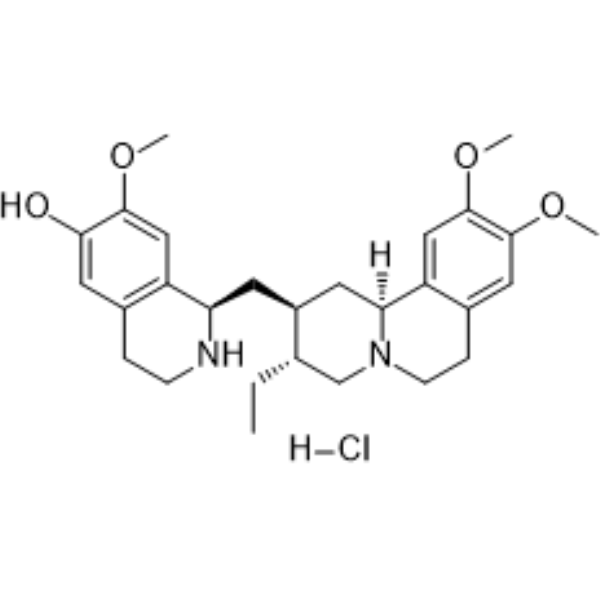
Cephaeline hydrochloride ((-)-Cephaeline (hydrochloride); NSC 32944 (monohydrochloride)) is a ferroptosis inducer, with broad-spectrum anticancer and antiviral activities. Cephaeline hydrochloride induces Ferroptosis by upregulating p53, inhibiting NRF2, activating ULK3, downregulating the expressions of SLC7A11 and GPX4 in a p53-dependent manner, reducing GSH and mitochondrial membrane potential, and increasing lipid peroxidation and iron accumulation. Cephaeline hydrochloride inhibits cancer cell proliferation, migration and tumor growth. Cephaeline hydrochloride inhibits Ebola virus (EBOV) VLP entry and infection, with IC50 values of 3.27 μM and 22.18 μM respectively; it also inhibits Zika virus (ZIKV) NS5 RdRp activity (IC50 = 976 nM), and binds to severe acute respiratory syndrome coronavirus 2 (SARS-CoV-2) RdRp and N protein, with Kd values of 8.9 μM and 53.8 μM respectively. Cephaeline hydrochloride can be used in studies related to breast cancer, lung cancer, COVID-19, EBOV and ZIKV infections [2] .
loading...
    loading...
Cat. No.: HY-180332
CAS No.: 112989-00-1
Research Areas:  

Infection Inflammation/Immunology

NSC-624871 (JD-87), an analog of Miltefosine (HY-13685), is natural killer T-2 (NKT-2) activator. NSC-624871 activates type II NKT cells. NSC-624871 can be used for the study of SARS-CoV-2-mediated inflammatory conditions .
loading...
    loading...
Cat. No.: HY-138794G
CAS No.: 2417089-74-6
XL177A GMP is XL177A (HY-138794) produced by using GMP guidelines. GMP small molecules works appropriately as an auxiliary reagent for cell therapy manufacture. XL177A is a covalent USP7 inhibitor that blocks the deubiquitinase activity of USP7. XL177A destabilizes non-canonical PRC1 complexes or KDM6A and reduces chromatin deposition of H2AK119Ub, thereby relieving the repression of neuronal differentiation programs. Meanwhile, XL177A also regulates the ELOF1-UVSSA-USP7-nuclear β-catenin axis, decreasing the transcription levels of related proteins and the accumulation of nuclear β-catenin. XL177A exerts antiviral effects by reducing the expression levels of coronavirus receptors, and exhibits inhibitory activity against APC-mutated colorectal cancer cells, neuroblastoma, and coronaviruses including SARS-CoV-2 variants. XL177A is mainly used in studies related to colorectal cancer, neuroblastoma, and coronavirus infections [2] .
loading...
    loading...
Cat. No.: HY-N4118A
CAS No.: 6014-81-9
Synonyms: (-)-Cephaeline dihydrobromide; NSC 32944 dihydrobromide
Cephaeline dihydrobromide ((-)-Cephaeline dihydrobromide; NSC 32944 dihydrobromide) is a ferroptosis inducer, with broad-spectrum anticancer and antiviral activities. Cephaeline dihydrobromide induces ferroptosis (Ferroptosis) by upregulating p53, inhibiting NRF2, activating ULK3, downregulating the expressions of SLC7A11 and GPX4 in a p53-dependent manner, reducing GSH and mitochondrial membrane potential, and increasing lipid peroxidation and iron accumulation. Cephaeline dihydrobromide inhibits cancer cell proliferation, migration and tumor growth. Cephaeline dihydrobromide inhibits Ebola virus (EBOV) VLP entry and infection, with IC50 values of 3.27 μM and 22.18 μM respectively; it also inhibits Zika virus (ZIKV) NS5 RdRp activity (IC50 = 976 nM), and binds to severe acute respiratory syndrome coronavirus 2 (SARS-CoV-2) RdRp and N protein, with Kd values of 8.9 μM and 53.8 μM respectively. Cephaeline dihydrobromide can be used in studies related to breast cancer, lung cancer, COVID-19, EBOV and ZIKV infections [2] .
loading...
    loading...
Cat. No.: HY-N8693
CAS No.: 362472-81-9
Withanoside IV is an orally active, blood-brain barrier-permeable withanolide derivative. Withanoside IV specifically binds to the Sudlow I site of HSA, induces secondary structural changes in HSA, and forms stable HSA complexes. Withanoside IV inhibits the enzymatic activity of COX-2. Withanoside IV induces axonal regeneration, peripheral nervous system myelination and increased axonal density in spinal cord tissue, reduces reactive gliosis-related changes, and improves hindlimb motor function. Withanoside IV binds to amyloid-β 1-42 to inhibit its aggregation, induces neurite outgrowth and synapse reconstruction, repairs damaged axons and dendrites, enhances mitochondrial biogenesis, exerts neuroprotective effects via the BDNF and SIRT1 signaling pathways, reduces ROS production and neuronal apoptosis, and ameliorates memory deficits. Withanoside IV inhibits the activity of the SARS-CoV-2 main protease. Withanoside IV can be used in research related to spinal cord injury, Alzheimer's disease, and coronavirus disease 2019 (COVID-19) [2] .
loading...
    loading...
Cat. No.: HY-100442R
CAS No.: 248282-01-1
Synonyms: ABR-215757 (Standard); ABR 25757 (Standard)
Paquinimod (Standard) is the analytical standard of Paquinimod. This product is intended for research and analytical applications. Paquinimod (ABR 215757) is a specific and orally active inhibitor of S100A8/S100A9. Paquinimod rescues the pneumonia with substantial reduction of viral loads in SARS-CoV-2-infected mice [2] .
loading...
    loading...
Cat. No.: HY-100442S
Synonyms: ABR-215757-d5; ABR 25757-d5
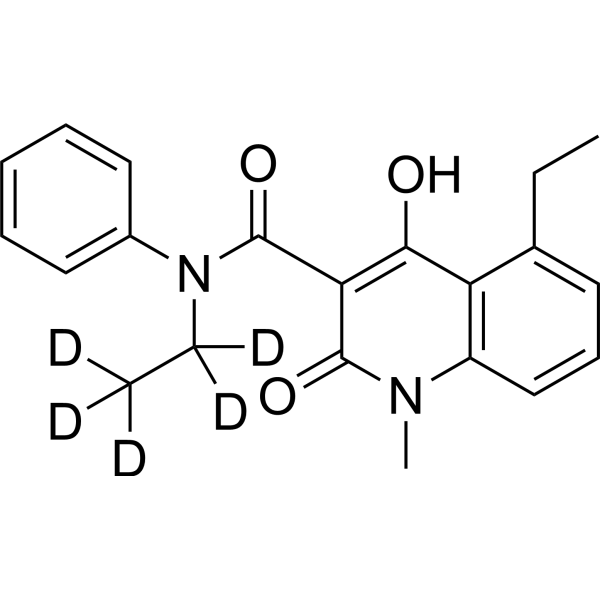
Paquinimod-d5 is a deuterated analog of Paquinimod (HY-100442). Paquinimod (ABR 215757) is a specific and orally active inhibitor of S100A8/S100A9. Paquinimod rescues the pneumonia with substantial reduction of viral loads in SARS-CoV-2-infected mice [2] .
loading...
    loading...

