
1215 Results for "

Enzyme activity

" in MedChemExpress (MCE) Product Catalog:
Products (1215)

1215 Results for "Enzyme activity" in MCE Product Catalog:

Cat. No.: HY-165426
CAS No.: 3031522-14-9
Research Areas:  

Inflammation/Immunology

HB-230 is a Transglutaminase-2 (TG2) (human IC50 = 4.9 μM) inhibitor and a selective fluorescent imaging probe for active TG2 localization. HB-230 modifies TG2 Cys277 to sustain the enzyme open conformation. HB-230 forms a ternary complex with TG2 and α2-macroglobulin, undergoes receptor-mediated endocytosis, and trafficks directly to lysosomes without early/late endosome fusion. HB-230 exhibits TG2 activity-dependent and α2-macroglobulin-dependent uptake. HB-230 can be used for the research of celiac disease, (Ex/Em = 649/665 nm) .
loading...
    loading...
Cat. No.: HY-177543
CAS No.: 65490-84-8
Target:  

Quinone Reductase

Research Areas:  

Others

5-(4-Methoxyphenol)-4-methyl-3H-1,2-dithiole-3-thione is a Phase 2 enzyme inducer. 5-(4-Methoxyphenol)-4-methyl-3H-1,2-dithiole-3-thione induces the activity of NAD (P) H:quinone oxidoreductase (QR; NQO1) in hepatoma cells. 5-(4-Methoxyphenol)-4-methyl-3H-1,2-dithiole-3-thione enhances growth hormone production in plasmid-transfected hepatoma cells .
loading...
    loading...
Cat. No.: HY-184980
CAS No.: 2180967-88-6
Target:  

Urease Fungal

Research Areas:  

Infection

Urease-IN-23 is a cryptococcal urease inhibitor with antifungal activity. AF55 exhibits mixed-type inhibition against cryptococcal urease, binds to both the nickel ion site at the enzyme's catalytic center and the allosteric site, impairs urease catalytic efficiency, simultaneously disrupts fungal virulence structures and damages cell membrane integrity. The IC50 and Ki values of Urease-IN-23 against cryptococcal urease are 54.92 nM and 149.1 nM, respectively. Urease-IN-23 significantly reduces the capsule thickness of Cryptococcus neoformans and Cryptococcus gattii, increases fungal cell membrane permeability, and completely blocks melanin synthesis. Urease-IN-23 shows no toxicity in the Galleria mellonella larval model. Urease-IN-23 can be used in studies related to fungal infections .
loading...
    loading...
Cat. No.: HY-D0837R
CAS No.: 288-32-4
Synonyms: Glyoxaline (Standard); 1,3-Diaza-2,4-cyclopentadiene (Standard)
Imidazole (Standard) is the analytical standard of Imidazole. This product is intended for research and analytical applications. Imidazole (Glyoxaline; 1,3-Diaza-2,4-cyclopentadiene) is a heterocyclic aromatic compound. Imidazole bearing molecules have been used as corrosion, acetylcholinesterase (AChEI) and xanthine oxidase (XO) inhibitors, performing biological activities such as antifungal, antituberculosis, anti-inflammatory, antioxidant, and analgesic, amongst many others. Imidazole inhibits the enzymatic conversion of the endoperoxides (PGG2 and PGH2) to thromboxane A2 by platelet microsomes. Imidazole derivatives exhibits inhibition on SARS-CoV-2 3CLPro enzyme, which is promising for research in the field of Alzheimer’s disease, gout, COVID-19 and thrombo-embolic disease .
loading...
    loading...
Cat. No.: HY-D0932R
CAS No.: 85-83-6
Synonyms: Solvent Red 24 (Standard); C.I. 26105 (Standard)
Sudan IV (Standard) (Solvent Red 24 (Standard)) is the analytical standard of Sudan IV (HY-D0932). This product is intended for research and analytical applications. Sudan IV is an agonist of the aryl hydrocarbon receptor (AhR) that activates downstream signaling pathways and induces CYP1A1 expression. Sudan IV promotes CYP1A1 gene transcription by activating AhR-ARNT heterodimers and binding to exogenous response elements (XREs) on DNA, thereby enhancing drug metabolizing enzyme activity. Sudan IV can be used to study the toxicity mechanisms of industrial dyes and the effects of interactions with serum proteins (such as bovine serum albumin (BSA)) on their distribution in vivo. Sudan IV is a fat-soluble diazo dye that can be used to stain lipids, triglycerides, and lipoproteins on frozen sections.
loading...
    loading...
Cat. No.: HY-N19401
CAS No.: 36001-47-5
Vescalagin is a hexahydroxyphenol. Vescalagin is isolable from Camu-camu (Myrciaria dubia) and immature wax apple fruits. Vescalagin exhibits inhibitory activity against a variety of enzymes, with a Ki value of 5.87 nM against AChE, 3.89 nM against BChE, 11.75 nM against hCA I, 16.23 nM against hCA II, and 16.08 nM against α-glucosidase. Vescalagin inhibits hCA I, hCA II and α-glucosidase in a non-competitive manner. Vescalagin downregulates JNK/p38 MAPK to protect pancreatic β-cells and improve insulin secretion in methylglyoxal-treated rats. Vescalagin reduces hyperglycemia and hypertriglyceridemia in rats fed a high-fructose diet. Vescalagin possesses anti-inflammatory and antioxidant properties .
loading...
    loading...
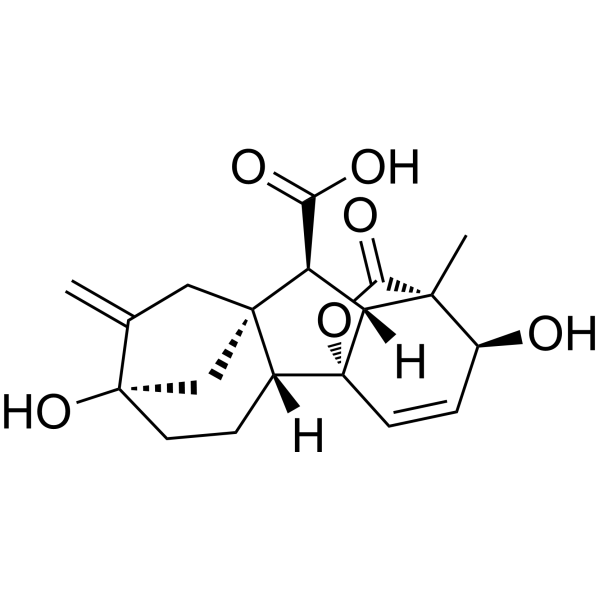
Cat. No.: HY-N1964R
CAS No.: 77-06-5
Synonyms: Gibberellin A3 (Standard)
Gibberellic acid (Standard) is the analytical standard of Gibberellic acid (GA3) (HY-N1964). This product is intended for research and analytical applications. Gibberellic acidis a natural plant growth regulator with oral bioactivity. Gibberellic acid governs multiple plant developmental events, including seed germination, cell elongation, floral organ formation, and rice spikelet fertility. Gibberellic acid optimizes root morphology and secondary metabolite production in Echinacea purpurea hairy roots, and serves as a bioactive seed priming agent to improve chilling stress tolerance in chickpea. Gibberellic acid mediates modulation of enzyme activity and secondary metabolism in plants and exerts tissue-specific regulatory effects on antioxidant systems and lipid peroxidation in rats. Gibberellic acid can be used in studies of plant growth, metabolism, and abiotic stress responses .
loading...
    loading...
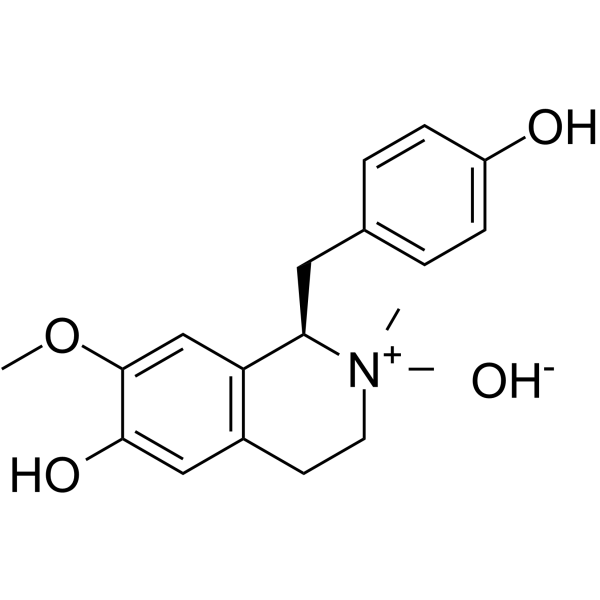
Cat. No.: HY-N4309A
CAS No.: 3721-76-4
Lotusine hydroxide is an orally active signaling pathway modulator and enzyme inhibitor, with an IC50 of 30.60 μg/mL against α-amylase and an IC50 of 36.15 μg/mL against α-glucosidase. Lotusine hydroxide inhibits the EGFR-Akt-ERK signaling pathway by reducing the levels of phosphorylated EGFR, Akt and ERK. Lotusine hydroxide induces apoptosis, triggers G0/G1 cell cycle arrest and inhibits cancer cell proliferation. Lotusine hydroxide reduces lipid peroxidation and increases the activities of SOD, CAT and GPx. Lotusine hydroxide is applicable to researches related to non-small cell lung cancer, type 2 diabetes and autism spectrum disorder .
loading...
    loading...
Cat. No.: HY-P10302A
Target:  

GLP Receptor

GLP-1R/GIPR agonist-1 sodium is a dual GLP-1/GIP receptor agonist, with an EC50 of 0.57 nM for GLP-1R and an EC50 of 0.75 nM for GIPR. GLP-1R/GIPR agonist-1 sodium reduces food intake, inhibits weight gain, repairs islet damage, improves glucose tolerance, regulates serum lipid and liver enzyme levels, ameliorates hepatic vacuolization, reduces hepatic fat accumulation, delays the progression of hepatic fibrosis, and exhibits long-lasting hypoglycemic activity. GLP-1R/GIPR agonist-1 sodium can be used in research related to type 2 diabetes, obesity, and non-alcoholic steatohepatitis .
loading...
    loading...
Cat. No.: HY-P10819
Research Areas:  

Cancer

S9-CMC1 TFA is a covalent peptide lysine-specific demethylase 1 (LSD1) inhibitor with an IC50 value of 2.53 μM. S9-CMC1 TFA specifically recognizes Cys360 in the enzyme-active region. S9-CMC1 TFA inhibits LSD1 activity, increasing H3K4me1 and H3K4me2 levels, leading to G1 cell cycle arrest and apoptosis and inhibiting cell proliferation. S9-CMC1 TFA significantly inhibits tumor growth in A549 xenograft animal models .
loading...
    loading...
Cat. No.: HY-P2819
CAS No.: 9001-80-3
Synonyms: PFK1
Phosphofructokinase 1 (PFK1) is a glycolytic enzyme and also an allosteric activation target of fructose-2,6-bisphosphate. PFK1 supports cardiac glycolysis to maintain normal cardiac function and mediates adaptive responses to pressure overload. Upregulated expression and activity of PFK1 are associated with the alleviation of pathological changes induced by pressure overload, including diastolic dysfunction, interstitial fibrosis and myocardial hypertrophy. Inhibition of PFK1 redirects glucose carbon flux to the pentose phosphate pathway. PFK1 promotes proliferation, migration and glycolysis of colorectal cancer cells, reduces apoptosis and decreases their radiosensitivity, and shows higher expression levels in radioresistant tumors. PFK1 can be used in research related to diastolic dysfunction heart failure and colorectal cancer .
loading...
    loading...
Cat. No.: HY-P2819A
CAS No.: 9001-80-3
Phosphofructokinase,Bacillus stearothermophilus is a glycolytic enzyme and also an allosteric activation target of fructose-2,6-bisphosphate. PFK1 supports cardiac glycolysis to maintain normal cardiac function and mediates adaptive responses to pressure overload. Upregulated expression and activity of PFK1 are associated with the alleviation of pathological changes induced by pressure overload, including diastolic dysfunction, interstitial fibrosis and myocardial hypertrophy. Inhibition of PFK1 redirects glucose carbon flux to the pentose phosphate pathway. PFK1 promotes proliferation, migration and glycolysis of colorectal cancer cells, reduces apoptosis and decreases their radiosensitivity, and shows higher expression levels in radioresistant tumors. PFK1 can be used in research related to diastolic dysfunction heart failure and colorectal cancer .
loading...
    loading...
Cat. No.: HY-P990951
CAS No.: 2845128-05-2
Synonyms: REGN-5381
Vixticibart (REGN-5381) is a fully human IgG4 monoclonal antibody and NPR1 agonist that targets NPR1. Vixticibart stabilizes the receptor in an activated conformation by binding to the N-terminal domain of NPR1, and enhances the activity of endogenous ligands ANP and BNP without blocking ligand binding when these ligands are present. Vixticibart exerts vasodilatory and hypotensive effects by inducing cGMP production, preferentially dilating venous vessels to reduce systolic and venous pressure, but does not induce diuresis and may trigger a compensatory increase in heart rate. Vixticibart produces a synergistic hypotensive effect when combined with angiotensin-converting enzyme inhibitors or angiotensin receptor blockers, and is currently mainly used in research related to heart failure and hypertension .
loading...
    loading...
Cat. No.: HY-W490804
CAS No.: 2971-36-0
Research Areas:  

Metabolic Disease

HPTE is the active in vivo metabolite of Methoxychlor (HY-B1873), and acts as an inhibitor of 3β‑HSD and 17β‑HSD3. HPTE binds to the substrate-binding pocket of 3β‑HSD in a non-competitive manner, but competitively occupies the coenzyme NAD +-binding site, thereby inhibiting the conversion of pregnenolone to progesterone. HPTE binds to the androstenedione-binding pocket (the substrate pocket) of 17β‑HSD3 in a non-competitive manner, and competitively occupies the coenzyme NADPH-binding site, thus blocking the conversion of androstenedione to testosterone. HPTE interferes with androgen biosynthesis in Leydig cells by inhibiting the activities of these two key steroidogenic enzymes. HPTE can be used in studies related to androgen biosynthesis .
loading...
    loading...
Cat. No.: HY-W663179
CAS No.: 681492-17-1
Research Areas:  

Infection

DNDI-VL-2098 is an orally active antileishmanial agent. DNDI-VL-2098 exhibits high permeability, in vitro metabolic stability, and selective inhibition of CYP2C19 (IC50=0.47 μM). DNDI-VL-2098 does not affect the activities of other major CYP enzymes (CYP1A2, CYP2C9, CYP2D6 and CYP3A4) at concentrations up to 12.5 μM. It shows favorable pharmacokinetic properties in multiple animal models including mice, hamsters, rats and dogs. DNDI-VL-2098 is characterized by moderate to high plasma protein binding and can be used for the research of visceral leishmaniasis .
loading...
    loading...
Cat. No.: HY-W699983
CAS No.: 74362-46-2
Synonyms: Glyoxaline-15N2; 1,3-Diaza-2,4-cyclopentadiene-15N2
Imidazole- 15N2 (Glyoxaline- 15N2) is 15N labeled Imidazole. Imidazole (Glyoxaline; 1,3-Diaza-2,4-cyclopentadiene) is a heterocyclic aromatic compound. Imidazole bearing molecules have been used as corrosion, acetylcholinesterase (AChEI) and xanthine oxidase (XO) inhibitors, performing biological activities such as antifungal, antituberculosis, anti-inflammatory, antioxidant, and analgesic, amongst many others. Imidazole inhibits the enzymatic conversion of the endoperoxides (PGG2 and PGH2) to thromboxane A2 by platelet microsomes. Imidazole derivatives exhibits inhibition on SARS-CoV-2 3CL Pro enzyme, which is promising for research in the field of Alzheimer’s disease, gout, COVID-19 and thrombo-embolic disease .
loading...
    loading...
Cat. No.: HY-L230
331 compounds

Kinases are enzymes that catalyze the addition of phosphate groups to substrate molecules, a process known as phosphorylation. Protein phosphorylation serves as a critical regulatory mechanism for numerous cellular processes, including cell division, metabolism, and signal transduction. The human genome encodes over 500 kinases, which collectively regulate approximately 50% of cellular functions. Due to their pivotal roles, kinases represent one of the most important target classes in drug development.

Kinase inhibitors can selectively block the activity of disease-associated kinases, making them valuable therapeutics for conditions such as cancer and inflammatory diseases. FDA-approved kinase inhibitors have undergone extensive preclinical and clinical studies, demonstrating high bioactivity, favorable safety profiles, and good bioavailability, rendering them suitable for investigating new therapeutic indications.

Cat. No.: HY-121501
CAS No.: 121024-51-9
Target:  

Endogenous Metabolite

Research Areas:  

Others

Tyrostatin is a peptide inhibitor isolated from Kitasatospora sp. 55. It has a Ki value of 6 nM against serine carboxyl protease (PSCP) from Pseudomonas sp. 101, a Ki value of 2.1 nM against carboxyl protease (XSCP) from Xanthomonas sp. T-22, and a Ki value of 2.6 nM against carboxyl protease (PCP) from Pseudomonas sp. 101. Tyrostatin forms a reversible covalent hemiacetal bond with Ser287 at the active site of PSCP, where Tyr at the P1 position and Leu at the P2 position occupy the S1-S4 subsites of the enzyme. Tyrostatin inhibits the activity of XSCP, specifically blocks the autocatalytic maturation process of PCP precursor under acidic conditions, and also inhibits the protease activity of mature and recombinant PCP in a dose-dependent manner. Tyrostatin does not inhibit KSCP or alcohol-resistant protease J-4, and can serve as a tool for identifying the catalytic residues of PCP .
loading...
    loading...
Cat. No.: HY-189662
Research Areas:  

Infection

Y-U0-S is a potent inhibitor of the coronavirus main protease (M pro) and host cathepsins. The IC50 values of Y-U0-S against SARS-CoV-2 M pro, SARS-CoV Mpro, Cathepsin B, and Cathepsin L are 0.81, 1.14, 0.86, and 21.13 μM, respectively. Y-U0-S exhibits broad-spectrum anti-coronavirus activity, with an EC50 of 0.22 μM against wild-type SARS-CoV-2. Y-U0-S forms an irreversible covalent bond with the catalytic site C145 of M pro through its aldehyde warhead, and by optimizing multi-site occupancy of the scaffold to engage conserved residues, it effectively blocks enzyme activity and inhibits viral replication. Y-U0-S can be used for research on COVID-19 .
loading...
    loading...
Cat. No.: HY-B1451R
CAS No.: 89396-94-1
Synonyms: TA-6366 (Standard)
Imidapril (hydrochloride) (Standard) is the analytical standard of Imidapril (hydrochloride). This product is intended for research and analytical applications. Imidapril hydrochloride (TA-6366) is an orally active dual inhibitor of angiotensin-converting enzyme (ACE) and MMP-9. Imidapril hydrochloride inhibits lipopolysaccharide-induced phosphorylation of c-Jun, MKK4 and JNK in monocytes, and downregulates the production of specific inflammatory factors such as TNF-α and IP-10, thereby exerting anti-inflammatory activity. Imidapril hydrochloride also effectively ameliorates mesangial expansion and reduces urinary albumin excretion by inhibiting angiotensin AngII production, lowering glomerular pressure and oxidative stress, thus delaying disease progression. Imidapril hydrochloride can also directly bind to the active site of MMP-9 to inhibit gelatinase activity, and suppress the enlargement of cerebral aneurysms without altering systemic blood pressure. Imidapril hydrochloride is widely applicable to related studies on autoimmune glomerulonephritis, diabetic nephropathy, cerebral aneurysms and other conditions .
loading...
    loading...

