154 Results for "

Contractility

" in MedChemExpress (MCE) Product Catalog:
Products (154)

154 Results for "Contractility" in MCE Product Catalog:

Cat. No.: HY-N2071R
CAS No.: 77-53-2
Synonyms: (+)-Cedrol (Standard); α-Cedrol (Standard)
Cedrol (Standard) is the analytical standard of Cedrol. This product is intended for research and analytical applications. Cedrol is a potent competitive inhibitor of cytochrome P-450(CYP) enzyme. Cedrol plays an anticancer role by inducing cell cycle arrest and Caspase-dependent apoptosis. Cedrol acts as a neutrophil agonist that can desensitize cells to subsequent stimulation of N-formyl peptides. Cedrol prevents neuropathic pain caused by chronic contractile injury by inhibiting oxidative stress and inflammation. In addition, Cedrol has antibacterial, hair loss prevention and anti-anxiety properties.
loading...
    loading...
Cat. No.: HY-P2601A
Target:  

CGRP Receptor

Research Areas:  

Others

Tyr-α-CGRP (human) TFA is an N-terminally extended human α-CGRP analog. Tyr-α-CGRP (human) TFA can bind to membrane preparations from rat brain and spleen with IC50 values of 0.2 nM and 0.5 nM, respectively, and induce positive chronotropic and inotropic effects in isolated guinea pig right and left atria with EC50 values of 282 nM and 74 nM, respectively. Tyr-α-CGRP (human) TFA also inhibits contractile responses in rat vas deferens with an EC50 value of 1.9 nM .
loading...
    loading...
Cat. No.: HY-175603
CAS No.: 3091000-99-3
Research Areas:  

Cancer

NCGC00685960 is a Nicotinamide N-methyltransferase (NNMT) inhibitor with an IC50 <10  nM. NCGC00685960 has potent antitumor activity. NCGC00685960 increases H3K27 trimethylation levels in ovarian cancer cells and inhibits α-SMA expression in NNMT-expressing ovarian fibroblasts. NCGC00685960 reduces 1-MNA levels, reverses SAM and H3K27 hypomethylation and significantly impairs collagen contractility in cancer-associated fibroblasts (CAFs). NCGC00685960 can be used for cancers research, such as ovarian cancer, breast cancer, colon cancer .
loading...
    loading...
Cat. No.: HY-B0204B
CAS No.: 118428-37-8
Synonyms: (-)-UD-CG115
Research Areas:  

Cardiovascular Disease

(-)-Pimobedan is an isomer of pimobedan. It has the property of stereoselective partitioning or distribution into erythrocytes. The clearance of (-)-pimobedan from erythrocytes is significantly lower than that of (+)-pimobedan, which is entirely due to its stereoselective distribution into erythrocytes. This stereoselective property of (-)-pimobedan may explain the phenomenon previously reported that it produces a 1.5-fold greater contractile force than the (+)-isomer in detergent-treated myocardial specimens of guinea pigs and dogs. These properties suggest that (-)-pimobedan may have unique advantages in terms of in vivo distribution and pharmacological action, which may have important implications for its clinical use.
loading...
    loading...
Cat. No.: HY-101366
CAS No.: 107756-30-9
Purity:  ≥99.0%
Target:  

Adrenergic Receptor

Research Areas:  

Endocrinology

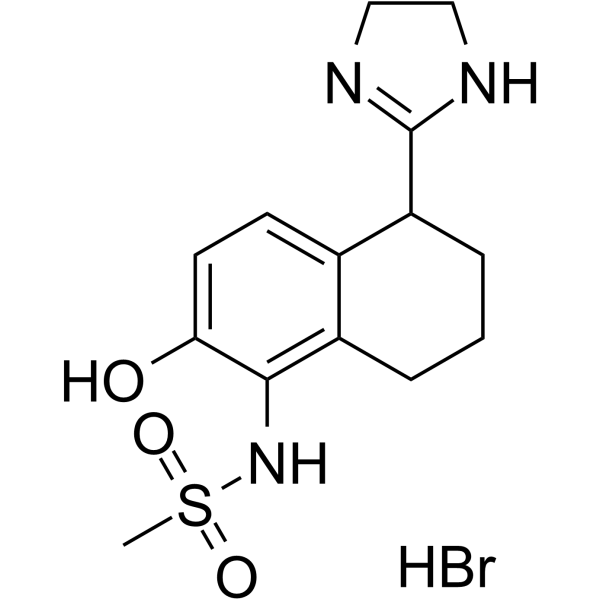
A-61603 is a selective α1A/α1a-adrenergic receptor agonist with Ki of 8.89 nM for rat submaxillary gland α1A, Ki of 30.5 nM for cloned bovine α1a. A-61603 potentiates Ca 2+ transients with EC50 of 6.9 nM. A-61603 stimulates phosphoinositide hydrolysis, induces contractile responses in vas deferens, prostate strips, and spleen strips, and exhibits low activity in aortic rings. A-61603 can be used for research on adrenergic function .
loading...
    loading...
Cat. No.: HY-187605
CAS No.: 113476-61-2
Gymnopusin is an L-type voltage-dependent calcium channel blocker and vasorelaxant. Gymnopusin inhibits KCl- and Norepinephrine-induced contractility as well as CaCl2-induced contractions. Gymnopusin induces endothelium-independent relaxation involving the opening of ATP-sensitive and calcium-activated potassium channels. Gymnopusin disrupts membranes through tonoplast lysis, leading to electrolyte leakage, chlorophyll loss, and photobleaching in duckweed. Gymnopusin inhibits radicle elongation in Amaranthus hypochondriacus seedlings and exhibits phytotoxicity against duckweed. Gymnopusin shows moderate cytotoxicity against mammalian cell lines. Gymnopusin can be used for research on hypertension .
loading...
    loading...
Cat. No.: HY-Y0047S
Synonyms: Picolamine-d2; 3-Pyridinemethanamine-d2; Pyridin-3-ylmethanamine-d2
3-Picolylamine-d2 (Picolamine-d2) is the deuterium labeled 3-Picolylamine (HY-Y0047). 3-Picolylamine is a primary amine compound containing a pyridine ring structure. 3-Picolylamine inhibits histaminase (diamine oxidase) activity in pig kidneys. 3-Picolylamine significantly enhances the contractile response of isolated guinea pig ileum to Histamine (HY-B1204). 3-Picolylamine can be used to study histamine-related physiological mechanisms or allergic diseases (such as histamine-mediated inflammatory responses) .
loading...
    loading...
Cat. No.: HY-121998
CAS No.: 220088-42-6
Target:  

Aurora Kinase

Research Areas:  

Others

Binucleine 2 is an isoform-specific and ATP-competitive inhibitor of Drosophila Aurora B kinase (Ki=0.36 μM), a kinase involved in cell division. It is specific for Drosophila Aurora B kinase, inhibiting it in a dose-dependent manner, with minimal inhibition of human or X. laevis Aurora B kinases at concentrations up to 100 μM. Binucleine 2 induces mitotic and cytokinesis defects in Drosophila Kc167 cells. It prevents Drosophila S2 cells from assembling a contractile ring during cell division when used at a concentration of 40 μM but does not affect ring ingression, suggesting that Aurora B kinase activity is not required for that step.
loading...
    loading...
Cat. No.: HY-100634
CAS No.: 14133-90-5
Synonyms: (±)-4-hydroxy Propranolol hydrochloride
Target:  

Adrenergic Receptor

Research Areas:  

Cardiovascular Disease

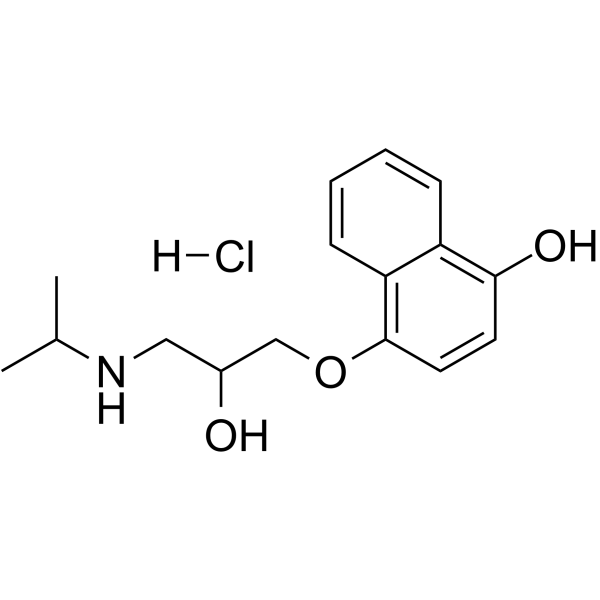
4-Hydroxypropranolol hydrochloride is a non-cardiac selective β-adrenergic receptor antagonist and a metabolite produced after oral administration of Propranolol (HY-B0573B). 4-Hydroxypropranolol hydrochloride also acts as a membrane stabilizer and possesses intrinsic sympathomimetic inhibitory activity. 4-Hydroxypropranolol hydrochloride blocks β-adrenergic receptors to antagonize the effects of catecholamines, acts as a partial β-adrenergic receptor agonist, and induces membrane stabilization. 4-Hydroxypropranolol hydrochloride alters heart rate, left ventricular contractility, and atrioventricular conduction time. 4-Hydroxypropranolol hydrochloride can be used in research related to cardiovascular and cerebrovascular diseases .
loading...
    loading...
Cat. No.: HY-137608
CAS No.: 221010-51-1
Synonyms: UDP-β-S
Uridine 5'-O-thiodiphosphate (UDP-β-S) is a P2Y6 receptor agonist with an EC50 of 25 nM. Uridine 5'-O-thiodiphosphate resists degradation by extracellular nucleotidases and stimulates the accumulation of inositol phosphates. Uridine 5'-O-thiodiphosphate stimulates contractile responses in endothelium-denuded rat mesenteric arteries. As a mitogen, Uridine 5'-O-thiodiphosphate stimulates DNA synthesis, [ 3H] thymidine incorporation, protein synthesis, [ 3H]leucine incorporation, and increases the number of vascular smooth muscle cells. Uridine 5'-O-thiodiphosphate can be used in the research of cardiovascular diseases such as atherosclerosis .
loading...
    loading...
Cat. No.: HY-A0144
CAS No.: 709-55-7
Research Areas:  

Cardiovascular Disease

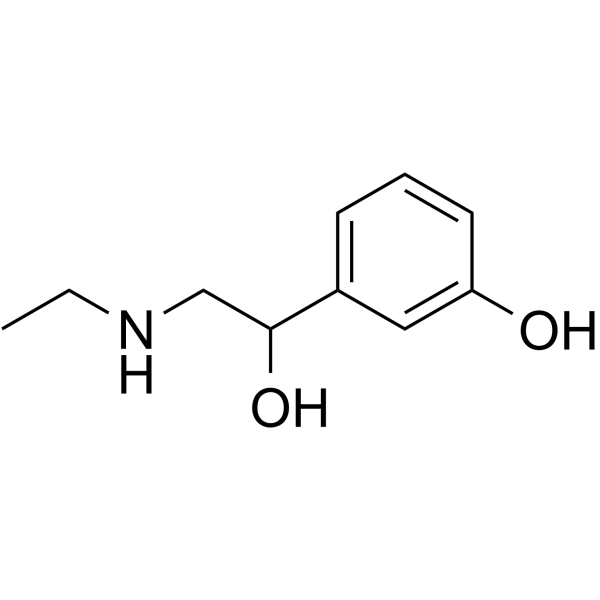
Etilefrine is a sympathetic nerve agonist and AMPK activator that selectively targets α1/β1 adrenergic receptors. Etilefrine stimulates α1 adrenergic receptors, leading to contraction of vascular smooth muscle and increased peripheral resistance. Etilefrine also stimulates β1 receptors to enhance myocardial contractility and increase heart rate, thereby increasing blood pressure and improving cardiac output. Etilefrine also bidirectionally regulates the AMPK/Akt pathway and modulates the phosphorylation levels. Etilefrine can be used in cardiovascular research, such as postural hypotension, chylothorax, and improving low cardiac output .
loading...
    loading...
Cat. No.: HY-A0144A
CAS No.: 943-17-9
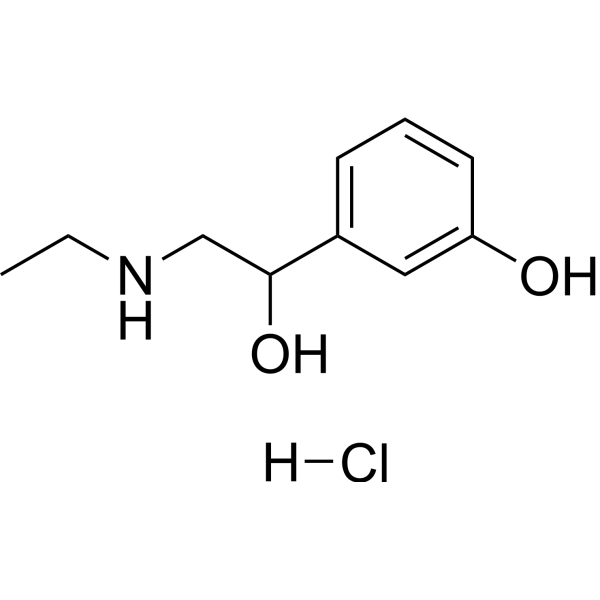
Etilefrine hydrochloride is a sympathetic nerve agonist and AMPK activator that selectively targets α1/β1 adrenergic receptors. Etilefrine hydrochloride stimulates α1 adrenergic receptors, leading to contraction of vascular smooth muscle and increased peripheral resistance. Etilefrine hydrochloride also stimulates β1 receptors to enhance myocardial contractility and increase heart rate, thereby increasing blood pressure and improving cardiac output. Etilefrine hydrochloride also bidirectionally regulates the AMPK/Akt pathway and modulates the phosphorylation levels. Etilefrine hydrochloride can be used in cardiovascular research, such as postural hypotension, chylothorax, and improving low cardiac output .
loading...
    loading...
Cat. No.: HY-W005255
CAS No.: 621-54-5
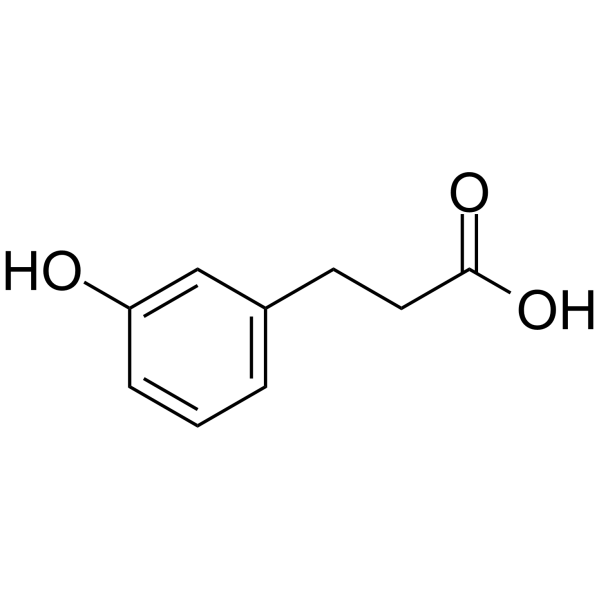
3-(3-Hydroxyphenyl)propionic acid (3HPPA) is an endothelium-dependent nitric oxide (NO) release promoter and endothelial nitric oxide synthase (eNOS) activator. 3-(3-Hydroxyphenyl)propionic acid activates eNOS to mediate vascular smooth muscle relaxation and enhances endothelial cell NO synthesis, inducing vasodilation and reducing peripheral vascular resistance. 3-(3-Hydroxyphenyl)propionic acid can dose-dependently reduce systolic and diastolic blood pressure in spontaneously hypertensive rats (SHR) without affecting cardiac contractility or heart rate. 3-(3-Hydroxyphenyl)propionic acid has antihypertensive and vascular protective effects and can be used in the prevention and treatment of cardiovascular diseases .
loading...
    loading...
Cat. No.: HY-137608A
Synonyms: UDP-β-S trisodium
Uridine 5'-O-thiodiphosphate trisodium (UDP-β-S trisodium) is a P2Y6 receptor agonist with an EC50 of 25 nM. Uridine 5'-O-thiodiphosphate trisodium resists degradation by extracellular nucleotidases and stimulates the accumulation of inositol phosphates. Uridine 5'-O-thiodiphosphate trisodium stimulates contractile responses in endothelium-denuded rat mesenteric arteries. As a mitogen, Uridine 5'-O-thiodiphosphate trisodium stimulates DNA synthesis, [ 3H] thymidine incorporation, protein synthesis, [ 3H]leucine incorporation, and increases the number of vascular smooth muscle cells. Uridine 5'-O-thiodiphosphate trisodium can be used in the research of cardiovascular diseases such as atherosclerosis .
loading...
    loading...
Cat. No.: HY-149933
CAS No.: 871978-21-1
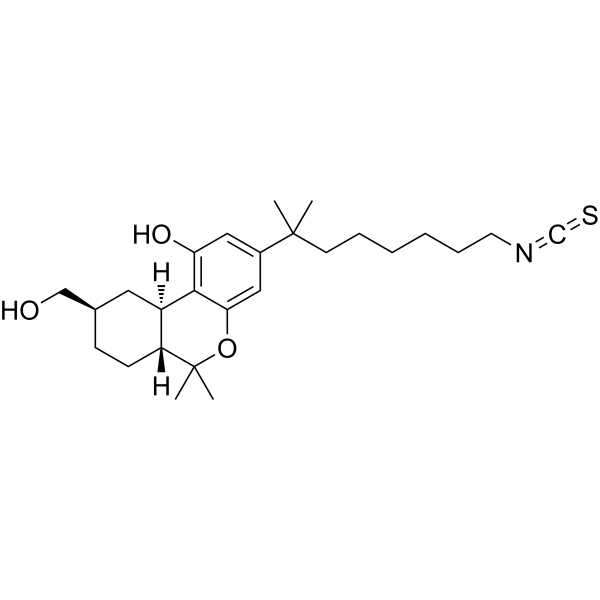
AM841 is a cannabinoid superagonist and a covalent, irreversible full agonist of CB1. AM841 can activate peripheral CB1 receptors to reduce excitatory neurotransmission and GI smooth muscle contractility, and inhibit synaptic transmission. AM841 is peripherally restricted at low doses in mice, with extremely low brain penetration, potently inhibits gastrointestinal motility, and can reverse acute stress-induced hyperaccelerated gastrointestinal transit; at high doses, it can produce the classic tetrad of central cannabinoid phenotypes (analgesia, catalepsy, hypothermia, decreased spontaneous activity). AM841 can improve intestinal inflammation in mouse colitis models. AM841 induces transient stress-induced hyperthermia. AM841 can be used for research on gastrointestinal motility disorders and colitis .
loading...
    loading...
Cat. No.: HY-159821
CAS No.: 2830607-59-3
Synonyms: CK-4021586; CK-586
Target:  

Myosin

Research Areas:  

Cardiovascular Disease

Ulacamten (CK-4021586; CK-586) is an orally active cardiac myosin inhibitor and an inhibitor of the double-headed cardiac heavy meromyosin (HMM)ATPase (excluding single-headed myosin subfragment-1), with an EC50 of 2.9 μM. Ulacamten regulates cardiac myosin, reduces excessive myocardial contractility, and alleviates left ventricular outflow tract obstruction. Ulacamten increases the left ventricular short-axis systolic internal diameter, inhibits dobutamine-induced exacerbation of obstruction, and exerts only a mild reducing effect on left ventricular systolic function. Ulacamten also inhibits the fractional shortening of the short axis without altering calcium transients. Ulacamten shows good safety and tolerability in purpose-bred cats with naturally occurring obstructive hypertrophic cardiomyopathy .
loading...
    loading...
Cat. No.: HY-181774
CAS No.: 1807631-43-1
Research Areas:  

Endocrinology

PDE4/5-IN-1 is a selective phosphodiesterase 4/5 (PDE4/5) dual inhibitor. PDE4/5-IN-1 functionally inhibits PDE5, PDE4B2, and PDE4D2 activity. PDE4/5-IN-1 relaxes isolated rat prostate tissue, enhances nitric oxide-induced relaxation in isolated rat prostate tissue, and reduces alpha-1 adrenoceptor-mediated contractile responses in isolated rat prostate tissue. PDE4/5-IN-1 inhibits proliferation of human hyperplastic prostate cells. PDE4/5-IN-1 can be used for the research of benign prostatic hyperplasia .
loading...
    loading...
Cat. No.: HY-A0144AR
CAS No.: 943-17-9
Etilefrine hydrochloride (Standard) is the analytical standard of Etilefrine hydrochloride (HY-A0144A). This product is intended for research and analytical applications. Etilefrine hydrochloride is a sympathetic nerve agonist and AMPK activator that selectively targets α1/β1 adrenergic receptors. Etilefrine hydrochloride stimulates α1 adrenergic receptors, leading to contraction of vascular smooth muscle and increased peripheral resistance. Etilefrine hydrochloride also stimulates β1 receptors to enhance myocardial contractility and increase heart rate, thereby increasing blood pressure and improving cardiac output. Etilefrine hydrochloride also bidirectionally regulates the AMPK/Akt pathway and modulates the phosphorylation levels. Etilefrine hydrochloride can be used in cardiovascular research, such as postural hypotension, chylothorax, and improving low cardiac output .
loading...
    loading...
Cat. No.: HY-A0144R
CAS No.: 709-55-7
Etilefrine (Standard) is the analytical standard of Etilefrine. This product is intended for research and analytical applications. Etilefrine is a sympathetic nerve agonist and AMPK activator that selectively targets α1/β1 adrenergic receptors. Etilefrine stimulates α1 adrenergic receptors, leading to contraction of vascular smooth muscle and increased peripheral resistance. Etilefrine also stimulates β1 receptors to enhance myocardial contractility and increase heart rate, thereby increasing blood pressure and improving cardiac output. Etilefrine also bidirectionally regulates the AMPK/Akt pathway and modulates the phosphorylation levels. Etilefrine can be used in cardiovascular research, such as postural hypotension, chylothorax, and improving low cardiac output .
loading...
    loading...
Cat. No.: HY-P11847
CAS No.: 3124030-35-6
Research Areas:  

Cardiovascular Disease

AT1R-agonist-1 is an angiotensin II type 1 receptor (AT1R) agonist with a Ki value of 1.4 nM. AT1R-agonist-1 exhibits low Gαq activity, retains β-arrestin recruitment function, and accesses the deep allosteric pocket inside AT1R via its flexible side chain. AT1R-agonist-1 possesses positive inotropic effects (enhancing cardiac contractile function) and causes almost no increase in blood pressure. AT1R-agonist-1 can be used for research on conditions such as refractory cardiogenic shock .
loading...
    loading...

