317 Results for "

Nrf2 inducer

" in MedChemExpress (MCE) Product Catalog:
Products (317)

317 Results for "Nrf2 inducer" in MCE Product Catalog:

Cat. No.: HY-W701218
CAS No.: 836682-32-7
Sulforaphane-d8 is the deuterium labeled Sulforaphane (HY-13755). Sulforaphane is an orally active inducer of the Keap1/Nrf2/ARE pathway. Sulforaphane promotes the transcription of tumor-suppressing proteins and effectively inhibits the activity of HDACs. Through the activation of the Keap1/Nrf2/ARE pathway and further induction of HO-1 expression, Sulforaphane protects the heart. Sulforaphane suppresses high glucose-induced pancreatic cancer through AMPK-dependent signal transmission. Sulforaphane exhibits both anticancer and anti-inflammatory properties .
loading...
    loading...
Cat. No.: HY-N11657
CAS No.: 76464-71-6
Synonyms: Sanggenone A
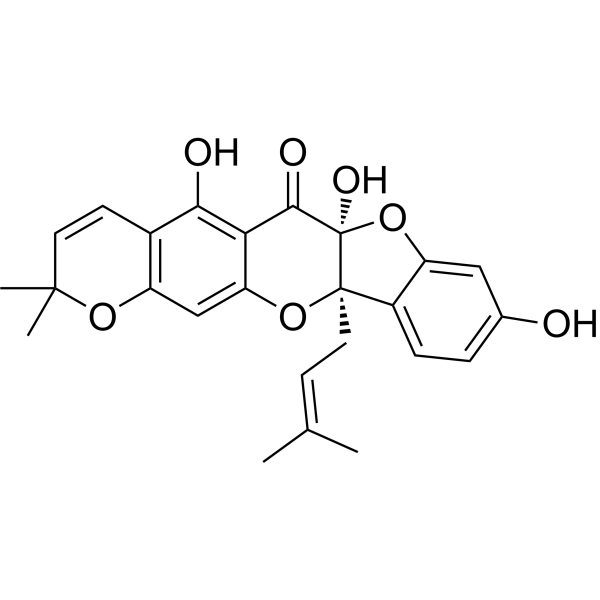
Sanggenon A (Sanggenone A) exerts anti-inflammatory effects by regulating NF-κB and HO-1/Nrf2 signaling pathways in BV2 and RAW264.7 cells. Sanggenon A markedly inhibits the Lipopolysaccharide (LPS; HY-D1056)-induced production of nitric oxide .
loading...
    loading...
Cat. No.: HY-N1970R
CAS No.: 31721-94-5
5,7-Dihydroxychromone (Standard) is the analytical standard of 5,7-Dihydroxychromone (HY-N1970). This product is intended for research and analytical applications. 5,7-Dihydroxychromone is a flavonoid compound with antioxidant properties. 5,7-Dihydroxychromone induces Nrf2 nuclear translocation, increases Nrf2/ARE binding activity, and up-regulates Nrf2-dependent antioxidant genes HO-1, NQO1, GCLc. 5,7-Dihydroxychromone attenuates excessive ROS generation, inhibits activated caspase-3, caspase-9, cleaved PARP expression, and prevents neuronal apoptosis and cell death. 5,7-Dihydroxychromone increases LXRα and PPARγ mRNA expression, induces preadipocyte differentiation, and regulates blood glucose levels. 5,7-Dihydroxychromone inhibits radial growth of soil pathogenic fungi, radicle elongation of select seedlings, and transiently inhibits Bradyrhizobium sp. growth in high mannitol medium. 5,7-Dihydroxychromone can be used for the research of Parkinson’s disease, type 2 diabetes mellitus and pathogenic fungal infection .
loading...
    loading...
Cat. No.: HY-168709
Target:  

Keap1-Nrf2

Research Areas:  

Inflammation/Immunology

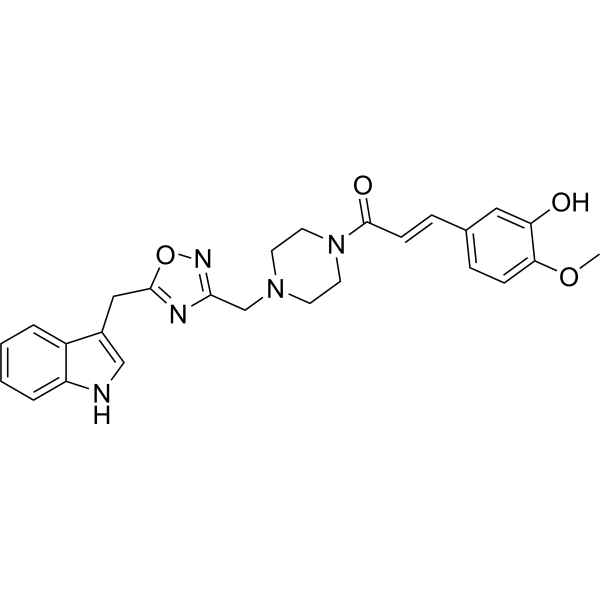
Nrf2 activator 18 (Compound 11a) is an orally active activator for Keap1/Nrf2/HO-1 signaling pathway, that promotes the Nrf2 nuclear translocation, and enhances the antioxidant efficacy. Nrf2 activator 18 inhibits the release of IL-6 with an IC50 of 4.816 μM. Nrf2 activator 18 exhibits anti-inflammatory efficacy in mouse PM2.5-induced lung injury model .
loading...
    loading...
Cat. No.: HY-168922
CAS No.: 3100306-80-4
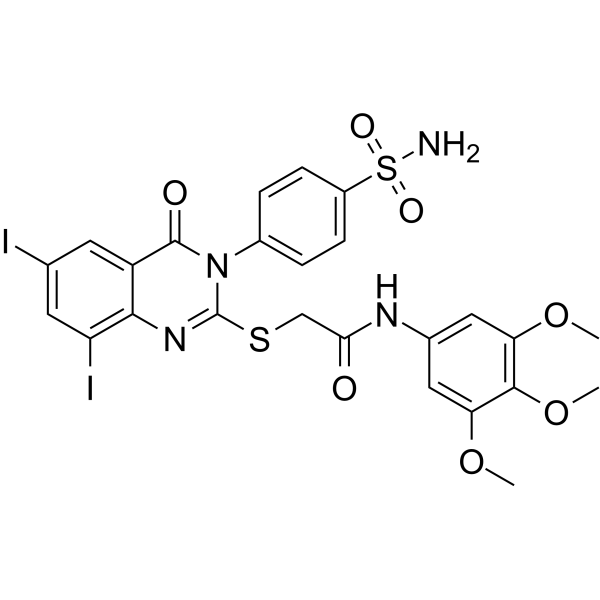
Keap1-Nrf2-IN-25 (Compound 19) is a potent Keap1-Nrf2 inhibitor (IC50 of 0.55 μM) with Keap1 binding affinity (Kd of 0.50 μM). Keap1-Nrf2-IN-25 activates Nrf2, reduces ROS and pro-inflammatory cytokines (IL-1β, IL-6). Keap1-Nrf2-IN-25 exerts protective effects against DSS (HY-116282)-induced colitis .
loading...
    loading...
Cat. No.: HY-146168
CAS No.: 1012860-13-7
Target:  

Keap1-Nrf2

Research Areas:  

Inflammation/Immunology

Nrf2 activator-5 (compound 1) is a potent Nrf2 activator that can attenuate H2O2-induced oxidative stress and LPS-stimulated inflammation in BV-2 microglial cells. Nrf2 activator-5 exhibits antioxidant and anti-inflammatory activities .
loading...
    loading...
Cat. No.: HY-155572
Target:  

Keap1-Nrf2

Research Areas:  

Inflammation/Immunology

Nrf2 activator-8 (compound 10e) is a Nrf2 activator (EC50=37.9 nM). Nrf2 activator-8 exhibits remarkable antioxidant and anti-inflammatory effects in BV-2 microglial cells. Nrf2 activator-8 can significantly restore spatial memory deficits in a mouse model of lipopolysaccharide (LPS)-induced neuroinflammation .
loading...
    loading...
Cat. No.: HY-144099
CAS No.: 2851480-01-6
Research Areas:  

Cancer

Keap1-Nrf2-IN-4 is a potent neddylation inhibitor. Keap1-Nrf2-IN-4 exhibits potent anti-proliferation activity against MGC-803 cells (IC50=2.55 µM). Keap1-Nrf2-IN-4 blocks the migration ability and induces apoptosis of gastric cancer cells. Keap1-Nrf2-IN-4 inhibits tumor growth without obvious toxicity .
loading...
    loading...
Cat. No.: HY-156081
Target:  

Keap1-Nrf2 Apoptosis

Research Areas:  

Metabolic Disease

Nrf2 activator-9 (compound D-36) is an Nrf2 activator that inhibits oxidized low-density lipoprotein (oxLDL) and high glucose (HG)-induced apoptosis in HUVEC cells. Nrf2 activator-9 inhibits oxLDL and HG-induced vascular endothelial cell (VEC) injury and can effectively prevent and treat atherosclerosis .
loading...
    loading...
Cat. No.: HY-147548
CAS No.: 2445349-54-0
Research Areas:  

Others

Keap1-Nrf2-IN-10 (compound 15) is a potent NQO1 inducer. Keap1-Nrf2-IN-10 inhibits oxidative stress by decreasing the levels of MDA, ROS, NQO1 in the liver for gamma-irradiated mice. Keap1-Nrf2-IN-10 improves the survival of gamma-irradiated mice .
loading...
    loading...
Cat. No.: HY-173187
Target:  

Keap1-Nrf2

Research Areas:  

Inflammation/Immunology

Keap1-Nrf2-IN-27 (compound 1C) is a inhibitor of Keap1-Nrf2 protein-protein interaction (PPI) with KD2 value of 0.119 μM. Keap1-Nrf2-IN-27 suppresses the expression of pro-inflammatory cytokine TNF-α and IL-6 in the LPS-induced RAW264.7 cell model .
loading...
    loading...
Cat. No.: HY-117993
CAS No.: 1639965-26-6
Target:  

Drug Intermediate

Research Areas:  

Neurological Disease

MIND4 is a neuroprotective thiozoline compound that inhibits the deacetylase SIRT2. MIND4 is also an inducer and activator of the nuclear factor NRF2. MIND4 can induce NRF2 activation in neurons and non-neuronal cells and reduce the production of reactive oxygen and nitrogen intermediates .
loading...
    loading...
Cat. No.: HY-158205
CAS No.: 1895934-61-8
Synonyms: 4-Hydroperoxy-2-decenoic acid ethyl ester
HPO-DAEE (4-Hydroperoxy-2-decenoic acid ethyl ester) elicits nuclear accumulation of Nrf2 and activated antioxidant response element (ARE). HPO-DAEE induces antioxidant genes upregulation (eg: HO-1) through Nrf2-ARE signaling. HPO-DAEE induces reactive oxygen species generation. HPO-DAEE also inhibits histone deacetylase and upregulate expression of extracellular superoxide dismutase via histone acetylation. HPO-DAEE protects against 6-hydroxydopamine-induced cell death via activation of Nrf2-ARE and eIF2α-ATF4 pathways .
loading...
    loading...
Cat. No.: HY-N0147R
CAS No.: 84-26-4
Synonyms: Rutecarpine (Standard)
Rutaecarpine (Standard) is the analytical standard of Rutaecarpine. This product is intended for research and analytical applications. Rutaecarpine, an alkaloid of Evodia rutaecarpa, is an inhibitor of COX-2 with an IC50 value of 0.28 μM. Rutaecarpine can target and activate the NRF2/HO-1 pathway to reduce craniofacial injury. Rutaecarpine sttenuates oxidative stress-induced traumatic brain injury (TBI) and reduces secondary injury via the PGK1/KEAP1/NRF2 signaling pathway. Rutaecarpine can cross the blood-brain barrier (BBB).
loading...
    loading...
Cat. No.: HY-169014
Research Areas:  

Cancer

HDAC-IN-77 (HL-5s) is an HDAC inhibitor. HDAC-IN-77 can induce ferroptosis and inhibit the Nrf2/HO-1 signaling pathway. HDAC-IN-77 can be used in cancer research .
loading...
    loading...
Cat. No.: HY-124941
CAS No.: 10314-90-6
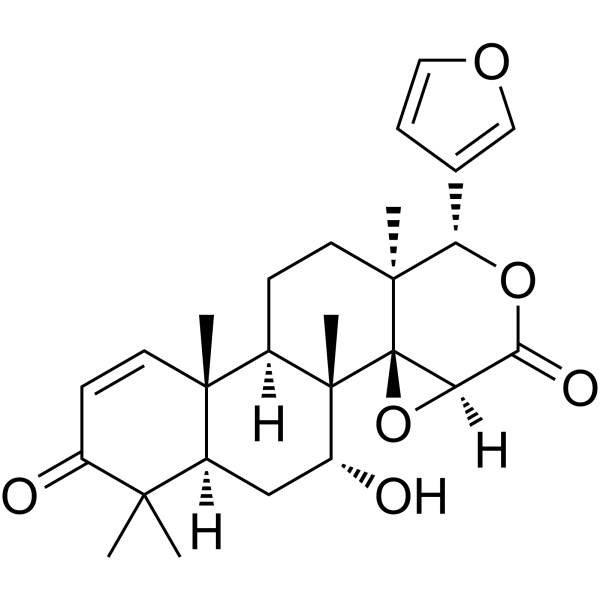
7-Deacetylgedunin is an activator of Keap1/Nrf2/HO-1. 7-Deacetylgedunin alleviates mice mortality induced by LPS. 7-Deacetylgedunin inhibits Keap1 expression and suppresses macrophage proliferation. 7-Deacetylgedunin suppresses inflammation in vivo and in vitro .
loading...
    loading...
Cat. No.: HY-N0806R
CAS No.: 14215-86-2
Sweroside (Standard) is the analytical standard of Sweroside (HY-N0806). This product is intended for research and analytical applications. Sweroside is an iridoid glycoside that targets multiple targets, including the Keap1/Nrf2 axis, NLRP3 inflammasome, SIRT1, NF-κB, AMPK/mTOR pathway, and caspase family. Sweroside promotes Nrf2 nuclear translocation by competitively binding to Keap1. Sweroside also inhibits oxidative stress and NLRP3-mediated pyroptosis by activating Nrf2, inhibits NF-κB inflammatory pathway by activating SIRT1, and promotes autophagy and induces caspase-dependent apoptosis via the AMPK/mTOR pathway. Sweroside has antioxidant, anti-inflammatory, anti-apoptotic, and lipid metabolism regulating activities, and can be used in the research of myocardial ischemia-reperfusion injury, leukemia, acute lung injury, non-alcoholic fatty liver disease, and other fields .
loading...
    loading...
Cat. No.: HY-N9602
CAS No.: 189689-31-4
6,7,4'-Trihydroxyflavanone is a compound with multiple pharmacological activities, including anti-rheumatic, anti-ischemic, anti-inflammatory, anti-osteoclastogenic and protective T-cells from METH-induced deactivation. 6,7,4'-Trihydroxyflavanone has shown potential protective effects in neurotoxicity studies and can be used to inhibit patients with neurodegenerative diseases caused by METH. 6,7,4'-Trihydroxyflavanone inhibits METH-induced neurotoxicity by upregulating the Nrf2/HO-1 and PI3K/Akt/mTOR signaling pathways. 6,7,4'-Trihydroxyflavanone can also induce Nrf2 nuclear translocation and HO-1 expression, further enhancing its protective effect on neuronal cells .
loading...
    loading...
Cat. No.: HY-77293
CAS No.: 878006-06-5
Target:  

Apoptosis Keap1-Nrf2

Research Areas:  

Cancer

(E)-[6]-Dehydroparadol, an oxidative metabolite of [6]-Shogaol (HY-14616), is a potent Nrf2 activator. (E)-[6]-Dehydroparadol can inhibit the growth and induce the apoptosis of human cancer cells .
loading...
    loading...
Cat. No.: HY-N0606R
CAS No.: 105558-26-7
Ginsenoside Rh3 (Standard) is the analytical standard of Ginsenoside Rh3. This product is intended for research and analytical applications. Ginsenoside Rh3 is a bacterial metabolite of Ginsenoside Rg5. Ginsenoside Rh3 treatment in human retinal cells induces Nrf2 activation.
loading...
    loading...

