2438 Results for "

decrease

" in MedChemExpress (MCE) Product Catalog:
Products (2438)

2438 Results for "decrease" in MCE Product Catalog:

Cat. No.: HY-160552
CAS No.: 2956402-64-3
Target:  

Liposome

Research Areas:  

Others

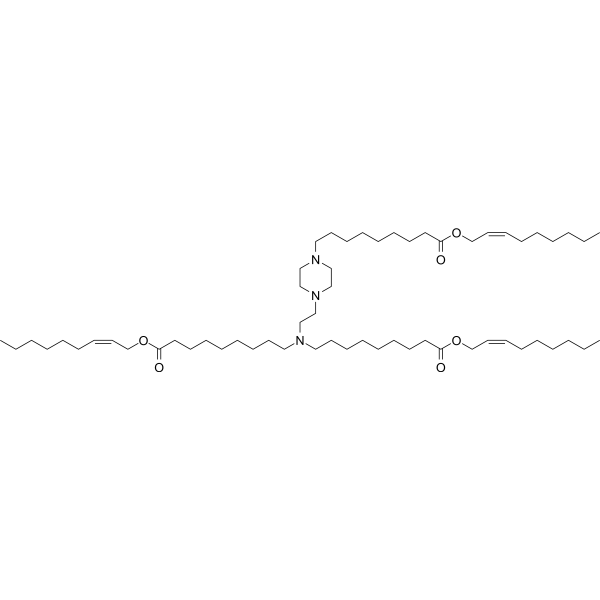
244cis, a piperazine-containing ionizable cationic lipid, has been used to generate lipid nanoparticles (LNPs). LNPs containing 244cis and coated with mRNA reporter gene were specifically accumulated in mouse lungs compared with LNPs containing SM-102. Induces a decrease in serum chemokine (C-C motif) ligand 2 (CCL2) levels .
The product specifications provided below refer solely to the active content of 244cis.
loading...
    loading...
Cat. No.: HY-161857
Target:  

Akt mTOR Caspase CDK

Research Areas:  

Cancer

Akt/mTOR-IN-1 (Compound 8r) is an AKT/mTOR signaling pathway inhibitor exhibiting an IC50 value of 0.8 µM with anticancer activity. Akt/mTOR-IN-1 can decrease the expression of Caspase 3 and increase the expression of the autophagic protein Cyclin B1, thereby inducing cell autophagy and apoptosis. Akt/mTOR-IN-1 can be used in research related to non-small cell lung cancer (NSCLC) .
loading...
    loading...
Cat. No.: HY-161985
Target:  

PPAR

Research Areas:  

Metabolic Disease

PPARγ-IN-3 (compound 9ga) is a potent and orally active PPARγ inhibitor. PPARγ-IN-3 reduces triglyceride (TG) accumulation with low cytotoxicity. PPARγ-IN-3 preventes the excessive growth of body weight and lessened fat mass as well as liver mass, decreases lipid accumulation in the liver and blood. PPARγ-IN-3 has the potential for the research of diet-induced obesity .
loading...
    loading...
Cat. No.: HY-161991
CAS No.: 1817874-62-6
Target:  

Caspase Apoptosis

Research Areas:  

Cancer

Caspase-3 activator 4 (compound 4o) is a potent and cross the blood-brain barrier caspase-3 activator. Caspase-3 activator 4 shows antiproliferative activity. Caspase-3 activator 4 induces apoptosis. Caspase-3 activator 4 increases the gene expression of TNF-α. Caspase-3 activator 4 decreases the protein expression of cleaved caspases 3/caspases 3 .
loading...
    loading...
Cat. No.: HY-162866
Target:  

Autophagy

Research Areas:  

Metabolic Disease

CXM102 is an autophagy activator. CXM102 can induce autophagy in aged BMSCs, leading to the rejuvenation of BMSCs and preferential differentiation into osteoblasts. CXM102 promotes the nuclear translocation of transcription factor EB (TFEB) and the formation of osteoblasts. CXM102 can stimulate bone synthesis metabolism in middle-aged male mice, reduce bone marrow adipocytes, delay bone loss, lower serum inflammation levels, decrease organ fibrosis, and extend the lifespan of the mice .
loading...
    loading...
Cat. No.: HY-16688R
CAS No.: 66611-26-5
Target:  

5-HT Receptor

Research Areas:  

Neurological Disease

RU 24969 (Standard) is the analytical standard of RU 24969. This product is intended for research and analytical applications. RU 24969 is a preferential 5-HT1B agonist, with a Ki of 0.38 nM, but also displays appreciable affinity for the 5-HT1A receptor (Ki=2.5 nM), and has low affinity for other receptor sites in the brain. RU 24969 could decrease fluid consumption and increase forward locomotion .
loading...
    loading...
Cat. No.: HY-167153
CAS No.: 2186644-51-7
PNA5 is a novel, blood-brain barrier permeable glycosylated angiotensin-(1-7) peptide and MasR agonist. PNA5 inhibits IL-7, increases IL-10. PNA5 inhibits ROS generation, decreases Iba-1 expression. PNA5 exhibits sustained cognitive protective effects. PNA5 rescues blunted cerebral functional hyperemia. PNA5 can be used in the research of inflammation-related brain diseases .
loading...
    loading...
Cat. No.: HY-168205
Target:  

HSP Apoptosis

Research Areas:  

Cancer

HSP90-IN-33 (compound 24e) is a potent Hsp90 inhibitor with Kd values of ≥200, 7.3 µM for Hsp90α, Hsp90β, respectively. HSP90-IN-33 induces apoptosis and cell cycle arrest at G0/G1 phase. HSP90-IN-33 decreases the protein expression of ERα, CDK4 and Akt .
loading...
    loading...
Cat. No.: HY-169124
Apoptosis Inducer 28 (Compound X1) is an apoptosis-inducing agent with anticancer activity in vitro. Apoptosis Inducer 28 can arrest the cell cycle at the G1 phase, promote cell death, and induce apoptosis by disrupting mitochondrial membrane potential. Apoptosis inducer 28 can also decrease the production of reactive oxygen species, downregulate the gene expression of BAX, Bcl-xL, and Bcl-2, while upregulating the gene expression of PAR-4 .
loading...
    loading...
Cat. No.: HY-169183
Target:  

Myosin

Research Areas:  

Others

Myokinasib-II is a MLCK1 inhibitor with an IC50 of 4.4 μM. Myokinasib-II induces cell cortex softening, impairs cell migration capacity, induces multinucleation, reduces cell stiffness, alters membrane tether dynamics, decreases actomyosin tension and changes nuclear morphology. Myokinasib-II is a MLCK1 chemical biology probe with a unique structure that does not depolymerize tubulin and maintains cell viability even under high-concentration treatment in fibroblasts .
loading...
    loading...
Cat. No.: HY-170937
CAS No.: 2998940-98-8
Urease-IN-20 (compound XBP2) is an inhibitor of Helicobacter pylori (H. pylori). Urease-IN-20 inhibits H. pylori with an IC50 of 0.14 μM. Urease-IN-20 reduces cell Apoptosis and decreases ROS and γH2AX in GES-1 cells infected with H. pylori. Urease-IN-20 exhibits significant gastric mucosal protective effects. Urease-IN-20 shows the potential for H. pylori research .
loading...
    loading...
Cat. No.: HY-171180
CAS No.: 122510-61-6
Target:  

DNA/RNA Synthesis

Research Areas:  

Cancer

AF615 is a small molecule inhibitor targeting the CDT1/Geminin protein complex (IC50 = 0.313 μM). AF615 selectively induces DNA damage, inhibits DNA synthesis, causes cell cycle arrest, and decreases the survival rate in cancer cell lines. AF615 displayed a Ki = 0.37 μM in case of Geminin-tCDT1 interaction and a Ki = 0.75 μM in case of Geminin-miniCDT1 interaction .
loading...
    loading...
Cat. No.: HY-171349
CAS No.: 1603833-56-2
Target:  

γ-secretase Amyloid-β

Research Areas:  

Neurological Disease

Amyloid-β-IN-3 (EX.113) is a selective γ-secretase inhibitor. Amyloid-β-IN-3 inhibits Aβ42 secretion in H4 cells with an EC50 value of 148 nM. Amyloid-β-IN-3 regulates the γ-secretase catalytic activity to decrease Aβ42 production, thereby alleviating neurotoxicity caused by Aβ deposition. Amyloid-β-IN-3 is promising for research of Alzheimer's disease (AD) .
loading...
    loading...
Cat. No.: HY-173188
Target:  

EGFR Akt PERK JNK p38 MAPK

Research Areas:  

Cancer

EGFR-IN-154 (compound 4c) is an EGFR inhibitor with EC50 values of 0.16 μM, 21.73 μM and 41.56 μM against EGFR Del19, EGFR WT and EGFR L858R, respectively. EGFR-IN-154 shows anticancer activity on various cance cell lines. EGFR-IN-154 induces mitochondrial apoptosis, and decreases pERK1/2 and pAkt levels, but increases pJNK and pp38 levels .
loading...
    loading...
Cat. No.: HY-17379R
CAS No.: 134523-03-8
Synonyms: CI-981 (Standard); Atorvastatin hemicalcium (Standard)
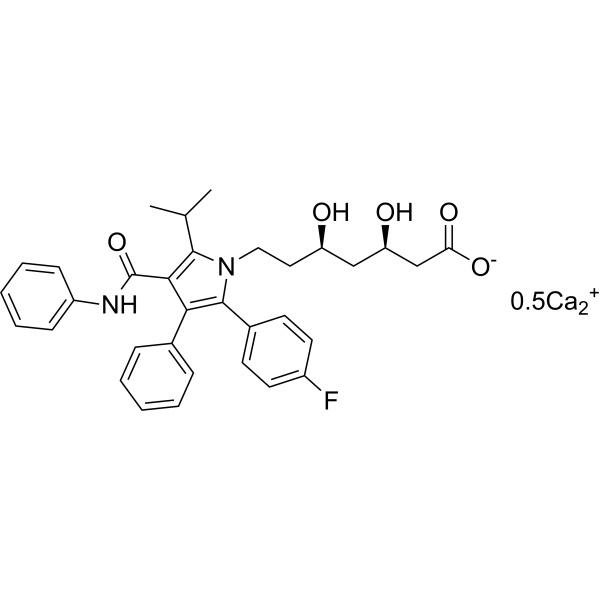
Atorvastatin (hemicalcium salt) (Standard) is the analytical standard of Atorvastatin (hemicalcium salt). This product is intended for research and analytical applications. Atorvastatin hemicalcium salt (CI-981) is an orally active 3-hydroxy-3-methylglutaryl coenzyme A (HMG-CoA) reductase inhibitor, has the ability to effectively decrease blood lipids. Atorvastatin hemicalcium salt inhibits human SV-SMC proliferation and invasion with IC50s of 0.39 μM and 2.39 μM, respectively .
loading...
    loading...
Cat. No.: HY-174419
CAS No.: 3017240-62-6
TFSeB is an orally active neuroprotective agent. TFSeB can reduce Streptozotocin (STZ) (HY-13753) induced MAO-B and AChE activity. TFSeB exerts neuroprotective effects by increasing the expression of BCL-2, BDNF, NRF2, and decreasing the expression of BAX. TFSeB can reduce lipid peroxidation (TBARS) and reactive oxygen species (ROS) levels. TFSeB can reduce neuroinflammation. TFSeB can be used for research on Alzheimer’s disease .
loading...
    loading...
Cat. No.: HY-174529
Target:  

mRNA

Research Areas:  

Inflammation/Immunology

Human TGFBR3 mRNA encodes the human transforming growth factor beta receptor 3 (TGFBR3) protein, a transforming growth factor (TGF)-beta type III receptor. TGFBR3 is a membrane proteoglycan that often functions as a co-receptor with other TGF-beta receptor superfamily members. Ectodomain shedding produces soluble TGFBR3, which may inhibit TGFB signaling. Decreased expression of this receptor has been observed in various cancers.
loading...
    loading...
Cat. No.: HY-174992
Target:  

Apoptosis Bcl-2 Family

Research Areas:  

Cancer

Apoptosis inducer 39 is an apoptosis inducer with IC50s of 4.53 and 15.42 μM against MDA-MB-231 and A549 cells. Apoptosis inducer 39 exerts in vitro anti-tumor activity by decreasing the expression of the anti-apoptotic protein Bcl-2 while increasing the expression of the pro-apoptotic protein Bax. Apoptosis inducer 39 can be used for the study of breast cancer and non-small lung cancer .
loading...
    loading...
Cat. No.: HY-175479
CAS No.: 3114869-49-4
GLPG4970 is a potent, selective and orally active salt-inducible kinase 2/3 (SIK2/SIK3) dual inhibitor with IC50 values of 0.3 nM and 0.7 nM. GLPG4970 has weak inhibition of hERG channel with an IC50 of 29 μM. GLPG4970 can decrease TNFα release and increase IL-10 release GLPG4970 can be used for the researches of inflammation and immunology, such as colitis .
loading...
    loading...
Cat. No.: HY-177854
CAS No.: 603113-07-1
Target:  

Amyloid-β

Research Areas:  

Neurological Disease

Aβ aggregation-IN-4 can alleviate the neurotoxicity of amyloid-β protein (Aβ) and significantly reduce the level of oligomeric complexes of Aβ (Aβ-OCs). Aβ aggregation-IN-4 does not decrease the level of amyloid-β protein (Aβ). Aβ aggregation-IN-4 attenuates Aβ oligomerization and prevents oligomer-induced death of primary cortical neurons. Aβ aggregation-IN-4 can be used for the study of Alzheimer’s disease (AD) .
loading...
    loading...

