177 Results for "

Bacillus subtilis

" in MedChemExpress (MCE) Product Catalog:
Products (177)

177 Results for "Bacillus subtilis" in MCE Product Catalog:

Cat. No.: HY-W588249
CAS No.: 546-79-2
Sabinene hydrate is a volatile organic compound of a bicyclic monoterpene alcohol. Sabinene hydrate, as a plant secondary metabolite, is naturally present in various plants and their essential oils. Sabinene hydrate exhibits broad-spectrum but varying-intensity antibacterial activity, with the greatest sensitivity to Gram-positive bacteria, especially Bacillus subtilis (MIC = 0.0312 mg/mL) and Staphylococcus aureus (MIC = 0.0625 mg/mL). Sabinene hydrate also shows certain sensitivity to Escherichia coli and Candida albicans, with MIC values of 0.125 mg/mL for both. Sabinene hydrate can be used in the research of the ecological functions of plant defense substances .
loading...
    loading...
Cat. No.: HY-137502
CAS No.: 1542213-67-1
Target:  

Bacterial

Research Areas:  

Infection

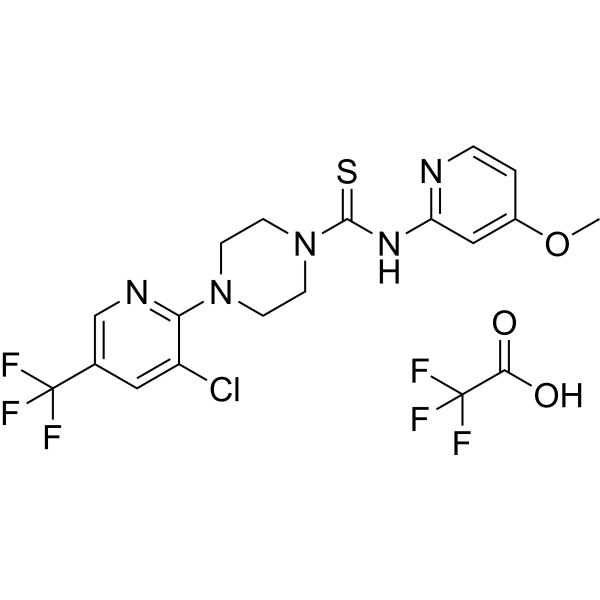
ML267 is a blood-brain barrier permeable Antibacterial agent and bacterial phosphopantetheinyl transferase (PPTase) inhibitor, with an IC50 of 0.29 μM against Bacillus subtilis Sfp-PPTase and an IC50 of 8.1 μM against bacterial AcpS-PPTase. ML267 attenuates bacterial secondary metabolism, activity, and the production of Sfp-PPTase-dependent metabolites. ML267 inhibits the growth of Gram-positive bacteria, including Methicillin (HY-121544)-resistant Staphylococcus aureus. ML267 is applicable to research related to bacterial infections, including methicillin-resistant Staphylococcus aureus infections .
loading...
    loading...
Cat. No.: HY-N7781
CAS No.: 39025-24-6
Synonyms: (E)-Guggulsterone
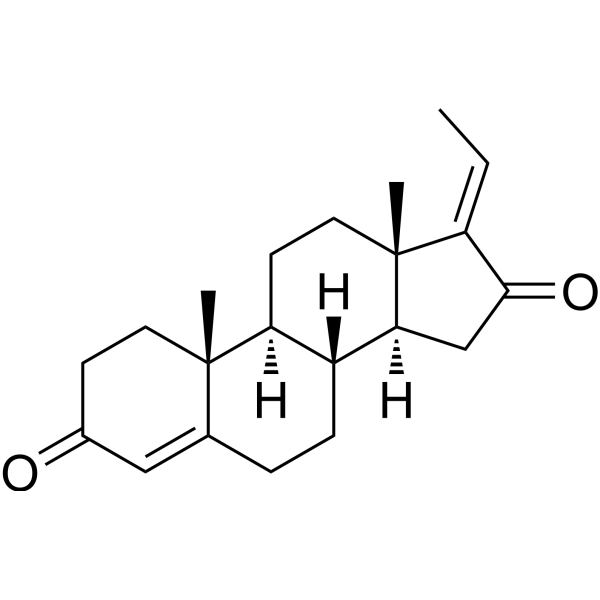
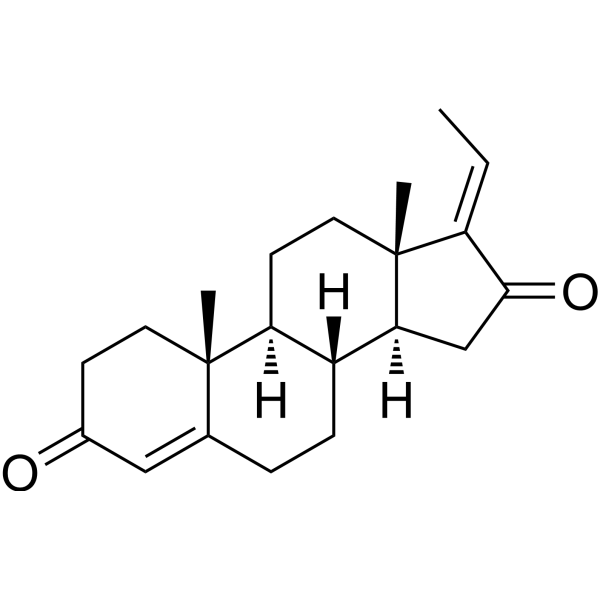
(-)-(E)-Guggulsterone ((E)-Guggulsterone) is an orally active natural stereoisomer of Guggulsterone (HY-107738). (-)-(E)-Guggulsterone is an antagonist for the Farnesoid X Receptor (FXR) with an IC50 of 24.06 μM and possesses potent hypolipidemic properties. (-)-(E)-Guggulsterone suppresses dengue virus (DENV) replication by upregulating antiviral interferon responses by inducing HO-1 expression via Nrf2 activation. (-)-(E)-Guggulsterone exhibits antibacterial activities against Bacillus subtilis, Staphylococcus aureus and Pseudomonas aeruginosa. (-)-(E)-Guggulsterone has cardiac protective and antioxidant activities in rats .
loading...
    loading...
Cat. No.: HY-W714137
CAS No.: 4430-39-1
Synonyms: Lesquerellin; 6-Methylthiohexyl isothiocyanate
Target:  

Bacterial

Research Areas:  

Infection

(6-Isothiocyanatohexyl)(methyl)sulfane (Lesquerellin; 6-Methylthiohexyl isothiocyanate) is an isothiocyanate found in wasabi (W. japonica) and has various biological activities. (6-Isothiocyanatohexyl)(methyl)sulfane is active against the bacterium Bacillus subtilis and the fungus T. mentagrophytes (MIC=25 μg/mL). (6-Isothiocyanatohexyl)(methyl)sulfane also has anthelmintic activity against blue mussel (M. edulis). (6-Isothiocyanatohexyl)(methyl)sulfane has antifouling activity when applied to polyvinyl chloride (PVC) panels at a concentration of 50 μmol/cm2 in a conventional immersion test.
loading...
    loading...
Cat. No.: HY-133101
CAS No.: 1031727-34-0
Synonyms: 14-Norpseurotin
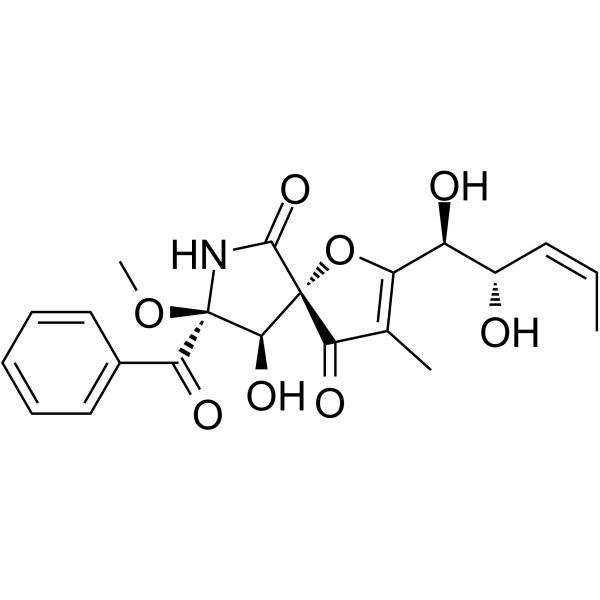
14-Norpseurotin A (14-Norpseurotin) is an Antibacterial, antimalarial, and anticancer agent. 14-Norpseurotin A is isolated from various fungi of the Aspergillus genus. 14-Norpseurotin A induces neurite outgrowth. 14-Norpseurotin A inhibits the growth of Escherichia coli, Bacillus subtilis, and Micrococcus lysoleikticus. 14-Norpseurotin A exhibits antileishmanial activity against L. donovani, antiplasmodial activity against P. falciparum, and shows no activity against T. cruzi. 14-Norpseurotin A exerts anticancer activity against breast cancer. 14-Norpseurotin A is used in research related to leishmaniasis, malaria, and breast cancer .
loading...
    loading...
Cat. No.: HY-B0914R
CAS No.: 112-38-9
Synonyms: Undecylenic acid (Standard)
10-Undecenoic acid (Standard) is the analytical standard of 10-Undecenoic acid. This product is intended for research and analytical applications. 10-Undecenoic acid (Undecylenic acid) is an antifungal agent. 10-Undecenoic acid inhibits Aβ oligomerization, scavenges ROS and inhibits μ-calpain activity. 10-Undecenoic acid has neuroprotective effects. 10-Undecenoic acid has anticancer effects on a variety of tumors. 10-Undecenoic acid inhibits C. albicans biofilm formation and MRSA infection. 10-Undecenoic acid inhibits quorum sensing signals of Bacillus subtilis and Pseudomonas aeruginosa .
loading...
    loading...
Cat. No.: HY-N7781R
CAS No.: 39025-24-6
Synonyms: (E)-Guggulsterone (Standard)
(-)-(E) -guggulsterone (Standard) is the analytical standard for (-)-(E) -guggulsterone ((E)-Guggulsterone) (HY-N7781). (-)-(E)-Guggulsterone is an orally active natural stereoisomer of Guggulsterone (HY-107738). (-)-(E)-Guggulsterone is an antagonist for the Farnesoid X Receptor (FXR) with an IC50 of 24.06 μM and possesses potent hypolipidemic properties. (-)-(E)-Guggulsterone suppresses dengue virus (DENV) replication by upregulating antiviral interferon responses by inducing HO-1 expression via Nrf2 activation. (-)-(E)-Guggulsterone exhibits antibacterial activities against Bacillus subtilis, Staphylococcus aureus and Pseudomonas aeruginosa. (-)-(E)-Guggulsterone has cardiac protective and antioxidant activities in rats.
loading...
    loading...
Cat. No.: HY-137502A
CAS No.: 1542213-03-5
Target:  

Bacterial

Research Areas:  

Infection

ML267 free base is a blood-brain barrier permeable Antibacterial agent and bacterial phosphopantetheinyl transferase (PPTase) inhibitor, with an IC50 of 0.29 μM against Bacillus subtilis Sfp-PPTase and an IC50 of 8.1 μM against bacterial AcpS-PPTase. ML267 free base attenuates bacterial secondary metabolism, activity, and the production of Sfp-PPTase-dependent metabolites. ML267 free base inhibits the growth of Gram-positive bacteria, including Methicillin (HY-121544)-resistant Staphylococcus aureus. ML267 free base is applicable to research related to bacterial infections, including methicillin-resistant Staphylococcus aureus infections .
loading...
    loading...
Cat. No.: HY-W756467
CAS No.: 2733149-80-7
Synonyms: 1-Cyclopropyl-6,7-difluoro-8-methoxy-4-oxo-1,4-dihydroquinoline-3-carboxylic Acid-13C,d3
Antibacterial agent 265- 13C,d3 (1-Cyclopropyl-6,7-difluoro-8-methoxy-4-oxo-1,4-dihydroquinoline-3-carboxylic Acid- 13C,d3) is the deuterium labeled and 13C-labeled Antibacterial agent 265 (HY-W018629). Antibacterial agent 265 (Compound 2) is an antibacterial agent. Antibacterial agent 265 shows antibacterial activity against Staphylococcus Aureus, Micrococcus Luteus, Bacillus subtilis, gram-negative Escherichia coli, Pseudomonas aeruginosa and Flavobacterium devorans .
loading...
    loading...
Cat. No.: HY-153575
Target:  

PROTACs Bacterial

Research Areas:  

Infection

BacPROTAC-1 is a BacPROTAC degrader that induces the degradation of the target protein mSA by recruiting ClpC/ClpC1. BacPROTAC-1 binds to mSA, Bacillus subtilis ClpCNTD and Mycobacterium smegmatis ClpC1NTD with Kd values of 3.9, 2.8 and 0.69 μM, respectively. BacPROTAC-1 forms a ternary complex between the substrate and ClpC, promotes ClpC reassembly and activation, and induces ATP-dependent degradation of mSA and mSA fusion model substrates via the ClpCP or ClpC1P1P2 protease system. BacPROTAC-1 can be used in studies on bacterial targeted protein degradation, bacterial protein homeostasis and antibacterial target discovery .
loading...
    loading...
Cat. No.: HY-181939
Target:  

Bacterial

Research Areas:  

Infection

Antibacterial agent 329 (Compound 9c) is an antibacterial agent. Antibacterial agent 329 inhibits the activity of MraY. Antibacterial agent 329 exhibits antibacterial activity against Escherichia coli K12 and Bacillus subtilis W23 with a MIC of 16 μg/mL, but shows no activity against Pseudomonas fluorescens Pf-5. Antibacterial agent 329 exerts antibacterial activity against Acinetobacter baumannii 19606, Staphylococcus aureus MRSA USA300 JE2, Enterobacter cloacae 19434, Klebsiella pneumoniae 700603 and Enterococcus faecium 19434, with MIC values of 8, 8, 16-32, 16-32 and 16 μg/mL, respectively, while it shows no activity against Pseudomonas aeruginosa NCTC 13437 .
loading...
    loading...
Cat. No.: HY-B0914AR
CAS No.: 557-08-4
Synonyms: Zinc undecylenate (Standard)
10-Undecenoic acid (zinc salt) (Standard) is the analytical standard of 10-Undecenoic acid (zinc salt). This product is intended for research and analytical applications. 10-Undecenoic acid zinc salt (Undecylenic acid zinc salt) is an antifungal agent. 10-Undecenoic acid zinc salt inhibits Aβ oligomerization, scavenges ROS and inhibits μ-calpain activity. 10-Undecenoic acid zinc salt has neuroprotective effects. 10-Undecenoic acid zinc salt has anticancer effects on a variety of tumors. 10-Undecenoic acid zinc salt inhibits C. albicans biofilm formation and MRSA infection. 10-Undecenoic acid zinc salt inhibits quorum sensing signals of Bacillus subtilis and Pseudomonas aeruginosa .
loading...
    loading...
Cat. No.: HY-N4157R
CAS No.: 5171-37-9
Isopteropodine (Standard) is the analytical standard of Isopteropodine (HY-N4157). This product is intended for research and analytical applications. Isopteropodine is a positive modulator that selectively acts on muscarinic M1 and 5-HT2 receptors. Isopteropodine has an EC50 of 9.92 μM for acetylcholine and 14.5 μM for 5-HT. Isopteropodine also has antibacterial activity against Gram-positive bacteria, with MICs of 150 μg/mL and 250 μg/mL for Staphylococcus aureus and Bacillus subtilis, respectively. Isopteropodine enhances receptor function by increasing the affinity of agonists for receptors and can also inhibit the growth of specific Gram-positive bacteria, and can be used in cognitive impairment and antibacterial research .
loading...
    loading...
Cat. No.: HY-D3389
sCy5DL-amide is an amidated fluorescent D-amino acid conjugated to Sulfo-Cyanine 5, and a peptidoglycan labeling agent. sCy5DL-amide incorporates into bacterial peptidoglycan cell wall via transpeptidase-mediated reactions, replacing the fourth or fifth D-amino acid of the peptidoglycan stem peptide for visualization of nascent peptidoglycan biosynthesis. sCy5DL-amide produces clear cell outline, septum labeling, and high localization density in Bacillus subtilis, including a 'V-shape' pattern at cell-cell contact areas. sCy5DL-amide exhibits robust incorporation into Gram-positive bacteria and mycobacteria, with reduced incorporation into Gram-negative bacteria (Ex/Em = 646/666 nm) .
loading...
    loading...
Cat. No.: HY-N21878
CAS No.: 474328-38-6
Muraymycin D2 is a peptidyl nucleoside natural product derived from Streptomyces spp., possessing competitive translocase I (MraY) inhibitory activity and antibacterial activity. Muraymycin D2 competitively binds to the nucleotide-binding pocket of the MraY substrate via its nucleoside moiety, and upon binding, induces a conformational change in MraY, blocking lipid I synthesis and inhibiting peptidoglycan biosynthesis. Muraymycin D2 exhibits a Ki of 7.6 nM against Bacillus subtilis and an IC50 of 0.39 nM against Staphylococcus aureus. Muraymycin D2 shows antibacterial activity against Escherichia coli and is capable of breaking persistence in chlamydial infection. Muraymycin D2 can be used for research on bacterial infection-related studies, such as chlamydial infection .
loading...
    loading...
Cat. No.: HY-N2789
CAS No.: 211238-60-7
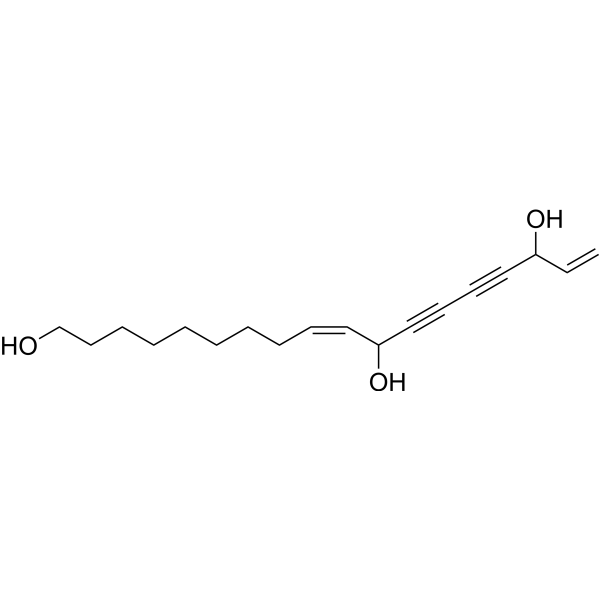
(9Z)-9,17-Octadecadiene-12,14-diyne-1,11,16-triol is a nature product that could be isolated from the ethyl acetate extract of Cassonia barteri (Araliaceae) leaves. (9Z)-9,17-Octadecadiene-12,14-diyne-1,11,16-triol has antibacterial activity against Bacillus subtilis and Pseudomonas fluorescens, antifungal activity against Cladosporium cucumerinum, moiluscicidal activity against Biomphalaria glabrata . (9Z)-9,17-Octadecadiene-12,14-diyne-1,11,16-triol is a click chemistry reagent, it contains an Alkyne group and can undergo copper-catalyzed azide-alkyne cycloaddition (CuAAc) with molecules containing Azide groups.
loading...
    loading...
Cat. No.: HY-N22017
CAS No.: 2341324-20-5
(4,5-Dichloro-1H-pyrrol-2-yl)(3-hexyl-2,4-dihydroxyphenyl) methanone is an antibacterial agent discovered from Streptomyces armeniacus. (4,5-Dichloro-1H-pyrrol-2-yl)(3-hexyl-2,4-dihydroxyphenyl) methanone inhibits the growth of Gram-positive bacteria and shows no activity against the tested Gram-negative bacteria. (4,5-Dichloro-1H-pyrrol-2-yl)(3-hexyl-2,4-dihydroxyphenyl) methanone is a biosynthetic intermediate of Armeniaspirol A-C (HY-N15548) (HY-N15550) (HY-N15551). (4,5-Dichloro-1H-pyrrol-2-yl)(3-hexyl-2,4-dihydroxyphenyl) methanone can be used in studies related to infections caused by Gram-positive bacteria such as Staphylococcus aureus, Enterococcus faecalis, and Bacillus subtilis .
loading...
    loading...

