281 Results for "

Fluorescent substrate

" in MedChemExpress (MCE) Product Catalog:
Products (281)

281 Results for "Fluorescent substrate" in MCE Product Catalog:

Cat. No.: HY-W277900
CAS No.: 50632-57-0
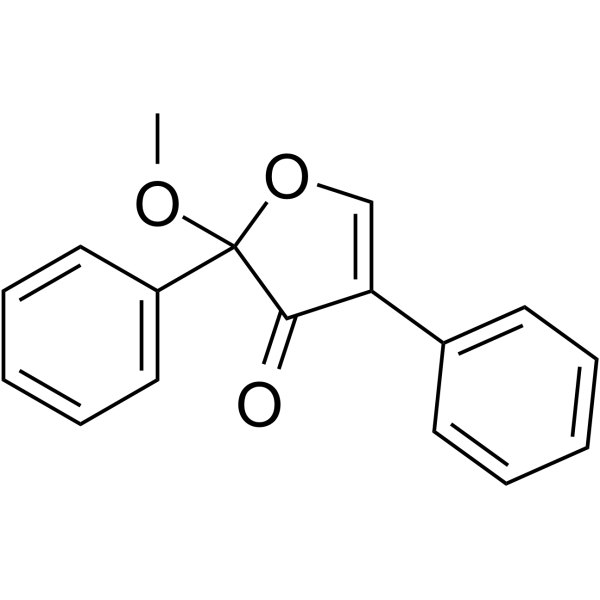
2-Methoxy-2,4-diphenylfuran-3-one is a fluorescent compound which can be used to label gelatin as a substrate for detection of the gelatin degrading MMP-2 and MMP-9 by zymography .
loading...
    loading...
Cat. No.: HY-P3749
CAS No.: 323577-36-2
Target:  

Fluorescent Dye

Research Areas:  

Others

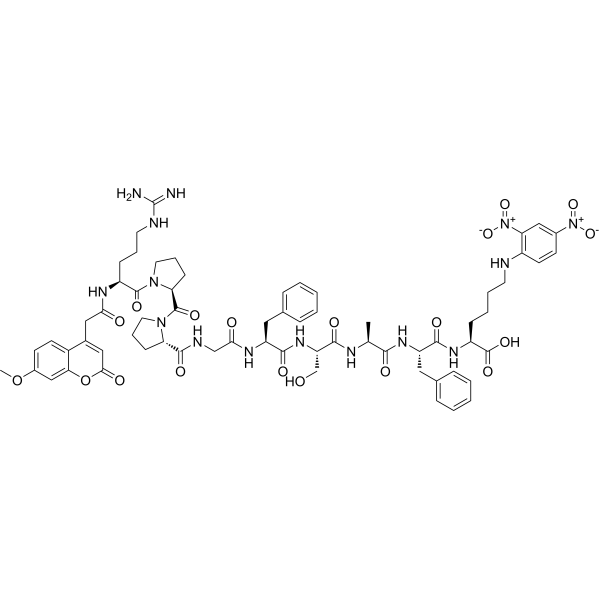
Mca-(ala7,lys(dnp)9)-bradykinin is a sensitive fluorogenic substrate for ECE-1 (endothelin-converting enzyme-1). The incorporation of a (7-methoxycoumarin-4-yl)acetyl (Mca) fluorescent group and a 2,4-dinitrophenyl (Dnp) quenching group has resulted in a large fluorescence increase upon substrate cleavage .
loading...
    loading...
Cat. No.: HY-137897
CAS No.: 87779-49-5
Research Areas:  

Others

Bz-VGR-AMC is a fluorescent substrate for the trypsin-like activity of the 20S proteasome. Bz-VGR-AMC can be used to measure the trypsin-like (β2) activity of the 20S proteasome (Ex/Em = 360/460 nm) .
loading...
    loading...
Cat. No.: HY-139101A
Purity:  99.97%
Synonyms: GpppA triammonium
Research Areas:  

Others

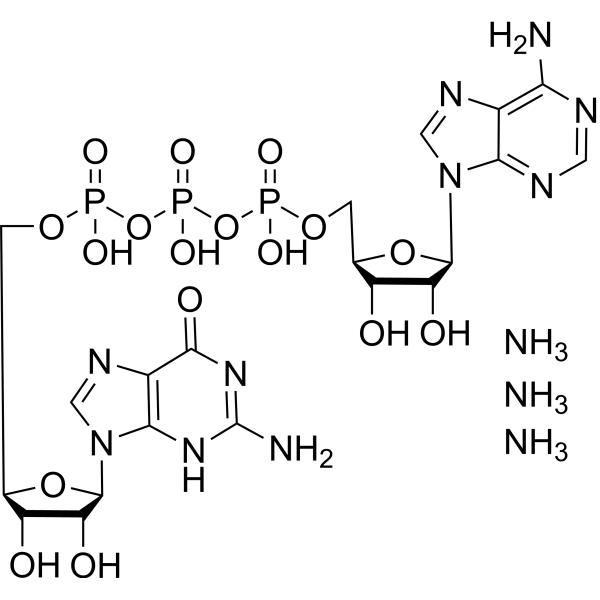
Guanosine 5'-triphosphate-5'-adenosine (GpppA) triammonium, a 5′ cap analog, can be used for RNA synthesis in vitro. Guanosine 5'-triphosphate-5'-adenosine triammonium is a fluorescent substrate analog .
loading...
    loading...
Cat. No.: HY-157744
CAS No.: 2741190-31-6
Purity:  99.9%
Research Areas:  

Cancer

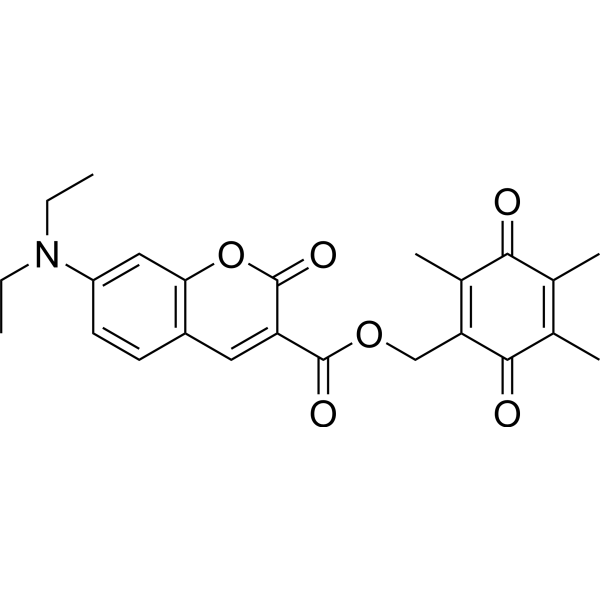
Coumarin–quinone conjugate is a fluorescent substrate for NADH:ubiquinone oxidoreductases which consists of a coumarin fluorophore and a ubiquinone analog. Coumarin–quinone conjugate can be used to measure the kinetic parameters of AIFM2/FSP1 for researches such as ferroptosis .
loading...
    loading...
Cat. No.: HY-P4344
CAS No.: 1926163-52-1
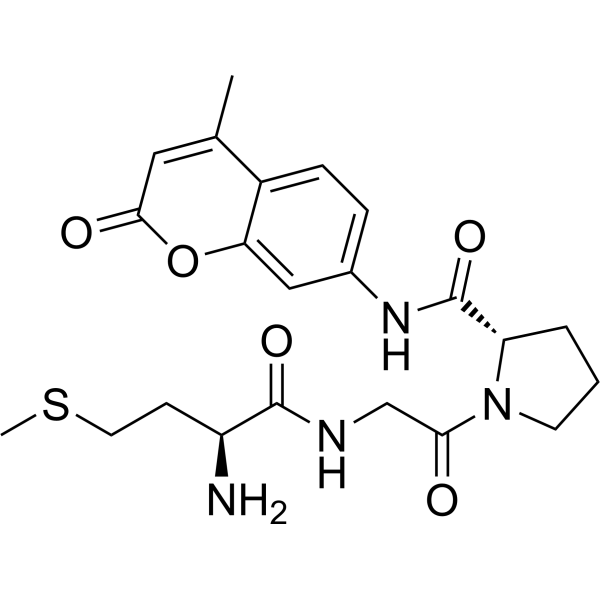
Met-Gly-Pro-AMC is a fluorescent peptide substrate active against *Caenorhabditis elegans* DPF-3, hDPP4, and methionyl aminopeptidase 2 (MetAP2). Met-Gly-Pro-AMC undergoes cleavage via tripeptidyl peptidase activity to release a fluorescent product. Met-Gly-Pro-AMC is used to detect the activities of tripeptidyl peptidases and MetAP2 peptidases in in vitro enzyme activity assays .
loading...
    loading...
Cat. No.: HY-131023
Synonyms: JF549, Maleimide TFA
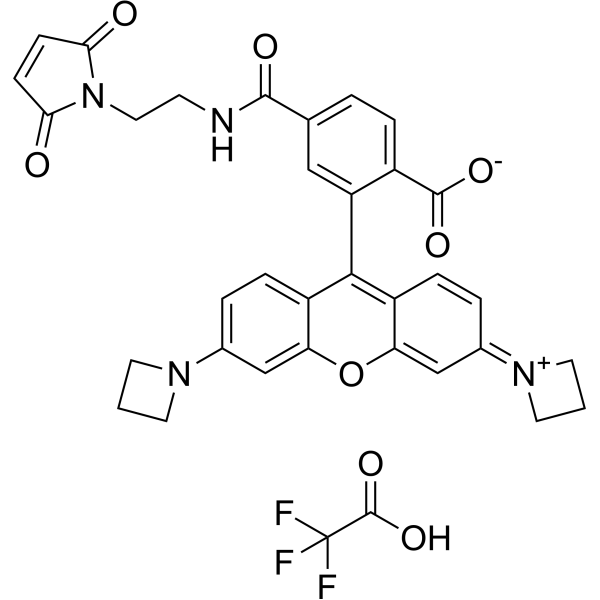
Janelia Fluor 549, Maleimide TFA (JF549, Maleimide TFA) is a fluorescent dye with the absorption maximum (λab (max)) of 549 nm and emission maximum (λem (max)) of 571 nm . Janelia Fluor fluorescent dyes can be chemically conjugated to the specific HaloTag substrate (a chloroalkane ligand) to form a fluorescent ligand, rather than binding directly to the HaloTag protein itself. Janelia Fluor products are licensed under U.S. Pat. Nos. 9,933,417, 10,018,624 and 10,161,932 and other patents from Howard Hughes Medical Institute.
loading...
    loading...
Cat. No.: HY-DY1117
CAS No.: 209540-64-7
Target:  

Fluorescent Dye

Research Areas:  

Others

PFB-FDG (solution) is a non-fluorescent galactosidase substrate that can be hydrolyzed into green fluorescent PFB-F (Ex=485 nm, Em=535 nm). PFB-FDG (solution) can be hydrolyzed by β-galactosidases derived from humans, bovine liver, and Aspergillus oryzae, producing a non-leakable green fluorescent product, which enables the detection of enzyme activity in liposomes and via flow cytometry. PFB-FDG (solution) is used for the determination of β-galactosidase activity .
Solvent and concentration: DMSO: 10 mM
loading...
    loading...
Cat. No.: HY-123004
CAS No.: 143199-54-6
Research Areas:  

Metabolic Disease

S 4404 is a prolyl-4-hydroxylase inhibitor. S 4404 functions as a non-substrate of hepatobiliary transport systems. S 4404 undergoes metabolic breakdown into fluorescent and red-colored metabolites. S 4404 can be used for the research of liver fibrosis .
loading...
    loading...
Cat. No.: HY-137897A
Research Areas:  

Others

Bz-VGR-AMC TFA is a fluorescent substrate for the trypsin-like activity of the 20S proteasome. Bz-VGR-AMCTFA can be used to measure the trypsin-like (β2) activity of the 20S proteasome (Ex/Em = 360/460 nm) .
loading...
    loading...
Cat. No.: HY-P11367
CAS No.: 118850-78-5
Boc-Ala-Gly-Pro-Arg-AMC is a synthetic fluorescent substrate, widely used for the detection of protease activity. Boc-Ala-Gly-Pro-Arg-AMC can be used to detect the activity of serine proteases and the oligopeptide enzyme B of Trypanosoma brucei .
loading...
    loading...
Cat. No.: HY-P4333
CAS No.: 73554-94-6
Target:  

Fluorescent Dye

Research Areas:  

Cardiovascular Disease

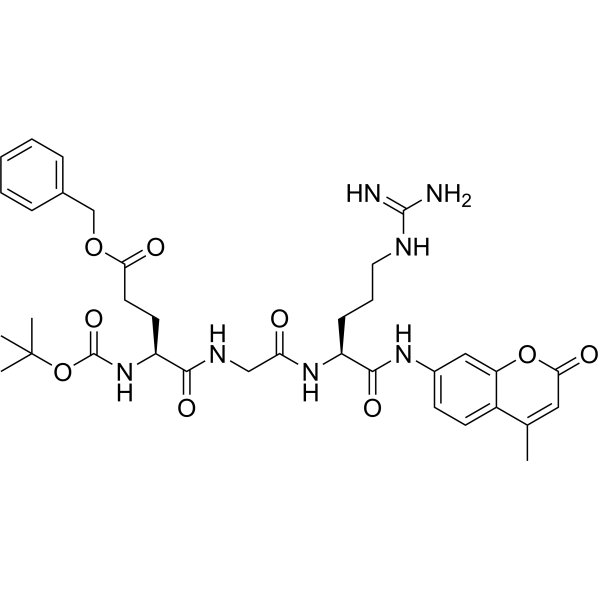
Boc-Glu(OBzl)-Gly-Arg-AMC is a fluorogenic substrate for factors IXa and XIIa. The cleavage of the amide bond between arginine and the methylcoumarin amide group releases fluorescent 7-Amino-4-methylcoumarin (HY-D0027) .
loading...
    loading...
Cat. No.: HY-W030319
CAS No.: 15991-13-6
Target:  

Fluorescent Dye

Research Areas:  

Others

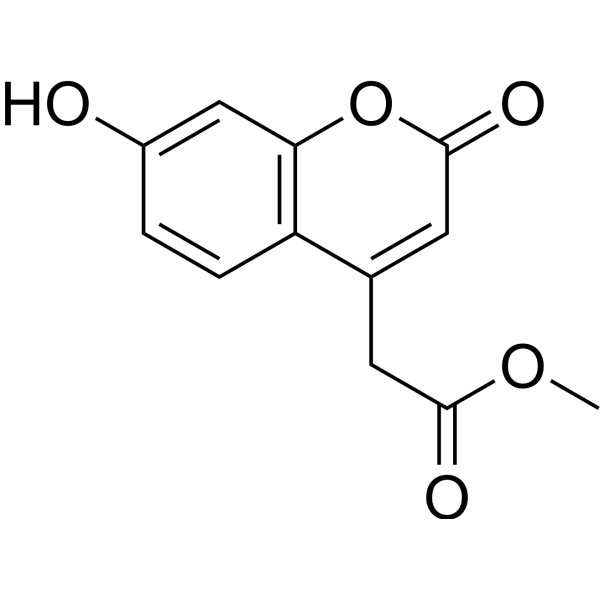
Methyl 2-(7-hydroxy-2-oxo-2H-chromen-4-yl)acetate, a natural coumarins derivative, is exploited for the synthesis of the switchable fluorescent substrates to be used in bacterial enzyme detection .
loading...
    loading...
Cat. No.: HY-137333
CAS No.: 72626-61-0
Purity:  99.43%
Research Areas:  

Others

4-Methylumbelliferyl β-D-cellobioside is a substrate of Cellulase (HY-B2220). 4-Methylumbelliferyl β-D-cellobioside is hydrolyzed to generate fluorescent 4-methylumbelliferone, which is used to study cellulase kinetics .
loading...
    loading...
Cat. No.: HY-P4332
CAS No.: 113866-16-3
Research Areas:  

Cardiovascular Disease

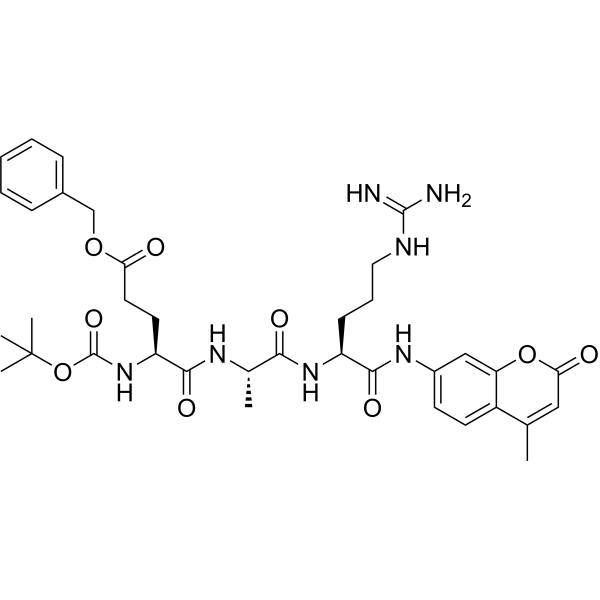
Boc-Glu(OBzl)-Ala-Arg-AMC is a fluorogenic substrate for coagulation factor XIa and trypsin. The cleavage of the amide bond between arginine and the methylcoumarin amide group releases fluorescent 7-Amino-4-methylcoumarin (HY-D0027) .
loading...
    loading...
Cat. No.: HY-W014018
CAS No.: 92-71-7
Synonyms: PPO; DPO; POP
2,5-Diphenyloxazole (PPO; DPO; POP) is a fluorescent dye, as well as a substrate and metabolite precursor of cytochrome P-450 (cytochrome P-448/P1-450). 2,5-Diphenyloxazole serves as a scintillator .
loading...
    loading...
Cat. No.: HY-W777429
CAS No.: 634151-16-9
Ceratamine B is a fluorescent substrate with significant biological activity and can be used for cell imaging and biolabeling. Ceratamine B can effectively penetrate cell membranes, facilitating the study of cellular processes. Ceratamine B also shows broad application potential in compound screening and biosensor development.
loading...
    loading...
Cat. No.: HY-P10322
Target:  

Fluorescent Dye

Research Areas:  

Cancer

Z-IETD-R110 is a fluorescent substrate of caspases. Z-IETD-R110 acts as a substrate for caspase-8. When caspase-8 is activated, it can recognize and cut Z-IETD-R110, releasing fluorophore, which can be detected by fluorescence microscopy. Z-IETD-R110 can be used to study oxidative stress-induced apoptosis, particularly in pancreatic acinar cells .
loading...
    loading...
Cat. No.: HY-DY1108
CAS No.: 38806-38-1
Synonyms: ε-NAD (solution)
Nicotinamide 1,N6-ethenoadenine dinucleotide (solution) (ε-NAD (solution)) is a fluorescent analog of NAD. Nicotinamide 1,N6-ethenoadenine dinucleotide can be cleaved by phosphodiesterase I (from C. adamanteus venom) and binds to bovine liver glutamate dehydrogenase. Nicotinamide 1,N6-ethenoadenine dinucleotide can serve as a substrate for G-ADP ribosylation of G proteins catalyzed by bacterial toxins. Nicotinamide 1,N6-ethenoadenine dinucleotide can be used as a fluorescent substrate for the study of ADP ribosylation reactions .
Solvent and concentration: ddH2O: 20 mM
loading...
    loading...
Cat. No.: HY-131029
Purity:  ≥95.0%
Synonyms: JF646, Maleimide
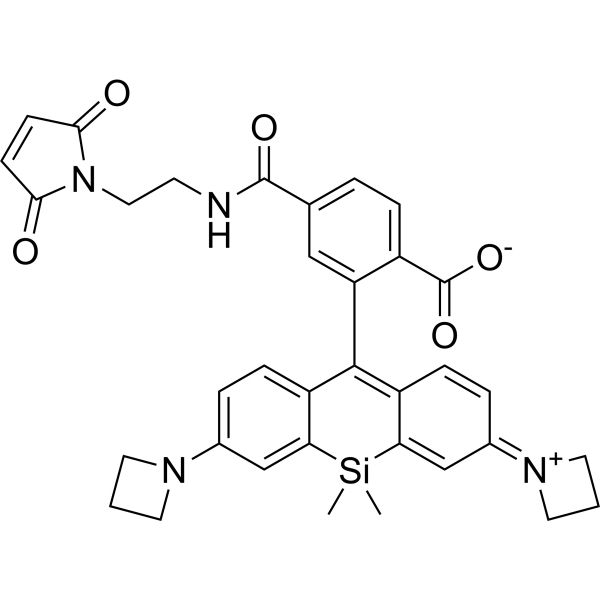
Janelia Fluor 646, Maleimide (JF646, Maleimide) is a red fluorescent dye that contains a maleimide group. JF646, Maleimide can be used in cellular imaging . Janelia Fluor fluorescent dyes can be chemically conjugated to the specific HaloTag substrate (a chloroalkane ligand) to form a fluorescent ligand, rather than binding directly to the HaloTag protein itself. Janelia Fluor products are licensed under U.S. Pat. Nos. 9,933,417, 10,018,624 and 10,161,932 and other patents from Howard Hughes Medical Institute (Ex/Em = 646/664 nm).
loading...
    loading...

