23 Results for "

5-Aminolevulinic acid

" in MedChemExpress (MCE) Product Catalog:
Products (23)

23 Results for "5-Aminolevulinic acid" in MCE Product Catalog:

21
21 Cited Publications
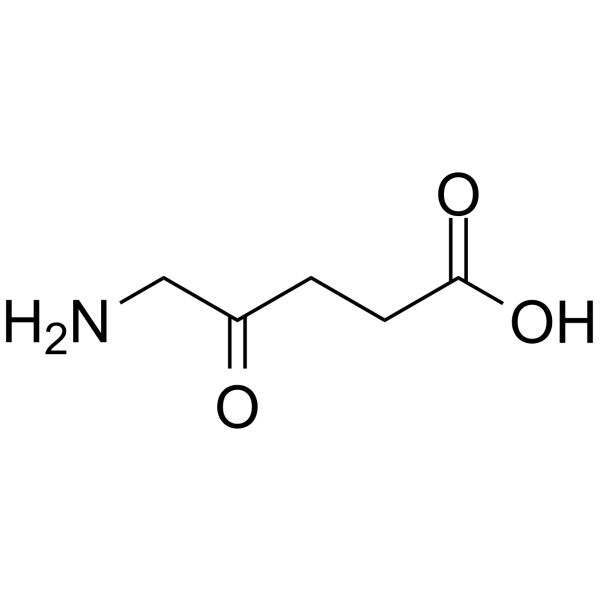
Cat. No.: HY-W000450
CAS No.: 106-60-5
Synonyms: 5-ALA; δ-Aminolevulinic acid; 5-Amino-4-oxopentanoic acid
5-Aminolevulinic acid (5-ALA; δ-Aminolevulinic acid; 5-Amino-4-oxopentanoic acid) is an orally active heme precursor. 5-Aminolevulinic acid promotes aerobic energy metabolism and increases ATP levels by enhancing the activity of cytochrome c oxidase. 5-Aminolevulinic acid enhances LPS-induced proinflammatory cytokine production and gene activation, and restores the phagocytic activity and ROS generation capacity of neutrophils. 5-Aminolevulinic acid selectively accumulates protoporphyrin IX in tumor cells; as a photosensitizer and radiosensitizer, it induces ROS burst upon light or X-ray irradiation to inhibit tumor growth. 5-Aminolevulinic acid can be applied to the research of septic shock, melanoma, and cancer radiotherapy .
loading...
    loading...
23
23 Publications Verification
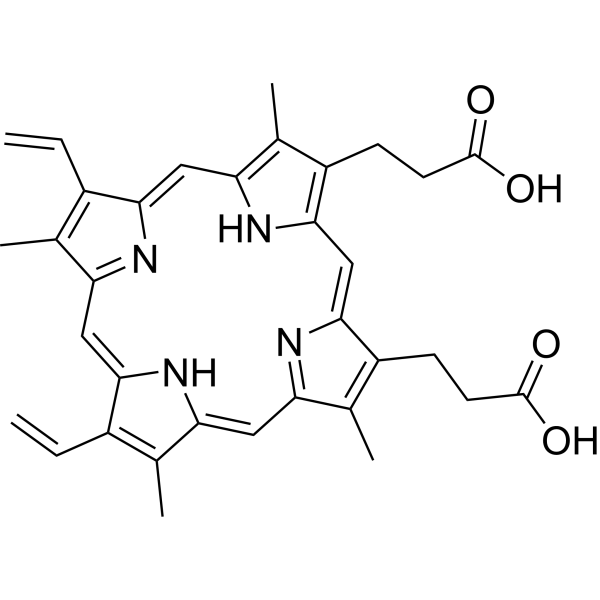
Cat. No.: HY-B1247
CAS No.: 553-12-8
Synonyms: PPIX
Protoporphyrin IX is a final intermediate in the heme biosynthetic pathway, which acts as a radiation sensitizer enhancing ROS generation even in a hypoxic state and inducing DNA damage. Protoporphyrin IX also acts as a photo sensitizer undergoing photobleaching that occurs through direct degradation by light irradiation. Protoporphyrin IX is formed and accumulated following 5-aminolevulinic acid (5-ALA) (HY-W000450) administration in the tumor cells of rats. Protoporphyrin IX causes selective improvement of basal cell carcinoma when activated red fluorescence of a peak wavelength at 405 nm. Protoporphyrin IX is promising for research of sonodynamic and photodynamic agents for a wide range of cancers, such as bladder cancer and nodular basal cell carcinoma .
loading...
    loading...
23
23 Publications Verification
Cat. No.: HY-B1247A
CAS No.: 50865-01-5
Synonyms: PPIX disodium
Target:  

Endogenous Metabolite

Research Areas:  

Cancer

Protoporphyrin IX disodium is a final intermediate in the heme biosynthetic pathway, which acts as a radiation sensitizer enhancing ROS generation even in a hypoxic state and inducing DNA damage. Protoporphyrin IX disodium also acts as a photo sensitizer undergoing photobleaching that occurs through direct degradation by light irradiation. Protoporphyrin IX disodium is formed and accumulated following 5-aminolevulinic acid (5-ALA) (HY-W000450) administration in the tumor cells of rats. Protoporphyrin IX disodium causes selective improvement of basal cell carcinoma when activated red fluorescence of a peak wavelength at 405 nm. Protoporphyrin IX disodium is promising for research of sonodynamic and photodynamic agents for a wide range of cancers, such as bladder cancer and nodular basal cell carcinoma .
loading...
    loading...
21
21 Cited Publications
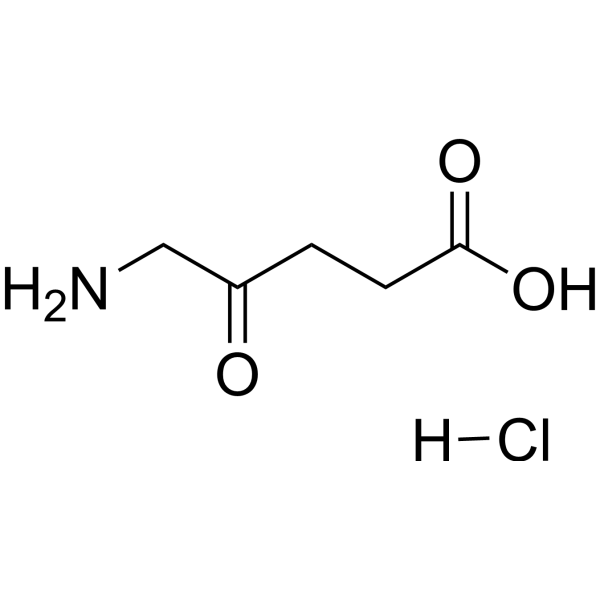
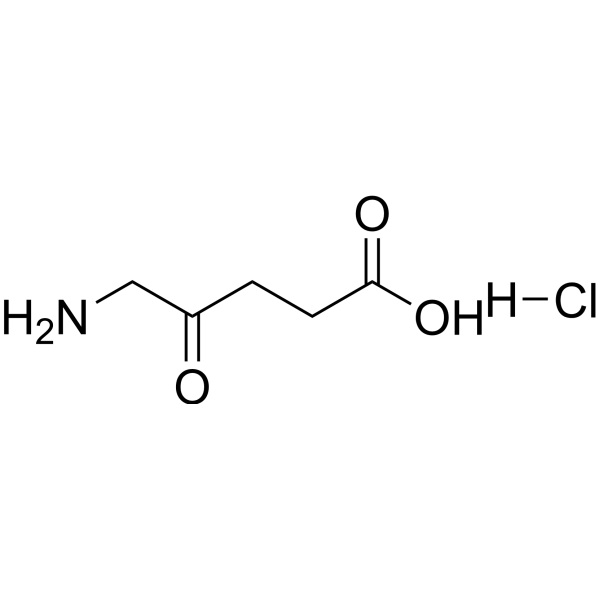
Cat. No.: HY-N0305
CAS No.: 5451-09-2
Synonyms: 5-ALA hydrochloride; δ-Aminolevulinic acid hydrochloride; 5-Amino-4-oxopentanoic acid hydrochloride
5-Aminolevulinic acid (5-ALA; δ-Aminolevulinic acid; 5-Amino-4-oxopentanoic acid) hydrochloride is an orally active heme precursor. 5-Aminolevulinic acid hydrochloride promotes aerobic energy metabolism and increases ATP levels by enhancing the activity of cytochrome c oxidase. 5-Aminolevulinic acid hydrochloride enhances LPS-induced proinflammatory cytokine production and gene activation, and restores the phagocytic activity and ROS generation capacity of neutrophils. 5-Aminolevulinic acid hydrochloride selectively accumulates protoporphyrin IX in tumor cells; as a photosensitizer and radiosensitizer, it induces ROS burst upon light or X-ray irradiation to inhibit tumor growth. 5-Aminolevulinic acid hydrochloride can be applied to the research of septic shock, melanoma, and cancer radiotherapy .
loading...
    loading...
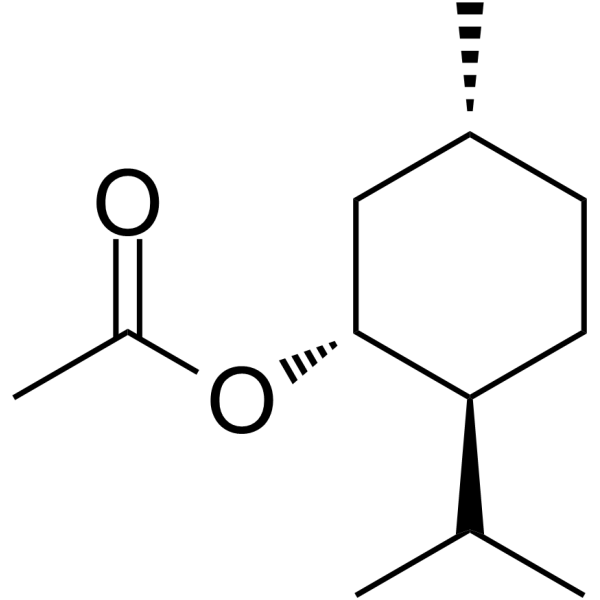
Cat. No.: HY-N7132
CAS No.: 2623-23-6
Synonyms: L-Menthyl acetate
(-)-Menthyl acetate (L-Menthyl acetate) is a derivative of L-menthol and also a skin penetration enhancer for 5-aminolevulinic acid (ALA). (-)-Menthyl acetate exhibits strong ALA skin penetration-enhancing activity .
loading...
    loading...
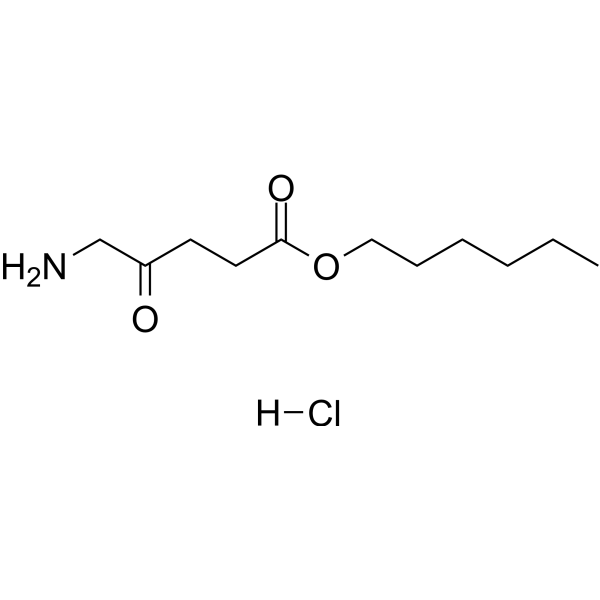
Cat. No.: HY-16045
CAS No.: 140898-91-5
Synonyms: Hexyl 5-aminolevulinate hydrochloride; P-1206; 5-Aminolevulinic acid hexyl ester hydrochloride
Target:  

Fluorescent Dye

Research Areas:  

Cancer

Hexaminolevulinate (Hexyl 5-aminolevulinate) hydrochloride, a porphyrin precursor, is a photosensitiser that can be used in photodynamic therapy (PDT) for certain tumor. Hexaminolevulinate hydrochloride can improve the visualisation of bladder tumours .
loading...
    loading...
Cat. No.: HY-N0305R
CAS No.: 5451-09-2
Synonyms: 5-ALA hydrochloride (Standard); δ-Aminolevulinic acid hydrochloride (Standard); 5-Amino-4-oxopentanoic acid hydrochloride (Standard)
5-Aminolevulinic acid (hydrochloride) (Standard) is the analytical standard of 5-Aminolevulinic acid (hydrochloride). This product is intended for research and analytical applications. 0
loading...
    loading...
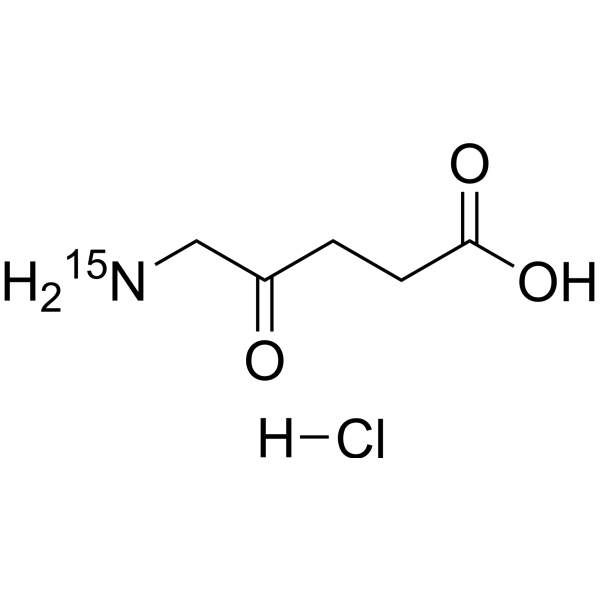
Cat. No.: HY-N0305S
CAS No.: 116571-80-3
Synonyms: 5-ALA-15N hydrochloride; δ-Aminolevulinic acid-15N hydrochloride; 5-Amino-4-oxopentanoic acid-15N hydrochloride
5-Aminolevulinic acid- 15N (hydrochloride) is the 15N-labeled 5-Aminolevulinic acid (hydrochloride). 5-Aminolevulinic acid hydrochloride (5-ALA hydrochloride) is an intermediate in heme biosynthesis in the body and the universal precursor of tetrapyrroles.
loading...
    loading...
Cat. No.: HY-B1247R
CAS No.: 553-12-8
Synonyms: PPIX (Standard)
Protoporphyrin IX (Standard) is the analytical standard of Protoporphyrin IX. This product is intended for research and analytical applications. Protoporphyrin IX is a final intermediate in the heme biosynthetic pathway, which acts as a radiation sensitizer enhancing ROS generation even in a hypoxic state and inducing DNA damage. Protoporphyrin IX also acts as a photo sensitizer undergoing photobleaching that occurs through direct degradation by light irradiation. Protoporphyrin IX is formed and accumulated following 5-aminolevulinic acid (5-ALA) (HY-W000450) administration in the tumor cells of rats. Protoporphyrin IX causes selective improvement of basal cell carcinoma when activated red fluorescence of a peak wavelength at 405 nm. Protoporphyrin IX is promising for research of sonodynamic and photodynamic agents for a wide range of cancers, such as bladder cancer and nodular basal cell carcinoma .
loading...
    loading...
Cat. No.: HY-W749251
CAS No.: 113639-01-3
Synonyms: 5-ALA-13C2,15N hydrochloride; δ-Aminolevulinic acid-13C2,15N hydrochloride; 5-Amino-4-oxopentanoic acid-13C2,15N hydrochloride
5-Aminolevulinic acid- 13C2, 15N (5-ALA- 13C2, 15N; δ-Aminolevulinic acid- 13C2, 15N) is 13C- and 15N-labeled 5-Aminolevulinic acid (HY-W000450) .
loading...
    loading...
Cat. No.: HY-P10341
CAS No.: 1345835-12-2
Target:  

GCGR

Research Areas:  

Metabolic Disease

ZP3022 is a dual agonist of glucagon-like peptide-1 (GLP-1) and gastrin that has the ability to sustainably improve glycemic control. Additionally, ZP3022 can effectively increase β-cell mass, promote β-cell proliferation, and enhance the function of pancreatic islets. ZP3022 can be used in anti-diabetic research .
loading...
    loading...
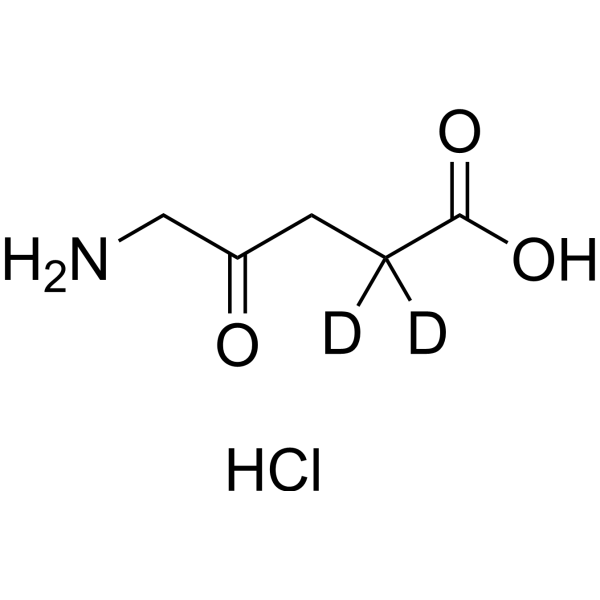
Cat. No.: HY-N0305S1
CAS No.: 187237-35-0
Synonyms: 5-ALA-d2 hydrochloride; δ-Aminolevulinic acid-d2 hydrochloride; 5-Amino-4-oxopentanoic acid-d2 hydrochloride
5-Aminolevulinic acid-d2 (hydrochloride) is deuterium labeled 5-Aminolevulinic acid (hydrochloride).
loading...
    loading...
Cat. No.: HY-W000450S
CAS No.: 123253-93-0
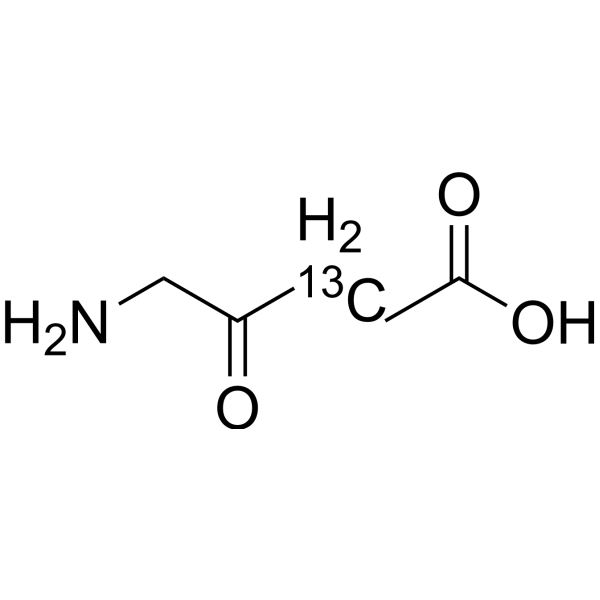
Synonyms: 5-ALA-13C; δ-Aminolevulinic acid-13C; 5-Amino-4-oxopentanoic acid-13C
5-Aminolevulinic acid- 13C is the 13C-labeled 5-Aminolevulinic acid. 5-Aminolevulinic acid (5-ALA) is a non-protein amino acid that plays a rate-limiting role in heme biosynthesis.
loading...
    loading...
Cat. No.: HY-N0305S3
CAS No.: 129720-94-1
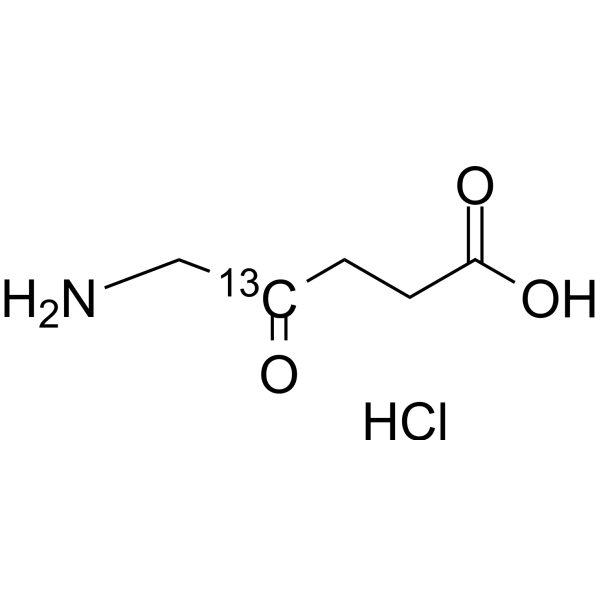
Synonyms: 5-ALA-13C-1 hydrochloride; δ-Aminolevulinic acid-13C-1 hydrochloride; 5-Amino-4-oxopentanoic acid-13C-1 hydrochloride
5-Aminolevulinic acid- 13C-1 (5-ALA- 13C-1) hydrochloride is the 13C labeled 5-Aminolevulinic acid hydrochloride . 5-Aminolevulinic acid hydrochloride (5-ALA hydrochloride) is an intermediate in heme biosynthesis in the body and the universal precursor of tetrapyrroles .
loading...
    loading...
Cat. No.: HY-N0305S2
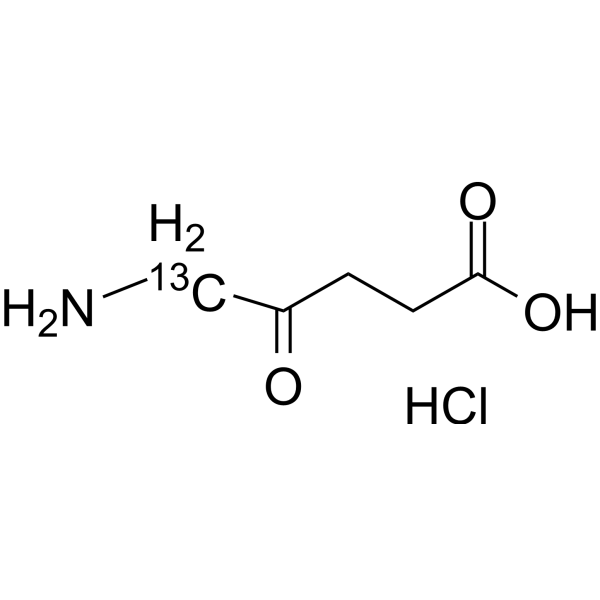
Synonyms: 5-ALA-13C hydrochloride; δ-Aminolevulinic acid-13C hydrochloride; 5-Amino-4-oxopentanoic acid-13C hydrochloride
5-Aminolevulinic acid- 13C (hydrochloride) is the 13C labeled 5-Aminolevulinic acid hydrochloride . 5-Aminolevulinic acid hydrochloride (5-ALA hydrochloride) is an intermediate in heme biosynthesis in the body and the universal precursor of tetrapyrroles .
loading...
    loading...
Cat. No.: HY-N7132R
CAS No.: 2623-23-6
Synonyms: L-Menthyl acetate (Standard)
(-)-Menthyl acetate (Standard) (L-Menthyl acetate (Standard)) is the analytical standard of (-)-Menthyl acetate (HY-N7132). This product is intended for research and analytical applications. (-)-Menthyl acetate (L-Menthyl acetate) is a derivative of L-menthol and also a skin penetration enhancer for 5-aminolevulinic acid (ALA). (-)-Menthyl acetate exhibits strong ALA skin penetration-enhancing activity .
loading...
    loading...
Cat. No.: HY-P11243
Target:  

Ephrin Receptor

Research Areas:  

Neurological Disease

EphA4 agonist compound 23 is a novel EphA4 agonist peptide mimic. EphA4 agonist compound 23 exhibits high affinity, high selectivity, and significant receptor activation ability. EphA4 agonist compound 23 is commonly used in the study of neurodegenerative diseases .
loading...
    loading...
Cat. No.: HY-W014394R
CAS No.: 82654-98-6
Protoporphyrin IX (Standard) is the analytical standard of Protoporphyrin IX. This product is intended for research and analytical applications. Protoporphyrin IX is a final intermediate in the heme biosynthetic pathway, which acts as a radiation sensitizer enhancing ROS generation even in a hypoxic state and inducing DNA damage. Protoporphyrin IX also acts as a photo sensitizer undergoing photobleaching that occurs through direct degradation by light irradiation. Protoporphyrin IX is formed and accumulated following 5-aminolevulinic acid (5-ALA) (HY-W000450) administration in the tumor cells of rats. Protoporphyrin IX causes selective improvement of basal cell carcinoma when activated red fluorescence of a peak wavelength at 405 nm. Protoporphyrin IX is promising for research of sonodynamic and photodynamic agents for a wide range of cancers, such as bladder cancer and nodular basal cell carcinoma .
loading...
    loading...
Cat. No.: HY-P10876
Target:  

Amyloid-β

Research Areas:  

Neurological Disease

mcK6A1 is an inhibitor for the aggregation of amyloid-β (), that selectively binds to the 16KLVFFA21 segment of Aβ42, forms an extended β-folded structure, and inhibits the formation of Aβ42 oligomers. mcK6A1 can be used in research of Alzheimer's disease and other amyloid-related diseases .
loading...
    loading...
Cat. No.: HY-P83276
Synonyms: ALAS1; ALAS-H; 5-Aminolevulinic acid synthase 1; Delta-ALA synthase 1; ALAS3; ALASH

Host:  

Rabbit

Application:  

WB, ICC/IF

Reactivity:  

Human

loading...
    loading...

