74 Results for "

ATP-binding pocket

" in MedChemExpress (MCE) Product Catalog:
Products (74)

74 Results for "ATP-binding pocket" in MCE Product Catalog:

35
35 Publications Verification
Cat. No.: HY-17600
CAS No.: 1420477-60-6
Synonyms: Calquence; ACP-196
Target:  

Btk

Research Areas:  

Inflammation/Immunology Cancer

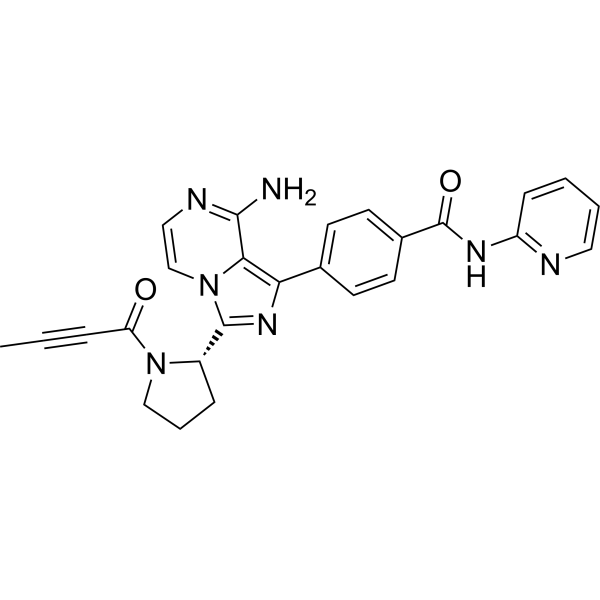
Acalabrutinib (ACP-196) is an orally active, irreversible, and highly selective second-generation BTK inhibitor. Acalabrutinib binds covalently to Cys481 in the ATP-binding pocket of BTK. Acalabrutinib demonstrates potent on-target effects and efficacy in mouse models of chronic lymphocytic leukemia (CLL). Acalabrutinib can be used for CLL research . Acalabrutinib is a click chemistry reagent, itcontains an Alkyne group and can undergo copper-catalyzed azide-alkyne cycloaddition (CuAAc) with molecules containing Azide groups.
loading...
    loading...
31
31 Cited Publications
Cat. No.: HY-103490
CAS No.: 1111556-37-6
Purity:  99.41%
Synonyms: EDHS-206
Target:  

MAP3K Apoptosis

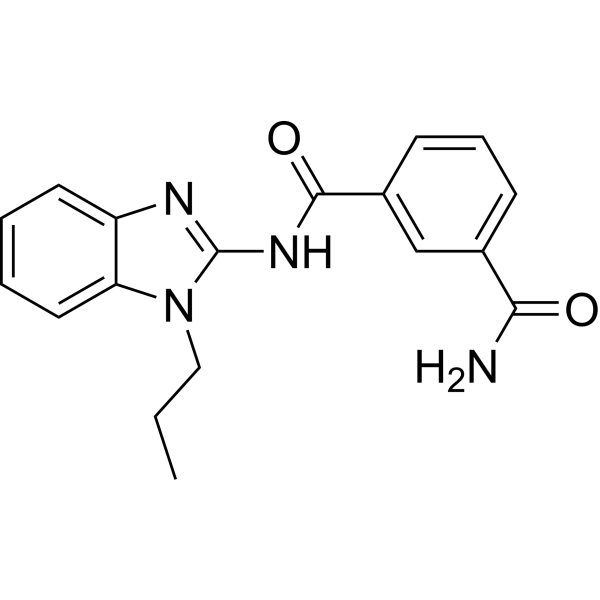
Takinib (EDHS-206) is an orally active and selective TAK1 inhibitor (IC50=9.5 nM), more than 1.5 log more potent than the second and third ranked targets, IRAK4 (120 nM) and IRAK1 (390 nM), respectively. Takinib is an inhibitor of autophosphorylated TAK1 that non-competitively binds within the ATP binding pocket. Takinib induces apoptosis following TNFα stimulation in cell models of rheumatoid arthritis and metastatic breast cancer. Takinib is also a P. falciparum protein kinase 9 (PfPK9) inhibitor (KD(app) of 0.46 μM) .
loading...
    loading...
16
16 Cited Publications
Cat. No.: HY-N0451
CAS No.: 480-44-4
Synonyms: 5,7-Dihydroxy-4'-methoxyflavone
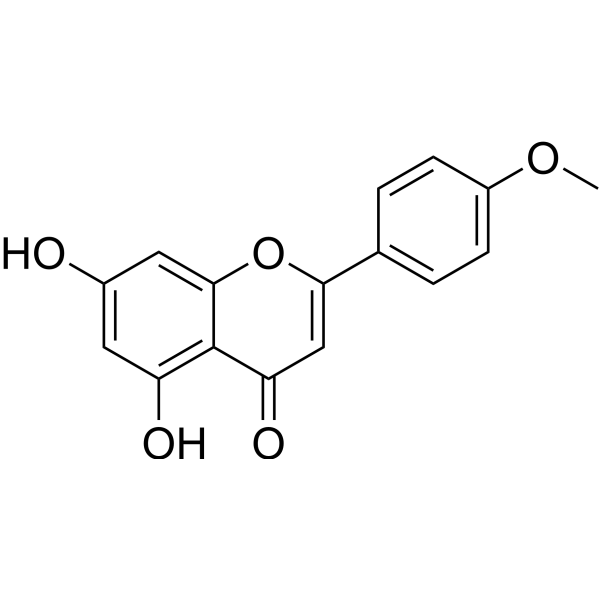
Acacetin (5,7-Dihydroxy-4'-methoxyflavone) is an orally active flavonoid derived from Dendranthema morifolium. Acacetin docks in the ATP binding pocket of PI3Kγ. Acacetin causes cell cycle arrest and induces apoptosis and autophagy in cancer cells. Acacetin has potent anti-cancer and anti-inflammatory activity and has the potential for pain-related diseases research .
loading...
    loading...
11
11 Cited Publications
Cat. No.: HY-17537
CAS No.: 1216665-49-4
Target:  

IRE1

Research Areas:  

Cancer

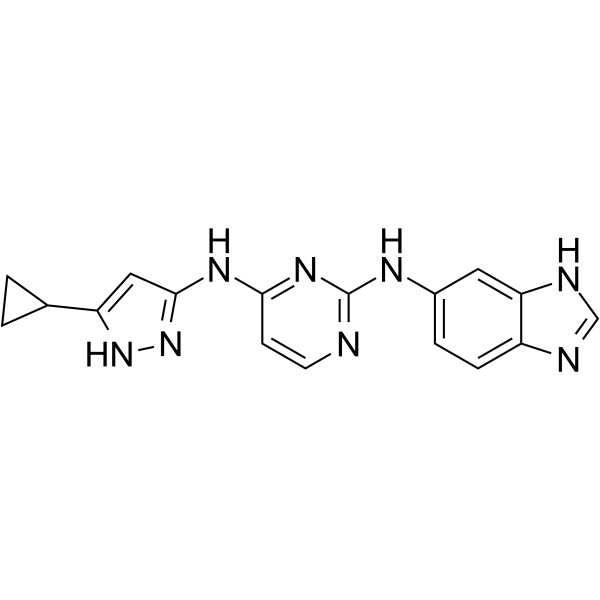
APY29, an ATP-competitive inhibitor, is an allosteric modulator of IRE1α which inhibits IRE1α autophosphorylation by binding to the ATP-binding pocket with IC50 of 280 nM. APY29 acts as a ligand that allosterically activates IRE1α adjacent RNase domain .
loading...
    loading...
2
2 Cited Publications
Cat. No.: HY-N0656A
CAS No.: 7562-61-0
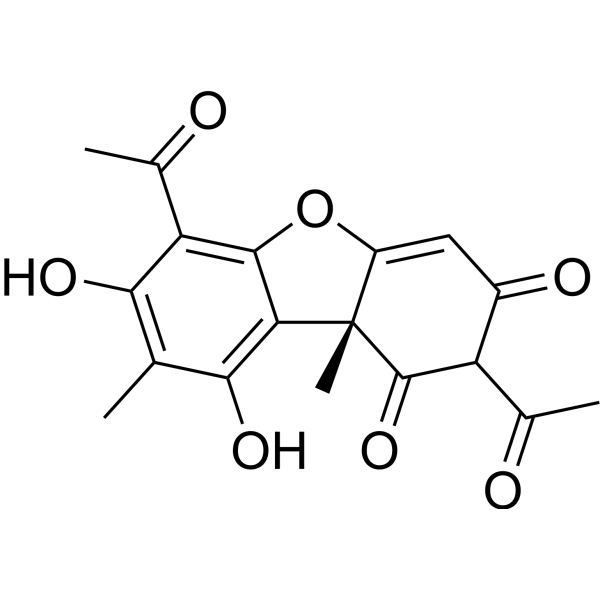
(+)-Usnic acid is isolated from isolated from lichens, binds at the ATP-binding pocket of mTOR, and inhibits mTORC1/2 activity. (+)-Usnic acid inhibits the phosphorylation of mTOR downstream effectors: Akt (Ser473), 4EBP1, S6K, induces autophay, with anti-cancer and anti-inflammatory activity. (+)-Usnic acid possesses antimicrobial activity against a number of planktonic gram-positive bacteria, including Staphylococcus aureus, Enterococcus faecalis, and Enterococcus faecium .
loading...
    loading...
1
1 Cited Publications
Cat. No.: HY-125017
CAS No.: 1440964-89-5
Purity:  98.88%
Synonyms: PLB-1001; CBT-101; Vebreltinib
Target:  

c-Met/HGFR

Research Areas:  

Cancer

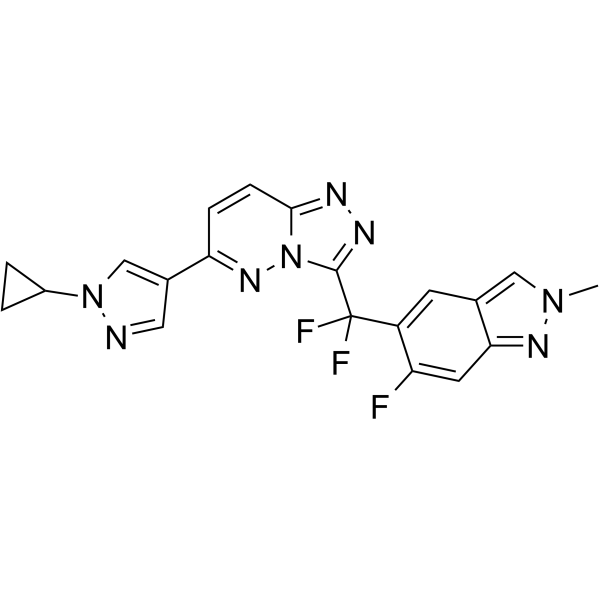
Bozitinib (PLB-1001) is a highly selective c-MET kinase inhibitor with blood-brain barrier permeability. Bozitinib (PLB-1001) is a ATP-competitive small-molecule inhibitor, binds to the conventional ATP-binding pocket of the tyrosine kinase superfamily .
loading...
    loading...
1
1 Cited Publications
Cat. No.: HY-125176
CAS No.: 2244035-16-1
Purity:  98.14%
Target:  

Bacterial

Research Areas:  

Infection

G907 is a selective antagonist of ATP-binding cassette (ABC) transporter MsbA with anti-microbial activity. G907 inhibits E. coli MsbA with an IC50 value of 18 nM. G907 traps MsbA in an inward-facing, lipopolysaccharide-bound conformation by wedging into an architecturally conserved transmembrane pocket .
loading...
    loading...
Cat. No.: HY-159520
CAS No.: 2731294-23-6
Synonyms: Ofirnoflast; HT-6184
Ofirnoflastum (Ofirnoflast) is an orally active first-in-class allosteric NEK7 inhibitor with an IC50 of 46 nM. Ofirnoflastum binds an allosteric site adjacent to NEK7’s ATP-binding pocket, induces conformational shifts, disrupts NEK7-NLRP3 binding, blocks NLRP3 inflammasome assembly, spares NEK7’s physiological functions, and suppresses caspase-1, caspase-8, NF-κB, and TNF activity. Ofirnoflastum reduces pro-inflammatory cytokine production, suppresses ASC specks, IL-1β release, pyroptotic cell death, and leukemic burden, induces apoptosis and erythroid differentiation, restores hematopoiesis, and improves outcomes in colitis models. Ofirnoflastum can be used for the research of myelodysplastic syndromes, chronic myelomonocytic leukemia, and acute myeloid leukemia .
loading...
    loading...
Cat. No.: HY-160196
CAS No.: 2803470-63-3
Synonyms: GCN2 modulator-1
Research Areas:  

Cancer

HC-7366 (GCN2 modulator-1) is an orally effective GCN2 activator. HC-7366 can effectively compete and occupy the ATP binding pocket of GCN2, with its IC50 being 72 nM. This binding triggers the conformational activation of GCN2, leading to the upregulation of downstream signals (such as ATF4, ASNS) in the integrated stress response (ISR) pathway, ultimately exerting anti-tumor effects. HC-7366 also has inhibitory activity against ZAK, with its IC50 being 47 nM. HC-7366 can be used for research on fibrosarcoma and acute myeloid leukemia .
loading...
    loading...
Cat. No.: HY-155583
Purity:  98.08%
Target:  

DNA/RNA Synthesis

Research Areas:  

Others

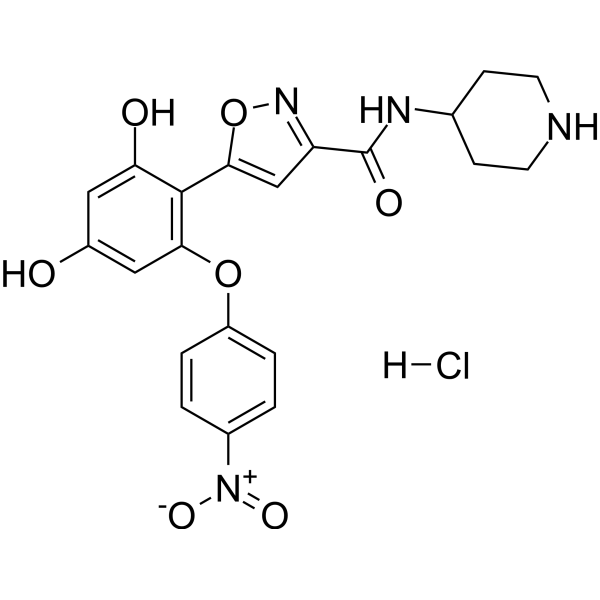
RNase L-IN-1 is a RNase L inhibitor with an IC50 of 15.9 μM. RNase L-IN-1 binds to the ATP-binding pocket of RNase L, and inhibits ribosomal RNA cleavage. RNase L-IN-1 can be used for the research of RNase L-associated cellular processes .
loading...
    loading...
Cat. No.: HY-112589
CAS No.: 503105-88-2
Purity:  98.93%
Target:  

Bacterial

Research Areas:  

Infection Cancer

BRITE-338733 is an inhibitor of E. coli RecA ATPase activity (IC50: 4.7 μM). BRITE-338733 also inhibits the ATP hydrolysis activity of RSC chromatin remodeling enzyme by binding to its ATP-binding pocket and DNA (IC50: 0.316 μM). BRITE-338733 exhibits cytotoxicity against MCF-7 and MDA-MB-231 breast cancer cells. BRITE-338733 can be used in studies on antibacterial adjuvants and anticancer research .
loading...
    loading...
Cat. No.: HY-115719
CAS No.: 2755241-73-5
Purity:  99.7%
Target:  

Ser/Thr Kinase

Research Areas:  

Neurological Disease

NR162 is a selective CASK (Ca 2+/calmodulin-dependent Ser/Thr kinase) inhibitor with an IC50 of 80 nM and a Kd of 22 nM. NR162 shows about 50-fold selectivity for CASK than TYRO3. NR162 targets the unique GFG motif of CASK and has excellent shape complementarity to the CASK ATP binding pocket. NR162 can be used for the research of neurological diseases .
loading...
    loading...
Cat. No.: HY-122616
CAS No.: 1402438-74-7
Purity:  98.8%
Target:  

Trk Receptor

Research Areas:  

Neurological Disease

PF-06273340 is a peripherally restricted pan-Trk inhibitor with IC50 values of 6, 4, 3 nM for TrkA, TrkB, and TrkC receptors. PF-06273340 binds in a DFG-out conformation, targeting less conserved kinase ligand binding domain regions outside the ATP binding pocket. PF-06273340 exhibits anti-hyperalgesic and analgesic effects. PF-06273340 can be used for the research of pain .
loading...
    loading...
Cat. No.: HY-120097
CAS No.: 2097938-51-5
Purity:  99.72%
Research Areas:  

Infection

R-10015, a broad-spectrum antiviral compound for HIV infection, acts as a potent and selective inhibitor of LIM domain kinase (LIMK) and binds to the ATP-binding pocket, with an IC50 of 38 nM for human LIMK1 .
loading...
    loading...
Cat. No.: HY-124858
CAS No.: 882290-02-0
Purity:  98.96%
Target:  

STAT JAK Apoptosis

Research Areas:  

Cardiovascular Disease Cancer

SC99 is an orally active, selective STAT3 inhibitor targeting JAK2-STAT3 pathway. SC99 docks into the ATP-binding pocket of JAK2. SC99 inhibits phosphorylation of JAK2 and STAT3 with no effects on the other kinases associated with STAT3 signaling. SC99 inhibits platelet activation, aggregation and displays potent anti-myeloma, anti-thrombotic activities .
loading...
    loading...
Cat. No.: HY-112373
CAS No.: 879127-16-9
Purity:  99.05%
Target:  

Aurora Kinase

Research Areas:  

Others

Aurora kinase inhibitor-3 is a strong and selective Aurora A kinase inhibitor with an IC50 of 42 nM, and weakly inhibits EGFR with an IC50 of >10 μM. Aurora kinase inhibitor-3 has a binding mode with the cyclopropanecarboxylic acid moiety directed towards the solvent exposed region of the ATP-binding pocket .
loading...
    loading...
Cat. No.: HY-12679
CAS No.: 1621002-24-1
Target:  

Btk

Research Areas:  

Cancer

PF-06658607 is an alkynylated irreversible Brutons tyrosine kinase (BTK) inhibitor that covalently reacts with active site cysteines in the ATP-binding pocket. PF-06658607 can be used to detect "off "-targets for covalent kinase inhibitors in cancer cells. The alkyne moiety allows for azide-based detection probe via copper-catalyzed click chemistry .
loading...
    loading...
Cat. No.: HY-148215A
CAS No.: 1253584-63-2
Purity:  99.27%
Target:  

HSP

Research Areas:  

Cancer

Hsp90-IN-17 hydrochloride is a Hsp90 inhibitor. Hsp90-IN-17 hydrochloride binds to the N-terminal ATP-binding pocket of Hsp90, inhibits its chaperone function, and induces the degradation of Hsp90 client proteins. Hsp90-IN-17 hydrochloride inhibits cancer cell proliferation. Hsp90-IN-17 hydrochloride can be used in the research of ovarian cancer .
loading...
    loading...
Cat. No.: HY-155583A
Purity:  99.56%
Target:  

DNA/RNA Synthesis

Research Areas:  

Others

RNase L-IN-1 trihydrochloride is a RNase L inhibitor with an IC50 of 15.9 μM. RNase L-IN-1 trihydrochloride binds to the ATP-binding pocket of RNase L, and inhibits ribosomal RNA cleavage. RNase L-IN-1 trihydrochloride can be used for the research of RNase L-associated cellular processes .
loading...
    loading...
Cat. No.: HY-167846
CAS No.: 2417685-83-5
Target:  

JAK

Research Areas:  

Cancer

YLIU-4-105-1 is a Type II JAK2 inhibitor. YLIU-4-105-1 binds to the ATP-binding pocket of JH1. YLIU-4-105-1 has in vivo pharmacodynamic activity as evidenced by inhibiting pSTAT5, reducing spleen to body weight, and lowering blood reticulocyte counts in a dose-dependent manner .
loading...
    loading...

