35 Results for "

ATP-binding proteins

" in MedChemExpress (MCE) Product Catalog:
Products (35)

35 Results for "ATP-binding proteins" in MCE Product Catalog:

131
131 Publications Verification
Art. -Nr.: HY-15463
CAS. Nr.: 152459-95-5
Reinheit:  99.95%
Synonyms: STI571; CGP-57148B
Forschungsgebiete:  

Cancer

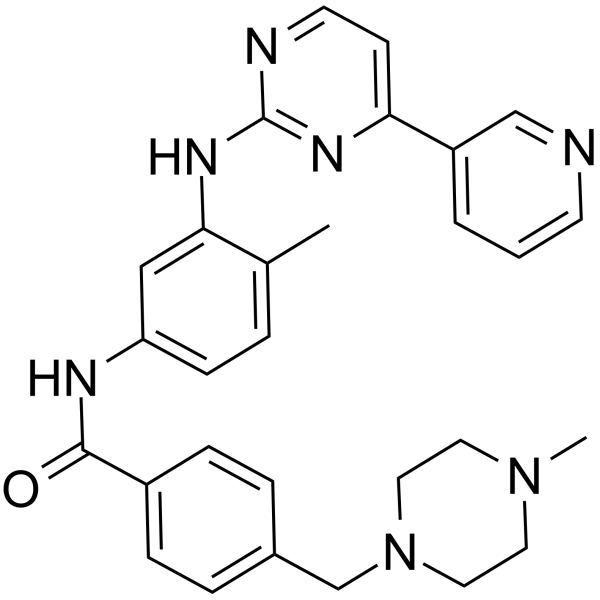
Imatinib (STI571) is an orally bioavailable tyrosine kinases inhibitor that selectively inhibits BCR/ABL, v-Abl, PDGFR and c-kit kinase activity. Imatinib (STI571) works by binding close to the ATP binding site, locking it in a closed or self-inhibited conformation, therefore inhibiting the enzyme activity of the protein semicompetitively . Imatinib also is an inhibitor of SARS-CoV and MERS-CoV .
loading...
    loading...
33
33 Cited Publications
Art. -Nr.: HY-103490
CAS. Nr.: 1111556-37-6
Reinheit:  99.41%
Synonyms: EDHS-206
Target:  

MAP3K Apoptosis

Forschungsgebiete:  

Infection Inflammation/Immunology Cancer

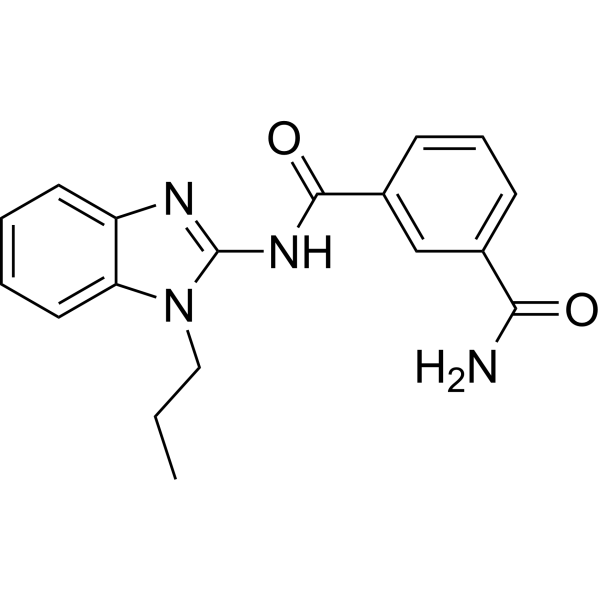
Takinib (EDHS-206) is an orally active and selective TAK1 inhibitor (IC50=9.5 nM), more than 1.5 log more potent than the second and third ranked targets, IRAK4 (120 nM) and IRAK1 (390 nM), respectively. Takinib is an inhibitor of autophosphorylated TAK1 that non-competitively binds within the ATP binding pocket. Takinib induces apoptosis following TNFα stimulation in cell models of rheumatoid arthritis and metastatic breast cancer. Takinib is also a P. falciparum protein kinase 9 (PfPK9) inhibitor (KD(app) of 0.46 μM) .
loading...
    loading...
4
4 Cited Publications
Art. -Nr.: HY-50867
CAS. Nr.: 111358-88-4
Synonyms: CEP-701; KT-5555
Forschungsgebiete:  

Cancer

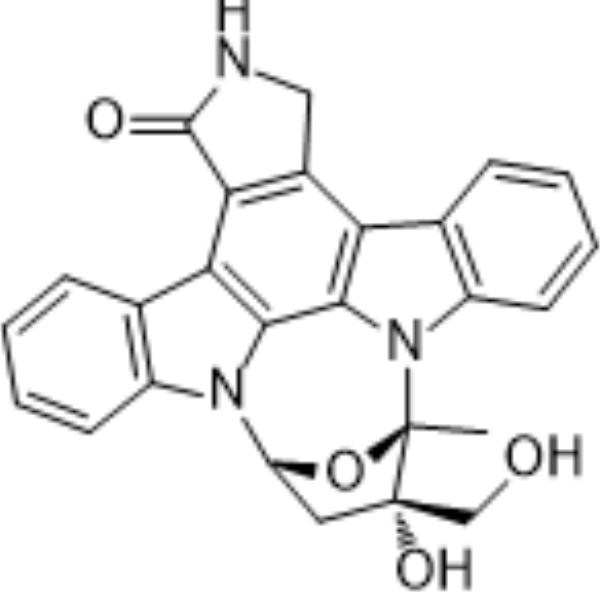
Lestaurtinib (CEP-701) is an orally active and selective RPTKs (receptor protein tyrosine kinase) inhibitor, competitively inhibits ATP binding to the TrkA/B/C domain. Lestaurtinib inhibits RPTKs phosphorylation, with IC50s of 2, 25 and 0.9 nM for FLT3, TrkA and JAK2, respectively. Lestaurtinib induces apoptosis and cycle arrest, also can inhibit growth of tumor .
loading...
    loading...
3
3 Cited Publications
Art. -Nr.: HY-128933
CAS. Nr.: 72957-42-7
Reinheit:  ≥97.0%
Synonyms: Adenylyl-imidodiphosphate tetralithium
Target:  

Potassium Channel

Forschungsgebiete:  

Metabolic Disease

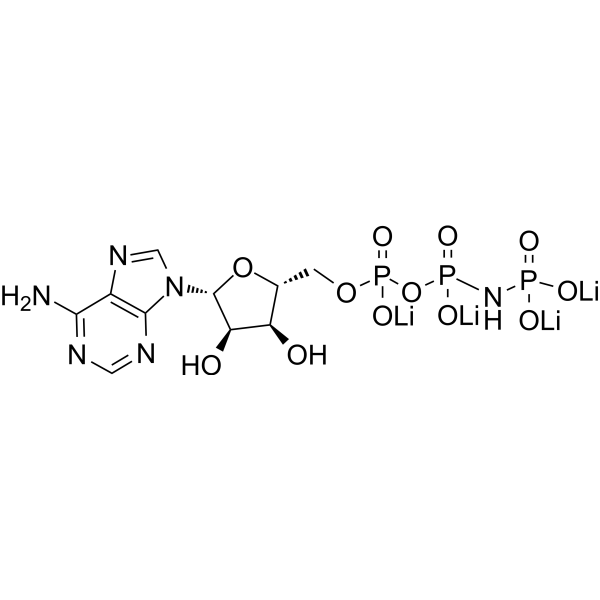
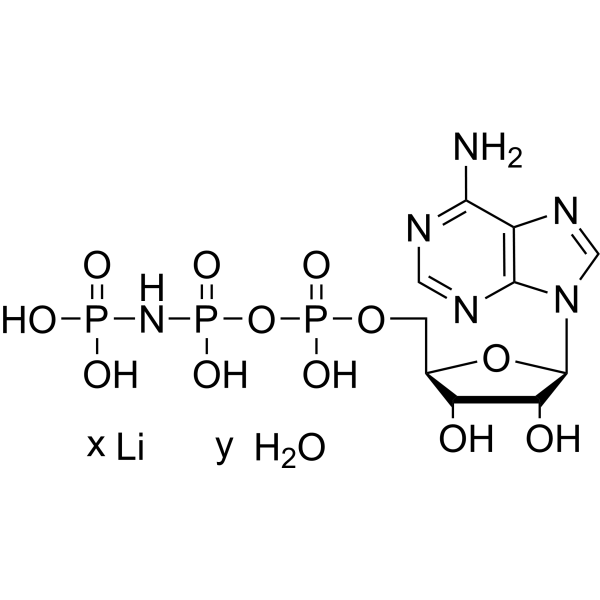
AMP-PNP (Adenylyl-imidodiphosphate) tetralithium is a non-hydrolyzable ATP analog. AMP-PNP tetralithium binds to ATP binding sites competely but is not hydrolyzed by enzymes, providing stable experimental conditions for studying ATP-dependent processes. AMP-PNP tetralithium can also be used to study enzyme activity, kinase regulation, DNA/RNA metabolism, ion channel function, and protein complex assembly .
loading...
    loading...
3
3 Cited Publications
Art. -Nr.: HY-130777A
Reinheit:  ≥94.0%
Synonyms: Adenylyl imidodiphosphate lithium hydrate
AMP-PNP (Adenylyl imidodiphosphate) lithium hydrate is a non-hydrolyzable ATP analog. AMP-PNP lithium hydrate binds to ATP binding sites competely but is not hydrolyzed by enzymes, providing stable experimental conditions for studying ATP-dependent processes. AMP-PNP lithium hydrate can also be used to study enzyme activity, kinase regulation, DNA/RNA metabolism, ion channel function, and protein complex assembly .
loading...
    loading...
3
3 Cited Publications
Art. -Nr.: HY-100848
CAS. Nr.: 1603845-32-4
Reinheit:  98.28%
Target:  

EGFR

Forschungsgebiete:  

Cancer

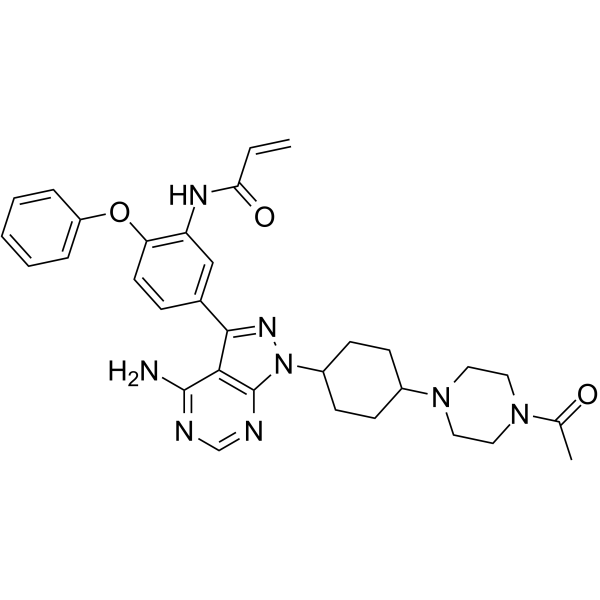
TX1-85-1 is an irreversible Her3 (ErbB3) inhibitor with an IC50 of 23 nM. TX1-85-1 is also the first selective Her3 ligand, which forms a covalent bond with Cys721 located in the ATP-binding site of Her3. TX1-85-1 induces partial degradation of Her3 protein and attenuates Her3-dependent signaling .
loading...
    loading...
Art. -Nr.: HY-148215A
CAS. Nr.: 1253584-63-2
Reinheit:  99.27%
Forschungsgebiete:  

Cancer

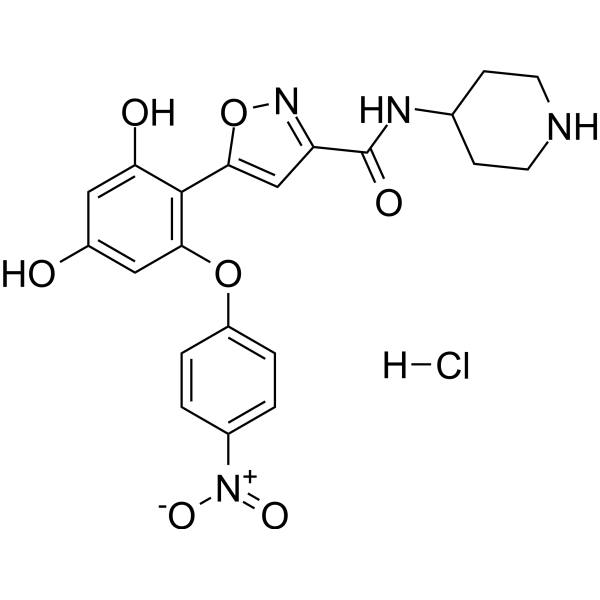
Hsp90-IN-17 hydrochloride is a Hsp90 inhibitor. Hsp90-IN-17 hydrochloride binds to the N-terminal ATP-binding pocket of Hsp90, inhibits its chaperone function, and induces the degradation of Hsp90 client proteins. Hsp90-IN-17 hydrochloride inhibits cancer cell proliferation. Hsp90-IN-17 hydrochloride can be used in the research of ovarian cancer .
loading...
    loading...
Art. -Nr.: HY-175252
Forschungsgebiete:  

Cancer

PROTAC EGFR degrader 14 is a EGFR PROTAC degrader, with a DC50 of 2.9 nM against EGFR L858R/T790M/C797S. PROTAC EGFR degrader 14 forms a stable ternary complex by bridging the ATP-binding pocket of the target protein EGFR with VHL E3 ubiquitin ligase, induces efficient and specific degradation of EGFR mutants via the ubiquitin-proteasome system, and ultimately induces cell cycle arrest and apoptosis. PROTAC EGFR degrader 14 can be used in studies related to non-small cell lung cancer carrying the EGFR C797S drug-resistant mutation .
loading...
    loading...
Art. -Nr.: HY-115741
CAS. Nr.: 956025-99-3
Reinheit:  ≥99.0%
Forschungsgebiete:  

Neurological Disease Cancer

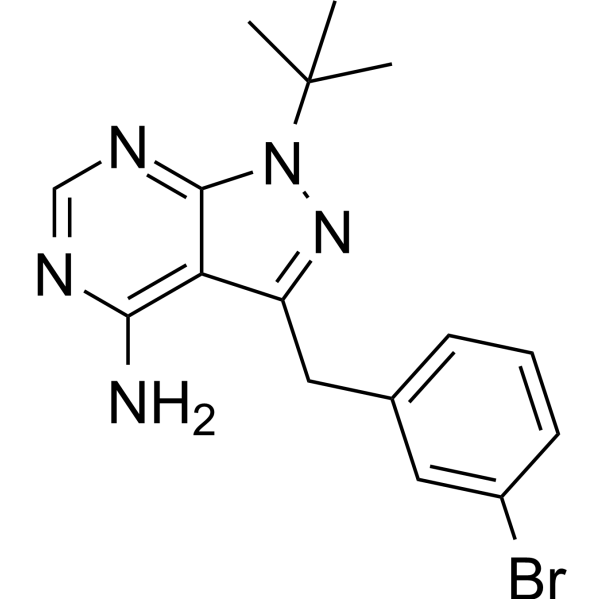
3BrB-PP1 is an ATP-competitive analog. 3BrB-PP1 can specifically inhibit the activity of protein kinase with mutations in the ATP-binding pocket (mutation of Thr97 within Sty1’s ATP-binding pocket) .
loading...
    loading...
Art. -Nr.: HY-15463R
CAS. Nr.: 152459-95-5
Synonyms: STI571 (Standard); CGP-57148B (Standard)
Forschungsgebiete:  

Cancer

Imatinib (Standard) is the analytical standard of Imatinib. This product is intended for research and analytical applications. Imatinib (STI571) is an orally bioavailable tyrosine kinases inhibitor that selectively inhibits BCR/ABL, v-Abl, PDGFR and c-kit kinase activity. Imatinib (STI571) works by binding close to the ATP binding site, locking it in a closed or self-inhibited conformation, therefore inhibiting the enzyme activity of the protein semicompetitively . Imatinib also is an inhibitor of SARS-CoV and MERS-CoV .
loading...
    loading...
Art. -Nr.: HY-164399
CAS. Nr.: 1799802-29-1
Target:  

HSP EGFR CDK Akt

Forschungsgebiete:  

Cancer

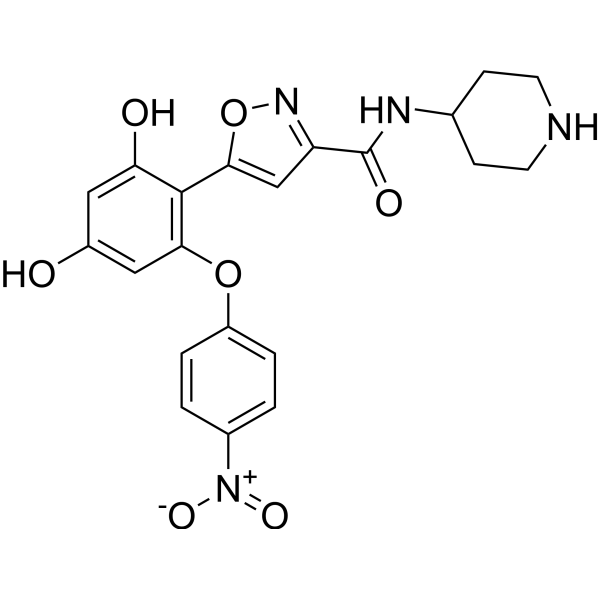
SST0116CL1 is a HSP90 inhibitor (IC50: 0.21 μM). SST0116CL1 binds to the ATP binding pocket of Hsp90, and interferes with Hsp90 chaperone function thus resulting in client protein (EGFR, CDK4 and AKT) degradation. SST0116CL1 induces degradation of Her2 in BT-474 cell (IC50: 0.2 μM). SST0116CL1 has antiproliferative activity and inhibits tumor growth. SST0116CL1 can be used for the study of leukemia, gastric and ovarian carcinoma .
loading...
    loading...
Art. -Nr.: HY-122735
CAS. Nr.: 690216-38-7
Forschungsgebiete:  

Infection

Inh2-B1 is a Ser/Thr protein kinase (STK1) inhibitor. Inh2-B1 specifically inhibits STK1 activity by directly binding to its ATP-binding catalytic domain. Inh2-B1 down-regulates cell wall hydrolase genes and disrupts the biofilm formation of Methicillin-resistant Staphylococcus aureus (MRSA) clearly .
loading...
    loading...
Art. -Nr.: HY-148215
CAS. Nr.: 1253584-78-9
Target:  

HSP

Forschungsgebiete:  

Cancer

Hsp90-IN-17 is a Hsp90 inhibitor. Hsp90-IN-17 binds to the N-terminal ATP-binding pocket of Hsp90, inhibits its chaperone function, and induces the degradation of Hsp90 client proteins. Hsp90-IN-17 inhibits cancer cell proliferation. Hsp90-IN-17 can be used in the research of ovarian cancer .
loading...
    loading...
Art. -Nr.: HY-15463S3
Synonyms: STI571-13C,d3; CGP-57148B-13C,d3
Imatinib- 13C,d3 (STI571- 13C,d3) is 13C labeled Imatinib. Imatinib (STI571) is an orally bioavailable tyrosine kinases inhibitor that selectively inhibits BCR/ABL, v-Abl, PDGFR and c-kit kinase activity. Imatinib (STI571) works by binding close to the ATP binding site, locking it in a closed or self-inhibited conformation, therefore inhibiting the enzyme activity of the protein semicompetitively . Imatinib also is an inhibitor of SARS-CoV and MERS-CoV .
loading...
    loading...
Art. -Nr.: HY-12933
CAS. Nr.: 911398-13-5
Target:  

HSP

Forschungsgebiete:  

Cancer

BIIB-028 is an orally active inhibitor for heat shock protein 90 (Hsp90). BIIB-028 targets the ATP-binding site of Hsp90, disrupts the function of Hsp90, leads to the degradation of client proteins, that are crucial for cancer cell survival and proliferation .
loading...
    loading...
Art. -Nr.: HY-N13361
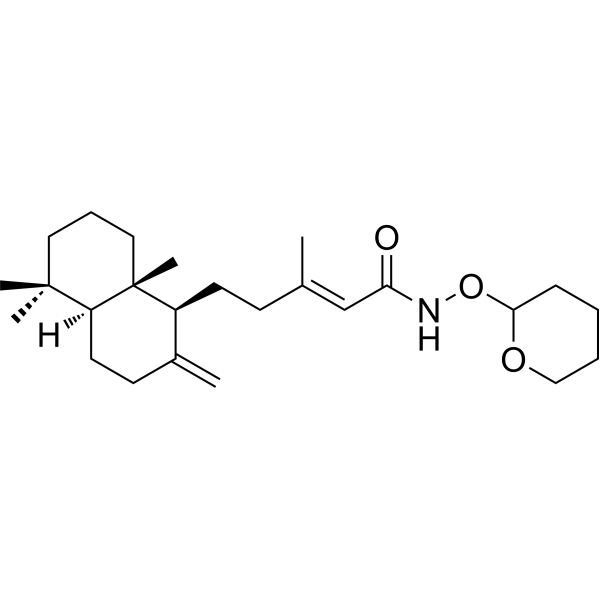
Elodeoidileon A is an agonist for RXRα, that interacts with RXRα-LBD protein with a dissociation constant Kd of 5.85 μM. Elodeoidileon A promotes the expression of ATP-binding cassette transporter A1 (ABCA1). Elodeoidileon A reveals the potential in Alzheimer's disease research .
loading...
    loading...
Art. -Nr.: HY-123650
CAS. Nr.: 78859-42-4
Reinheit:  99.06%
Synonyms: 5'-p-Fluorosulfonylbenzoyladenosine
Forschungsgebiete:  

Cancer

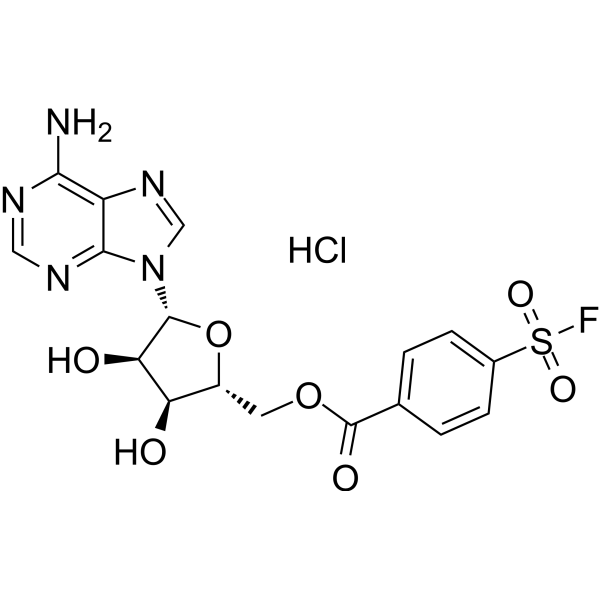
FSBA (5'-p-Fluorosulfonylbenzoyladenosine) hydrochloride is a covalent modifier and affinity labeling reagent for adenine nucleotide-binding proteins. FSBA hydrochloride covalently attaches to the nucleotide-binding sites of pyruvate kinase, glutamate dehydrogenase, and p56 lck, and to a lysine residue in the ATP-binding site of cAMP-dependent protein kinase, causing loss of enzymatic activity. FSBA hydrochloride can be used for the research of T lymphoma .
loading...
    loading...
Art. -Nr.: HY-137626
CAS. Nr.: 58976-48-0
Target:  

P2Y Receptor

Forschungsgebiete:  

Others

Sp-ATPαS is a regulator of ATP-binding proteins. Sp-ATPαS is a competitive antagonist of the human P2Y1 receptor, which can inhibit the calcium signal induced by ADP. Sp-ATPαS is metabolically more stable than ATP . Sp-ATPαS can be used to study the binding patterns of metals and nucleotides in enzymatic reactions.
loading...
    loading...
Art. -Nr.: HY-130004
CAS. Nr.: 2909443-13-4
Target:  

Antibiotic Bacterial

Forschungsgebiete:  

Infection

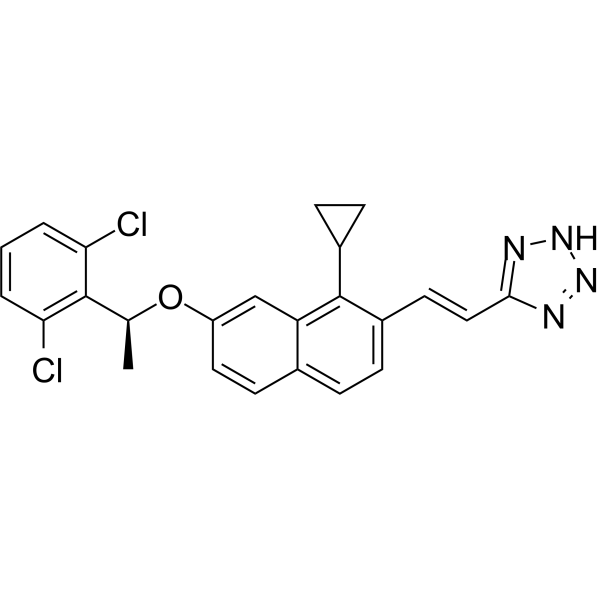
MsbA-IN-6 is a potent inhibitor of MsbA. MsbA-IN-6 is an antibiotic. Gram-negative ATP-binding cassette (ABC) transporter MsbA, an essential inner membrane protein, transports lipopolysaccharide from the inner leaflet to the periplasmic face of the inner membrane. MsbA-IN-6 kills Escherichia coli through inhibition of its ATPase and transport activity, with no loss of activity against clinical multidrug-resistant strains .
loading...
    loading...
Art. -Nr.: HY-156026
Target:  

FAK

Forschungsgebiete:  

Cancer

FAK-IN-11 (Compound 4l) is a FAK inhibitor. FAK-IN-11 binds to the ATP binding pocket of FAK, and inhibits phosphorylation of FAK protein. FAK-IN-11 shows cytotoxic activity against the MDA-MB-231 cells with an IC50 of 13.73? μM. FAK-IN-11 induces non-apoptotic cell death in MDA-MB-231 cells .
loading...
    loading...

