1. Search Result
Search Result
Results for "

Acetylcholinesterase inhibition

" in MedChemExpress (MCE) Product Catalog:

22

Inhibitors & Agonists

2

Biochemical Assay Reagents

6

Natural
Products

1

Isotope-Labeled Compounds

Cat. No. Product Name Target Research Areas Chemical Structure
  • HY-D0837
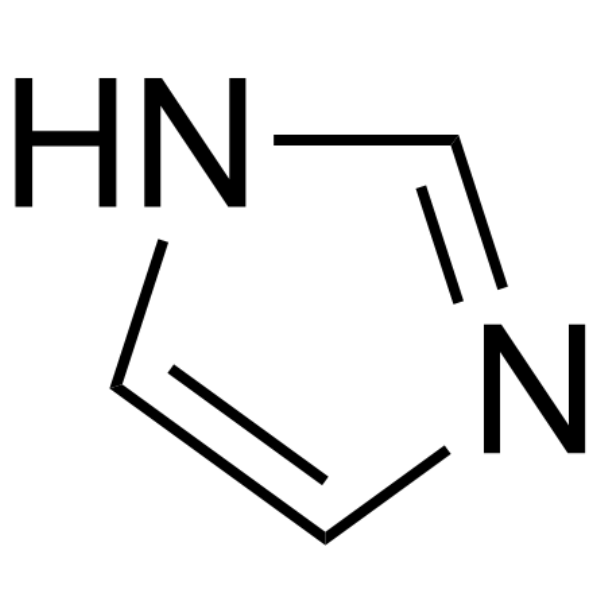
    Imidazole
    2 Publications Verification

    Glyoxaline; 1,3-Diaza-2,4-cyclopentadiene

    MOFs Ser/Thr Protease Thrombopoietin Receptor Neurological Disease Inflammation/Immunology
    Imidazole (Glyoxaline; 1,3-Diaza-2,4-cyclopentadiene) is a heterocyclic aromatic compound. Imidazole bearing molecules have been used as corrosion, acetylcholinesterase (AChEI) and xanthine oxidase (XO) inhibitors, performing biological activities such as antifungal, antituberculosis, anti-inflammatory, antioxidant, and analgesic, amongst many others. Imidazole inhibits the enzymatic conversion of the endoperoxides (PGG2 and PGH2) to thromboxane A2 by platelet microsomes. Imidazole derivatives exhibits inhibition on SARS-CoV-2 3CL Pro enzyme, which is promising for research in the field of Alzheimer’s disease, gout, COVID-19 and thrombo-embolic disease .
    Imidazole
  • HY-N2511

    Cholinesterase (ChE) Phosphatase Infection Neurological Disease
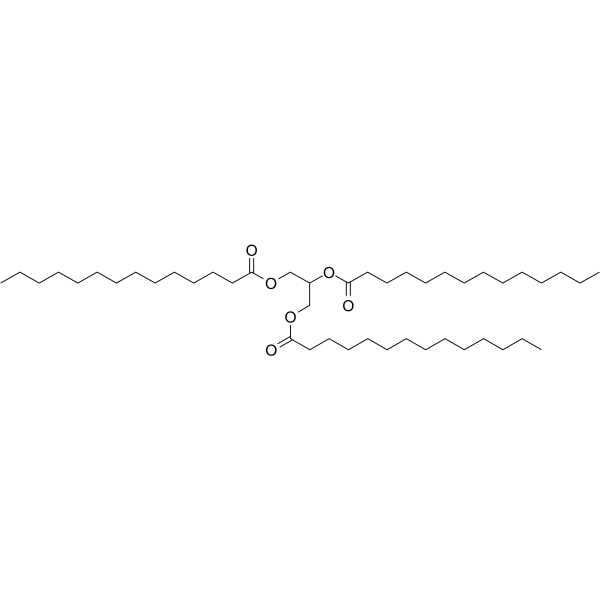
    Trimyristin is an orally active compound. Trimyristin can be isolated from the seeds of nutmeg (Myristica fragrans). Trimyristin inhibits the activities of acetylcholinesterase (AChE), ACP and ALP, with IC50 values of 0.11, 0.16 and 0.18 mM, respectively. Trimyristin exerts competitive-noncompetitive inhibition on acetylcholinesterase, uncompetitive inhibition on ACP, and competitive/noncompetitive inhibition on ALP. Trimyristin restores the downregulated acetylcholinesterase concentration in the cerebral cortex of rats exposed to sodium arsenite. Trimyristin can be used in studies related to fascioliasis and neurotoxicity .
    Trimyristin
  • HY-N8161

    Kaempferol 3,7-diglucoside

    Glycosidase Cholinesterase (ChE) Neurological Disease
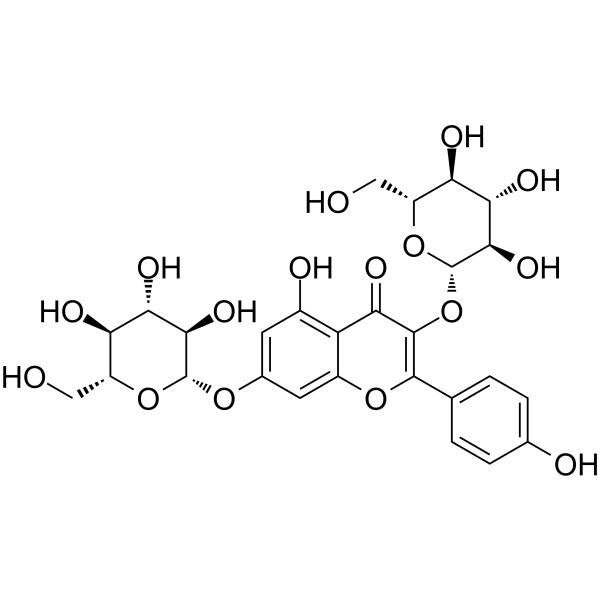
    Kaempferol-3,7-di-O-β-glucoside (Kaempferol 3,7-diglucoside), a flavonol, possesses enzyme inhibition property towards α-amylase, α-glucosidase and Acetylcholinesterase. Kaempferol-3,7-di-O-β-glucoside protects differentiating neuronal cells, SH-SY5Y from Amyloid β peptide-induced injury. Kaempferol-3,7-di-O-β-glucoside has the potential for Alzheimer's research .
    Kaempferol-3,7-di-O-β-glucoside
  • HY-W540232

    4-Methylphenyl ITC

    Cholinesterase (ChE) Neurological Disease
    4-Methoxyphenyl isothiocyanate (4-Methylphenyl ITC) is an antioxidant, with a IC50 value of 1.25 mM for scavenging DPPH radicals. ORAC testing indicates its antioxidant capacity as 11.7 mM TE (indicating that the antioxidant efficacy of this compound is equivalent to 11.7 mmol of Trolox (HY-101445, a standard antioxidant) under the same conditions), and it extends the oxidation process by approximately 9180 seconds in the Briggs–Rauscher reaction. Additionally, 4-Methoxyphenyl isothiocyanate exhibits moderate cholinesterase inhibitory activity, with an inhibition rate of 30.4% against acetylcholinesterase (AChE) and 17.9% against butyrylcholinesterase (BChE). 4-Methoxyphenyl isothiocyanate holds potential for research in the fields of antioxidation and neurological disorders .
    4-Methoxyphenyl isothiocyanate
  • HY-106440

    Cholinesterase (ChE) Neurological Disease
    Zifrosilone is an orally active acetylcholinesterase (AChE) inhibitor with a mean maximum inhibition of 20.9% at 10 mg. Zifrosilone can be used for the research of neurological disease .
    Zifrosilone
  • HY-107047

    RS-1259

    Cholinesterase (ChE) Serotonin Transporter 5-HT Receptor Calcium Channel Sodium Channel Sigma Receptor Neurological Disease
    BGC-201259 (RS-1259) is an orally active inhibitor that simultaneously targets acetylcholinesterase (AChE) (IC50 = 101 nM) and serotonin transporter (SERT) (IC50 = 42 nM). BGC-201259 inhibits 5-HT receptor with an IC50 of 90 nM. BGC-201259 exhibits strong weak activity against the NA transporter (IC50 = 7.7 μM), L-type calcium channel (IC50 = 3.6 μM), σ receptor (IC50 = 2 μM), and sodium channel (IC50 = 5.1 μM). BGC-201259 demonstrates synergistic potential in improving cognitive and emotional symptoms by balancing the inhibition of these two targets. BGC-201259 can be used in research on Alzheimer's disease .
    BGC-201259
  • HY-D0837R

    Glyoxaline (Standard); 1,3-Diaza-2,4-cyclopentadiene (Standard)

    Xanthine Oxidase Reference Standards Ser/Thr Protease Thrombopoietin Receptor Neurological Disease Inflammation/Immunology
    Imidazole (Standard) is the analytical standard of Imidazole. This product is intended for research and analytical applications. Imidazole (Glyoxaline; 1,3-Diaza-2,4-cyclopentadiene) is a heterocyclic aromatic compound. Imidazole bearing molecules have been used as corrosion, acetylcholinesterase (AChEI) and xanthine oxidase (XO) inhibitors, performing biological activities such as antifungal, antituberculosis, anti-inflammatory, antioxidant, and analgesic, amongst many others. Imidazole inhibits the enzymatic conversion of the endoperoxides (PGG2 and PGH2) to thromboxane A2 by platelet microsomes. Imidazole derivatives exhibits inhibition on SARS-CoV-2 3CLPro enzyme, which is promising for research in the field of Alzheimer’s disease, gout, COVID-19 and thrombo-embolic disease .
    Imidazole (Standard)
  • HY-N10209

    Cholinesterase (ChE) Others
    Paecilomide is a pyridone alkaloid and acetylcholinesterase inhibitor .
    Paecilomide
  • HY-129468

    Cholinesterase (ChE) Neurological Disease
    Pirimiphos ethyl is a kind of organophosphorus pesticide that commonly employes for the protection of crops including vegetables, bananas, turf and mushrooms through the inhibition of acetylcholinesterase activity .
    Pirimiphos ethyl
  • HY-112013

    Cholinesterase (ChE) Neurological Disease
    Isodimethoate is a thermal decomposition product of Dimethoate (HY-B1946). Isodimethoate is a direct anticholinesterase agent and shows an inhibition to human red blood cell acetylcholinesterase (AChE) .
    Isodimethoate
  • HY-129468R

    Reference Standards Cholinesterase (ChE) Neurological Disease
    Pirimiphos ethyl (Standard) is the analytical standard of Pirimiphos ethyl. This product is intended for research and analytical applications. Pirimiphos ethyl is a kind of organophosphorus pesticide that commonly employes for the protection of crops including vegetables, bananas, turf and mushrooms through the inhibition of acetylcholinesterase activity .
    Pirimiphos ethyl (Standard)
  • HY-147954

    Carbonic Anhydrase Cholinesterase (ChE) Neurological Disease Metabolic Disease
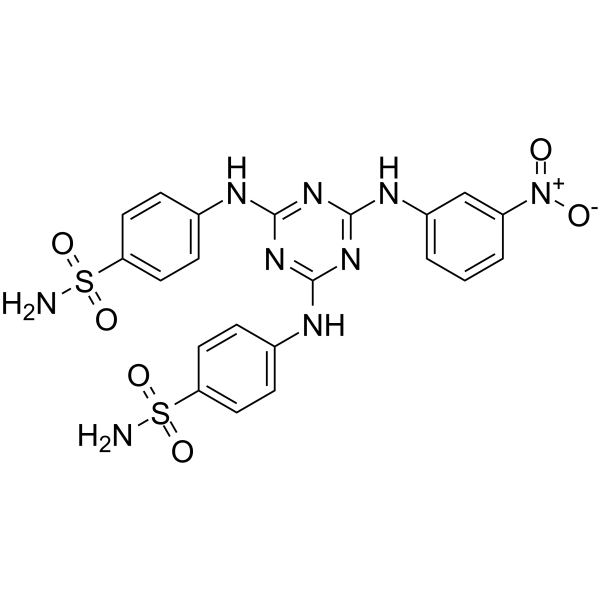
    α-Glycosidase-IN-1 (compound MZ7) is a potent α-GLY (α-Glycosidase) inhibitor, with an IC50 of 44.72 nM and a KI of 41.74 nM. α-Glycosidase-IN-1 also shows inhibition profile against human carbonic anhydrase isoenzymes I and II (hCA I and hCA II), and acetylcholinesterase (AChE), with IC50 values of 104.87, 100.04, and 654.87 nM, respectively. α-Glycosidase-IN-1 can be used for the research of many diseases such as diabetes, Alzheimer’s disease, heart failure, ulcer, and epilepsy .
    α-Glycosidase-IN-1
  • HY-158978

    Cholinesterase (ChE) Monoamine Oxidase Neurological Disease
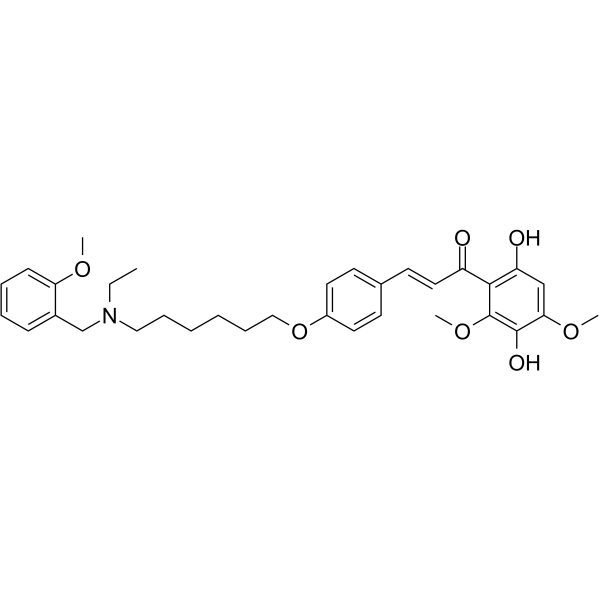
    Multitarget AD inhibitor-2 (Compound VN-19) is a multitargeting inhibitor acetylcholinesterase (AChE, IC50=0.14 μM), butyrylcholinesterase (BChE, IC50=11.6 μM), monoamine oxidase B (MAO B, IC50=0.45 μM). Multitarget AD inhibitor-2 inhibits self-induced aggregation of amyloid beta protein Aβ1-42 (inhibition rate is 47.3% at 20 μM), and downregulates the level of ROS in SH-SY5Y (80 inhibition rate at 25 μM). Multitarget AD inhibitor-2 ameliorates the cognitive decline in Scopolamine (HY-N0296)-induced Alzheimer’s Disease zebrafish models .
    Multitarget AD inhibitor-2
  • HY-144790

    Amyloid-β Cholinesterase (ChE) Monoamine Oxidase Neurological Disease
    AChE-IN-12 is a potent and blood-brain barrier (BBB) penetrant acetylcholinesterase (AChE) with IC50s of 0.41 μM and 1.88 μM for rat AChE and electric eel AChE. AChE-IN-12 is also a good antioxidant (ORAC = 3.3 eq), selective metal chelator and huMAO-B inhibitor (IC50 = 8.8 μM). AChE-IN-12 has remarkable inhibition of self- and Cu 2+-induced Aβ1-42 aggregation, as well as exhibits a good neuroprotective effect. AChE-IN-12 can be used for researching Alzheimer’s disease .
    AChE-IN-12
  • HY-W699983

    Glyoxaline-15N2; 1,3-Diaza-2,4-cyclopentadiene-15N2

    Isotope-Labeled Compounds Thrombopoietin Receptor Ser/Thr Protease Xanthine Oxidase Neurological Disease Inflammation/Immunology
    Imidazole- 15N2 (Glyoxaline- 15N2) is 15N labeled Imidazole. Imidazole (Glyoxaline; 1,3-Diaza-2,4-cyclopentadiene) is a heterocyclic aromatic compound. Imidazole bearing molecules have been used as corrosion, acetylcholinesterase (AChEI) and xanthine oxidase (XO) inhibitors, performing biological activities such as antifungal, antituberculosis, anti-inflammatory, antioxidant, and analgesic, amongst many others. Imidazole inhibits the enzymatic conversion of the endoperoxides (PGG2 and PGH2) to thromboxane A2 by platelet microsomes. Imidazole derivatives exhibits inhibition on SARS-CoV-2 3CL Pro enzyme, which is promising for research in the field of Alzheimer’s disease, gout, COVID-19 and thrombo-embolic disease .
    Imidazole-15N2
  • HY-W746884

    Cholinesterase (ChE) Neurological Disease
    2-Methyl-2-butenyl (E)-Caffeate is a type of caffeic acid ester compound. The petroleum ether and chloroform extracts containing 2-Methyl-2-butenyl (E)-Caffeate have inhibitory effects on acetylcholinesterase (AChE) and butyrylcholinesterase (BChE). The ether extract containing 2-Methyl-2-butenyl (E)-Caffeate exhibits strong antioxidant properties. 2-Methyl-2-butenyl (E)-Caffeate can be used in the research of Alzheimer's disease .
    2-Methyl-2-butenyl (E)-Caffeate
  • HY-181744

    Cholinesterase (ChE) Neurological Disease
    AChE-IN-108 is a potent mixed-type acetylcholinesterase (AChE) inhibitor with an in vitro IC50 of 0.17 nM. AChE-IN-108 acts on both free AChE and the enzyme-substrate complex to exert mixed-type inhibition. AChE-IN-108 can be used for the study of acetylcholinesterase inhibition in Alzheimer’s disease (AD) .
    AChE-IN-108
  • HY-N7617R

    Reference Standards Keap1-Nrf2 Cancer
    Pirimiphos ethyl (Standard) is the analytical standard of Pirimiphos ethyl. This product is intended for research and analytical applications. Pirimiphos ethyl is a kind of organophosphorus pesticide that commonly employes for the protection of crops including vegetables, bananas, turf and mushrooms through the inhibition of acetylcholinesterase activity .
    Toralactone (Standard)
  • HY-181161

    Cholinesterase (ChE) Neurological Disease
    AChE-IN-107 is a selective acetylcholinesterase (AChE) inhibitor with an IC50 of 0.22 μM and a Ki of 0.207 μM. AChE-IN-107 shows no inhibitory effect on equine serum BChE at 10 μM. AChE-IN-107 exhibits mixed-type inhibition of electric eel acetylcholinesterase, binding to both free enzyme and enzyme-substrate complex. AChE-IN-107 acts as a cytotoxin, reduces cell viability in hepatocellular carcinoma HepG2 cells.AChE-IN-107 can be used for the research of alzheimer's disease .
    AChE-IN-107
  • HY-179711

    Cholinesterase (ChE) Amyloid-β Neurological Disease
    AChE/BChE-IN-32 (Compound 4a) is an AChE and BChE inhibitor, with Ki values of 2.48 and 0.696 μM respectively. AChE/BChE-IN-32 inhibits aggregation and exhibits a strong ABTS•+ scavenging ability (TEAC = 2.40). AChE/BChE-IN-32 shows significant neuroprotective activity in glutamate and hydrogen peroxide-induced oxidative stress models. AChE/BChE-IN-32 can be used for the study of Alzheimer's disease .
    AChE/BChE-IN-32
  • HY-N10032

    Cholinesterase (ChE) Others
    (3β,5α,6α,16β)-8,14-Didehydrocevane-3,6,16,20-tetrol (compound 3) is an inhibitor targeting acetylcholinesterase (AChE). At a concentration of 100 μg/mL, (3β,5α,6α,16β)-8,14-Didehydrocevane-3,6,16,20-tetrol exhibits an in vitro inhibition rate of 12% against AChE .
    (3β,5α,6α,16β)-8,14-Didehydrocevane-3,6,16,20-tetrol
  • HY-180506

    Tyrosinase Glycosidase Cholinesterase (ChE) Others
    Tyrosinase-IN-47 (compound 6a) is a potent competitive tyrosinase inhibitor with an IC50 of 1.43 µM and a Ki of 0.1142 μM. Tyrosinase-IN-47 also shows inhibition activity in α-Glucosidase (IC50 = 36.26 μM) and acetylcholinesterase (IC50 = 8.26 μM). Tyrosinase-IN-47 exhibits in vitro antioxidant activity, with good scavenging ability for DPPH (IC50 = 4.75 μM) and ABTS (IC50 = 0.04 μM). Tyrosinase-IN-47 displays anti-browning effect on freshly cut potatoes. Tyrosinase-IN-47 can be used for pharmaceutical research .
    Tyrosinase-IN-47

Inquiry Online

Your information is safe with us. * Required Fields.

Salutation


Country or Region *

Applicant Name *


Organization Name *

Department *


Email Address *


Product Name *

Cat. No.


Requested quantity *

Phone Number *


Remarks

Inquiry Online

Inquiry Information

Product Name:
Cat. No.:
Quantity:
MCE Japan Authorized Agent:

