
Search Result
Results for "
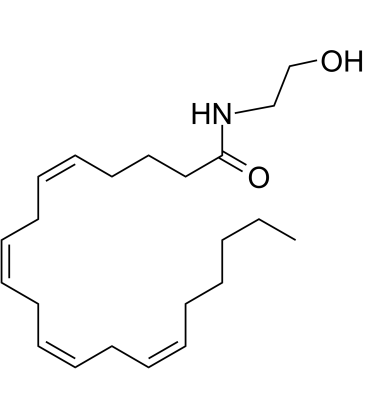
Anandamide
" in MedChemExpress (MCE) Product Catalog:
-
- HY-10863
-
-
-
- HY-103334
-
-
-
- HY-P4070
-
|
|
Insulin Receptor
|
Metabolic Disease
|
|
Insulin icodec is an Insulin (HY-P0035) analog that strongly but reversibly binds to albumin. Insulin icodec has long plasma half-life. Insulin icodec modulates insulin receptor activity, controls blood glucose levels, reduces HbA1c levels, and binds reversibly to human serum albumin. Insulin icodec can be used for the research of type 2 diabetes mellitus .
|
-
-
- HY-103332
-
|
NA-Gly
|
GlyT
Endogenous Metabolite
|
Inflammation/Immunology
|
|
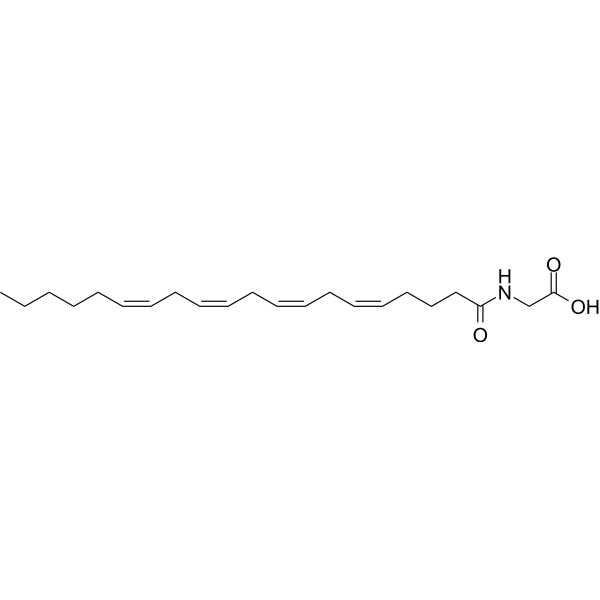
N-Arachidonylglycine (NA-Gly), a carboxylic analog of the endocannabinoid anandamide (AEA), is a GPR18 agonist (EC50 = 44.5 nM). Unlike AEA, N-Arachidonylglycine has no activity at either CB1 or CB2 receptors. N-Arachidonylglycine inhibits GLYT2 (IC50 = 5.1 μM). N-Arachidonylglycine also is an effective activator of endometrial cell migration .
|
-
-
- HY-116477
-
|
|
FAAH
|
Neurological Disease
Inflammation/Immunology
|
|
URB937 is an orally active and peripherally restricted FAAH inhibitor (IC50=26.8 nM) and increases anandamide levels. URB937 fails to affect FAAH activity in the brain (not penetrate the blood-brain barrier) .
|
-
-
- HY-100197
-
|
N-Docosahexaenoyl ethanolamine (DHEA); Docosahexaenoyl ethanolamide
|
Cannabinoid Receptor
|
Neurological Disease
|
|
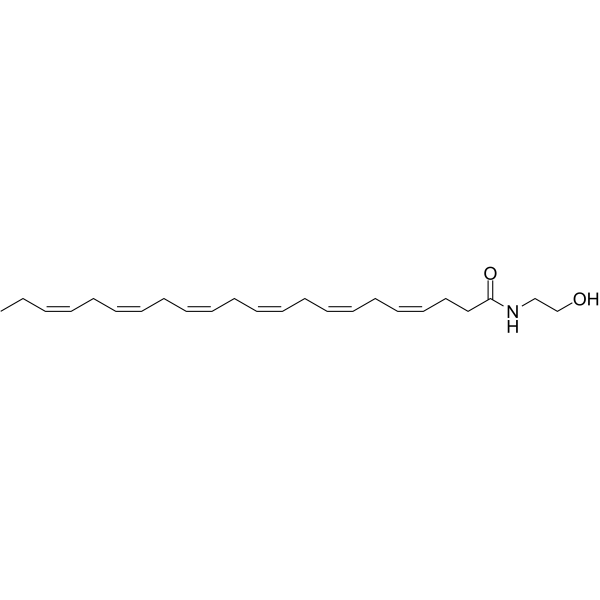
Synaptamide (Dehydroepiandrosteron; DHEA) is an endogenous metabolite and structural analogue of Anandamide. Synaptamide binds to both the cannabinoid-1 and 2 (CB1 and CB2) cannabinoid receptors and has anti-inflammatory properties. Synaptamide is the first small-molecule endogenous ligand of an adhesion G protein-coupled receptor (aGPCR) .
|
-
-
- HY-110072S
-
-
-
- HY-101388
-
AM404
2 Publications Verification
|
Cannabinoid Receptor
|
Neurological Disease
|
|
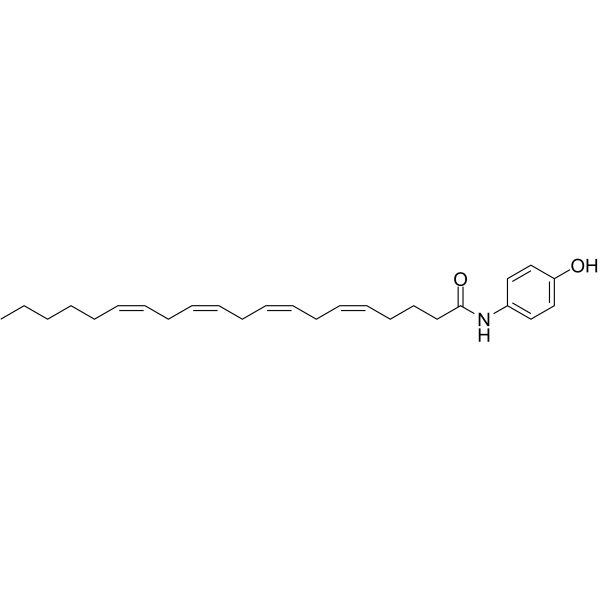
AM404, an inhibitor of endocannabinoid reuptake, blocks anandamide transport with IC50 values in the low micromolar range . AM404 is able to relax rat isolated hepatic arteries contracted with Phenylephrine, with a pEC50 value of 7.4 (corresponding to an EC50 of 0.04 μM). Neuroprotective Effect .
|
-
-
- HY-10865
-
|
|
FAAH
Autophagy
|
Neurological Disease
|
|
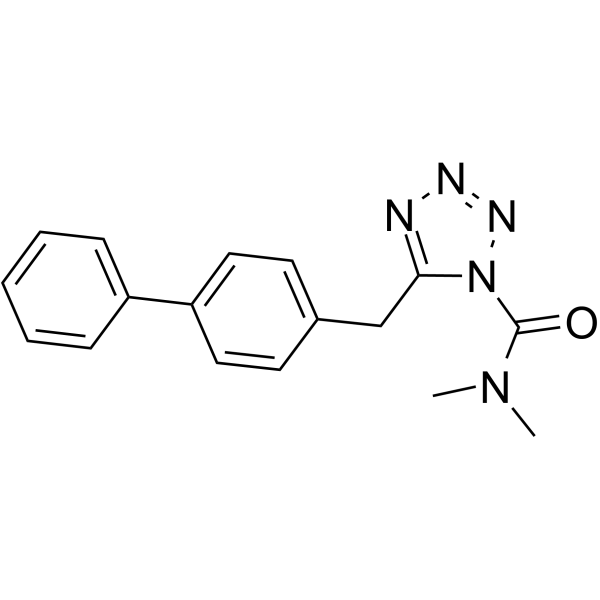
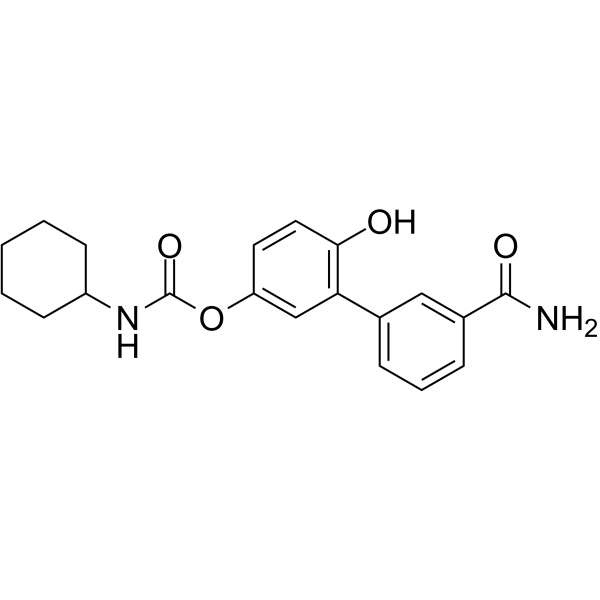
LY2183240 is a highly potent blocker of anandamide uptake (IC50= 270 pM; Ki=540 nM). LY2183240 is a potent, covalent inhibitor of the endocannabinoid-degrading enzyme fatty acid amide hydrolase (FAAH) with an IC50 of 12.4 nM. LY2183240 inactivates FAAH by carbamylation of the enzyme's serine nucleophile. LY2183240 also inhibits several other brain serine hydrolases with IC50s of 5.3, 0.09, 8.2 nM for MAG lipase, bh6 and KIAA1363, respectively .
|
-
-
- HY-P1103
-
|
|
CXCR
|
Cancer
|
|
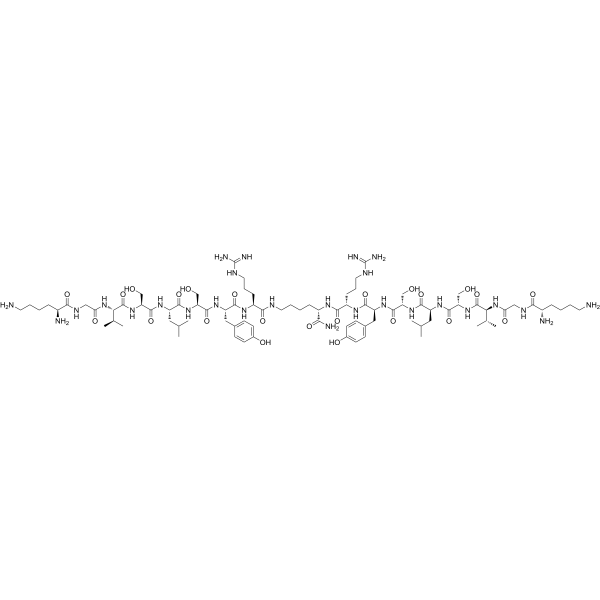
CTCE-9908 is a potent and selective CXCR4 antagonist. CTCE-9908 induces mitotic catastrophe, cytotoxicity and inhibits migration in CXCR4-expressing ovarian cancer cells .
|
-
-
- HY-103325
-
|
|
Cannabinoid Receptor
TRP Channel
Interleukin Related
ANGPTL
VEGFR
|
Metabolic Disease
Inflammation/Immunology
|
|
JTE-907 is a selective and orally active cannabinoid CB2 receptor inverse agonist and exerts anti-inflammatory effects. JTE-907 upregulates IL-6, MCP-1, IL-1β, VEGF, ANGPTL4, and TRPV1 in mature adipocytes. JTE-907 downregulates CB1, MCP-1, and IL-1β in preadipocytes. JTE-907 inhibits ear swelling in mice. JTE-907 reverses the protective effects of CB2 agonists and Anandamide (HY-10863) against cytokine-evoked colonic mucosal damage. JTE-907 can be used for the research of allergic dermatitis, obesity, and colitis .
|
-
-
- HY-125967
-
|
|
FAAH
|
Neurological Disease
|
|
AM 374 is an fatty acid amide hydrolase (FAAH) inhibitor. AM 374 inhibits amidase activity with an IC50 value of 13 nM. AM 374 can be used for the research of neurological disease .
|
-
-
- HY-124314
-
|
|
MAGL
DAGL
|
Metabolic Disease
|
|
LEI-106 is a dual ABHD6 and DAGL-α inhibitor, with a Ki of 0.8 μM for ABHD6, and an IC50 of 18 nM and a Ki of 0.7 μM for DAGL-α. LEI-106 blocks the synthesis of 2-arachidonoylglycerol, reduces the level of endothelial cell-derived 2-arachidonoylglycerol, without altering the levels of cannabinoids and diacylglycerol. LEI-106 is applicable to research related to diet-induced obesity and metabolic syndrome .
|
-
-
- HY-130311
-
|
2-Monolinolein; 2-Monolinoleoylglycerol
|
Cannabinoid Receptor
|
Neurological Disease
|
|
2-Linoleoyl glycerol (2-Monolinolein) is a partial CB1 receptor agonist with a pEC50 of 4.781. 2-Linoleoyl glycerol activates the hCB1 receptor. 2-Linoleoyl glycerol does not induce an increase in intracellular free Ca 2+. 2-Linoleoyl glycerol can be used in the research of neurological disorders .
|
-
-
- HY-113421
-
|
Linoleic acid monoethanolamide
|
Cannabinoid Receptor
|
Neurological Disease
|
|
Linoleoyl ethanolamide (Linoleic acid monoethanolamide) is classified as a fatty acid ethanolamide. Linoleoyl ethanolamide only weakly binds G-protein-coupled cannabinoid receptors of type-1(CB1)and CB2 receptors, and inhibits the binding of [3H]CP-55,940 with Kis of 10 and 25 μM, respectively. Linoleoyl ethanolamide is 4-fold less potent than anandamide at causing catalepsy in mice and it does not prolong sleep time .
|
-
-
- HY-120957
-
|
AMC-AA; 7-Amino-4-methyl coumarin-arachidonamide
|
Endogenous Metabolite
|
Metabolic Disease
|
|
AMC arachidonoyl amide (AMC-AA) is one of several fatty acid amides which can be used to measure fatty acid amide hydrolase (FAAH) activity.1 FAAH is a relatively unselective enzyme in that it accepts a variety of amide head groups other than the ethanolamine of its nominal endogenous substrate anandamide.2 Exposure of AMC-AA to FAAH activity results in the release of the fluorescent aminomethyl coumarin that absorbs at 360 nm and emits at 465 nm. This allows the fast and convenient measurement of FAAH activity using a simple cuvette or microplate fluorometer.
|
-
-
- HY-108455
-
|
PALDA
|
Dopamine Receptor
TRP Channel
|
Neurological Disease
|
|
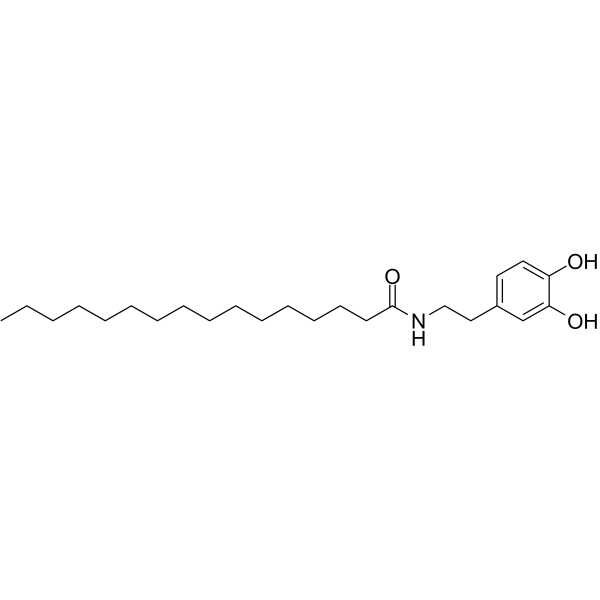
N-Palmitoyl dopamine (PALDA) is a endogenous, long-chain, linear fatty acid dopamide, which is inactive on TRPV1. N-Palmitoyl dopamine displays 'entourage' effects on endovanilloids N-arachidonoyl-dopamine (NADA) and anandamide .
|
-
-
- HY-10863S
-
|
AEA-d8
|
Isotope-Labeled Compounds
Cannabinoid Receptor
PPAR
Endogenous Metabolite
Tau Protein
GPR55
Fungal
TRP Channel
|
Infection
|
|
Anandamide-d8 is a deuterated labeled Anandamide . Anandamide is an endocannabinoid. Anandamide modulates both neuronal and immune functions through two protein-coupled cannabinoid receptors (CB1 and CB2). Anandamide can activate numerous other receptors like PPARS, TRPV1, and GPR18/GPR55. Anandamide also has potential anti-fungal and anti-inflammatory activities. Anandamide can be used for the research of Alzheimer’s disease (AD) and ulcerative colitis .
|
-
-
- HY-101389
-
-
-
- HY-118140
-
|
|
Cannabinoid Receptor
|
Neurological Disease
Inflammation/Immunology
|
|
ZCZ011 is a potent and brain-penetrant cannabinoid 1 (CB1) receptor positive allosteric modulator. ZCZ011 potentiates binding of CP55,940 to the CB1 receptor, enhances anandamide (AEA)-stimulated GTPγS binding in mouse brain membranes. ZCZ011 increases β-arrestin recruitment and ERK phosphorylation in hCB1 cells. ZCZ011 can be used for researching neuropathic and inflammatory pain .
|
-
-
- HY-N16008
-
-
-
- HY-125743
-
|
(S)-MethAnandamide
|
Cannabinoid Receptor
|
Neurological Disease
|
|
S-1 Methanandamide ((S)-Methanandamide), an Anandamide analog, is a CB1 receptor ligand with a Ki of 173 nM. S-1 Methanandamide inhibits electrically-evoked twitch response in mouse vas deferens with an IC50 value of 230 nM .
|
-
-
- HY-110101
-
-
-
- HY-113421S
-
|
|
Isotope-Labeled Compounds
Cannabinoid Receptor
|
Neurological Disease
|
|
Linoleoyl ethanolamide-d4 is a deuterated labeled Linoleoyl ethanolamide . Linoleoyl ethanolamide (Linoleic acid monoethanolamide) is classified as a fatty acid ethanolamide. Linoleoyl ethanolamide only weakly binds G-protein-coupled cannabinoid receptors of type-1(CB1)and CB2 receptors, and inhibits the binding of [3H]CP-55,940 with Kis of 10 and 25 μM, respectively. Linoleoyl ethanolamide is 4-fold less potent than anandamide at causing catalepsy in mice and it does not prolong sleep time .
|
-
-
- HY-113264
-
|
|
Apoptosis
|
Cancer
|
|
PGD2 ethanolamide is the COX-2 dependent metabolite of Anandamide that induces apoptosis in colorectal carcinoma (CRC) cells .
|
-
-
- HY-N16019
-
-
-
- HY-103507
-
|
|
GABA Receptor
|
Neurological Disease
|
|
N-Arachidonoyl-GABA is one member of a new class of lipoamino acids related to anandamide identified in bovine brain. N-Arachidonoyl-GABA displays analgesic activity .
|
-
-
- HY-W127407
-
|
|
Biochemical Assay Reagents
|
Others
|
|
Glycerophospho-N-Arachidonoyl Ethanolamine is a N-acylated ethanolamines (NAEs). Most NAEs are naturally occurring lipids with diverse biological activities. Different types of NAE can be derived from glycerophosphate-linked precursors through the activity of glycerophosphodiesterase 1 (GDE1). Glycerophosphate-N-Arachidonoyl Ethanolamine is the precursor of Anandamide (AEA), also known as Anandamide. AEA is an endocannabinoid neurotransmitter that binds to central cannabinoid (CB1) and peripheral cannabinoid (CB2) receptors. It inhibits the specific binding of [3H]-HU-243 to synaptosomal membranes with a Ki value of 52 nM compared to 46 nM for δ9-THC.
|
-
-
- HY-111293
-
|
Arachidonoyl amine; Arachidonic acid amide
|
FAAH
|
Metabolic Disease
|
|
Arachidonamide is substrate of anandamide amidohydrolase .
|
-
-
- HY-172568
-
|
|
Cannabinoid Receptor
Cytochrome P450
|
Neurological Disease
Inflammation/Immunology
|
|
(±)5(6)-EET Ethanolamide is a metabolite of Anandamide (HY-10863) generated via oxidation by cytochrome P450 enzymes. (±)5(6)-EET Ethanolamide is also a selective cannabinoid receptor 2 (CB2) agonist. (±)5(6)-EET Ethanolamide has Ki values of 11.4 μM and 8.9 nM for human CB1 and CB2, respectively . (±)5(6)-EET Ethanolamide can be used in research on immunomodulation and neuroinflammation .
|
-
-
- HY-N15894
-
-
-
- HY-169603
-
|
|
FAAH
|
Metabolic Disease
|
|
AZ513 is a reversible FAAH inhibitor with an IC50s of 551 nM and 27 nM for human FAAH and rat FAAH, respectively. AZ513 inhibits Anandamide (HY-10863) hydrolysis in human FAAH-transfected HEK293 cells (IC50 of 360 nM) .
|
-
-
- HY-P1103A
-
|
|
CXCR
|
Cancer
|
|
CTCE-9908 TFA is a potent and selective CXCR4 antagonist. CTCE-9908 TFA induces mitotic catastrophe, cytotoxicity and inhibits migration in CXCR4-expressing ovarian cancer cells .
|
-
-
- HY-P4757
-
|
|
Parasite
|
Others
|
|
N1-Glutathionyl-spermidine disulfide is a substrate of trypanothione reductase .
|
-
-
- HY-P11293
-
|
|
Melanocortin Receptor
|
Cancer
|
|
DOTA-GGNle-CycMSHhex is a melanocortin-1 receptor (MC1R)-targeting peptide that can be radionuclide-labeled for melanoma imaging .
|
-
-
- HY-P1321
-
|
1229U91; GW1229
|
Neuropeptide Y Receptor
|
Neurological Disease
|
|
GR231118, an analogue of the C-terminus of neuropeptide Y, is a potent , competitive and relative seletive antagonist at human neuropeptide Y Y receptor with a pKi of 10.4. GR231118 a potent agonist at the human neuropeptide Y Y4 receptor (pEC50=8.6; pKi=9.6) and a weak agonist at the human and rat neuropeptide YY2 and Y5 receptors. GR231118 also has high affinity for the mouse neuropeptide Y Y6 receptor (pKi= 8.8) .
|
-
-
- HY-N16027
-
-
-
- HY-N16018
-
-
-
- HY-10863S1
-
-
-
- HY-121830
-
-
-
- HY-123594
-
|
|
Cannabinoid Receptor
|
Neurological Disease
|
|
R-2 Methanandamide (Compound 2) is a cannabinoid Anandamide (HY-10863) analog with a Ki of 119 nM for the cannabinoid receptor (Ki is determined using rat brain membranes with PMSF) .
|
-
-
- HY-103324
-
-
-
- HY-115428
-
|
|
Cannabinoid Receptor
|
Others
|
|
(R)-(+)-Linoleyl-1'-Hydroxy-2'-Propylamide (Compound 19) is the analogue of endogenous cannabinoid receptor ligand Anandamide (HY-10863). (R)-(+)-Linoleyl-1'-Hydroxy-2'-Propylamide shows weak binding affinity for CB1 and CB2 with Kis of both 21 μM .
|
-
-
- HY-121476
-
|
|
MAGL
|
Neurological Disease
|
|
Arachidonoyl Serinol, an endogenous cannabimimetic metabolite, is an inhibitor of monoacylglycerol lipase (MAGL). Arachidonoyl Serinol inhibits the hydrolysis of [ 3H]2-oleoylglycerol and [ 3H]anandamide with IC50s of ~70 μM .
|
-
-
- HY-103338
-
|
|
Others
|
Neurological Disease
|
|
AM1172 is metabolically stable anandamide uptake inhibitor. AM1172 inhibits [ 3H] anandamide transport in rat cortical neurons and human CCF-STTG1 astrocytoma cells with IC50 values of 2.1 μM and 2.5 μM, respectively. AM1172 can significantly inhibit AEA hydrolysis and concurrently decrease AEA uptake. AM1172 can be used for the study of endocannabinoid system regulation .
|
-
-
- HY-124081A
-
-
-
- HY-103341
-
-
-
- HY-103340
-
-
-
- HY-135880A
-
-
-
- HY-135880
-
-
- HY-121557
-
-
- HY-134224
-
|
|
Cannabinoid Receptor
|
Endocrinology
|
|
Arachidonoyl 2'-fluoroethylamide is an anandamide analog. Arachidonoyl 2'-fluoroethylamide has the potential for the research of intraocular hypertension .
|
-
- HY-103342
-
-
- HY-W337358
-
-
- HY-134110
-
|
|
Endogenous Metabolite
|
Metabolic Disease
|
|
Anandamide (AEA) is an endogenous cannabinoid that binds to both central cannabinoid (CB1) and peripheral cannabinoid (CB2) receptors. The biological actions of AEA are terminated by cellular uptake and hydrolysis of the amide bond by the enzyme fatty acid amide hydrolase. Arachidonoyl-N-methyl amide is an analog of anandamide that binds to the human central cannabinoid (CB1) receptor with a Ki of 60 nM. It inhibits rat glial gap junction cell-cell communication 100% at a concentration of 50 μM.
|
-
- HY-134055
-
|
Arachidonic acid-N,N-dimethyl amide
|
Cannabinoid Receptor
|
Metabolic Disease
|
|
Anandamide (AEA) is an endogenous cannabinoid that binds to both central cannabinoid (CB1) and peripheral cannabinoid (CB2) receptors. The biological actions of AEA are terminated by cellular uptake and hydrolysis of the amide bond by the enzyme fatty acid amide hydrolase. Arachidonoyl-N,N-dimethyl amide is an analog of anandamide that exhibits weak or no binding to the human central cannabinoid (CB1) receptor (Ki >1 μM). It inhibits rat glial gap junction cell-cell communication 100% at a concentration of 50 μM.
|
-
- HY-103339
-
|
|
FAAH
MAGL
|
Neurological Disease
|
|
VDM11 is a potent and selective anandamide membrane transporter (AMT) inhibitor . VDM11 inhibits FAAH and MAGL and may act as an alternative FAAH substrate .
|
-
- HY-113516
-
-
- HY-19636A
-
|
|
FAAH
|
Others
|
|
JNJ-42165279 (dihydrochloride) is aFAAHinhibitor with IC50 of 70 nM and 313 nM for hFAAH and rFAAH, respectively .
|
-
- HY-120649
-
|
|
Biochemical Assay Reagents
|
Others
|
|
SKM 4-45-1 is an analog of Anandamide (AEA)(HY-10863). SKM 4-45-1 is a fluorescent substrate, that can be used to study the transmembrane carrier-mediated transport of AEA across cell membranes .
|
-
- HY-135882
-
-
- HY-135881
-
|
|
TRP Channel
Endogenous Metabolite
|
Neurological Disease
|
|
OMDM-5 is a selective inhibitor of anandamide cellular uptake (ACU), with a Ki of 4.8 μM. OMDM-5 is also a potent vanilloid receptor type 1 (VR1, TRPV1) agonist, with an EC50 of 75 nM, and shows weakly active as cannabinoid receptor type 1 (CB1) ligand (Ki=4.9 μM) .
|
-
- HY-131995
-
|
|
Cannabinoid Receptor
|
Metabolic Disease
|
|
O-Arachidonoyl glycidol (compound 1) is a 2-arachidonoylglycerol (2-AG) analog. O-Arachidonoyl glycidol inhibits cytosolic 2-oleoylglycerol (2-OG) hydrolysis with an IC50 value of 4.5 µM. O-Arachidonoyl glycidol blocks 2-OG hydrolysis in membrane fractions and anandamide hydrolysis with IC50s of 19, 12 µM, respectively .
|
-
- HY-W777527
-
|
|
Isotope-Labeled Compounds
Cannabinoid Receptor
|
Neurological Disease
|
|
AM404-d4 is the deuterium labeled AM404 (HY-101388). AM404, an inhibitor of endocannabinoid reuptake, blocks anandamide transport with IC50 values in the low micromolar range . AM404 is able to relax rat isolated hepatic arteries contracted with Phenylephrine, with a pEC50 value of 7.4 (corresponding to an EC50 of 0.04 μM). Neuroprotective Effect .
|
-
- HY-103332S
-
|
NA-Gly-d8
|
Isotope-Labeled Compounds
Endogenous Metabolite
GlyT
|
Inflammation/Immunology
|
|
N-Arachidonylglycine-d8 is a deuterated labeled N-Arachidonylglycine . N-Arachidonylglycine (NA-Gly), a carboxylic analog of the endocannabinoid anandamide (AEA), is a GPR18 agonist (EC50 = 44.5 nM). Unlike AEA, N-Arachidonylglycine has no activity at either CB1 or CB2 receptors. N-Arachidonylglycine inhibits GLYT2 (IC50 = 5.1 μM). N-Arachidonylglycine also is an effective activator of endometrial cell migration .
|
-
- HY-P1321A
-
|
1229U91 TFA; GW1229 TFA
|
Neuropeptide Y Receptor
|
Neurological Disease
|
|
GR231118 TFA, an analogue of the C-terminus of neuropeptide Y, is a potent , competitive and relative seletive antagonist at human neuropeptide YY receptor with a pKi of 10.4. GR231118 a potent agonist at the human neuropeptide YY4 receptor (pEC50=8.6; pKi=9.6) and a weak agonist at the human and rat neuropeptide Y Y2 and Y5 receptors. GR231118 also has high affinity for the mouse neuropeptide YY6 receptor (pKi= 8.8) .
|
-
- HY-W742940
-
|
|
Isotope-Labeled Compounds
Cannabinoid Receptor
|
Metabolic Disease
|
|
O-Arachidonoyl glycidol-d5 is the deuterium labeled O-Arachidonoyl glycidol (HY-131995). O-Arachidonoyl glycidol (compound 1) is a 2-arachidonoylglycerol (2-AG) analog. O-Arachidonoyl glycidol inhibits cytosolic 2-oleoylglycerol (2-OG) hydrolysis with an IC50 value of 4.5 μM. O-Arachidonoyl glycidol blocks 2-OG hydrolysis in membrane fractions and anandamide hydrolysis with IC50s of 19, 12 μM, respectively .
|
-
- HY-N15892
-
-
- HY-N16014
-
-
- HY-120971
-
|
DepNA
|
Endogenous Metabolite
|
Metabolic Disease
|
|
N-Decanoyl p-nitroaniline (DepNA) is one of several nitroaniline fatty acid amides which can be used to measure fatty acid amide hydrolase (FAAH) activity.1 FAAH is a relatively unselective enzyme in that it accepts a variety of amide head groups other than the ethanolamine of its endogenous substrate anandamide (AEA). It also will hydrolyze fatty acid amides with fewer carbons and fewer double bonds than arachidonate. Exposure of DepNA to FAAH activity results in the release of the yellow colorimetric dye p-nitroaniline (ε=13,500 at 410 nm). This allows the fast and convenient measurement of FAAH activity using a 96 well plate spectrophotometer.
|
-
- HY-173550
-
|
MLnFP
|
Drug Derivative
|
Others
|
|
Methyl α-Linolenyl Fluorophosphonate (MLnFP) is an analog of Methyl arachidonyl fluorophosphonate (HY-103334). Methyl arachidonyl fluorophosphonate is an anandamide amidase inhibitor .
|
-
- HY-184029
-
-
- HY-175062
-
|
iPF2α-III ethanolamide; 8-Isoprostane ethanolamide; 8-iso PGF2α ethanolamide
|
Drug Derivative
|
Others
|
|
8-isoprostaglandin F2α ethanolamide (iPF2α-III ethanolamide; 8-Isoprostane ethanolamide; 8-iso PGF2α ethanolamide) is an isoprostanol ethanolamide derivative derived from anandamide (AEA) via non-enzymatic free radical oxidation. 8-isoprostaglandin F2α ethanolamide is commonly used as a marker of oxidative stress, distinguishing non-enzymatic degradation products from "prostamides" generated by enzymatic pathways such as COX-2 .
|
-
- HY-10865R
-
|
|
Reference Standards
FAAH
Autophagy
|
Neurological Disease
|
|
LY2183240 (Standard) is the analytical standard of LY2183240 (HY-10865). This product is intended for research and analytical applications. LY2183240 is a highly potent blocker of anandamide uptake (IC50= 270 pM; Ki=540 nM). LY2183240 is a potent, covalent inhibitor of the endocannabinoid-degrading enzyme fatty acid amide hydrolase (FAAH) with an IC50 of 12.4 nM. LY2183240 inactivates FAAH by carbamylation of the enzyme's serine nucleophile. LY2183240 also inhibits several other brain serine hydrolases with IC50s of 5.3, 0.09, 8.2 nM for MAG lipase, bh6 and KiAA1363, respectively .
|
-
- HY-120960A
-
-
- HY-179857
-
-
- HY-N16012
-
-
- HY-N16023
-
-
- HY-N16016
-
-
- HY-175075
-
|
|
Drug Metabolite
|
Others
|
|
(±)11(12)-EET Ethanolamide is a potential metabolite of Anandamide (HY-10863), and it is produced by the catalysis of cytochrome P450 (CYP450) enzymes .
|
-
- HY-103334R
-
|
Methyl Arachidonyl Fluorophosphonate (Standard)
|
Reference Standards
Phospholipase
|
Cardiovascular Disease
Neurological Disease
Metabolic Disease
|
|
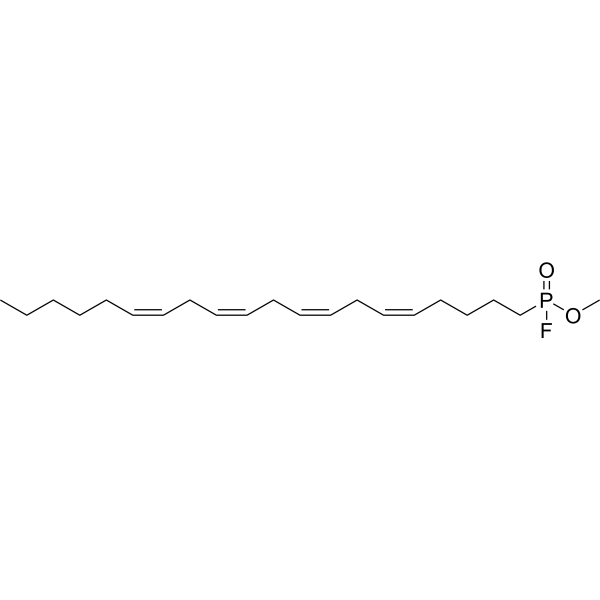
MAFP (Standard) is the analytical standard of MAFP (HY-103334). This product is intended for research and analytical applications. MAFP (Methyl Arachidonyl Fluorophosphonate) is an selective, active-site directed and irreversible inhibitor of cPLA2 and iPLA2. MAFP is also a potent irreversible inhibitor of anandamide amidase.
|
-
- HY-168320
-
|
N-(1-Oxooctadecyl)-L-tyrosine
|
Apoptosis
|
Neurological Disease
|
|
N-Stearoyltyrosine (N-(1-Oxooctadecyl)-L-tyrosine) is an analog of Anandamide (HY-10863). N-Stearoyltyrosine exhibits neuroprotective efficacy in gerbils ischemia-reperfusion model through protection in the CA1 region of the hippocampus. N-Stearoyltyrosine inhibits the free radicals production and improves antioxidant capacity. N-Stearoyltyrosine inhibits the IR-induced apoptosis .
|
-
- HY-P11480
-
|
|
Trk Receptor
|
Neurological Disease
|
|
TrkA/NGF-IN-1 (Peptide 19) is an inhibitor of protein-protein interactions between TrkA and NGF (IC50: 21 nM for human TrkA in PathHunter assay). TrkA/NGF-IN-1 shows an analgesic effect in a rat incisional pain model .
|
-
-
- HY-120649
-
|
|
蛍光色素
|
|
SKM 4-45-1 is an analog of Anandamide (AEA)(HY-10863). SKM 4-45-1 is a fluorescent substrate, that can be used to study the transmembrane carrier-mediated transport of AEA across cell membranes .
|
-
- HY-120971
-
|
DepNA
|
蛍光色素
|
|
N-Decanoyl p-nitroaniline (DepNA) is one of several nitroaniline fatty acid amides which can be used to measure fatty acid amide hydrolase (FAAH) activity.1 FAAH is a relatively unselective enzyme in that it accepts a variety of amide head groups other than the ethanolamine of its endogenous substrate anandamide (AEA). It also will hydrolyze fatty acid amides with fewer carbons and fewer double bonds than arachidonate. Exposure of DepNA to FAAH activity results in the release of the yellow colorimetric dye p-nitroaniline (ε=13,500 at 410 nm). This allows the fast and convenient measurement of FAAH activity using a 96 well plate spectrophotometer.
|
-
- HY-W127407
-
|
|
生化学アッセイ試薬
|
|
Glycerophospho-N-Arachidonoyl Ethanolamine is a N-acylated ethanolamines (NAEs). Most NAEs are naturally occurring lipids with diverse biological activities. Different types of NAE can be derived from glycerophosphate-linked precursors through the activity of glycerophosphodiesterase 1 (GDE1). Glycerophosphate-N-Arachidonoyl Ethanolamine is the precursor of Anandamide (AEA), also known as Anandamide. AEA is an endocannabinoid neurotransmitter that binds to central cannabinoid (CB1) and peripheral cannabinoid (CB2) receptors. It inhibits the specific binding of [3H]-HU-243 to synaptosomal membranes with a Ki value of 52 nM compared to 46 nM for δ9-THC.
|
-
- HY-P4070
-
|
|
Insulin Receptor
|
Metabolic Disease
|
|
Insulin icodec is an Insulin (HY-P0035) analog that strongly but reversibly binds to albumin. Insulin icodec has long plasma half-life. Insulin icodec modulates insulin receptor activity, controls blood glucose levels, reduces HbA1c levels, and binds reversibly to human serum albumin. Insulin icodec can be used for the research of type 2 diabetes mellitus .
|
-
- HY-P1103
-
|
|
CXCR
|
Cancer
|
|
CTCE-9908 is a potent and selective CXCR4 antagonist. CTCE-9908 induces mitotic catastrophe, cytotoxicity and inhibits migration in CXCR4-expressing ovarian cancer cells .
|
-
- HY-P1103A
-
|
|
CXCR
|
Cancer
|
|
CTCE-9908 TFA is a potent and selective CXCR4 antagonist. CTCE-9908 TFA induces mitotic catastrophe, cytotoxicity and inhibits migration in CXCR4-expressing ovarian cancer cells .
|
-
- HY-P4757
-
|
|
Parasite
|
Others
|
|
N1-Glutathionyl-spermidine disulfide is a substrate of trypanothione reductase .
|
-
- HY-P11293
-
|
|
Melanocortin Receptor
|
Cancer
|
|
DOTA-GGNle-CycMSHhex is a melanocortin-1 receptor (MC1R)-targeting peptide that can be radionuclide-labeled for melanoma imaging .
|
-
- HY-P1321
-
|
1229U91; GW1229
|
Neuropeptide Y Receptor
|
Neurological Disease
|
|
GR231118, an analogue of the C-terminus of neuropeptide Y, is a potent , competitive and relative seletive antagonist at human neuropeptide Y Y receptor with a pKi of 10.4. GR231118 a potent agonist at the human neuropeptide Y Y4 receptor (pEC50=8.6; pKi=9.6) and a weak agonist at the human and rat neuropeptide YY2 and Y5 receptors. GR231118 also has high affinity for the mouse neuropeptide Y Y6 receptor (pKi= 8.8) .
|
-
- HY-P1321A
-
|
1229U91 TFA; GW1229 TFA
|
Neuropeptide Y Receptor
|
Neurological Disease
|
|
GR231118 TFA, an analogue of the C-terminus of neuropeptide Y, is a potent , competitive and relative seletive antagonist at human neuropeptide YY receptor with a pKi of 10.4. GR231118 a potent agonist at the human neuropeptide YY4 receptor (pEC50=8.6; pKi=9.6) and a weak agonist at the human and rat neuropeptide Y Y2 and Y5 receptors. GR231118 also has high affinity for the mouse neuropeptide YY6 receptor (pKi= 8.8) .
|
-
- HY-P11480
-
|
|
Trk Receptor
|
Neurological Disease
|
|
TrkA/NGF-IN-1 (Peptide 19) is an inhibitor of protein-protein interactions between TrkA and NGF (IC50: 21 nM for human TrkA in PathHunter assay). TrkA/NGF-IN-1 shows an analgesic effect in a rat incisional pain model .
|
| 製品番号 |
製品名 |
Category |
Target |
構造式 |
-
- HY-110072S
-
|
|
|
Anandamide-d4 (AEA-d4) is the deuterium labeled Anandamide.
|
-
-
- HY-10863S
-
|
|
|
Anandamide-d8 is a deuterated labeled Anandamide . Anandamide is an endocannabinoid. Anandamide modulates both neuronal and immune functions through two protein-coupled cannabinoid receptors (CB1 and CB2). Anandamide can activate numerous other receptors like PPARS, TRPV1, and GPR18/GPR55. Anandamide also has potential anti-fungal and anti-inflammatory activities. Anandamide can be used for the research of Alzheimer’s disease (AD) and ulcerative colitis .
|
-
-
- HY-113421S
-
|
|
|
Linoleoyl ethanolamide-d4 is a deuterated labeled Linoleoyl ethanolamide . Linoleoyl ethanolamide (Linoleic acid monoethanolamide) is classified as a fatty acid ethanolamide. Linoleoyl ethanolamide only weakly binds G-protein-coupled cannabinoid receptors of type-1(CB1)and CB2 receptors, and inhibits the binding of [3H]CP-55,940 with Kis of 10 and 25 μM, respectively. Linoleoyl ethanolamide is 4-fold less potent than anandamide at causing catalepsy in mice and it does not prolong sleep time .
|
-
-
- HY-10863S1
-
|
|
|
Anandamide-d11 is deuterium labeled Anandamide. Anandamide is an immune modulator in the central nervous system acts via not only cannabinoid receptors (CB1 and CB2) but also other targets (e.g., GPR18/GPR55) .
|
-
-
- HY-W777527
-
|
|
|
AM404-d4 is the deuterium labeled AM404 (HY-101388). AM404, an inhibitor of endocannabinoid reuptake, blocks anandamide transport with IC50 values in the low micromolar range . AM404 is able to relax rat isolated hepatic arteries contracted with Phenylephrine, with a pEC50 value of 7.4 (corresponding to an EC50 of 0.04 μM). Neuroprotective Effect .
|
-
-
- HY-103332S
-
|
|
|
N-Arachidonylglycine-d8 is a deuterated labeled N-Arachidonylglycine . N-Arachidonylglycine (NA-Gly), a carboxylic analog of the endocannabinoid anandamide (AEA), is a GPR18 agonist (EC50 = 44.5 nM). Unlike AEA, N-Arachidonylglycine has no activity at either CB1 or CB2 receptors. N-Arachidonylglycine inhibits GLYT2 (IC50 = 5.1 μM). N-Arachidonylglycine also is an effective activator of endometrial cell migration .
|
-
-
- HY-W742940
-
|
|
|
O-Arachidonoyl glycidol-d5 is the deuterium labeled O-Arachidonoyl glycidol (HY-131995). O-Arachidonoyl glycidol (compound 1) is a 2-arachidonoylglycerol (2-AG) analog. O-Arachidonoyl glycidol inhibits cytosolic 2-oleoylglycerol (2-OG) hydrolysis with an IC50 value of 4.5 μM. O-Arachidonoyl glycidol blocks 2-OG hydrolysis in membrane fractions and anandamide hydrolysis with IC50s of 19, 12 μM, respectively .
|
-
-
- HY-184029
-
|
|
|
Alkynes
|
|
PF-7845yne is a clickable analogue of PF-7845. PF-7845yne serves as a pharmacological probe to investigate effects of targeting the FAAH-anandamide pathway .
|
入力情報は安全に管理されます. ※ 必須入力項目.
Inquiry Information
- 製品名:
- 製品番号:
- 数量:
- MCE 日本正規代理店:

