


1. Search Result
Search Result
Isoforms Recommended: Bcl-2
Results for "

BCL-2

" in MedChemExpress (MCE) Product Catalog:

602

Inhibitors & Agonists

1

Screening Libraries

1

Fluorescent Dye

5

Biochemical Assay Reagents

19

Peptides

4

Inhibitory Antibodies

137

Natural
Products

19

Recombinant Proteins

12

Isotope-Labeled Compounds

55

Antibodies

39

Oligonucleotides

Targets Recommended:
Cat. No. Product Name Target Research Areas Chemical Structure
  • HY-10087
    Navitoclax
    145+ Cited Publications

    ABT-263

    Bcl-2 Family Cancer
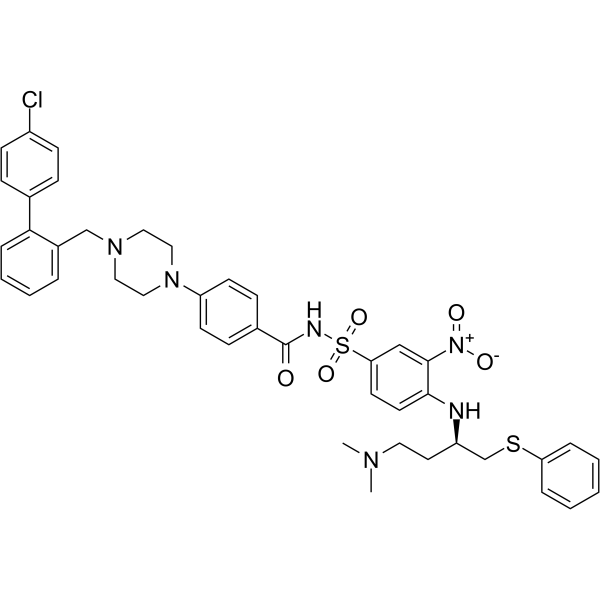
    Navitoclax (ABT-263) is a potent and orally active Bcl-2 family protein inhibitor that binds to multiple anti-apoptotic Bcl-2 family proteins, such as Bcl-xL, Bcl-2 and Bcl-w, with a Ki of less than 1 nM .
    Navitoclax
  • HY-117288
    S55746
    1 Publications Verification

    BCL201

    Bcl-2 Family Cancer
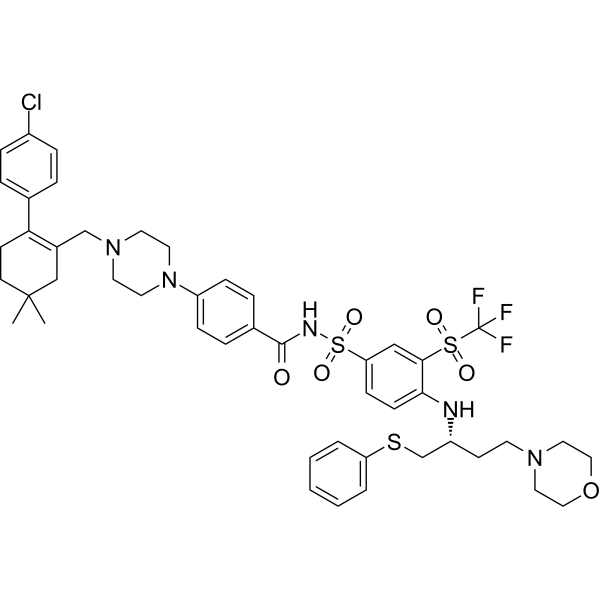
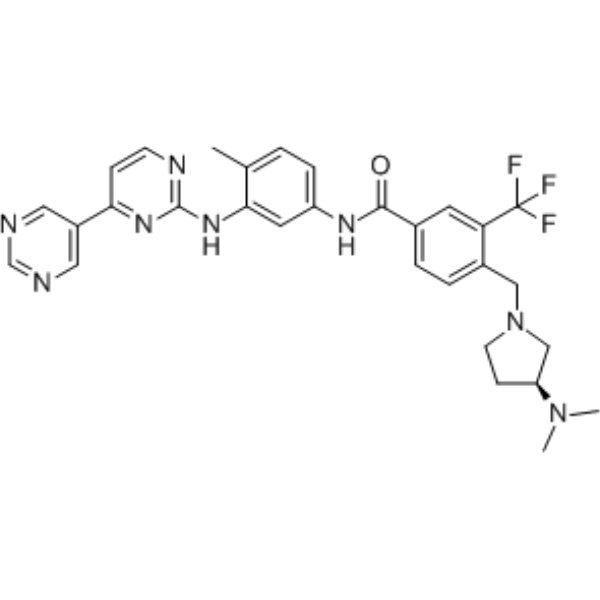
    S55746 (BCL201) is a potent, orally active and selective BCL-2 inhibitor, with a Ki of 1.3 nM and a Kd of 3.9 nM. S55746 (BCL201) has antitumor activity with low toxicity .
    S55746
  • HY-129179
    Lisaftoclax
    1 Publications Verification

    APG-2575; BCL-2/BCL-xl inhibitor 1

    Bcl-2 Family Cancer
    Lisaftoclax (compound 6) is a dual Bcl-2 and Bcl-xl inhibitor with anti-tumor activity, extracted from patent WO2018027097A1. Lisaftoclax exhibits IC50 values of 2 nM and 5.9 nM for Bcl-2 and Bcl-xl, respectively .
    Lisaftoclax
  • HY-125876
    PROTAC Bcl2 degrader-1
    1 Publications Verification

    PROTACs Bcl-2 Family Cancer
    PROTAC Bcl2 degrader-1 (Compound C5) is a PROTAC based on Cereblon ligand, which potently and selectively induces the degradation of Bcl-2 (IC50, 4.94 μM; DC50, 3.0 μM) and Mcl-1 (IC50, 11.81 μM) by introducing the E3 ligase cereblon (CRBN)-binding ligand pomalidomide to Mcl-1/Bcl-2 dual inhibitor Nap-1 (Blue: CRBN ligand, Black: linker;Pink: Mcl-1/Bcl-2 inhibitor, Nap-1).
    PROTAC Bcl2 degrader-1
  • HY-12020
    TW-37
    4 Publications Verification

    Bcl-2 Family Cancer
    TW-37 is a potent Bcl-2 inhibitor with Ki values of 260, 290 and 1110 nM for Mcl-1, Bcl-2 and Bcl-xL, respectively.
    TW-37
  • HY-129700

    Bcl-2 Family Cancer
    MCL-1/BCL-2-IN-2 (Compound 6) is a potent and selective Mcl-1 and Bcl-2 dual inhibitor .
    MCL-1/BCL-2-IN-2
  • HY-142209

    Bcl-2 Family Cancer
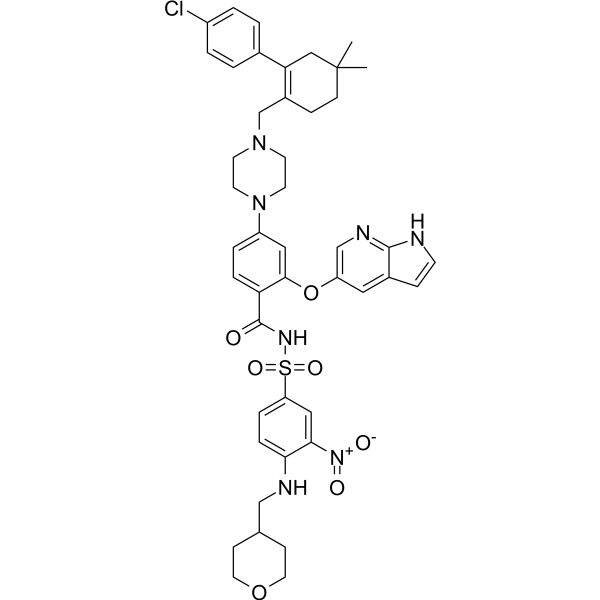
    ABBV-167 is a phosphate prodrug of the BCL-2 inhibitor venetoclax .
    ABBV-167
  • HY-138697

    VOB560

    Bcl-2 Family Apoptosis Cancer
    S65487 (VOB560), a potent and selective BCL-2 inhibitor, is a proagent of S55746. S65487 is also active on BCL-2 mutations, such as G101V and D103Y. S65487 has poor affinity with MCL-1, BFL-1 and BCL-XL. S65487 induces apoptosis and has anticaner activities [2].
    S65487
  • HY-161410

    PROTACs Apoptosis Bcl-2 Family Cancer
    WH244 is a second generation BCL-2 and BCL-xL dual depressant (PROTAC). The primary activity of WH244 is the specific degradation of BCL-2 and BCL-xL proteins (BCL-xL: DC50=0.6 nM, BCL-2: DC50=7.4 nM). WH244 promotes their ubiquitination and subsequent proteasome degradation by targeting these proteins, thereby restoring the cell's apoptosis pathway. WH244 has good antitumor activity. (Pink: BCL-2/BCL-xL ligand (HY-161415); Blue: E3 ligase ligand (HY-112078); Black: linker) .
    WH244
  • HY-120882

    UBX1967

    Bcl-2 Family Cancer
    BM-1197 (UBX1967) is a potent and selective inhibitor of dual Bcl-2/Bcl-xL, with IC50s of 3.5 nM and 5.2 nM for Bcl-2 and Bcl-xL, respectively. BM-1197 exhibits antitumor effects both in vitro and in vivo [2].
    BM-1197
  • HY-129702

    Bcl-2 Family Cancer
    MCL-1/BCL-2-IN-4 (Compound 7) is a potent and selective Mcl-1 and Bcl-2 dual inhibitor .
    MCL-1/BCL-2-IN-4
  • HY-129681

    Bcl-2 Family Cancer
    MCL-1/BCL-2-IN-2 (Compound Nap-1) is a potent and selective Mcl-1 and Bcl-2 dual inhibitor with IC50s of 4.45 and 3.18 μM, respectively .
    MCL-1/BCL-2-IN-1
  • HY-10087R

    ABT-263 (Standard)

    Reference Standards Bcl-2 Family Cancer
    Navitoclax (Standard) is the analytical standard of Navitoclax. This product is intended for research and analytical applications. Navitoclax (ABT-263) is a potent and orally active Bcl-2 family protein inhibitor that binds to multiple anti-apoptotic Bcl-2 family proteins, such as Bcl-xL, Bcl-2 and Bcl-w, with a Ki of less than 1 nM .
    Navitoclax (Standard)
  • HY-118874A

    Apoptosis Bcl-2 Family Cancer
    Oblimersen sodium is a BCL-2 inhibitor targeting BCL-2 RNA. Oblimersen sodium specifically binds to the first six codons of the bcl-2 mRNA sequence, resulting in degradation of bcl-2 mRNA and induces apoptosis by down-regulating expression of Bcl-2. Oblimersen sodium can be used for cancer research [2] .
    Oblimersen sodium
  • HY-138697A

    VOB560 sulfate

    Bcl-2 Family Apoptosis Cancer
    S65487 (VOB560) sulfate, a potent and selective Bcl-2 inhibitor, is a proagent of S55746. S65487 sulfate is also active on BCL-2 mutations, such as G101V and D103Y. S65487 sulfate has poor affinity with MCL-1, BFL-1 and BCL-XL. S65487 sulfate induces apoptosis and has anticaner activities [2].
    S65487 sulfate
  • HY-169266

    Bcl-2 Family Apoptosis Metabolic Disease
    BRD-K56819078 is a Bcl-2 inhibitor that significantly reduces senescent cell load and senescence-related genes in the kidney mRNA expression. BRD-K56819078 exerts anti-aging effects by inhibiting apoptosis .
    BRD-K56819078
  • HY-19551

    ApoG2

    Bcl-2 Family Apoptosis Autophagy Fungal ROS Kinase Infection Cancer
    Apogossypolone (ApoG2) is an orally active Bcl-2 family proteins inhibitor with Ki values of 35, 25 and 660 nM for Bcl-2, Mcl-1 and Bcl-XL, respectively. Apogossypolone shows antitumor activities, induces cell apoptosis and autophagy [2]. Apogossypolone also has antifungal activity .
    Apogossypolone
  • HY-135273

    BCL2-IN-1

    Bcl-2 Family Cancer
    A-1211212 (BCL2-IN-1), a chemical probe, is a potent Bcl-2 inhibitor. BCL2-IN-1 binds Bcl-2 with a Ki of <0.01 nM .
    A-1211212
  • HY-117288A
    S55746 hydrochloride
    1 Publications Verification

    BCL201 hydrochloride

    Bcl-2 Family Cancer
    S55746 hydrochloride (BCL201 hydrochloride) is a potent, orally active and selective BCL-2 inhibitor, with a Ki of 1.3 nM and a Kd of 3.9 nM. S55746 hydrochloride (BCL201 hydrochloride) has antitumor activity with low toxicity .
    S55746 hydrochloride
  • HY-118874

    Bcl-2 Family Apoptosis Cancer
    Oblimersen is a BCL-2 inhibitor targeting BCL-2 RNA. Oblimersen specifically binds to the first six codons of the bcl-2 mRNA sequence, resulting in degradation of bcl-2 mRNA and induces apoptosis by down-regulating expression of Bcl-2. Oblimersen can be used for cancer research [2] .
    Oblimersen
  • HY-129701

    Bcl-2 Family Cancer
    MCL-1/BCL-2-IN-3 (Compound 2) is a potent and selective Mcl-1 and Bcl-2 dual inhibitor with IC50s of 5.95 and 4.78 μM, respectively .
    MCL-1/BCL-2-IN-3
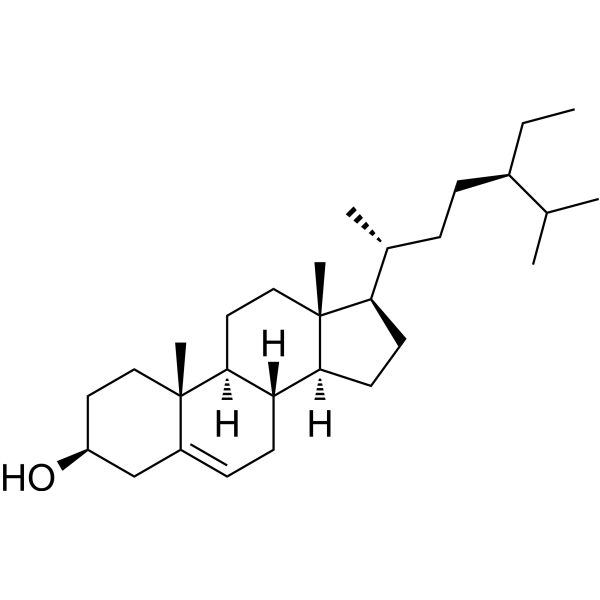
  • HY-N1218

    Glycosidase Bcl-2 Family Others
    Stellasterol is a natural product. Stellasterol has high affinity towards Bcl-2 protein (Ki: 118.05 nM). Stellasterol is a weak α-glucosidase inhibitor [2].
    Stellasterol
  • HY-P5325A

    Bcl-2 Family Others
    Bid BH3 (80-99) acetate is a biological active peptide. (BID is a pro-apoptotic member of the 'BH3-only' (BOPS) subset of the BCL-2 family of proteins that constitute a critical control point in apoptosis. Bid is the first of the BOPs reported to bind and activate Bcl-2, Bax, and Bak. Bid serves as a death-inducing ligand that moves from the cytosol to the mitochondrial membrane to inactivate Bcl-2 or to activate Bax.Pyroglutamyl (pGlu) peptides may spontaneously form when either Glutamine (Q) or Glutamic acid (E) is located at the sequence N-terminus. The conversion of Q or E to pGlu is a natural occurrence and in general it is believed that the hydrophobic γ-lactam ring of pGlu may play a role in peptide stability against gastrointestinal proteases. Pyroglutamyl peptides are therefore considered a normal subset of such peptides and are included as part of the peptide purity during HPLC analysis.)
    Bid BH3 (80-99) acetate
  • HY-10087S
    Navitoclax-d8
    1 Publications Verification

    Bcl-2 Family Cancer
    Navitoclax-d8 is the deuterium labeled Navitoclax. Navitoclax (ABT-263) is a potent and orally active Bcl-2 family protein inhibitor that binds to multiple anti-apoptotic Bcl-2 family proteins, such as Bcl-xL, Bcl-2 and Bcl-w, with a Ki of less than 1 nM .
    Navitoclax-d8
  • HY-149009

    Bcl-2 Family Apoptosis Cancer
    Bcl-2-IN-9 is a novel proapoptotic Bcl-2 inhibitor with IC50 value of 2.9 μM and low cytotoxic. Bcl-2-IN-9 mediates apoptosis by down-regulating expression of Bcl-2 in cancer cells and has a high selectivity against leukemia cells .
    Bcl-2-IN-9
  • HY-143872

    Bcl-2 Family Cancer
    Bcl-2-IN-4 is a potent, orally active and selective Bcl-2 inhibitor with an IC50 of 1.5 nM. Bcl-2-IN-4 displays >200-fold selectivity over Bcl-xL (IC50 of 411 nM). Bcl-2-IN-4 inhibits RS4; 11 cell proliferation with an IC50 of 2.7 nM (WO2021180040A1; compound 2) .
    Bcl-2-IN-4
  • HY-174403

    Bcl-2 Family c-Myc Apoptosis Caspase Cancer
    c-MYC/BCL2 ligand 1 iodide is a dual-targeting c-MYC/Bcl-2 G4 ligand with Kd values of 0.90 μM (c-MYC G4) and 0.56 μM (Bcl-2 G4). c-MYC/BCL2 ligand 1 iodide inhibits c-MYC and Bcl-2 gene transcription by binding to G4-forming sequences and downregulates their protein expression. c-MYC/BCL2 ligand 1 iodide inhibits suppresses migration, induces caspase-dependent apoptosis, and triggers cell cycle G1 arrest in MCF-7 cells. c-MYC/BCL2 ligand 1 iodide significantly suppresses tumor growth in a 4T1 syngeneic model with no observable toxicity. c-MYC/BCL2 ligand 1 iodide can be used for the research of breast cancer.
    c-MYC/BCL2 ligand 1 iodide
  • HY-RS01417

    Small Interfering RNA (siRNA) Bcl-2 Family Others

    BCL2 Rat Pre-designed siRNA Set A contains three designed siRNAs for BCL2 gene (Rat), as well as a negative control, a positive control, and a FAM-labeled negative control.

    BCL2 Rat Pre-designed siRNA Set A
    BCL2 Rat Pre-designed siRNA Set A
  • HY-RS01415

    Small Interfering RNA (siRNA) Bcl-2 Family Others

    BCL2 Human Pre-designed siRNA Set A contains three designed siRNAs for BCL2 gene (Human), as well as a negative control, a positive control, and a FAM-labeled negative control.

    BCL2 Human Pre-designed siRNA Set A
    BCL2 Human Pre-designed siRNA Set A
  • HY-149681

    Bcl-2 Family Beclin1 Neurological Disease Cancer
    Beclin1-Bcl-2 interaction inhibitor 1 is a Beclin1 and Bcl-2 interaction inhibitor with an IC50 value of 4.4 nM. Beclin1-Bcl-2 interaction inhibitor 1 disrupts the binding of the Bcl-2-Beclin 1 BH3 domain. Beclin1-Bcl-2 interaction inhibitor 1 can be used in the research of cancer and neurodegenerative diseases .
    Beclin1-Bcl-2 interaction inhibitor 1
  • HY-131247

    Bcl-2 Family Inflammation/Immunology Cancer
    Bcl-2-IN-2 is a potent and selective Bcl-2 inhibitor with an IC50 of 0.034 nM and also inhibits Bcl-xL with an IC50 of 43 nM, showing >1000-fold selectivity for Bcl-2 over Bcl-xL .
    Bcl-2-IN-2
  • HY-RS01416

    Small Interfering RNA (siRNA) Bcl-2 Family Others

    Bcl2 Mouse Pre-designed siRNA Set A contains three designed siRNAs for Bcl2 gene (Mouse), as well as a negative control, a positive control, and a FAM-labeled negative control.

    Bcl2 Mouse Pre-designed siRNA Set A
    Bcl2 Mouse Pre-designed siRNA Set A
  • HY-160108

    Bcl-2 Family Others
    Bcl-2-IN-17 is a Bcl2 inhibitor and can be used for the research of diseases associated with Bcl anti-apoptotic protein .
    Bcl-2-IN-17
  • HY-153953

    Bcl-2 Family Cancer
    Bcl-2-IN-11 (compound 6) is a potent and selective Bcl-2 activity inhibitor, with an IC50 of 0.9 nM. Bcl-2-IN-11 shows weak inhibition of Bcl-xl (IC50 > 1000 nM). Bcl-2-IN-11 can be used for the research of a variety of cancers caused by abnormal overexpression of Bcl-2 family proteins: especially malignant hematologic diseases of acute lymphoid leukemia, etc. Bcl-2-IN-11 can also avoid toxic side effects caused by Bcl-xl inhibition, such as thrombocytopenia .
    Bcl-2-IN-11
  • HY-161415

    Ligands for E3 Ligase Cancer
    BCL-xL/BCL-2 ligand 1 (compound 72-1) is a BCL-xL and BCL-2 protein ligand. BCL-xL/BCL-2 ligand 1 can be connected to the E3 ligase by a linker to form PROTACs (HY-161410) [2].
    BCL-xL/BCL-2 ligand 1
  • HY-159668

    ADC Linker Cancer
    DL002 is a ADC linker that can be used to synthesize antibody-drug conjugates containing BCL-2 family protein degraders, and it's used in tumor research .
    DL002
  • HY-138697B

    VOB560 hydrochloride

    Bcl-2 Family Apoptosis Cancer
    S65487 (VOB560) hydrochloride, a potent and selective Bcl-2 inhibitor, is a proagent of S55746. S65487 hydrochloride is also active on BCL-2 mutations, such as G101V and D103Y. S65487 hydrochloride has poor affinity with MCL-1, BFL-1 and BCL-XL. S65487 hydrochloride induces apoptosis and has anticaner activities [2].
    S65487 hydrochloride
  • HY-161577

    Bcl-2 Family Cancer
    BFC1103 is a small-molecule compound whose primary mechanism of action involves interaction with a specific domain of Bcl-2, particularly its loop domain. This interaction induces a conformational change in Bcl-2, exposing its BH3 (Bcl-2 homology 3) domain, thereby switching Bcl-2's function from anti-apoptotic to pro-apoptotic. The cell death induced by BFC1103 is dependent on the presence of Bax or Bak, both of which are key proteins involved in the intrinsic apoptotic pathway mediated by mitochondria. BFC1103 has successfully inhibited lung metastasis of triple-negative breast cancer in mouse models. It can be utilized in studying the roles of Bcl-2 family proteins in cancer development and how they impact the survival and proliferation of cancer cells .
    BFC1103
  • HY-N3828

    Apoptosis ERK JNK Cancer
    epi-Eriocalyxin A (Epieriocalyxin A), a diterpenoid isolated from Isodon eriocalyx, induces colon cancer apoptosis. epi-Eriocalyxin A also inhibits ERK1/2 and JNK activation, which suppresses Bcl-2 expression .
    epi-Eriocalyxin A
  • HY-10087A1

    ABT-263 dihydrochloride

    Bcl-2 Family Cancer
    Navitoclax (ABT-263) dihydrochloride is an orally active Bcl-2 inhibitor that binds to various Bcl-2 family proteins, including Bcl-xL, Bcl-2, and Bcl-w, with a Ki value of less than 1 nM. Navitoclax dihydrochloride can be used in cancer research .
    Navitoclax dihydrochloride
  • HY-161276
    BFC1108
    1 Publications Verification

    Apoptosis Bcl-2 Family Cancer
    BFC1108 is a small molecule Bcl-2 functional converter. BFC1108 induces a conformational change in Bcl-2, resulting in the exposure of its BH3 domain both in vitro and in vivo. BFC1108 effectively induces apoptosis in Bcl-2 expressing cancers. .
    BFC1108
  • HY-123244

    Bcl-2 Family Apoptosis Cancer
    YC137 is a potent Bcl-2 antagonist with Kis of 1.3 μM and >100 μM for Bcl-2 and Bcl-xL when assayed in Bis-Tris buffer, respectively. YC137 inhibits the binding of the Bid BH3 peptide to Bcl-2, thus disrupting an interaction essential for the antiapoptotic activity of Bcl-2. YC137 selectively induces apoptosis of Bcl-2-dependent cells. YC137 has the potential for breast cancer research [2].
    YC137
  • HY-168983

    Bcl-2 Family Cancer
    Lonitoclax is a B-cell lymphoma 2 (Bcl-2) inhibitor. Lonitoclax has comparable anti-tumor efficacy to Venetoclax (HY-15531) in both B cell and myeloid malignancy models. Lonitoclax is promising for research of relapsed or refractory chronic lymphocytic leukemia (CLL), small lymphocytic lymphoma, and certain low-grade lymphomas .
    Lonitoclax
  • HY-174419

    Monoamine Oxidase Reactive Oxygen Species (ROS) NF-κB Bcl-2 Family Cholinesterase (ChE) Neurological Disease Inflammation/Immunology
    TFSeB is an orally active neuroprotective agent. TFSeB can reduce Streptozotocin (STZ) (HY-13753) induced MAO-B and AChE activity. TFSeB exerts neuroprotective effects by increasing the expression of BCL-2, BDNF, NRF2, and decreasing the expression of BAX. TFSeB can reduce lipid peroxidation (TBARS) and reactive oxygen species (ROS) levels. TFSeB can reduce neuroinflammation. TFSeB can be used for research on Alzheimer’s disease .
    TFSeB
  • HY-143873

    Bcl-2 Family Cancer
    Bcl-2-IN-5 is a BCL-2 inhibitor with IC50s of 0.12 nM, 0.14 nM and 0.22 nM for Bcl-2 wild type, Bcl-2 D103Y and Bcl-2 G101V, respectively. Bcl-2-IN-5 inhibits the cell growth with IC50 values of 0.2 nM and 0.44 nM for Bcl 2-G101V knock-in RS4; 11 and RS4; 11 cells, respectively (WO2021208963A1; Example 155) .
    Bcl-2-IN-5
  • HY-149623

    Bcl-2 Family Cancer
    Bcl-2-IN-13 is a Bcl-2 inhibitor with an IC50 value of 17 nM. Bcl-2-IN-13 can be used in cancer research .
    Bcl-2-IN-13
  • HY-149624

    Bcl-2 Family Cancer
    Bcl-2-IN-14 (Compound 13c) is a BCL-2 inhibitor with an IC50 value of 0.471 μM. Bcl-2-IN-14 can be used in cancer research .
    Bcl-2-IN-14
  • HY-149622

    Bcl-2 Family Cancer
    Bcl-2-IN-12 (Compound 1) is a Bcl-2 inhibitor (IC50: 6 nM). Bcl-2-IN-12 can be used for cancer research .
    Bcl-2-IN-12
  • HY-149625

    Bcl-2 Family Cancer
    Bcl-2-IN-15 (Compound 13d)) is a Bcl-2 inhibitor (IC50: 363 nM). Bcl-2-IN-15 inhibits the proliferation ofNCI leukemia cancer cell line .
    Bcl-2-IN-15
  • HY-163308

    Bcl-2 Family Cancer
    Bcl-2-IN-18 (Compound 23) is a breast cancer Bcl-2 inhibitor with a IC50 value of 4.7 μM for MCF-7. Bcl-2-IN-18 has antitumor activity .
    Bcl-2-IN-18

Inquiry Online

Your information is safe with us. * Required Fields.

Salutation


Country or Region *

Applicant Name *


Organization Name *

Department *


Email Address *


Product Name *

Cat. No.


Requested quantity *

Phone Number *


Remarks

Inquiry Online

Inquiry Information

Product Name:
Cat. No.:
Quantity:
MCE Japan Authorized Agent:

