1. Search Result
Search Result
Results for "

Bone-marrow-derived macrophages

" in MedChemExpress (MCE) Product Catalog:

15

Inhibitors & Agonists

3

Natural
Products

Cat. No. Product Name Target Research Areas Chemical Structure
  • HY-W018643
    Ferulic acid methyl ester
    1 Publications Verification

    Methyl ferulate

    p38 MAPK Autophagy Neurological Disease Inflammation/Immunology Cancer
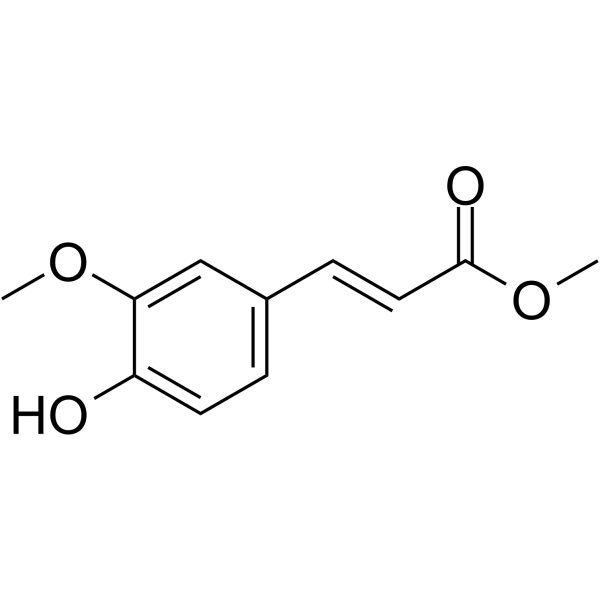
    Ferulic acid methyl ester (Methyl ferulate) is a derivative of ferulic acid, isolated from Stemona tuberosa, with anti-inflammatory and antioxidant properties . Ferulic acid methyl ester is a cell membrane and brain permeable compound, shows free radical scavenging ability, used in the research of neurodegenerative disorders . Ferulic acid methyl ester inhibits COX-2 expression, blocks p-p38 and p-JNK in primary bone marrow derived-macrophages .
    Ferulic acid methyl ester
  • HY-W008634
    Bropirimine
    2 Publications Verification

    U-54461; U-54461S; PNU-54461

    Toll-like Receptor (TLR) Cancer
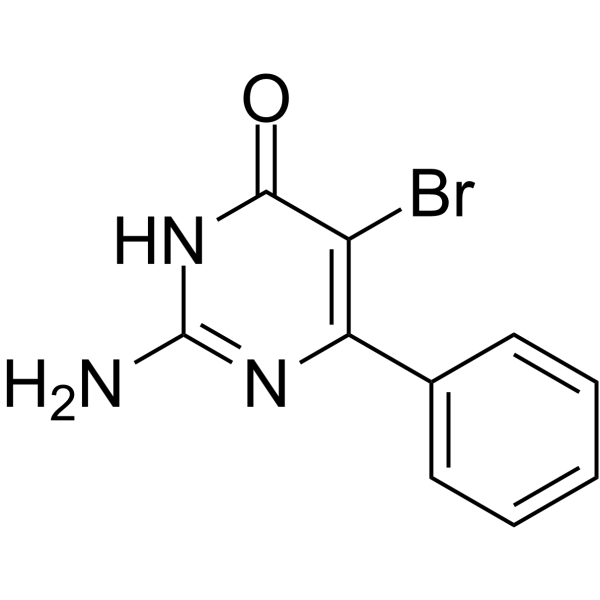
    Bropirimine (U-54461; U-54461S; PNU-54461) is an orally active TLR7 agonist. Bropirimine inhibits RANKL-induced osteoclast differentiation of mouse bone marrow-derived macrophages (BMMs). Bropirimine exhibits dose-dependent direct inhibitory effects on colony formation of cultured KK-47 and 724 cells. Bropirimine can be used for the study of cancers and bone metabolic disorders such as osteoporosis .
    Bropirimine
  • HY-175222

    Toll-like Receptor (TLR) NF-κB Caspase TNF Receptor Interleukin Related Metabolic Disease Inflammation/Immunology
    GlcNAc-MurNAc, a disaccharide, is a TLR4 agonist with a Kd of 383 μM for murine TLR4. GlcNAc-MurNAc directly binds to TLR4 and activates its downstream NF-κB and IRF pathways. GlcNAc-MurNAc improves Dextran sulfate sodium salt (DSS) (HY-116282C)-induced colitis in mice through a TLR4-dependent mechanism. GlcNAc-MurNAc can be used for the study of inflammatory bowel disease .
    GlcNAc-MurNAc
  • HY-12700
    RO5256390
    3 Publications Verification

    Trace Amine-associated Receptor (TAAR) Neurological Disease
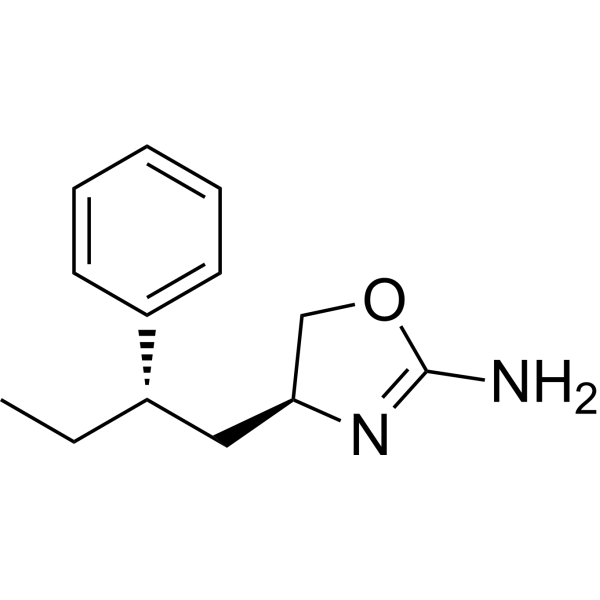
    RO5256390 is an orally effective trace amine associated receptor 1 (TAAR1) agonist. RO5256390 exhibits pro-cognitive and antidepressant-like properties in rodent and primate models, showing similar brain activation patterns to Olanzapine (HY-14541). RO5256390 blocks compulsive overeating behavior in rats. RO5256390 can inhibit ATP (HY-B2176)-induced TNF secretion in mouse bone marrow-derived macrophages .
    RO5256390
  • HY-145961

    Toll-like Receptor (TLR) TNF Receptor Cancer
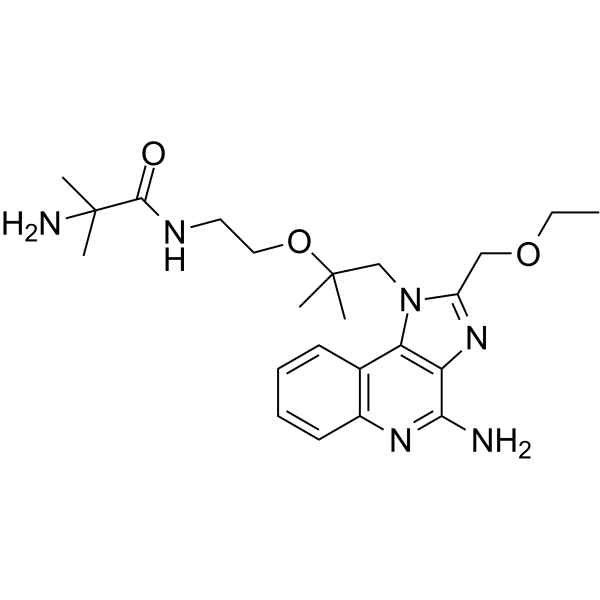
    TLR7 agonist 4 is a TLR7 agonist with pro-inflammatory cytokine-stimulating activity. TLR7 agonist 4 modulates TLR7 activity to stimulate the production of pro-inflammatory cytokines. TLR7 agonist 4 stimulates mouse bone marrow-derived macrophages to produce the pro-inflammatory cytokine TNFα. TLR7 agonist 4 can be conjugated with antibodies to form conjugates. TLR7 agonist 4 is applicable to cancer research .
    TLR7 agonist 4
  • HY-173070

    Toll-like Receptor (TLR) IFNAR PD-1/PD-L1 ADC Payload Inflammation/Immunology Cancer
    TLR7 agonist 29 (Compound 1) is the agonist for TLR7 with an EC50 of 5.2 nM for human TLR7 (EC50 for mouse TLR7 is 48.2 nM). TLR7 agonist 29 activates bone marrow-derived macrophages (BMDMs), stimulates myeloid cells in the tumor microenvironment, promotes the expression of PD-L1, CD86 and IFN-α. TLR7 agonist 29 can be used as payload for synthesis of ADC .
    TLR7 agonist 29
  • HY-175645

    NOD-like Receptor (NLR) URAT1 Interleukin Related OAT GLUT Metabolic Disease Inflammation/Immunology
    NLRP3/URAT1-IN-1 is an orally active double inhibitor of NLRP3 and URAT1 (IC50 = 3.81 μM). NLRP3/URAT1-IN-1 inhibits IL-1β release in LPS (HY-D1056) and ATP-stimulated mouse bone marrow-derived macrophages (BMDMs), with an IC50 of 2.61 μM. NLRP3/URAT1-IN-1 reduces serum uric acid (SUA) and alleviates liver/kidney damage in mice with acute hyperuricemia (HUA). NLRP3/URAT1-IN-1can be used for the study of gout and hyperuricemia .
    NLRP3/URAT1-IN-1
  • HY-131040

    NOD-like Receptor (NLR) Inflammation/Immunology
    NLRP3-IN-NBC6 is a potent, selective NLRP3 inflammasome inhibitor (IC50= 574 nM) that acts independently of Ca 2+. NLRP3-IN-NBC6 inhibits Nigericin (HY-127019)-induced inflammasome activation in THP-1 cells and Imiquimod (HY-B0180)-induced IL-1β release from LPS-primed bone marrow-derived macrophages (BMDMs) .
    NLRP3-IN-NBC6
  • HY-169703
    SPA0355
    1 Publications Verification

    RANKL/RANK p38 MAPK Akt NF-κB Inflammation/Immunology
    SPA0355 is a thiourea derivative that has antioxidant and anti-inflammatory properties. SPA0355 inhibits the RANKL (receptor activator of nuclear factor κB ligand) induced osteoclast formation in primary bone marrow-derived macrophages. SPA0355 also suppresses the activation of the MAPKs, Akt, and NF-κB pathways. Additionally, SPA0355 promotes osteoblast differentiation, increases alkaline phosphatase activity, and enhances mineral nodule formation. SPA0355 can protect ovariectomized mice from bone loss by stimulating osteoblast differentiation and inhibiting osteoclast resorption, making it useful for studying postmenopausal osteoporosis .
    SPA0355
  • HY-W615446

    Glutathione S-transferase Interleukin Related Inflammation/Immunology Cancer
    GSTO1-IN-3 is a potent GSTO1-1 inhibitor with an IC50 of 0.11 μM, and shows selectivity over GSTO2-2, GSTA1-1 and GSTP1-1 (IC50 > 100 μM). GSTO1-IN-3 enhances the cytotoxicity of Cisplatin (HY-17394) against human breast cancer cells. GSTO1-IN-3 inhibits IL-1β release in mouse bone marrow-derived macrophage (BMDM) cells. GSTO1-IN-3 attenuates inflammation in mice. GSTO1-IN-3 can be used for breast cancer and inflammation research .
    GSTO1-IN-3
  • HY-N11494

    NF-κB Others
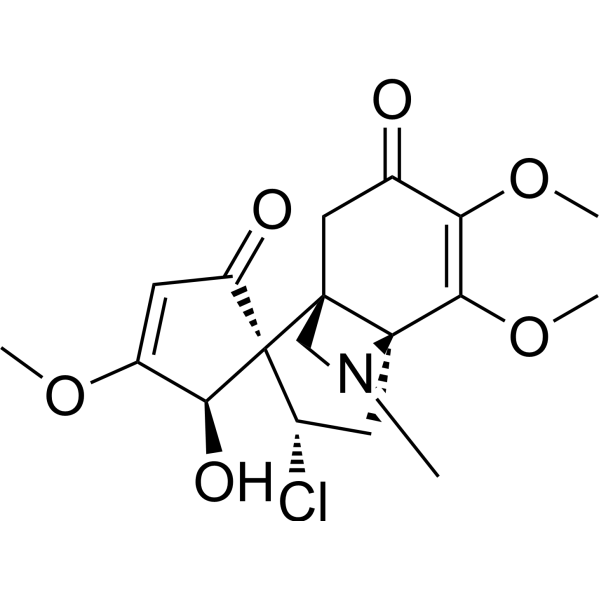
    Dauricumine is a chlorinated alkaloid that inhibits NF-κB ligand-induced differentiation of mouse bone marrow-derived macrophages into multinucleated osteoclasts .
    Dauricumine
  • HY-152940

    C24:1 β-glucosylceramide

    Drug Derivative PKC C-type Lectin-like Receptors (CTLRs) Metabolic Disease Inflammation/Immunology
    βGlcCer is a glycosphingolipid. βGlcCer directly increases the development and PKCα and PKCδ activation in mouse bone marrow-derived DCs (BMDCs) . β-GlcCer accumulating in Gaucher disease activates microglia through macrophage-inducible C-type lectin (Mincle) to induce phagocytosis of living neurons, which exacerbates Gaucher symptoms .
    βGlcCer
  • HY-W018643R

    Methyl ferulate (Standard)

    p38 MAPK Reference Standards Autophagy Neurological Disease Inflammation/Immunology Cancer
    Ferulic acid methyl ester (Standard) is the analytical standard of Ferulic acid methyl ester (HY-W018643). This product is intended for research and analytical applications. Ferulic acid methyl ester (Methyl ferulate) is a derivative of ferulic acid, isolated from Stemona tuberosa, with anti-inflammatory and antioxidant properties . Ferulic acid methyl ester is a cell membrane and brain permeable compound, shows free radical scavenging ability, used in the research of neurodegenerative disorders . Ferulic acid methyl ester inhibits COX-2 expression, blocks p-p38 and p-JNK in primary bone marrow derived-macrophages .
    Ferulic acid methyl ester (Standard)
  • HY-182757

    RANKL/RANK Nuclear Factor of activated T Cells (NFAT) Cathepsin Metabolic Disease Inflammation/Immunology
    Y1693 is an orally active RANKL inhibitor with a Kd of 5.03 μM for hRANKL. Y1693 inhibits the activation of the downstream c-fos/NFATc1 signaling pathway by blocking its interaction with RANK. Y1693 significantly inhibits RANKL-induced osteoclast differentiation, F-actin ring formation and bone resorptive activity, while downregulating the mRNA and protein expressions of TRAP, cathepsin K, c-fos and NFATc1. Y1693 shows no obvious cytotoxicity to bone marrow-derived macrophages and osteoclast precursor cells, and exhibits favorable ADME properties. Y1693 improves ovariectomy-induced osteoporosis in mice and reverses ligation-induced periodontal alveolar bone loss. Y1693 is applicable to research related to osteoporosis and periodontal diseases .
    Y1693
  • HY-165396

    Bacterial Infection
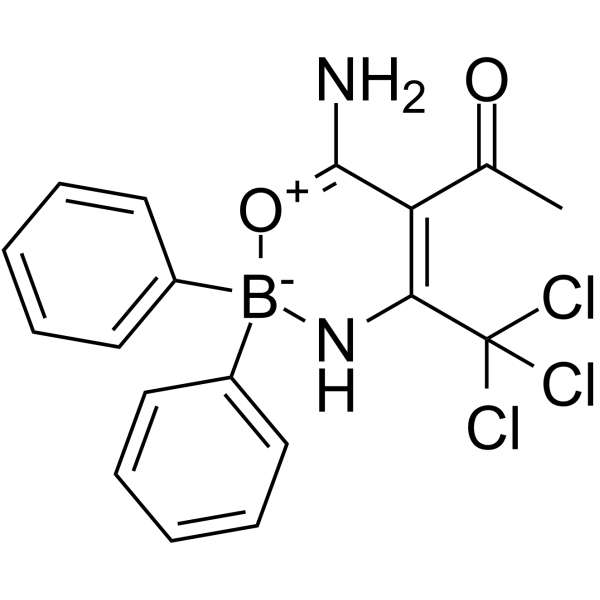
    HC103A is an Antibacterial agent and a DosS/DosT histidine sensor kinase inhibitor, with an IC50 of 0.5 μM against DosS and ~5 μM against DosT of *Mycobacterium tuberculosis*. HC103A inhibits the autophosphorylation of DosS/DosT. HC103A suppresses hypoxia-induced triacylglycerol synthesis and the viability of Mtb. HC103A can be used in the research of tuberculosis .
    HC103A

Inquiry Online

Your information is safe with us. * Required Fields.

Salutation


Country or Region *

Applicant Name *


Organization Name *

Department *


Email Address *


Product Name *

Cat. No.


Requested quantity *

Phone Number *


Remarks

Inquiry Online

Inquiry Information

Product Name:
Cat. No.:
Quantity:
MCE Japan Authorized Agent:

