
79 Results for "

CD44

" in MedChemExpress (MCE) Product Catalog:
Products (79)

79 Results for "CD44" in MCE Product Catalog:

4
4 Cited Publications
Referencia número: HY-P99126

Áreas de investigación:  

Inflammation/Immunology Cancer

Anti-Mouse/Human CD44 Antibody (IM7) is an anti-huamn and mouse CD44 IgG2b monoclonal antibody that recognizes a conserved epitope outside the HA-binding domain of the CD44 molecule. Anti-Mouse/Human CD44 Antibody (IM7) exerts a potent anti-inflammatory effect by inducing the shedding of cell surface CD44, significantly improving symptoms in mice with rheumatoid arthritis without affecting relevant immune responses. Anti-Mouse/Human CD44 Antibody (IM7) can be used for researches on inflammation conditions and cancer such as arthritis and osteosarcoma .
loading...
    loading...
3
3 Cited Publications
Referencia número: HY-108910
No. CAS: 9004-07-3
Synonyms: EC 3.4.21.1; Chymotrypsin A
Chymotrypsin (EC 3.4.21.1; Chymotrypsin A) is an orally effective inhibitor targeting molecules such as TLR4, NF-κB, MMP-1, TNF-α, IL-1β, and IL-6. Chymotrypsin downregulates the TLR4/NF-κB signaling pathway, inhibiting the release of inflammatory factors, reducing cell infiltration and tissue damage. It also reduces the expression of tumor cell adhesion molecules (such as CD44 and CD54) and can be specifically detected by fluorescent probes (such as NBD-3). Chymotrypsin has anti-inflammatory, hepatoprotective, joint damage-reducing, liver protection against lipotoxicity, and anti-tumor metastasis functions. It can be used in research on diseases such as rheumatoid arthritis, non-alcoholic fatty liver disease, and melanoma metastasis. Chymotrypsin can be used in studies of inflammation, edema, and expectoration .
loading...
    loading...
3
3 Cited Publications
Referencia número: HY-149897
No. CAS: 3009761-01-4
Pureza:  99.36%
Áreas de investigación:  

Cancer

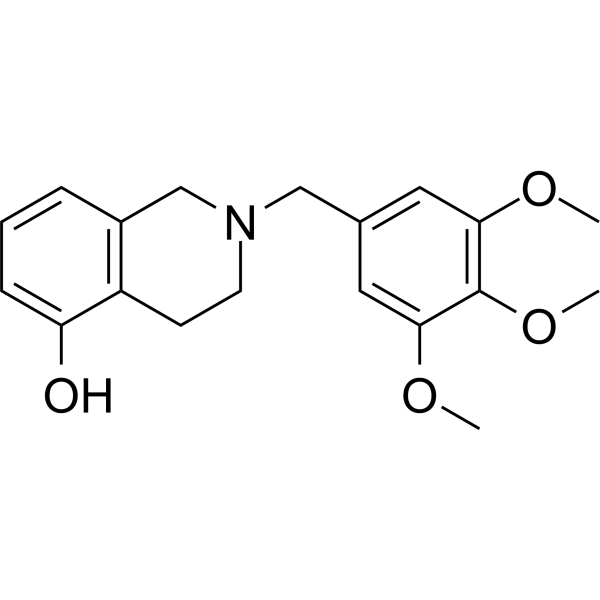
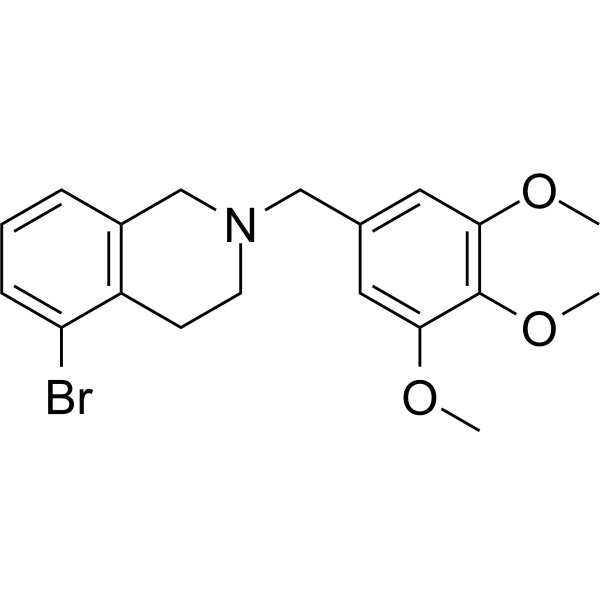
HA-CD44 interaction inhibitor 2 is a CD44 inhibitor that can inhibit the interaction between Hyaluronic acid (HA) (HY-B0633A) and CD44. HA-CD44 interaction inhibitor 2 acts as an antiproliferative agent against CD44 + cancer cells. HA-CD44 interaction inhibitor 2 can disrupt the integrity of cancer spheres and reduce cancer cell viability in a dose-dependent manner. HA-CD44 interaction inhibitor 2 is applicable for tumor research .
loading...
    loading...
3
3 Cited Publications
Referencia número: HY-108910A
No. CAS: 9004-07-3
Synonyms: EC 3.4.21.1 (MS grade); Chymotrypsin A (MS grade)
Áreas de investigación:  

Inflammation/Immunology

Chymotrypsin (EC 3.4.21.1; Chymotrypsin A) (MS grade) is an orally effective inhibitor targeting molecules such as TLR4, NF-κB, MMP-1, TNF-α, IL-1β, and IL-6. Chymotrypsin (MS grade) downregulates the TLR4/NF-κB signaling pathway, inhibits the release of inflammatory factors, reduces cell infiltration and tissue damage, and also reduces the expression of tumor cell adhesion molecules (such as CD44 and CD54). It can also be specifically detected by fluorescent probes (such as NBD-3). Chymotrypsin (MS grade) has anti-inflammatory, hepatoprotective, joint damage-reducing, liver protection against lipotoxicity, and anti-tumor metastasis functions, and can be used in the research of diseases such as rheumatoid arthritis, non-alcoholic fatty liver disease, and melanoma metastasis. Chymotrypsin (MS grade) can be used in studies of inflammation, edema, and expectoration .
loading...
    loading...
3
3 Cited Publications
Referencia número: HY-P86463
Synonyms: CD44; LHR; MDU2; MDU3; MIC4; CD44 antigen; CDw44; Epican; Extracellular matrix receptor III; GP90 lymphocyte homing/adhesion receptor; HUTCH-I; Heparan sulfate proteoglycan; Hermes antigen; Hyaluronate receptor; Phagocytic glycoprotein 1; Phagocytic glycoprotein I; ECMR-III; PGP-1; PGP-I

Host:  

Rabbit

Application:  

WB, IHC-P, ICC/IF, IP, ELISA

Reactivity:  

Human, Mouse, Rat

loading...
    loading...
2
2 Cited Publications
Referencia número: HY-154812
No. CAS: 2604513-16-6
Pureza:  99.81%
Synonyms: KTX-1001
Áreas de investigación:  

Cancer

Gintemetostat (KTX-1001) is an orally active, highly specific NSD2/MMSET histone methyltransferase inhibitor with human NSD2 IC50 values ranging 0.460-2.17 nM and NSD2 SET domain IC50 of 2.32 nM and Kd values ranging 6.3-70.4 nM .Gintemetostat reduces H3K36me2 levels, impairs multiple myeloma cell adhesion and colony formation, enhances cytotoxicity, boosts T-cell activation, and sensitizes resistant multiple myeloma cells to other agents .Gintemetostat can be used for the research of multiple myeloma and relapsed and refractory multiple myeloma .
loading...
    loading...
2
2 Cited Publications
Referencia número: HY-P2230
No. CAS: 220334-14-5
Synonyms: A6 Peptide
Target:  

PAI-1

Áreas de investigación:  

Cancer

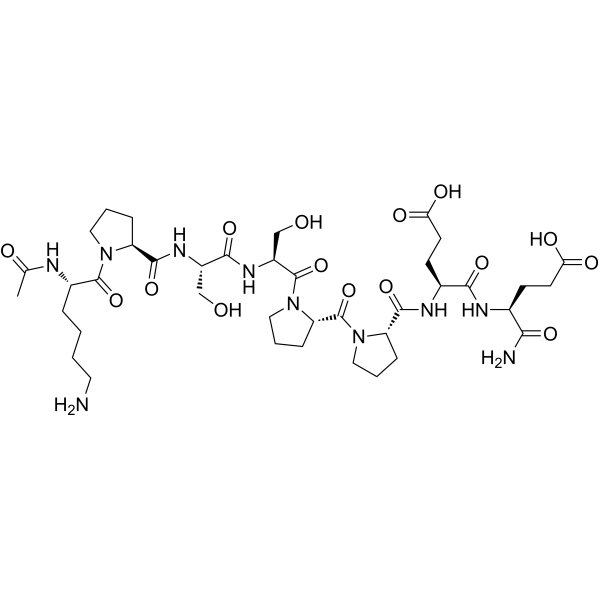
Angstrom6 (A6 Peptide) is an 8 amino-acid peptide derived from single-chain urokinase plasminogen activator (scuPA) and interferes with the uPA/uPAR cascade and abrogates downstream effects. Angstrom6 binds to CD44 resulting in the inhibition of migration, invasion, and metastasis of tumor cells, and the modulation of CD44-mediated cell signaling .
loading...
    loading...
2
2 Cited Publications
Referencia número: HY-P2284
No. CAS: 959961-23-0
Áreas de investigación:  

Cancer

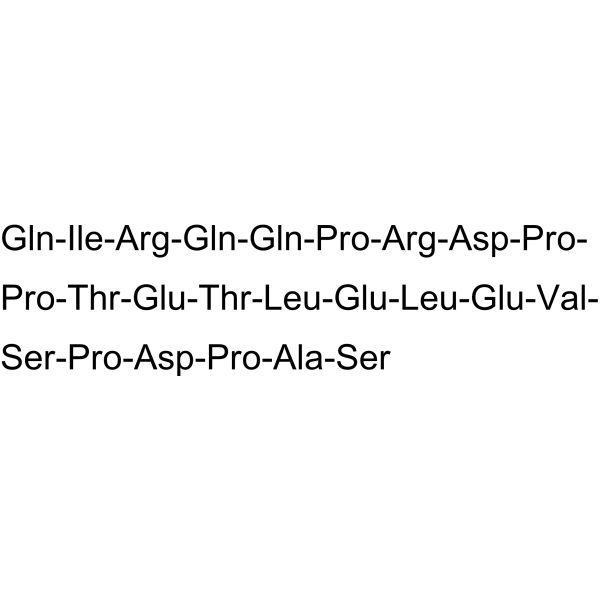
AD 01, a 24 amino acid peptide of FKBPL (FK506-binding protein like), possesses potent anti-angiogenic activity. AD 01 bind to the CD44 receptor and inhibit tumour cell migration in a CD44 dependant manner .
loading...
    loading...
2
2 Cited Publications
Referencia número: HY-P990859

Áreas de investigación:  

Cancer

Anti-CD44 Antibody (Hermes-1) is a kind of rat IgG2a κ chimeric antibody, targeting to human CD44. Anti-CD44 Antibody (Hermes-1) blocks the binding of hyaluronan to CD44. Anti-CD44 Antibody (Hermes-1) restores (Platelet-derived Growth Factor-BB)-induced β-receptor activation and motility in fibroblasts. Anti-CD44 Antibody (Hermes-1) causes partial loss of the anti-aging effect of hyaluronic .
loading...
    loading...
1
1 Cited Publications
Referencia número: HY-P70507
Pureza:  ≥ 95%, as determined by reducing SDS-PAGE.
Synonyms: CD44; Chondroitin Sulfate Proteoglycan 8; Prev. MDU2; Heparan Sulfate Proteoglycan; Prev. MDU3; Phagocytic Glycoprotein I; Prev. MIC4; Phagocyte Glycoprotein 1; HUTCH-I; In(Lu) Related-P80; CDw44; Soluble CD44; GP90 Lymphocyte Homing/Adhesion Receptor; EC
Species:  
Human
Source:  
HEK293
loading...
    loading...
1
1 Cited Publications
Referencia número: HY-P80062
Synonyms: LHR antibody; BA-1 antibody; CD 44 antibody; CD44 antibody; CD44 antigen antibody; CD44 molecule (Indian blood group) antibody; CD44 molecule antibody; CD44_HUMAN antibody; CDw44 antibody; Cell surface glycoprotein CD44 antibody; chondroitin sulfate proteoglycan 8 antibody; CSPG8 antibody; ECMR-III antibody; Epican antibody; Extracellular matrix receptor III antibody; GP90 lymphocyte homing/adhesion receptor antibody; HCELL antibody; hematopoietic cell E- and L-selectin ligand antibody; Heparan sulfate proteoglycan antibody; Hermes antigen antibody; homing function and Indian blood group system antibody; HSA antibody; HUTCH-I antibody; HUTCH1 antibody; Hyaluronate receptor antibody; IN antibody; MC56 antibody; MDU2 antibody; MDU3 antibody

Host:  

Rabbit

Application:  

WB, IHC-P, FC

Reactivity:  

Human, Mouse

loading...
    loading...
1
1 Cited Publications
Referencia número: HY-P84122
Synonyms: CD44; LHR; MDU2; MDU3; MIC4; CD44 antigen; CDw44; Epican; Extracellular matrix receptor III; GP90 lymphocyte homing/adhesion receptor; HUTCH-I; Heparan sulfate proteoglycan; Hermes antigen; Hyaluronate receptor; Phagocytic glycoprotein 1; Phagocytic glycoprotein I; ECMR-III; PGP-1; PGP-I

Host:  

Mouse

Application:  

WB, IHC-P, ICC/IF, FC, ELISA

Reactivity:  

Human, Mouse, Rat, Monkey

loading...
    loading...
Referencia número: HY-149898
No. CAS: 3052354-70-5
Pureza:  99.34%
Áreas de investigación:  

Cancer

HA-CD44 interaction inhibitor 1 is a CD44 inhibitor that can inhibit the interaction between Hyaluronic acid (HA) (HY-B0633A) and CD44. HA-CD44 interaction inhibitor 1 exerts an antiproliferative effect on CD44+ cancer cell lines. HA-CD44 interaction inhibitor 1 can be used for the research of cancer .
loading...
    loading...
Referencia número: HY-P99281
No. CAS: 214559-60-1
Synonyms: BIWA 4; Anti-CD44 Recombinant Antibody
Target:  

CD44 ADC Antibodies

Áreas de investigación:  

Cancer

Bivatuzumab (BIWA 4) is a humanized monoclonal antibody targeting CD44v6 . Bivatuzumab binds the v6 variant exon of CD44 with a Kd of 3.4 nM, undergoes internalization after binding, and achieves tumor localization. Bivatuzumab is inactive in antibody-dependent cell-mediated cytotoxicity and complement-dependent cytotoxicity. Bivatuzumab can serve as the antibody component for synthesizing antibody-drug conjugates (ADCs), such as Bivatuzumab mertansine (BIWI 1). Bivatuzumab can be used for research on head and neck squamous cell carcinoma or esophageal squamous cell carcinoma .
loading...
    loading...
Referencia número: HY-P991558
Synonyms: RG-7356
Target:  

CD44

Áreas de investigación:  

Cancer

RO-5429083 (RG-7356) is a humanized monoclonal antibody targeting CD44. RO-5429083 binds to the extracellular domain of CD44 and inhibits constitutive EGFR phosphorylation. RO-5429083 suppresses tumor growth in xenograft models and can be used in research related to head and neck squamous cell carcinoma and acute myeloid leukemia .
loading...
    loading...
Referencia número: HY-B0633D
No. CAS: 9067-32-7
Hyaluronic acid sodium (MW 200-1560) is a biopolymer composed of repeating disaccharide units, with a molecular weight of 200-1560. Hyaluronic acid sodium is a major component of the extracellular matrix (ECM). It is synthesized on the plasma membrane. Hyaluronic acid sodium exerts its effects by binding to receptors CD44 and RHAMM. Hyaluronic acid sodium activates PI3K-Akt signaling. Hyaluronic acid sodium also enhances cell invasion and angiogenesis by promoting or stimulating the binding of proteolytic MMP-9 to the cell surface. Elevated hyaluronic acid levels are associated with tumor cell growth, adhesion, migration, invasion, and angiogenesis in digestive system cancers. Hyaluronic acid sodium is involved in tissue remodeling and rapid cell proliferation in several physiological processes, including embryonic morphogenesis and wound healing. Hyaluronic acid sodium can be used as a regulator of cancer-associated lymphangiogenesis. Hyaluronic acid sodium can be used as a drug delivery carrier for sodium butyrate, enhancing its anti-proliferative activity against breast cancer cell lines. Hyaluronic acid sodium can lubricate the corneal endothelium. Hyaluronic acid sodium can improve tissue hydration and enhance the resistance of cells to mechanical damage. Hyaluronic acid sodium has been conjugated with antibodies to ensure that the active compound continues to exert its effects at the site of inflammation. Hyaluronic acid sodium can be used in research in the fields of osteoarthritis, ophthalmology, cosmetic dermatology, oncology, and liver diseases .
loading...
    loading...
Referencia número: HY-B0633E
No. CAS: 9004-61-9
Synonyms: Hyaluronan, low endotoxin; Hyaluronate, low endotoxin
Hyaluronic acid, low endotoxin (Hyaluronan, low endotoxin) is a biopolymer composed of repeating disaccharide units containing low levels of endotoxin. Hyaluronic acid is a major component of the extracellular matrix (ECM). It is synthesized on the plasma membrane. Hyaluronic acid exerts its effects by binding to receptors CD44 and RHAMM. Hyaluronic acid activates PI3K-Akt signaling. Hyaluronic acid also enhances cell invasion and angiogenesis by promoting or stimulating the binding of proteolytic MMP-9 to the cell surface. Elevated hyaluronic acid levels are associated with tumor cell growth, adhesion, migration, invasion, and angiogenesis in digestive system cancers. Hyaluronic acid is involved in tissue remodeling and rapid cell proliferation in several physiological processes, including embryonic morphogenesis and wound healing. Hyaluronic acid can be used as a regulator of cancer-associated lymphangiogenesis. Hyaluronic acid can be used as a drug delivery carrier for sodium butyrate, enhancing its anti-proliferative activity against breast cancer cell lines. Hyaluronic acid can lubricate the corneal endothelium. Hyaluronic acid can improve tissue hydration and enhance the resistance of cells to mechanical damage. Hyaluronic acid has been conjugated with antibodies to ensure that the active compound continues to exert its effects at the site of inflammation. Hyaluronic acid can be used in research in the fields of osteoarthritis, ophthalmology, cosmetic dermatology, oncology, and liver diseases .
loading...
    loading...
Referencia número: HY-D2836
Synonyms: FITC-Hyaluronate (MW 1000000)
FITC-HA (MW 1000000) is hyaluronic acid (HA) (HY-B0633A) labeled with FITC (HY-66019). FITC-HA retains the ability of HA to bind to receptors (such as CD44) and form extracellular matrices, while it can be detected by fluorescence microscopy or flow cytometry for tracing the localization, binding, internalization and metabolic pathways of HA in cells, tissues or living organisms (Ex/Em ≈ 490/520 nM) .
loading...
    loading...
Referencia número: HY-P990045
No. CAS: 2749515-10-2
Synonyms: ALE.F02

Target:  

Claudin

Áreas de investigación:  

Endocrinology

Lixudebart (ALE.F02) is a humanized immunoglobulin G1-kappa, anti-CLDN1 monoclonal antibody. Lixudebart disrupts CLDN1 interactions with CD44 and MMP14, reduces renal macrophage infiltration, epithelial activation, and urinary albumin-to-creatinine ratio, and attenuates glomerulosclerosis. Lixudebart can be used for the research of focal segmental glomerulosclerosis .
loading...
    loading...
Referencia número: HY-RS02248
Áreas de investigación:  

Others

CD44 Human Pre-designed siRNA Set A contains three designed siRNAs for CD44 gene (Human), as well as a negative control, a positive control, and a FAM-labeled negative control.

loading...
    loading...

