1. Search Result
Search Result
Results for "

CEM CD4 T lymphocytes

" in MedChemExpress (MCE) Product Catalog:

747

Inhibitors & Agonists

2

Screening Libraries

6

Fluorescent Dye

18

Biochemical Assay Reagents

107

Peptides

4

MCE Kits

133

Inhibitory Antibodies

110

Natural
Products

16

Recombinant Proteins

31

Isotope-Labeled Compounds

7

Antibodies

1

Click Chemistry

35

Oligonucleotides

Cat. No. Product Name Target Research Areas Chemical Structure
  • HY-P9997

    ANB030

    PD-1/PD-L1 Inflammation/Immunology
    Rosnilimab (ANB030) is a PD-1 agonist IgG1 monoclonal antibody. Rosnilimab can inhibit T cell proliferation, the secretion of inflammatory cytokines, and reduce CD4 and CD8 T cells with high PD-1 expression. Rosnilimab can be used in the research of inflammatory diseases such as colitis and rheumatoid arthritis .
    Rosnilimab
  • HY-P990792

    Transmembrane Glycoprotein Inflammation/Immunology
    Anti-Mouse CD4 Antibody (GK1.5) is an anti-mouse CD4 IgG2b monoclonal antibody. Anti-Mouse CD4 Antibody (GK1.5) can significantly deplete CD4 + T cells. Anti-Mouse CD4 Antibody (GK1.5) can extend the survival rate of xenograft models. Anti-Mouse CD4 Antibody (GK1.5) can be used for research on immunology. The recommend isotype control of Anti-Mouse CD4 Antibody (GK1.5): Rat IgG2b kappa, Isotype Control (HY-P990682) .
    Anti-Mouse CD4 Antibody (GK1.5)
  • HY-110382
    Cyclic-di-GMP disodium
    5+ Cited Publications

    c-di-GMP disodium; cyclic diguanylate disodium; 5GP-5GP disodium

    STING Endogenous Metabolite Cancer
    Cyclic-di-GMP disodium is a STING agonist and a bacterial second messenger that coordinates different aspects of bacterial growth and behavior, including motility, virulence, biofilm formation, and cell cycle progression. Cyclic-di-GMP disodium has anti-cancer cell proliferation activity and also induces elevated CD4 receptor expression and cell cycle arrest. Cyclic-di-GMP disodium can be used in cancer research [4].
    Cyclic-di-GMP disodium
  • HY-17593
    Solithromycin
    3 Publications Verification

    CEM-101; OP-1068

    Bacterial Antibiotic Infection
    Solithromycin (CEM-101) is an orally bioavailable, effective antimicrobial agent, with IC50s for inhibition of cell viability, protein synthesis, and growth rate are 7.5 ng/mL, 40 ng/mL, and 125 ng/mL for Streptococcus pneumonia, Staphylococcus aureus, and Haemophilus influenzae, respectively. Solithromycin binds to the large 50S subunit of the ribosome and inhibits protein biosynthesis .
    Solithromycin
  • HY-150741
    ODN 2216
    1 Publications Verification

    Toll-like Receptor (TLR) IFNAR Interleukin Related Infection Inflammation/Immunology Cancer
    ODN 2216 is a type A CpG oligodeoxynucleotide vaccine adjuvant and a TLR9 agonist. ODN 2216 interacts with TLR9 in the lysosomes of CD4 + T cells and activates feedback-dependent signaling pathways. ODN 2216 induces the production of type I interferons, IL-6 and TGF-β via the IRAK4/IRF7 axis, while increasing intracellular ATP levels. ODN 2216 not only induces the differentiation of CD4 + T cells into anti-inflammatory Th3-like regulatory phenotypes to inhibit autologous proliferation, but also enhances the specific CD8 + T cell-mediated cytotoxicity against Mammaglobin-A in breast cancer cells. ODN 2216 is widely used in studies related to breast cancer and systemic lupus erythematosus .
    ODN 2216
  • HY-P99908

    NT-17

    Interleukin Related Cancer
    Efineptakin alfa (NT-17) is a long-acting recombinant human IL-7. Efineptakin alfa supports the proliferation and survival CD4 + and CD8 + cells in both human and mice. Efineptakin alfa can be used for glioblastoma research .
    Efineptakin alfa
  • HY-15440A
    Fostemsavir
    2 Publications Verification

    BMS-663068

    HIV Infection
    Fostemsavir (BMS-663068) is the phosphonooxymethyl prodrug of BMS-626529. Fostemsavir (BMS-663068) is a novel attachment inhibitor that targets HIV-1 gp120 and prevents its binding to CD4 + T cells.
    Fostemsavir
  • HY-134809

    CADA

    HIV Infection Inflammation/Immunology
    Cyclotriazadisulfonamide (CADA) is a specific CD4-targeted HIV entry inhibitors. Cyclotriazadisulfonamide (CADA) inhibits the co-translational translocation of human CD4 (huCD4) into the ER lumen in a signal peptide (SP)-dependent way. Cyclotriazadisulfonamide is also a Sec61 translocon inhibitor .
    Cyclotriazadisulfonamide
  • HY-15440
    Temsavir
    5+ Cited Publications

    BMS-626529

    HIV Infection
    Temsavir (BMS-626529) is a novel attachment inhibitor that targets HIV-1 gp120 and prevents its binding to CD4 + T cells.
    Temsavir
  • HY-150741C
    ODN 2216 sodium
    1 Publications Verification

    Toll-like Receptor (TLR) Cancer
    ODN 2216 sodium is a type A CpG oligodeoxynucleotide vaccine adjuvant and a TLR9 agonist. ODN 2216 sodium interacts with TLR9 in the lysosomes of CD4 + T cells and activates feedback-dependent signaling pathways. ODN 2216 sodium induces the production of type I interferons, IL-6 and TGF-β via the IRAK4/IRF7 axis, while increasing intracellular ATP levels. ODN 2216 sodium not only induces the differentiation of CD4 + T cells into anti-inflammatory Th3-like regulatory phenotypes to inhibit autologous proliferation, but also enhances the specific CD8 + T cell-mediated cytotoxicity against Mammaglobin-A in breast cancer cells. ODN 2216 sodium is widely used in studies related to breast cancer and systemic lupus erythematosus .
    ODN 2216 sodium
  • HY-P2560
    LCMV GP (61-80)
    1 Publications Verification

    Arenavirus Infection Inflammation/Immunology
    LCMV GP (61-80) is a peptide fragment derived from lymphocytic choriomeningitis virus (LCMV) glycoprotein (GP), and corresponds to amino acids 61-80. LCMV GP (61-80) is a specific epitope which can induce CD4 + T-cell response .
    LCMV GP (61-80)
  • HY-P6312

    MHC Inflammation/Immunology
    ESAT6 Epitope is a ESAT6 CD4 + T cell epitope. ESAT6 Epitope binds to MHC class I molecules with an IC50 value of approximately 180 nM. ESAT6 Epitope has weak immunogenicity. ESAT6 Epitope can be used in studies related to pulmonary tuberculosis .
    ESAT6 Epitope
  • HY-139780

    ROR Inflammation/Immunology
    JNJ-61803534 is a potent and orally active RORγt inverse agonist with an IC50 of 9.6  nM. JNJ-61803534 has anti-inflammatory activity. JNJ-61803534 inhibits IL-17A production in human CD4+ T cells under Th17 differentiation conditions .
    JNJ-61803534
  • HY-119347
    Cirsilineol
    3 Publications Verification

    IFNAR STAT Inflammation/Immunology Cancer
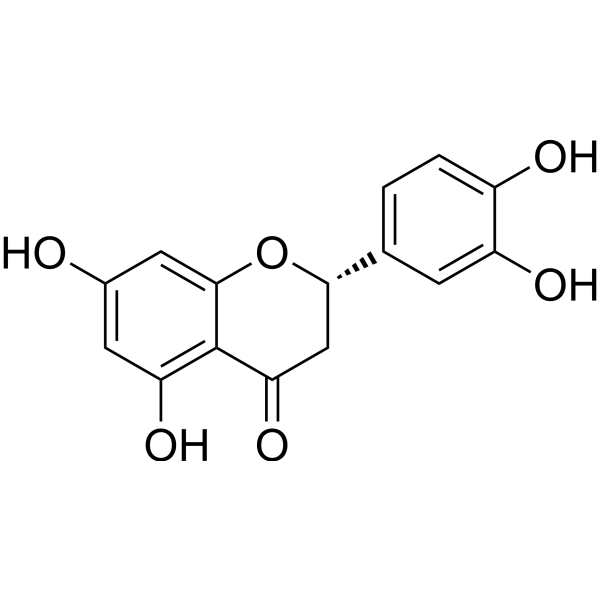
    Cirsilineol, a natural flavone compound, selectively inhibits IFN-γ/STAT1/T-bet signaling in intestinal CD4 + T cells. Cirsilineol has potent immunosuppressive and anti-tumor properties. Cirsilineol significantly ameliorates trinitro-benzene sulfonic acid (TNBS)-induced T-cell-mediated experimental colitis in mice .
    Cirsilineol
  • HY-P99266

    Anti-Human CD4 Recombinant Antibody

    Transmembrane Glycoprotein Inflammation/Immunology Cancer
    Zanolimumab (Anti-Human CD4 Recombinant Antibody) is a fully human monoclonal antibody targets CD4. Zanolimumab effectively inhibits T-cell receptor (TCR) signal transduction. Zanolimumab can be used for the research of heumatoid arthritis, psoriasis, melanoma, cutaneous and peripheral T-cell lymphoma .
    Zanolimumab
  • HY-P990135

    Transmembrane Glycoprotein Infection Inflammation/Immunology
    Anti-Rat CD4 Antibody (OX-38) is a mouse-derived IgG2a κ type antibody inhibitor, targeting to rat CD4. Anti-Rat CD4 Antibody (OX-38) can deplete CD4 + cells. Anti-Rat CD4 Antibody (OX-38) can be used for the researches of immunology and infection, such as borna disease and transplantation [4].
    Anti-Rat CD4 Antibody (OX-38)
  • HY-P0272

    HIV Infection
    Peptide T is an octapeptide from the V2 region of HIV-1 gp120. Peptide T is a ligand for the CD4 receptor and prevents binding of HIV to the CD4 receptor.
    Peptide T
  • HY-14134
    BMS-378806
    5+ Cited Publications

    BMS-806

    HIV Infection
    BMS-378806 is a potent HIV-1 attachment inhibitor that interferes with CD4-gp120 interactions. BMS-378806 selectively inhibits the binding of HIV-1 gp120 to the CD4 receptor with EC50 of 0.85-26.5 nM in virus.
    BMS-378806
  • HY-107780

    c-di-GMP; cyclic diguanylate; 5GP-5GP

    STING Endogenous Metabolite Cancer
    Cyclic-di-GMP is a STING agonist and a bacterial second messenger that coordinates different aspects of bacterial growth and behavior, including motility, virulence, biofilm formation, and cell cycle progression. Cyclic-di-GMP has anti-cancer cell proliferation activity and also induces elevated CD4 receptor expression and cell cycle arrest. Cyclic-di-GMP can be used in cancer research [4].
    Cyclic-di-GMP
  • HY-171860

    PROTACs HIV Infection Cancer
    FC-14369 is a PROTAC degrader targeting the HIV-1 Nef protein, with a DC50 value of 160 nM. Through its bifunctional structure, FC-14369 binds to Nef and the Cereblon E3 ubiquitin ligase, induces Nef ubiquitination and proteasomal degradation, restores the expression of cell-surface CD4 and MHC-I, and inhibits HIV-1 replication. FC-14369 can be used in research on HIV infection and AIDS. FC-14369 is applicable to studies related to HIV-1 infection .
    FC-14369
  • HY-P9998

    UB421

    HIV Cancer
    Semzuvolimab is a human IgG1κ antibody, targeting to p55, T cell surface antigen T4/Leu-3 (CD4). Human CD4 antibodies can neutralize HIV infection and have the potential to inhibit HAART stable HIV infection .
    Semzuvolimab
  • HY-107780B
    Cyclic-di-GMP diammonium
    5+ Cited Publications

    c-di-GMP diammonium; cyclic diguanylate diammonium; 5GP-5GP diammonium

    STING Endogenous Metabolite Cancer
    Cyclic-di-GMP diammonium is a STING agonist and a bacterial second messenger that coordinates different aspects of bacterial growth and behavior, including motility, virulence, biofilm formation, and cell cycle progression. Cyclic-di-GMP diammonium has anti-cancer cell proliferation activity and also induces elevated CD4 receptor expression and cell cycle arrest. Cyclic-di-GMP diammonium can be used in cancer research [4].
    Cyclic-di-GMP diammonium
  • HY-P99141

    LAG-3 Inflammation/Immunology Cancer
    Anti-Mouse LAG-3 Antibody (C9B7W) is an anti-mouse LAG-3 IgG1 monoclonal antibody. Anti-Mouse LAG-3 Antibody (C9B7W) can enhance CD4 + T cell function and exert anti-tumor effects without blocking the interaction between LAG-3 and MHCII. Anti-Mouse LAG-3 Antibody (C9B7W) can be used for research on cancer such as head and neck squamous cell carcinoma (HNSCC) .
    Anti-Mouse LAG-3 Antibody (C9B7W)
  • HY-Y0788

    HIV Infection
    Indoline is a derivative of Indole (HY-W001132). Indoline can use as the basic structure for CD4 mimetic compounds (CD4mcs), which triggers conformational changes of the HIV-1 envelope glycoprotein (Env) in advance, and causes viral inactivation. Indoline binds to gp120. Indoline CD4mcs can inhibit HIV-1AD8 with an IC50 in the micromolar range .
    Indoline
  • HY-115488A

    HIV Infection
    BNM-III-170, CD4-mimeticcompound, is an anti-HIV-1 agent. BNM-III-170 binds to the Phe43 cavity of HIV 1 gp120. BNM-III-170 can inhibits HIV-1 viral entry into target cells. BNM-III-170 can be used for the research of HIV-1 infection .
    BNM-III-170
  • HY-76648

    HIV Infection
    NBD-556, a CD4 mimetic, is a potent HIV-1 entry inhibitor that blocks the gp120-CD4 interaction. NBD-556 shows potent cell fusion and virus-cell fusion inhibitory activity at low micromolar levels .
    NBD-556
  • HY-P5425A

    Transmembrane Glycoprotein Cancer
    Tetanus Toxin (830–844) TFA is a biological active peptide. (tetanus toxin-derived peptide TT830–844 CD4 + T-cell epitope. This promiscuous CD4 + T-cell epitope can bind to a wide range of HLA–DRB molecules and is thus expected to activate CD4 + T-cell responses in a large part of the human population) .
    Tetanus Toxin (830–844) TFA
  • HY-P991246

    Virus Protease HIV Infection
    VRC01LS is a humanized monoclonal antibody inhibitor targeting the CD4-binding site of HIV-1 envelope glycoprotein (Env). VRC01LS blocks the binding of HIV-1 to host cell CD4 receptor, inhibiting viral entry. VRC01LS is promising for research of HIV-1 infection .
    VRC01LS
  • HY-100039

    HIV Infection
    YYA-021 is a small-molecule CD4 mimic that inhibits HIV entry, with high anti-HIV activity and low cytotoxicity .
    YYA-021
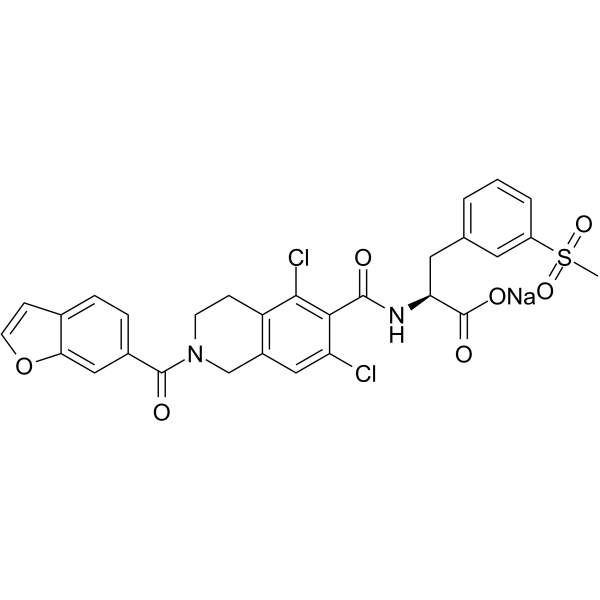
  • HY-W181026

    Fluorescent Dye Inflammation/Immunology
    KLF10-IN-1 (#48-15) is a KLF10 inhibitor with an IC50 value of 40 μM for KLF10 reporter gene. KLF10-IN-1 can inhibit KLF10-DNA binding and transcriptional activity, block the conversion of CD4+CD25 T cells to CD4+CD25+T regulatory cells, and inhibit the expression of KLF10 target genes. KLF10-IN-1 can be used as a useful mechanistic probe to study KLF10-mediated effects and T regulatory cell biology .
    KLF10-IN-1
  • HY-P990861

    Transmembrane Glycoprotein Infection Inflammation/Immunology Cancer
    Anti-CD4 Antibody (OKT-4) is a kind of mouse IgG2b κ chimeric antibody inhibitor, targeting to human CD4. Anti-CD4 Antibody (OKT-4) can deplete T cells. Anti-CD4 Antibody (OKT-4) can be used for the researches of cancer, infection and immunology, such as melanoma and adenovirus infection .
    Anti-CD4 Antibody (OKT-4)
  • HY-15440B
    Fostemsavir Tris
    2 Publications Verification

    BMS-663068 Tris

    HIV Infection
    Fostemsavir Tris (BMS-663068 (Tris)) is the phosphonooxymethyl proagent of BMS-626529. Fostemsavir Tris (BMS-663068 (Tris)) is a novel attachment inhibitor that targets HIV-1 gp120 and prevents its binding to CD4 + T cells.
    Fostemsavir Tris
  • HY-P99999
    Anti-Mouse CD4 Antibody (YTS 191)
    1 Publications Verification

    HIV Infection
    Anti-Mouse CD4 Antibody (YTS 191) is anti-mouse CD4 IgG2b antibody inhibitor derived from host Rat.
    Anti-Mouse CD4 Antibody (YTS 191)
  • HY-P99028

    TMB-355; TNX-355

    HIV Infection
    Ibalizumab (TMB-355) is a humanized anti-CD4 IgG4 monoclonal antibody. Ibalizumab prevents HIV cell entry by binding to CD4 receptor. Ibalizumab can be used for the research of infection, such as HIV-1 infection .
    Ibalizumab
  • HY-P99790

    CEN 000029; cM-T412

    Transmembrane Glycoprotein Inflammation/Immunology
    Priliximab (CEN 000029) is an anti-CD4 humanized monoclonal antibody. Priliximab binds to CD4 on the surface of T cells, resulting in a significant and sustained reduction in circulating CD4 + T cells. Priliximab can be used in research of rheumatoid arthritis (RA) .
    Priliximab
  • HY-P99680

    SB-210396; IDEC CE9.1

    Interleukin Related Cancer
    Keliximab (SB-210396) is a chimeric human/macaque IgG1 anti-CD4 monoclonal antibody with a Ki value of 1.0 nM for soluble CD4. Keliximab blocks T cell proliferation and inhibits IL-2 production. Keliximab can be used for cancer research .
    Keliximab
  • HY-105037A

    IPP-201101 TFA

    Autophagy Inflammation/Immunology
    Forigerimod TFA (IPP-201101 TFA) is a CD4 T-cell modulator. Forigerimod TFA is a 21-amino-acid fragment of U1 small nuclear ribonucleoprotein 70 kDa that is phosphorylated at Ser140. Forigerimod TFA can potently inhibit autophagy. Forigerimod can be used for the research of autoimmune disorders, such as systemic lupus erythematosus (SLE) [4].
    Forigerimod TFA
  • HY-P99607

    IDEC-151

    HIV Inflammation/Immunology
    Clenoliximab (IDEC-151) is a macaque-human chimeric monoclonal antibody (immunoglobulin G4) specific for the CD4 molecule on the surface of T lymphocytes. Clenoliximab can be used for the research of rheumatoid arthritis .
    Clenoliximab
  • HY-P5453

    CD3 Others
    CFP10 (71–85) is a biological active peptide. (CFP1071–85, that elicited IFN-γ production and CTL activity by both CD4+ and CD8+ T cells from persons expressing multiple MHC class II and class I molecules)
    CFP10 (71–85)
  • HY-P991110

    Interleukin Related Inflammation/Immunology
    Anti-Mouse CD25 Antibody (7D4) is a mouse IgG2 monoclonal antibody targeting CD25. Anti-Mouse CD25 Antibody (7D4) enables the isolation of naive CD4 + T cells by depleting CD25-expressing cells .
    Anti-Mouse CD25 Antibody (7D4)
  • HY-106055

    HIV Inflammation/Immunology
    Murabutide is a safe synthetic immunomodulator. Murabutide can reduce CD4 and CCR5 receptor expression and secrete high levels of beta-chemokines. Murabutide enhances nonspecific resistance against viral infections. Murabutide did not affect virus entry, reverse transcriptase activity or early proviral DNA formation in the cytoplasm of infected cells .
    Murabutide
  • HY-P4015

    HIV Neurological Disease Metabolic Disease
    VIP (1-12), human, porcine, rat, ovine is a vasoactive intestinal peptide (VIP) fragment. VIP (1-12), human, porcine, rat, ovine is a ligand for the CD4 (T4)/human immunodeficiency virus receptor .
    VIP (1-12), human, porcine, rat, ovine
  • HY-14135

    BMS 043

    HIV Infection Inflammation/Immunology
    BMS 488043 (BMS 043) is an orally active and well-tolerated inhibitor of the attachment of human immunodeficiency virus type 1 (HIV-1) to CD4+ lymphocytes .
    BMS 488043
  • HY-105037

    IPP-201101

    Autophagy Inflammation/Immunology
    Forigerimod (IPP-201101) is a CD4 T-cell modulator. Forigerimod is a 21-amino-acid fragment of U1 small nuclear ribonucleoprotein 70 kDa that is phosphorylated at Ser140. Forigerimod can potently inhibit autophagy. Forigerimod can be used for the research of autoimmune disorders, such as systemic lupus erythematosus (SLE) [4].
    Forigerimod
  • HY-107780A

    c-di-GMP sodium; cyclic diguanylate sodium; 5GP-5GP sodium

    STING Endogenous Metabolite Cancer
    Cyclic-di-GMP sodium is a STING agonist and a bacterial second messenger that coordinates different aspects of bacterial growth and behavior, including motility, virulence, biofilm formation, and cell cycle progression. Cyclic-di-GMP sodium has anti-cancer cell proliferation activity and also induces elevated CD4 receptor expression and cell cycle arrest. Cyclic-di-GMP sodium can be used in cancer research [4].
    Cyclic-di-GMP sodium
  • HY-155978

    Tyrosinase Inflammation/Immunology
    RDN2150 (Compound 25) is a ZAP-70 inhibitor (IC50: 14.6 nM). RDN2150 covalently binds to the C346 residue of ZAP-70. RDN2150 inhibits the expression of CD25 and CD69, and inhibits CD4 + T cell activation. RDN2150 can be used for research of psoriasis .
    RDN2150
  • HY-135432

    APD334 arginine

    LPL Receptor Inflammation/Immunology
    Etrasimod arginine is an orally available S1P receptor modulator that is a potent full agonist of the S1P1 receptor and has partial agonist activity at S1P4. Etrasimod arginine reduces inflammation in a CD4 +CD45RB high T cell-transferred mouse colitis model .
    Etrasimod arginine
  • HY-B0757

    Reactive Oxygen Species (ROS) Cardiovascular Disease Inflammation/Immunology
    Vitamin E nicotinate is the derivative of Vitamin E. Vitamin E nicotinate exhibits antioxidant activity and prevents lipid peroxidation. Vitamin E nicotinate upregulates levels of CD4+ T cells and IL-2, exhibits immunomodulatory activity. Vitamin E nicotinate exhibits antiplatelet and antihypertensive activities, that can be used in atherosclerosis and thrombosis ressearch .
    Vitamin E nicotinate
  • HY-RS02245

    Small Interfering RNA (siRNA) Others

    CD4 Human Pre-designed siRNA Set A contains three designed siRNAs for CD4 gene (Human), as well as a negative control, a positive control, and a FAM-labeled negative control.

    CD4 Human Pre-designed siRNA Set A
    CD4 Human Pre-designed siRNA Set A
  • HY-RS16540

    Small Interfering RNA (siRNA) Others

    Cd4 Mouse Pre-designed siRNA Set A contains three designed siRNAs for Cd4 gene (Mouse), as well as a negative control, a positive control, and a FAM-labeled negative control.

    Cd4 Mouse Pre-designed siRNA Set A
    Cd4 Mouse Pre-designed siRNA Set A

Inquiry Online

Your information is safe with us. * Required Fields.

Salutation


Country or Region *

Applicant Name *


Organization Name *

Department *


Email Address *


Product Name *

Cat. No.


Requested quantity *

Phone Number *


Remarks

Inquiry Online

Inquiry Information

Product Name:
Cat. No.:
Quantity:
MCE Japan Authorized Agent:

