1. Search Result
Search Result
Results for "

CRL4

" in MedChemExpress (MCE) Product Catalog:

26

Inhibitors & Agonists

6

Recombinant Proteins

3

Isotope-Labeled Compounds

1

Oligonucleotides

Cat. No. Product Name Target Research Areas Chemical Structure
  • HY-A0003
    Lenalidomide
    Maximum Cited Publications
    59 Publications Verification

    CC-5013

    Ligands for E3 Ligase Molecular Glues Apoptosis Inflammation/Immunology Cancer
    Lenalidomide (CC-5013), a derivative of Thalidomide, acts as molecular glue. Lenalidomide is an orally active immunomodulator. Lenalidomide (CC-5013) is a ligand of ubiquitin E3 ligase cereblon (CRBN), and it causes selective ubiquitination and degradation of two lymphoid transcription factors, IKZF1 and IKZF3, by the CRBN-CRL4 ubiquitin ligase. Lenalidomide (CC-5013) specifically inhibits growth of mature B-cell lymphomas, including multiple myeloma, and induces IL-2 release from T cells .
    Lenalidomide
  • HY-130800
    Eragidomide
    5+ Cited Publications

    CC-90009

    Ligands for E3 Ligase Molecular Glues Apoptosis Inflammation/Immunology Cancer
    Eragidomide (CC-90009) is a first-in-class GSPT1-selective cereblon (CRBN) E3 ligase modulator, acts as a molecular glue. Eragidomide coopts the CRL4 CRBN to selectively target GSPT1 for ubiquitination and proteasomal degradation .
    Eragidomide
  • HY-14571
    E7820
    5 Publications Verification

    ER68203-00

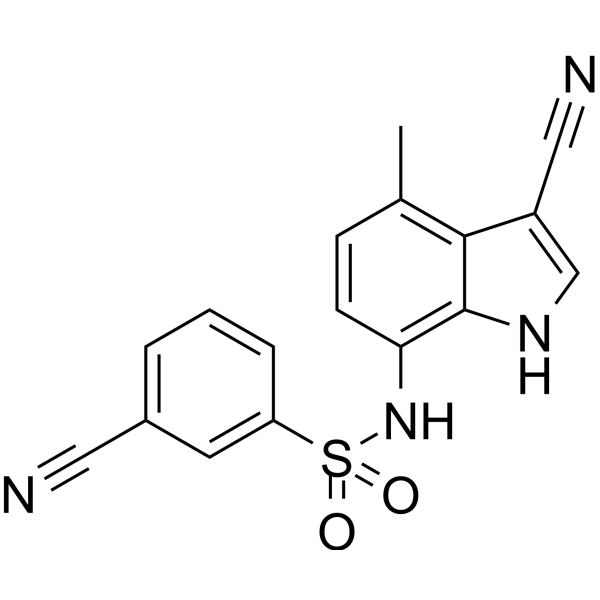
    Molecular Glues Integrin Infection Metabolic Disease Cancer
    E7820 (ER68203-00), an orally active aromatic sulfonamide derivative, is a molecular glue that induces the targeted degradation of splicing factor RBM39 by recruiting the E3 ubiquitin ligase CUL4-RBX1-DDB1-DCAF15 (CRL4 DCAF15). E7820 is an angiogenesis inhibitor suppressing an expression of integrin alpha2 subunit on endothelium. E7820 inhibits rat aorta angiogenesis with an IC50 of 0.11 μg/ml. E7820 modulates α-1, α-2, α-3, and α-5 integrin mRNA expression. E7820 can be used for the study of acute myeloid leukemia (AML) .
    E7820
  • HY-146237

    CC-99282

    Ligands for E3 Ligase Molecular Glues Cancer
    Golcadomide (CC-99282) is a potent and orally active CRBN E3 ligase modulator (CELMoD). Golcadomide interacts with the CRL4 CRBN E3 ubiquitin ligase substrate receptor CRBN, inducing the recruitment and ubiquitin-mediated proteasomal degradation of the transcription factors Ikaros and Aiolos. Golcadomide shows potential for research in cancer-related fields, including chronic lymphocytic leukemia (CLL) and non-Hodgkin lymphoma (NHL) .
    Golcadomide
  • HY-123844
    dBET57
    4 Publications Verification

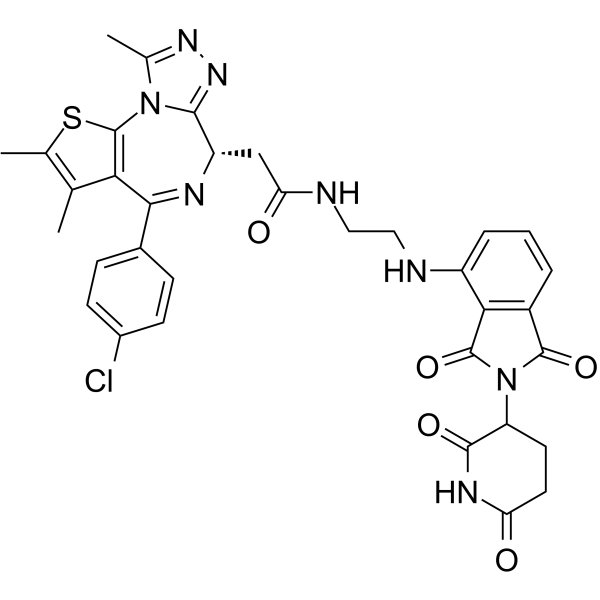
    PROTACs Epigenetic Reader Domain Apoptosis Cancer
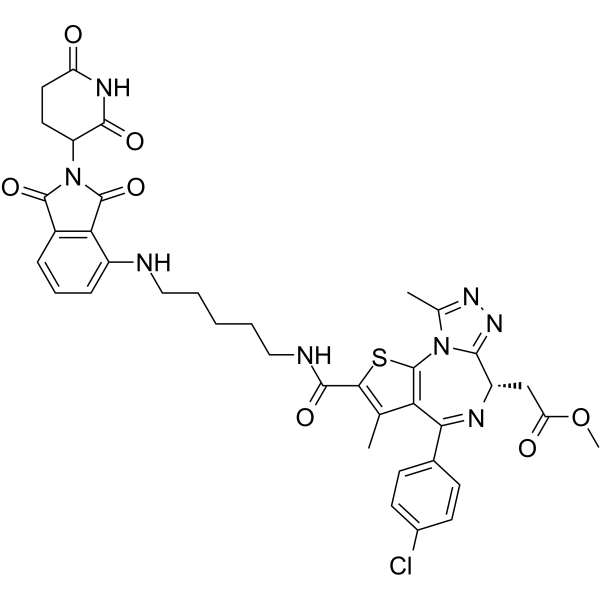
    dBET57 is an effective and selective BRD4BD1 degrader based on PROTAC technology, with the ability to induce cell apoptosis and anti-tumor activity. dBET57 mediates the recruitment of the E3 ubiquitin ligase CRL4 Cereblon, showing a DC50/5h value of 500 nM for BRD4BD1 .
    dBET57
  • HY-149934

    Ligands for E3 Ligase Cancer
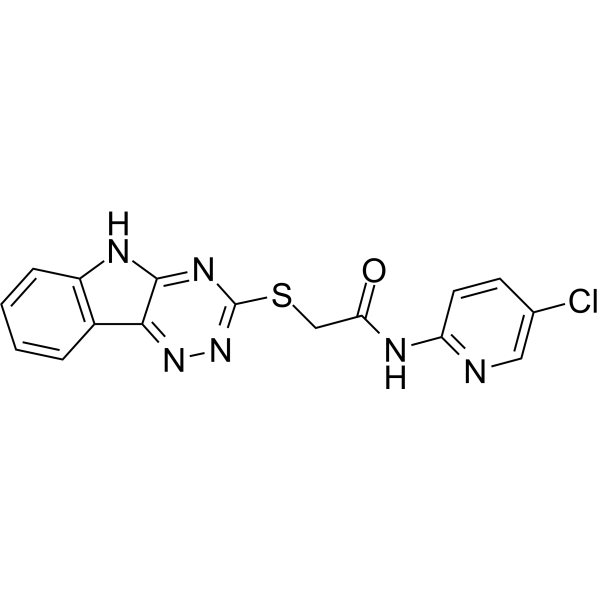
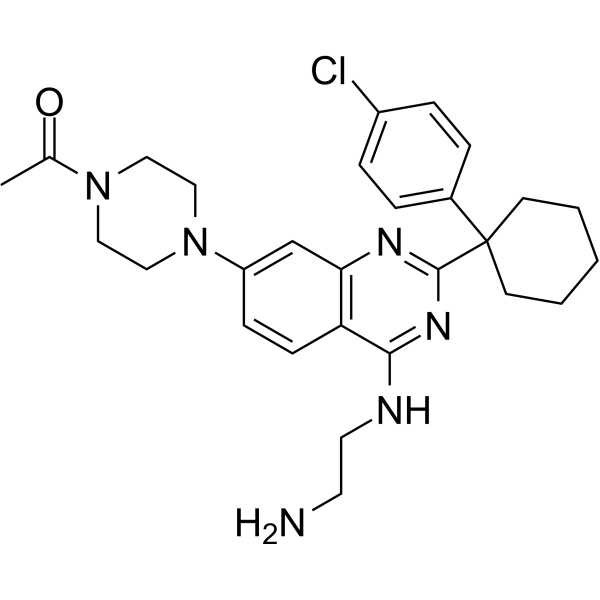
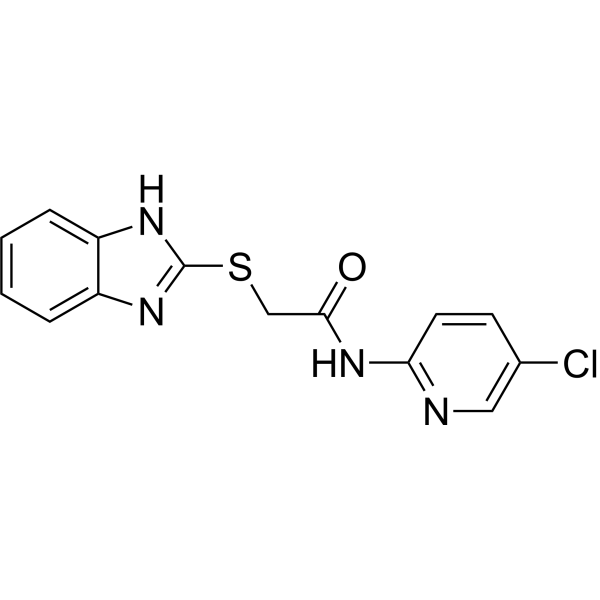
    DCAF1 binder 1 is a selective for the CRL4 DCAF1 E3 ligase complex. DCAF1 binder 1 is a ligands for E3 Ligase, involving in targeted protein degradation (TPD) .
    DCAF1 binder 1
  • HY-W133627

    Molecular Glues Cancer
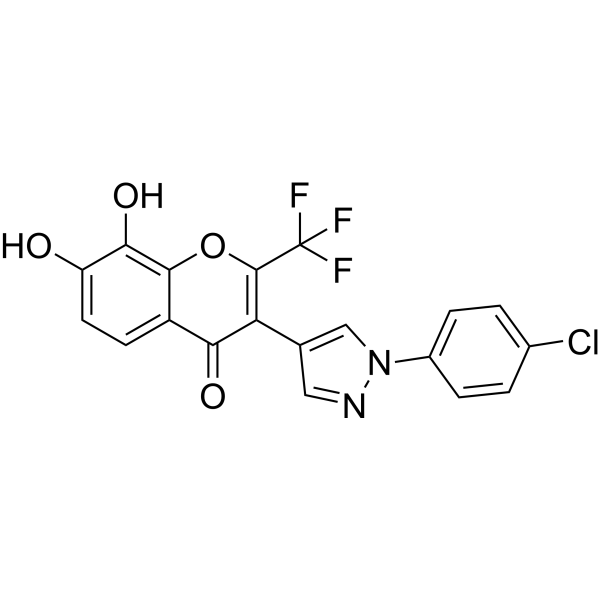
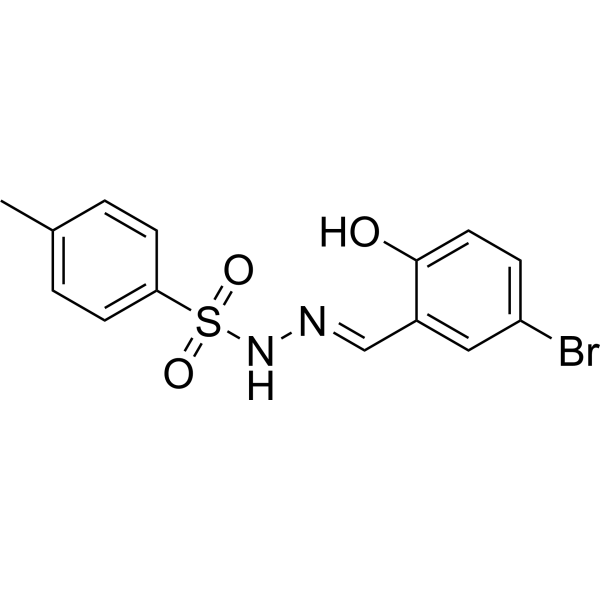
    dCeMM1 is a RBM39 glue degrader. dCeMM1 shows functions by re-directing the activity of the CRL4 DCAF15 ligase. dCeMM1 decreases the expression of RBM39 levels in WT KBM7 cells .
    dCeMM1
  • HY-A0003B
    Lenalidomide hemihydrate
    Maximum Cited Publications
    59 Publications Verification

    CC-5013 hemihydrate

    Ligands for E3 Ligase Molecular Glues Apoptosis Cancer
    Lenalidomide hemihydrate (CC-5013 hemihydrate), a derivative of Thalidomide, acts as molecular glue. Lenalidomide hemihydrate is an orally active immunomodulator. Lenalidomide hemihydrate (CC-5013 hemihydrate) is a ligand of ubiquitin E3 ligase cereblon (CRBN), and it causes selective ubiquitination and degradation of two lymphoid transcription factors, IKZF1 and IKZF3, by the CRBN-CRL4 ubiquitin ligase. Lenalidomide hemihydrate (CC-5013 hemihydrate) specifically inhibits growth of mature B-cell lymphomas, including multiple myeloma, and induces IL-2 release from T cells .
    Lenalidomide hemihydrate
  • HY-136688

    PROTACs Cancer
    MI-389 is a PROTAC translation termination factor GSPT1 degrader. MI-389 disrupts a target that is a shared dependency in different AML and ALL cell lines, and that MI-389 action is dependent on the CRL4 CRBN E3 ligase .
    MI-389
  • HY-144977

    Molecular Glues CDK Cancer
    dCeMM4 (Compound 5) is a molecular glue degrader. dCeMM4 induces ubiquitination and degradation of cyclin K by prompting an interaction of CDK12-cyclin K with a CRL4B ligase complex .
    dCeMM4
  • HY-144971

    Molecular Glues CDK Cancer
    dCeMM2 (Compound 2) is a molecular glue-type degrader that targets cyclin K. dCeMM2 induces ubiquitination and degradation of cyclin K by prompting an interaction of CDK12-cyclin K with a CRL4B ligase complex .
    dCeMM2
  • HY-153385

    Molecular Glues Epigenetic Reader Domain Cancer
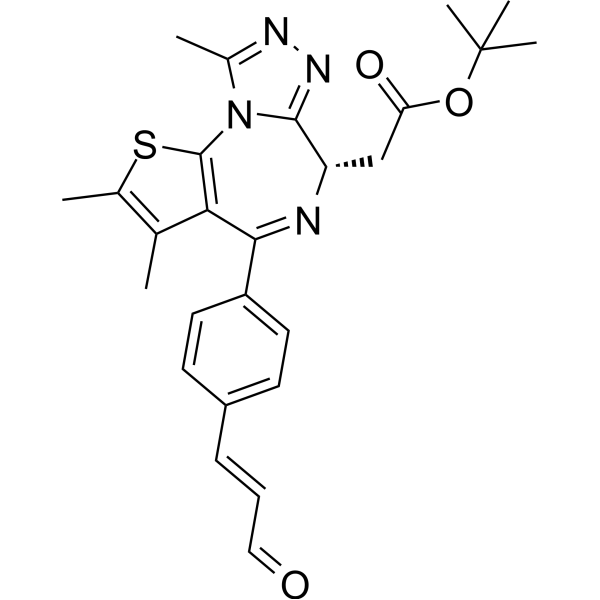
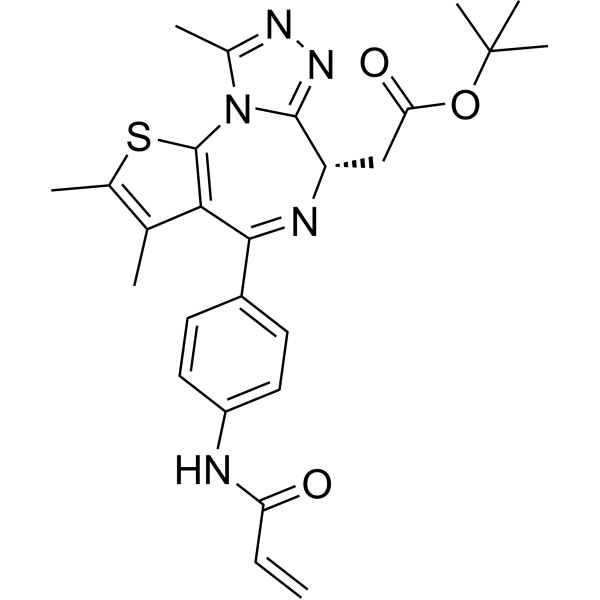
    TMX1 is a covalent, selective BRD4 molecular glue degrader. TMX1 binds to the JQ1-binding site of BRD4BD2, forms covalent bonds with Cys58 of DCAF16 and Cys87 of GAK in a BRD4BD2-dependent template-assisted manner, stabilizes the BRD4-TMX1-DCAF16 ternary complex, and promotes the ubiquitination of BRD4 via the CRL4DCAF16 ubiquitin ligase complex. TMX1 induces selective degradation of BRD4, mild degradation of BRD2 and BRD3, as well as DCAF16-dependent cytotoxicity .
    TMX1
  • HY-148602
    KH-4-43
    1 Publications Verification

    E1/E2/E3 Enzyme Cancer
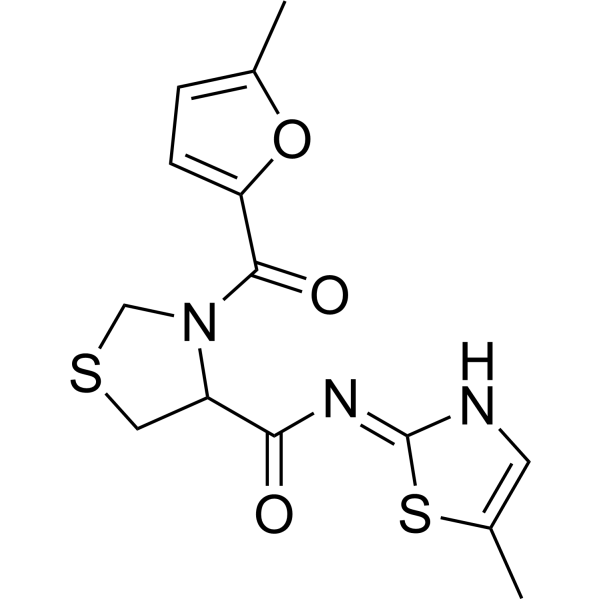
    KH-4-43 is an inhibitor of E3 CRL4. KH-4-43 inhibits E3 CRL4's core ligase complex and exhibits anticancer activity. KH-4-43 has a binding Kd to E3 ROC1-CUL4A CTD or the highly related ROC1-CUL1 CTD at 83 nM or 9.4 μM, respectively .
    KH-4-43
  • HY-A0003R

    CC-5013 (Standard)

    Reference Standards Ligands for E3 Ligase Molecular Glues Apoptosis Inflammation/Immunology Cancer
    Lenalidomide (Standard) is the analytical standard of Lenalidomide. This product is intended for research and analytical applications. Lenalidomide (CC-5013), a derivative of Thalidomide, acts as molecular glue. Lenalidomide is an orally active immunomodulator. Lenalidomide (CC-5013) is a ligand of ubiquitin E3 ligase cereblon (CRBN), and it causes selective ubiquitination and degradation of two lymphoid transcription factors, IKZF1 and IKZF3, by the CRBN-CRL4 ubiquitin ligase. Lenalidomide (CC-5013) specifically inhibits growth of mature B-cell lymphomas, including multiple myeloma, and induces IL-2 release from T cells .
    Lenalidomide (Standard)
  • HY-144976

    Molecular Glues CDK Cancer
    dCeMM3 (Compound 3) is a molecular glue degrader. dCeMM3 induces ubiquitination and degradation of cyclin K by prompting an interaction of CDK12-cyclin K with a CRL4B ligase complex .
    dCeMM3
  • HY-175334

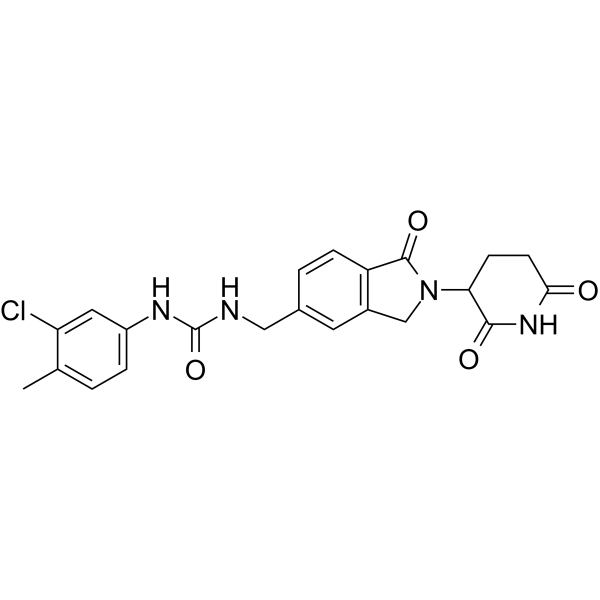
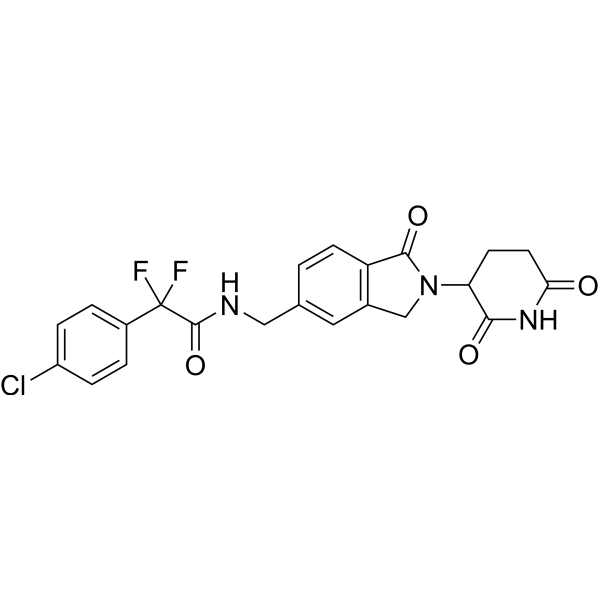
    Molecular Glues Cancer
    DHC-286 is a molecular glue degrader targeting GSPT1. DHC-286 recruits GSPT1 to the CRL4CRBN ubiquitin ligase complex, promoting GSPT1 ubiquitination and proteasomal degradation, inducing cytotoxicity. DHC-286 is promising for research of cancers such as acute myeloid leukemia .
    DHC-286
  • HY-A0003S

    CC-5013-d5

    Isotope-Labeled Compounds Ligands for E3 Ligase Molecular Glues Apoptosis Inflammation/Immunology Cancer
    Lenalidomide-d5 is deuterium labeled Lenalidomide. Lenalidomide (CC-5013), a derivative of Thalidomide, acts as molecular glue. Lenalidomide is an orally active immunomodulator. Lenalidomide (CC-5013) is a ligand of ubiquitin E3 ligase cereblon (CRBN), and it causes selective ubiquitination and degradation of two lymphoid transcription factors, IKZF1 and IKZF3, by the CRBN-CRL4 ubiquitin ligase. Lenalidomide (CC-5013) specifically inhibits growth of mature B-cell lymphomas, including multiple myeloma, and induces IL-2 release from T cells .
    Lenalidomide-d5
  • HY-A0003A

    CC-5013 hydrochloride

    Ligands for E3 Ligase Molecular Glues Inflammation/Immunology Cancer
    Lenalidomide hydrochloride (CC-5013 hydrochloride), a derivative of Thalidomide, acts as molecular glue. Lenalidomide hydrochloride is an orally active immunomodulator. Lenalidomide hydrochloride (CC-5013 hydrochloride) is a ligand of ubiquitin E3 ligase cereblon (CRBN), and it causes selective ubiquitination and degradation of two lymphoid transcription factors, IKZF1 and IKZF3, by the CRBN-CRL4 ubiquitin ligase. Lenalidomide hydrochloride (CC-5013 hydrochloride) specifically inhibits growth of mature B-cell lymphomas, including multiple myeloma, and induces IL-2 release from T cells .
    Lenalidomide hydrochloride
  • HY-175599

    Molecular Glues Cardiovascular Disease Neurological Disease
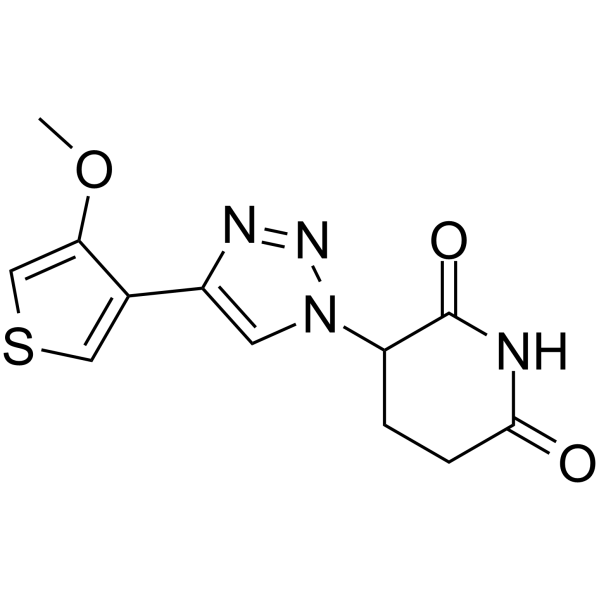
    Z6466608628 is a selective PPIL4 molecular glue degrader with human PPIL4 EC50 values of 0.34 µM. Z6466608628 functionally recruits PPIL4 to CRBN, induces CRL4 CRBN-mediated ubiquitylation and degradation of PPIL4. Z6466608628 can be used for the research of intracranial aneurysms .
    Z6466608628
  • HY-A0003BR

    CC-5013 hemihydrate (Standard)

    Ligands for E3 Ligase Molecular Glues Apoptosis Reference Standards Cancer
    Lenalidomide (hemihydrate) (Standard) is the analytical standard of Lenalidomide (hemihydrate). This product is intended for research and analytical applications. Lenalidomide hemihydrate (CC-5013 hemihydrate), a derivative of Thalidomide, acts as molecular glue. Lenalidomide hemihydrate is an orally active immunomodulator. Lenalidomide hemihydrate (CC-5013 hemihydrate) is a ligand of ubiquitin E3 ligase cereblon (CRBN), and it causes selective ubiquitination and degradation of two lymphoid transcription factors, IKZF1 and IKZF3, by the CRBN-CRL4 ubiquitin ligase. Lenalidomide hemihydrate (CC-5013 hemihydrate) specifically inhibits growth of mature B-cell lymphomas, including multiple myeloma, and induces IL-2 release from T cells .
    Lenalidomide hemihydrate (Standard)
  • HY-A0003S2

    CC-5013-13C5,15N

    Ligands for E3 Ligase Apoptosis Molecular Glues Isotope-Labeled Compounds Inflammation/Immunology Cancer
    Lenalidomide- 13C5, 15N is 15N and 13C labeled Lenalidomide (HY-A0003). Lenalidomide (CC-5013), a derivative of Thalidomide, acts as molecular glue. Lenalidomide is an orally active immunomodulator. Lenalidomide (CC-5013) is a ligand of ubiquitin E3 ligase cereblon (CRBN), and it causes selective ubiquitination and degradation of two lymphoid transcription factors, IKZF1 and IKZF3, by the CRBN-CRL4 ubiquitin ligase. Lenalidomide (CC-5013) specifically inhibits growth of mature B-cell lymphomas, including multiple myeloma, and induces IL-2 release from T cells .
    Lenalidomide-13C5,15N
  • HY-W1128213

    Molecular Glues IKZF Family Inflammation/Immunology Cancer
    IKZF2-degrader 2 is a selective and orally active IKZF2 molecular glue degrader with DC50 values of 0.5 nM and 1.8 nM in HiBit and FACS. The IKZF2-degrader 2 mediates the ubiquitination and degradation of target proteins by recruiting the CRL4-CRBN E3 ubiquitin ligase. IKZF2-degrader 2 displays moderate degradation against SALL4 with a DC50 of 9 nM but does not induce any significant degradation towards IKZF1, IKZF3, CK1α and GSPT1. IKZF2-degrader 2 can be used for the study of cancer immunology .
    IKZF2-degrader 2
  • HY-A0003S3

    CC-5013-d4

    Isotope-Labeled Compounds Apoptosis Molecular Glues Ligands for E3 Ligase Inflammation/Immunology Cancer
    Lenalidomide-d4 (CC-5013-d4) is deuterium labeled Lenalidomide. Lenalidomide (CC-5013), a derivative of Thalidomide, acts as molecular glue. Lenalidomide is an orally active immunomodulator. Lenalidomide (CC-5013) is a ligand of ubiquitin E3 ligase cereblon (CRBN), and it causes selective ubiquitination and degradation of two lymphoid transcription factors, IKZF1 and IKZF3, by the CRBN-CRL4 ubiquitin ligase. Lenalidomide (CC-5013) specifically inhibits growth of mature B-cell lymphomas, including multiple myeloma, and induces IL-2 release from T cells .
    Lenalidomide-d4
  • HY-183117

    Molecular Glues HIF/HIF Prolyl-Hydroxylase Cancer
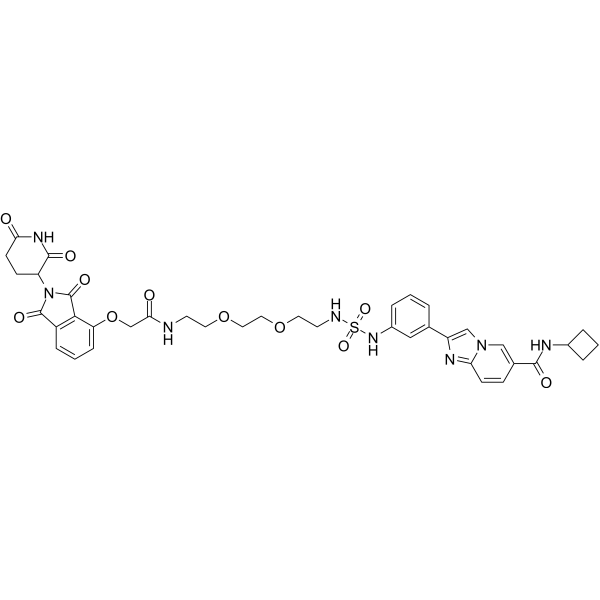
    NEO-811 is a selective and orally active ARNT (HIF-1β) molecular glue degrader. NEO-811 is mediated by CRL4-CRBN E3 ligase for ARNT degradation. NEO-811 can be used for the study of clear cell renal cell carcinoma (ccRCC) .
    NEO-811
  • HY-RS06703

    Small Interfering RNA (siRNA) Others

    IL17RB Human Pre-designed siRNA Set A contains three designed siRNAs for IL17RB gene (Human), as well as a negative control, a positive control, and a FAM-labeled negative control.

    IL17RB Human Pre-designed siRNA Set A
    IL17RB Human Pre-designed siRNA Set A
  • HY-175599A

    Molecular Glues Cardiovascular Disease Neurological Disease
    Z6466608628 hydrochloride is a selective PPIL4 molecular glue degrader with human PPIL4 EC50 values of 0.34 µM. Z6466608628 hydrochloride functionally recruits PPIL4 to CRBN, induces CRL4 CRBN-mediated ubiquitylation and degradation of PPIL4. Z6466608628 hydrochloride can be used for the research of intracranial aneurysms[1].
    Z6466608628 hydrochloride

Inquiry Online

Your information is safe with us. * Required Fields.

Salutation


Country or Region *

Applicant Name *


Organization Name *

Department *


Email Address *


Product Name *

Cat. No.


Requested quantity *

Phone Number *


Remarks

Inquiry Online

Inquiry Information

Product Name:
Cat. No.:
Quantity:
MCE Japan Authorized Agent:

