1. Search Result
Search Result
Results for "

Cold injury,uncoupling protein 1

" in MedChemExpress (MCE) Product Catalog:

594

Inhibitors & Agonists

23

Fluorescent Dyes

29

Biochemical Assay Reagents

101

Peptides

32

Inhibitory Antibodies

63

Natural
Products

536

Recombinant Proteins

30

Isotope-Labeled Compounds

601

Antibodies

10

Click Chemistry

13

Oligonucleotides

2

GMP Molecules

Cat. No. Product Name Target Research Areas Chemical Structure
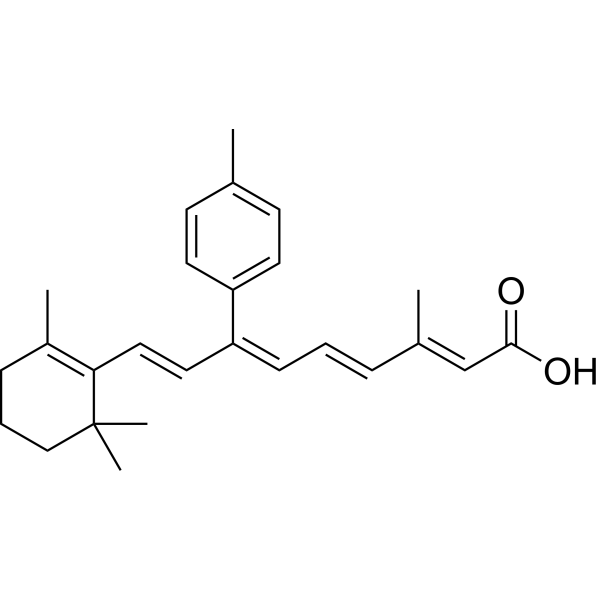
  • HY-15870
    SR 11302
    20+ Cited Publications

    AP-1 Inflammation/Immunology Cancer
    SR 11302 is an activator protein-1 (AP-1) transcription factor inhibitor. SR 11302 is a retinoid that specifically inhibits AP-1 activity without activating the transcription of retinoic acid response element (RARE) [1].
    SR 11302
  • HY-W145499
    Zinc Gluconate
    1 Publications Verification

    PPAR NF-κB Toll-like Receptor (TLR) Inflammation/Immunology Cancer
    Zinc Gluconate is a zinc supplement in the form of a gluconate salt, which plays a role in various physiological processes such as immune function, wound healing, and olfaction. Zinc Gluconate has a LD50 of 39.6 mg/kg in mice (Tail vein injection). Zinc Gluconate can be used in the research of inflammation, zinc deficiency, colds, cancer, and nutritional supplements [1] .
    Zinc Gluconate
  • HY-B0480
    Brompheniramine maleate
    2 Publications Verification

    (±)-Brompheniramine maleate

    Histamine Receptor mAChR Potassium Channel Sodium Channel Calcium Channel Neurological Disease Inflammation/Immunology Endocrinology
    Brompheniramine ((±)-Brompheniramine) maleate is a potent and orally active antihistamine of the alkylamine class. Brompheniramine maleate is a selective histamine H1 receptor antagonist with a Kd of 6.06 nM. Brompheniramine maleate can block the hERG channels, calcium channels, and sodium channels with IC50s of 0.90 μM, 16.12 μM and 21.26 μM, respectively. Brompheniramine maleate has anticholinergic, antidepressant and anesthetic properties and can be used for allergic rhinitis research [1] .
    Brompheniramine maleate
  • HY-115506

    TRP Channel Neurological Disease
    PF-05105679, a chemical probe, is an orally active and selective TRPM8 antagonist with an IC50 of 103 nM. PF-05105679 has the potential for cold-related pain [1].
    PF-05105679
  • HY-110177
    SP-100030
    1 Publications Verification

    NF-κB Inflammation/Immunology
    SP-100030 is a potent NF-κB and activator protein-1 (AP-1) double inhibitor (IC50s=50 and 50 nM, respectively). SP-100030 inhibits IL-2, IL-8, and TNF-alpha production in Jurkat and other T cell lines. SP-100030 decreases murine collagen-induced arthritis (CIA) [1] .
    SP-100030
  • HY-P99050

    BIVV009; IPN-009; TNT009

    Complement System Cardiovascular Disease Inflammation/Immunology
    Sutimlimab is a humanized monoclonal IgG4 antibody. Sutimlimab inhibits complement protein component 1, s subcomponent (C1s). Sutimlimab blocks C3 and C4 activation. Sutimlimab can be used for the research of cold agglutinin disease and complement-mediated hemolytic uremic syndrome [1] .
    Sutimlimab
  • HY-17013
    Dofequidar
    2 Publications Verification

    MS-209 free base

    P-glycoprotein Cancer
    Dofequidar (MS-209 free base) is an orally active quinoline compoundthat blocks P-glycoprotein (P-gp) and multidrug resistance-associated protein-1 (MDR-1). Dofequidar has highly potent reversing effect on multidrug-resistant tumor cells. Dofequidar competitively inhibits ABCB1/P-gp, ABCC1/MRP-1, blocks the efflux of chemotherapeutic agents, increases the drug concentration in cancer cells, and enhances the chemotherapeutic effect [1] .
    Dofequidar
  • HY-P5096

    Amyloid-β Neurological Disease
    FITC-β-Ala-Amyloid β-Protein (1-42) is a FITC tagged Aβ1-42 peptide. Aβ1-42 plays a key role in the pathogenesis of Alzheimer’s disease [1].
    FITC-β-Ala-Amyloid β-Protein (1-42)
  • HY-157068

    Ferroptosis Glutathione Peroxidase Cancer
    icFSP1 is a potent ferroptosis suppressor protein-1 (FSP1) inhibitor. icFSP1 triggers subcellular relocalization of FSP1 from the membrane and FSP1 condensation, in synergism with GPX4 inhibition. icFSP1 induces ferroptosis. icFSP1 shows antitumor activity against melanoma. [1].
    icFSP1
  • HY-125864B

    MMP Cadherin Cardiovascular Disease Neurological Disease
    Murine Fibrinogen is a native fibrinogen derived from mouse plasma. Murine Fibrinogen acts as a cerebrovascular permeability enhancer. Murine Fibrinogen activates matrix metalloproteinase-9 (MMP-9), downregulates the expression of vascular endothelial cadherin (VE-cadherin), and upregulates the expression of plasmalemmal vesicle-associated protein-1 (PV-1). Murine Fibrinogen increases macromolecular leakage from pial veins, thereby disrupting the microvascular integrity of cerebral blood vessels. Murine Fibrinogen can be used in studies related to cerebrovascular dysfunction [1].
    Murine Fibrinogen
  • HY-128577
    NIC3
    1 Publications Verification

    BTB/POZ Family Cancer
    NIC3 is a selective nucleus accumbens-associated protein-1 (NAC1) inhibitor, binds to the conserved Leu-90 of NAC1, prevents its homodimerization, and leads to proteasomal NAC1 degradation. Anti-cancer activity [1].
    NIC3
  • HY-B0780
    Fimasartan
    4 Publications Verification

    BR-A-657

    Angiotensin Receptor Apoptosis NF-κB Cardiovascular Disease Neurological Disease Inflammation/Immunology Endocrinology
    Fimasartan (BRA-657) is an orally effective angiotensin receptor AT1 non-peptide antagonist. Fimasartan has antihypertensive effects. Fimasartan improves neuroinflammation and brain injury mediated by NLRP3 inflammatome after intracerebral hemorrhage, and has neuroprotective effect. Fimasartan inhibits the expression of inducible nitric oxide synthase through the inactivation of NF-κB and activator protein-1 [1] .
    Fimasartan
  • HY-D0007

    Tetrazolium blue

    Biochemical Assay Reagents Others
    Blue Tetrazolium is a tetrazolium salt chromogenic dye that can be reduced to a dark blue formazan product. Blue Tetrazolium is applicable for assays such as succinate dehydrogenase activity detection and reducing sugar quantification. Blue Tetrazolium also serves as a novel corrosion inhibitor for cold-rolled steel in hydrochloric acid solutions. Blue Tetrazolium has a broad wavelength range (480-600 nm), with the maximum absorbance observed at 540 nm [1] .
    Blue Tetrazolium
  • HY-116003

    Endogenous Metabolite Metabolic Disease
    12,13-DiHOME is a stimulator of Brown adipose tissue (BAT), as well as a thermogenic lipokine that activates BAT in response to cold. (±)12,13-DiHOME activates BAT fuel uptake and enhances cold tolerance, via promoting the translocation of the FA transporters FATP1 and CD36 to the cell membrane. (±)12,13-DiHOME can be used for research of metabolic disorders [1].
    12,13-DiHOME
  • HY-P3908

    Amyloid-β Neurological Disease
    FITC-β-Ala-Amyloid β-Protein (1-42) ammonium is a FITC tagged Aβ1-42 peptide. Aβ1-42 plays a key role in the pathogenesis of Alzheimer’s disease [1].
    FITC-β-Ala-Amyloid β-Protein (1-42) ammonium
  • HY-110181
    M8-B
    1 Publications Verification

    TRP Channel Metabolic Disease
    M8-B is a potent transient receptor potential melastatin-8 (TRPM8) antagonist. M8-B blocks cold-induced and TRPM8-agonist-induced activation TRPM8 channels. M8-B decreases deep body temperature (Tb) [1].
    M8-B
  • HY-156649

    CR6086

    Prostaglandin Receptor Interleukin Related MMP PD-1/PD-L1 Cardiovascular Disease Inflammation/Immunology Cancer
    Vorbipiprant (CR6086) is an orally active EP4 receptor antagonist with high selectivity for the human EP4 receptor (Ki: 16.6 nM). Vorbipiprant has immunomodulatory, anti-inflammatory, antitumor, and anti-angiogenic activities. Vorbipiprant can inhibit the expression of multiple pro-inflammatory cytokines and the activation of immune cells, and convert "cold" tumors unresponsive to immune checkpoint inhibitors into "hot" tumors. Vorbipiprant is used in the research of diseases such as rheumatoid arthritis and colon cancer [1] .
    Vorbipiprant
  • HY-W044764
    2-Benzylsuccinic acid
    1 Publications Verification

    DL-Benzylsuccinic acid

    Carboxypeptidase Neurological Disease Metabolic Disease
    2-Benzylsuccinic acid (DL-Benzylsuccinic acid) is an orally active carboxypeptidase A and Nna1 inhibitor. 2-Benzylsuccinic acid reduces cold hyperalgesia. 2-Benzylsuccinic acid can be used for the researches of neuropathic pain, non-alcoholic steatohepatitis [1] .
    2-Benzylsuccinic acid
  • HY-120959

    Fluorescent Dye Parasite Others
    DAUDA (11-(dansylamino) undecanoic acid) is an environment-sensitive fluorescent fatty acid analogue. DAUDA alters its intensities and fluorescent emission spectra on entry into binding proteins. DAUDA is used to determine the relative affinity of natural fatty acids for polymorphs of the Schistosoma mansoni Sm14 fatty acid-binding protein[1].
    DAUDA
  • HY-W010983
    SC-236
    2 Publications Verification

    COX PPAR Apoptosis Cardiovascular Disease Inflammation/Immunology Cancer
    SC-236 is an orally active COX-2 specific inhibitor (IC50 = 10 nM) and a PPARγ agonist. SC-236 suppresses activator protein-1 (AP-1) through c-Jun NH2-terminal kinase. SC-236 exerts anti-inflammatory effects by suppressing phosphorylation of ERK in a murine model [1] .
    SC-236
  • HY-17013A
    Dofequidar fumarate
    2 Publications Verification

    MS-209

    P-glycoprotein Cancer
    Dofequidar fumarate (MS-209) is an orally active quinoline compoundthat blocks P-glycoprotein (P-gp) and multidrug resistance-associated protein-1 (MDR-1). Dofequidar fumarate has highly potent reversing effect on multidrug-resistant tumor cells. Dofequidar fumarate competitively inhibits ABCB1/P-gp, ABCC1/MRP-1, blocks the efflux of chemotherapeutic agents, increases the drug concentration in cancer cells, and enhances the chemotherapeutic effect [1] .
    Dofequidar fumarate
  • HY-B1173
    (+)-Camphor
    1 Publications Verification

    D-(+)-Camphor; (1R)-(+)-Camphor

    Environmental Pollutants Bacterial Neurological Disease Inflammation/Immunology Cancer
    (+)-Camphor (D-(+)-Camphor; (1R)-(+)-Camphor) is an isomer of Camphor. Camphor is an agonist of monoterpenoid transient receptor potential (TRP) channels (such as TRPV1, TRPV3, TRPM8) and an inhibitor of TRPA1 channels. Camphor's derivatives have multiple biological activities, including antibacterial, antiviral, antioxidant, analgesic and anticancer. Camphor can selectively activate cold-sensitive TRP channels and inhibit TRPA1-mediated nociceptive signals. Camphor stimulates the cold-sensing nerve endings in the skin and regulates the activity of ion channels to exert analgesic, anti-inflammatory and anti-itching effects. It also has anti-proliferative and anti-mutagenic activities on tumor cells, which may be related to inhibiting ribosome function or inducing cell apoptosis. Camphor can be absorbed through the skin and (+)-Camphor can be used in the study of muscle and joint pain and inflammation [1] .
    (+)-Camphor
  • HY-119190

    Phosphodiesterase (PDE) Neurological Disease
    PF-06445974, a promising positron emission tomography (PET) lead, has exquisite potency at PDE4B with an IC50 <1 nM. The IC50 values are 36, 4.7 and 17 nM for PDE4D, PDE4A and PDE4C, respectively. PF-06445974 has good selectivity over PDE4D, excellent brain permeability, and a high level of specific binding in the "cold tracer" study [1].
    PF-06445974
  • HY-B0658A

    Zinc(II) acetate dihydrate, ACS, 98%

    Biochemical Assay Reagents Others
    Zinc acetate dihydrate, ACS, 98% (Zinc (II) acetate dihydrate, ACS, 98%) acts as a metal chelator and an intestinal metallothionein inducer. Zinc acetate dihydrate, ACS, 98% induces intestinal metallothionein synthesis and shortens the course of the common cold. Zinc acetate dihydrate, ACS, 98% is applicable to the research of copper metabolism disorder-related diseases, the common cold and Wilson's disease, as well as protein experiments [1] .
    Zinc acetate dihydrate, ACS, 98%
  • HY-106856

    NT-11624

    iGluR Cancer
    Dimiracetam is an orally active compound, with anti-neuropathic activity. Dimiracetam inhibits hypersensitivity and neurological alterations, and inhibits Sorafenib (HY-10201)-induced neuropathy in cold stimulation rat models [1].
    Dimiracetam
  • HY-N1391

    10-Deacetylpaclitaxel

    Microtubule/Tubulin Cancer
    10-Deacetyltaxol (10-Deacetylpaclitaxel) is a taxane derivative isolated from Taxus wallichiana Zucc [1]. 10-Deacetyltaxol (10-Deacetylpaclitaxel) promotes the polymerization of tubulin and to inhibit the depolymerization of microtubules induced by cold or by calcium ions in vitro . 10-Deacetyltaxol (10-Deacetylpaclitaxel) exhibits cytotoxicity in human glial and neuroblastoma cell-lines .
    10-Deacetyltaxol
  • HY-W709856

    Influenza Virus Infection
    Dodeca-2E,4E,8Z,10Z/E-N-tetraenoic acid isobutylamide is a brain-penetrant substance and the main alkamide in Echinacea preparations, which might be used for research of common cold and various upper respiratory infections [1].
    Dodeca-2E,4E,8Z,10Z/E-N-tetraenoic acid isobutylamide
  • HY-P3075

    pTHrP (1-34)

    Thyroid Hormone Receptor Inflammation/Immunology
    pTH-Related Protein (1-34) (human, mouse, rat), a fragment of parathyroid hormone-related protein, is an anabolic agent. pTH-Related Protein (1-34) (human, mouse, rat) can be used for postmenopausal osteoporosis study [1].
    pTH-Related Protein (1-34) (human,mouse,rat)
  • HY-125972

    Keap1-Nrf2 Heme Oxygenase (HO) Cardiovascular Disease Neurological Disease
    zr17-2 is a cold inducible RNA-binding protein (CIRBP) agonist. zr17-2 has anti-inflammatory and anti-oxidant and can be used for the study of myocardial infarction. zr17-2 is a hypothermia mimetic molecule that reduces oxidative stress-induced retinal cell death [1] .
    zr17-2
  • HY-B0480A
    Brompheniramine
    2 Publications Verification

    (±)-Brompheniramine

    Histamine Receptor mAChR Potassium Channel Sodium Channel Calcium Channel Neurological Disease Inflammation/Immunology Endocrinology
    Brompheniramine ((±)-Brompheniramine) is a potent and orally active antihistamine of the alkylamine class. Brompheniramine is a selective histamine H1 receptor antagonist with a Kd of 6.06 nM. Brompheniramine can block the hERG channels, calcium channels, and sodium channels with IC50s of 0.90 μM, 16.12 μM and 21.26 μM, respectively. Brompheniramine has anticholinergic, antidepressant and anesthetic properties and can be used for allergic rhinitis research [1] .
    Brompheniramine
  • HY-N4231

    NF-κB Inflammation/Immunology
    Lucyoside B inhibits the production of inflammatory mediators via both NF-κB and activator protein-1 pathways in activated macrophages [1].
    Lucyoside B
  • HY-15450A
    INCB 3284
    2 Publications Verification

    CCR Endocrinology
    INCB 3284 is a potent, selective and orally bioavailable human CCR2 antagonist, inhibiting monocyte chemoattractant protein-1 binding to hCCR2, with an IC50 of 3.7 nM. INCB 3284 can be used in the research of acute liver failure.
    INCB 3284
  • HY-15870A

    AP-1 Inflammation/Immunology Cancer
    (6E)-SR 11302 is a E-isomer of SR 11302. SR 11302 is an activator protein-1 (AP-1) transcription factor inhibitor. SR 11302 is a retinoid that specifically inhibits AP-1 activity without activating the transcription of retinoic acid response element (RARE) [1].
    (6E)-SR 11302
  • HY-173463

    Sirtuin Metabolic Disease Inflammation/Immunology
    Sirtuin modulator 8 is a sirtuin modulator that can activate Sirtuin activity. Sirtuin modulator 8 significantly downregulates the expression of monocyte chemoattractant protein-1 (MCP-1) and upregulates the expression of fibroblast growth factor 21 (FGF21). Sirtuin modulator 8 regulates the expression of inflammation- and metabolism-related genes, showing potential for studying metabolic diseases (such as diabetes, obesity) and inflammatory diseases [1].
    Sirtuin modulator 8
  • HY-N1369S

    Isotope-Labeled Compounds Calcium Channel Neurological Disease
    Menthol-d4 is the deuterium labeled Menthol. Menthol is a natural analgesic compound. Menthol could cause a feeling of coolness due to stimulation of ‘cold’ receptors by inhibiting Ca++ currents of neuronal membranes [1].
    Menthol-d4
  • HY-P991309

    C-type Lectin-like Receptors (CTLRs) Cancer
    ZM-008 is an anti-LLT1 monoclonal antibody. ZM-008 blocks the interaction between LLT1 and CD161 on the surface of NK cells and T cells. ZM-008 restores anti-tumor immune activity, shifts the tumor microenvironment to an immune-responsive state, and recovers NK cell-mediated cytotoxicity against tumor cells, thereby reversing immunosuppression in immune-resistant "cold" tumors. ZM-008 is applicable to the research of immune-resistant solid tumors [1].
    ZM-008
  • HY-N5118

    (-)-Chimonanthine

    Tyrosinase Cancer
    Chimonanthine is an alkaloid of Chimonanthus praecox, inhibits tyrosinase and tyrosine-related protein-1 mRNA expression, amd inhibits melanogenesis [1].
    Chimonanthine
  • HY-107798

    Bacterial Infection
    Potassium guaiacolsulfonate hemihydrate is an orally active expectorant used for acute respiratory tract infections. Potassium guaiacolsulfonate hemihydrate helps loosen mucus and used for a cough caused by the common cold, infections or allergies in combination with other agents [1] .
    Potassium guaiacolsulfonate hemihydrate
  • HY-P4788

    Amyloid-β Neurological Disease
    Acetyl-Amyloid β-Protein (1-6) amide is a hexapeptide that contains a potential copper(II) binding site. Acetyl-Amyloid β-Protein (1-6) amide can be used for research of Alzheimer's disease and related disorders [1].
    Acetyl-Amyloid β-Protein (1-6) amide
  • HY-P4849

    PTHR Others
    pTH-Related Protein (1-37) (human, mouse, rat), the peptide analogue of pTH-Related Protein (pTHrP). pTHrP refers to parathyroid-hormone-related protein, involved in physiological regulation of bone formation [1].
    pTH-Related Protein (1-37) (human, mouse, rat)
  • HY-P4856

    PTHR PKC Endocrinology
    pTH-Related Protein (1-40) (human, mouse, rat) stimulates calcium uptake in rat intestinal cells through PTHR1 receptor and PKCα/β signaling pathways. pTH-Related Protein (1-40) up-regulates parathyroid hormone 1 receptor (PTHR1) protein, four transcellular calcium transporters, potential vanillin member 6 (TRPV6), calcium-binding protein-D9K (CaBP-D9k), sodium-calcium Exchanger 1 (NCX1) and plasma membrane calcium ATPase 1 (PMCA1) [1].
    pTH-Related Protein (1-40) (human, mouse, rat)
  • HY-15450

    CCR Endocrinology
    INCB 3284 dimesylate is a potent, selective and orally bioavailable human CCR2 antagonist, inhibiting monocyte chemoattractant protein-1 binding to hCCR2, with an IC50 of 3.7 nM. INCB 3284 dimesylate can be used in the research of acute liver failure.
    INCB 3284 dimesylate
  • HY-P11122

    IFNAR Interleukin Related Inflammation/Immunology
    MSP-1 P2 is a synthetic peptide of merozoite surface protein-1 (MSP-1). MSP-1 P2 stimulates umbilical cord blood lymphocytes to produce IFN-γ and IL-13, and this immune response is primarily mediated by CD4+ T cells. MSP-1 P2 can be used as a specific antigen stimulus to detect T cell responses and cytokine levels [1].
    MSP-1 P2
  • HY-P990149

    Tyrosinase Cancer
    Anti-Mouse/Human TYRP1 Antibody (TA99) is a mouse-derived IgG2a κ type antibody inhibitor, targeting to mouse/human TYRP1. Anti-Mouse/Human TYRP1 Antibody (TA99) binds to Tyrp1 (tyrosinase related protein-1) on tumor. Anti-Mouse/Human TYRP1 Antibody (TA99) enhances infiltration of the tumor by CD8 + T cells. Anti-Mouse/Human TYRP1 Antibody (TA99) can be used for the research of melanoma [1].
    Anti-Mouse/Human TYRP1 Antibody (TA99)
  • HY-N1369S1

    Calcium Channel Isotope-Labeled Compounds Neurological Disease
    Menthol-d2 is deuterated labeled Menthol (HY-N1369). Menthol is an analgesic and TRPM8 modulator. TRPM8 is a cold temperature sensing ion channel, and Menthol can regulate TRPM8 to exert analgesic and anti-irritation mechanisms. Menthol stimulates cold receptors and produces a cooling sensation by inhibiting Ca++ currents in neuronal cell membranes [1] .
    Menthol-d2
  • HY-W322222

    Sex Pheromone Endocrinology
    Ethyl (E,Z)-2,4-decadienoate is a pheromone that induces an electroshock response in male cold moths (Sensilla Auricillica) and can be isolated from host plants [1].
    Ethyl (E,Z)-2,4-decadienoate
  • HY-P4884

    Amyloid-β Others
    Amyloid β-Protein (1-46) is aAβ Fragment.
    Amyloid β-Protein (1-46)
  • HY-P3859

    Amyloid-β Neurological Disease
    Cys-Gly-Lys-Arg-Amyloid β-Protein (1-42) is a peptide fragment of amyloid β-protein (Aβ). Cys-Gly-Lys-Arg-Amyloid β-Protein (1-42) can be used in research of Alzheimer's disease [1].
    Cys-Gly-Lys-Arg-Amyloid β-Protein (1-42)
  • HY-P4391

    Amyloid-β Neurological Disease
    (Asp37)-Amyloid β-Protein (1-42) is the G37D mutant of wild-type Amyloid-beta (1-42) peptide [1].
    (Asp37)-Amyloid β-Protein (1-42)
  • HY-P990253

    Notch EAAT Inflammation/Immunology
    Anti-Mouse Delta-like protein 1/DLL1 Antibody (HMD1-5) is an anti-mouse Delta-like protein 1/DLL1 IgG monoclonal antibody. Anti-Mouse Delta-like protein 1/DLL1 Antibody (HMD1-5) can reverse the inhibition of Treg cells. Anti-Mouse Delta-like protein 1/DLL1 Antibody (HMD1-5) can inhibit the upregulation of GLT-1 expression induced by endothelial cells. Anti-Mouse Delta-like protein 1/DLL1 Antibody (HMD1-5) reduces autoimmune response by reducing B cell activation. Anti-Mouse Delta-like protein 1/DLL1 Antibody (HMD1-5) can be used for research on inflammation conditions such as lupus nephritis [1] .
    Anti-Mouse Delta-like protein 1/DLL1 Antibody (HMD1-5)

Inquiry Online

Your information is safe with us. * Required Fields.

Salutation


Country or Region *

Applicant Name *


Organization Name *

Department *


Email Address *


Product Name *

Cat. No.


Requested quantity *

Phone Number *


Remarks

Inquiry Online

Inquiry Information

Product Name:
Cat. No.:
Quantity:
MCE Japan Authorized Agent:

