


1. Search Result
Search Result
Results for "

Cys

" in MedChemExpress (MCE) Product Catalog:

1405

Inhibitors & Agonists

2

Screening Libraries

10

Fluorescent Dye

35

Biochemical Assay Reagents

1400

Peptides

39

Natural
Products

6

Recombinant Proteins

31

Isotope-Labeled Compounds

3

Antibodies

8

Click Chemistry

35

Oligonucleotides

Cat. No. Product Name Target Research Areas Chemical Structure
  • HY-P1351

    Biochemical Assay Reagents Cancer
    Angiopep-2-cys is a conjugate of Angiopep-2 hydrochloride (HY-P2341) and cysteine. Angiopep-2 hydrochloride is a brain peptide vector. The conjugation of anticancer agents with the Angiopep-2 peptide vector could increase their efficacy in the treatment of brain cancer .
    Angiopep-2-Cys
  • HY-W007798

    Amino Acid Derivatives Others
    Fmoc-Cys(Trt)-OH is a cysteine derivative .
    Fmoc-Cys(Trt)-OH
  • HY-P2300
    Cyclo(Arg-Gly-Asp-D-Phe-Cys)
    2 Publications Verification

    Cyclo(RGDfC)

    Integrin Cancer
    Cyclo(Arg-Gly-Asp-D-Phe-Cys) (Cyclo RGDfC), a cyclic RGD peptide which has high affinity to αvβ3, can disrupt cell integrin interactions. Cyclo(Arg-Gly-Asp-D-Phe-Cys) inhibits pluripotent marker expression in embryonic stem cells (ESCs) and the tumorigenic potential of mESCs in vivo. Cyclo(Arg-Gly-Asp-D-Phe-Cys) can be used in the research of tumors .
    Cyclo(Arg-Gly-Asp-D-Phe-Cys)
  • HY-150233

    Microtubule/Tubulin Cancer
    Cys-McMMAF is the released payload of AlMcMMAF, an anti-5T4 humanized A1 antibody conjugated to the microtubule disrupting MMAF (HY-15579) via a maleimidocaproyl linker. Cys-McMMAF has antitumor efficacy in two tumor mouse models (H1975 and MDA-MB-361-DYT2 models) .
    Cys-McMMAF
  • HY-113110

    L-Cysteinylglycine; Cys-Gly; H-Cys-Gly-OH

    Endogenous Metabolite Reactive Oxygen Species (ROS) DNA/RNA Synthesis Cardiovascular Disease Cancer
    Cysteinylglycine (L-Cysteinylglycine; Cys-Gly) is a dipeptide formed by the peptide bond linkage between cysteine (Cysteine) and glycine (Glycine). Cysteinylglycine is an important metabolic intermediate in the human body, mainly derived from the degradation of glutathione (GSH). Cysteinylglycine reduces ferric iron to ferrous iron, drives the redox cycle of iron, generates reactive oxygen species (ROS), stimulates oxidative reactions, induces lipid peroxidation of human plasma LDL lipoproteins, and causes oxidative damage to DNA bases. Cysteinylglycine can be used as a biomarker to evaluate ischemic heart disease, breast cancer and other conditions .
    Cysteinylglycine
  • HY-P5623A

    RVG29-Cys; RDP-Cys; Rabies Virus Glycoprotein-29-Cys

    RABV Others
    RVG-Cys (RVG29-Cys) is a peptide derived from rabies virus glycoprotein (RVG29) with Cys attached to facilitate subsequent conjugation. RVG-Cys enhances the specific targeted delivery of proteins in brain tissue and neurons .
    RVG-Cys
  • HY-P4093

    Biochemical Assay Reagents Others
    Cys-Penetratin is a cysteine-containing cell-penetrating peptide with sequence CRQIKIWFQNRRMKWKK. Cys-Penetratin can Cys-Penetratin can be used for the research for the research of drug delivery .
    Cys-Penetratin
  • HY-P10533

    Tyrosinase Others
    Cysteine peptide is a tyrosinase inhibitor with skin-whitening, antioxidant and multi-regulatory activities. Cysteine peptide inhibits enzyme activity and blocks melanin transport, effectively reducing UV-B-induced skin erythema and pigmentation. Cysteine peptide synergistically maintains skin health by quenching ROS, resisting oxidative stress and promoting pheomelanin production. Cysteine peptide safely prevents daily ultraviolet damage and supports moderate sun exposure for vitamin D synthesis. Cysteine peptide also acts as a plant signaling factor to regulate vegetative growth, development and stress resistance responses .
    Cysteine peptide
  • HY-P11051

    Biochemical Assay Reagents Cancer
    GE11, Cys Conjugated is a peptide conjugate. GE11, Cys Conjugated consists of GE11 (HY-P10128) conjugated to a GGGGC sequence. GE11, Cys Conjugated can be used to synthesize stimulus-responsive peptide nanomaterials (SRPNs) for photoacoustic imaging and cancer research, such as studies on triple-negative breast cancer (TNBC) .
    GE11, Cys Conjugated
  • HY-W013143

    Amino Acid Derivatives Others
    Fmoc-Cys(Acm)-OH is a cysteine derivative .
    Fmoc-Cys(Acm)-OH
  • HY-176415

    Drug-Linker Conjugates for ADC Cancer
    Cys-MC-GGFG-Dxd is a cysteine-modified, cleavable ADC drug-linker conjugate. Cys-MC-GGFG-Dxd consists of a maleimidocaproyl-glycine-glycine-L-phenylalanine-glycine (MC-GGFG) linker and an Exatecan (HY-13631) derivative (DXd) (HY-13631D) payload. Cys-MC-GGFG-Dxd can be further conjugated to anti-HER2 IgG1κ antibody for the synthesis of antibody-drug conjugates (ADC), such as the breast cancer-targeting ADC compound Fam-trastuzumab deruxtecan-nxki (Enhertu) .
    Cys-MC-GGFG-Dxd
  • HY-P11308

    EGFR Cancer
    Cys-GE11 is an N-terminal modified GE11 (HY-P10128) with cysteine ​​(Cys) added. Cys-GE11 can be coupled through the thiol group of Cys. Cys-GE11 can be linked to PEG-P (TMC-DTC) through the N-terminus of cysteine to form a targeted polymer. Cys-GE11 can target cells with high EGFR expression (such as SMMC-7721 cells). Cys-GE11 can significantly enhance drug enrichment at the tumor site and exhibit low toxicity .
    Cys-GE11
  • HY-P11099

    Transferrin Receptor Neurological Disease Cancer
    Cys-LT7 is a transferrin receptor (TfR)-targeting peptide ligand. Cys-LT7 binds to a TfR site distinct from endogenous transferrin, mediates conjugated Doxorubicin (HY-15142A) delivery to TfR-overexpressed tumor cells, and exhibits low toxicity to TfR-low-expressed normal cells. Cys-LT7 is an L-configuration peptide susceptible to proteolytic enzymes, leading to poor biostability in peptide-drug conjugates. Cys-LT7 can be used for the research of glioblastoma, hepatocellular carcinoma, lung carcinoma .
    Cys-LT7
  • HY-P5623A1

    RVG29-Cys acetate; RDP-Cys acetate; Rabies Virus Glycoprotein-29-Cys acetate

    RABV Others
    RVG-Cys (RVG29-Cys) acetate is a peptide derived from rabies virus glycoprotein (RVG29) with Cys attached to facilitate subsequent conjugation. RVG-Cys acetate enhances the specific targeted delivery of proteins in brain tissue and neurons .
    RVG-Cys acetate
  • HY-P11094

    TET Protein Neurological Disease
    Tet1-Cys peptide is a peptide with the sequence HLNILSTLWKYRC. Tet1 (HLNILSTLWKYR) (HY-P10998) can specifically bind to the neuronal ganglioside receptor GT1b, possessing neuronal targeting capabilities. The Tet1-Cys peptide sequence has an added Cys, which can be used for drug conjugation for research on drug delivery .
    Tet1-Cys peptide
  • HY-W141789

    Biochemical Assay Reagents Others
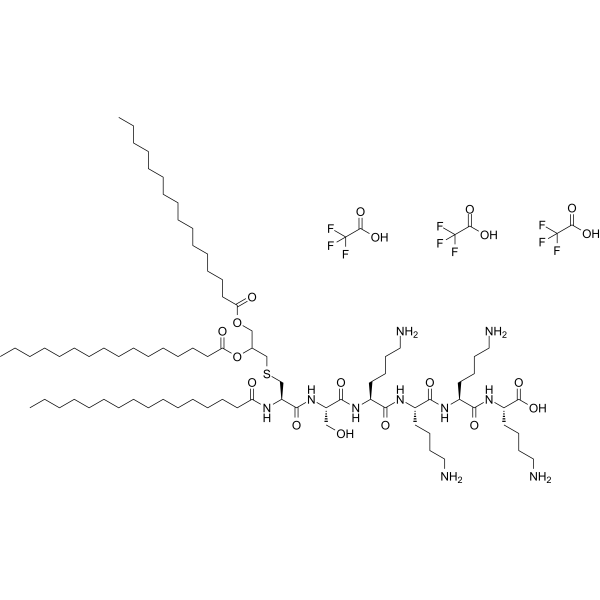
    Pam3-Cys-OH is a lipoamino acid .
    Pam3-Cys-OH
  • HY-W010724

    Amino Acid Derivatives Others
    Fmoc-D-Cys(Trt)-OH is a cysteine derivative .
    Fmoc-D-Cys(Trt)-OH
  • HY-P1801A

    Cys-[HIV-Tat (47-57)] TFA

    HIV Drug Derivative Others
    Cys-TAT(47-57) (Cys-[HIV-Tat (47-57)]) TFA, TAT (HY-P0281) derivative, is a Cysteine (HY-Y0337)-tagged cell-penetrating peptide (CPP) derived from the HIV TAT protein. Cys-TAT(47-57) TFA can be used for the research for the research of drug delivery .
    Cys-TAT(47-57) TFA
  • HY-P4087

    HIV Infection Cancer
    Cys(Npys)-(Arg)9 is a synthetic cationic cell-penetrating peptide with a reversible thiol-reactive nitropyridyl (Npys) group. Cys(Npys)-(Arg)9 efficiently mediates the internalization and delivery of various "cargo" such as proteins and antibodies by forming reversible disulfide bonds with surface-exposed cysteine residues. Cys(Npys)-(Arg)9 endows TALEN proteins with cell-penetrating activity, enabling gene knockout in mammalian cells and protein transduction in wheat microspores. Cys(Npys)-(Arg)9 can be conjugated with antibodies to form cationized IgG for enhancing endosomal escape of oligonucleotides, or form siRNA delivery complexes. When the molar ratio of Cys(Npys)-(Arg)9 to loaded molecules is higher than 1:1, it exerts certain cytotoxic effects on cells. Cys(Npys)-(Arg)9 can be used in studies related to oral squamous cell carcinoma and HIV infection .
    Cys(Npys)-(Arg)9
  • HY-D2315

    Fluorescent Dye Cancer
    Probe-Cys is a water-soluble and selective near-infrared fluorescent probe for Cysteine (Cys) (λex= 680 nm, λem=710 nm) that is not interfered by Hcy, GSH, and HS-. Probe-Cys can react with the stimulant DTT (HY-15917) and the NEM (HY-D0843) in HepG2 cells and zebrafish for the detection of endogenous Cys. Probe-Cys can also be used for imaging Cys in Arabidopsis thaliana. Probe-Cys provides a method for cancer diagnosis and exploration of plant sulfur metabolism .
    Probe-Cys
  • HY-P4123

    MMP Cardiovascular Disease Inflammation/Immunology Cancer
    TAT (47-57) GGG-Cys (Npys) is a cell-penetrating peptide and delivery carrier derived from TAT. TAT (47-57) GGG-Cys (Npys) facilitates the translocation of conjugated drug molecules across cell membranes. TAT (47-57) GGG-Cys (Npys) acts as a delivery carrier for MT1-MMP inhibitors. TAT (47-57) GGG-Cys (Npys) is applicable to research on diseases associated with MT1-MMP activity, such as cancer, arthritis, heart disease, and vascular disorders .
    TAT (47-57) GGG-Cys(Npys)
  • HY-D2912

    Biochemical Assay Reagents Others
    Cys-shift probe-1 (compound 13) is a potent Cys-shift probe. Cys-shift probe-1 can improve the ion mobility of labeled peptides and be used in protein analysis .
    Cys-shift probe-1
  • HY-171822

    Drug-Linker Conjugates for ADC Microtubule/Tubulin Cancer
    Cys-MC-VC-PAB-MMAE consists a cleavable ADC linker (Cys-MC-VC-PAB) and a potent tubulin inhibitor (MMAE). Cys-MC-VC-PAB-MMAE can be used in the synthesis of antibody-drug conjugates (ADCs) .
    Cys-MC-VC-PAB-MMAE
  • HY-W012075

    Amino Acid Derivatives Others
    H-Cys(pMeOBzl)-OH is a cysteine derivative .
    H-Cys(pMeOBzl)-OH
  • HY-134852

    Amino Acid Derivatives Others
    Fmoc-Cys(STmp)-OH is a cysteine derivative .
    Fmoc-Cys(STmp)-OH
  • HY-171910

    Asialoglycoprotein Receptor (ASGPR) LYTACs Others
    tri(GalNAc-PEG2)-PEG4-cyclo(Ac-DCAW-{Arg(3F-Ph)-PEG2}-LGELVWCT) (Cys2-Cys12) is an asialoglycoprotein receptor (ASGPR) ligand that can be used for LYsosome TArgeting Chimera (LYTAC) research .
    tri(GalNAc-PEG2)-PEG4-cyclo(Ac-DCAW-{Arg(3F-Ph)-PEG2}-LGELVWCT) (Cys2-Cys12)
  • HY-P5969

    Biochemical Assay Reagents Others
    Cys-V5 Peptide, a tag peptide, is the V5 Peptide with an N-terminal cysteine. Cys-V5 Peptide can be used to label proteins
    Cys-V5 Peptide
  • HY-172271

    Liposome Cancer
    DSPE-PEG1000-Mal-Cys-CGNKRTRGC (Disulfide bridge: Cys2-Cys10) is a PEG compound which composed of DSPE and a nine residue peptide (LyP-1) (HY-P2526). LyP-1 is a cyclic 9-amino-acids tumor homing peptide and selectively bind to p32 receptors overexpressed in various tumor-associated cells .
    DSPE-PEG1000-Mal-Cys-CGNKRTRGC (Disulfide bridge: Cys2-Cys10)
  • HY-P4337A

    Fluorescent Dye Others
    Dansyl-Gly-Cys-Val-Leu-Ser TFA is a dansyl-labeled peptide .
    Dansyl-Gly-Cys-Val-Leu-Ser TFA
  • HY-W041857

    Amino Acid Derivatives Others
    Boc-Cys(tBu)-OH is a cysteine derivative .
    Boc-Cys(tBu)-OH
  • HY-W053550

    Amino Acid Derivatives Others
    H-D-Cys(Trt)-OH is a cysteine derivative .
    H-D-Cys(Trt)-OH
  • HY-W736950A

    Amino Acid Derivatives Others
    H-L-Cys(MDNPE)-OH hydrochloride is a cysteine ​​derivative with a short peptide sequence attached to the thiol group of cysteine.
    H-L-Cys(MDNPE)-OH hydrochloride
  • HY-P1325

    ((Cys31, Nva 34)-Neuropeptide Y (27-36))2

    Neuropeptide Y Receptor Neurological Disease
    BWX 46 (((Cys31, Nva 34)-Neuropeptide Y (27-36))2) is a selective Y5 receptor agonist with an IC50 value of 0.85 nM. BWX 46 can inhibit the synthesis of cAMP in Y5 cells .
    BWX 46
  • HY-P4108C

    Phosphodiesterase (PDE) Others
    Cys-TAT-HA2 is a conjugate of Cys and TAT-HA2 (HY-P4108). Cys-TAT-HA2 is a transduction complex that can be introduced protein (such as Cardiac troponin C) into the cytoplasm of living cells. Cys-TAT-HA2 can be used for live tracking of exogenous proteins research .
    Cys-TAT-HA2
  • HY-P1801

    Cys-[HIV-Tat (47-57)]

    HIV Drug Derivative Others
    Cys-TAT(47-57) (Cys-[HIV-Tat (47-57)]), TAT (HY-P0281) derivative, is a Cysteine (HY-Y0337)-tagged cell-penetrating peptide (CPP) derived from the HIV TAT protein. Cys-TAT(47-57) can be used for the research for the research of drug delivery .
    Cys-TAT(47-57)
  • HY-P10183

    Cys-CD36(139-155)

    Transmembrane Glycoprotein Inflammation/Immunology
    CD36 Peptide P (139-155), Cys conjugated is a Cys labelled CD36 Peptide, and can inhibit the immunoadsorption of CD36 by OKM5 .
    CD36 Peptide P (139-155), Cys conjugated
  • HY-P4087B

    HIV Others
    Cys(Npys)-(Arg)9 acetate is a synthetic cationic cell-penetrating peptide with a reversible thiol-reactive nitropyridyl (Npys) group. Cys(Npys)-(Arg)9 acetate efficiently mediates the internalization and delivery of various "cargo" such as proteins and antibodies by forming reversible disulfide bonds with surface-exposed cysteine residues. Cys(Npys)-(Arg)9 acetate endows TALEN proteins with cell-penetrating activity, enabling gene knockout in mammalian cells and protein transduction in wheat microspores. Cys(Npys)-(Arg)9 acetate can be conjugated with antibodies to form cationized IgG for enhancing endosomal escape of oligonucleotides, or form siRNA delivery complexes. When the molar ratio of Cys(Npys)-(Arg)9 acetate to loaded molecules is higher than 1:1, it exerts certain cytotoxic effects on cells. Cys(Npys)-(Arg)9 acetate can be used in studies related to oral squamous cell carcinoma and HIV infection .
    Cys(Npys)-(Arg)9 acetate
  • HY-P11205A

    Cys-txCD47 TFA

    CD47 Reactive Oxygen Species (ROS) Thrombopoietin Receptor Inflammation/Immunology Cancer
    Cys-PKHB1 (Cys-txCD47) TFA is a peptide conjugated to PKHB1, a CD47 agonist peptide and a thrombospondin-1 peptide mimic with antitumor effects. PKHB1 induces mitochondrial alterations, ROS generation, intracellular Ca + accumulation, and calcium-dependent cell death in breast cancer cells. PKHB1 induces immune system activation in breast cancer cells through immunogenic cell death .
    Cys-PKHB1 TFA
  • HY-P4101

    HIV Infection
    Cys(Npys)-TAT (47-57) is a peptide fragment of TAT peptide and it is able to interact with plasmid DNA electrostatically. Cys(Npys)-TAT (47-57) is corresponding to the transduction domain of TAT with an activated cysteine residue C. TAT is a small nuclear transcriptional activator protein encoded by HIV-1 .
    Cys(Npys)-TAT (47-57)
  • HY-157284

    Drug-Linker Conjugates for ADC Cancer
    Cys-mc-MMAE is a Drug-Linker Conjugates for ADC, and consists of Monomethyl auristatin E (HY-15162) and a linker. Cys-mc-MMAE can be used for synthesis of ADCs .
    Cys-mc-MMAE
  • HY-W141779

    Amino Acid Derivatives Others
    Boc-Cys(Npys)-OH is a cysteine derivative .
    Boc-Cys(Npys)-OH
  • HY-113110A

    L-Cysteinylglycine TFA; Cys-Gly TFA; H-Cys-Gly-OH TFA

    Endogenous Metabolite Reactive Oxygen Species (ROS) DNA/RNA Synthesis Cardiovascular Disease Cancer
    Cysteinylglycine (L-Cysteinylglycine; Cys-Gly) TFA is a dipeptide formed by the peptide bond connection of cysteine and glycine. Cysteinylglycine TFA is an important metabolic intermediate in the human body, mainly derived from the degradation of glutathione (GSH). Cysteinylglycine TFA can reduce trivalent iron to divalent iron, driving the redox cycle of iron, generating reactive oxygen species (ROS), stimulating oxidative reactions, inducing lipid peroxidation in human plasma LDL lipoproteins, and causing oxidative damage to DNA base. Cysteinylglycine TFA can be used as a biomarker to assess ischemic heart disease and breast cancer, etc [1][2][3][4].
    Cysteinylglycine TFA
  • HY-P3780

    Amyloid-β Neurological Disease
    Cys-Gly-Lys-Lys-Gly-Amyloid β-Protein (36-42) is the 36-42 fragment of Amyloid β-Protein. β-amyloid, a polypeptide made up of 36-43 amino acids, is the main component of amyloid plaques found in the brains of people with Alzheimer's disease. β-amyloid oligomers (Aβos) plays A key role in the progression of Alzheimer's disease (AD) by inducing neuronal damage and cognitive impairment .
    Cys-Gly-Lys-Lys-Gly-Amyloid β-Protein (36-42)
  • HY-P10184

    Transmembrane Glycoprotein Inflammation/Immunology
    CD36 Peptide P (93-110), Cys conjugated is a Cys labelled CD36 Peptide, and can block binding of CD36 to immobilized thrombospondin and partially inhibited collagen-induced platelet aggregation .
    CD36 Peptide P (93-110), Cys conjugated
  • HY-P4320

    Integrin Cancer
    Cys-Arg-Gly-Asp-Phe-Pro-Ala-Ser-Ser-Cys (Disulfide bridge: Cys1-Cys10), a decapeptide containing a cyclic RGD active sequence, is an Integrin αIIbβ3 antagonist that inhibits platelet and Adhesion of proMMP-13 .
    Cys-Arg-Gly-Asp-Phe-Pro-Ala-Ser-Ser-Cys (Disulfide bridge: Cys1-Cys10)
  • HY-159703

    Glutamyl-Cysteine; PSSGlu-Cys

    Endogenous Metabolite Others
    Glu-Cys (Glutamyl-cysteine; PSSGlu-Cys) is a dipeptide composed of L-glutamic acid (HY-14608) and L-cysteine (HY-Y0337) joined by a peptide linkage .
    Glu-Cys
  • HY-P11421

    Biochemical Assay Reagents Others
    Cys-His Tag is a dual-purpose protein tag combining a cysteine residue and a Histidine tag. Cys-His Tag can be used to improve marker specificity or introduce covalent binding sites .
    Cys-His Tag
  • HY-P11541

    Amino Acid Derivatives Others
    CTP-Cys is a cysteine attached to CTP (HY-P4094) for peptide conjugation .
    CTP-Cys
  • HY-176415S

    Isotope-Labeled Compounds Drug-Linker Conjugates for ADC Cancer
    Cys-MC-GGFG-Dxd-d5 is the deuterium labeled Cys-MC-GGFG-Dxd (HY-176415). Cys-MC-GGFG-Dxd is a conjugate of Cys and Deruxtecan (HY-13631E). Cys-MC-GGFG-Dxd is a linker-toxin building block in antibody-drug conjugates (ADCs) used to link antibody Cys residues to cytotoxic drugs. Cys-MC-GGFG-Dxd can be used in cancer research .
    Cys-MC-GGFG-Dxd-d5
  • HY-174813

    E3 Ligase Ligand-Linker Conjugates Others
    Pomalidomide-PEG3-Cys is an E3 ligase ligand-linker conjugate that incorporates a CRBN ligand Pomalidomide (HY-10984) and 3-unit PEG linker. Pomalidomide-PEG3-Cys can be used for synthesis of PROTAC BRD4 Degrader-33 (HY-174811) .
    Pomalidomide-PEG3-Cys

Inquiry Online

Your information is safe with us. * Required Fields.

Salutation


Country or Region *

Applicant Name *


Organization Name *

Department *


Email Address *


Product Name *

Cat. No.


Requested quantity *

Phone Number *


Remarks

Inquiry Online

Inquiry Information

Product Name:
Cat. No.:
Quantity:
MCE Japan Authorized Agent:

