



Search Result
Results for "
Determination
" in MedChemExpress (MCE) Product Catalog:
42
Biochemical Assay Reagents
17
Isotope-Labeled Compounds
| Cat. No. |
Product Name |
Target |
Research Areas |
Chemical Structure |
-
- HY-W009694
-
|
|
Biochemical Assay Reagents
|
Others
|
|
3,5-Dinitrosalicylic acid the derivative of salicylic acid. 3,5-Dinitrosalicylic acid is used in the α-amylase assay, carbohydrase assay, and for the colorimetric determination of reducing substances .
|
-
-
- HY-W040226
-
-
-
- HY-W074143
-
|
|
Fluorescent Dye
|
Others
|
|
Tris(4,7-diphenyl-1,10-phenanthroline)ruthenium(II) dichloride ([Ru(dpp)3] 2+) is an electrochemiluminescent (ECL) probe and oxygen-sensitive sensor. Tris(4,7-diphenyl-1,10-phenanthroline)ruthenium(II) dichloride can be used to modify electrode surfaces for the detection of sulfates (S2O8 2-) and oxalates, based on electrochemical reactions that generate excited-state species, releasing photons through irreversible redox reactions. Tris(4,7-diphenyl-1,10-phenanthroline)ruthenium(II) dichloride utilizes the oxygen quenching of fluorescence mechanism, where fluorescence intensity reflects the metabolic rate of living microorganisms or oxygen levels within cells/tumors, allowing for real-time detection. Tris(4,7-diphenyl-1,10-phenanthroline)ruthenium(II) dichloride's main applications include microbial detection, antibacterial activity studies, and tumor microenvironment research .
|
-
-
- HY-P2767
-
|
|
Bacterial
|
Others
|
|
Urease, Jack bean is derived from jack bean and Catalyzes hydrolysis of urea to carbon dioxide and ammonia. Urease, Jack bean is useful in the determination of urea in body fluids.
|
-
-
- HY-128429
-
|
(E)-2-Hexenal
|
Environmental Pollutants
Biochemical Assay Reagents
Fungal
|
Infection
|
|
trans-2-Hexenal ((E)-2-Hexenal) is a volatile compound widely present in fresh plants, vegetables, and fruits, with a unique leafy aroma. trans-2-Hexenal has antifungal activity and can also inhibit the germination of soybean seeds and the growth of seedlings. In addition, trans-2-Hexenal can be used to determine low-molecular-weight carbonyl compounds that are reactive with biological nucleophiles in biological samples .
|
-
-
- HY-113415A
-
|
|
Endogenous Metabolite
Drug Metabolite
|
Metabolic Disease
|
|
Testosterone sulfate pyridinium is a Testosterone sulfate with a pyridinium. Testosterone sulfate pyridinium is the metabolite of Testosterone. Testosterone is the main male sex hormone which determination is useful for assessment of androgen status .
|
-
-
- HY-N6831
-
|
|
Biochemical Assay Reagents
|
Others
|
|
Xylohexaose is a xylooligosaccharide composed of six xylose residues. Xylohexaose can be produced by hydrolysis of beechwood xylan by AfXynA. Xylohexaose serves as a substrate for the determination of xylan hydrolysis activity .
|
-
-
- HY-125815
-
|
|
Fluorescent Dye
|
Others
|
|
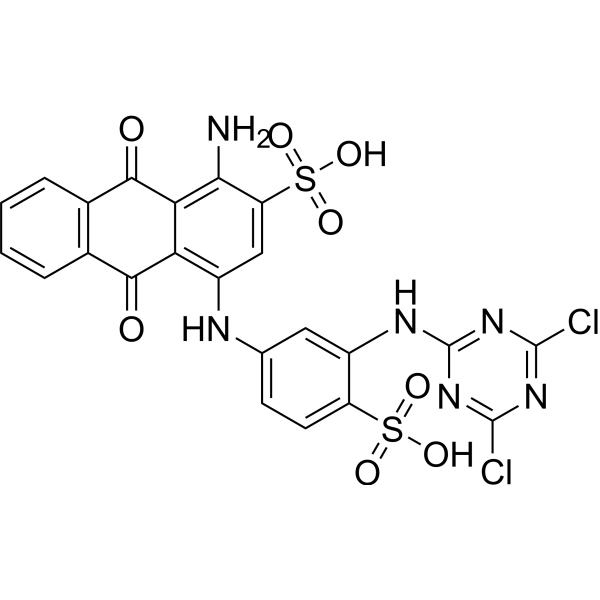
Reactive Blue 4 is an anthraquinone dye used extensively in the textile industry. Reactive Blue 4 is a single colorimetric chemosensor for sequential determination of multiple analytes with different optical responses in aqueous media .
|
-
-
- HY-E70003
-
|
|
Biochemical Assay Reagents
|
Endocrinology
|
|
Glutamate dehydrogenase is an enzyme in both prokaryotes and eukaryotic mitochondria. Glutamate dehydrogenase can be used for the enzymatic determination of ammonia, alpha-ketoglutaric acid, L-glutamate and urease .
|
-
-
- HY-D0797
-
|
|
Fluorescent Dye
|
Others
|
|
Azomethine-H monosodium is a colour-forming reagent. Azomethine-H monosodium is also a reagent for boron determinations .
|
-
-
- HY-W032388
-
-
-
- HY-P2893
-
|
Creatine amidohydrolase
|
Endogenous Metabolite
|
Others
|
|
Creatinase, Actinobacteria (Creatine amidohydrolase) is a hydrolase that catalyzes the hydrolysis of creatine into sarcosine and urea, and plays an important role in the enzymatic determination of creatinine concentration .
|
-
-
- HY-137840
-
|
|
Carboxypeptidase
|
Cancer
|
|
Hippuryl-L-phenylalanine is a substrate of carboxypeptidase. Carboxypeptidase is a protease enzyme that related with obesity, epilepsy and neurodegeneration. Hippuryl-L-phenylalanine can be used for the determination of carboxypeptidase activity .
|
-
-
- HY-130509
-
|
Otmpmms
|
Biochemical Assay Reagents
|
Others
|
|
MTSSL (Otmpmms) is highly reactive thiol-specific spin label, which is used to label protein thiol residues for protein structure and dynamics determination and protein-protein interaction studies .
|
-
-
- HY-D0885A
-
|
Creatine phosphate disodium tetrahydrate; Creatinephosphoric acid disodium tetrahydrate
|
Endogenous Metabolite
|
Metabolic Disease
|
|
Phosphocreatine disodium tetrahydrate, primarily found in the skeletal muscles of vertebrates and one of organic compounds known as alpha amino acids and derivatives, is a substrate for the determination of creatine kinase and used to regenerate ATP during skeletal muscle contraction .
|
-
-
- HY-134420
-
-
-
- HY-D0813
-
|
|
Fluorescent Dye
|
Others
|
|
Zincon sodium is an excellent colorimetric reagent for the detection of zinc and copper ions in aqueous solution. Zincon sodium can be used for the determination of zinc, copper, and cobalt ions in metalloproteins .
|
-
-
- HY-P2008
-
|
IEGR-AMC
|
Factor Xa
|
Cardiovascular Disease
|
|
Boc-Ile-Glu-Gly-Arg-AMC (IEGR-AMC) is an activated factor X (FXa) specific fluorogenic peptide substrate used for Factor VIII determination .
|
-
-
- HY-157362
-
|
TSB
|
Biochemical Assay Reagents
|
Others
|
|
Tryptone Soya Broth can be used for MPN determination of Staphylococcus aureus. Tryptone Soya Broth ingredients include tryptone, soy peptone, sodium chloride, dipotassium hydrogen phosphate, and glucose .
|
-
-
- HY-P2065
-
|
|
Fluorescent Dye
|
Others
|
|
Ac-VEID-AMC is a fluorescent substrate for the determination of caspase-6 and related cysteine protease activities (Ex=340-360 nm, Em=440-460 nm) .
|
-
-
- HY-113415
-
|
|
Endogenous Metabolite
Drug Metabolite
|
Others
|
|
Testosterone sulfate is a Testosterone sulfate with a pyridinium. Testosterone sulfate is the metabolite of Testosterone. Testosterone is the main male sex hormone which determination is useful for assessment of androgen status .
|
-
-
- HY-W017425
-
|
Phenylhydrazine acetate
|
Biochemical Assay Reagents
|
Others
|
|
N'-Phenylacetohydrazide consists of a phenyl group attached to the acetylhydrazide functional group via a hydrazine bond. This compound is commonly used as a reagent in organic chemistry for the determination of carbonyl compounds such as aldehydes and ketones.
|
-
-
- HY-D0036
-
|
4-Bromomethyl-7-methoxycoumarin
|
Fluorescent Dye
|
Others
|
|
Br-Mmc (4-Bromomethyl-7-methoxycoumarin) is often used as fluorescent label for the determination of compounds possessing a carboxylic group. Br-Mmc is used for the determination fatty acids by TLC or HPLC .
|
-
-
- HY-W011112
-
-
-
- HY-D1436
-
|
|
Fluorescent Dye
|
Neurological Disease
|
|
PBFI is the cell-impermeant fluorescent indicator that is widely used for the determination of concentrations of K + (Ex/Em = 340,380/500 nm) .
|
-
-
- HY-112276
-
|
|
Fluorescent Dye
|
Others
|
|
Beryllon II is a widely used chromogenic reagent that is used to determine many elements, such as Mo, Mg and Co, and also used for the determination of proteins.
|
-
-
- HY-P3146S
-
|
|
Isotope-Labeled Compounds
|
Cancer
|
|
FTISADTSK- 13C6, 15N2 TFA is 13C- and 15N-labeled FTISADTSK (HY-P3146). FTISADTSK is an endogenous stable signature peptide from Trastuzumab monitored by selected reaction monitoring (SRM) .
|
-
-
- HY-P3146A
-
|
|
Drug Metabolite
|
Cancer
|
|
FTISADTSK acetate is an endogenous stable signature peptide from Trastuzumab monitored by selected reaction monitoring (SRM) .
|
-
-
- HY-W017165
-
|
|
Biochemical Assay Reagents
|
Others
|
|
Sodium malonate hydrate is a complexing agent for the determination of beryllium and copper. Sodium malonate hydrate is a kind of biological materials or organic compounds that are widely used in life science research .
|
-
-
- HY-P4518
-
|
|
Ser/Thr Protease
|
Others
|
|
Z-Val-Gly-Arg-pNA is a chromogenic substrate for urokinase. Z-Val-Gly-Arg-pNA can be used for determination of urokinase activity .
|
-
-
- HY-P3792
-
|
|
Biochemical Assay Reagents
|
Others
|
|
Mca-Pro-Leu-Gly-Pro-D-Lys(Dnp) is a FRET substrate of Thimet oligopeptidase. Mca-Pro-Leu-Gly-Pro-D-Lys(Dnp) can be used for the determination of Thimet oligopeptidase activity .
|
-
-
- HY-134423S
-
|
|
Isotope-Labeled Compounds
|
Others
|
|
Stearoyl coenzyme A- 13C18 (lithium) is the 13C labeled Stearoyl coenzyme A lithium . Stearoyl coenzyme A (Stearoyl-CoA) lithium is an active compound that can be used as a substrate for the determination of stearoyl-Coenzyme desaturase in microsomes .
|
-
-
- HY-20803
-
|
|
Biochemical Assay Reagents
|
Others
|
|
2,3-Dihydroxyquinoxaline is a fluorescent reagent. 2,3-Dihydroxyquinoxaline can be used for the determination of trace Pb(II) in vinegar .
|
-
-
- HY-128429R
-
|
(E)-2-Hexenal (Standard)
|
Fungal
Biochemical Assay Reagents
Reference Standards
|
Infection
|
|
Trans-2-Hexenal (Standard) is the analytical standard of Trans-2-Hexenal. This product is intended for research and analytical applications. Trans-2-Hexenal can be used for the determination of low-molecular-weight carbonyl compounds which are reactive with biological nucleophiles in biological samples .
|
-
-
- HY-P4484
-
|
|
Biochemical Assay Reagents
|
Others
|
|
Suc-AAPK-pNA is a chromogenic substrate for the determination of serine/threonine kinase activity and enzyme kinetic parameters .
|
-
-
- HY-76981
-
|
|
Others
|
Others
|
|
5-hydroxy-1-tetralone can be used as a fluorescent labeling reagent for the determination of glycosphingolipid from biological samples .
|
-
-
- HY-100908
-
|
N10-Acetyltryptamine; Nb-Acetyltryptamine; Nω-Acetyltryptamine
|
Melatonin Receptor
|
Neurological Disease
|
|
N-Acetyltryptamine is a partial agonist for melatonin receptors in the retina . N-Acetyltryptamine is also used for determination of serotonin N-acetyl transferase activity .
|
-
-
- HY-W415108
-
|
|
Fluorescent Dye
|
Others
|
|
10-Methyl-9-(phenoxycarbonyl) acridinium trifluoromethanesulfonate is an acridinium ester that produces fluorescent 10-methyl-9-acridone upon oxidation with hydrogen peroxide, persulfate, and other oxidants under alkaline conditions. 10-Methyl-9-(phenoxycarbonyl) acridinium trifluoromethanesulfonate can be used in chemiluminescent assays, enzyme, antigen, antibody, and hormone immunoassays, and for the detection of oxidants in environmental, biological, and pharmaceutical samples .
|
-
-
- HY-W008378
-
|
|
Biochemical Assay Reagents
|
Others
|
|
5-Methoxy-2-benzimidazolethiol is a benzimidazole. The iodimetric determination of 5-Methoxy-2-benzimidazolethiol in alkaline media is studied .
|
-
-
- HY-P10043
-
|
|
MMP
|
Others
|
|
MMP-1 Substrate is a matrix metalloproteinase-1 (MMP-1) selective substrate that can be used for the fluorometric determination of MMP-1 enzymatic activity .
|
-
-
- HY-D0216
-
|
|
Biochemical Assay Reagents
|
Cancer
|
|
Salicylaldoxime is an organic compound, that has been used as a reagent for the gravimetric determination and separation of Cooper, Nickel, Palladium, Lead, Bismuth and Zine. The copper complex of Salicylaldoxime has anticancer activity .
|
-
-
- HY-E70002
-
-
-
- HY-P11302
-
|
|
CHIKV
Virus Protease
|
Infection
|
|
DABCYL-RAGGYIFS-(E-EDANS)-NH2, an octapeptide, is a FRET-based substrate peptide of CHIKV nsP2protease with highly sensitivity. DABCYL-RAGGYIFS-(E-EDANS)-NH2 can be cleaved by the active CHIKV nsP2protease, separating fluorophore and quencher and resulting in an increase of fluorescence signal. DABCYL-RAGGYIFS-(E-EDANS)-NH2 can used for the determination of CHIKV nsP2protease activity .
|
-
-
- HY-135996A
-
|
|
Lipase
|
Others
|
|
Dilaurylglycerosulfate sodium is a co-emulsifier in the diagnostic test for the determination of lipase.
|
-
-
- HY-157368
-
-
-
- HY-W250725
-
|
|
Fluorescent Dye
|
Neurological Disease
|
|
H-GLU-AMC-OH is an amino acid derivative that can be used as A fluorescent peptide substrate for the determination of aminopeptidase A enzyme activity .
|
-
-
- HY-138011
-
|
Dolutegravir glucuronide; DTG glucuronide
|
Biochemical Assay Reagents
|
Others
|
|
Dolutegravir O-β-D-glucuronide (Dolutegravir glucuronide) is a compound used for the simultaneous determination of rilpivirine and dolutegravir concentrations in human plasma.
|
-
-
- HY-P2921A
-
|
Uox, Bacillus fastidious
|
Endogenous Metabolite
|
Metabolic Disease
Inflammation/Immunology
|
|
Uricase, Bacillus fastidious (Uox, Bacillus fastidious) is a uricase (urate oxidase) derived from Bacillus fastidious. Uricase, Bacillus fastidious converts uric acid into allantoin. The absence of Uricase in mammals causes kidney diseases resulting from uric acid accumulation. Uricase, Bacillus fastidious can be used for research on chronic refractory gout and hyperuricemia .
|
-
-
- HY-W011757
-
|
|
Biochemical Assay Reagents
|
Others
|
|
Neocuproine hydrochloride monohydrate, 99% can be used to prepare complex solutions for studying antioxidant capacity determination in biological samples based on copper reduction complexes.
|
-
-
- HY-156901
-
|
|
Biochemical Assay Reagents
|
Others
|
|
MNG-14a is an amphiphilic compound that can be used to aid the isolation of membrane proteins, and functional and structural determination of membrane proteins .
|
-
- HY-137286
-
|
Z-Leu-Leu-Glu-β-naphthylamide
|
Proteasome
|
Others
|
|
Z-Leu-Leu-Glu-βNA (Z-Leu-Leu-Glu-β-naphthylamide) is a substrate for determination of the glutamylpeptidyl-peptide hydrolase activity of the 20S proteasome .
|
-
- HY-110225
-
|
UCB L059-d6 (ring-d6)
|
Others
|
Others
|
|
Levetiracetam-d6 (ring-d6) can be used as internal standard for the determination of Levetiracetam (HY-B0106) content in whole blood .
|
-
- HY-W127746
-
|
|
Biochemical Assay Reagents
|
Others
|
|
Picrolonic acid is the reagent for the separation of amines as crystalline π-complexes. Pyrrolic acid is an analytical reagent for the determination of calcium, magnesium, lead, strontium and thorium. It is also used for the analysis of alkaloids, tryptophan and phenylalanine.
|
-
- HY-170757A
-
|
|
Biochemical Assay Reagents
|
Others
|
|
Spermidine-alkyne trihydrochloride is a Spermidine (HY-B1776) derivative endowed with an alkyne handle. Spermidine-alkyne trihydrochloride is a Spermidine probe, which can be used for the determination of the Spermidine binding to cellular proteins .
|
-
- HY-W927359
-
|
|
Fluorescent Dye
|
Others
|
|
Fluorescein hydrazide (3,6-Dihydroxyxanthane) is a fluorescein dye that can be used for the fluorophotometric determination of hydrogen peroxide (H2O2) and other reactive oxygen species (ROS) .
|
-
- HY-131389
-
|
|
Biochemical Assay Reagents
|
Others
|
|
Cholesteryl heptadecanoate is a cholesteryl ester internal standard that accurately determines the concentration of free cholesterol in cells without hydrolyzing triglycerides. Cholesteryl heptadecanoate can be used for the quantitative determination of cholesteryl esters by GC or LC mass spectrometry .
|
-
- HY-D0374
-
|
|
Fluorescent Dye
|
Others
|
|
Reactive Blue 4 sodium is an anthraquinone dye used extensively in the textile industry. Reactive Blue 4 sodium is a single colorimetric chemosensor for sequential determination of multiple analytes with different optical responses in aqueous media .
|
-
- HY-D1699
-
|
|
Fluorescent Dye
|
Others
|
|
PFB-FDG is a non-fluorescent galactosidase substrate that can be hydrolysed to green fluorescent PFB-F (Ex=485 nm, Em=535 nm). PFB-FDG can be used for the determination of β-galactosidase activity .
|
-
- HY-W110904
-
|
|
Fluorescent Dye
|
Others
|
|
Methylthymol blue tetrasodium is a metallochromic indicator dye and can be used for determination of sulfate and calcium .
|
-
- HY-W009022
-
|
|
Biochemical Assay Reagents
|
Others
|
|
Diantipyrylmethane is a chromogenic reagent commonly used for the determination of the contents of metals such as Au (III), Ti (IV), Ir, Fe (III), molybdenum, neodymium, U (IV), iridium, platinum and rhenium via spectrophotometry and extraction photometry. Diantipyrylmethane can also form a fluorescent complex with Er (III) ions, which is applied to the determination of erbium .
|
-
- HY-W923770
-
|
|
Biochemical Assay Reagents
|
Others
|
|
N-(1-Naphthyl)ethylenediamine dihydrochloride monomethanolate is a reagent that can be used for the spectrophotometric determination of nitrite and nitrate .
|
-
- HY-P3146
-
|
|
Drug Metabolite
|
Cancer
|
|
FTISADTSK is an endogenous stable signature peptide from Trastuzumab monitored by selected reaction monitoring (SRM) .
|
-
- HY-150354MR1
-
|
#N/A
|
Reference Standards
|
Others
|
|
Mixture of 9 Antioxidants in Acetonitrile (Standard) is mainly used for the determination of antioxidants in food and is suitable for the use of standard products in GB 5009.32
|
-
- HY-W110909
-
|
Titan yellow; Clayton Yellow
|
Biochemical Assay Reagents
|
Others
|
|
Thiazole yellow G, for microscopy is a cationic basic thiazine dye. Thiazole yellow G can be used for the determination of uranium and thorium .
|
-
- HY-W142631
-
|
|
Fluorescent Dye
|
Cancer
|
|
4-(Phenylazo)diphenylamine is an excellent colorimetric indicator for the accurate determination of the concentration for a variety of strong bases, Lewis acids, and hydride reducing agents .
|
-
- HY-15923
-
|
|
Reactive Oxygen Species (ROS)
|
Others
|
|
MAOS is a modified Trinder’s reagent that can be used as a chromogenic probe for the determination of H2O2. MAOS is strongly dependent on the pH of the reaction medium .
|
-
- HY-N1480S1
-
|
6-Desoxygalactose-13C-1; L-(-)-Fucose-13C-1; L-Galactomethylose-13C-1
|
Isotope-Labeled Compounds
Endogenous Metabolite
Parasite
|
Infection
Metabolic Disease
|
|
(-)-Fucose- 13C-1 is the 13C labeled (-)-Fucose. (-)-Fucose is classified as a member of the hexoses, plays a role in A and B blood group antigen substructure determination, selectin-mediated leukocyte-endothelial adhesion, and host-microbe interacti[
|
-
- HY-W411837
-
|
|
Biochemical Assay Reagents
|
Others
|
|
4-(4-Diethylaminophenylazo)-1-(4-nitrobenzyl)pyridinium bromide is a very stable compound that can be used in the determination of anionic surfactants .
|
-
- HY-153421
-
|
|
Histone Methyltransferase
|
Cancer
|
|
PRMT5-IN-28 (compound 36) is an inhibitor of protein arginine methyltransferase 5 (PRMT5) enzyme. Protein arginine methylation is a common post-translational modification involved in gene transcription, mRNA splicing, DNA repair, protein cellular localization, cell fate determination and signal transduction, etc. Abnormal PRMT5 can promote cancer cell proliferation, resist apoptosis, enhance invasion and metastasis, and affect immune escape .
|
-
- HY-135996
-
|
|
Lipase
|
Others
|
|
Dilaurylglycerosulfate is a co-emulsifier in the diagnostic test for the determination of lipase.
|
-
- HY-W097785
-
-
- HY-D1170
-
|
|
Fluorescent Dye
|
|
|
Acid alizarin red B is a bright, scarlet, translucent red dye used for calcium determination.
|
-
- HY-108353S
-
-
- HY-P5981
-
-
- HY-P4448
-
|
|
Fluorescent Dye
|
Others
|
|
Ac-Gly-Pro-AFC is a fluorogenic substrate for the determination of fibroblast activation protein (FAP) endopeptidase activity .
|
-
- HY-N15422
-
|
|
TRP Channel
|
Inflammation/Immunology
|
|
Glucoputranjivin (compound 1) is a reference compound that can be used for qualitative and quantitative determinations of active compounds in SO .
|
-
- HY-P5086
-
|
|
Cathepsin
|
Others
|
|
H-Gly-Arg-NH2 is a substrate for the determination of bovine spleen cathepsin C activity .
|
-
- HY-W175580
-
|
Fluorone black
|
Biochemical Assay Reagents
|
Others
|
|
Phenylfluorone (Fluorone black) can be used for photometric determination of some heavy metals, such as Germanium and Tin .
|
-
- HY-121617
-
|
RHC G-233
|
Others
|
Cardiovascular Disease
|
|
Bucainide (RHC G-233) is an antiarrhythmic agent that enables the determination of Bucainide in plasma using the GLC method .
|
-
- HY-157187
-
|
|
Biochemical Assay Reagents
|
Others
|
|
Fenhexamid-1-pentanoic acid is a hapten that can be covalently coupled to a carrier protein for the determination of cyclohexamide residues .
|
-
- HY-134423
-
|
Stearoyl-CoA lithium
|
Biochemical Assay Reagents
|
Others
|
|
Stearoyl coenzyme A (Stearoyl-CoA) lithium is an active compound that can be used as a substrate for the determination of stearoyl-Coenzyme desaturase in microsomes .
|
-
- HY-W098280
-
|
|
Biochemical Assay Reagents
|
Others
|
|
Phenylglycine methyl ester is a chiral anisotropic reagent. Phenylglycine methyl ester can be used for absolute configuration determination of various chiral carboxylic acids .
|
-
- HY-D1681
-
|
|
Fluorescent Dye
|
Others
|
|
Rhod-590 AM Ester is a fluorescent dye. Rhod-590 AM Ester can be used as a fluorescent indicator for calcium determination .
|
-
- HY-129480
-
|
|
Drug Intermediate
|
Others
|
|
Vertilmicin sulfate combines with FMOC-Cl to form the Vertilmicin-FMOC-Cl adduct, and can be used for the determination of glucosamine sulfate in plasma .
|
-
- HY-N2464R
-
|
Amylotetraose (Standard); Fujioligo 450 (Standard); α-1,4-Tetraglucose (Standard)
|
TNF Receptor
Reference Standards
Endogenous Metabolite
Bacterial
|
Metabolic Disease
|
|
Maltotetraose (Standard) is the analytical standard of Maltotetraose. This product is intended for research and analytical applications. Maltotetraose can be used as a substrate for the enzyme-coupled determination of amylase activity in biological fluids.
|
-
- HY-W040226R
-
|
Indigotindisulfonate sodium (Standard); C.I.Acid Blue 74 (Standard)
|
Fluorescent Dye
Reference Standards
|
Cancer
|
|
Indigo carmine (Standard) is the analytical standard of Indigo carmine. This product is intended for research and analytical applications. Indigo carmine is an efficient reagent for the determination of ozone by chemlluminescence (CL) .
|
-
- HY-W335656
-
-
- HY-W127846
-
|
|
Biochemical Assay Reagents
|
Others
|
|
4',4 "(5")-Di-tert-butyldibenzo-18-crown-6 is an ionic carrier that can be used for the determination of potassium ions in artificial serum .
|
-
- HY-W020798
-
|
|
Fluorescent Dye
|
Others
|
|
1-Palmitoyl-2-[3-(diphenylhexatriene)propanoyl]-sn-phosphatidylcholine is a fluorescent probe with a polar phosphatidylethanolamine head group for the determination of surface lipid oxidation in lipoproteins and plasma .
|
-
- HY-170757
-
|
|
Biochemical Assay Reagents
|
Others
|
|
Spermidine-alkyne is a Spermidine (HY-B1776) derivative endowed with an alkyne handle. Spermidine-alkyne is a Spermidine probe, which can be used for the determination of the Spermidine binding to cellular proteins .
|
-
- HY-137164A
-
|
|
Fluorescent Dye
|
Others
|
|
Ala-Ala-Phe-AMC TFA is the TFA salt form for Ala-Ala-Phe-AMC. Ala-Ala-Phe-AMC TFA is a fluorogenic substrate, which is used to for tripeptidyl peptidase II (TPPII) activity determination .
|
-
- HY-D0980A
-
|
|
Biochemical Assay Reagents
|
Metabolic Disease
|
|
Biotin-DADOO TFA is a biotinylating reagent. Biotin-DADOO TFA is conjugated to CMC thiosulfate. Biotin-DADOO TFA can be used to synthesize biotin-estradiol conjugates for the determination of plasma estradiol concentrations by enzyme immunoassay .
|
-
- HY-N1480S
-
-
- HY-136444
-
|
|
Drug Derivative
|
Others
|
|
2-NP-AOZ is a 2-nitrophenyl derivative of AOZ (HY-W012982, a tissue-bound metabolite of the Furazolidone). 2-NP-AOZ can be used to determination of the AOZ residues .
|
-
- HY-N1480S2
-
|
6-Desoxygalactose-13C-2; L-(-)-Fucose-13C-2; L-Galactomethylose-13C-2
|
Isotope-Labeled Compounds
Endogenous Metabolite
Parasite
|
Infection
Metabolic Disease
|
|
(-)-Fucose- 13C-2 is the 13C labeled (-)-Fucose. (-)-Fucose is classified as a member of the hexoses, plays a role in A and B blood group antigen substructure determination, selectin-mediated leukocyte-endothelial adhesion, and host-microbe interacti[
|
-
- HY-N1480S3
-
|
6-Desoxygalactose-13C-3; L-(-)-Fucose-13C-3; L-Galactomethylose-13C-3
|
Isotope-Labeled Compounds
Endogenous Metabolite
Parasite
|
Infection
Metabolic Disease
|
|
(-)-Fucose- 13C-3 is the 13C labeled (-)-Fucose. (-)-Fucose is classified as a member of the hexoses, plays a role in A and B blood group antigen substructure determination, selectin-mediated leukocyte-endothelial adhesion, and host-microbe interacti[
|
-
- HY-W340440
-
|
|
Fluorescent Dye
|
Others
|
|
Salicylfluorone is a fluorogenic reagent (λex = 495 nm, λem = 520 nm). Salicylfluorone can be used for fluorescencequenching determination of trace iodide ion .
|
-
- HY-W011757A
-
|
|
Biochemical Assay Reagents
|
Others
|
|
Neocuproine hydrochloride monohydrate, 95% can be used to prepare complex solutions for studying antioxidant capacity determination in biological samples based on copper reduction complexes.
|
-
- HY-W345558
-
|
CPA-mA
|
Biochemical Assay Reagents
|
Others
|
|
Chlorophosphonazo mA (CPA-mA) forms blue complexes with rare earth elements in acidic medium. Chlorophosphonazo mA can be used for the determination of rare earth elements .
|
-
- HY-182607
-
|
|
Biochemical Assay Reagents
|
Others
|
|
SA buffer, 1×, pH 7.4, is mainly composed of sodium chloride, calcium chloride, magnesium chloride, sodium bicarbonate, etc. It is the most commonly used reagent for diluting serum and other samples in immunotoxicology experiments, and is used for complement determination experiments, etc.
|
-
- HY-D0305
-
|
|
Fluorescent Dye
|
Others
|
|
Tropaeolin O is an acidic monoazo dye that undergoes a coupling reaction under pH=10.5 conditions to form a blue disazo dye. Tropaeolin O can be used for the determination of palladium(II), osmium(IV), albumin, and casein .
|
-
- HY-100908R
-
|
N10-Acetyltryptamine (Standard); Nb-Acetyltryptamine (Standard); Nω-Acetyltryptamine (Standard)
|
Reference Standards
Melatonin Receptor
|
Neurological Disease
|
|
N-Acetyltryptamine (Standard) is the analytical standard of N-Acetyltryptamine. This product is intended for research and analytical applications. N-Acetyltryptamine is a partial agonist for melatonin receptors in the retina . N-Acetyltryptamine is also used for determination of serotonin N-acetyl transferase activity .
|
-
- HY-B0594
-
Iohexol
5 Publications Verification
|
Autophagy
Mitophagy
|
Cancer
|
|
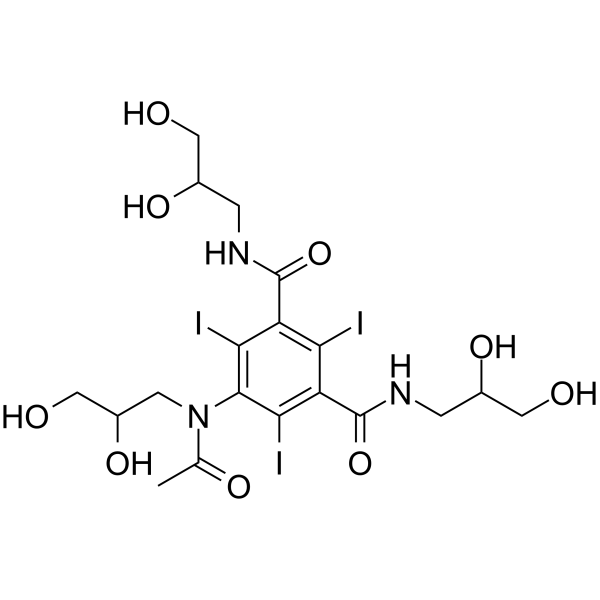
Iohexol is a non-ionic, water-soluble contrast agent used as a reference marker for the determination of glomerular filtration rate (GFR) at the level of renal function. Iohexol can be used for contrast in myelography, computerized tomography (cisternography, ventriculography) and MicroCT imaging .
|
-
- HY-131768
-
|
|
Cholinesterase (ChE)
|
Others
|
|
2'-O-Succinyl-cAMP is a cAMP analog that can be covalently coupled to acetylcholinesterase. 2'-O-Succinyl-cAMP conjugate has been used as tracers in a classical heterogeneous competitive enzyme immunoassay allowing the determination of cAMP .
|
-
- HY-77873
-
|
|
Others
|
Metabolic Disease
|
|
4,5-Dimethoxybenzene-1,2-diamine 4,5-Dimethoxybenzene-1,2-diamine can be used as a standard for the determination of methyldiacetaldehyde, an intermediate product of glycolysis and a diabetic ketone Biomarkers of acidosis .
|
-
- HY-W009311
-
|
4,4'-Bis(dimethylamino)thiobenzophenone
|
Biochemical Assay Reagents
|
Others
|
|
Thiomichler's ketone (4,4'-Bis(dimethylamino)thiobenzophenone) can be used as a photometric reagent for the determination of gold, palladium, platinum, mercury, silver, and copper. Thiomichler's ketone is a kind of biological materials or organic compounds that are widely used in life science research .
|
-
- HY-W356117
-
|
|
Fluorescent Dye
|
Others
|
|
C6 NBD Glucosylceramide is a glucosylceramide fluorescent derivative (Ex=466 nm, Em=535 nm). C6 NBD Glucosylceramide can be used to study the metabolism and internalization of glucosylceramide and also for the determination of glucosyl ceramide synthase activity .
|
-
- HY-Y1083H
-
|
Salt of lemery, 99%
|
Biochemical Assay Reagents
|
Others
|
|
Potassium sulfate, 99% (Salt of lemery, 99%) can be used in biochemical tests for serum proteins, the determination of blood potassium and other potassium salts, and the preparation of protein capillary electrophoresis buffers. Potassium sulfate, 99% is a kind of biological materials or organic compounds that are widely used in life science research .
|
-
- HY-Y1666
-
|
|
Biochemical Assay Reagents
|
Others
|
|
2,2′-Dipyridyl disulfide is a useful reagent for the determination of sulfhydryl groups. 2,2′-Dipyridyl disulfide is a common reagent in peptide chemistry, often used in oxidation–reduction condensations to form peptide bonds or in coupling reactions to form disulfide-linked heterodimers .
|
-
- HY-D1676
-
|
|
Phosphatase
|
Others
|
|
Thymolphthalein monophosphate disodium hydrate is a chromogenic substrate for the determination of acid phosphatase and alkaline phosphatase. Thymolphthalein is released during the reaction, increases the pH of the medium for easy detection, produces color and stops hydrolysis. Thymolphthalein monophosphate disodium hydrate can be used for the specific detection of prostatic phosphatase in serum .
|
-
- HY-P4417
-
|
|
Fluorescent Dye
|
Others
|
|
Ac-IEPD-AMC is a fluorogenic substrate for the determination of protease activity. Ac-IEPD-AMC undergoes hydrolysis and releases the fluorescent product 7-amino-4-methylcoumarin (AMC). AMC is fluorescent under UV light and can emit a fluorescent signal .
|
-
- HY-W760733
-
|
|
Biochemical Assay Reagents
|
Metabolic Disease
|
|
2,4-Decadienal is a toxic aldehyde produced by the oxidation of linoleic acid-rich oils. 2,4-decadienal can be used as an alternative oxidation indicator for linoleic acid-rich oils .
|
-
- HY-163113
-
|
|
Endogenous Metabolite
|
Cancer
|
|
Anticancer agent 180 (compound 4) is a secondary metabolite present in fungal strains and extracted through physical interaction with Streptomyces sp. Anticancer agent 180 has potential anti-tumor activity and can inhibit the migration of MDA-MB-231 breast cancer cells .
|
-
- HY-D0858B
-
|
2-Morpholinoethanesulphonic acid sodium salt
|
Biochemical Assay Reagents
|
Others
|
|
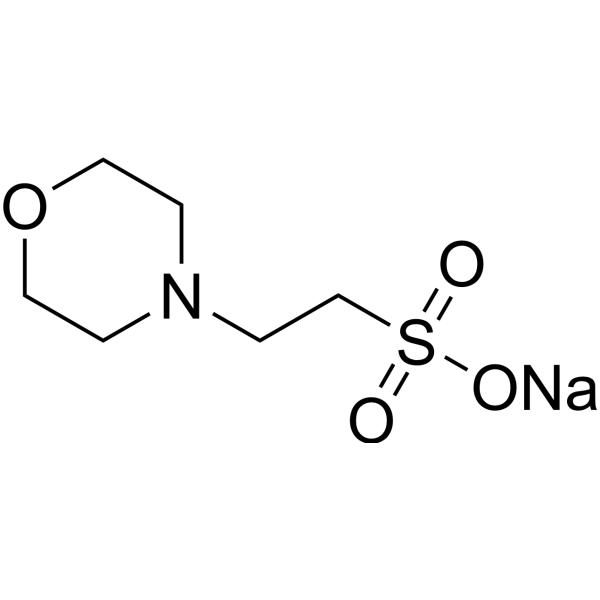
MES sodium salt (2-Morpholinoethanesulphonic acid) is a kind of amphoteric ion buffer, the buffer capacity ranging pH 5.5-7.0. As a Good's buffer, MES sodium salt is widely used in biochemistry and molecular biology experiments, such as cell culture, enzyme activity determination, electrophoresis and protein studies .
|
-
- HY-D0858C
-
|
2-Morpholinoethanesulphonic acid hydrate
|
Biochemical Assay Reagents
|
Others
|
|
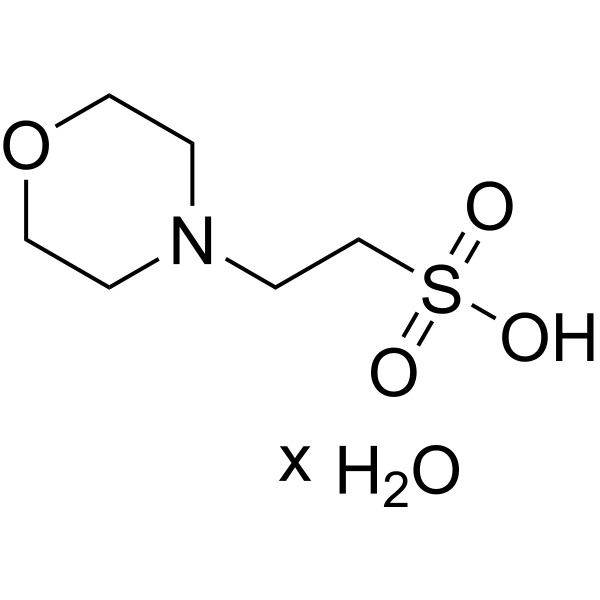
MES (2-Morpholinoethanesulphonic acid) hydrate is a kind of amphoteric ion buffer, the buffer capacity ranging pH 5.5-7.0. As a Good's buffer, MES hydrate is widely used in biochemistry and molecular biology experiments, such as cell culture, enzyme activity determination, electrophoresis and protein studies .
|
-
- HY-Y1083C
-
|
Salt of lemery, for cell culture
|
Biochemical Assay Reagents
|
Others
|
|
Potassium sulfate, for cell culture (Salt of lemery, for cell culture) can be used in biochemical tests for serum proteins, the determination of blood potassium and other potassium salts, and the preparation of protein capillary electrophoresis buffers. Potassium sulfate, for cell culture is a kind of biological materials or organic compounds that are widely used in life science research .
|
-
- HY-D0858E
-
|
2-Morpholinoethanesulphonic acid potassium
|
Biochemical Assay Reagents
|
Others
|
|
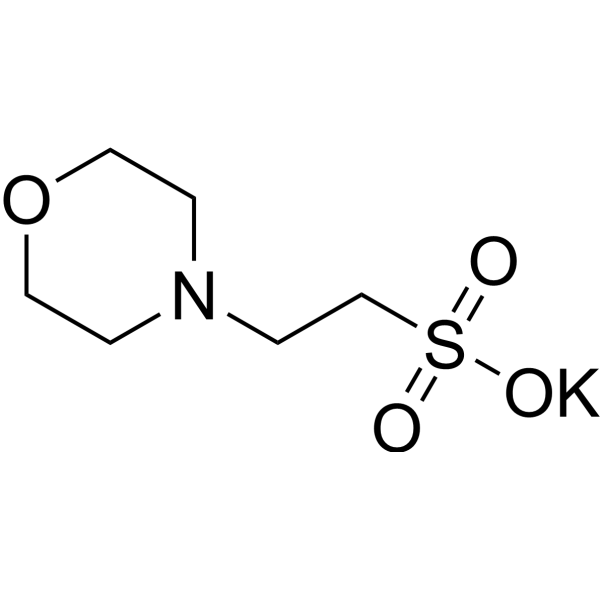
MES (2-Morpholinoethanesulphonic acid) potassium is a kind of amphoteric ion buffer, the buffer capacity ranging pH 5.5-7.0. As a Good's buffer, MES potassium is widely used in biochemistry and molecular biology experiments, such as cell culture, enzyme activity determination, electrophoresis and protein studies .
|
-
- HY-134564
-
|
|
Fluorescent Dye
|
Others
|
|
Fluorescein octadecyl ester is a lipophilic fluorescent reagent is immobilized in a plasticized PVC membrane. Fluorescein octadecyl ester can reversibly recognize alcohol molecules and can be used to determine the concentration of ethanol in alcoholic drinks. Fluorescein octadecyl ester can be used as acceptor to make optrode membrane for the determination of picric acid .
|
-
- HY-D0858
-
MES
4 Publications Verification
2-Morpholinoethanesulphonic acid
|
Biochemical Assay Reagents
|
Others
|
|
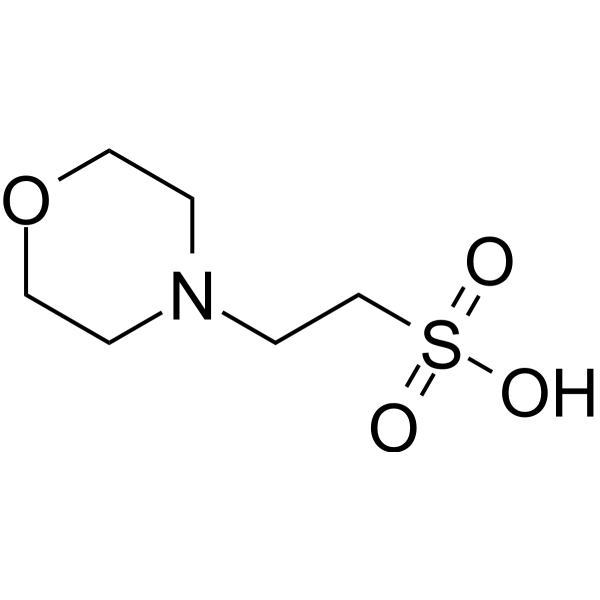
MES (2-Morpholinoethanesulphonic acid) is a kind of amphoteric ion buffer, the buffer capacity ranging pH 5.5-7.0. As a Good's buffer, MES is widely used in biochemistry and molecular biology experiments, such as cell culture, enzyme activity determination, electrophoresis and protein studies .
|
-
- HY-N1480
-
|
6-Desoxygalactose; L-(-)-Fucose; L-Galactomethylose
|
Endogenous Metabolite
Parasite
|
Infection
Metabolic Disease
Cancer
|
|
(-)-Fucose is classified as a member of the hexoses, plays a role in A and B blood group antigen substructure determination, selectin-mediated leukocyte-endothelial adhesion, and host-microbe interactions. (-)-Fucose is orally active, inhibits CL11-induced inflammatory response in kidney and tumor growth .
|
-
- HY-127151
-
|
Levophencynonate hydrochloride
|
Endogenous Metabolite
|
Neurological Disease
|
|
Levophencynonate is a muscarinic receptor antagonist with anticholinergic activity. The biological activity of levophencynonate makes it a key target for the determination of its concentration in human plasma in medical research. Levophencynonate was analyzed by high performance liquid chromatography tandem mass spectrometry (HPLC-MS/MS) and showed good specificity and linearity .
|
-
- HY-107864
-
|
Tetraiodofluorescein
|
Fluorescent Dye
|
Infection
|
|
Erythrosine B free acid is a visibly red dye with colorimetric and fluorescent properties that serves as an important dye for many Gram-positive and -negative bacteria. Erythrosine B free acid can be used for live/dead determination in both colorimetric and fluorescence-based assays for low, medium and high-throughput experimentation .
|
-
- HY-157917
-
|
|
Biochemical Assay Reagents
|
Others
|
|
Nitro-PAPS disodium dihydrate is a highly sensitive colometric reagent for Fe(II) detection with a maximal absorption wavelength of 592 nm. Nitro-PAPS disodium dihydrate is suitable for the determination of Fe(II) in serum and also be used to determine micro molar levels of Cu, Zn, Ni, Co and V .
|
-
- HY-P4406
-
|
|
Fluorescent Dye
|
Others
|
|
Abz-AGLA-Nba is a fluorogenic substrate for the determination of protease activity. Abz-AGLA-Nba is hydrolyzed to release aminoacyl benzimide (Abz-AGLA) and 2-naphthylaminoacyl (Nba). The product Abz-AGLA produced by this hydrolysis reaction is fluorescent under ultraviolet light and can emit a fluorescent signal .
|
-
- HY-P2979A
-
|
β-D-Fructofuranosidase, candida sp.
|
Biochemical Assay Reagents
|
Others
|
|
Invertase from Candida sp. is responsible for catalyzing the hydrolysis of sucrose into glucose and fructose and is widely used in the field of carbohydrate processing. Invertase from Candida sp. can be used for enzymatic determination of sucrose concentration as well as for structural analysis of carbohydrates containing β-D-fructofuranosyl residues .
|
-
- HY-135543
-
|
|
Endogenous Metabolite
|
Neurological Disease
|
|
Levophencynonate is a muscarinic receptor antagonist with anticholinergic activity. The biological activity of levophencynonate makes it a key target for the determination of its concentration in human plasma in medical research. Levophencynonate was analyzed by high performance liquid chromatography tandem mass spectrometry (HPLC-MS/MS) and showed good specificity and linearity .
|
-
- HY-107864A
-
|
Tetraiodofluorescein aluminum
|
Fluorescent Dye
|
Infection
|
|
Erythrosine B aluminum is a visibly red dye with colorimetric and fluorescent properties that serves as an important dye for many Gram-positive and -negative bacteria. Erythrosine B aluminum can be used for live/dead determination in both colorimetric and fluorescence-based assays for low, medium and high-throughput experimentation .
|
-
- HY-D0858A
-
|
2-Morpholinoethanesulphonic acid monohydrate
|
Biochemical Assay Reagents
|
Others
|
|
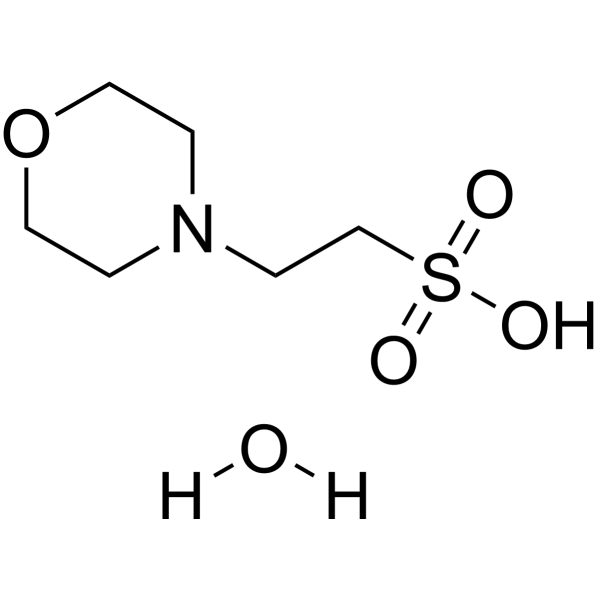
MES (2-Morpholinoethanesulphonic acid) monohydrate is a kind of amphoteric ion buffer, the buffer capacity ranging pH 5.5-7.0. As a Good's buffer, MES monohydrate is widely used in biochemistry and molecular biology experiments, such as cell culture, enzyme activity determination, electrophoresis and protein studies .
|
-
- HY-D0858D
-
|
2-Morpholinoethanesulphonic acid hemisodium
|
Biochemical Assay Reagents
|
Others
|
|
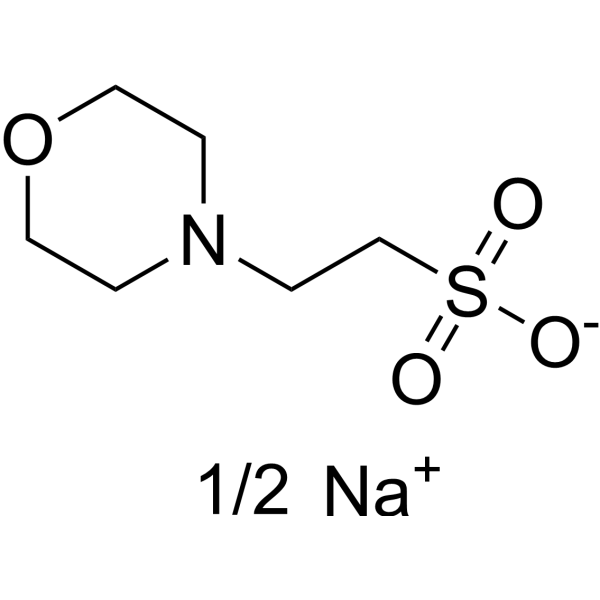
MES (2-Morpholinoethanesulphonic acid) hemisodium is a kind of amphoteric ion buffer, the buffer capacity ranging pH 5.5-7.0. As a Good's buffer, MES hemisodium is widely used in biochemistry and molecular biology experiments, such as cell culture, enzyme activity determination, electrophoresis and protein studies .
|
-
- HY-136444S
-
|
|
Isotope-Labeled Compounds
|
Others
|
|
2-NP-AOZ-d4 is a deuterium labeled 2-NP-AOZ. 2-NP-AOZ is a 2-nitrophenyl derivative of AOZ (a tissue-bound metabolite of the Furazolidone). 2-NP-AOZ can be used to determination of the AOZ residues .
|
-
- HY-P4419
-
|
|
Fluorescent Dye
|
Others
|
|
Boc-Asp(OBzl)-Pro-Arg-AMC is a fluorogenic substrate for the determination of protease activity. Boc-Asp(OBzl)-Pro-Arg-AMC undergoes hydrolysis and releases the fluorescent product 7-amino-4-methylcoumarin (AMC). The excitation and emission wavelengths are 351 nm and 430 nm, respectively .
|
-
- HY-130509S
-
|
Otmpmms-15N
|
Isotope-Labeled Compounds
Biochemical Assay Reagents
|
Others
|
|
MTSSL- 15N (Otmpmms- 15N) is the 15N-labeled MTSSL (HY-130509). MTSSL (Otmpmms) is highly reactive thiol-specific spin label, which is used to label protein thiol residues for protein structure and dynamics determination and protein-protein interaction studies .
|
-
- HY-Y1097S
-
|
2-(Methoxycarbonyl)benzoic acid-d4
|
Isotope-Labeled Compounds
|
Cancer
|
|
Monomethyl phthalate-d4 (2-(Methoxycarbonyl)benzoic acid-d4) is the deuterium labeled Monomethyl phthalate. Monomethyl phthalate is a phthalate metabolite. Monomethyl phthalate acts as a urinary biomarker of phthalates exposure and can be used as a standard for the determination of thyroid cancer and benign nodule .
|
-
- HY-W017445
-
|
|
Fungal
|
Infection
|
|
Homogentisic acid lactone (Compound 1) is a fungal metabolite with fungicidal activity, which is found in the fungus WF5. Homogentisic acid lactone is active against the plant pathogenic fungus F. graminearum. Homogentisic acid lactone can be used as a substrate in the determination of serum paraoxonase/arylesterase 1 (PON1) activity .
|
-
- HY-D1702
-
|
|
Fluorescent Dye
|
Others
|
|
Mag-Fura-2 tetrapotassium is a cell-impermeant UV excitable rational fluorescent Mg 2+/Ca 2+ indicator (Ex=334-360 nm, Em=510 nm). Mag-Fura-2 tetrapotassium can be used for the determination of Mg 2+ and Ca 2+ concentrations .
|
-
- HY-D1536
-
|
|
Fluorescent Dye
|
Neurological Disease
|
|
Glycine cresol red is a complexometric indicator. Glycine cresol red forms coloured complexes with Al 3+, Ga 3+ and In 3+ ions in aqueous solutions. Glycine cresol red can been used for the spectrophotometric determination of inorganic ions. Glycine cresol red can be used as a stain in neurohistology .
|
-
- HY-P4408
-
|
|
Fluorescent Dye
|
Others
|
|
Ac-Arg-Gly-Lys-AMC is a fluorogenic substrate for the determination of protease activity. Ac-Arg-Gly-Lys-AMC undergoes hydrolysis and releases the fluorescent product 7-amino-4-methylcoumarin (AMC). AMC is fluorescent under UV light and can emit a fluorescent signal .
|
-
- HY-P4323
-
|
|
Fluorescent Dye
|
Others
|
|
Boc-Gln-Arg-Arg-AMC is a fluorogenic substrate for the determination of protease activity. Boc-Gln-Arg-Arg-AMC undergoes hydrolysis and releases the fluorescent product 7-amino-4-methylcoumarin (AMC). AMC is fluorescent under UV light and can emit a fluorescent signal .
|
-
- HY-158655
-
|
(3'-Sulfo)Galβ-Cer (d18:1/17:0); N-Heptadecanoyl sulfatide; C17 Sulfatide
|
Biochemical Assay Reagents
|
Neurological Disease
|
|
C17 3'-Sulfo galactosylceramide (d18:1/17:0) is a member of the sulfatide class of glycolipids. C17 3'-Sulfo galactosylceramide (d18:1/17:0) can be used for the mass spectrometric quantitative urinary determination in metachromatic leukodystrophies .
|
-
- HY-P4406A
-
|
|
Fluorescent Dye
|
Others
|
|
Abz-AGLA-Nba TFA is a fluorogenic substrate for the determination of protease activity. Abz-AGLA-Nba TFA is hydrolyzed to release aminoacyl benzimide (Abz-AGLA) and 2-naphthylaminoacyl (Nba). The product Abz-AGLA produced by this hydrolysis reaction is fluorescent under ultraviolet light and can emit a fluorescent signal .
|
-
- HY-P4323A
-
|
|
Fluorescent Dye
|
Others
|
|
Boc-Gln-Arg-Arg-AMC acetate is a fluorogenic substrate for the determination of protease activity. Boc-Gln-Arg-Arg-AMC undergoes hydrolysis and releases the fluorescent product 7-amino-4-methylcoumarin (AMC). AMC is fluorescent under UV light and can emit a fluorescent signal .
|
-
- HY-P4419A
-
|
|
Fluorescent Dye
|
Others
|
|
Boc-Asp(OBzl)-Pro-Arg-AMC acetate is a fluorogenic substrate for the determination of protease activity. Boc-Asp(OBzl)-Pro-Arg-AMC acetate undergoes hydrolysis and releases the fluorescent product 7-amino-4-methylcoumarin (AMC). AMC is fluorescent under UV light and can emit a fluorescent signal .
|
-
- HY-W008378S
-
|
|
Isotope-Labeled Compounds
|
Others
|
|
5-Methoxy-2-benzimidazolethiol-d3 is the deuterium labeled 5-Methoxy-2-benzimidazolethiol . 5-Methoxy-2-benzimidazolethiol is a benzimidazole. The iodimetric determination of 5-Methoxy-2-benzimidazolethiol in alkaline media is studied .
|
-
- HY-D2355
-
|
|
Biochemical Assay Reagents
|
Others
|
|
Tris-NTA Biotin is a biotin-labeled version of tris-NTA. Tris-NTA Biotin, as a bridge connecting His-tagged proteins with streptavidin, can reversibly label proteins and cell surfaces. Tris-NTA Biotin can be used in experiments such as protein immobilization, kinetic determination, live cell labeling, and Western blot detection .
|
-
- HY-136976
-
WST-1
3 Publications Verification
|
Fluorescent Dye
|
Cancer
|
|
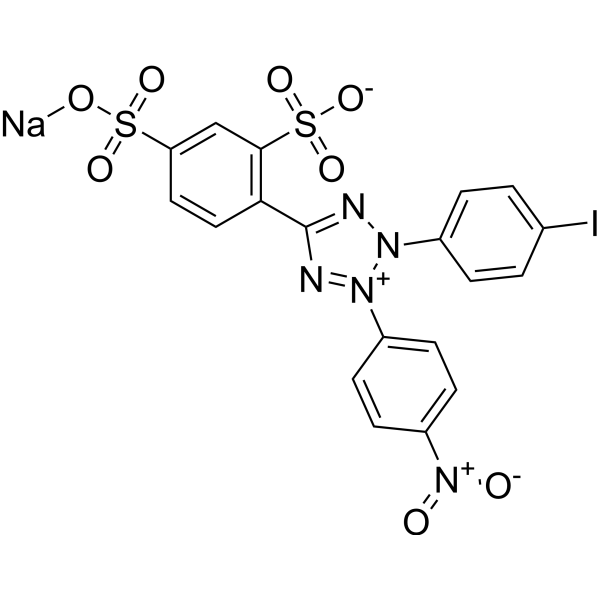
WST-1 is a kind of water-soluble tetrazolium salt. WST induces the intracellular mitochondrial dehydrogenase to conduct NADH-dependent enzyme digestion reaction, releasing the water-soluble methyl benzene product. WST-1 can be used for the detection of cell proliferation and cytotoxicity, via the determination of the light absorption value at 450 nm .
|
-
- HY-B0594R
-
|
|
Reference Standards
Autophagy
Mitophagy
|
Cancer
|
|
Iohexol (Standard) is the analytical standard of Iohexol. This product is intended for research and analytical applications. Iohexol is a non-ionic, water-soluble contrast agent used as a reference marker for the determination of glomerular filtration rate (GFR) at the level of renal function. Iohexol can be used for contrast in myelography, computerized tomography (cisternography, ventriculography) and MicroCT imaging .
|
-
- HY-W077680
-
|
|
Biochemical Assay Reagents
|
Others
|
|
Girard's P reagent is a reagent used in organic chemistry. Girard's P reagent is used to react with vanillin to form a hydrazone derivative, which is then combined with an ion selective electrode (ISE) to develop a potentiometric method for the determination of vanillin. Girard's P reagent can be used in the development of ion selective electrodes and in the study of organic analysis .
|
-
- HY-P4416
-
|
|
Fluorescent Dye
|
Others
|
|
Ac-Gly-Ala-Lys(Ac)-AMC is a fluorogenic substrate for the determination of protease activity. Ac-Gly-Ala-Lys(Ac)-AMC undergoes hydrolysis and releases the fluorescent product 7-amino-4-methylcoumarin (AMC). AMC is fluorescent under UV light and can emit a fluorescent signal .
|
-
- HY-34849
-
|
|
Biochemical Assay Reagents
|
Others
|
|
(R)-(-)-1-(9-Anthryl)-2,2,2-trifluoroethanol is utilized as a chiral shift reagent for determining enantiomeric ratios. Additionally, (R)-(-)-1-(9-Anthryl)-2,2,2-trifluoroethanol can be employed for nuclear magnetic resonance (NMR) optical purity determination .
|
-
- HY-158725
-
|
|
Endogenous Metabolite
|
Others
|
|
N-Octadecenoyl-(cis-9) -Sulfatide is a glycolipid found in the brains of mice. N-Octadecenoyl-(cis-9) -Sulfatide can be used as a standard for the determination of C18:13 '-mergogalactosyllactose in dry blood stains of patients with chromatic leukodystrophy (MLD) by ultra-high performance liquid chromatography-mass spectrometry (UPLC-MS) .
|
-
- HY-W008378R
-
|
|
Biochemical Assay Reagents
Reference Standards
|
Others
|
|
5-Methoxy-2-benzimidazolethiol (Standard) is the analytical standard of 5-Methoxy-2-benzimidazolethiol. This product is intended for research and analytical applications. 5-Methoxy-2-benzimidazolethiol is a benzimidazole. The iodimetric determination of 5-Methoxy-2-benzimidazolethiol in alkaline media is studied .
|
-
- HY-174572
-
|
|
mRNA
|
Neurological Disease
|
|
Human NEUROD2 mRNA encodes the human neuronal differentiation 2 (NEUROD2) protein, a member of the neuroD family of neurogenic basic helix-loop-helix (bHLH) proteins. Human NEUROD2 can induce neurogenic differentiation in non-neuronal cells in Xenopus embryos, and is thought to play a role in the determination and maintenance of neuronal cell fates.
|
-
- HY-W088069
-
|
|
Biochemical Assay Reagents
|
Others
|
|
Dipotassium hydrogen phosphate trihydrate, which is commonly used as a buffer and source of phosphorus and potassium in various applications, such as fertilizers, food processing, and pharmaceuticals, in biochemistry and molecular biology, Dipotassium hydrogen phosphate trihydrate is used in the preparation of cell culture media And reagent buffer system, in addition, it has been used in analytical chemistry as a reagent for the determination of calcium and magnesium ions in water samples.
|
-
- HY-D0858S
-
|
|
Isotope-Labeled Compounds
Biochemical Assay Reagents
|
Others
|
|
MES-d13 is the deuterium labeled MES. MES (2-Morpholinoethanesulphonic acid) is a kind of amphoteric ion buffer, the buffer capacity ranging pH 5.5-7.0. As a Good's buffer, MES is widely used in biochemistry and molecular biology experiments, such as cell culture, enzyme activity determination, electrophoresis and protein studies .
|
-
- HY-106572A
-
|
T-1982 sodium
|
Bacterial
|
Infection
|
|
Cefbuperazone sodium is an antibacterial agent that demonstrates significant activity against bacterial infections. Cefbuperazone sodium exhibits a linear pharmacokinetic profile, allowing for effective dosage determination in clinical settings. Cefbuperazone sodium reaches peak concentrations in human plasma following intravenous infusion, indicating its rapid absorption and distribution. Cefbuperazone sodium is primarily excreted unchanged in urine, highlighting its efficiency in renal elimination.
|
-
- HY-134278A
-
|
8-Br-ITP tetrasodium; 8-Bromo ITP tetrasodium
|
Nucleoside Antimetabolite/Analog
|
Others
|
|
8-Bromoinosine-5'-O-triphosphate (8-Br-ITP) tetrasodium is a derivative of the nucleoside triphosphate Inosine-5'-triphosphate (ITP) (HY-W013706). 8-Bromoinosine-5'-O-triphosphate tetrasodium can be used in the determination of nucleoside diphosphate kinase (NDPK) activity .
|
-
- HY-D1895A
-
|
|
Biochemical Assay Reagents
|
Others
|
|
3,5-DiBr-PAESA sodium is a water-soluble pyridylazo-based highly sensitive chromogenic reagent. With the assistance of EDTA for masking copper and bromide ions for dissociating silver chelates, 3,5-DiBr-PAESA sodium enables accurate determination of sub-milligram level silver ions in strongly acidic high-copper systems via flow injection spectrophotometry .
|
-
- HY-D1895
-
|
|
Biochemical Assay Reagents
|
Others
|
|
3,5-DiBr-PAESA is a water-soluble pyridylazo-based highly sensitive chromogenic reagent. With the assistance of EDTA for masking copper and bromide ions for dissociating silver chelates, 3,5-DiBr-PAESA enables accurate determination of sub-milligram level silver ions in strongly acidic high-copper systems via flow injection spectrophotometry .
|
-
- HY-D0858AR
-
|
2-Morpholinoethanesulphonic acid monohydrate (Standard)
|
Biochemical Assay Reagents
Reference Standards
|
Others
|
|
MES (monohydrate) (Standard) is the analytical standard of MES (monohydrate). This product is intended for research and analytical applications. MES (2-Morpholinoethanesulphonic acid) is a kind of amphoteric ion buffer, the buffer capacity ranging pH 5.5-7.0. As a Good's buffer, MES is widely used in biochemistry and molecular biology experiments, such as cell culture, enzyme activity determination, electrophoresis and protein studies .
|
-
- HY-Y0469
-
|
|
Drug Metabolite
|
Others
|
|
1-Aminohydantoin hydrochloride is a major metabolite of nitrofurantoin in animal tissues and can be used as a standard for the determination of residues of veterinary agents in meat, milk et.al. 1-Aminohydantoin hydrochloride covalently binds to tissue proteins and is released from the tissues under slightly acidic conditions and derivatized with 2-nitrobenzaldehyde to form nitrophenyl derivatives of AHD before detection .
|
-
- HY-P2891A
-
|
PoxB, Aerococcus viridans
|
Endogenous Metabolite
|
Others
|
|
Pyruvate oxidase, Aerococcus viridans (PoxB) is a thiamine pyrophosphate-dependent oxidase that catalyzes the oxidative decarboxylation of pyruvate to produce acetyl phosphate, carbon dioxide, and water. Pyruvate oxidase, Aerococcus viridans is an important enzyme in bacterial metabolism and can enhance ATP production. Additionally, Pyruvate oxidase, Aerococcus viridans can be used for the determination of aspartate aminotransferase and alanine aminotransferase activities .
|
-
- HY-111424
-
BDP9066
2 Publications Verification
|
Cdc42-binding kinase
|
Cancer
|
|
BDP9066 is a potent and selective myotonic dystrophy-related Cdc42-binding kinase MRCK inhibitor with an IC50 of 64 nM for MRCKβ in SCC12 cells, Ki values of 0.0136 nM and 0.0233 nM for MRCKα/β in house determinations, respectively. BDP9066 has therapeutic effect on skin cancer by reducing substrate phosphorylation.
|
-
- HY-D1571
-
|
|
DNA Stain
|
Others
|
|
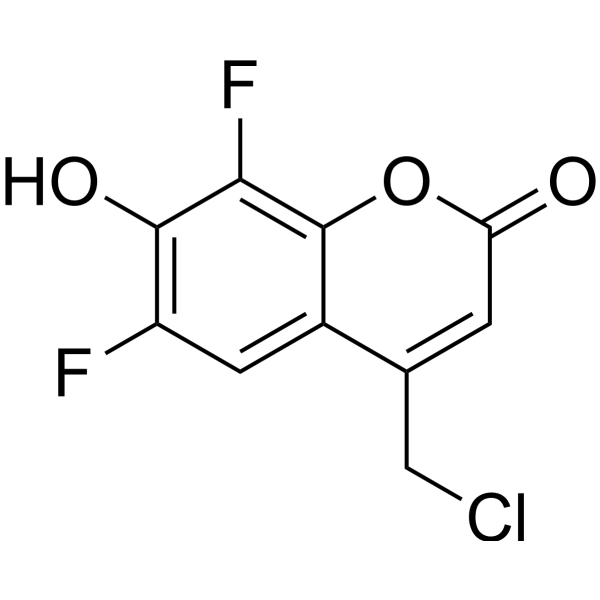
CellTracker Blue CMF2HC Dye is a blue dye, can be used in two-channel nuclei acid sequencing, with blue and purple excitation light (450-460 nm/400-405nm or 415-450 nm/480-525nm). CellTracker Blue CMF2HC Dye can be used to rapid determination of antibiotic sensitivity of microorganisms .
|
-
- HY-B1571
-
|
|
Environmental Pollutants
Fluorescent Dye
|
Others
|
|
Bromophenol blue is an acid phthalein dye, and it is used as a tracking dye for electrophoresis. Bromophenol blue is also used as a pH indicator, with a transition range of pH 3 to 4.6. Bromophenol blue is used as a sensor for the determination of several compounds including ammonia, drugs, proteins and amino acids. The binding of Bromophenol blue to proteins is accompanied by the appearance of a strong absorbance at 610 nm .
|
-
- HY-136444R
-
|
|
Biochemical Assay Reagents
Reference Standards
|
Others
|
|
2-NP-AOZ (Standard) is the analytical standard of 2-NP-AOZ. This product is intended for research and analytical applications. 2-NP-AOZ is a 2-nitrophenyl derivative of AOZ (HY-W012982, a tissue-bound metabolite of the Furazolidone). 2-NP-AOZ can be used to determination of the AOZ residues .
|
-
- HY-P3815
-
|
|
Casein Kinase
|
Others
|
|
Casein Kinase 2 Substrate Peptide is a common CK2 substrate peptide. Casein Kinase 2 Substrate Peptide is synthesized with its C-terminus conjugated to 5-[(2-aminoethyl)amino]naphthalene-1-sulfonic acid (EDANS). Casein Kinase 2 Substrate Peptide can be used for protein kinase CK2 activity determination .
|
-
- HY-N1480R
-
|
6-Desoxygalactose (Standard); L-(-)-Fucose (Standard); L-Galactomethylose (Standard)
|
Reference Standards
Endogenous Metabolite
Parasite
|
Infection
Metabolic Disease
|
|
(-)-Fucose (Standard) is the analytical standard of (-)-Fucose. This product is intended for research and analytical applications. (-)-Fucose is classified as a member of the hexoses, plays a role in A and B blood group antigen substructure determination, selectin-mediated leukocyte-endothelial adhesion, and host-microbe interactions. (-)-Fucose is orally active, inhibits CL11-induced inflammatory response in kidney and tumor growth .
|
-
- HY-W011664
-
|
DPBF
|
Fluorescent Dye
Reactive Oxygen Species (ROS)
|
Others
|
|
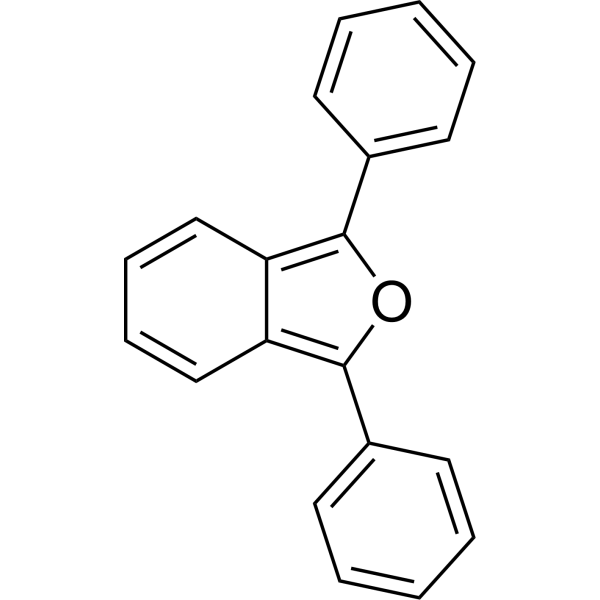
1,3-Diphenylisobenzofuran (DPBF) has been developed as a selective probe for the detection and quantitative determination of hydrogen peroxide in samples containing different reactive nitrogen and oxygen species (RNOS). DPBF is a fluorescent probe which, for almost 20 years, was believed to react in a highly specific manner toward some reactive oxygen species such as singlet oxygen and hydroxy, alkyloxy or alkylperoxy radicals .
|
-
- HY-D0945
-
|
|
Fluorescent Dye
|
Others
|
|
Xylene Cyanol FF is an acid triphenylmethane dye. Xylene Cyanol FF can be used for histochemical staining of hemoglobin peroxidase or as a tracking dye for DNA sequencing in electrophoresis. Xylene Cyanol FF will be catalyzed by Fe and Al to accelerate oxidation under the addition of double oxidant hydrogen peroxide and potassium periodate. Xylene Cyanol FF thus enables the spectrophotometric determination of Fe and Al in the solution to be tested .
|
-
- HY-134349A
-
|
8-Piperidino-NAD+ sodium
|
Endogenous Metabolite
|
Others
|
|
8-PIP-NAD+ (sodium) (8-Piperidino-NAD+ (sodium)) is a derivative of the signaling molecule and enzyme cofactor NAD+ (HY-B0445). 8-PIP-NAD+ (sodium) can be used in the determination of poly(ADP-ribose) polymerase (PARP) target proteins. 8-PIP-NAD+ (sodium) is a synthetic intermediate in the synthesis of cyclic ADP-ribose (cADPR) derivatives .
|
-
- HY-W776833
-
|
Otmpmms-15N,d15
|
Isotope-Labeled Compounds
Biochemical Assay Reagents
|
Others
|
|
MTSSL- 15N,d15-1 (Otmpmms- 15N,d15) is the deuterium and 15N-labeled MTSSL (HY-130509). MTSSL (Otmpmms) is highly reactive thiol-specific spin label, which is used to label protein thiol residues for protein structure and dynamics determination and protein-protein interaction studies .
|
-
- HY-126839
-
|
5-Dodecanoylaminofluorescein di-β-D-Galactopyranoside
|
Fluorescent Dye
|
Others
|
|
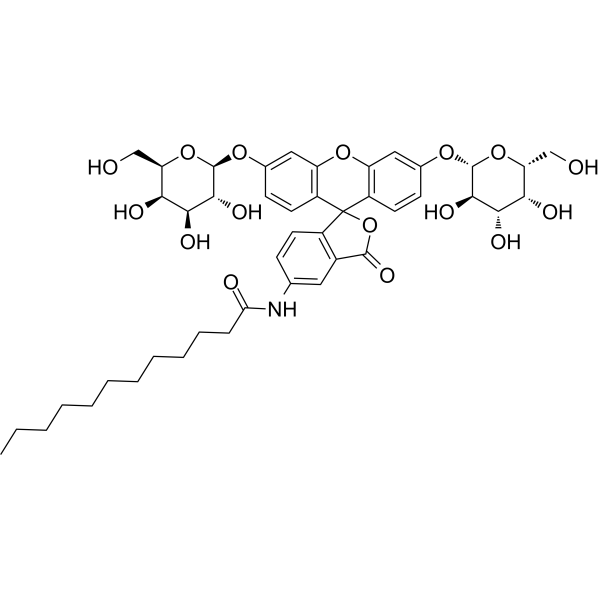
C12FDG (5-Dodecanoylaminofluorescein di-β-D-Galactopyranoside) is a lipophilic green fluorescent substrate for β-galactosidase detection. C12-FDG is more sensitive than Fluorescein di(β-D-galactopyranoside) (HY-101895) for beta-galactosidase activity determinations in animal cells (Ex/Em = 488/523 nm) .
|
-
- HY-W011038S
-
|
HDPB-d5
|
Isotope-Labeled Compounds
Biochemical Assay Reagents
|
Others
|
|
Hexadecylpyridinium bromide-d5 (HDPB-d5) is the deuterated form of Hexadecylpyridinium bromide. Hexadecylpyridinium bromide (HDPB) is a cationic surfactant. Hexadecylpyridinium bromide can act as a sensitizer and solubilizer, and is a key component in spectrophotometric determination of metal ion reaction systems. Hexadecylpyridinium bromide can be used as a new passivating ligand for the synthesis and stabilization of cesium lead bromide calcium phosphate nanocrystals.
|
-
- HY-157926
-
|
|
Biochemical Assay Reagents
|
Others
|
|
Nitroso-PSAP is a sensitive and specific chromogenic reagent for iron (Fe 2+), which is used for the colorimetric determination of iron in blood after mineralization with periodic acid. TNitroso-PSAP chelates with iron (Fe 2+) to produce a green complex (λmax=756 nm, Epsilon = 4.5 x 10 < sup > 4 < / sup > dm < sup > 3 < / sup > mol < sup > 1 < / sup > cm < sup > 1 < / sup >) .
|
-
- HY-W103047
-
|
|
Fluorescent Dye
Reactive Oxygen Species (ROS)
|
Others
|
|
1-Pyrenebutyric acid is a fluorescence probe whose fluorescence lifetime depends on local oxygen and free radical concentrations. 1-Pyrenebutyric acid is used in fluorescence determination of DNA. 1-Pyrenebutyric acid can be used as a linker for biomolecules to form a self-assembled monolayer on grapheme. 1-Pyrenebutyric acid can also be used for the measurement of free radicals in solution and in living cells .
|
-
- HY-DY1100
-
|
|
Fluorescent Dye
|
Others
|
WST-1 (solution) is a kind of water-soluble tetrazolium salt. WST induces the intracellular mitochondrial dehydrogenase to conduct NADH-dependent enzyme digestion reaction, releasing the water-soluble methyl benzene product. WST-1 can be used for the detection of cell proliferation and cytotoxicity, via the determination of the light absorption value at 450 nm . Solvent and concentration: ddH2O: 10 mg/mL
|
-
- HY-174539
-
|
|
mRNA
|
Neurological Disease
|
|
Human SOX2 mRNA encodes the human SRY-box transcription factor 2 (SOX2) protein, a member of the SRY-related HMG-box (SOX) family of transcription factors. SOX2 involves in the regulation of embryonic development and in the determination of cell fate. In addition, SOX2 is also required for stem-cell maintenance in the central nervous system and could regulate gene expression in the stomach.
|
-
- HY-D0858DR
-
|
2-Morpholinoethanesulphonic acid hemisodium (Standard)
|
Biochemical Assay Reagents
|
Others
|
|
MES (hemisodium) (Standard) is the analytical standard of MES (hemisodium). This product is intended for research and analytical applications. MES (2-Morpholinoethanesulphonic acid) hemisodium is a kind of amphoteric ion buffer, the buffer capacity ranging pH 5.5-7.0. As a Good's buffer, MES hemisodium is widely used in biochemistry and molecular biology experiments, such as cell culture, enzyme activity determination, electrophoresis and protein studies .
|
-
- HY-D1687
-
|
|
Fluorescent Dye
|
Others
|
|
Flubi-2 is a fluorescein-biotin based pH-ratio dye (Ex=480 nm, Em= 520-560 nm) with a pK value of 6.7. Flubi-2 is a hydrolysis product of Flubida-2 (non-fluorescent, membrane permeable). Flubi-2 can be used for pH determination of organelles of the secretory pathway (such as golgi apparatus and endoplasmic reticulum) in living cells .
|
-
- HY-W699846
-
|
|
Isotope-Labeled Compounds
Biochemical Assay Reagents
|
Others
|
|
5-(Methoxy-d3)-1H-benzo[d]imidazole-2-thiol is the deuterium labeled 5-Methoxy-2-benzimidazolethiol (HY-W008378). 5-Methoxy-2-benzimidazolethiol is a benzimidazole. The iodimetric determination of 5-Methoxy-2-benzimidazolethiol in alkaline media is studied .
|
-
- HY-P3699
-
|
|
MMP
Fluorescent Dye
|
Others
|
|
TNO003 is a selective fluorogenic substrate for stromelysin-1 (MMP-3). TNO003 has higher selectivity for MMP-3 than MMP-1, MMP-2, MMP-7, MMP-8, MMP-9 and MMP-13. TNO003 can be used for the determination of stromelysin activity (Ex/Em = 360/490 nm) .
|
-
- HY-W344380
-
|
|
Biochemical Assay Reagents
|
|
|
Tetrahydro-2,5-dioxo-3-furansulfonic acid, sodium is a chemical reagent with excellent water determination activity. Tetrahydro-2,5-dioxo-3-furansulfonic acid, sodium is widely used as a titrant in Karl Fischer titration to determine the water content in various samples. Tetrahydro-2,5-dioxo-3-furansulfonic acid, sodium has important application value in chemical analysis.
|
-
- HY-107864R
-
|
Tetraiodofluorescein (Standard)
|
Reference Standards
Fluorescent Dye
|
Infection
|
|
Erythrosine B free acid (Standard) is the analytical standard of Erythrosine B (free acid) (HY-107864). This product is intended for research and analytical applications. Erythrosine B free acid is a visibly red dye with colorimetric and fluorescent properties that serves as an important dye for many Gram-positive and -negative bacteria. Erythrosine B free acid can be used for live/dead determination in both colorimetric and fluorescence-based assays for low, medium and high-throughput experimentation .
|
-
- HY-P3699A
-
|
|
MMP
Fluorescent Dye
|
Others
|
|
TNO003 TFA is a selective fluorogenic substrate for stromelysin-1 (MMP-3). TNO003 TFA has higher selectivity for MMP-3 than MMP-1, MMP-2, MMP-7, MMP-8, MMP-9 and MMP-13. TNO003 TFA can be used for the determination of stromelysin activity (Ex/Em = 360/490 nm) .
|
-
- HY-116879
-
|
(2E)-4-Oxo-2-nonen-8-ynal; alkynyl-4-ONE
|
Exosomes
Others
|
Cancer
|
|
4-Oxo-2-Nonenal Alkyne ((2E)-4-Oxo-2-nonen-8-ynal; alkynyl-4-ONE) is a functionalized lipid electrophile that conjugated to the exosomes via the reaction of amino and aldehyde groups. 4-Oxo-2-Nonenal Alkyne can be used in tumor exosomes determination .
|
-
- HY-DY1033
-
|
|
Fluorescent Dye
|
Others
|
C12FDG (5-Dodecanoylaminofluorescein di-β-D-Galactopyranoside) (solution) is a lipophilic green fluorescent substrate for β-galactosidase detection. C12-FDG is more sensitive than Fluorescein di (β-D-galactopyranoside) (HY-101895) for beta-galactosidase activity determinations in animal cells (Ex/Em = 488/523 nm) . Solvent and concentration: DMSO: 10 mM
|
-
- HY-W127790
-
|
|
Biochemical Assay Reagents
|
Others
|
|
Bathophenanthrolinedisulfonic acid disodium salt (BPS) is a colorimetric reagent for iron detection, with a wavelength of 535 nm for iron complex. It can be used for iron determination in aqueous solution systems without the need for extraction solvents. BPS can serve as a precursor to prepare Europium(III) tris(dibenzoylmethanate) bis(bathophenanthrolinedisulfonate) complex and ruthenium(II) tris(bathophenanthrolinedisulfonate), or participate in the catalytic oxidation of 2-hexanol by forming water-soluble complexes with palladium .
|
-
- HY-W419044A
-
|
|
Fluorescent Dye
|
Others
|
|
Calcein calcium potassium is a fluorescent dye and self-quenching probe, used as an indicator of lipid vesicle leakage, and also as a complexometric indicator for titration of calcium ions with EDTA, and for fluorometric determination of calcium. Calcein cannot directly cross the intact cell membrane of a living cell, unlike Calcein-AM (HY-D0041) which is cell-permeable. Calcein can also be used as a model drug for evaluating efficiency and bioavailability of drug delivery systems .
|
-
- HY-D0040
-
|
Fluorexon
|
Fluorescent Dye
|
Others
|
|
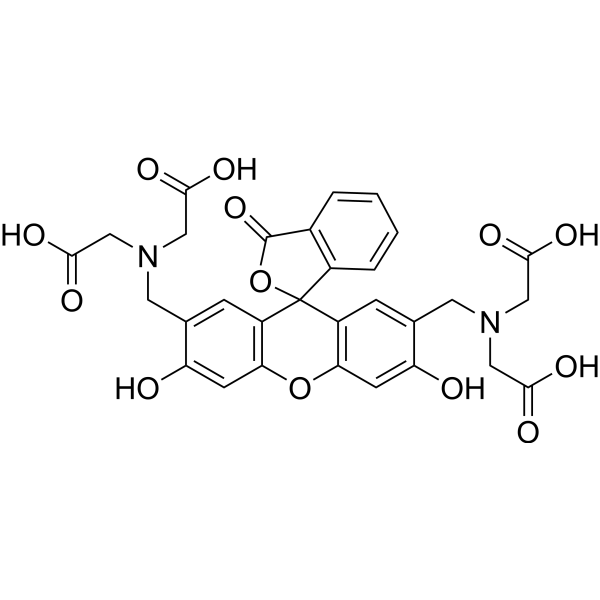
Calcein is a fluorescent dye and self-quenching probe, used as an indicator of lipid vesicle leakage, and also as a complexometric indicator for titration of calcium ions with EDTA, and for fluorometric determination of calcium. Calcein cannot directly cross the intact cell membrane of a living cell, unlike Calcein-AM (HY-D0041) which is cell-permeable. Calcein can also be used as a model drug for evaluating efficiency and bioavailability of drug delivery systems .
|
-
- HY-D0215
-
|
Safranine T
|
Fluorescent Dye
Bacterial
|
Infection
Metabolic Disease
|
|
Safranin (Safranin T) is an important and classical phenazinium dye. Safranin has been extensively used in the academic field as a spectroscopic probe and indicator. Safranin possesses a planar structure and cationic charge. Safranin can readily intercalate into biological macromolecules, including DNA and proteins. Safranin has antibacterial effects against gram-positive bacteria (S. aureus). Safranin can be used as a redox indicator in the determination of metal ion concentration .
|
-
- HY-W329161
-
|
|
Fluorescent Dye
|
Others
|
|
Calcein sodium is a fluorescent dye and self-quenching probe, used as an indicator of lipid vesicle leakage, and also as a complexometric indicator for titration of calcium ions with EDTA, and for fluorometric determination of calcium. Calcein cannot directly cross the intact cell membrane of a living cell, unlike Calcein-AM (HY-D0041) which is cell-permeable. Calcein can also be used as a model drug for evaluating efficiency and bioavailability of drug delivery systems .
|
-
- HY-128868D
-
|
|
Fluorescent Dye
|
Others
|
|
FITC-Dextran (MW 40000) is a fluorescent probe for fluorescein isothiocyanate (FITC) dextran (Ex=495 nm; Em=525 nm). FITC-Dextran (MW 40000) can be used as a marker to reveal heat shock-induced cell damage and to study the early and late stages of apoptosis. FITC-Dextran (MW 40000) can also be used for cell permeability studies, such as blood-brain barrier permeability and determination of the extent of blood-brain barrier disruption .
|
-
- HY-128868
-
|
|
Fluorescent Dye
|
Others
|
|
FITC-Dextran (MW 10000) is a fluorescent probe for fluorescein isothiocyanate (FITC) dextran (Ex=495 nm; Em=525 nm). FITC-Dextran (MW 10000) can be used as a marker to reveal heat shock-induced cell damage and to study the early and late stages of apoptosis. FITC-Dextran (MW 10000) can also be used for cell permeability studies, such as blood-brain barrier permeability and determination of the extent of blood-brain barrier disruption .
|
-
- HY-P5485
-
|
|
Bacterial
|
Others
|
|
Dabcyl-QALPETGEE-Edans is a synthetic peptide substrate for fluorescence resonance energy transfer (FRET) detection of Sortase A (SrtA) enzymatic activity. Dabcyl-QALPETGEE-Edans is labeled at both ends with the fluorescent group Edans (donor) and the quencher Dabcyl (acceptor), respectively. Dabcyl-QALPETGEE-Edans's central sequence contains a conserved motif specifically recognized by SrtA. Dabcyl-QALPETGEE-Edans demonstrates high sensitivity in vitro assays, enabling precise determination of the half-maximal inhibitory concentration of SrtA .
|
-
- HY-P2724A
-
|
PNP, Bacillus sp.
|
Endogenous Metabolite
|
Metabolic Disease
|
|
Purine nucleoside phosphorylase, Bacillus sp. is a key enzyme in purine metabolism, involved in the purine salvage pathway. A deficiency in Purine nucleoside phosphorylase, Bacillus sp. can lead to impaired T-cell function. In the presence of inorganic phosphate as a second substrate, Purine nucleoside phosphorylase, Bacillus sp. catalyzes the cleavage of the glycosidic bond of ribonucleosides and deoxyribonucleosides, producing purine bases and ribose (or deoxyribose)-1-phosphate. Purine nucleoside phosphorylase, Bacillus sp. can be used for the determination of inorganic phosphate .
|
-
- HY-128868A
-
|
|
Fluorescent Dye
|
Others
|
|
FITC-Dextran (MW 4000) is a fluorescent probe for fluorescein isothiocyanate (FITC) dextran (Ex=495 nm; Em=525 nm). FITC-Dextran (MW 4000) can be used as a marker to reveal heat shock-induced cell damage and to study the early and late stages of apoptosis. FITC-Dextran (MW 4000) can also be used for cell permeability studies, such as blood-brain barrier permeability and determination of the extent of blood-brain barrier disruption .
|
-
- HY-W129633
-
|
DCIP sodium hydrate; DPIP sodium hydrate
|
Biochemical Assay Reagents
|
Others
|
|
2,6-Dichlorophenolindophenol (DCIP; DPIP) sodium hydrate is a redox chromogenic indicator with a redox potential of +217 mV relative to SHE, and it acts as a substrate for reduction reactions. During the metabolic process of nutrient consumption by Saccharomyces cerevisiae, 2,6-Dichlorophenolindophenol sodium hydrate is reduced from dark blue to colorless, resulting in a decrease in absorbance. 2,6-Dichlorophenolindophenol sodium hydrate is widely used in spectrophotometric biochemical oxygen demand determination and preclinical colorimetric toxicity analysis for heavy metal ion detection based on Saccharomyces cerevisiae .
|
-
- HY-DY1016
-
|
|
Fluorescent Dye
|
Others
|
FITC-Dextran (MW 10000) (solution) is a fluorescent probe for fluorescein isothiocyanate (FITC) dextran (Ex=495 nm; Em=525 nm). FITC-Dextran (MW 10000) can be used as a marker to reveal heat shock-induced cell damage and to study the early and late stages of apoptosis. FITC-Dextran (MW 10000) can also be used for cell permeability studies, such as blood-brain barrier permeability and determination of the extent of blood-brain barrier disruption . Solvent and Concentration: Sterile water: 2 mM
|
-
- HY-D0203
-
|
Malachite green
|
Environmental Pollutants
Fluorescent Dye
|
Others
|
|
Basic green 4 (Malachite green) is a cationic dye that is widely used as a bactericide in aquaculture and is also commonly used in laboratories for the determination of phosphates. Basic green 4 exhibits high cytotoxicity and carcinogenicity to mammalian cells, specifically shown by its IC50 values of 2.03 µM for HEp-2 human laryngeal cells and 13.8 µM for Caco-2 human colorectal adenocarcinoma cells, and it can promote the development of liver tumors. The maximum absorbance wavelength is 621 nm .
|
-
- HY-DY1018
-
|
|
Fluorescent Dye
|
Others
|
FITC-Dextran (MW 4000) (solution) is a fluorescent probe for fluorescein isothiocyanate (FITC) dextran (Ex=495 nm; Em=525 nm). FITC-Dextran (MW 4000) can be used as a marker to reveal heat shock-induced cell damage and to study the early and late stages of apoptosis. FITC-Dextran (MW 4000) can also be used for cell permeability studies, such as blood-brain barrier permeability and determination of the extent of blood-brain barrier disruption . Solvent and Concentration: Sterile water: 2 mM
|
-
- HY-W127711
-
|
|
Phosphatase
Lipase
|
Metabolic Disease
Inflammation/Immunology
|
Fast Blue B Salt, Dye content ~95% is a diazo dye, primarily used as a chromogenic substrate in biochemical analysis. Fast Blue B Salt, Dye content ~95% is the coupling agent for the histochemical demonstration of proteases. Fast Blue B Salt, Dye content ~95% can be used for the detection of acid phosphatase in Clostridium perfringens, and also for the determination of lipase activity. Fast Blue B Salt, Dye content ~95% reacts directly with the active hydroxyl groups in phenolic compounds to determine the content of phenolic substances .
|
-
- HY-117401
-
|
|
Fluorescent Dye
|
Others
|
|
5-Dodecanoylaminofluorescein is an amphipathic (amphoteric) fluorescent probe (Ex/Em = 485 nm/515-535 nm), which consists of a hydrophilic fluorescein core and a hydrophobic dodecanoyl group (C12 fatty acid chain) linked by an amide bond. 5-Dodecanoylaminofluorescein is mainly used as an interface-localized radical trapping/indicator probe. Dodecanoylaminofluorescein can be used for the determination of the antioxidant properties of emulsions, or can serve as a lipophilic drug model for the study of passive skin penetration when encapsulated in tyrosine-derived nanospheres .
|
-
- HY-DY1053
-
|
|
Fluorescent Dye
Reactive Oxygen Species (ROS)
|
Others
|
1,3-Diphenylisobenzofuran (DPBF) (solution) has been developed as a selective probe for the detection and quantitative determination of hydrogen peroxide in samples containing different reactive nitrogen and oxygen species (RNOS). DPBF is a fluorescent probe which, for almost 20 years, was believed to react in a highly specific manner toward some reactive oxygen species such as singlet oxygen and hydroxy, alkyloxy or alkylperoxy radicals . Solvent and concentration: DMSO: 10 mM The 1 mL volume is defined as the base specification. All larger sizes correspond to incremental volumes of this base.
|
-
- HY-128868B
-
|
|
Biochemical Assay Reagents
|
Others
|
|
FITC-Dextran (MW 3000-5000) is a fluorescent probe for fluorescein isothiocyanate (FITC) dextran (Ex=495 nm; Em=525 nm). FITC-Dextran (MW 3000-5000) can be used as a marker to reveal heat shock-induced cell damage and to study the early and late stages of apoptosis. FITC-Dextran (MW 3000-5000) can also be used for cell permeability studies, such as blood-brain barrier permeability and determination of the extent of blood-brain barrier disruption . Storage: protect from light.
|
-
- HY-W283166
-
|
|
Biochemical Assay Reagents
|
Others
|
|
n-Undecyl β-D-maltopyranoside is an n-alkyl β-D-maltopyranoside detergent that can be used for solubilization and structural determination of membrane proteins. n-Undecyl β-D-maltopyranoside effectively solubilizes CST from Golgi-enriched fractions of Pichia pastoris, but fails to maintain the functional activity of CST during subsequent partial purification and reconstitution into proteoliposomes. n-Undecyl β-D-maltopyranoside is more suitable for structural analysis studies of membrane proteins rather than functional reconstitution experiments .
|
-
- HY-Y0469R
-
|
|
Reference Standards
Drug Metabolite
|
Cancer
|
|
1-Aminohydantoin hydrochloride (Standard) is the analytical standard of 1-Aminohydantoin hydrochloride (HY-Y0469). This product is intended for research and analytical applications. 1-Aminohydantoin hydrochloride is a major metabolite of Nitrofurantoin (HY-A0090) in animal tissues and can be used as a standard for the determination of residues of veterinary agents in meat, milk et.al. 1-Aminohydantoin hydrochloride covalently binds to tissue proteins and is released from the tissues under slightly acidic conditions and derivatized with 2-nitrobenzaldehyde to form nitrophenyl derivatives of 1-Aminohydantoin hydrochloride before detection .
|
-
- HY-DY1091
-
|
Fluorexon (solution)
|
Fluorescent Dye
|
Others
|
Calcein (solution) (Fluorexon (solution)) is a fluorescent dye and self-quenching probe, used as an indicator of lipid vesicle leakage, and also as a complexometric indicator for titration of calcium ions with EDTA, and for fluorometric determination of calcium. Calcein cannot directly cross the intact cell membrane of a living cell, unlike Calcein-AM (HY-D0041) which is cell-permeable. Calcein can also be used as a model drug for evaluating efficiency and bioavailability of drug delivery systems . Solvent and concentration: DMSO: 2 mM The 1 mL volume is defined as the base specification. All larger sizes correspond to incremental volumes of this base.
|
-
- HY-W040144
-
|
|
Fluorescent Dye
|
Others
|
|
Bromocresol green is a pH-sensitive triphenylmethane dye commonly used for the determination of protein and albumin in serum. Bromocresol green is a bio-based dye with a yellow-green to blue-green color. Bromocresol green turns yellow (λmax=435 nm, protonated form) when placed in acidic solution (e.g. pH=4.15), and turns blue in basic solution (λmax=615 nm, deprotonated form). Bromocresol green is widely used as a pH indicator in the field of biochemical analysis. In addition, Bromocresol green is also used to detect the concentration of molecules such as creatinine, and to judge the viability of cells .
|
-
- HY-173283
-
|
|
Fungal
|
Infection
|
|
Antifungal agent 129 (Compound 4g) is an inhibitor targeting Rhizoctonia solani, with an EC50 value of 4.27 mg/L. It has a good control effect against rice sheath blight in in vitro and in vivo experiments. Preliminary exploration through scanning electron microscopy, molecular docking, enzyme activity determination, and cytotoxicity experiments has revealed that Antifungal agent 129 may exert its inhibitory activity by affecting the cell structure or physiological processes of Rhizoctonia solani. Antifungal agent 129 can be used in the research of plant diseases in the agricultural field, such as rice sheath blight, which are caused by Rhizoctonia solani .
|
-
- HY-157718
-
|
|
Biochemical Assay Reagents
|
|
|
1,2-Di-O-(9Z-octadecenyl)-sn-glycero-3-phosphocholine is a surfactant that has the activity of promoting liposome formation. 1,2-Di-O-(9Z-octadecenyl)-sn-glycero-3-phosphocholine can effectively study the biological effects of ceramide and ceramide phosphate. 1,2-Di-O-(9Z-octadecenyl)-sn-glycero-3-phosphocholine shows important application in the determination of phospholipase A activity of lecithin-cholesterol acyltransferase in ether matrix.
|
-
- HY-W587488
-
|
3′-AMP
|
Nucleoside Antimetabolite/Analog
Cyclic GMP-AMP Synthase
|
Cancer
|
|
Adenosine 3’-monophosphate (3’-AMP) is a nucleotide. Adenosine 3’-monophosphate is a cyclic AMP production agonist. Adenosine 3’-monophosphate increases cyclic AMP levels concentration-dependently in NG108-15 cells. Adenosine 3’-monophosphate can be used in the determination of acid phosphatase activity of human serum, which is estabilished as a laboratory procedure in the diagnosis of prostate cancer, metastatic mammary cancer and Gaucher’s disease. Adenosine 3’-monophosphate inhibits human aortic and coronary vascular smooth muscle cell proliferation via A2B receptors .
|
-
- HY-15929
-
TBHBA
1 Publications Verification
2,4,6-Tribromo-3-hydroxybenzoic acid
|
Biochemical Assay Reagents
|
Others
|
|
TBHBA (2,4,6-Tribromo-3-hydroxybenzoic acid) is a chemical colorimetric agent and nanomaterial surface modifier. TBHBA can react with some oxidants (such as H2O2) to generate high-absorbance quinoneimine dyes, which enhance the sensitivity of HDL cholesterol enzymatic determination. TBHBA can be used as a bromine-containing coupling agent to modify the surface of silica nanoparticles through esterification reaction. Thereby, organic flame retardant groups are introduced to improve the thermal stability and flame retardant properties of nanocomposites. TBHBA can be used in clinical biochemical testing (such as serum lipoprotein analysis) and the preparation of flame-retardant polymer nanocomposites .
|
-
- HY-B1422
-
|
Aminacrine
|
Bacterial
HIV
|
Infection
|
|
9-Aminoacridine, a fluorescent probe, acts as an indicator of pH for quantitative determination of transmembrane pH gradients (inside acidic). 9-Aminoacridine is an antimicrobial. 9-Aminoacridine exerts its antimicrobial activity by interacting with specific bacterial DNA and disrupting the proton motive force in K. pneumoniae. 9-Aminoacridine is a HIV-1 inhibitor and inhibits HIV LTR transcription highly dependent on the presence and location of the amino moiety. 9-Aminoacridine inhibits virus replication in HIV-1 infected cell lines. 9-Aminoacridine is used as a Rifampin (RIF; HY-B0272) adjuvant for the multidrug-resistant K. pneumoniae infections .
|
-
- HY-D0233
-
|
|
Fluorescent Dye
|
Others
|
|
Leucocrystal violet is a cationic triarylmethane dye. Leucocrystal violet generates a colored purple product in the presence of hydrogen peroxide and horseradish peroxidase, or when oxidized by periodate under the catalysis of horseradish peroxidase. Leucocrystal violet serves as a chromogenic reagent for the determination of submicrogram-level hydrogen peroxide, with no interference from tryptophan, persulfate or chromate. Leucocrystal violet reacts with blood to produce a purple/violet color in the presence of hydrogen peroxide; it forms a very weak fluorophore when acting with whole blood in an unbuffered solution, with a maximum absorption wavelength of 630 nm and a maximum fluorescence emission wavelength of 665 nm upon excitation at 630 nm. Leucocrystal violet is widely used for staining blood residues on porous and non-porous materials .
|
-
- HY-B1543
-
-
- HY-D0233S
-
|
|
Isotope-Labeled Compounds
Fluorescent Dye
|
Others
|
|
Leucocrystal violet-d6 is the deuterium labeled Leucocrystal violet (HY-D0233). Leucocrystal violet is a cationic triarylmethane dye. Leucocrystal violet generates a colored purple product in the presence of hydrogen peroxide and horseradish peroxidase, or when oxidized by periodate under the catalysis of horseradish peroxidase. Leucocrystal violet serves as a chromogenic reagent for the determination of submicrogram-level hydrogen peroxide, with no interference from tryptophan, persulfate or chromate. Leucocrystal violet reacts with blood to produce a purple/violet color in the presence of hydrogen peroxide; it forms a very weak fluorophore when acting with whole blood in an unbuffered solution, with a maximum absorption wavelength of 630 nm and a maximum fluorescence emission wavelength of 665 nm upon excitation at 630 nm. Leucocrystal violet is widely used for staining blood residues on porous and non-porous materials.
|
-
- HY-118773
-
|
A22 hydrochloride
|
Bacterial
|
Infection
|
|
MreB Perturbing Compound A22 hydrochloride (A22 hydrochloride) is a reversible MreB inhibitor and antimicrobial agent that exhibits bacteriostatic activity against Escherichia coli, with low activity against Gram-positive bacteria. MreB Perturbing Compound A22 hydrochloride rapidly and reversally delocalizes MreB from the helical/circular structures in cells, impairs MreB function, and reduces the binding of MreB to the chromosomal region proximal to the replication origin. MreB Perturbing Compound A22 hydrochloride alters the cell morphology of caulobacters to round/lemon-shaped, slows caulobacter growth, blocks their cell division, and induces the formation of spherical morphology, asymmetric division, and anucleate cells in Escherichia coli. MreB Perturbing Compound A22 hydrochloride is used for studies related to bacterial rod-shaped morphology determination, chromosome segregation, and cell division mechanisms .
|
-
- HY-B1422R
-
|
Aminacrine (Standard)
|
Reference Standards
Bacterial
HIV
|
Infection
|
|
9-Aminoacridine (Standard) is the analytical standard of 9-Aminoacridine. This product is intended for research and analytical applications. 9-Aminoacridine, a fluorescent probe, acts as an indicator of pH for quantitative determination of transmembrane pH gradients (inside acidic). 9-Aminoacridine is an antimicrobial. 9-Aminoacridine exerts its antimicrobial activity by interacting with specific bacterial DNA and disrupting the proton motive force in K. pneumoniae. 9-Aminoacridine is a HIV-1 inhibitor and inhibits HIV LTR transcription highly dependent on the presence and location of the amino moiety. 9-Aminoacridine inhibits virus replication in HIV-1 infected cell lines. 9-Aminoacridine is used as a Rifampin (RIF; HY-B0272) adjuvant for the multidrug-resistant K. pneumoniae infections .
|
-
- HY-B1422S
-
|
Aminacrine-13C6
|
Bacterial
HIV
Isotope-Labeled Compounds
|
Infection
|
|
9-Aminoacridine-13C6 is the 13C-labeled 9-Aminoacridine(HY-B1422). 9-Aminoacridine, a fluorescent probe, acts as an indicator of pH for quantitative determination of transmembrane pH gradients (inside acidic). 9-Aminoacridine is an antimicrobial. 9-Aminoacridine exerts its antimicrobial activity by interacting with specific bacterial DNA and disrupting the proton motive force in K. pneumoniae. 9-Aminoacridine is a HIV-1 inhibitor and inhibits HIV LTR transcription highly dependent on the presence and location of the amino moiety. 9-Aminoacridine inhibits virus replication in HIV-1 infected cell lines. 9-Aminoacridine is used as a Rifampin (RIF; HY-B0272) adjuvant for the multidrug-resistant K. pneumoniae infections .
|
-
- HY-D0233R
-
|
|
Reference Standards
Fluorescent Dye
|
Others
|
|
Leucocrystal violet (Standard) is the analytical standard of Leucocrystal violet (HY-D0233). This product is intended for research and analytical applications. Leucocrystal violet is a cationic triarylmethane dye. Leucocrystal violet generates a colored purple product in the presence of hydrogen peroxide and horseradish peroxidase, or when oxidized by periodate under the catalysis of horseradish peroxidase. Leucocrystal violet serves as a chromogenic reagent for the determination of submicrogram-level hydrogen peroxide, with no interference from tryptophan, persulfate or chromate. Leucocrystal violet reacts with blood to produce a purple/violet color in the presence of hydrogen peroxide; it forms a very weak fluorophore when acting with whole blood in an unbuffered solution, with a maximum absorption wavelength of 630 nm and a maximum fluorescence emission wavelength of 665 nm upon excitation at 630 nm. Leucocrystal violet is widely used for staining blood residues on porous and non-porous materials.
|
-
- HY-118773R
-
|
A22 hydrochloride (Standard)
|
Reference Standards
Bacterial
|
Infection
|
|
MreB Perturbing Compound A22 hydrochloride (Standard) is the analytical standard for MreB Perturbing Compound A22 hydrochloride (HY-118773). This product is intended for research and analytical applications. MreB Perturbing Compound A22 hydrochloride (A22 hydrochloride) is a reversible MreB inhibitor and antimicrobial agent that exhibits bacteriostatic activity against Escherichia coli, with low activity against Gram-positive bacteria. MreB Perturbing Compound A22 hydrochloride rapidly and reversally delocalizes MreB from the helical/circular structures in cells, impairs MreB function, and reduces the binding of MreB to the chromosomal region proximal to the replication origin. MreB Perturbing Compound A22 hydrochloride alters the cell morphology of caulobacters to round/lemon-shaped, slows caulobacter growth, blocks their cell division, and induces the formation of spherical morphology, asymmetric division, and anucleate cells in Escherichia coli. MreB Perturbing Compound A22 hydrochloride is used for studies related to bacterial rod-shaped morphology determination, chromosome segregation, and cell division mechanisms .
|
-
- HY-P1047
-
|
[Pro18, Asp21] β-Amyloid (17-21)
|
Amyloid-β
|
Neurological Disease
|
|
β-Sheet Breaker Peptide iAβ5 is an effective brain amyloid-β (Abeta) degrader. Abeta deposits are associated with Alzheimer's disease (AD), and the related toxicity arises from its β-sheet conformation and aggregation. β-Sheet Breaker Peptide iAβ5 can repeatedly induce the degradation of fibrillary amyloid deposits in vivo. Therefore, β-Sheet Breaker Peptide iAβ5 can prevent and/or reverse neuronal contraction caused by Abeta and reduce the range of interleukin IL-1beta positive microglial-like cells around Abeta deposits. β-Sheet Breaker Peptide iAβ5 can reduce the size and/or number of brain amyloid plaques in AD. β-Sheet Breaker Peptide iAβ5 is labeled with a hydrophobic benzyl alcohol (HBA) tag and shows a bright blue color under acidic conditions, which can be used for quantitative determination.
|
-
- HY-161972
-
|
|
HyT
Ferroptosis
Glutathione Peroxidase
|
Cancer
|
|
ZX782 is a HyT GPX4 degrader and a ferroptosis inducer, which induces GPX4 degradation and significantly increases lipid ROS accumulation in HT1080 cells. ZX782 can be used to treat AD by reducing the size and/or number of brain amyloid plaques and by inhibiting the spread of IL-1beta-positive microglial-like cells around amyloid plaques. ZX782 is labeled with hydrophobic benzyl alcohol (HBA) and appears bright blue under acidic conditions, which can be used for quantitative determination . ZX782 is composed of target protein ligand (red part) ML-210 (HY-100003), PROTAC linker (black part) Bromo-PEG2-CH2-Boc (HY-141371) and Hty molecule (blue part) Adamantan-1-ylmethanamine (HY-W037848). The conjugate consisting of Hyt and linker parts is Adamantan-C-amide-PEG2-C-Br (HY-161974), and the activity control of the target protein ligand is Hydroxyl-ML-210 (HY-161973).
|
-
- HY-P5415
-
|
|
HIV
|
Others
|
|
DABCYL-GABA-Ser-Gln-Asn-Tyr-Pro-Ile-Val-Gln-EDANS is a biological active peptide. (DABCYL-GABA-Ser-Gln-Asn-Tyr-Pro-Ile-Val-Gln-EDANS is also called HIV protease substrate I in some literature. It is widely used for the continuous assay for HIV protease activity. The 11-Kd protease (PR) encoded by the human immunodeficiency virus 1 (HIV-1) is essential for the correct processing of viral polyproteins and the maturation of infectious virus, and is therefore a target for the design of selective acquired immunodeficiency syndrome (AIDS) therapeutics. The FRET-based fluorogenic substrate is derived from a natural processing site for HIV-1 PR. Incubation of recombinant HIV-1 PR with the fluorogenic substrate resulted in specific cleavage at the Tyr-Pro bond and a time-dependent increase in fluorescence intensity that is linearly related to the extent of substrate hydrolysis. The fluorescence quantum yields of the HIV-1 PR substrate in the FRET assay increased by 40.0- and 34.4-fold, respectively, per mole of substrate cleaved. Because of its simplicity and precision in the determination of reaction rates required for kinetic analysis, this substrate offers many advantages over the commonly used HPLC or electrophoresis-based assays for peptide substrate hydrolysis by retroviral PRs. Abs/Em = 340nm/490nm.)
|
-
| Cat. No. |
Product Name |
Type |
-
- HY-128868A
-
|
|
Fluorescent Dye
|
|
FITC-Dextran (MW 4000) is a fluorescent probe for fluorescein isothiocyanate (FITC) dextran (Ex=495 nm; Em=525 nm). FITC-Dextran (MW 4000) can be used as a marker to reveal heat shock-induced cell damage and to study the early and late stages of apoptosis. FITC-Dextran (MW 4000) can also be used for cell permeability studies, such as blood-brain barrier permeability and determination of the extent of blood-brain barrier disruption .
|
-
- HY-128868
-
|
|
Fluorescent Dye
|
|
FITC-Dextran (MW 10000) is a fluorescent probe for fluorescein isothiocyanate (FITC) dextran (Ex=495 nm; Em=525 nm). FITC-Dextran (MW 10000) can be used as a marker to reveal heat shock-induced cell damage and to study the early and late stages of apoptosis. FITC-Dextran (MW 10000) can also be used for cell permeability studies, such as blood-brain barrier permeability and determination of the extent of blood-brain barrier disruption .
|
-
- HY-128868D
-
|
|
Fluorescent Dye
|
|
FITC-Dextran (MW 40000) is a fluorescent probe for fluorescein isothiocyanate (FITC) dextran (Ex=495 nm; Em=525 nm). FITC-Dextran (MW 40000) can be used as a marker to reveal heat shock-induced cell damage and to study the early and late stages of apoptosis. FITC-Dextran (MW 40000) can also be used for cell permeability studies, such as blood-brain barrier permeability and determination of the extent of blood-brain barrier disruption .
|
-
- HY-126839
-
|
5-Dodecanoylaminofluorescein di-β-D-Galactopyranoside
|
Fluorescent Dye
|
|
C12FDG (5-Dodecanoylaminofluorescein di-β-D-Galactopyranoside) is a lipophilic green fluorescent substrate for β-galactosidase detection. C12-FDG is more sensitive than Fluorescein di(β-D-galactopyranoside) (HY-101895) for beta-galactosidase activity determinations in animal cells (Ex/Em = 488/523 nm) .
|
-
- HY-D0040
-
|
Fluorexon
|
Fluorescent Dye
|
|
Calcein is a fluorescent dye and self-quenching probe, used as an indicator of lipid vesicle leakage, and also as a complexometric indicator for titration of calcium ions with EDTA, and for fluorometric determination of calcium. Calcein cannot directly cross the intact cell membrane of a living cell, unlike Calcein-AM (HY-D0041) which is cell-permeable. Calcein can also be used as a model drug for evaluating efficiency and bioavailability of drug delivery systems .
|
-
- HY-128868B
-
|
|
Fluorescent Dye
|
|
FITC-Dextran (MW 3000-5000) is a fluorescent probe for fluorescein isothiocyanate (FITC) dextran (Ex=495 nm; Em=525 nm). FITC-Dextran (MW 3000-5000) can be used as a marker to reveal heat shock-induced cell damage and to study the early and late stages of apoptosis. FITC-Dextran (MW 3000-5000) can also be used for cell permeability studies, such as blood-brain barrier permeability and determination of the extent of blood-brain barrier disruption . Storage: protect from light.
|
-
- HY-136976
-
WST-1
3 Publications Verification
|
Fluorescent Dye
|
|
WST-1 is a kind of water-soluble tetrazolium salt. WST induces the intracellular mitochondrial dehydrogenase to conduct NADH-dependent enzyme digestion reaction, releasing the water-soluble methyl benzene product. WST-1 can be used for the detection of cell proliferation and cytotoxicity, via the determination of the light absorption value at 450 nm .
|
-
- HY-W011664
-
|
DPBF
|
Fluorescent Dye
|
|
1,3-Diphenylisobenzofuran (DPBF) has been developed as a selective probe for the detection and quantitative determination of hydrogen peroxide in samples containing different reactive nitrogen and oxygen species (RNOS). DPBF is a fluorescent probe which, for almost 20 years, was believed to react in a highly specific manner toward some reactive oxygen species such as singlet oxygen and hydroxy, alkyloxy or alkylperoxy radicals .
|
-
- HY-W040226
-
|
Indigotindisulfonate sodium; C.I.Acid Blue 74
|
Fluorescent Dye
|
|
Indigo carmine is an efficient reagent for the determination of ozone by chemlluminescence (CL) .
|
-
- HY-W074143
-
|
|
Fluorescent Dye
|
|
Tris(4,7-diphenyl-1,10-phenanthroline)ruthenium(II) dichloride ([Ru(dpp)3] 2+) is an electrochemiluminescent (ECL) probe and oxygen-sensitive sensor. Tris(4,7-diphenyl-1,10-phenanthroline)ruthenium(II) dichloride can be used to modify electrode surfaces for the detection of sulfates (S2O8 2-) and oxalates, based on electrochemical reactions that generate excited-state species, releasing photons through irreversible redox reactions. Tris(4,7-diphenyl-1,10-phenanthroline)ruthenium(II) dichloride utilizes the oxygen quenching of fluorescence mechanism, where fluorescence intensity reflects the metabolic rate of living microorganisms or oxygen levels within cells/tumors, allowing for real-time detection. Tris(4,7-diphenyl-1,10-phenanthroline)ruthenium(II) dichloride's main applications include microbial detection, antibacterial activity studies, and tumor microenvironment research .
|
-
- HY-B1571
-
|
|
Fluorescent Dye
|
|
Bromophenol blue is an acid phthalein dye, and it is used as a tracking dye for electrophoresis. Bromophenol blue is also used as a pH indicator, with a transition range of pH 3 to 4.6. Bromophenol blue is used as a sensor for the determination of several compounds including ammonia, drugs, proteins and amino acids. The binding of Bromophenol blue to proteins is accompanied by the appearance of a strong absorbance at 610 nm .
|
-
- HY-W127711
-
|
|
Fluorescent Dye
|
Fast Blue B Salt, Dye content ~95% is a diazo dye, primarily used as a chromogenic substrate in biochemical analysis. Fast Blue B Salt, Dye content ~95% is the coupling agent for the histochemical demonstration of proteases. Fast Blue B Salt, Dye content ~95% can be used for the detection of acid phosphatase in Clostridium perfringens, and also for the determination of lipase activity. Fast Blue B Salt, Dye content ~95% reacts directly with the active hydroxyl groups in phenolic compounds to determine the content of phenolic substances .
|
-
- HY-D0203
-
|
Malachite green
|
Fluorescent Dye
|
|
Basic green 4 (Malachite green) is a cationic dye that is widely used as a bactericide in aquaculture and is also commonly used in laboratories for the determination of phosphates. Basic green 4 exhibits high cytotoxicity and carcinogenicity to mammalian cells, specifically shown by its IC50 values of 2.03 µM for HEp-2 human laryngeal cells and 13.8 µM for Caco-2 human colorectal adenocarcinoma cells, and it can promote the development of liver tumors. The maximum absorbance wavelength is 621 nm .
|
-
- HY-B1422
-
|
Aminacrine
|
Fluorescent Dye
|
|
9-Aminoacridine, a fluorescent probe, acts as an indicator of pH for quantitative determination of transmembrane pH gradients (inside acidic). 9-Aminoacridine is an antimicrobial. 9-Aminoacridine exerts its antimicrobial activity by interacting with specific bacterial DNA and disrupting the proton motive force in K. pneumoniae. 9-Aminoacridine is a HIV-1 inhibitor and inhibits HIV LTR transcription highly dependent on the presence and location of the amino moiety. 9-Aminoacridine inhibits virus replication in HIV-1 infected cell lines. 9-Aminoacridine is used as a Rifampin (RIF; HY-B0272) adjuvant for the multidrug-resistant K. pneumoniae infections .
|
-
- HY-125815
-
|
|
Fluorescent Dye
|
|
Reactive Blue 4 is an anthraquinone dye used extensively in the textile industry. Reactive Blue 4 is a single colorimetric chemosensor for sequential determination of multiple analytes with different optical responses in aqueous media .
|
-
- HY-D1571
-
|
|
Fluorescent Dye
|
|
CellTracker Blue CMF2HC Dye is a blue dye, can be used in two-channel nuclei acid sequencing, with blue and purple excitation light (450-460 nm/400-405nm or 415-450 nm/480-525nm). CellTracker Blue CMF2HC Dye can be used to rapid determination of antibiotic sensitivity of microorganisms .
|
-
- HY-D0215
-
|
Safranine T
|
Fluorescent Dye
|
|
Safranin (Safranin T) is an important and classical phenazinium dye. Safranin has been extensively used in the academic field as a spectroscopic probe and indicator. Safranin possesses a planar structure and cationic charge. Safranin can readily intercalate into biological macromolecules, including DNA and proteins. Safranin has antibacterial effects against gram-positive bacteria (S. aureus). Safranin can be used as a redox indicator in the determination of metal ion concentration .
|
-
- HY-DY1016
-
|
|
Fluorescent Dye
|
FITC-Dextran (MW 10000) (solution) is a fluorescent probe for fluorescein isothiocyanate (FITC) dextran (Ex=495 nm; Em=525 nm). FITC-Dextran (MW 10000) can be used as a marker to reveal heat shock-induced cell damage and to study the early and late stages of apoptosis. FITC-Dextran (MW 10000) can also be used for cell permeability studies, such as blood-brain barrier permeability and determination of the extent of blood-brain barrier disruption . Solvent and Concentration: Sterile water: 2 mM
|
-
- HY-D2355
-
|
|
Fluorescent Dye
|
|
Tris-NTA Biotin is a biotin-labeled version of tris-NTA. Tris-NTA Biotin, as a bridge connecting His-tagged proteins with streptavidin, can reversibly label proteins and cell surfaces. Tris-NTA Biotin can be used in experiments such as protein immobilization, kinetic determination, live cell labeling, and Western blot detection .
|
-
- HY-D0945
-
|
|
Fluorescent Dye
|
|
Xylene Cyanol FF is an acid triphenylmethane dye. Xylene Cyanol FF can be used for histochemical staining of hemoglobin peroxidase or as a tracking dye for DNA sequencing in electrophoresis. Xylene Cyanol FF will be catalyzed by Fe and Al to accelerate oxidation under the addition of double oxidant hydrogen peroxide and potassium periodate. Xylene Cyanol FF thus enables the spectrophotometric determination of Fe and Al in the solution to be tested .
|
-
- HY-117401
-
|
|
Fluorescent Dye
|
|
5-Dodecanoylaminofluorescein is an amphipathic (amphoteric) fluorescent probe (Ex/Em = 485 nm/515-535 nm), which consists of a hydrophilic fluorescein core and a hydrophobic dodecanoyl group (C12 fatty acid chain) linked by an amide bond. 5-Dodecanoylaminofluorescein is mainly used as an interface-localized radical trapping/indicator probe. Dodecanoylaminofluorescein can be used for the determination of the antioxidant properties of emulsions, or can serve as a lipophilic drug model for the study of passive skin penetration when encapsulated in tyrosine-derived nanospheres .
|
-
- HY-D0797
-
|
|
Fluorescent Dye
|
|
Azomethine-H monosodium is a colour-forming reagent. Azomethine-H monosodium is also a reagent for boron determinations .
|
-
- HY-D1895A
-
|
|
Fluorescent Dye
|
|
3,5-DiBr-PAESA sodium is a water-soluble pyridylazo-based highly sensitive chromogenic reagent. With the assistance of EDTA for masking copper and bromide ions for dissociating silver chelates, 3,5-DiBr-PAESA sodium enables accurate determination of sub-milligram level silver ions in strongly acidic high-copper systems via flow injection spectrophotometry .
|
-
- HY-DY1033
-
|
|
Fluorescent Dye
|
C12FDG (5-Dodecanoylaminofluorescein di-β-D-Galactopyranoside) (solution) is a lipophilic green fluorescent substrate for β-galactosidase detection. C12-FDG is more sensitive than Fluorescein di (β-D-galactopyranoside) (HY-101895) for beta-galactosidase activity determinations in animal cells (Ex/Em = 488/523 nm) . Solvent and concentration: DMSO: 10 mM
|
-
- HY-D0233
-
|
|
Fluorescent Dye
|
|
Leucocrystal violet is a cationic triarylmethane dye. Leucocrystal violet generates a colored purple product in the presence of hydrogen peroxide and horseradish peroxidase, or when oxidized by periodate under the catalysis of horseradish peroxidase. Leucocrystal violet serves as a chromogenic reagent for the determination of submicrogram-level hydrogen peroxide, with no interference from tryptophan, persulfate or chromate. Leucocrystal violet reacts with blood to produce a purple/violet color in the presence of hydrogen peroxide; it forms a very weak fluorophore when acting with whole blood in an unbuffered solution, with a maximum absorption wavelength of 630 nm and a maximum fluorescence emission wavelength of 665 nm upon excitation at 630 nm. Leucocrystal violet is widely used for staining blood residues on porous and non-porous materials .
|
-
- HY-D0813
-
|
|
Fluorescent Dye
|
|
Zincon sodium is an excellent colorimetric reagent for the detection of zinc and copper ions in aqueous solution. Zincon sodium can be used for the determination of zinc, copper, and cobalt ions in metalloproteins .
|
-
- HY-P2065
-
|
|
Fluorescent Dye
|
|
Ac-VEID-AMC is a fluorescent substrate for the determination of caspase-6 and related cysteine protease activities (Ex=340-360 nm, Em=440-460 nm) .
|
-
- HY-W356117
-
|
|
Fluorescent Dye
|
|
C6 NBD Glucosylceramide is a glucosylceramide fluorescent derivative (Ex=466 nm, Em=535 nm). C6 NBD Glucosylceramide can be used to study the metabolism and internalization of glucosylceramide and also for the determination of glucosyl ceramide synthase activity .
|
-
- HY-D1895
-
|
|
Fluorescent Dye
|
|
3,5-DiBr-PAESA is a water-soluble pyridylazo-based highly sensitive chromogenic reagent. With the assistance of EDTA for masking copper and bromide ions for dissociating silver chelates, 3,5-DiBr-PAESA enables accurate determination of sub-milligram level silver ions in strongly acidic high-copper systems via flow injection spectrophotometry .
|
-
- HY-W103047
-
|
|
Fluorescent Dye
|
|
1-Pyrenebutyric acid is a fluorescence probe whose fluorescence lifetime depends on local oxygen and free radical concentrations. 1-Pyrenebutyric acid is used in fluorescence determination of DNA. 1-Pyrenebutyric acid can be used as a linker for biomolecules to form a self-assembled monolayer on grapheme. 1-Pyrenebutyric acid can also be used for the measurement of free radicals in solution and in living cells .
|
-
- HY-D0036
-
|
4-Bromomethyl-7-methoxycoumarin
|
Fluorescent Dye
|
|
Br-Mmc (4-Bromomethyl-7-methoxycoumarin) is often used as fluorescent label for the determination of compounds possessing a carboxylic group. Br-Mmc is used for the determination fatty acids by TLC or HPLC .
|
-
- HY-D1436
-
|
|
Fluorescent Dye
|
|
PBFI is the cell-impermeant fluorescent indicator that is widely used for the determination of concentrations of K + (Ex/Em = 340,380/500 nm) .
|
-
- HY-112276
-
|
|
Fluorescent Dye
|
|
Beryllon II is a widely used chromogenic reagent that is used to determine many elements, such as Mo, Mg and Co, and also used for the determination of proteins.
|
-
- HY-107864
-
|
Tetraiodofluorescein
|
Fluorescent Dye
|
|
Erythrosine B free acid is a visibly red dye with colorimetric and fluorescent properties that serves as an important dye for many Gram-positive and -negative bacteria. Erythrosine B free acid can be used for live/dead determination in both colorimetric and fluorescence-based assays for low, medium and high-throughput experimentation .
|
-
- HY-D1702
-
|
|
Fluorescent Dye
|
|
Mag-Fura-2 tetrapotassium is a cell-impermeant UV excitable rational fluorescent Mg 2+/Ca 2+ indicator (Ex=334-360 nm, Em=510 nm). Mag-Fura-2 tetrapotassium can be used for the determination of Mg 2+ and Ca 2+ concentrations .
|
-
- HY-DY1018
-
|
|
Fluorescent Dye
|
FITC-Dextran (MW 4000) (solution) is a fluorescent probe for fluorescein isothiocyanate (FITC) dextran (Ex=495 nm; Em=525 nm). FITC-Dextran (MW 4000) can be used as a marker to reveal heat shock-induced cell damage and to study the early and late stages of apoptosis. FITC-Dextran (MW 4000) can also be used for cell permeability studies, such as blood-brain barrier permeability and determination of the extent of blood-brain barrier disruption . Solvent and Concentration: Sterile water: 2 mM
|
-
- HY-W415108
-
|
|
Fluorescent Dye
|
|
10-Methyl-9-(phenoxycarbonyl) acridinium trifluoromethanesulfonate is an acridinium ester that produces fluorescent 10-methyl-9-acridone upon oxidation with hydrogen peroxide, persulfate, and other oxidants under alkaline conditions. 10-Methyl-9-(phenoxycarbonyl) acridinium trifluoromethanesulfonate can be used in chemiluminescent assays, enzyme, antigen, antibody, and hormone immunoassays, and for the detection of oxidants in environmental, biological, and pharmaceutical samples .
|
-
- HY-W927359
-
|
|
Fluorescent Dye
|
|
Fluorescein hydrazide (3,6-Dihydroxyxanthane) is a fluorescein dye that can be used for the fluorophotometric determination of hydrogen peroxide (H2O2) and other reactive oxygen species (ROS) .
|
-
- HY-D0374
-
|
|
Fluorescent Dye
|
|
Reactive Blue 4 sodium is an anthraquinone dye used extensively in the textile industry. Reactive Blue 4 sodium is a single colorimetric chemosensor for sequential determination of multiple analytes with different optical responses in aqueous media .
|
-
- HY-D1699
-
|
|
Fluorescent Dye
|
|
PFB-FDG is a non-fluorescent galactosidase substrate that can be hydrolysed to green fluorescent PFB-F (Ex=485 nm, Em=535 nm). PFB-FDG can be used for the determination of β-galactosidase activity .
|
-
- HY-DY1053
-
|
|
Fluorescent Dye
|
1,3-Diphenylisobenzofuran (DPBF) (solution) has been developed as a selective probe for the detection and quantitative determination of hydrogen peroxide in samples containing different reactive nitrogen and oxygen species (RNOS). DPBF is a fluorescent probe which, for almost 20 years, was believed to react in a highly specific manner toward some reactive oxygen species such as singlet oxygen and hydroxy, alkyloxy or alkylperoxy radicals . Solvent and concentration: DMSO: 10 mM The 1 mL volume is defined as the base specification. All larger sizes correspond to incremental volumes of this base.
|
-
- HY-W110904
-
|
|
Fluorescent Dye
|
|
Methylthymol blue tetrasodium is a metallochromic indicator dye and can be used for determination of sulfate and calcium .
|
-
- HY-W142631
-
|
|
Fluorescent Dye
|
|
4-(Phenylazo)diphenylamine is an excellent colorimetric indicator for the accurate determination of the concentration for a variety of strong bases, Lewis acids, and hydride reducing agents .
|
-
- HY-15923
-
|
|
Fluorescent Dye
|
|
MAOS is a modified Trinder’s reagent that can be used as a chromogenic probe for the determination of H2O2. MAOS is strongly dependent on the pH of the reaction medium .
|
-
- HY-D1676
-
|
|
Fluorescent Dye
|
|
Thymolphthalein monophosphate disodium hydrate is a chromogenic substrate for the determination of acid phosphatase and alkaline phosphatase. Thymolphthalein is released during the reaction, increases the pH of the medium for easy detection, produces color and stops hydrolysis. Thymolphthalein monophosphate disodium hydrate can be used for the specific detection of prostatic phosphatase in serum .
|
-
- HY-D1170
-
|
|
Fluorescent Dye
|
|
Acid alizarin red B is a bright, scarlet, translucent red dye used for calcium determination.
|
-
- HY-W040226R
-
|
Indigotindisulfonate sodium (Standard); C.I.Acid Blue 74 (Standard)
|
Fluorescent Dye
|
|
Indigo carmine (Standard) is the analytical standard of Indigo carmine. This product is intended for research and analytical applications. Indigo carmine is an efficient reagent for the determination of ozone by chemlluminescence (CL) .
|
-
- HY-W020798
-
|
|
Fluorescent Dye
|
|
1-Palmitoyl-2-[3-(diphenylhexatriene)propanoyl]-sn-phosphatidylcholine is a fluorescent probe with a polar phosphatidylethanolamine head group for the determination of surface lipid oxidation in lipoproteins and plasma .
|
-
- HY-D0980A
-
|
|
Fluorescent Dye
|
|
Biotin-DADOO TFA is a biotinylating reagent. Biotin-DADOO TFA is conjugated to CMC thiosulfate. Biotin-DADOO TFA can be used to synthesize biotin-estradiol conjugates for the determination of plasma estradiol concentrations by enzyme immunoassay .
|
-
- HY-134564
-
|
|
Fluorescent Dye
|
|
Fluorescein octadecyl ester is a lipophilic fluorescent reagent is immobilized in a plasticized PVC membrane. Fluorescein octadecyl ester can reversibly recognize alcohol molecules and can be used to determine the concentration of ethanol in alcoholic drinks. Fluorescein octadecyl ester can be used as acceptor to make optrode membrane for the determination of picric acid .
|
- HY-D1536
-
|
|
Fluorescent Dye
|
|
Glycine cresol red is a complexometric indicator. Glycine cresol red forms coloured complexes with Al 3+, Ga 3+ and In 3+ ions in aqueous solutions. Glycine cresol red can been used for the spectrophotometric determination of inorganic ions. Glycine cresol red can be used as a stain in neurohistology .
|
- HY-D1687
-
|
|
Fluorescent Dye
|
|
Flubi-2 is a fluorescein-biotin based pH-ratio dye (Ex=480 nm, Em= 520-560 nm) with a pK value of 6.7. Flubi-2 is a hydrolysis product of Flubida-2 (non-fluorescent, membrane permeable). Flubi-2 can be used for pH determination of organelles of the secretory pathway (such as golgi apparatus and endoplasmic reticulum) in living cells .
|
- HY-B1422R
-
|
Aminacrine (Standard)
|
Fluorescent Dye
|
|
9-Aminoacridine (Standard) is the analytical standard of 9-Aminoacridine. This product is intended for research and analytical applications. 9-Aminoacridine, a fluorescent probe, acts as an indicator of pH for quantitative determination of transmembrane pH gradients (inside acidic). 9-Aminoacridine is an antimicrobial. 9-Aminoacridine exerts its antimicrobial activity by interacting with specific bacterial DNA and disrupting the proton motive force in K. pneumoniae. 9-Aminoacridine is a HIV-1 inhibitor and inhibits HIV LTR transcription highly dependent on the presence and location of the amino moiety. 9-Aminoacridine inhibits virus replication in HIV-1 infected cell lines. 9-Aminoacridine is used as a Rifampin (RIF; HY-B0272) adjuvant for the multidrug-resistant K. pneumoniae infections .
|
- HY-D0233R
-
|
|
Fluorescent Dye
|
|
Leucocrystal violet (Standard) is the analytical standard of Leucocrystal violet (HY-D0233). This product is intended for research and analytical applications. Leucocrystal violet is a cationic triarylmethane dye. Leucocrystal violet generates a colored purple product in the presence of hydrogen peroxide and horseradish peroxidase, or when oxidized by periodate under the catalysis of horseradish peroxidase. Leucocrystal violet serves as a chromogenic reagent for the determination of submicrogram-level hydrogen peroxide, with no interference from tryptophan, persulfate or chromate. Leucocrystal violet reacts with blood to produce a purple/violet color in the presence of hydrogen peroxide; it forms a very weak fluorophore when acting with whole blood in an unbuffered solution, with a maximum absorption wavelength of 630 nm and a maximum fluorescence emission wavelength of 665 nm upon excitation at 630 nm. Leucocrystal violet is widely used for staining blood residues on porous and non-porous materials.
|
- HY-DY1100
-
|
|
Fluorescent Dye
|
WST-1 (solution) is a kind of water-soluble tetrazolium salt. WST induces the intracellular mitochondrial dehydrogenase to conduct NADH-dependent enzyme digestion reaction, releasing the water-soluble methyl benzene product. WST-1 can be used for the detection of cell proliferation and cytotoxicity, via the determination of the light absorption value at 450 nm . Solvent and concentration: ddH2O: 10 mg/mL
|
- HY-107864R
-
|
Tetraiodofluorescein (Standard)
|
Fluorescent Dye
|
|
Erythrosine B free acid (Standard) is the analytical standard of Erythrosine B (free acid) (HY-107864). This product is intended for research and analytical applications. Erythrosine B free acid is a visibly red dye with colorimetric and fluorescent properties that serves as an important dye for many Gram-positive and -negative bacteria. Erythrosine B free acid can be used for live/dead determination in both colorimetric and fluorescence-based assays for low, medium and high-throughput experimentation .
|
- HY-DY1091
-
|
Fluorexon (solution)
|
Fluorescent Dye
|
Calcein (solution) (Fluorexon (solution)) is a fluorescent dye and self-quenching probe, used as an indicator of lipid vesicle leakage, and also as a complexometric indicator for titration of calcium ions with EDTA, and for fluorometric determination of calcium. Calcein cannot directly cross the intact cell membrane of a living cell, unlike Calcein-AM (HY-D0041) which is cell-permeable. Calcein can also be used as a model drug for evaluating efficiency and bioavailability of drug delivery systems . Solvent and concentration: DMSO: 2 mM The 1 mL volume is defined as the base specification. All larger sizes correspond to incremental volumes of this base.
|
| Cat. No. |
Product Name |
Type |
-
- HY-D0858
-
MES
4 Publications Verification
2-Morpholinoethanesulphonic acid
|
Biochemical Assay Reagents
|
|
MES (2-Morpholinoethanesulphonic acid) is a kind of amphoteric ion buffer, the buffer capacity ranging pH 5.5-7.0. As a Good's buffer, MES is widely used in biochemistry and molecular biology experiments, such as cell culture, enzyme activity determination, electrophoresis and protein studies .
|
-
- HY-W009694
-
|
|
Biochemical Assay Reagents
|
|
3,5-Dinitrosalicylic acid the derivative of salicylic acid. 3,5-Dinitrosalicylic acid is used in the α-amylase assay, carbohydrase assay, and for the colorimetric determination of reducing substances .
|
-
- HY-D0858A
-
|
2-Morpholinoethanesulphonic acid monohydrate
|
Biochemical Assay Reagents
|
|
MES (2-Morpholinoethanesulphonic acid) monohydrate is a kind of amphoteric ion buffer, the buffer capacity ranging pH 5.5-7.0. As a Good's buffer, MES monohydrate is widely used in biochemistry and molecular biology experiments, such as cell culture, enzyme activity determination, electrophoresis and protein studies .
|
-
- HY-W127711
-
|
|
Biochemical Assay Reagents
|
Fast Blue B Salt, Dye content ~95% is a diazo dye, primarily used as a chromogenic substrate in biochemical analysis. Fast Blue B Salt, Dye content ~95% is the coupling agent for the histochemical demonstration of proteases. Fast Blue B Salt, Dye content ~95% can be used for the detection of acid phosphatase in Clostridium perfringens, and also for the determination of lipase activity. Fast Blue B Salt, Dye content ~95% reacts directly with the active hydroxyl groups in phenolic compounds to determine the content of phenolic substances .
|
-
- HY-D0858C
-
|
2-Morpholinoethanesulphonic acid hydrate
|
Biochemical Assay Reagents
|
|
MES (2-Morpholinoethanesulphonic acid) hydrate is a kind of amphoteric ion buffer, the buffer capacity ranging pH 5.5-7.0. As a Good's buffer, MES hydrate is widely used in biochemistry and molecular biology experiments, such as cell culture, enzyme activity determination, electrophoresis and protein studies .
|
-
- HY-D0858E
-
|
2-Morpholinoethanesulphonic acid potassium
|
Biochemical Assay Reagents
|
|
MES (2-Morpholinoethanesulphonic acid) potassium is a kind of amphoteric ion buffer, the buffer capacity ranging pH 5.5-7.0. As a Good's buffer, MES potassium is widely used in biochemistry and molecular biology experiments, such as cell culture, enzyme activity determination, electrophoresis and protein studies .
|
-
- HY-W129633
-
|
DCIP sodium hydrate; DPIP sodium hydrate
|
Biochemical Assay Reagents
|
|
2,6-Dichlorophenolindophenol (DCIP; DPIP) sodium hydrate is a redox chromogenic indicator with a redox potential of +217 mV relative to SHE, and it acts as a substrate for reduction reactions. During the metabolic process of nutrient consumption by Saccharomyces cerevisiae, 2,6-Dichlorophenolindophenol sodium hydrate is reduced from dark blue to colorless, resulting in a decrease in absorbance. 2,6-Dichlorophenolindophenol sodium hydrate is widely used in spectrophotometric biochemical oxygen demand determination and preclinical colorimetric toxicity analysis for heavy metal ion detection based on Saccharomyces cerevisiae .
|
-
- HY-W040144
-
|
|
Biochemical Assay Reagents
|
|
Bromocresol green is a pH-sensitive triphenylmethane dye commonly used for the determination of protein and albumin in serum. Bromocresol green is a bio-based dye with a yellow-green to blue-green color. Bromocresol green turns yellow (λmax=435 nm, protonated form) when placed in acidic solution (e.g. pH=4.15), and turns blue in basic solution (λmax=615 nm, deprotonated form). Bromocresol green is widely used as a pH indicator in the field of biochemical analysis. In addition, Bromocresol green is also used to detect the concentration of molecules such as creatinine, and to judge the viability of cells .
|
-
- HY-Y1083H
-
|
Salt of lemery, 99%
|
Biochemical Assay Reagents
|
|
Potassium sulfate, 99% (Salt of lemery, 99%) can be used in biochemical tests for serum proteins, the determination of blood potassium and other potassium salts, and the preparation of protein capillary electrophoresis buffers. Potassium sulfate, 99% is a kind of biological materials or organic compounds that are widely used in life science research .
|
-
- HY-D0858B
-
|
2-Morpholinoethanesulphonic acid sodium salt
|
Biochemical Assay Reagents
|
|
MES sodium salt (2-Morpholinoethanesulphonic acid) is a kind of amphoteric ion buffer, the buffer capacity ranging pH 5.5-7.0. As a Good's buffer, MES sodium salt is widely used in biochemistry and molecular biology experiments, such as cell culture, enzyme activity determination, electrophoresis and protein studies .
|
-
- HY-D0945
-
|
|
Biochemical Assay Reagents
|
|
Xylene Cyanol FF is an acid triphenylmethane dye. Xylene Cyanol FF can be used for histochemical staining of hemoglobin peroxidase or as a tracking dye for DNA sequencing in electrophoresis. Xylene Cyanol FF will be catalyzed by Fe and Al to accelerate oxidation under the addition of double oxidant hydrogen peroxide and potassium periodate. Xylene Cyanol FF thus enables the spectrophotometric determination of Fe and Al in the solution to be tested .
|
-
- HY-15929
-
TBHBA
1 Publications Verification
2,4,6-Tribromo-3-hydroxybenzoic acid
|
Biochemical Assay Reagents
|
|
TBHBA (2,4,6-Tribromo-3-hydroxybenzoic acid) is a chemical colorimetric agent and nanomaterial surface modifier. TBHBA can react with some oxidants (such as H2O2) to generate high-absorbance quinoneimine dyes, which enhance the sensitivity of HDL cholesterol enzymatic determination. TBHBA can be used as a bromine-containing coupling agent to modify the surface of silica nanoparticles through esterification reaction. Thereby, organic flame retardant groups are introduced to improve the thermal stability and flame retardant properties of nanocomposites. TBHBA can be used in clinical biochemical testing (such as serum lipoprotein analysis) and the preparation of flame-retardant polymer nanocomposites .
|
-
- HY-W032388
-
-
- HY-137840
-
|
|
Biochemical Assay Reagents
|
|
Hippuryl-L-phenylalanine is a substrate of carboxypeptidase. Carboxypeptidase is a protease enzyme that related with obesity, epilepsy and neurodegeneration. Hippuryl-L-phenylalanine can be used for the determination of carboxypeptidase activity .
|
-
- HY-134420
-
|
PNP α-L-Fuc
|
Biochemical Assay Reagents
|
|
p-Nitrophenyl α-L-fucoside (PNP α-L-Fuc) is a substrate for the determination of α-L-fucosidase .
|
-
- HY-157362
-
|
TSB
|
Biochemical Assay Reagents
|
|
Tryptone Soya Broth can be used for MPN determination of Staphylococcus aureus. Tryptone Soya Broth ingredients include tryptone, soy peptone, sodium chloride, dipotassium hydrogen phosphate, and glucose .
|
-
- HY-W017425
-
|
Phenylhydrazine acetate
|
Biochemical Assay Reagents
|
|
N'-Phenylacetohydrazide consists of a phenyl group attached to the acetylhydrazide functional group via a hydrazine bond. This compound is commonly used as a reagent in organic chemistry for the determination of carbonyl compounds such as aldehydes and ketones.
|
-
- HY-W127790
-
|
|
Biochemical Assay Reagents
|
|
Bathophenanthrolinedisulfonic acid disodium salt (BPS) is a colorimetric reagent for iron detection, with a wavelength of 535 nm for iron complex. It can be used for iron determination in aqueous solution systems without the need for extraction solvents. BPS can serve as a precursor to prepare Europium(III) tris(dibenzoylmethanate) bis(bathophenanthrolinedisulfonate) complex and ruthenium(II) tris(bathophenanthrolinedisulfonate), or participate in the catalytic oxidation of 2-hexanol by forming water-soluble complexes with palladium .
|
-
- HY-W011112
-
|
|
Biochemical Assay Reagents
|
|
Hydrindantin hydrate is a biochemical assay reagent, which is utilized in quantitation determination of amino acid .
|
-
- HY-W017165
-
|
|
Biochemical Assay Reagents
|
|
Sodium malonate hydrate is a complexing agent for the determination of beryllium and copper. Sodium malonate hydrate is a kind of biological materials or organic compounds that are widely used in life science research .
|
-
- HY-D0858AR
-
|
2-Morpholinoethanesulphonic acid monohydrate (Standard)
|
Biochemical Assay Reagents
|
|
MES (monohydrate) (Standard) is the analytical standard of MES (monohydrate). This product is intended for research and analytical applications. MES (2-Morpholinoethanesulphonic acid) is a kind of amphoteric ion buffer, the buffer capacity ranging pH 5.5-7.0. As a Good's buffer, MES is widely used in biochemistry and molecular biology experiments, such as cell culture, enzyme activity determination, electrophoresis and protein studies .
|
-
- HY-W009311
-
|
4,4'-Bis(dimethylamino)thiobenzophenone
|
Biochemical Assay Reagents
|
|
Thiomichler's ketone (4,4'-Bis(dimethylamino)thiobenzophenone) can be used as a photometric reagent for the determination of gold, palladium, platinum, mercury, silver, and copper. Thiomichler's ketone is a kind of biological materials or organic compounds that are widely used in life science research .
|
-
- HY-W760733
-
|
|
Biochemical Assay Reagents
|
|
2,4-Decadienal is a toxic aldehyde produced by the oxidation of linoleic acid-rich oils. 2,4-decadienal can be used as an alternative oxidation indicator for linoleic acid-rich oils .
|
-
- HY-D0858D
-
|
2-Morpholinoethanesulphonic acid hemisodium
|
Biochemical Assay Reagents
|
|
MES (2-Morpholinoethanesulphonic acid) hemisodium is a kind of amphoteric ion buffer, the buffer capacity ranging pH 5.5-7.0. As a Good's buffer, MES hemisodium is widely used in biochemistry and molecular biology experiments, such as cell culture, enzyme activity determination, electrophoresis and protein studies .
|
-
- HY-157368
-
|
|
Biochemical Assay Reagents
|
|
Bismuth Sulfite Agar is a selective solid medium that can be used for the isolation, determination and culture of Salmonella .
|
-
- HY-W127746
-
|
|
Biochemical Assay Reagents
|
|
Picrolonic acid is the reagent for the separation of amines as crystalline π-complexes. Pyrrolic acid is an analytical reagent for the determination of calcium, magnesium, lead, strontium and thorium. It is also used for the analysis of alkaloids, tryptophan and phenylalanine.
|
-
- HY-Y1083C
-
|
Salt of lemery, for cell culture
|
Biochemical Assay Reagents
|
|
Potassium sulfate, for cell culture (Salt of lemery, for cell culture) can be used in biochemical tests for serum proteins, the determination of blood potassium and other potassium salts, and the preparation of protein capillary electrophoresis buffers. Potassium sulfate, for cell culture is a kind of biological materials or organic compounds that are widely used in life science research .
|
-
- HY-W283166
-
|
|
Biochemical Assay Reagents
|
|
n-Undecyl β-D-maltopyranoside is an n-alkyl β-D-maltopyranoside detergent that can be used for solubilization and structural determination of membrane proteins. n-Undecyl β-D-maltopyranoside effectively solubilizes CST from Golgi-enriched fractions of Pichia pastoris, but fails to maintain the functional activity of CST during subsequent partial purification and reconstitution into proteoliposomes. n-Undecyl β-D-maltopyranoside is more suitable for structural analysis studies of membrane proteins rather than functional reconstitution experiments .
|
-
- HY-W009022
-
|
|
Biochemical Assay Reagents
|
|
Diantipyrylmethane is a chromogenic reagent commonly used for the determination of the contents of metals such as Au (III), Ti (IV), Ir, Fe (III), molybdenum, neodymium, U (IV), iridium, platinum and rhenium via spectrophotometry and extraction photometry. Diantipyrylmethane can also form a fluorescent complex with Er (III) ions, which is applied to the determination of erbium .
|
-
- HY-W923770
-
|
|
Biochemical Assay Reagents
|
|
N-(1-Naphthyl)ethylenediamine dihydrochloride monomethanolate is a reagent that can be used for the spectrophotometric determination of nitrite and nitrate .
|
-
- HY-W110909
-
|
Titan yellow; Clayton Yellow
|
Biochemical Assay Reagents
|
|
Thiazole yellow G, for microscopy is a cationic basic thiazine dye. Thiazole yellow G can be used for the determination of uranium and thorium .
|
-
- HY-D0305
-
|
|
Biochemical Assay Reagents
|
|
Tropaeolin O is an acidic monoazo dye that undergoes a coupling reaction under pH=10.5 conditions to form a blue disazo dye. Tropaeolin O can be used for the determination of palladium(II), osmium(IV), albumin, and casein .
|
-
- HY-134423
-
|
Stearoyl-CoA lithium
|
Biochemical Assay Reagents
|
|
Stearoyl coenzyme A (Stearoyl-CoA) lithium is an active compound that can be used as a substrate for the determination of stearoyl-Coenzyme desaturase in microsomes .
|
-
- HY-W335656
-
|
|
Biochemical Assay Reagents
|
|
6-Methyl-2-pyridyl 2-acetamido-2-deoxy-b-D-thioglucopyranoside is used for glucose content determination.
|
-
- HY-157917
-
|
|
Biochemical Assay Reagents
|
|
Nitro-PAPS disodium dihydrate is a highly sensitive colometric reagent for Fe(II) detection with a maximal absorption wavelength of 592 nm. Nitro-PAPS disodium dihydrate is suitable for the determination of Fe(II) in serum and also be used to determine micro molar levels of Cu, Zn, Ni, Co and V .
|
-
- HY-157926
-
|
|
Biochemical Assay Reagents
|
|
Nitroso-PSAP is a sensitive and specific chromogenic reagent for iron (Fe 2+), which is used for the colorimetric determination of iron in blood after mineralization with periodic acid. TNitroso-PSAP chelates with iron (Fe 2+) to produce a green complex (λmax=756 nm, Epsilon = 4.5 x 10 < sup > 4 < / sup > dm < sup > 3 < / sup > mol < sup > 1 < / sup > cm < sup > 1 < / sup >) .
|
-
- HY-W344380
-
|
|
Biochemical Assay Reagents
|
|
Tetrahydro-2,5-dioxo-3-furansulfonic acid, sodium is a chemical reagent with excellent water determination activity. Tetrahydro-2,5-dioxo-3-furansulfonic acid, sodium is widely used as a titrant in Karl Fischer titration to determine the water content in various samples. Tetrahydro-2,5-dioxo-3-furansulfonic acid, sodium has important application value in chemical analysis.
|
-
- HY-157718
-
|
|
Biochemical Assay Reagents
|
|
1,2-Di-O-(9Z-octadecenyl)-sn-glycero-3-phosphocholine is a surfactant that has the activity of promoting liposome formation. 1,2-Di-O-(9Z-octadecenyl)-sn-glycero-3-phosphocholine can effectively study the biological effects of ceramide and ceramide phosphate. 1,2-Di-O-(9Z-octadecenyl)-sn-glycero-3-phosphocholine shows important application in the determination of phospholipase A activity of lecithin-cholesterol acyltransferase in ether matrix.
|
-
- HY-W011757A
-
|
|
Biochemical Assay Reagents
|
|
Neocuproine hydrochloride monohydrate, 95% can be used to prepare complex solutions for studying antioxidant capacity determination in biological samples based on copper reduction complexes.
|
-
- HY-W345558
-
|
CPA-mA
|
Biochemical Assay Reagents
|
|
Chlorophosphonazo mA (CPA-mA) forms blue complexes with rare earth elements in acidic medium. Chlorophosphonazo mA can be used for the determination of rare earth elements .
|
-
- HY-182607
-
|
|
Biochemical Assay Reagents
|
|
SA buffer, 1×, pH 7.4, is mainly composed of sodium chloride, calcium chloride, magnesium chloride, sodium bicarbonate, etc. It is the most commonly used reagent for diluting serum and other samples in immunotoxicology experiments, and is used for complement determination experiments, etc.
|
-
- HY-D0858DR
-
|
2-Morpholinoethanesulphonic acid hemisodium (Standard)
|
Biochemical Assay Reagents
|
|
MES (hemisodium) (Standard) is the analytical standard of MES (hemisodium). This product is intended for research and analytical applications. MES (2-Morpholinoethanesulphonic acid) hemisodium is a kind of amphoteric ion buffer, the buffer capacity ranging pH 5.5-7.0. As a Good's buffer, MES hemisodium is widely used in biochemistry and molecular biology experiments, such as cell culture, enzyme activity determination, electrophoresis and protein studies .
|
| Cat. No. |
Product Name |
Target |
Research Area |
-
- HY-P3815
-
|
|
Casein Kinase
|
Others
|
|
Casein Kinase 2 Substrate Peptide is a common CK2 substrate peptide. Casein Kinase 2 Substrate Peptide is synthesized with its C-terminus conjugated to 5-[(2-aminoethyl)amino]naphthalene-1-sulfonic acid (EDANS). Casein Kinase 2 Substrate Peptide can be used for protein kinase CK2 activity determination .
|
-
- HY-137811
-
|
Suc-Ala-Ala-Pro-Phe-AMC
|
Peptides
|
Others
|
|
Suc-AAPF-AMC is an α-chymotrypsin fluorogenic substrate for the quantitative determination of chymotrypsin activity .
|
-
- HY-P2008
-
|
IEGR-AMC
|
Factor Xa
|
Cardiovascular Disease
|
|
Boc-Ile-Glu-Gly-Arg-AMC (IEGR-AMC) is an activated factor X (FXa) specific fluorogenic peptide substrate used for Factor VIII determination .
|
-
- HY-P2065
-
|
|
Fluorescent Dye
|
Others
|
|
Ac-VEID-AMC is a fluorescent substrate for the determination of caspase-6 and related cysteine protease activities (Ex=340-360 nm, Em=440-460 nm) .
|
-
- HY-P4417
-
|
|
Fluorescent Dye
|
Others
|
|
Ac-IEPD-AMC is a fluorogenic substrate for the determination of protease activity. Ac-IEPD-AMC undergoes hydrolysis and releases the fluorescent product 7-amino-4-methylcoumarin (AMC). AMC is fluorescent under UV light and can emit a fluorescent signal .
|
-
- HY-P4419A
-
|
|
Fluorescent Dye
|
Others
|
|
Boc-Asp(OBzl)-Pro-Arg-AMC acetate is a fluorogenic substrate for the determination of protease activity. Boc-Asp(OBzl)-Pro-Arg-AMC acetate undergoes hydrolysis and releases the fluorescent product 7-amino-4-methylcoumarin (AMC). AMC is fluorescent under UV light and can emit a fluorescent signal .
|
-
- HY-P1047
-
|
[Pro18, Asp21] β-Amyloid (17-21)
|
Amyloid-β
|
Neurological Disease
|
|
β-Sheet Breaker Peptide iAβ5 is an effective brain amyloid-β (Abeta) degrader. Abeta deposits are associated with Alzheimer's disease (AD), and the related toxicity arises from its β-sheet conformation and aggregation. β-Sheet Breaker Peptide iAβ5 can repeatedly induce the degradation of fibrillary amyloid deposits in vivo. Therefore, β-Sheet Breaker Peptide iAβ5 can prevent and/or reverse neuronal contraction caused by Abeta and reduce the range of interleukin IL-1beta positive microglial-like cells around Abeta deposits. β-Sheet Breaker Peptide iAβ5 can reduce the size and/or number of brain amyloid plaques in AD. β-Sheet Breaker Peptide iAβ5 is labeled with a hydrophobic benzyl alcohol (HBA) tag and shows a bright blue color under acidic conditions, which can be used for quantitative determination.
|
-
- HY-P3146S
-
|
|
Isotope-Labeled Compounds
|
Cancer
|
|
FTISADTSK- 13C6, 15N2 TFA is 13C- and 15N-labeled FTISADTSK (HY-P3146). FTISADTSK is an endogenous stable signature peptide from Trastuzumab monitored by selected reaction monitoring (SRM) .
|
-
- HY-P3146A
-
|
|
Drug Metabolite
|
Cancer
|
|
FTISADTSK acetate is an endogenous stable signature peptide from Trastuzumab monitored by selected reaction monitoring (SRM) .
|
-
- HY-P4518
-
|
|
Ser/Thr Protease
|
Others
|
|
Z-Val-Gly-Arg-pNA is a chromogenic substrate for urokinase. Z-Val-Gly-Arg-pNA can be used for determination of urokinase activity .
|
-
- HY-P3792
-
|
|
Biochemical Assay Reagents
|
Others
|
|
Mca-Pro-Leu-Gly-Pro-D-Lys(Dnp) is a FRET substrate of Thimet oligopeptidase. Mca-Pro-Leu-Gly-Pro-D-Lys(Dnp) can be used for the determination of Thimet oligopeptidase activity .
|
-
- HY-P4406
-
|
|
Fluorescent Dye
|
Others
|
|
Abz-AGLA-Nba is a fluorogenic substrate for the determination of protease activity. Abz-AGLA-Nba is hydrolyzed to release aminoacyl benzimide (Abz-AGLA) and 2-naphthylaminoacyl (Nba). The product Abz-AGLA produced by this hydrolysis reaction is fluorescent under ultraviolet light and can emit a fluorescent signal .
|
-
- HY-P5485
-
|
|
Bacterial
|
Others
|
|
Dabcyl-QALPETGEE-Edans is a synthetic peptide substrate for fluorescence resonance energy transfer (FRET) detection of Sortase A (SrtA) enzymatic activity. Dabcyl-QALPETGEE-Edans is labeled at both ends with the fluorescent group Edans (donor) and the quencher Dabcyl (acceptor), respectively. Dabcyl-QALPETGEE-Edans's central sequence contains a conserved motif specifically recognized by SrtA. Dabcyl-QALPETGEE-Edans demonstrates high sensitivity in vitro assays, enabling precise determination of the half-maximal inhibitory concentration of SrtA .
|
-
- HY-P4484
-
|
|
Biochemical Assay Reagents
|
Others
|
|
Suc-AAPK-pNA is a chromogenic substrate for the determination of serine/threonine kinase activity and enzyme kinetic parameters .
|
-
- HY-P10043
-
|
|
MMP
|
Others
|
|
MMP-1 Substrate is a matrix metalloproteinase-1 (MMP-1) selective substrate that can be used for the fluorometric determination of MMP-1 enzymatic activity .
|
-
- HY-P4323A
-
|
|
Fluorescent Dye
|
Others
|
|
Boc-Gln-Arg-Arg-AMC acetate is a fluorogenic substrate for the determination of protease activity. Boc-Gln-Arg-Arg-AMC undergoes hydrolysis and releases the fluorescent product 7-amino-4-methylcoumarin (AMC). AMC is fluorescent under UV light and can emit a fluorescent signal .
|
-
- HY-P11302
-
|
|
CHIKV
Virus Protease
|
Infection
|
|
DABCYL-RAGGYIFS-(E-EDANS)-NH2, an octapeptide, is a FRET-based substrate peptide of CHIKV nsP2protease with highly sensitivity. DABCYL-RAGGYIFS-(E-EDANS)-NH2 can be cleaved by the active CHIKV nsP2protease, separating fluorophore and quencher and resulting in an increase of fluorescence signal. DABCYL-RAGGYIFS-(E-EDANS)-NH2 can used for the determination of CHIKV nsP2protease activity .
|
-
- HY-137286
-
|
Z-Leu-Leu-Glu-β-naphthylamide
|
Proteasome
|
Others
|
|
Z-Leu-Leu-Glu-βNA (Z-Leu-Leu-Glu-β-naphthylamide) is a substrate for determination of the glutamylpeptidyl-peptide hydrolase activity of the 20S proteasome .
|
-
- HY-P4406A
-
|
|
Fluorescent Dye
|
Others
|
|
Abz-AGLA-Nba TFA is a fluorogenic substrate for the determination of protease activity. Abz-AGLA-Nba TFA is hydrolyzed to release aminoacyl benzimide (Abz-AGLA) and 2-naphthylaminoacyl (Nba). The product Abz-AGLA produced by this hydrolysis reaction is fluorescent under ultraviolet light and can emit a fluorescent signal .
|
-
- HY-P3699
-
|
|
MMP
Fluorescent Dye
|
Others
|
|
TNO003 is a selective fluorogenic substrate for stromelysin-1 (MMP-3). TNO003 has higher selectivity for MMP-3 than MMP-1, MMP-2, MMP-7, MMP-8, MMP-9 and MMP-13. TNO003 can be used for the determination of stromelysin activity (Ex/Em = 360/490 nm) .
|
-
- HY-P3146
-
|
|
Drug Metabolite
|
Cancer
|
|
FTISADTSK is an endogenous stable signature peptide from Trastuzumab monitored by selected reaction monitoring (SRM) .
|
-
- HY-P4489
-
|
|
Peptides
|
Others
|
|
Suc-AAPM-pNA is a sensitive substrate for the determination of human pancreatic elastase activity .
|
-
- HY-P5981
-
-
- HY-P4448
-
|
|
Fluorescent Dye
|
Others
|
|
Ac-Gly-Pro-AFC is a fluorogenic substrate for the determination of fibroblast activation protein (FAP) endopeptidase activity .
|
-
- HY-P5086
-
|
|
Cathepsin
|
Others
|
|
H-Gly-Arg-NH2 is a substrate for the determination of bovine spleen cathepsin C activity .
|
-
- HY-137164A
-
|
|
Fluorescent Dye
|
Others
|
|
Ala-Ala-Phe-AMC TFA is the TFA salt form for Ala-Ala-Phe-AMC. Ala-Ala-Phe-AMC TFA is a fluorogenic substrate, which is used to for tripeptidyl peptidase II (TPPII) activity determination .
|
-
- HY-P4419
-
|
|
Fluorescent Dye
|
Others
|
|
Boc-Asp(OBzl)-Pro-Arg-AMC is a fluorogenic substrate for the determination of protease activity. Boc-Asp(OBzl)-Pro-Arg-AMC undergoes hydrolysis and releases the fluorescent product 7-amino-4-methylcoumarin (AMC). The excitation and emission wavelengths are 351 nm and 430 nm, respectively .
|
-
- HY-P4408
-
|
|
Fluorescent Dye
|
Others
|
|
Ac-Arg-Gly-Lys-AMC is a fluorogenic substrate for the determination of protease activity. Ac-Arg-Gly-Lys-AMC undergoes hydrolysis and releases the fluorescent product 7-amino-4-methylcoumarin (AMC). AMC is fluorescent under UV light and can emit a fluorescent signal .
|
-
- HY-P4323
-
|
|
Fluorescent Dye
|
Others
|
|
Boc-Gln-Arg-Arg-AMC is a fluorogenic substrate for the determination of protease activity. Boc-Gln-Arg-Arg-AMC undergoes hydrolysis and releases the fluorescent product 7-amino-4-methylcoumarin (AMC). AMC is fluorescent under UV light and can emit a fluorescent signal .
|
-
- HY-P4416
-
|
|
Fluorescent Dye
|
Others
|
|
Ac-Gly-Ala-Lys(Ac)-AMC is a fluorogenic substrate for the determination of protease activity. Ac-Gly-Ala-Lys(Ac)-AMC undergoes hydrolysis and releases the fluorescent product 7-amino-4-methylcoumarin (AMC). AMC is fluorescent under UV light and can emit a fluorescent signal .
|
-
- HY-P5415
-
|
|
HIV
|
Others
|
|
DABCYL-GABA-Ser-Gln-Asn-Tyr-Pro-Ile-Val-Gln-EDANS is a biological active peptide. (DABCYL-GABA-Ser-Gln-Asn-Tyr-Pro-Ile-Val-Gln-EDANS is also called HIV protease substrate I in some literature. It is widely used for the continuous assay for HIV protease activity. The 11-Kd protease (PR) encoded by the human immunodeficiency virus 1 (HIV-1) is essential for the correct processing of viral polyproteins and the maturation of infectious virus, and is therefore a target for the design of selective acquired immunodeficiency syndrome (AIDS) therapeutics. The FRET-based fluorogenic substrate is derived from a natural processing site for HIV-1 PR. Incubation of recombinant HIV-1 PR with the fluorogenic substrate resulted in specific cleavage at the Tyr-Pro bond and a time-dependent increase in fluorescence intensity that is linearly related to the extent of substrate hydrolysis. The fluorescence quantum yields of the HIV-1 PR substrate in the FRET assay increased by 40.0- and 34.4-fold, respectively, per mole of substrate cleaved. Because of its simplicity and precision in the determination of reaction rates required for kinetic analysis, this substrate offers many advantages over the commonly used HPLC or electrophoresis-based assays for peptide substrate hydrolysis by retroviral PRs. Abs/Em = 340nm/490nm.)
|
-
- HY-K2002
-
1 Publications Verification
|
|
MCE BCA Protein Assay Kit is a colorimetric assay based on the bicinchoninic acid (BCA) reaction principle for quantitative protein determination.
|
-
- HY-K0314
-
|
|
|
MCE ATP Assay Kit provides a rapid method to measure intracellular ATP. The kit is suitable for ATP determination in cells, tissue, and other biological samples.
|
-
- HY-K0311
-
|
|
|
MCE GSH/GSSG Assay Kit is suitable for the quantitative determination of reduced and oxidized glutathione (GSH/GSSG) in whole blood, plasma, serum, urine, and tissue and cell extracts.
|
-
- HY-K0301
-
Maximum Cited Publications
3907 Publications Verification
|
|
Cell Counting Kit-8 (CCK-8) allows sensitive colorimetric assays for the determination of cell viability in cell proliferation and cytotoxicity assays.The 5 mL volume is defined as the base specification. All larger sizes correspond to incremental volumes of this base.
|
-
- HY-K0324
-
|
|
|
MCE MCE Total Superoxide Dismutase (SOD) Activity Colorimetric Assay Kit (Xanthine Oxidase-NBT Method) is based on the xanthine oxidase–NBT chromogenic system and quantitatively determines total SOD activity in various biological samples by measuring the inhibition of NBT reduction to formazan in the xanthine/xanthine oxidase–generated superoxide system at 560 nm. It is suitable for the determination of SOD activity in cell or tissue homogenate supernatants, whole blood, erythrocyte extracts, serum, and other biological samples.
|
| Cat. No. |
Product Name |
Category |
Target |
Chemical Structure |
| Cat. No. |
Compare |
Product Name |
Species |
Source |
Image |
Compare Products
|
| Products |
|
| Cat. No. |
|
| Species |
|
| Source |
|
| Tag |
|
| Accession |
|
| Gene ID |
|
| Molecular Weight |
|
| Purity |
|
| Endotoxin Level |
|
| Biological Activity |
|
| Appearance |
|
| Formulation |
|
| Storage & Stability |
|
| Shipping |
|
| Free Sample |
Yes
No
|
| Size |
* This product has been "discontinued".
Optimized version of product available:
|
| Cat. No. |
Product Name |
Chemical Structure |
-
- HY-P3146S
-
|
|
|
FTISADTSK- 13C6, 15N2 TFA is 13C- and 15N-labeled FTISADTSK (HY-P3146). FTISADTSK is an endogenous stable signature peptide from Trastuzumab monitored by selected reaction monitoring (SRM) .
|
-
-
- HY-134423S
-
|
|
|
Stearoyl coenzyme A- 13C18 (lithium) is the 13C labeled Stearoyl coenzyme A lithium . Stearoyl coenzyme A (Stearoyl-CoA) lithium is an active compound that can be used as a substrate for the determination of stearoyl-Coenzyme desaturase in microsomes .
|
-
-
- HY-Y1097S
-
|
|
|
Monomethyl phthalate-d4 (2-(Methoxycarbonyl)benzoic acid-d4) is the deuterium labeled Monomethyl phthalate. Monomethyl phthalate is a phthalate metabolite. Monomethyl phthalate acts as a urinary biomarker of phthalates exposure and can be used as a standard for the determination of thyroid cancer and benign nodule .
|
-
-
- HY-D0858S
-
|
|
|
MES-d13 is the deuterium labeled MES. MES (2-Morpholinoethanesulphonic acid) is a kind of amphoteric ion buffer, the buffer capacity ranging pH 5.5-7.0. As a Good's buffer, MES is widely used in biochemistry and molecular biology experiments, such as cell culture, enzyme activity determination, electrophoresis and protein studies .
|
-
-
- HY-W776833
-
|
|
|
MTSSL- 15N,d15-1 (Otmpmms- 15N,d15) is the deuterium and 15N-labeled MTSSL (HY-130509). MTSSL (Otmpmms) is highly reactive thiol-specific spin label, which is used to label protein thiol residues for protein structure and dynamics determination and protein-protein interaction studies .
|
-
-
- HY-N1480S1
-
|
|
|
(-)-Fucose- 13C-1 is the 13C labeled (-)-Fucose. (-)-Fucose is classified as a member of the hexoses, plays a role in A and B blood group antigen substructure determination, selectin-mediated leukocyte-endothelial adhesion, and host-microbe interacti[
|
-
-
- HY-W011038S
-
|
|
|
Hexadecylpyridinium bromide-d5 (HDPB-d5) is the deuterated form of Hexadecylpyridinium bromide. Hexadecylpyridinium bromide (HDPB) is a cationic surfactant. Hexadecylpyridinium bromide can act as a sensitizer and solubilizer, and is a key component in spectrophotometric determination of metal ion reaction systems. Hexadecylpyridinium bromide can be used as a new passivating ligand for the synthesis and stabilization of cesium lead bromide calcium phosphate nanocrystals.
|
-
-
- HY-108353S
-
|
|
|
Isoprenalin-d7 acetate is an internal standard for the determination of isoproterenol by GC- or LC-MS .
|
-
-
- HY-N1480S
-
|
|
|
(-)-Fucose- 13C is the 13C labeled (-)-Fucose. (-)-Fucose is classified as a member of the hexoses, plays a role in A and B blood group antigen substructure determination, selectin-mediated leukocyte-endothelial adhesion, and host-microbe interacti
|
-
-
- HY-N1480S2
-
|
|
|
(-)-Fucose- 13C-2 is the 13C labeled (-)-Fucose. (-)-Fucose is classified as a member of the hexoses, plays a role in A and B blood group antigen substructure determination, selectin-mediated leukocyte-endothelial adhesion, and host-microbe interacti[
|
-
-
- HY-N1480S3
-
|
|
|
(-)-Fucose- 13C-3 is the 13C labeled (-)-Fucose. (-)-Fucose is classified as a member of the hexoses, plays a role in A and B blood group antigen substructure determination, selectin-mediated leukocyte-endothelial adhesion, and host-microbe interacti[
|
-
-
- HY-130509S
-
|
|
|
MTSSL- 15N (Otmpmms- 15N) is the 15N-labeled MTSSL (HY-130509). MTSSL (Otmpmms) is highly reactive thiol-specific spin label, which is used to label protein thiol residues for protein structure and dynamics determination and protein-protein interaction studies .
|
-
-
- HY-W008378S
-
|
|
|
5-Methoxy-2-benzimidazolethiol-d3 is the deuterium labeled 5-Methoxy-2-benzimidazolethiol . 5-Methoxy-2-benzimidazolethiol is a benzimidazole. The iodimetric determination of 5-Methoxy-2-benzimidazolethiol in alkaline media is studied .
|
-
-
- HY-W699846
-
|
|
|
5-(Methoxy-d3)-1H-benzo[d]imidazole-2-thiol is the deuterium labeled 5-Methoxy-2-benzimidazolethiol (HY-W008378). 5-Methoxy-2-benzimidazolethiol is a benzimidazole. The iodimetric determination of 5-Methoxy-2-benzimidazolethiol in alkaline media is studied .
|
-
-
- HY-D0233S
-
|
|
|
Leucocrystal violet-d6 is the deuterium labeled Leucocrystal violet (HY-D0233). Leucocrystal violet is a cationic triarylmethane dye. Leucocrystal violet generates a colored purple product in the presence of hydrogen peroxide and horseradish peroxidase, or when oxidized by periodate under the catalysis of horseradish peroxidase. Leucocrystal violet serves as a chromogenic reagent for the determination of submicrogram-level hydrogen peroxide, with no interference from tryptophan, persulfate or chromate. Leucocrystal violet reacts with blood to produce a purple/violet color in the presence of hydrogen peroxide; it forms a very weak fluorophore when acting with whole blood in an unbuffered solution, with a maximum absorption wavelength of 630 nm and a maximum fluorescence emission wavelength of 665 nm upon excitation at 630 nm. Leucocrystal violet is widely used for staining blood residues on porous and non-porous materials.
|
-
-
- HY-B1422S
-
|
|
|
9-Aminoacridine-13C6 is the 13C-labeled 9-Aminoacridine(HY-B1422). 9-Aminoacridine, a fluorescent probe, acts as an indicator of pH for quantitative determination of transmembrane pH gradients (inside acidic). 9-Aminoacridine is an antimicrobial. 9-Aminoacridine exerts its antimicrobial activity by interacting with specific bacterial DNA and disrupting the proton motive force in K. pneumoniae. 9-Aminoacridine is a HIV-1 inhibitor and inhibits HIV LTR transcription highly dependent on the presence and location of the amino moiety. 9-Aminoacridine inhibits virus replication in HIV-1 infected cell lines. 9-Aminoacridine is used as a Rifampin (RIF; HY-B0272) adjuvant for the multidrug-resistant K. pneumoniae infections .
|
-
-
- HY-136444S
-
|
|
|
2-NP-AOZ-d4 is a deuterium labeled 2-NP-AOZ. 2-NP-AOZ is a 2-nitrophenyl derivative of AOZ (a tissue-bound metabolite of the Furazolidone). 2-NP-AOZ can be used to determination of the AOZ residues .
|
-
| Cat. No. |
Compare |
Product Name |
Application |
Reactivity |
Image |
Compare Products
|
| Products |
|
| Cat. No. |
|
| Host |
|
| Reactivity |
|
| Application |
|
Dilution Ratio |
|
| Molecular Weight |
|
| Conjugation |
|
| Clonality |
|
| Immunogen |
|
| Appearance |
|
| Isotype |
|
| Gene ID |
|
| SwissProt ID |
|
| Purity |
|
| Formulation |
|
| Free Sample |
Yes
No
|
| Size |
* This product has been "discontinued".
Optimized version of product available:
|
| Cat. No. |
Product Name |
|
Classification |
-
- HY-170757
-
|
|
|
Alkynes
|
|
Spermidine-alkyne is a Spermidine (HY-B1776) derivative endowed with an alkyne handle. Spermidine-alkyne is a Spermidine probe, which can be used for the determination of the Spermidine binding to cellular proteins .
|
| Cat. No. |
Product Name |
|
Classification |
-
- HY-W587488
-
|
3′-AMP
|
|
Nucleotide Analogs
Adenine Nucleotide
|
|
Adenosine 3’-monophosphate (3’-AMP) is a nucleotide. Adenosine 3’-monophosphate is a cyclic AMP production agonist. Adenosine 3’-monophosphate increases cyclic AMP levels concentration-dependently in NG108-15 cells. Adenosine 3’-monophosphate can be used in the determination of acid phosphatase activity of human serum, which is estabilished as a laboratory procedure in the diagnosis of prostate cancer, metastatic mammary cancer and Gaucher’s disease. Adenosine 3’-monophosphate inhibits human aortic and coronary vascular smooth muscle cell proliferation via A2B receptors .
|
-
- HY-W088069
-
|
|
|
pH Modifiers
|
|
Dipotassium hydrogen phosphate trihydrate, which is commonly used as a buffer and source of phosphorus and potassium in various applications, such as fertilizers, food processing, and pharmaceuticals, in biochemistry and molecular biology, Dipotassium hydrogen phosphate trihydrate is used in the preparation of cell culture media And reagent buffer system, in addition, it has been used in analytical chemistry as a reagent for the determination of calcium and magnesium ions in water samples.
|
-
- HY-131389
-
|
|
|
Cholesterol
|
|
Cholesteryl heptadecanoate is a cholesteryl ester internal standard that accurately determines the concentration of free cholesterol in cells without hydrolyzing triglycerides. Cholesteryl heptadecanoate can be used for the quantitative determination of cholesteryl esters by GC or LC mass spectrometry .
|
-
- HY-174539
-
|
|
|
mRNA
Transcription Factors
|
|
Human SOX2 mRNA encodes the human SRY-box transcription factor 2 (SOX2) protein, a member of the SRY-related HMG-box (SOX) family of transcription factors. SOX2 involves in the regulation of embryonic development and in the determination of cell fate. In addition, SOX2 is also required for stem-cell maintenance in the central nervous system and could regulate gene expression in the stomach.
|
-
- HY-157718
-
|
|
|
Phospholipids
|
|
1,2-Di-O-(9Z-octadecenyl)-sn-glycero-3-phosphocholine is a surfactant that has the activity of promoting liposome formation. 1,2-Di-O-(9Z-octadecenyl)-sn-glycero-3-phosphocholine can effectively study the biological effects of ceramide and ceramide phosphate. 1,2-Di-O-(9Z-octadecenyl)-sn-glycero-3-phosphocholine shows important application in the determination of phospholipase A activity of lecithin-cholesterol acyltransferase in ether matrix.
|
-
- HY-174572
-
|
|
|
mRNA
|
|
Human NEUROD2 mRNA encodes the human neuronal differentiation 2 (NEUROD2) protein, a member of the neuroD family of neurogenic basic helix-loop-helix (bHLH) proteins. Human NEUROD2 can induce neurogenic differentiation in non-neuronal cells in Xenopus embryos, and is thought to play a role in the determination and maintenance of neuronal cell fates.
|
Your information is safe with us. * Required Fields.
Inquiry Information
- Product Name:
- Cat. No.:
- Quantity:
- MCE Japan Authorized Agent:

