54 Results for "

DiD

" in MedChemExpress (MCE) Product Catalog:
Products (54)

54 Results for "DiD" in MCE Product Catalog:

45
45 Publications Verification
Cat. No.: HY-D1028
CAS No.: 127274-91-3
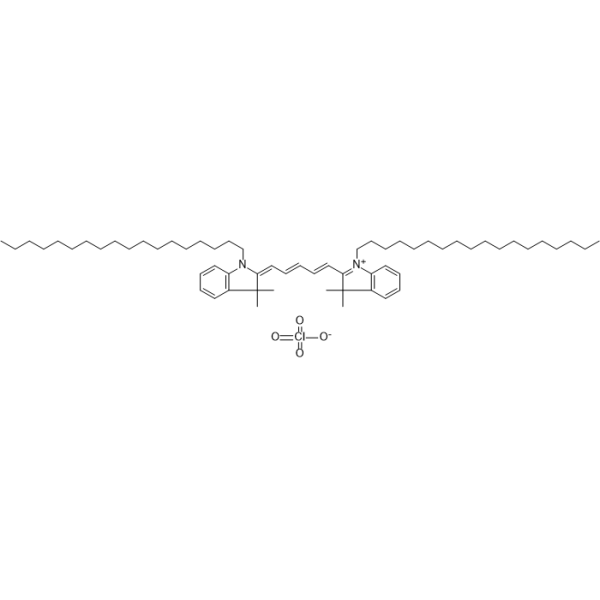
DiD is a long-chain carbocyanine dye. Carbocyanine dyes are widely used as Di to label cells, organelles, liposomes, viruses and lipoproteins (Ex/Em = 633/665 nm) .
loading...
    loading...
22
22 Cited Publications
Cat. No.: HY-D0086
CAS No.: 67483-13-0
Synonyms: MDL101114ZA
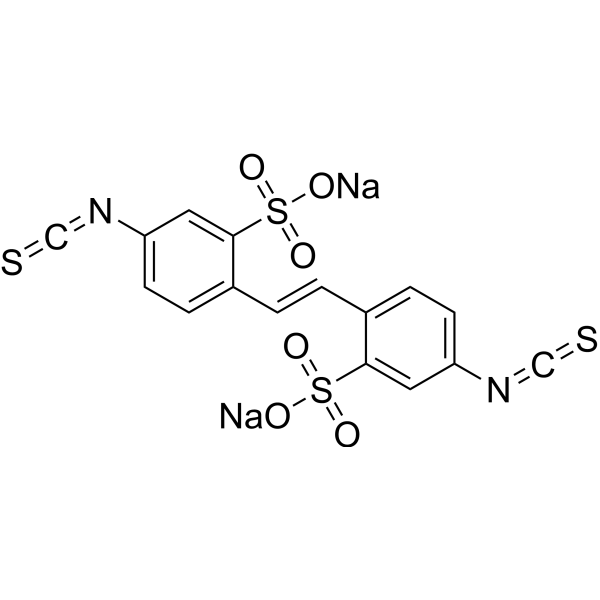
DIDS sodium salt (MDL101114ZA) is a dual inhibitor of ABCA1 and VDAC1. DIDS also inhibits RAD51, inhibiting RAD51-mediated homologous pairing and strand exchange reactions. DIDS inhibits anion exchange and binding to red blood cell membranes, inhibits the activation of caspase-3 and -9, and can be used in cancer research .
loading...
    loading...
Cat. No.: HY-121693
CAS No.: 53005-05-3
Synonyms: MDL101114ZA free base
Target:  

VDAC RAD51

Research Areas:  

Cancer

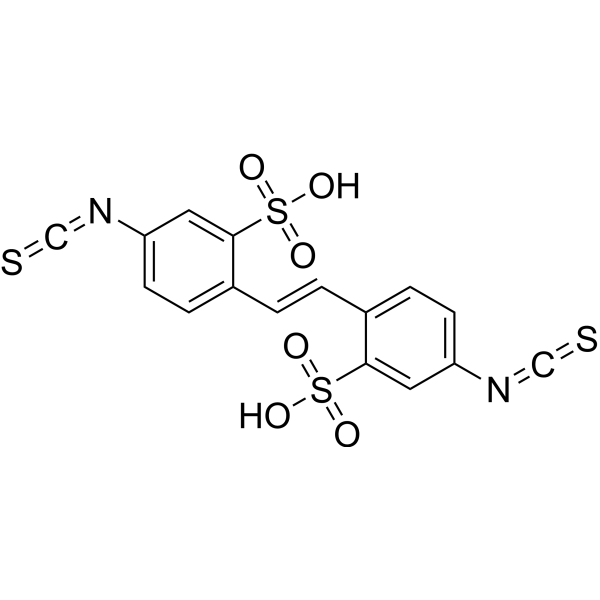
DIDS is a dual inhibitor of ABCA1 and VDAC1. DIDS also inhibits RAD51, inhibiting RAD51-mediated homologous pairing and strand exchange reactions. DIDS inhibits anion exchange and binding to red blood cell membranes, inhibits the activation of caspase-3 and -9, and can be used in cancer research .
loading...
    loading...
Cat. No.: HY-108900
CAS No.: 288591-93-5
Purity:  98.08%
Research Areas:  

Infection Cancer

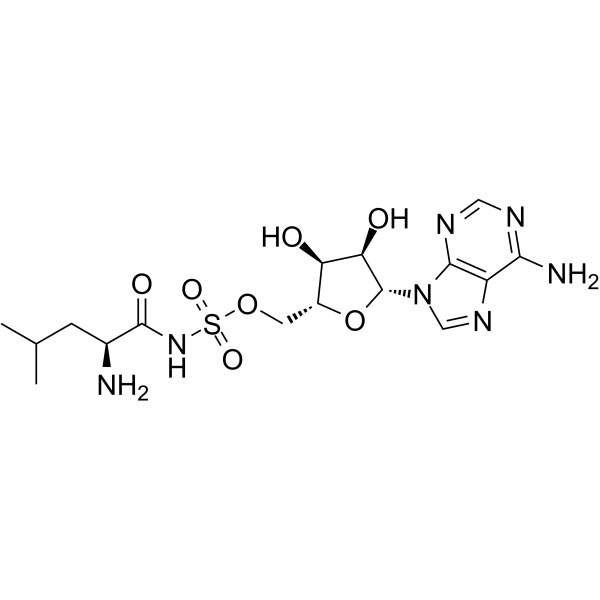
Leu-AMS (compound 6), a leucine analogue, is a potent inhibitor of leucyl-tRNA synthetase (LRS) with an IC50 of 22.34 nM, which inhibits the catalytic activity of LRS but did not affect the leucine-induced mTORC1 activation. Leu-AMS shows cytotoxicity in cancer cells and normal cells, and inhibits the growth of bacteria .
loading...
    loading...
Cat. No.: HY-124808
CAS No.: 218795-74-5
Purity:  99.87%
Target:  

Ras Apoptosis

Research Areas:  

Cancer

IMM-01 is a mammalian Diaphanous (mDia)-related formins agonist that inhibits DID-DAD (diaphanous inhibitory domain-diaphanous autoregulatory domain) binding with an IC50 of 140 nM. IMM-01 acts by disrupting the autoinhibitory bond between the DID and DAD domain and thus activates formins. IMM-01 shows anticancer effects .
loading...
    loading...
Cat. No.: HY-108519
CAS No.: 928320-12-1
Purity:  99.33%
Target:  

ROCK

Research Areas:  

Neurological Disease

AS1892802 is a potent, orally active, and highly selective inhibitor of ROCK. The onset of antinociceptive effect of AS1892802 is as fast as those of Tramadol and Diclofenac. AS1892802 did not induce gastric irritation or abnormal behavior. AS1892802 is an attractive analgesic profile for the research of severe osteoarthritis pain .
loading...
    loading...
Cat. No.: HY-137494
CAS No.: 74214-62-3
Purity:  99.75%
Target:  

GABA Receptor

Research Areas:  

Neurological Disease

Ethyl β-carboline-3-carboxylate (fl-CCE) is a ligand and short-acting antagonist of benzodiazepine receptors. Ethyl β-carboline-3-carboxylate did not affect cerebellar cGMP levels when used alone, but when taken together with Diazepam, it significantly inhibited the cGMP levels that were upregulated by Diazepam .
loading...
    loading...
Cat. No.: HY-N3394
CAS No.: 480-56-8
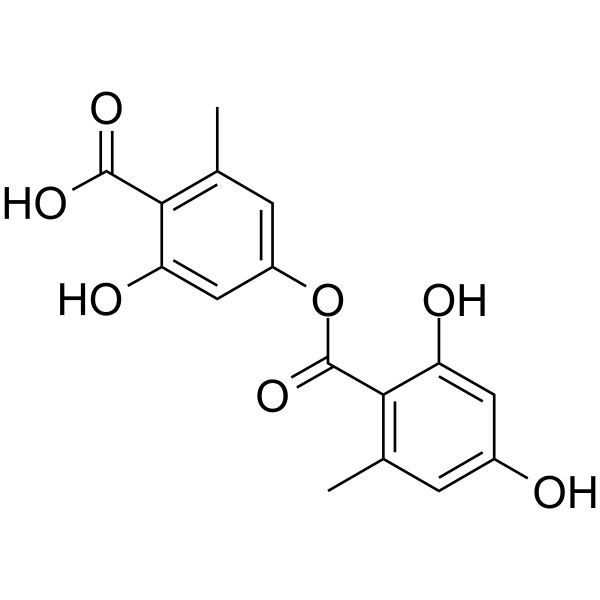
Lecanoric acid is a histidine-decarboxylase inhibitor isolated from fungus. The inhibition by lecanoric acid is competitive with histidineand noncompetitive with pyridoxal phosphate. Lecanoric acid did not inhibit aromatic amino acid decarboxylase .
loading...
    loading...
Cat. No.: HY-149616
CAS No.: 3032388-42-1
Target:  

PROTACs ERK

Research Areas:  

Cancer

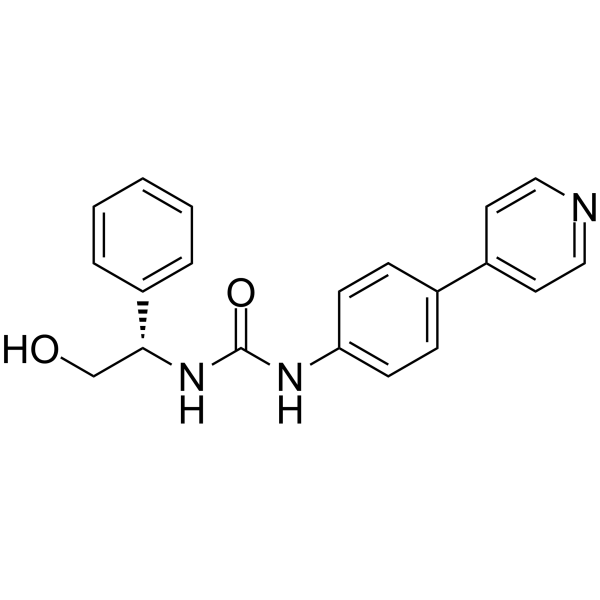
PPM-3 is a potent and selective PROTAC ERK5 degrader, with an IC50 of 62.4 nM. PPM-3 did not influence tumor cell growth directly. PPM-3 influences tumor development by affecting the differentiation of macrophages .
loading...
    loading...
Cat. No.: HY-N4108
CAS No.: 33676-00-5
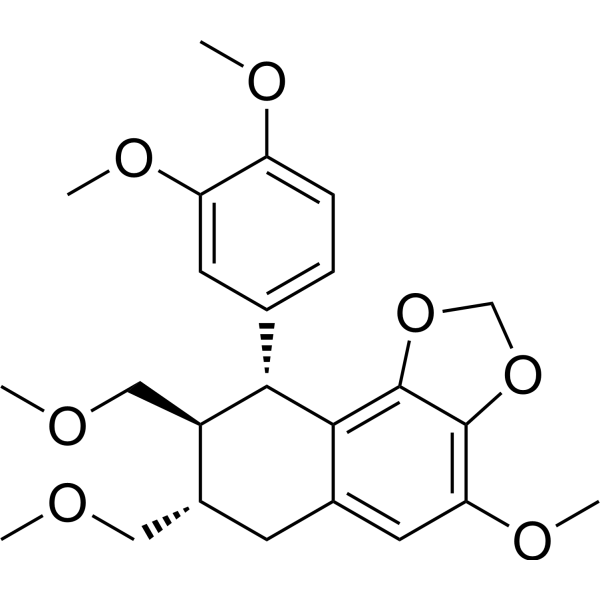
Hypophyllanthin is a major lignan in Phyllanthus spp, with strong anti-inflammatory activity. Hypophyllanthin directly inhibits P-glycoprotein (P-gp) activity and did not interfere with multidrug resistance protein 2 (MRP2) activity .
loading...
    loading...
Cat. No.: HY-117902
CAS No.: 1940118-04-6
Purity:  99.89%
Target:  

Dopamine Transporter

Research Areas:  

Neurological Disease

SRI-31142 is a putative, brain-penetrant allosteric inhibitor of the dopamine transporter (DAT). In behavioral studies using intracranial self-stimulation (ICSS), SRI-31142 did not produce the abuse-related effects seen with cocaine and GBR-12935, but instead reduced ICSS responses and dopamine levels in the nucleus accumbens (NAc) at effective doses. SRI-31142 also blocked cocaine-induced increases in ICSS and NAc dopamine .
loading...
    loading...
Cat. No.: HY-N7536
CAS No.: 510-22-5
Voacangine is an antagonist for TRPV1 and TRPM8 but as an agonist for TRPA1 (EC50=8 μM). Voacangine competitively blockes capsaicin binding to TRPV1 (IC50=50 μM). Voacangine competitively inhibits the binding of menthol to TRPM8 (IC50=9 μM) and it shows noncompetitive inhibition against icilin (IC50=7 μM). Voacangine selectively abrogates chemical agonist-induced TRPM8 activation and did not affect cold-induced activation. Voacangine is an alkaloid isolated from the root bark of Voacanga africana .
loading...
    loading...
Cat. No.: HY-116680
CAS No.: 60634-51-7
LY53857 is a potent antagonist of vasoconstriction and serotonin-mediated 5-HT2 receptors. LY53857 did not reduce mean arterial blood pressure in spontaneously hypertensive rats (SHR) at doses that blocked the depressor response to serotonin and blocked central serotonin receptors. In addition, LY53857 was able to enhance neurotransmitter release in rat vas deferens and guinea pig ileal nerves .
loading...
    loading...
Cat. No.: HY-117219
CAS No.: 136209-43-3
SKF 104976 is a 3,2-carboxylic acid derivative with potent 14-alpha-demethylase (14 alpha DM) inhibitory activity. SKF 104976 inhibited 14 alpha DM activity by 50% at 2 nM in Hep G2 cell extracts. SKF 104976 inhibited the incorporation of [14C]acetate into cholesterol in intact cells at similar concentrations, accompanied by accumulation of lanosterol, and resulted in a 40-70% decrease in 3-hydroxy-3-methylglutaryl-CoA reductase (HMGR) activity. SKF 104976 did not affect the uptake and degradation of low-density lipoprotein in Hep G2 cells, indicating that HMGR and low-density lipoprotein receptor activities are not coordinately regulated under these conditions. The inhibitory effect of SKF 104976 on HMGR activity remained unchanged even when the flux of carbon units in the sterol synthesis pathway was reduced by 80%. SKF 104976 did not inhibit HMGR activity under conditions where sterol synthesis was almost completely blocked by lovastatin .
loading...
    loading...
Cat. No.: HY-138660
CAS No.: 2376841-30-2
Synonyms: HM-JF526 NHS
Target:  

Fluorescent Dye

Research Areas:  

Others

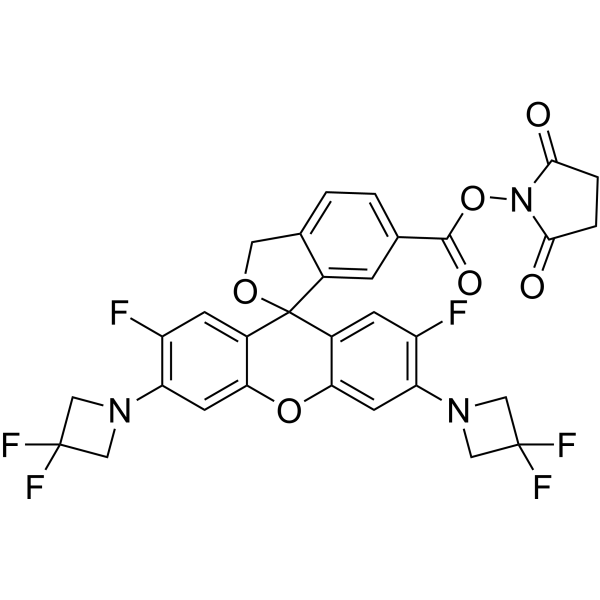
HM Janelia Fluor® 526, SE (HM-JF526 NHS) is a derivative of hydroxymethyl JF526 (HM-JF526). SMLM (single-molecule localization microscopy) imaging in standard phosphate-buffered saline (pH 7.4) revealed that the HM-JF526 label showed spontaneous blinking behavior throughout the imaging session and did not require short-wavelength activation light . Janelia Fluor® products are licensed under U.S. Pat. Nos. 9,933,417, 10,018,624 and 10,161,932 and other patents from Howard Hughes Medical Institute.
loading...
    loading...
Cat. No.: HY-136720
CAS No.: 304913-22-2
Target:  

COX

Research Areas:  

Others

ZXX2-77 is a cyclooxygenase-1 (COX-1) selective inhibitor belonging to the benzenesulfonylanilide class of compounds. It is reported as a novel analgesic that does not cause gastric damage. ZXX2-77 has a weak analgesic effect but exhibits potent COX-1 inhibitory activity in vitro. The low oral absorption rate of ZXX2-77 leads to its weak analgesic effect in vivo. At a dose of 30 mg/kg, the maximum plasma concentration of ZXX2-77 (1.2 mM) did not reach its COX-1 IC50 value (3.2 mM). In contrast, its derivative ZXX2-79, although weaker in vitro COX inhibitory activity, is better absorbed, exhibits stronger analgesic effect and hardly causes gastric damage. These findings suggest that ZXX2-77 and its derivatives as COX-1 selective inhibitors may become effective analgesics that do not cause gastric damage.
loading...
    loading...
Cat. No.: HY-121918
CAS No.: 134377-22-3
Target:  

Others

Research Areas:  

Others

RU 41656 partially alleviated triazolam-induced memory impairment but did not counteract the sedative effects of this agent .
loading...
    loading...
Cat. No.: HY-105578A
CAS No.: 21791-39-9
Synonyms: MA 1143 hydrochloride
Target:  

Endogenous Metabolite

Research Areas:  

Inflammation/Immunology

Letimide hydrochloride (MA 1143 hydrochloride) is an analgesic with potent analgesic activity. Letimide hydrochloride has shown cytogenetic effects on human lymphocytes in in vitro experiments. Letimide hydrochloride did not exhibit significant chromosomal aberrations or sister chromatid exchanges in in vivo studies in mouse bone marrow cells. Teratogenic studies conducted on mice with Letimide hydrochloride also did not show obvious effects on inducing congenital malformations .
loading...
    loading...
Cat. No.: HY-129548
CAS No.: 38819-28-2
Target:  

Antibiotic

Research Areas:  

Infection

Prumycin is an antifungal antibiotic with activity against cucumber powdery mildew. Prumycin significantly inhibited the disease, whereas other metabolites such as bacillomycin D and surfactin did not. Prumycin did not induce the expression of plant defense genes, indicating that its effects were not through plant defense responses. Observation of cucumber cotyledons treated with prumycin showed that it could inhibit spore germination of P. fusca .
loading...
    loading...
Cat. No.: HY-129548A
CAS No.: 57420-47-0
Target:  

Fungal

Research Areas:  

Infection

Prumycin dihydrochloride is an antifungal antibiotic with activity against cucumber powdery mildew. Prumycin dihydrochloride significantly inhibited the disease, whereas other metabolites such as bacillomycin D and surfactin did not. Prumycin dihydrochloride did not induce the expression of plant defense genes, indicating that its effects were not through plant defense responses. Observation of cucumber cotyledons treated with prumycin showed that it could inhibit spore germination of P. fusca .
loading...
    loading...

