
1. Search Result
Search Result
Results for "

Embryonic

" in MedChemExpress (MCE) Product Catalog:

291

Inhibitors & Agonists

4

Screening Libraries

14

Fluorescent Dyes

12

Biochemical Assay Reagents

23

Peptides

7

MCE Kits

2

Inhibitory Antibodies

33

Natural
Products

6

Recombinant Proteins

8

Isotope-Labeled Compounds

6

Antibodies

21

Oligonucleotides

6

GMP Molecules

Targets Recommended:
Cat. No. Product Name Target Research Areas Chemical Structure
  • HY-135146
    GSK-3484862
    20+ Cited Publications

    DNA Methyltransferase Cancer
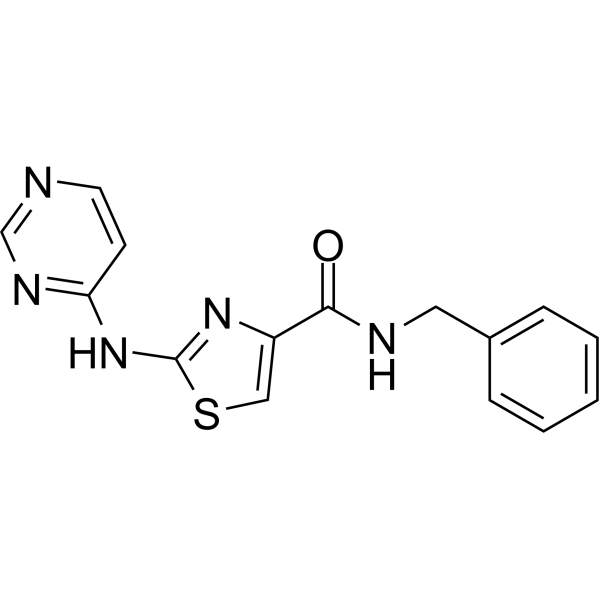
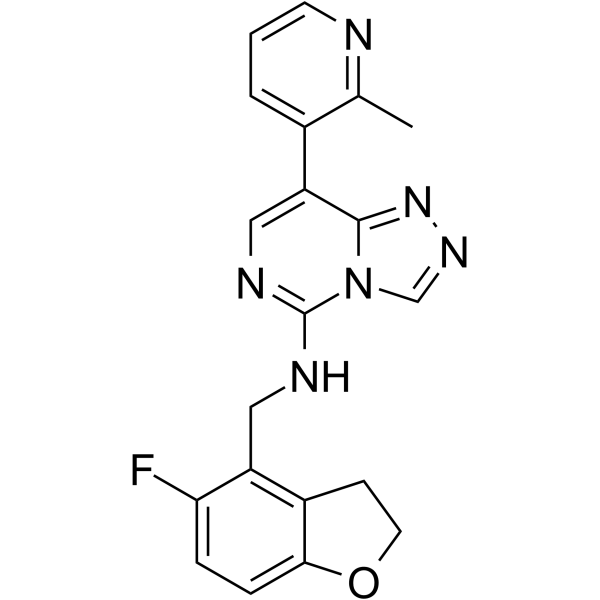
    GSK-3484862 is a non-covalent inhibitor for DNA methyltransferase (Dnmt1). GSK-3484862 induces DNA hypomethylation to against cancer. GSK-3484862 mediates dramatic demethylation in murine embryonic stem cells with minimal non-specific toxicity .
    GSK-3484862
  • HY-13257
    Thiazovivin
    10+ Cited Publications

    ROCK Cancer
    Thiazovivin is a potent ROCK inhibitor, which can protect human embryonic stem cells. Thiazovivin improves the efficiency of iPSC generation.
    Thiazovivin
  • HY-B0631
    Alendronic acid
    5+ Cited Publications

    NF-κB Interleukin Related Metabolic Disease
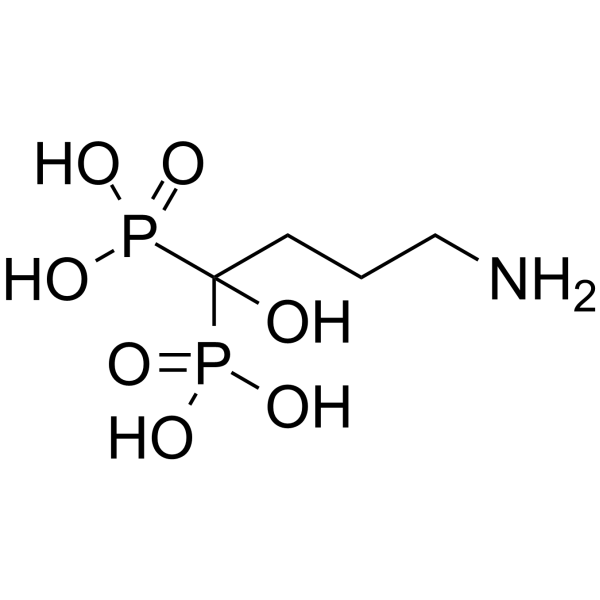
    Alendronate acid is an orally active bisphosphonate which binds to bone surfaces and inhibits bone resorption by osteoclasts. Alendronate acid induces skeletal alterations in the chicken embryonic development model. Alendronate acid can be used for osteoporosis research .
    Alendronic acid
  • HY-13306
    Pyrintegrin
    4 Publications Verification

    Integrin Metabolic Disease
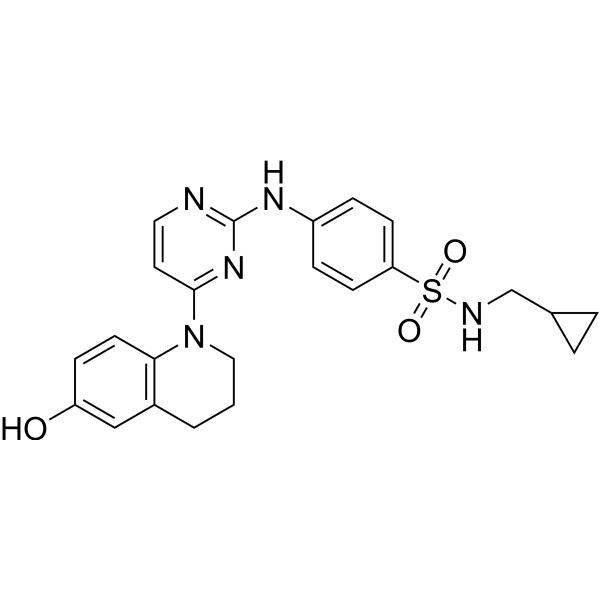
    Pyrintegrin is an β1-integrin agonist and a 2,4-disubstituted pyrimidine that promotes embryonic stem cells survival. Pyrintegrin enhances cell-extracellular matrix (ECM) adhesion-mediated integrin signaling. Pyrintegrin can be used as a podocyte-protective agent and has robustly adipogenic .
    Pyrintegrin
  • HY-108685
    Alendronate sodium
    5+ Cited Publications

    Alendronic acid monosodium salt

    NF-κB Interleukin Related Metabolic Disease
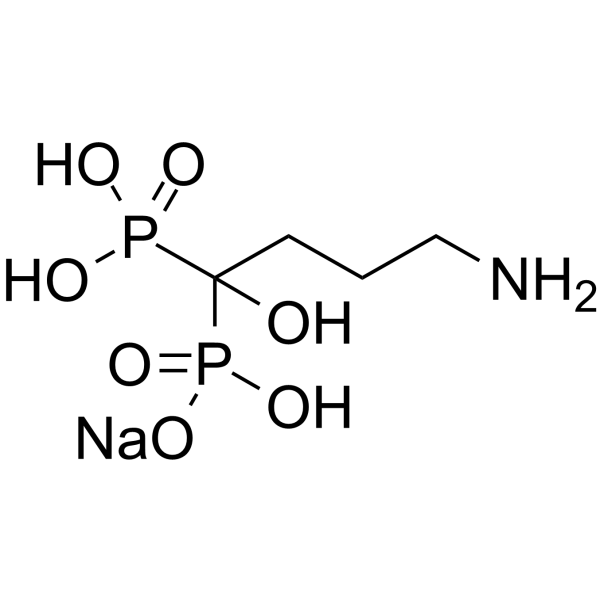
    Alendronate sodium is an orally active bisphosphonate which binds to bone surfaces and inhibits bone resorption by osteoclasts. Alendronate sodium induces skeletal alterations in the chicken embryonic development model. Alendronate sodium can be used for osteoporosis research .
    Alendronate sodium
  • HY-103663
    MAK683
    4 Publications Verification

    Histone Methyltransferase Cancer
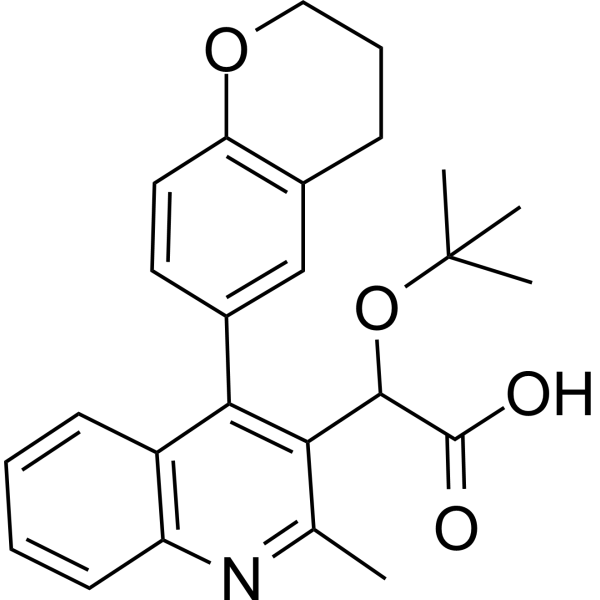
    MAK683 is an embryonic ectoderm development (EED) inhibitor extracted from patent US20160176882 A1, compound example 2. MAK683 exhibits IC50s of 59, 89, 26 nM in EED Alphascreen binding, LC-MS and ELISA assay .
    MAK683
  • HY-139400

    FTX-6058

    Histone Methyltransferase Cardiovascular Disease
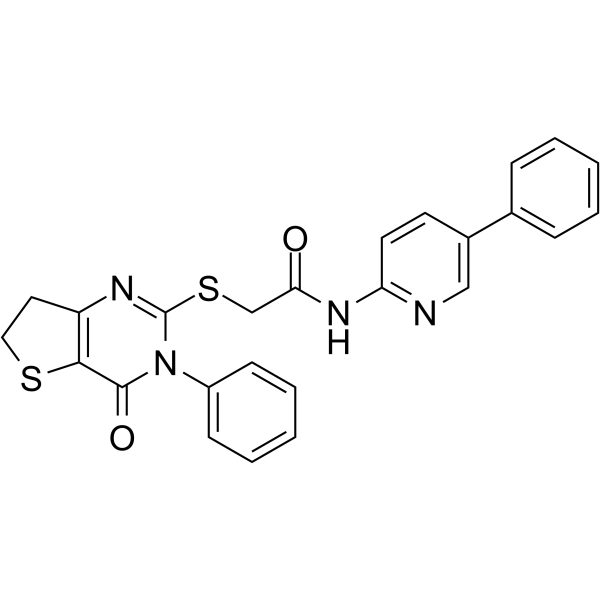
    Pociredir (FTX-6058) is a potent and orally active inhibitor of Embryonic Ectoderm Development (EED). Pociredir can induce HbF protein expression in cell and murine models. Pociredir can be used for the research of select hemoglobinopathies, including sickle cell disease and β-thalassemia .
    Pociredir
  • HY-130708
    UNC6852
    4 Publications Verification

    Histone Methyltransferase PROTACs Cancer
    UNC6852 is a selective polycomb repressive complex 2 (PRC2) degrader based on PROTAC and contains an EED (embryonic ectoderm development) ligand and a von Hippel-Lindau ligand, with an IC50 of 247 nM for EED .
    UNC6852
  • HY-P99011
    Cibisatamab
    2 Publications Verification

    CD3 Cancer
    Cibisatamab, a T cell bispecific antibody, binds Carcino-Embryonic Antigen (CEA) on cancer cells and CD3 on T cells. Cibisatamab triggers T cell killing of cancer cell lines expressing moderate to high levels of CEA at the cell surface. Cibisatamab can be used for colorectal cancer research .
    Cibisatamab
  • HY-136977
    EEDi-5285
    1 Publications Verification

    Histone Methyltransferase Cancer
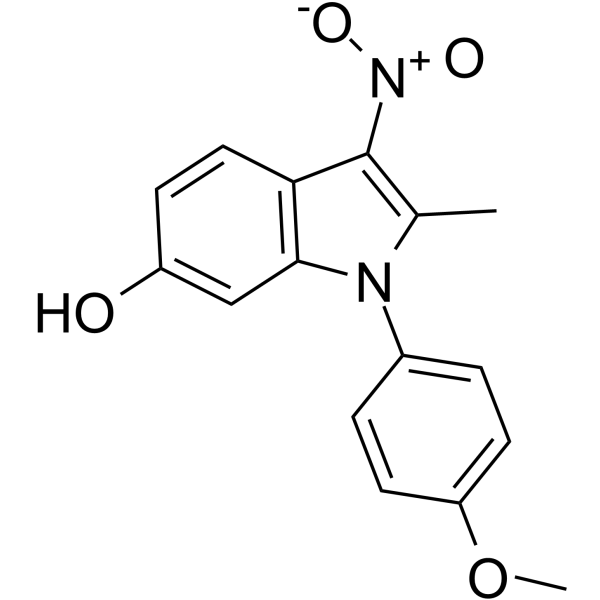
    EEDi-5285 is an exceptionally potent and orally active embryonic ectoderm development (EED) inhibitor with an IC50 value of 0.2 nM for binds to the EED protein. EEDi-5285 has anti-cancer activity .
    EEDi-5285
  • HY-N7122

    Endogenous Metabolite Inflammation/Immunology Cancer
    Thymopentin is a biologically active peptide secreted mainly by the epithelial cells of thymic cortex and medulla. Thymopentin is an effective immunomodulatory agent with a short plasma half-life of 30 seconds. Thymopentin enhances the generation of T-cell lineage derived from human embryonic stem cells (hESCs) .
    Thymopentin
  • HY-Y1110H

    Magnogene, suitable for insect cell culture

    Environmental Pollutants Biochemical Assay Reagents Others
    Magnesium chloride anhydrous, suitable for insect cell culture is an inorganic salt and cell culture medium component that can be used to prepare Tris buffer. Magnesium chloride anhydrous, suitable for insect cell culture is a component of Hunter's Thrips medium, which supports the in vitro culture of western flower thrip embryonic cells, and promotes the adhesion of tissue fragments/cells as well as the growth of fibroblast-like and epithelial-like cells .
    Magnesium chloride anhydrous, suitable for insect cell culture
  • HY-N6747

    c-Myc Autophagy Cancer
    Stauprimide is a staurosporine analog that promotes embryonic stem cell (ESC) differentiation. Stauprimide is a non-broad spectrum inhibitor that binds to the MYC transcription factor NME2 and blocks its nuclear localization in ESCs, which results in down-regulation of MYC transcription .
    Stauprimide
  • HY-103073
    Mesendogen
    1 Publications Verification

    TRP Channel Others
    Mesendogen is a TRPM6 inhibitor. Mesendogen enhances the mesoderm and definitive endoderm (DE) differentiations of human embryonic stem cells (hESCs) and human induced pluripotent stem cells (hiPSCs). Mesendogen can be used for the research of magnesium homeostasis during early embryonic cell development .
    Mesendogen
  • HY-130815A

    Ligands for Target Protein for PROTAC Histone Methyltransferase Cancer
    MAK683-CH2CH2COOH binds to EED (embryonic ectoderm development protein). MAK683-CH2CH2COOH and a VHL ligand for the E3 ubiquitin ligase have been used to design PROTAC EED degrader-1 (HY-130614) and PROTAC EED degrader-2 (HY-130615) .
    MAK683-C2-acid hydrochloride
  • HY-15838
    ID-8
    5 Publications Verification

    DYRK Cancer
    ID-8 is an inhibitor of dual-specificity tyrosine phosphorylation-regulated kinase (DYRK). ID-8 sustains embryonic stem cell (ESC) self-renewal and pluripotency. ID-8 enhances Wnt-mediated hESC survival and proliferation via inhibition of DYRKs .
    ID-8
  • HY-W762011

    Apoptosis Reactive Oxygen Species (ROS) JNK Oxidative Phosphorylation Neurological Disease Cancer
    BDE 47 targets mitochondria, inhibits mitochondrial oxidative phosphorylation (OXPHOS), decreases mitochondrial membrane potential (MMP) and induces apoptosis in embryonic cell. BDE 47 induces the generation of ROS, and activates the JNK signaling pathway. BDE 47 exhibits embryonic developmental toxicity in zebrafish .
    BDE 47
  • HY-100368A
    MELK-8a hydrochloride
    3 Publications Verification

    NVS-MELK8a hydrochloride

    MELK Cancer
    MELK-8a hydrochloride is a novel maternal embryonic leucine zipper kinase (MELK) inhibitor with an IC50 of 2 nM.
    MELK-8a hydrochloride
  • HY-15825
    IWP L6
    4 Publications Verification

    Porcn Inhibitor III

    Porcupine Cancer
    IWP L6 (Porcn Inhibitor III) is a Porcupine (Porcn) inhibitor with an EC50 of 0.5 nM. IWP L6 disrupts well-established Wnt-dependent developmental processes of embryonic and juvenile zebrafish .
    IWP L6
  • HY-136833
    X5050
    4 Publications Verification

    DNA/RNA Synthesis Neurological Disease
    X5050 is a REST inhibitor, with an EC50 of 2.1 μM .
    X5050
  • HY-124838
    EG1
    1 Publications Verification

    DNA/RNA Synthesis Cancer
    EG1, a specific Pax2 inhibitor, directly binds the paired domain of Pax2 (Kd=1.35-1.5 μM) and inhibits Pax2-DNA interactions. EG1 can inhibit embryonic kidney development, a process directly dependent on Pax2 activity .
    EG1
  • HY-Y0278

    Tetrachloro-p-benzoquinone; TCBQ

    Environmental Pollutants JNK Fungal Toll-like Receptor (TLR) Reactive Oxygen Species (ROS) Apoptosis MyD88 Ferroptosis Infection Neurological Disease Metabolic Disease Inflammation/Immunology
    Chloranil (Tetrachloro-p-benzoquinone), an orally active metabolite of pentachlorophenol and hexachlorobenzene, is a widely used fungicide. Chloranil can induce ROS production. Chloranil induces neutrophil extracellular traps through the ROS-JNK-NOX2 pathway. Chloranil induces ferroptosis and neuroinflammation. Chloranil induces apoptosis of mouse embryonic stem cells .
    Chloranil
  • HY-114858
    Epiblastin A
    1 Publications Verification

    Casein Kinase Cancer
    Epiblastin A is an ATP competitive casein kinase 1 (CK1) inhibitor with IC50s of 8.9, 0.5, and 4.7 µM for CK1α, CK1δ, and CK1 ɛ, respectively. Epiblastin A induces reprogramming of epiblast stem cells into embryonic stem cells by inhibition of CK1 .
    Epiblastin A
  • HY-18601
    (±)-BI-D
    5+ Cited Publications

    HIV HIV Integrase Infection
    (±)-BI-D is a potent ALLINI (allosteric integrase inhibitor). (±)-BI-D binds integrase at the LEDGF/p75 binding site. (±)-BI-D inhibits HIV-Luc infection in cells (IC50: 0.16 μM in Psip1 knockout E9 mouse embryonic fibroblasts, 2.9 μM in wild-type E9 mouse embryonic fibroblasts) .
    (±)-BI-D
  • HY-17597

    Parasite Infection
    Febantel is an oral dewormer used to treat gastrointestinal nematodes in sheep, as well as roundworm and tapeworm infections in poultry and livestock, and it also inhibits the embryonic development of mouse hairworms and whipworm eggs .
    Febantel
  • HY-N125722

    Aabomycin A1

    ATP Synthase Antibiotic Infection
    Venturicidin A (Aabomycin A1), from actinomycetes, is a membrane-active natural product inhibitor of ATP synthase. Venturicidin A potentiates the aminoglycoside antibiotic gentamicin against multidrug-resistant clinical isolates of Staphylococcus, Enterococcus, and Pseudomonas aeruginosa. Venturicidin A shows noticeable toxicity toward human embryonic-kidney (HEK)cells with an IC50 of 31 μg/mL.
    Venturicidin A
  • HY-139400A

    FTX-6058 hydrochloride

    Histone Methyltransferase Cardiovascular Disease
    Pociredir (FTX-6058) hydrochloride is a potent and orally active inhibitor of Embryonic Ectoderm Development (EED). Pociredir hydrochloride can induce HbF protein expression in cell and murine models. Pociredir hydrochloride can be used for the research of select hemoglobinopathies, including sickle cell disease and β-thalassemia .
    Pociredir hydrochloride
  • HY-P3138

    Angiotensin Receptor Cardiovascular Disease
    (Sar1)-Angiotensin II, an analogue of Angiotensin II, is a specific agonist of angiotensin AT1 receptor. (Sar1)-Angiotensin II binds to brain membrane-rich particles, with a Kd of 2.7 nM. (Sar1)-Angiotensin II can stimulate protein synthesis and cell growth in embryonic chick myocytes .
    (Sar1)-Angiotensin II
  • HY-100368
    MELK-8a
    3 Publications Verification

    NVS-MELK8a

    PDGFR Haspin Kinase MELK Mitosis Cancer
    MELK-8a (NVS-MELK8a) is a highly potent and selective maternal embryonic leucine zipper kinase (MELK) inhibitor with IC50 of 2 nM. MELK-8a also inhibits Flt3 (ITD), Haspin, PDGFRα with IC50s of 0.18, 0.19, and 0.42 μM, respectively. MELK plays an essential role in regulating cell mitosis in a subset of cancer cells .
    MELK-8a
  • HY-12273G

    Organoid TGF-β Receptor Microtubule/Tubulin Cardiovascular Disease Neurological Disease
    DMH-1 (GMP) is GMP grade DMH-1 (HY-12273). DMH-1 (GMP) is a selective BMP inhibitor. DMH-1 (GMP) upregulates the expression of SOX1. DMH-1 (GMP) increases cardiomyocyte progenitor cells and promotes the differentiation of mouse embryonic stem cells into cardiomyocytes. DMH-1 (GMP) induces the differentiation of hiPSC-derived neural progenitor cells into β3-tubulin-positive neurons .
    DMH-1
  • HY-101515

    MELK Cancer
    MELK-IN-1 is a potent inhibitor of maternal embryonic leucine zipper kinase (MELK) with an IC50 and a Ki of 3 nM and 0.39 nM, respectively.
    MELK-IN-1
  • HY-100534

    Organoid TGF-beta/Smad Others
    IDE2 is a small molecule cell-permeable inducer of definitive endoderm formation in mouse and human embryonic stem cells (ESCs) by activating the TGF-βsignaling pathway .
    IDE 2
  • HY-N2785

    Wnt Metabolic Disease
    Desmethylicaritin is a phytoestrogenic molecule, has inducible effect on directional differentiation of embryonic stem cells into cardiomyocytes. Desmethylicaritin also suppresses adipogenesis via Wnt/β-catenin signaling pathway .
    Desmethylicaritin
  • HY-E70098

    Others Cancer
    RNase H2 is the predominant source of RNase H activity in mammalian and human cells. RNase H2 protects genome integrity. RNase H2 has been associated with ribonucleotide removal from genomic DNA in yeast and mouse, where it is required for embryonic development .
    RNase H2
  • HY-125987

    Ras Cancer
    RBC6 is an inhibitor of GTPases RalA. RBC6 inhibits binding of Ral to its effector RALBP1. RBC6 also inhibits Ral-mediated cell spreading of murine embryonic fibroblasts, as well as anchorage-independent growth of human cancer celllines .
    RBC6
  • HY-116057

    Apoptosis Others
    Stemazole is a protective agent that promotes stem cell survival. Stemazole has the protective effect of human embryonic stem cells (hESCs). Stemazole enhances clonal expansion of single cells and decreases apoptosis. Stemazole for the study of stem cell survival in starvation culture .
    Stemazole
  • HY-W178327

    Adenosine Receptor Cancer
    8-Chloro caffeine binds to adenosine receptors (Ki = 30 µM). 8-Chloro caffeine potentiates UV-induced chromosomal aberrations in Cl-I Chinese hamster embryonic lung cells. 8-Chloro caffeine is a derivative of the methylxanthine alkaloid caffeine .
    8-Chloro caffeine
  • HY-B1374S1

    (-)-Florfenicol-d3; SCH-25298-d3

    Isotope-Labeled Compounds Bacterial Antibiotic Infection
    Florfenicol-d3 ((-)-Florfenicol-d3)?is the deuterium labeled Florfenicol. Florfenicol, a commonly used veterinary antibiotic, is currently indicated for bovine respiratory disease, and also used in aquaculture for the control of enteric septicemia in catfish. Florfenicol can induce early embryonic death in eggs, with an LC50 of 1.07 μg/g.
    Florfenicol-d3
  • HY-111002

    NSC375009

    HSP Others
    Displurigen (NSC375009) disrupts human embryonic stem cell pluripotency by targeting HSPA8. Displurigen inhibits ATPase activity of HSP70 (IC50 = 225 μM) .
    Displurigen
  • HY-156095
    F7H
    2 Publications Verification

    Wnt Cancer
    F7H is a Frizzled receptor FZD7 antagonist (IC50: 1.25 μM). Frizzled receptors (FZDs) influence Wnt signaling, mediating embryonic development and tissue homeostasis. F7H is a potent ligand for the FZD7 transmembrane domain (TMD) .
    F7H
  • HY-W004154

    Environmental Pollutants Biochemical Assay Reagents Others
    2-Ethylbutyric acid is a volatile fatty acid. 2-Ethylbutyric acid exhibits phytotoxicity. 2-Ethylbutyric acid is used as an internal standard in milk and dairy products and as an internal standard (IS) in the calibration of fecal VFA standards. 2-Ethylbutyric acid can be used in the research of embryonic development .
    2-Ethylbutyric acid
  • HY-12564

    Aurora Kinase Apoptosis Mitosis Cancer
    Phthalazinone pyrazole is a potent, selective, and orally active inhibitor of Aurora-A kinase with an IC50 of 0.031 μM. Phthalazinone pyrazole can arrests mitosis and subsequently inhibit tumor growth via apoptosis of proliferating cells. Phthalazinone pyrazole suppresses the epithelial-mesenchymal transition (EMT) during the differentiation of hepatocyte-like cells (HLCs) from human embryonic stem cells .
    Phthalazinone pyrazole
  • HY-N7122A

    Endogenous Metabolite Inflammation/Immunology Cancer
    Thymopentin acetate is a biologically active peptide secreted mainly by the epithelial cells of thymic cortex and medulla. Thymopentin acetate is an effective immunomodulatory agent with a short plasma half-life of 30 seconds. Thymopentin acetate enhances the generation of T-cell lineage derived from human embryonic stem cells (hESCs) .
    Thymopentin acetate
  • HY-128034

    PIN1 Cancer
    PPIase-Parvulin inhibitor (compound B) is a cell-permeable inhibitor targeting PPIase Pin1 and Par14, with IC50s of 1.5 and 1.0 µM, respectively. PPIase-Parvulin inhibitor has anticancer activity and inhibits the growth and proliferation of mouse embryonic fibroblasts (MEFs) .
    PPIase-Parvulin inhibitor
  • HY-103663A

    Histone Methyltransferase Cancer
    MAK683 hydrochloride is an embryonic ectoderm development (EED) inhibitor extracted from patent US20160176882 A1, compound example 2. MAK683 exhibits IC50s of 59, 89, 26 nM in EED Alphascreen binding, LC-MS and ELISA assay .
    MAK683 hydrochloride
  • HY-130815

    Histone Methyltransferase Ligands for Target Protein for PROTAC Cancer
    MAK683-CH2CH2COOH binds to EED (embryonic ectoderm development protein). MAK683-CH2CH2COOH and a VHL ligand for the E3 ubiquitin ligase have been used to design PROTAC EED degrader-1 (HY-130614) and PROTAC EED degrader-2 (HY-130615) .
    MAK683-CH2CH2COOH
  • HY-146272

    Vasopressin Receptor Endocrinology
    Vasopressin V2 receptor antagonist 1 is a vasopressin V2 receptor (V2R) antagonist with a Ki value of 3.8 nM. Vasopressin V2 receptor antagonist 1 inhibits renal cyst formation in embryonic renal cyst models and mouse models. Vasopressin V2 receptor antagonist 1 can be used in research related to autosomal dominant polycystic kidney disease .
    Vasopressin V2 receptor antagonist 1
  • HY-137063

    TGF-beta/Smad TGF-β Receptor Cardiovascular Disease
    (+)-ITD-1 is an inhibitor for TGF-β, that inhibits the TGF-β2 with an IC50 of 0.46 μM. (+)-ITD-1 promotes the degradation of TGF-b type II receptor (TGFBR2) and the differentiation of cardiomyocyte, and inhibits the mesoderm formation in the early differentiation stage of mouse embryonic stem cells (mESCs) .
    (+)-ITD-1
  • HY-116603

    5-HT Receptor Others
    SB-236057 is an inverse agonist of the 5-HT1B receptor that exhibits strong skeletal teratogenicity in rodents and rabbits. SB-236057 affects gene expression during embryonic development through interference with the Notch signaling pathway and interaction with r-esp1. SB-236057 induces somatic patterning and tail extension defects in rat embryos during early organogenesis .
    SB-236057
  • HY-W025074

    Sirtuin Histone Methyltransferase Cancer
    BML-278 is a SIRT1 activator (EC150: 1 μM). BML-278 increases H3K9 methylation and inhibits H3K9 acetylation in both the paternal and maternal pronucleus. BML-278 improves early embryonic development. BML-278 arrests the cell cycle at the G1/S phase, and reduces senescence in primary human mesenchymal cells. BML-278 reduces tubulin acetylation in U937 cells. BML-278 also increases mitochondrial density in murine C2C12 myoblasts .
    BML-278

Inquiry Online

Your information is safe with us. * Required Fields.

Salutation


Country or Region *

Applicant Name *


Organization Name *

Department *


Email Address *


Product Name *

Cat. No.


Requested quantity *

Phone Number *


Remarks

Inquiry Online

Inquiry Information

Product Name:
Cat. No.:
Quantity:
MCE Japan Authorized Agent:

