

1. Search Result
Search Result
Results for "

Fe

" in MedChemExpress (MCE) Product Catalog:

178

Inhibitors & Agonists

13

Fluorescent Dyes

16

Biochemical Assay Reagents

13

Peptides

1

MCE Kits

21

Natural
Products

1

Recombinant Proteins

8

Isotope-Labeled Compounds

11

Antibodies

3

Click Chemistry

4

Oligonucleotides

Cat. No. Product Name Target Research Areas Chemical Structure
  • HY-12040
    Elesclomol
    110+ Cited Publications

    STA-4783

    Reactive Oxygen Species (ROS) Apoptosis Cuproptosis Cancer
    Elesclomol (STA-4783) is a potent copper ionophore and promotes copper-dependent cell death (cuproptosis). Elesclomol specifically binds ferredoxin 1 (FDX1) α2/α3 helices and β5 strand. Elesclomol inhibits FDX1-mediated Fe-S cluster biosynthesis. Elesclomol is an oxidative stress inducer that induces cancer cell apoptosis. Elesclomol is a reactive oxygen species (ROS) inducer. Elesclomol can be used for Menkes and associated disorders of hereditary copper deficiency research .
    Elesclomol
  • HY-16168A
    Degarelix
    Maximum Cited Publications
    11 Publications Verification

    Fe 200486 free base

    GnRH Receptor Apoptosis Endocrinology Cancer
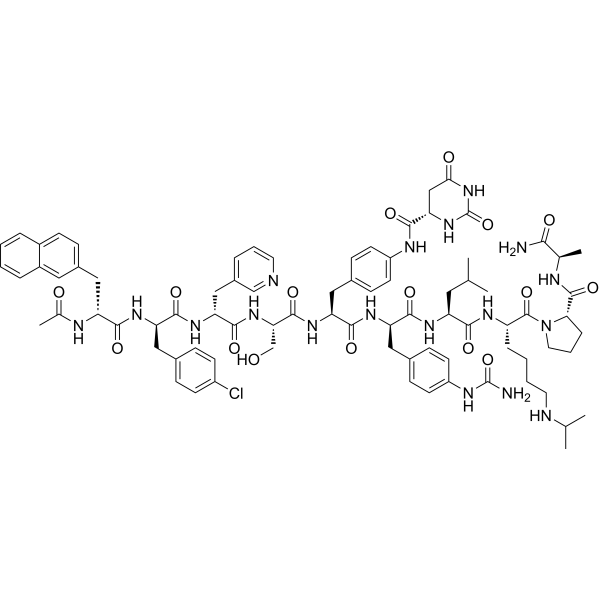
    Degarelix acetate (FE 200486) is a decapeptide that shows high affinity/selectivity to human gonadotropin-releasing hormone (GnRH) receptor (IC50 = 3 nM). Degarelix acetate Degarelix acetate (FE 200486) is used for the research of prostate cancer .
    Degarelix
  • HY-137805
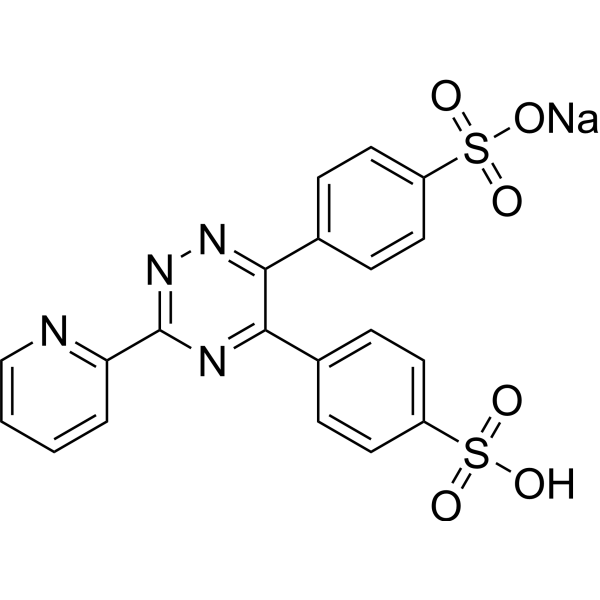
    Ferrozine
    3 Publications Verification

    Fluorescent Dye Others
    Ferrozine is a spectrophotometric reagent for iron ions, can react with divalent Fe to form a stable magenta complex species. The complex has an absorption peak at 562 nm . Ferrozine-based colorimetric assays can quantify iron in cells
    Ferrozine
  • HY-D1533
    RhoNox-1
    Maximum Cited Publications
    39 Publications Verification

    Fluorescent Dye Others
    RhoNox-1 is a fluorescent probe for the specific detection of divalent iron ions, and when RhoNox-1 reacts with Fe 2+. RhoNox-1 can generate an irreversible orange (red) fluorescent product (Ex/Em:540/575 nm) . FeRhoNox-1 can enter the cell well, suitable for the detection of Fe 2+ in living cells, and tends to be localized in the Golgi apparatus .
    RhoNox-1
  • HY-D1913
    Fe2Orange
    20+ Cited Publications

    Fluorescent Dye Others
    Fe2Orange is a Fe 2+ selective probe with an excitation wavelength of 543 nm and an emission wavelength of 580 nm. Fe2Orange emits fluorescence after binding to intracellular Fe 2+, thereby achieving specific labeling of Fe 2+. Fe2Orange is used to detect the content and distribution of Fe 2+ in cells .
    Fe2Orange
  • HY-107928
    Iron dextran
    1 Publications Verification

    Fe dextran

    Transferrin Receptor Metabolic Disease Cancer
    Iron dextran (Fe dextran) can be used in the study of iron-deficiency anemia in animals .
    Iron dextran
  • HY-W075707
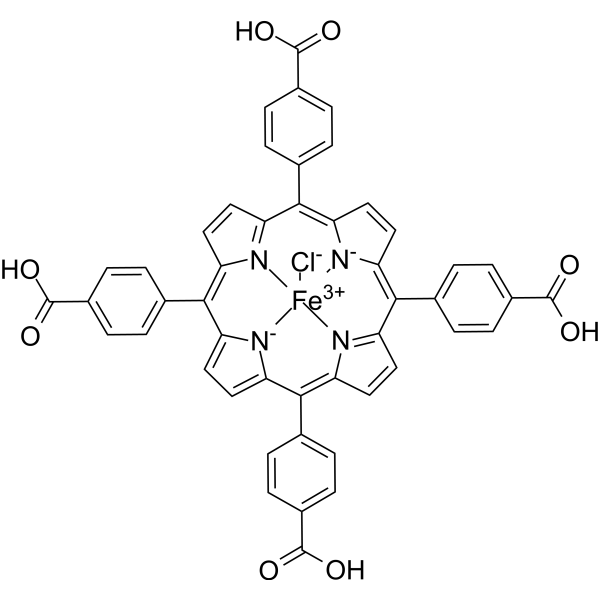
    FeTCPP chloride
    1 Publications Verification

    Iron(III) meso-Tetra(4-carboxyphenyl)porphine chloride

    MOFs Others
    FeTCPP chloride (Iron(III) meso-Tetra(4-carboxyphenyl)porphine chloride) is a metallic porphyrin compound formed by the coordination of a central iron ion (Fe 3+) with four 4-carboxyphenylporphyrins (TCPP). FeTCPP chloride can be used as a catalyst for catalytic, electrochemical, photochemical and biomedical research. FeTCPP chloride has high photocatalytic performance for p-nitrophenol under visible light. FeTCPP chloride also has peroxisase-like activity, which is used in bionic catalysis research .
    FeTCPP chloride
  • HY-17609
    Difelikefalin
    1 Publications Verification

    CR-845; Fe-202845

    Opioid Receptor Neurological Disease Inflammation/Immunology
    Difelikefalin (CR-845) is a peripherally restricted and selective agonist of kappa opioid receptor (KOR). Difelikefalin produces anti-inflammatory effects and has the potential in modulating pruritus in conditions such as chronic kidney disease .
    Difelikefalin
  • HY-132989

    Biochemical Assay Reagents Bacterial Cardiovascular Disease Infection Inflammation/Immunology
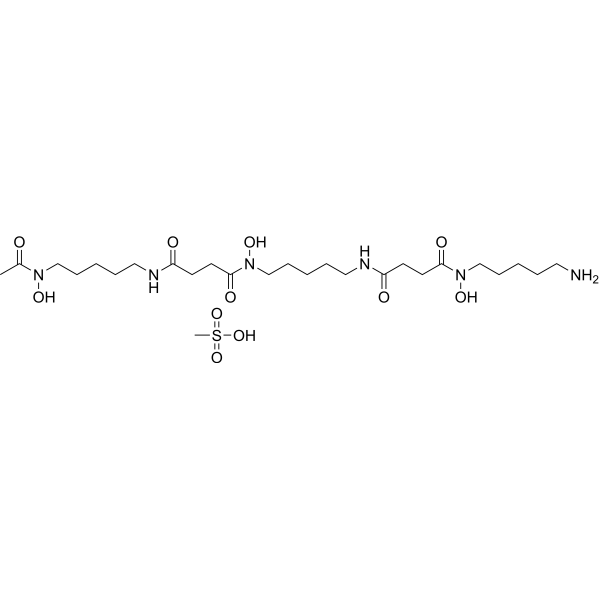
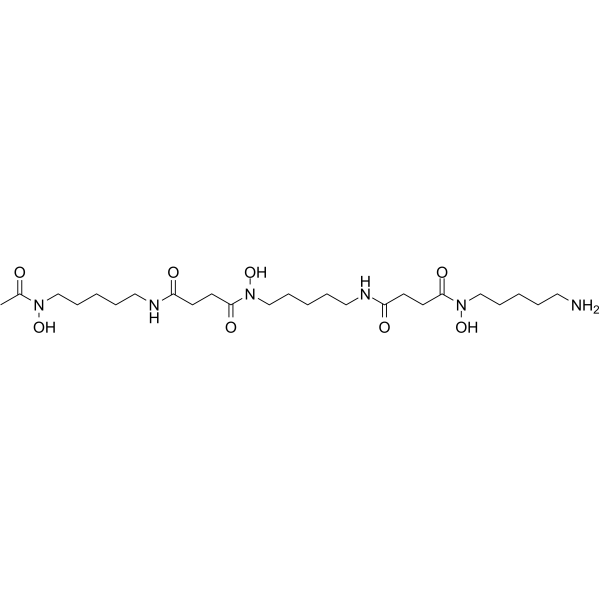
    Mal-Deferoxamine is a maleimide-functionalized trihydroxamate siderophore derivative that can be isolated from Streptomyces pilosus. Mal-Deferoxamine possesses highly specific Fe (III) chelating ability, and the stability of complexes formed between it and non-Fe (III) metal ions is significantly lower. Mal-Deferoxamine exhibits growth inhibitory effects against Gram-positive bacteria, but shows no obvious inhibitory activity against Gram-negative bacteria (MIC>50 μM). Mal-Deferoxamine is mainly suitable for scientific research in hematology and related fields .
    Mal-Deferoxamine
  • HY-145157

    Biochemical Assay Reagents Metabolic Disease Cancer
    Ferric nitrilotriacetate (Fe-NTA), a complexation of nitriloacetic acid with iron, is a highly reactive compound used to induce degenerative disorders through oxidative stress (OS). Ferric nitrilotriacetate is also used in several studies to induce hyperglycemia, glycosuria, and both renal and liver carcinogenesis .
    Ferric nitrilotriacetate
  • HY-W698249

    Ferroptosis Bacterial Cardiovascular Disease Infection
    Ferrous gluconate is a highly water-soluble iron-containing agent with high bioavailability and bactericidal activity. As a non-heme iron, Ferrous gluconate is used for meat product fortification and improvement of iron deficiency anemia. Ferrous gluconate induces ferroptosis in E. coli through Fe 2+ infiltration, reactive oxygen species burst, lipid peroxidation and direct interaction with DNA. Ferrous gluconate also downregulates the SOS responsive transcriptional repressor LexA. In addition, Ferrous gluconate regulates multiple key pathways in E. coli such as fatty acid metabolism, iron-sulfur cluster assembly and pyruvate metabolism, and is applied in studies related to *E. coli* infection and iron deficiency anemia .
    Ferrous gluconate
  • HY-105239

    Fe 202158

    Vasopressin Receptor Cardiovascular Disease
    Selepressin (FE 202158) is a selective vasopressin V1A receptor agonist. Selepressin is a potent vasopressor. Selepressin can be used in the research of septic shock .
    Selepressin
  • HY-P1714

    Fe 203799

    GLP Receptor Metabolic Disease
    Apraglutide (FE 203799), a synthetic 33-amino-acid peptide and a long-acting GLP-2 analogue, enhances adaptation and linear intestinal growth in a neonatal piglet model of short bowel syndrome with total resection of the ileum .
    Apraglutide
  • HY-P3267A

    Ferroportin Transferrin Receptor Neurological Disease
    Apo-Bovine Transferrin refers to iron free Transferrin (HY-P3267), serves as Transferrin receptor ligand and mediates iron release from endothelial cells. Apo-Transferrin can directly bind to hephaestin, which can convert Fe 2+ to Fe 3+. Apo-Transferrin mediates iron efflux most likely in cooperation with ferroportin 1. Apo-Bovine Transferrin can be used in neuroretinal research .
    Apo-Bovine Transferrin
  • HY-108017

    Biochemical Assay Reagents Metabolic Disease Cancer
    Ferric maltol is an orally active monovalent iron (Fe 3+) complex. Ferric maltol is used in the study of iron deficiency anemia in inflammatory bowel disease .
    Ferric maltol
  • HY-D0945

    Fluorescent Dye Others
    Xylene Cyanol FF is an acid triphenylmethane dye. Xylene Cyanol FF can be used for histochemical staining of hemoglobin peroxidase or as a tracking dye for DNA sequencing in electrophoresis. Xylene Cyanol FF will be catalyzed by Fe and Al to accelerate oxidation under the addition of double oxidant hydrogen peroxide and potassium periodate. Xylene Cyanol FF thus enables the spectrophotometric determination of Fe and Al in the solution to be tested .
    Xylene Cyanol FF
  • HY-DY1030

    Fluorescent Dye Others
    RhoNox-1 (solution) is a fluorescent probe for the specific detection of divalent iron ions, and when RhoNox-1 reacts with Fe 2+. RhoNox-1 can generate an irreversible orange (red) fluorescent product (Ex/Em:540/575 nm). FeRhoNox-1 can enter the cell well, suitable for the detection of Fe 2+ in living cells, and tends to be localized in the Golgi apparatus .
    Solvent and concentration: DMSO: 5 mM
    RhoNox-1 (solution)
  • HY-Y1422I

    Environmental Pollutants Biochemical Assay Reagents Lipase Others
    Lipase, Pseudomonas fluorescens (Immobilized) is an immobilized biocatalyst derived from Pseudomonas fluorescens. Lipase, Pseudomonas fluorescens (Immobilized) efficiently catalyzes the hydrolysis, esterification and transesterification of triacylglycerols in solvent-free systems, and is particularly suitable for biodiesel production from soybean oil and selective modification of oils rich in EPA and DHA. Lipase, Pseudomonas fluorescens (Immobilized) exhibits optimal activity at pH 8.5 and 45°C, and retains residual activity after repeated cycles of use. Lipase, Pseudomonas fluorescens (Immobilized) is activated by Ca 2+, but inhibited by Co 2+, Ni 2+, Fe 3+, Fe 2+ and EDTA .
    Lipase,Pseudomonas fluorescens (Immobilized)
  • HY-N0046

    Notoginseng triterpenes; Ginsenoside Mb

    Apoptosis Src Neurological Disease Metabolic Disease Cancer
    Notoginsenoside Fe (Notoginseng triterpenes; Ginsenoside Mb) is a saponin with anti-obesity and anti-neuroblastoma activities. Notoginsenoside Fe can be isolated from leaves of Panax notoginseng. Notoginsenoside Fe specifically activates paraventricular nucleus neurons in the hypothalamus, effectively reducing body weight, improving fasting blood glucose and protecting liver function by decreasing food intake, increasing resting metabolic rate and enhancing energy expenditure. Notoginsenoside Fe also inhibits the c-Src signaling pathway, blocks the proliferation and viability of human neuroblastoma cells, while improving mitochondrial dysfunction and alleviating apoptosis. Notoginsenoside Fe can be used in studies related to diet-induced obesity and neuroblastoma .
    Notoginsenoside Fe
  • HY-16564

    Ferroptosis Bacterial Others
    Deferasirox Fe3+ Chelate is an iron chelating agent extracted from patent WO2003053986 .
    Deferasirox (Fe3+ chelate)
  • HY-107928B

    Biochemical Assay Reagents Others Inflammation/Immunology Cancer
    Iron-dextran (Fe 35-40% w/w) is an iron supplement (Fe 35-40% w/w). Iron-dextran can cause severe immune reactions, including anaphylactic shock. Iron-dextran can be used in studies of iron deficiency anemia .
    Iron–Dextran(Fe 35-40% w/w)
  • HY-P3609
    CR 665
    2 Publications Verification

    JNJ 38488502; Fe 200665

    Opioid Receptor Neurological Disease
    CR 665 (JNJ 38488502) is a peripherally selective κ-opioid agonist. CR 665 can activate the kappa opioid receptor with EC50 value of 10.9 nM. CR 665 can be used for the research of peripheral pain .
    CR 665
  • HY-105239A

    Fe 202158 acetate

    Vasopressin Receptor Cardiovascular Disease
    Selepressin (FE 202158) acetate is a selective vasopressin V1A receptor agonist. Selepressin acetate is a potent vasopressin. Selepressin acetate can be used in the study of septic shock.
    Selepressin acetate
  • HY-D2339

    Fluorescent Dye Others
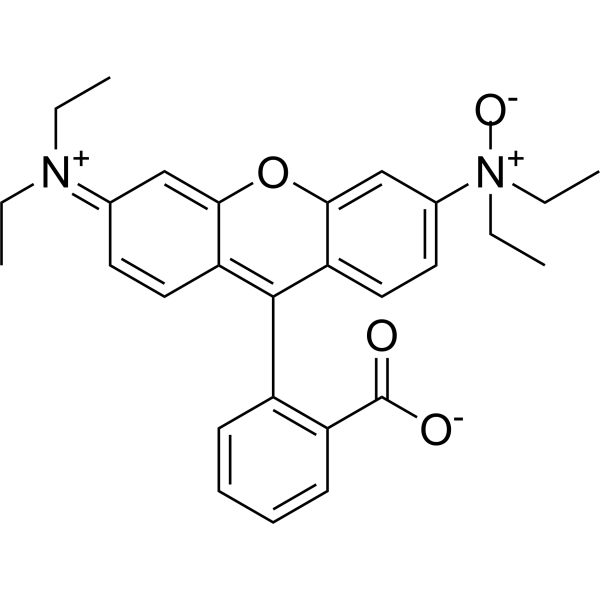
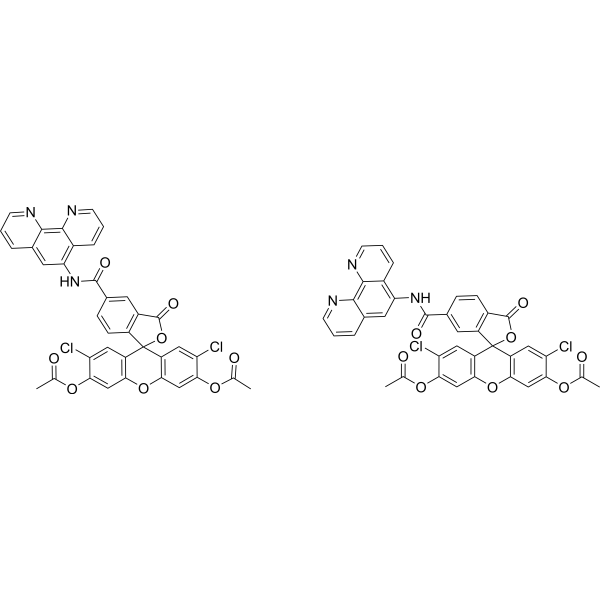
    H-FluNox is a selective fluorescent probe that senses labile heme using biomimetic N-oxide deoxygenation to trigger fluorescence. H-FluNox is more than 100-fold selective for labile heme over Fe(II), enabling the discrimination of labile heme from labile Fe(II) pools in living cells. H-FluNox is sensitive enough to detect the subcellular labile heme. (λex=490 nm, λem=535 nm)
    H-FluNox
  • HY-P2777

    Biochemical Assay Reagents Neurological Disease Metabolic Disease Inflammation/Immunology
    Ceruloplasmin is a copper-containing multifunctional ferrous oxidase glycoprotein. Ceruloplasmin specifically oxidizes Fe 2+ to Fe 3+, promoting the binding of Fe 3+ to transferrin. Ceruloplasmin can bind to copper ions to prevent the toxicity of free copper to cells. Ceruloplasmin can be used for the research of inflammation, metabolic and neurological disease such as Parkinson’s disease .
    Ceruloplasmin
  • HY-158779

    SSP4

    Fluorescent Dye Others
    Sulfane sulfur probe 4 (SSP4) is a fluorescent probe used to detect sulfane sulfur species (Ex/Em=494/515 nm). Sulfane sulfur probe 4 exhibits high sensitivity in detecting sulfane sulfur, even in the presence of other substances such as homocysteine, methionine, cysteine, glutathione, N-acetyl-L-cysteine, glycine, tyrosine, tryptophan, arginine, and metal ions (Fe 2+, Fe 3+, Mg 2+, Ca 2+, and Zn 2+) .
    Sulfane sulfur probe 4
  • HY-158739

    Fluorescent Dye Cancer
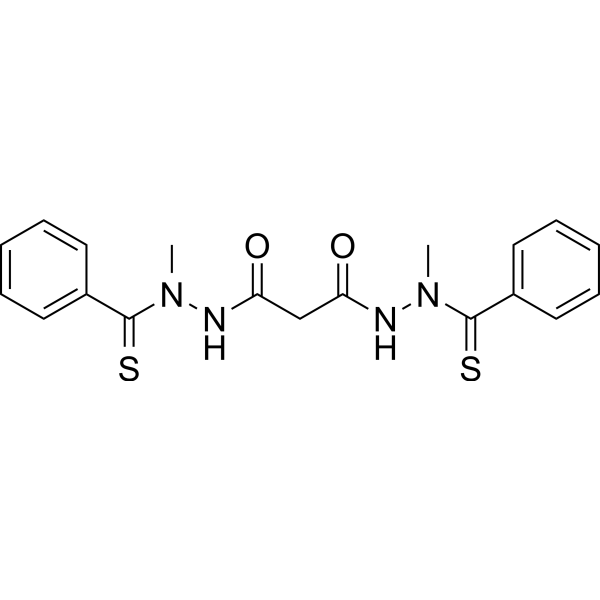
    Rhodamine dithenoyl hydrazide (probe 1) possesses excellent recognition and selectivity for Fe 3+ ion. Rhodamine dithenoyl hydrazide exhibits Excitation/Emission maxima of 543/550-700 nm, respectively .
    Rhodamine dithenoyl hydrazide
  • HY-177506

    Cholecystokinin Receptor Metabolic Disease
    FE100726 (Compound 39) is a Cholecystokinin 2 (CCK2) receptor agonist. FE100726 has a superior binding capacity on CCK2 receptor. FE100726 can induce gastric acid secretion in anaesthetized rat models. FE100726 can be used for diabetes research .
    FE100726
  • HY-16168
    Degarelix acetate
    10+ Cited Publications

    Fe 200486

    GnRH Receptor Cancer
    Degarelix acetate (FE 200486) is a decapeptide that shows high affinity/selectivity to human gonadotropin-releasing hormone (GnRH) receptor (IC50 = 3 nM). Degarelix acetate (FE 200486) is used for the research of prostate cancer .
    Degarelix acetate
  • HY-P3516

    Fe-200440

    Oxytocin Receptor Endocrinology
    Barusiban (FE-200440) is an oxytocin receptor (OT-R) antagonist (Ki=0.8 nM), inhibits OT-induced contraction. Barusiban can be used in preterm labor (PTL), in vitro fertilisation (IVF) and infertility research .
    Barusiban
  • HY-107928A

    Biochemical Assay Reagents Others
    Iron-Dextran is an injectable complex of iron and dextran, a complex carbohydrate. It is often used to improve iron deficiency anemia, a condition characterized by low levels of iron in the blood due to insufficient dietary intake or malabsorption. Iron-glucan works by providing a source of supplemental iron that the body can use to produce hemoglobin, the protein responsible for carrying oxygen in the blood. However, caution should be exercised when taking iron dextran because it may cause hypersensitivity reactions, including anaphylaxis, and may also increase the risk of infection or other adverse reactions. Therefore, it should only be administered under the supervision of a qualified healthcare provider in a clinical setting.
    Iron–Dextran(Fe 25-35% w/w)
  • HY-W249602

    MIL-88-Fe

    MOFs Others
    MIL-88A(Fe)(MIL-88-Fe) is a metal-organic framework (MOF).
    MIL-88A(Fe)
  • HY-117478

    CH-2856

    Kallikrein Inflammation/Immunology Cancer
    FE-999024 (CH-2856) is a specific tissue kallikrein inhibitor. FE-999024 can inhibit cancer cells invasion with a maximum of 39%. FE-999024 can reduce eosinophilia in a model of allergic inflammation. FE-999024 can be used for the researches of cancer, inflammation and immunology .
    FE-999024
  • HY-W124354

    MOFs Others
    MIL-101-Fe is a metal-organic framework (MOF).
    MIL-101-Fe
  • HY-W075508

    MOFs Others
    MIL-100(Fe) is a metal-organic framework (MOF).
    MIL-100(Fe)
  • HY-W112939

    MOFs Others
    Fe(III)(TDCPP) chloride is a biochemical reagent that can be used as a biological material or organic compound for life science related research.
    Fe(III)(TDCPP) chloride
  • HY-P1714A

    Fe 203799 TFA

    GLP Receptor Metabolic Disease
    Apraglutide TFA (FE 203799 TFA), a synthetic 33-amino-acid peptide and a long-acting GLP-2 analogue, enhances adaptation and linear intestinal growth in a neonatal piglet model of short bowel syndrome with total resection of the ileum .
    Apraglutide TFA
  • HY-W151629A

    Fluorescent Dye Others
    Ferrozine sodium hydrate is a spectrophotometric reagent for iron, can react with divalent Fe to form a stable magenta complex species. The complex has an absorption peak at 562 nm .Ferrozine sodium hydrate-based colorimetric assays can quantify iron in cells
    Ferrozine sodium hydrate
  • HY-W107177

    meso-Tetrakis(4-chlorophenyl)porphyrin-Fe(III)chloride

    MOFs Others
    5,10,15,20-tetrakis(p-chlorophenyl)porphyrin iron(III) chloride (meso-Tetrakis(4-chlorophenyl)porphyrin-Fe(III)chloride) is a metal-organic framework (MOF).
    5,10,15,20-tetrakis(p-chlorophenyl)porphyrin iron(III) chloride
  • HY-W113011

    meso-Tetratolylporphyrin-Fe(III)chloride

    MOFs Others
    5,?10,?15,?20-?Tetra(4-?methylphenyl)?-?21H,?23H-?porphine iron(III) chloride (meso-Tetratolylporphyrin-Fe(III)chloride) is a metal-organic framework (MOF).
    5,​10,​15,​20-​Tetra(4-​methylphenyl)​-​21H,​23H-​porphine iron(III) chloride
  • HY-W011816

    Biochemical Assay Reagents Others
    1,2-Hexadecanediol is a reducing agent. 1,2-Hexadecanediol facilitates the decomposition of the metal-organic precursor, forms an intermediate Co 2+Fe 3+-oleate complex .
    1,2-Hexadecanediol
  • HY-N13871

    Antibiotic Bacterial Infection
    Anguibactin is an antibiotic that acts as a siderophore. Anguibactin has a strong affinity with Fe 3+ .
    Anguibactin
  • HY-17609S1

    CR-845-d5 hydrochloride; Fe-202845-d5 hydrochloride

    Isotope-Labeled Compounds Opioid Receptor Neurological Disease Inflammation/Immunology
    Difelikefalin-d5 (CR-845-d5) hydrochloride is the deuterium labeled Difelikefalin (HY-17609). Difelikefalin (CR-845) is a peripherally restricted and selective agonist of kappa opioid receptor (KOR). Difelikefalin produces anti-inflammatory effects and has the potential in modulating pruritus in conditions such as chronic kidney disease .
    Difelikefalin-d5 hydrochloride
  • HY-176212

    Ferroptosis VDAC Reactive Oxygen Species (ROS) Inflammation/Immunology
    Ferroptosis-IN-20 (Compound 34a) is a Ferroptosis inhibitor (EC50: 24.2 nM) targeting voltage-dependent anion channel (VDAC). Ferroptosis-IN-20 inhibits VDAC oligomerization and lipid peroxidation. Ferroptosis-IN-20 reduces content of ROS, attenuates TFR1-mediated iron uptake, inhibits Fe 2+ level and restores glutathione (GSH) level. Ferroptosis-IN-20 alleviates Folic acid (HY-16637)-induced acute kidney injury (AKI) .
    Ferroptosis-IN-20
  • HY-16168B

    Fe 200486 acetate hydrate

    GnRH Receptor Apoptosis Endocrinology Cancer
    Degarelix acetate hydrate (FE 200486 acetate hydrate) is a competitive and reversible gonadotropin-releasing hormone receptor (GnRHR/LHRHR) antagonist. Degarelix acetate hydrate can be used for prostate cancer research .
    Degarelix acetate hydrate
  • HY-17609S

    CR-845-d5; Fe-202845-d5

    Isotope-Labeled Compounds Opioid Receptor Neurological Disease
    Difelikefalin-d5 (CR-845-d5) is deuterium labeled Difelikefalin. Difelikefalin (CR-845; FE-202845) is a peripherally restricted and selective agonist of kappa opioid receptor (KOR). Difelikefalin produces anti-inflammatory effects and has the potential in modulating pruritus in conditions such as chronic kidney disease .
    Difelikefalin-d5
  • HY-P11424

    Integrin Cancer
    Cyclo(GRGDSPA) is a cyclic RGD peptide targeting αvβ3 integrin. Cyclo(GRGDSPA) reduces the formation of colonies in mice injected with B16-FE7 melanoma cells. Cyclo(GRGDSPA) can be used for melanoma research .
    Cyclo(GRGDSPA)
  • HY-B1159S

    8-Hydroxy-5-nitroquinoline-d4; 5-Nitro-8-quinolinol-d4

    Bacterial Autophagy Antibiotic Infection Cancer
    Nitroxoline-d4 is the deuterium labeled Nitroxoline. Nitroxoline is an antibiotic that has proven to be very effective at combating biofilm infections. Nitroxoline functions by chelating Fe 2+ and Zn 2+ ions from the biofilm matrix .
    Nitroxoline-d4
  • HY-178370

    Ferroptosis Reactive Oxygen Species (ROS) Cancer
    Ferroptosis inducer-12 is a potent and selective ferroptosis inducer. Ferroptosis inducer-12 exhibits potent antiproliferative activity against HT1080 and OS-RC-2, with IC50 values of 3 nM and 5 nM, respectively. Ferroptosis inducer-12 strongly inhibits GPX4 enzymatic activity, induces intracellular ROS and elevates intracellular Fe 2+ levels in OS-RC-2 cells. Ferroptosis inducer-12 significantly inhibits tumor growth in BALB/c nude mice bearing OS-RC-2 xenografts. Ferroptosis inducer-12 can be used for the study of cancer .
    Ferroptosis inducer-12
  • HY-175698

    ACSL Family Ferroptosis Microtubule/Tubulin COX Glutathione Peroxidase Cancer
    Ferroptosis inducer-9 is a ferroptosis inducer and colchicine site tubulin polymerization inhibitor. Ferroptosis inducer-9 inhibits MCF-7 cell growth with an IC50 of 14 nM and inhibits [ 3H]colchicine binding. Ferroptosis inducer-9 reduces expression of GPX4 and FTH, increases COX2 and ACSL4, lowers GSH, NADP+, and NADPH levels, increases LPO, MDA, and Fe(II) levels, and decreases SOD concentrations. Ferroptosis inducer-9 demonstrates significant anti-tumor efficacy in HCT116 CRC xenograft model. Ferroptosis inducer-9 can be used for the study of triple negative breast cancer (TNBC) and colorectal cancer (CRC) .
    Ferroptosis inducer-9

Inquiry Online

Your information is safe with us. * Required Fields.

Salutation


Country or Region *

Applicant Name *


Organization Name *

Department *


Email Address *


Product Name *

Cat. No.


Requested quantity *

Phone Number *


Remarks

Inquiry Online

Inquiry Information

Product Name:
Cat. No.:
Quantity:
MCE Japan Authorized Agent:

