1. Search Result
Search Result
Results for "

G-1

" in MedChemExpress (MCE) Product Catalog:

736

Inhibitors & Agonists

15

Biochemical Assay Reagents

19

Peptides

51

Inhibitory Antibodies

106

Natural
Products

61

Recombinant Proteins

18

Isotope-Labeled Compounds

49

Antibodies

4

Click Chemistry

23

Oligonucleotides

Cat. No. Product Name Target Research Areas Chemical Structure
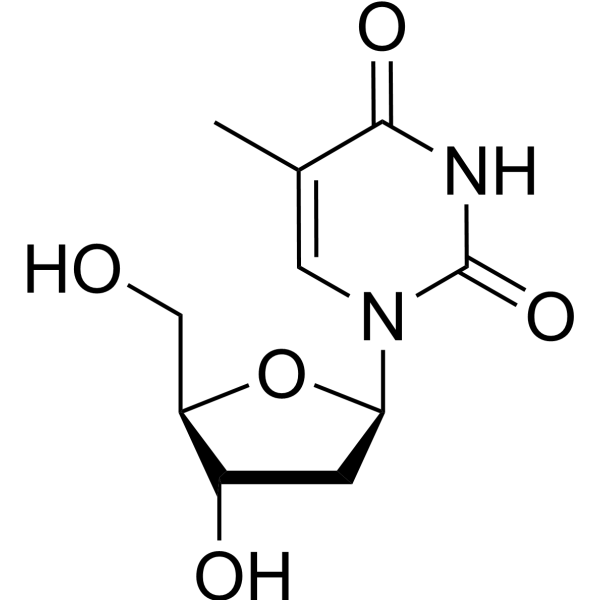
  • HY-N1150
    Thymidine
    20+ Cited Publications

    DThyd; NSC 21548

    DNA/RNA Synthesis Endogenous Metabolite Orthopoxvirus Cancer
    Thymidine, a specific precursor of deoxyribonucleic acid, is used as a cell synchronizing agent. Thymidine is a DNA synthesis inhibitor that can arrest cell at G1/S boundary, prior to DNA replication [1] .
    Thymidine
  • HY-13650
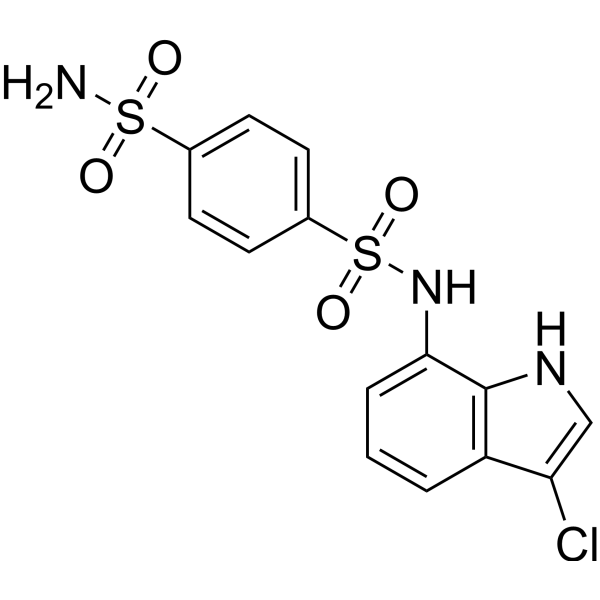
    Indisulam
    10+ Cited Publications

    E 7070

    Molecular Glues Carbonic Anhydrase Cancer
    Indisulam (E 7070) is a carbonic anhydrase inhibitor with anticancer activity. Indisulam (E 7070) is a sulfonamide agent that targets the G1 phase of the cell cycle. Indisulam (E 7070) causes a blockade in the G1/S transition through inhibition of the activation of both CDK2 and cyclin E. Indisulam (E 7070) targets splicing by inducing RBM39 degradation via recruitment to DCAF15 [1] .
    Indisulam
  • HY-107216
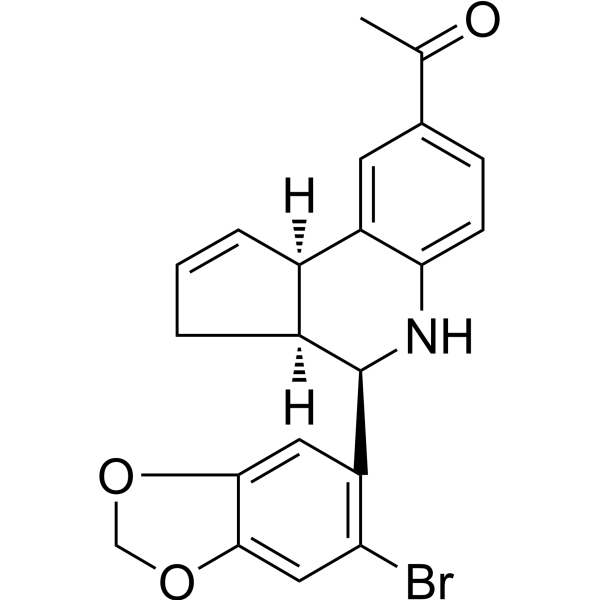
    G-1
    25+ Cited Publications

    Estrogen Receptor/ERR Cancer
    G-1 is a nonsteroidal, high-affinity and selective agonist of GPR30 with a Ki of 11 nM.
    G-1
  • HY-P99367

    DS-7300a Antibody; MABX-9001A Antibody

    CD276/B7-H3 Inflammation/Immunology Cancer
    Ifinatamab is monoclonal immunoglobulin G1-kappa with anti-human B7 homolog 3 protein (Human B7-H3). Ifinatamab is a glycoforme α immunomodulateur [1].
    Ifinatamab
  • HY-101467
    Trilaciclib
    1 Publications Verification

    G1T28

    CDK Cancer
    Trilaciclib (G1T28) is an orally active CDK4/6 inhibitor with IC50 values of 1 nM and 4 nM for CDK4 and CDK6, respectively. . Trilaciclib can effectively inhibit tumor cell proliferation and reduce the hematological toxicity caused by chemotherapy. Trilaciclib attenuates apoptosis and myelosuppression induced by 5FU (HY-90006) chemotherapy [1].
    Trilaciclib
  • HY-112272
    Lerociclib
    2 Publications Verification

    G1T38

    CDK Cancer
    Lerociclib (G1T38) is a potent and selective inhibitor of CDK4/6, with IC50s of 1 nM, 2 nM for CDK4/CyclinD1 and CDK6/CyclinD3, respectively.
    Lerociclib
  • HY-13768
    Topotecan
    35+ Cited Publications

    SKF 104864A; NSC 609669

    Topoisomerase Autophagy Apoptosis Cancer
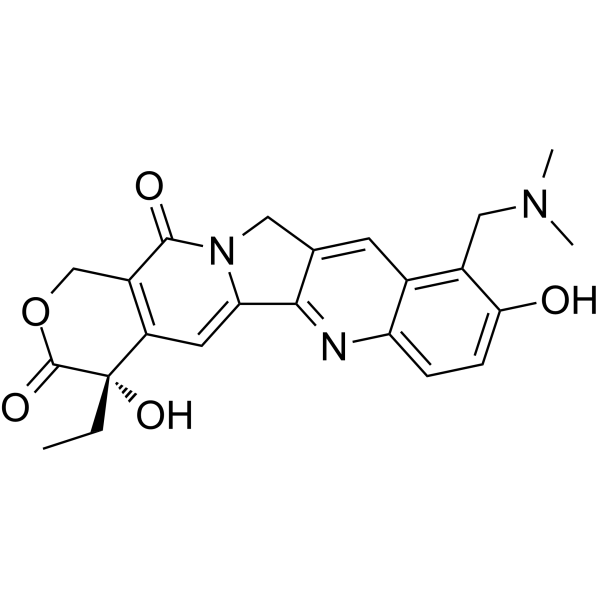
    Topotecan (SKF 104864A; NSC 609669) is an orally active and potent Topoisomerase I inhibitor. Topotecan induces cell cycle arrest in G0/G1 and S phases and promotes apoptosis. Topotecan shows anticancer activity [1].
    Topotecan
  • HY-13680
    Meisoindigo
    2 Publications Verification

    Dian III; N-Methylisoindigotin; Natura-α

    Apoptosis Cancer
    Meisoindigo (Dian III), a derivative of Indirubin (HY-N0117), halts the cell cycle at the G0/G1 phase and induces apoptosis in primary acute myeloid leukemia (AML) cells. Meisoindigo exhibits high antitumor activity [1] .
    Meisoindigo
  • HY-125098
    Illudin S
    1 Publications Verification

    DNA Alkylator/Crosslinker Apoptosis Infection Cancer
    Illudin S, a cytotoxic Illudin, is a natural sesquiterpene with strong anti-tumour and antiviral activities. Illudin S has genotoxic activities. Illudin S blocks the G1-S phase interface of the cell cycle in human leukemia cells [1] .
    Illudin S
  • HY-N3521

    Deapi-platycoside E

    Others Others
    Platycoside G1, a natural product found in Platycodon grandiflorum, is a triterpenoid saponin. Platycoside G1 has potent antioxidant activities [1].
    Platycoside G1
  • HY-120897

    Bcl-2 Family Apoptosis Inflammation/Immunology
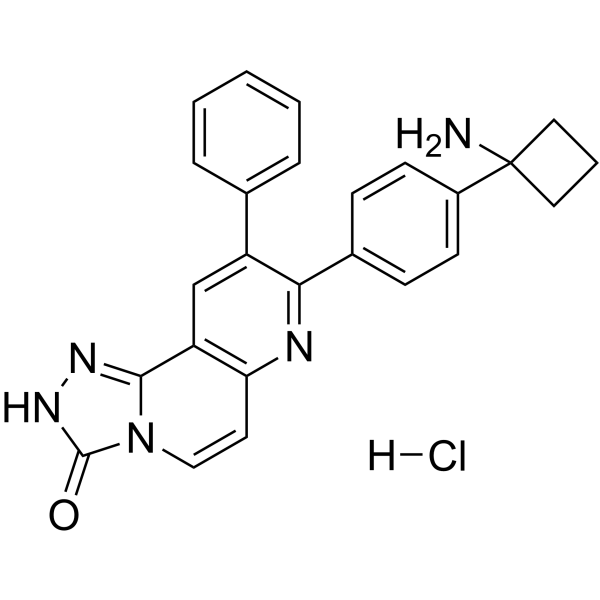
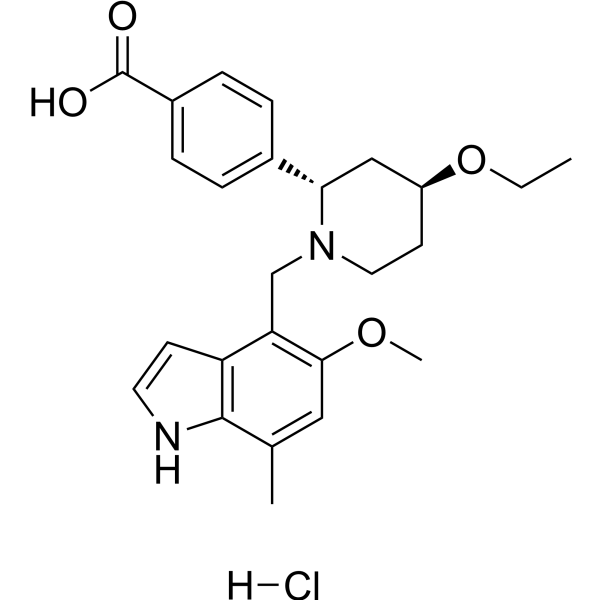
    NS-3-008 hydrochloride is an orally active transcriptional inhibitor of G0/G1 switch 2 (G0s2) with an IC50 of 2.25 μM. NS-3-008 hydrochloride can be used for chronic kidney disease [1].
    NS-3-008 hydrochloride
  • HY-101467A
    Trilaciclib hydrochloride
    1 Publications Verification

    G1T28 hydrochloride

    CDK Cancer
    Trilaciclib (G1T28) hydrochloride is an orally active CDK4/6 inhibitor with IC50 values of 1 nM and 4 nM for CDK4 and CDK6, respectively. Trilaciclib hydrochloride can effectively inhibit tumor cell proliferation and reduce the hematological toxicity caused by chemotherapy. Trilaciclib hydrochloride attenuates apoptosis and myelosuppression induced by 5FU (HY-90006) chemotherapy [1].
    Trilaciclib hydrochloride
  • HY-113638

    GS-456332

    Stearoyl-CoA Desaturase (SCD) Apoptosis Cancer
    CVT-11127 is a potent SCD inhibitor. CVT-11127 induces apoposis and arrests the cell cycle at the G1/S phase. CVT-11127 has the potential for the research of lung cancer [1].
    CVT-11127
  • HY-118672

    HDAC MMP HIF/HIF Prolyl-Hydroxylase Cancer
    HNHA is a potent HDAC inhibitor with an IC50 of 100 nM. HNHA arrests the cell cycle at the G1/S phase via p21 induction. HNHA inhibits tumor growth and tumor neovascularization. HNHA may be a potent anti-cancer agent against breast cancer [1].
    HNHA
  • HY-112197
    PKG drug G1
    2 Publications Verification

    PKG Cardiovascular Disease
    PKG agent G1 targets C42 of PKG Iα. PKG agent G1 can couple to vasodilation and blood pressure lowering by a C42 PKG Iα-independent mechanism.
    PKG drug G1
  • HY-P991033

    CTX-009

    VEGFR Inflammation/Immunology
    HY-P991033 is an VEGFA/DLL4-targeting G1-scFvlh_L-κ type bispecific antibody [1].
    Tovecimig
  • HY-137449

    G1T48

    Estrogen Receptor/ERR CDK Cancer
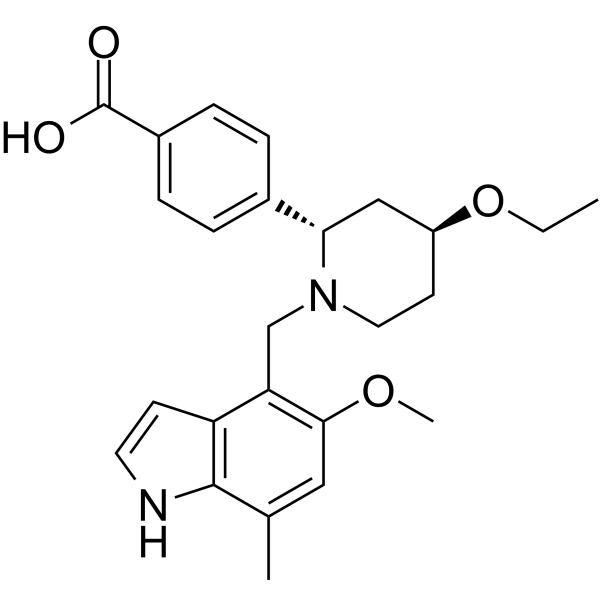
    Rintodestrant (G1T48) is an orally active, non-steroidal and selective estrogen receptor degrader. Rintodestrant (G1T48) is also a CDK4/6 inhibitor [1].
    Rintodestrant
  • HY-N1150R

    DThyd (Standard); NSC 21548 (Standard)

    Reference Standards DNA/RNA Synthesis Endogenous Metabolite Orthopoxvirus Cancer
    Thymidine (Standard) is the analytical standard of Thymidine. This product is intended for research and analytical applications. Thymidine, a specific precursor of deoxyribonucleic acid, is used as a cell synchronizing agent. Thymidine is a DNA synthesis inhibitor that can arrest cell at G1/S boundary, prior to DNA replication [1] .
    Thymidine (Standard)
  • HY-112272A
    Lerociclib dihydrochloride
    2 Publications Verification

    G1T38 dihydrochloride

    CDK Cancer
    Lerociclib dihydrochloride (G1T38 dihydrochloride) is a potent and selective inhibitor of CDK4/CDK6, with IC50s of 1 nM and 2 nM for CDK4/CyclinD1 and CDK6/CyclinD3, respectively.
    Lerociclib dihydrochloride
  • HY-169474

    PAMAM G1.0

    Biochemical Assay Reagents Cancer
    Starburst 1st Generation (PAMAM G1.0) is a Polyamidoamine (HY-164657; PAMAM) dendrimer with amine termini that has been used as a drug delivery system in vitro. Starburst 1st Generation conjugated to di-n-dodecylamine and encapsulating 5-Fluorouracil (HY-90006) increase the solubility of 5-Fluorouracil and are cytotoxic to AGS gastric adenocarcinoma cells [1].
    Starburst 1st generation (13.93% w/w in water)
  • HY-N1150S9

    DThyd-15N2; NSC-15N2

    DNA/RNA Synthesis Endogenous Metabolite Orthopoxvirus Cancer
    Thymidine- 15N2 is the 15N labeled Thymidine [1]. Thymidine, a specific precursor of deoxyribonucleic acid, is used as a cell synchronizing agent. Thymidine is a DNA synthesis inhibitor that can arrest cell at G1/S boundary, prior to DNA replication .
    Thymidine-15N2
  • HY-151978

    Indoleamine 2,3-Dioxygenase (IDO) Apoptosis Cancer
    ZC0109 is a dual inhibitor of IDO1 and thioredoxin reductase 1 (TrxR1) with IC50s of 50 nM and 3.0 μM, respectively. ZC0109 induces ROS accumulation and cell cycle arrest at G1/S phase, thus leads to cancer cells apoptosis [1].
    ZC0109
  • HY-W127501

    Biochemical Assay Reagents Others
    Prostaglandin G1 is a biochemical reagent that can be used as a biological material or organic compound for life science related research.
    Prostaglandin G1
  • HY-P990048

    ADG126

    CTLA-4 Cancer
    Muzastotug is a humanized immunoglobulin G1-kappa, anti-CTLA4 monoclonal antibody. Muzastotug is an immunostimulant and antineoplastic [1].
    Muzastotug
  • HY-169932

    Apolipoprotein Infection
    APOL1-IN-2 (Compound 467) is the inhibitor for Apolipoprotein 1 (APOL1). APOL1-IN-2 reduces the APOL1 G2/G1 induced cell death in HEK293 with EC50 of 4.74 nM and 14.3 nM. APOL1-IN-2 reduces the APOL1 G2/G1/G0 induced death of trypanosomes with EC50 of 2.24, 6.03 and 3.72 nM, respectively [1].
    APOL1-IN-2
  • HY-N1150S2

    DThyd-13C; NSC 21548-13C

    Isotope-Labeled Compounds DNA/RNA Synthesis Endogenous Metabolite Orthopoxvirus Cancer
    Thymidine- 13C is the 13C labeled Thymidine. Thymidine, a specific precursor of deoxyribonucleic acid, is used as a cell synchronizing agent. Thymidine is a DNA synthesis inhibitor that can arrest cell at G1/S boundary, prior to DNA replication [1]
    Thymidine-13C
  • HY-N1150S

    DThyd-d3; NSC 21548-d3

    Isotope-Labeled Compounds DNA/RNA Synthesis Endogenous Metabolite Others
    Thymidine-d3 is the deuterium labeled Thymidine. Thymidine, a specific precursor of deoxyribonucleic acid, is used as a cell synchronizing agent. Thymidine is a DNA synthesis inhibitor that can arrest cell at G1/S boundary, prior to DNA replication [1] .
    Thymidine-d3
  • HY-P990079

    BMS-986207; ONO-4686

    CD28 Inflammation/Immunology
    Renvistobart is an immunoglobulin G1-κ, anti-[Homo sapiens TIGIT (T cell immunoreceptor with Ig domain and ITIM, VSIG9, VSTM3)] Homo sapiens monoclonal antibody [1].
    Renvistobart
  • HY-168620

    CDK Cancer
    CDK6-IN-1 (compound 4i) is a CDK6 inhibitor. CDK6-IN-1 inhibits cell growth and induces cell cycle arrest at G1-phase [1].
    CDK6-IN-1
  • HY-P99698

    LDP

    PD-1/PD-L1 Inflammation/Immunology Cancer
    Lesabelimab (LDP) is an immunoglobulin G1-kappa anti-CD274 monoclonal antibody. CD274 is an immune checkpoint ligand, represses antitumour immunity through the interaction with PDCD1 receptor [1] .
    Lesabelimab
  • HY-N1150S6

    DThyd-d2; NSC 21548-d2

    Isotope-Labeled Compounds DNA/RNA Synthesis Endogenous Metabolite Orthopoxvirus Cancer
    Thymidine-d2 is the deuterium labeled Thymidine. Thymidine, a specific precursor of deoxyribonucleic acid, is used as a cell synchronizing agent. Thymidine is a DNA synthesis inhibitor that can arrest cell at G1/S boundary, prior to DNA replication[1
    Thymidine-d2
  • HY-P991706

    Phosphodiesterase (PDE) CD3 Cancer
    Nelvutamig is a humanized immunoglobulin (H-gamma1_L-kappa)_scFvkh-G1(h-CH2-CH3) antibody targeting ENPP3/CD203c and CD3E. The corresponding isotype control is: Human immunoglobulin (H-gamma1_L-kappa)_scFvkh-G1(h-CH2-CH3) [1].
    Nelvutamig
  • HY-158473

    FA2[3]G1 & FA2[6]G1 N-linked oligosaccharide

    Biochemical Assay Reagents Others
    FA2[3]G1 & FA2[6]G1 glycan (G1F) (FA2[3]G1 & FA2[6]G1 N-linked oligosaccharide) is a N-polysaccharide protein and a multifunctional fluorescent linker. The resulting conjugates exhibit high sensitivity and specificity by mimicking the antennal elements of N-glycans [1].
    FA2[3]G1 & FA2[6]G1 glycan (G1F)
  • HY-N14079

    Antibiotic Bacterial Infection
    Monamycin G1 is an ester peptide antibiotic. Monamycin G1 has activity against Gram-positive bacteria [1].
    Monamycin G1
  • HY-N14184

    Adrenergic Receptor Cardiovascular Disease
    Luminacin G1 has a strong inhibitory effect on capillary formation (IC50 is less than 0.1 μg/mL) [1].
    Luminacin G1
  • HY-P990020

    FSI-174

    c-Kit Others
    Eglatoprutug is an humanized immunoglobulin G1-kappa, anti-c-Kit monoclonal antibody [1].
    Eglatoprutug
  • HY-147407

    EGFR Cancer
    Imbotolimod, immunoglobulin G1-kappa, is a humanized monoclonal antibody with anti-ERBB2 and antineoplastic activity. Imbotolimod is a derivative of telratolimod [1].
    Imbotolimod
  • HY-124261

    Apoptosis Cancer
    Sampangine is an alkaloid that induces apoptosis by inducing cell cycle arrest in the G0/G1 phase. Sampangine can inhibit the biosynthesis of heme [1] .
    Sampangine
  • HY-E70678

    CDK Cancer
    CDK3 is a major player driving retinoblastoma (Rb) phosphorylation during the G0/G1 transition and in the early G1 phase of the cell cycle. CDK3 interacts with various transcription factors involved in cell proliferation, differentiation, and transformation driven by the EGFR/Ras signaling pathway. CDK3/CycE1 Recombinant Human Active Protein Kinase is an ortholog of CDK3 [1].
    CDK3/CycE1 Recombinant Human Active Protein Kinase
  • HY-13650R

    E 7070 (Standard)

    Molecular Glues Carbonic Anhydrase Reference Standards Cancer
    Indisulam (Standard) is the analytical standard of Indisulam. This product is intended for research and analytical applications. Indisulam (E 7070) is a carbonic anhydrase inhibitor with anticancer activity. Indisulam (E 7070) is a sulfonamide agent that targets the G1 phase of the cell cycle. Indisulam (E 7070) causes a blockade in the G1/S transition through inhibition of the activation of both CDK2 and cyclin E. Indisulam (E 7070) targets splicing by inducing RBM39 degradation via recruitment to DCAF15 [1] .
    Indisulam (Standard)
  • HY-P991135

    RO-7502175; RG-6411

    CCR Cancer
    Enzelkitug is a humanized immunoglobulin G1-κ monoclonal antibody targeting the human C-C motif chemokine receptor 8 (CCR8). Enzelkitug is promising for research of various solid tumors and hematological malignancies [1].
    Enzelkitug
  • HY-P991153

    Virus Protease Infection
    Potravitug is a humanized immunoglobulin G1-κ monoclonal antibody targeting the major capsid protein VP1 of BK polyomavirus (BKV). Potravitug is promising for research of BKV-infection-related diseases, such as BKV-induced nephropathy after organ transplantation [1].
    Potravitug
  • HY-N1150S1

    DThyd-d4; NSC 21548-d4

    DNA/RNA Synthesis Endogenous Metabolite Others
    Thymidine-d4 is the deuterium labeled Thymidine. Thymidine, a specific precursor of deoxyribonucleic acid, is used as a cell synchronizing agent. Thymidine is a DNA synthesis inhibitor that can arrest cell at G1/S boundary, prior to DNA replication [1] .
    Thymidine-d4
  • HY-N1150S3

    DThyd-13C-1; NSC 21548-13C-1

    Isotope-Labeled Compounds DNA/RNA Synthesis Endogenous Metabolite Orthopoxvirus Cancer
    Thymidine- 13C-1 is the 13C labeled Thymidine. Thymidine, a specific precursor of deoxyribonucleic acid, is used as a cell synchronizing agent. Thymidine is a DNA synthesis inhibitor that can arrest cell at G1/S boundary, prior to DNA replication [1]
    Thymidine-13C-1
  • HY-P991134

    IGF-1R Inflammation/Immunology
    Elegrobart is an immunoglobulin G1-κ monoclonal antibody targeting the human insulin-like growth factor 1 receptor (IGF1R). Elegrobart is promising for research of diseases associated with abnormal IGF1R signaling, especially thyroid eye disease [1].
    Elegrobart
  • HY-135217

    Apoptosis Cancer
    Apiole is an anti-tumor agent that induces apoptosis and inhibits human colon cancer cells by inducing G0/G1 cell cycle arrest. Apiole also significantly inhibited colon tumor development in an in vivo mouse xenograft model [1] .
    Apiole
  • HY-129592

    Apoptosis Cancer
    p-Tolylmaleimide (compound 9) is a naphthalimide derivative that has cytotoxic effects on cancer cells. p-Tolylmaleimide can arrest the cell cycle of human acute myeloid leukemia cells K562 in the sub-G0/G1 phase and induce apoptosis [1].
    p-Tolylmaleimide
  • HY-144733

    Estrogen Receptor/ERR Apoptosis Cancer
    ERα antagonist 1 (Compound 19d) is a potent, selective, covalent estrogen receptor α (ERα) antagonist. ERα antagonist 1 induces apoptosis and cell cycle G0/G1 phase arrest in MCF-7 cells [1].
    ERα antagonist 1
  • HY-N16567

    Apoptosis Caspase PARP Survivin Cancer
    Acrofolione A is an acetophenone dimer isolated from Acronychia pendunculata with anticancer effects. Acrofolione A induces G0/G1 phase cell cycle arrest and apoptosis in human NALM-6 pre-B cell leukaemia cells. Acrofolione A can be used for leukaemia research [1].
    Acrofolione A
  • HY-W582827

    Biochemical Assay Reagents Endogenous Metabolite
    RuPhos Pd G1 methyl t-butyl ether adduct (MTBE) is a highly efficient catalyst with excellent cross-coupling activity. RuPhos Pd G1 methyl t-butyl ether adduct (MTBE) is widely used in organic synthesis and can be used to promote various reactions to build complex molecular structures. RuPhos Pd G1 methyl t-butyl ether adduct (MTBE) has good adaptability to temperature and reaction conditions, which enables it to exhibit excellent catalytic performance in different reaction systems.
    RuPhos Pd G1 methyl t-butyl ether adduct (MTBE)

Inquiry Online

Your information is safe with us. * Required Fields.

Salutation


Country or Region *

Applicant Name *


Organization Name *

Department *


Email Address *


Product Name *

Cat. No.


Requested quantity *

Phone Number *


Remarks

Inquiry Online

Inquiry Information

Product Name:
Cat. No.:
Quantity:
MCE Japan Authorized Agent:

