1. Search Result
Search Result
Results for "

P2X2

" in MedChemExpress (MCE) Product Catalog:

32

Inhibitors & Agonists

1

Peptides

1

Isotope-Labeled Compounds

3

Oligonucleotides

Cat. No. Product Name Target Research Areas Chemical Structure
  • HY-136254
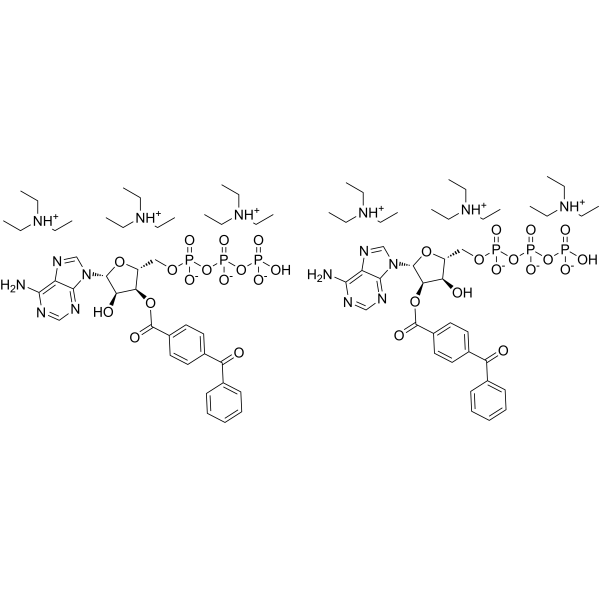
    BzATP triethylammonium salt
    Maximum Cited Publications
    14 Publications Verification

    P2X Receptor Inflammation/Immunology Cancer
    BzATP triethylammonium salt acts as a P2X receptor agonist with pEC50s of 8.74, 5.26, 7.10, 7.50, 6.19, 6.31, 5.33 for P2X1, P2X2, P2X3, P2X2/3, P2X4 and P2X7, respectively . BzATP triethylammonium salt is potent at P2X7 receptors with EC50s of 3.6 μM and 285 μM for rat P2X7 and mouse P2X7, respectively .
    BzATP triethylammonium salt
  • HY-112461A
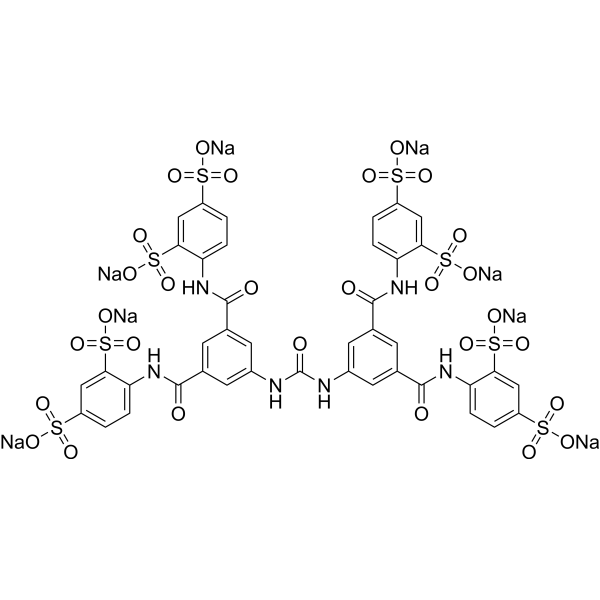
    NF449 octasodium
    4 Publications Verification

    P2X Receptor Cardiovascular Disease
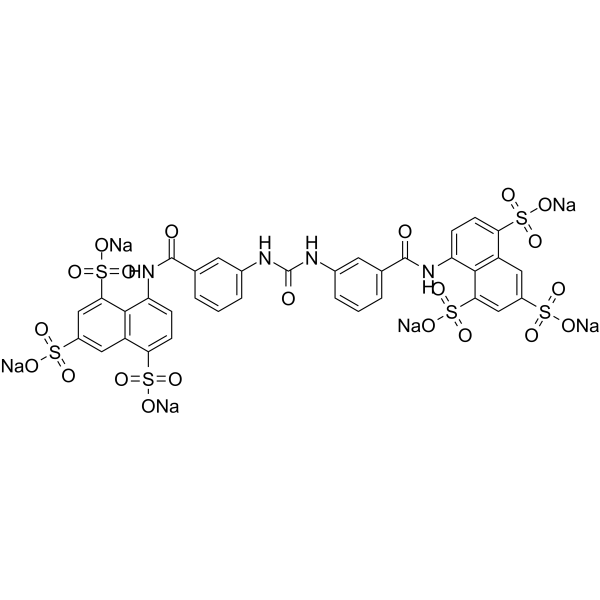
    NF449 octasodium is a highly potent P2X1 receptor antagonist, with IC50s of 0.28, 0.69, and 120 nM for rP2X1, rP2X1+5, P2X2+3, respectively. NF449 octasodium is a G-selective G Protein antagonist. NF449 octasodium suppresses the rate of GTP[γS] binding to Gsα-s, inhibits the stimulation of adenylyl cyclase activity, and blocks the coupling of β-adrenergic receptors to Gs .
    NF449 octasodium
  • HY-15568
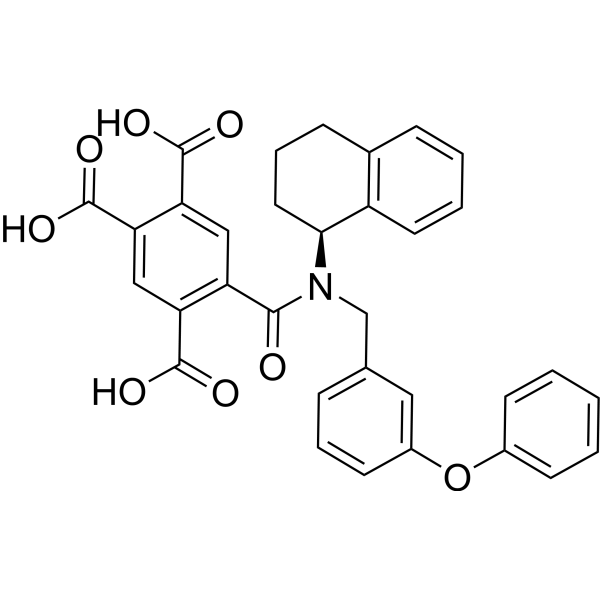
    A-317491
    5 Publications Verification

    P2X Receptor Neurological Disease Inflammation/Immunology
    A-317491 is a potent, selective and non-nucleotide antagonist of P2X3 and P2X2/3 receptors, with Kis of 22, 22, 9, and 92 nM for hP2X3, rP2X3, hP2X2/3, and rP2X2/3, respectively. A-317491 is highly selective (IC50>10 μM) over other P2 receptors and other neurotransmitter receptors, ion channels, and enzymes. A-317491 reduces inflammatory and neuropathic pain by blocking P2X3 and P2X2/3 receptor-mediated calcium flux .
    A-317491
  • HY-14483
    AF-353
    1 Publications Verification

    Ro-4

    P2X Receptor Cancer
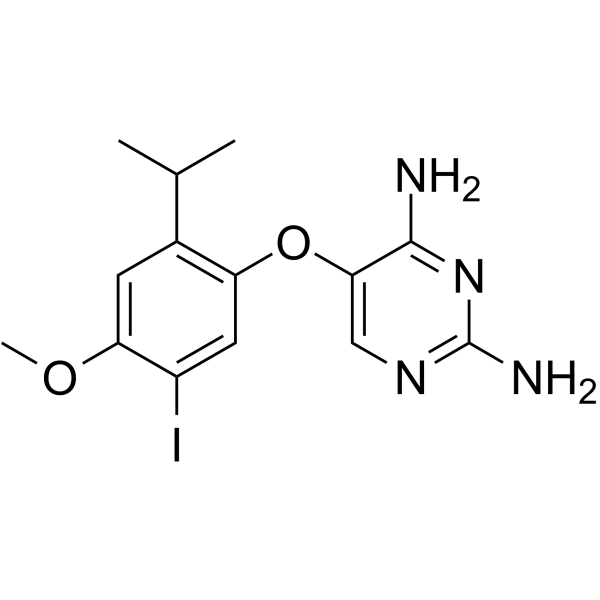
    AF-353 (Ro-4) is a potent, selective and orally bioavailable P2X3/P2X2/3 receptor antagonist, with a pIC50 of 8.0 for both human and rat P2X3, and with a pIC50 of 7.3 for human P2X2/3 .
    AF-353
  • HY-137451
    Sivopixant
    1 Publications Verification

    S-600918

    P2X Receptor Neurological Disease
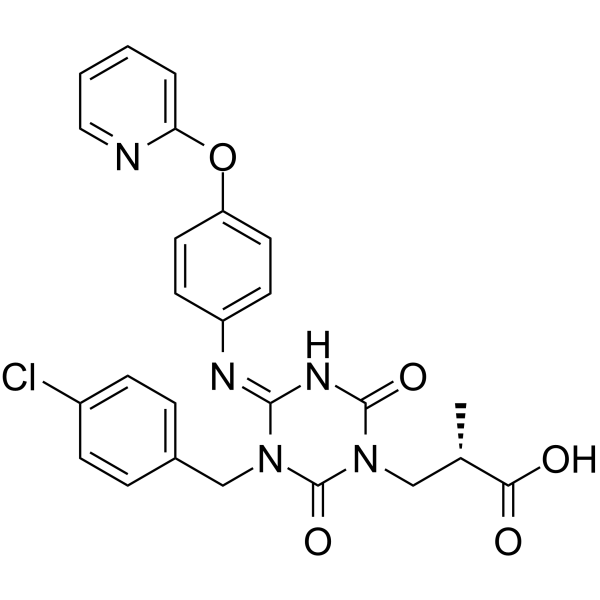
    Sivopixant (S-600918) is a potent and selective P2X3 receptor antagonist (P2X3 IC50=4.2 nM; P2X2/3 IC50=1100 nM). Sivopixant shows strong analgesic effect .
    Sivopixant
  • HY-D0976
    NF279
    1 Publications Verification

    P2X Receptor HIV NTPDase CXCR Infection
    NF279 is a selective P2X1 receptor antagonist and NTPDase inhibitor, with a P2X1 IC50 value of 19 nM. NF279 suppresses GABA-evoked currents, reduces ATP-excited respiratory activity, alters hypoglossal nerve burst parameters, and blocks CXCR4, CCR5, CXCR3, and CXCR7-mediated calcium responses. NF279 arrests HIV-1 fusion downstream of CD4 binding, inhibits R5- and X4-tropic HIV-1 strains. NF279 can be used for the research of HIV-1 infection .
    NF279
  • HY-112461

    P2X Receptor Cardiovascular Disease
    NF449 is a highly potent P2X1 receptor antagonist, with IC50s of 0.28, 0.69, and 120 nM for rP2X1, rP2X1+5, P2X2+3, respectively. NF449 is a G-selective G Protein antagonist. NF449 suppresses the rate of GTP[γS] binding to Gsα-s, inhibits the stimulation of adenylyl cyclase activity, and blocks the coupling of β-adrenergic receptors to Gs .
    NF449
  • HY-108667

    P2X Receptor Interleukin Related Fluorescent Dye Neurological Disease
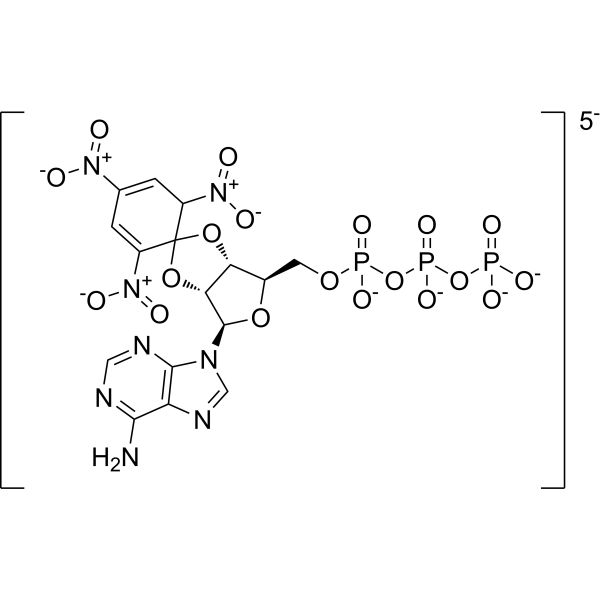
    TNP-ATP triethylammonium is a P2X receptor antagonist with an IC50 of 0.010 μM for P2X3 and an IC50 of 0.062 μM for P2X2/3. TNP-ATP triethylammonium acts as an inhibitor of CheA autophosphorylation, with a Ki of 0.7 µM. TNP-ATP triethylammonium blocks the functional activation of P2X1-7 receptors. TNP-ATP triethylammonium attenuates hypoxia-induced IL-1β expression and release. TNP-ATP triethylammonium alleviates visceral pain, and improves hypoxia-induced cognitive impairment, insufficient myelination and neuroinflammation. Binding of TNP-ATP triethylammonium to CheA enhances the fluorescence of the TNP group. TNP-ATP triethylammonium can be used in studies related to visceral pain. NP-ATP triethylammonium can be used in studies related to hypoxia-induced insufficient myelination and cognitive decline .
    TNP-ATP triethylammonium
  • HY-108676
    NF023 hexasodium
    1 Publications Verification

    P2X Receptor Neurological Disease
    NF023 hexasodium is a selective and competitive P2X1 receptor antagonist, with IC50 values of 0.21 μM, 28.9 μM, > 50 μM and > 100 μM for human P2X1, P2X3, P2X2, and P2X4-mediated responses respectively .
    NF023 hexasodium
  • HY-101308A
    MRS2179 tetrasodium hydrate
    2 Publications Verification

    P2Y Receptor Cardiovascular Disease
    MRS2179 tetrasodium hydrate is a competitive P2Y1 receptor antagonist, with a Kb of 102 nM and a pA2 of 6.99 for turkey P2Y1 receptor. MRS2179 tetrasodium hydrate is selective for P2Y1 over P2X1 (IC50=1.15 µM), P2X3 (12.9 µM), P2X2, P2X4, P2Y2, P2Y4, and P2Y6 receptors . MRS2179 tetrasodium hydrate inhibits platelet aggregation .
    MRS2179 tetrasodium hydrate
  • HY-135976

    P2X Receptor Neurological Disease Inflammation/Immunology
    P2X3 antagonist 34 is a potent, selective and orally active P2X3 homotrimeric receptor antagonist with IC50s of 25 nM, 92 nM and 126 nM for human P2X3, rat P2X3 and guinea pig P2X3 receptors, respectively. P2X3 antagonist 34 is less active against human, rat and guinea pig P2X2/3 heterotrimeric receptors. P2X3 antagonist 34 has strong anti-tussive effect .
    P2X3 antagonist 34
  • HY-16322A
    Minodronic acid hydrate
    1 Publications Verification

    YM-529 hydrate

    P2X Receptor Apoptosis Cancer
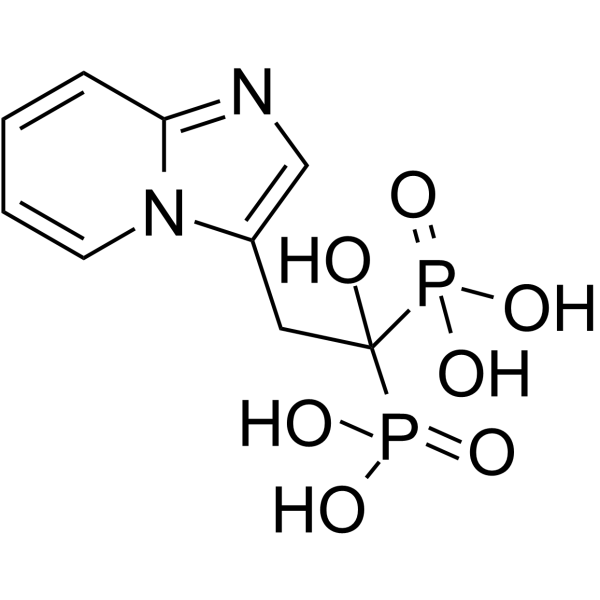
    Minodronic acid (YM-529) hydrate is a third-generation bisphosphonate that directly and indirectly prevents proliferation, induces apoptosis, and inhibits metastasis of various types of cancer cells. Minodronic acid (YM-529) is an antagonist of purinergic P2X2/3 receptors involved in pain .
    Minodronic acid hydrate
  • HY-15568A
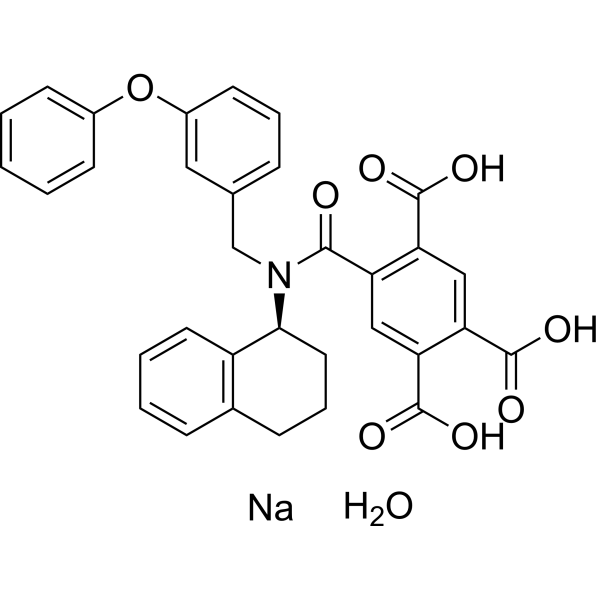
    A-317491 sodium salt hydrate
    5 Publications Verification

    P2X Receptor Neurological Disease Inflammation/Immunology
    A-317491 sodium salt hydrate is a potent, selective and non-nucleotide antagonist of P2X3 and P2X2/3 receptors, with Kis of 22, 22, 9, and 92 nM for hP2X3, rP2X3, hP2X2/3, and rP2X2/3, respectively. A-317491 sodium salt hydrate is highly selective (IC50>10 μM) over other P2 receptors and other neurotransmitter receptors, ion channels, and enzymes. A-317491 sodium salt hydrate reduces inflammatory and neuropathic pain by blocking P2X3 and P2X2/3 receptor-mediated calcium flux .
    A-317491 sodium salt hydrate
  • HY-16322
    Minodronic acid
    1 Publications Verification

    YM-529

    P2X Receptor Apoptosis Farnesyl Transferase Metabolic Disease Cancer
    Minodronic acid is an FPP synthase inhibitor with an IC50 of 3 nM, and also an antagonist of P2X2/3 receptors with an IC50 of 62.7 μM. Minodronic acid induces tumor cell apoptosis and inhibits cell growth. Minodronic acid also suppresses bone resorption. Minodronic acid can be used in research related to osteoporosis and cancer .
    Minodronic acid
  • HY-18745

    Benzoylbenzoyl-ATP triethylammonium

    P2X Receptor Inflammation/Immunology Cancer
    BzATP triethylammonium acts as a P2X receptor agonist with pEC50s of 8.74, 5.26, 7.10, 7.50, 6.19, 6.31, 5.33 for P2X1, P2X2, P2X3, P2X2/3, P2X4 and P2X7, respectively . BzATP triethylammonium is potent at P2X7 receptors with EC50s of 3.6 μM and 285 μM for rat P2X7 and mouse P2X7, respectively .
    BzATP triethylammonium
  • HY-19978

    P2X Receptor Neurological Disease
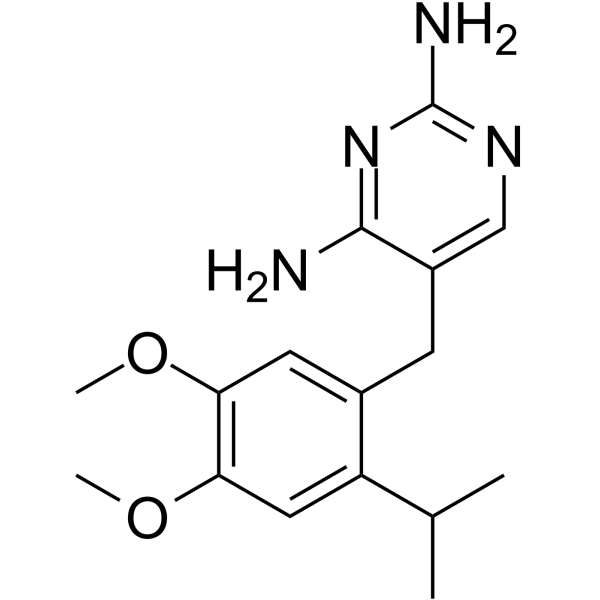
    RO-3 is a potent, and orally active P2X3 and P2X2/3 antagonist with pIC50s of 5.9 and 7.0 for human homomultimeric P2X3 and heteromultimeric P2X2/3 receptors, respectively. RO-3 shows selectivity for P2X3 and P2X2/3 over all other functional homomultimeric P2X receptors (IC50 >10 μM at P2X1,2,4,5,7) .
    RO-3
  • HY-101308

    P2Y Receptor Cardiovascular Disease
    MRS2179 tetrasodium is a competitive P2Y1 receptor antagonist, with a Kb of 102 nM and a pA2 of 6.99 for turkey P2Y1 receptor. MRS2179 tetrasodium is selective for P2Y1 over P2X1 (IC50=1.15 µM), P2X3 (12.9 µM), P2X2, P2X4, P2Y2, P2Y4, and P2Y6 receptors . MRS2179 tetrasodium inhibits platelet aggregation .
    MRS2179 tetrasodium
  • HY-108673

    P2X Receptor Cancer
    Ro 0437626 is a selective purinergic (P2X1) receptor antagonist (IC50 = 3 μM), but shows low affinity for P2X2, P2X3 and P2X2/3 receptors (IC50 > 100 μM) .
    Ro 0437626
  • HY-153548

    P2X Receptor Neurological Disease Inflammation/Immunology
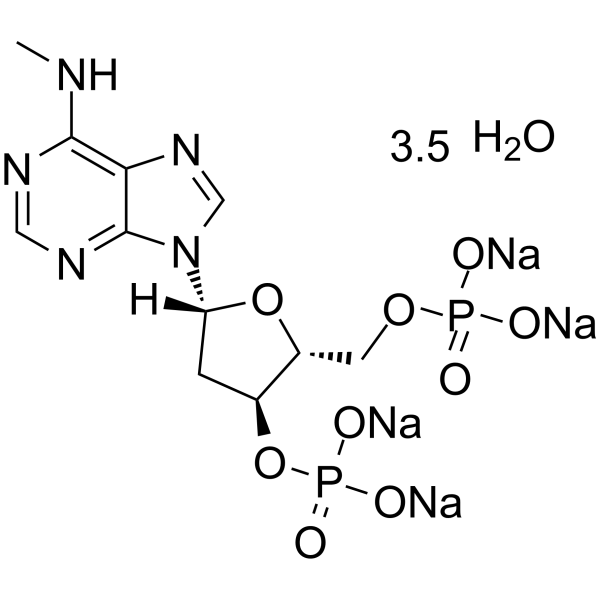
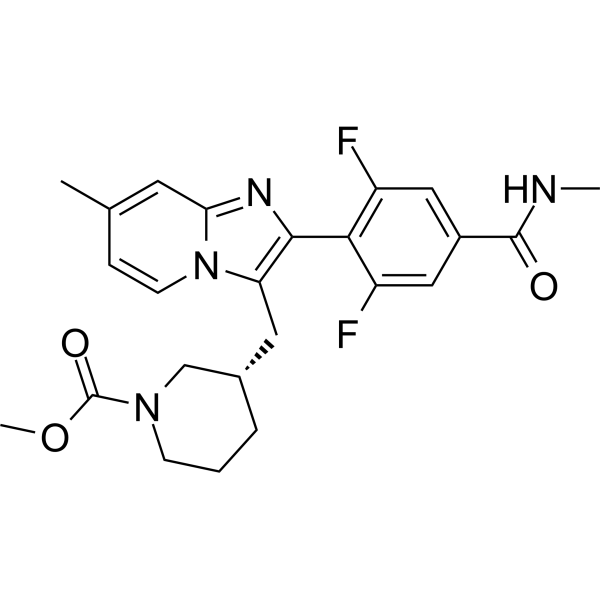
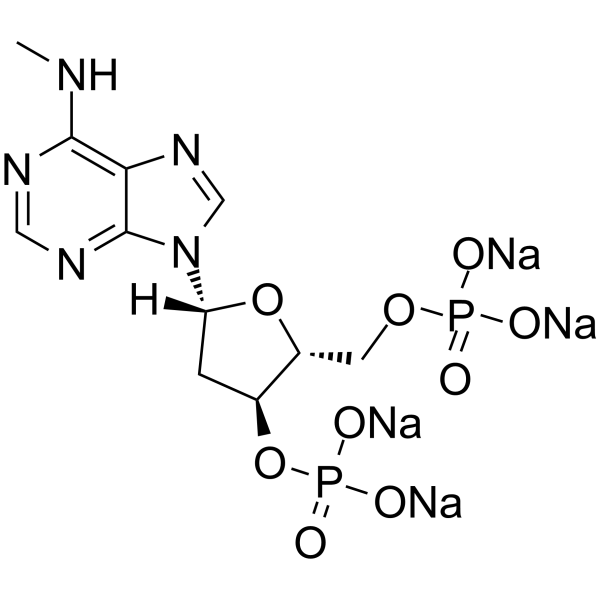
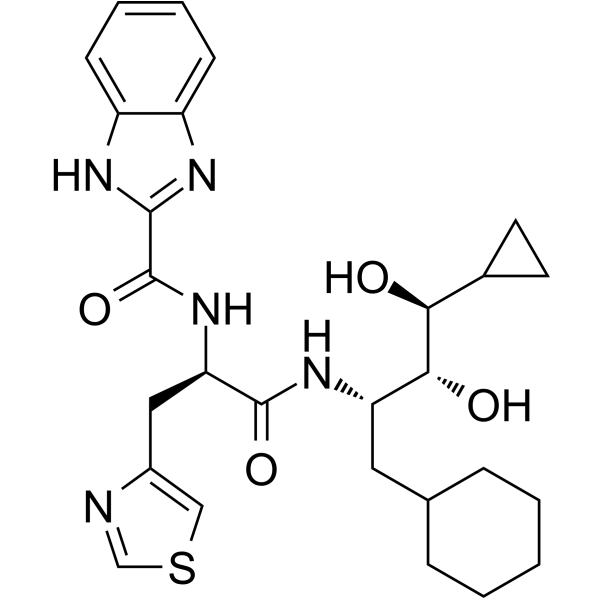
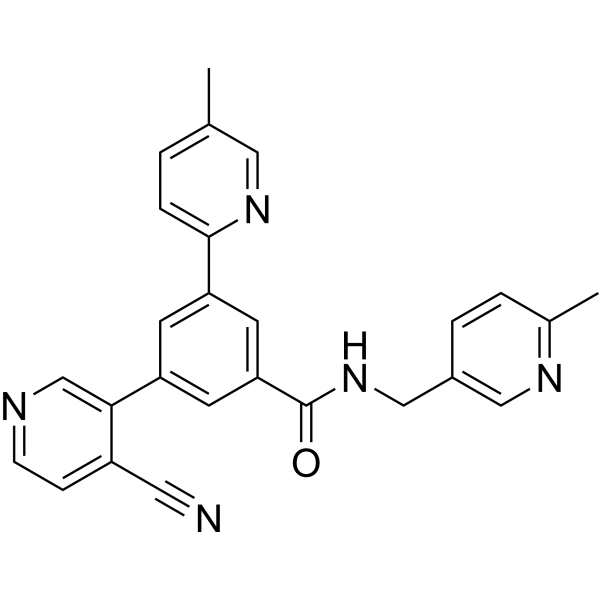
    P2X2/3 modulator-1 (Compound 46) is a P2X2/3 modulator. P2X2/3 modulator-1 can be used in the study of pain, central nervous system disorders and inflammation .
    P2X2/3 modulator-1
  • HY-137610A

    P2X Receptor P2Y Receptor Neurological Disease
    TNP-ATP is an antagonist of purinergic P2Y1, P2X3, and P2X2/3 receptors (IC50 = 6, 0.9, and 7 nM, respectively, in HEK293 cells expressing human receptors). TNP-ATP reduces acetate-induced calcium flux in 1321N1 cells expressing P2X3 and P2X2/3 receptors (IC50 = 100 and 62 nM, respectively). TNP-ATP dose-dependently attenuates acetate-induced abdominal contractions in a mouse visceral pain model (ED50 = 6.35 µmol/kg) [1][2].
    TNP-ATP tetrasodium
  • HY-P1441A

    Sodium Channel Neurological Disease
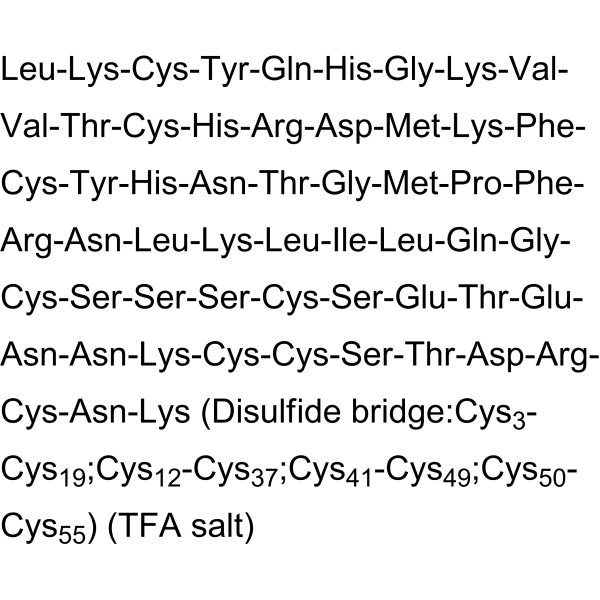
    Mambalgin 1 TFA is a selective ASIC1a inhibitor (IC50 values are 192 and 72 nM for human ASIC1a and ASIC1a/1b dimer, respectively). Mambalgin 1 TFA binds to closed/inactive channel. Mambalgin 1 TFA is selective for ASIC1a over ASIC2a, ASIC3, TRPV1, P2X2, 5-HT3, Nav1.8, Cav3.2 and Kv1.2 channels. Mambalgin 1 TFA increases latency of withdrawal response in mouse tail-flick and paw-flick tests.
    Mambalgin 1 TFA
  • HY-14485

    P2X Receptor Neurological Disease
    Ro-51 is a potent and selective dual P2X3/P2X2/3 antagonist, with IC50 of 2 nM and 5 nM for P2X3 and P2X2/3, respectively. Ro-51 can be used for the research for pain .
    Ro-51
  • HY-14483A

    Ro-4 hydrochloride

    P2X Receptor Cancer
    AF-353 hydrochloride is a potent, selective and orally bioavailable P2X3/P2X2/3 receptor antagonist, with a pIC50 of 8.0 for both human and rat P2X3, and with a pIC50 of 7.3 for human P2X2/3 .
    AF-353 hydrochloride
  • HY-14483R

    Ro-4 (Standard)

    P2X Receptor Reference Standards Cancer
    AF-353 (Standard) is the analytical standard of AF-353. This product is intended for research and analytical applications. AF-353 (Ro-4) is a potent, selective and orally bioavailable P2X3/P2X2/3 receptor antagonist, with a pIC50 of 8.0 for both human and rat P2X3, and with a pIC50 of 7.3 for human P2X2/3 .
    AF-353 (Standard)
  • HY-16322S

    YM-529-d4

    Isotope-Labeled Compounds P2X Receptor Apoptosis Cancer
    Minodronic acid-d4 is deuterium labeled Minodronic acid. Minodronic acid (YM-529) is a third-generation bisphosphonate that directly and indirectly prevents proliferation, induces apoptosis, and inhibits metastasis of various types of cancer cells. Minodronic acid (YM-529) is an antagonist of purinergic P2X2/3 receptors involved in pain .
    Minodronic acid-d4
  • HY-182715

    P2X Receptor Neurological Disease
    PSB-10211 is a P2X2 receptor antagonist with an IC50 of 0.086 μM against rat P2X2 receptors. PSB-10211 inhibits ATP-mediated currents of rat P2X2 receptors expressed in Xenopus oocytes. PSB-10211 can be used in studies related to pain and urinary incontinence .
    PSB-10211
  • HY-186112

    P2X Receptor Inflammation/Immunology
    PSFL2915 is a P2X receptor inhibitor with oral effectiveness, with an IC50 of 0.319 μM for human P2X3, 0.261 μM for rat P2X2/3, and 13.3 μM for human P2X2, and exhibits ~42-fold selectivity for human P2X3 over human P2X2. PSFL2915 inhibits human P2X3 activation by preventing allosteric tightening of the inner pocket of the head domain required for channel opening, with magnesium-dependent inhibition. PSFL2915 inhibits rat P2X2/3 and human P2X2 receptor activation, and has low activity against human P2X1, P2X4, and P2X7 receptors. PSFL2915 can be used for the research of chronic cough .
    PSFL2915
  • HY-137609A

    TNP-Guanosine 5'-triphosphate tetrasodium

    Glutamate Dehydrogenase (GLDH) P2X Receptor Guanylate Cyclase Cardiovascular Disease Neurological Disease Inflammation/Immunology
    TNP-GTP tetrasodium is a fluorescently labeled GTP (HY-113225) derivative. TNP-GTP tetrasodium can inhibit glutamate dehydrogenase (Ki = 2.7 μM). TNP-GTP tetrasodium is an antagonist of the purinergic P2X2 and P2X2/3 receptors with IC50 values of 0.4 and 1.2 nM, respectively. TNP-GTP tetrasodium also inhibit rat soluble guanylyl cyclase (Ki = 11 nM) .
    TNP-GTP tetrasodium
  • HY-RS09902

    Small Interfering RNA (siRNA) Others

    P2rx2 Rat Pre-designed siRNA Set A contains three designed siRNAs for P2rx2 gene (Rat), as well as a negative control, a positive control, and a FAM-labeled negative control.

    P2rx2 Rat Pre-designed siRNA Set A
    P2rx2 Rat Pre-designed siRNA Set A
  • HY-RS09900

    Small Interfering RNA (siRNA) Others

    P2RX2 Human Pre-designed siRNA Set A contains three designed siRNAs for P2RX2 gene (Human), as well as a negative control, a positive control, and a FAM-labeled negative control.

    P2RX2 Human Pre-designed siRNA Set A
    P2RX2 Human Pre-designed siRNA Set A
  • HY-RS09901

    Small Interfering RNA (siRNA) Others

    P2rx2 Mouse Pre-designed siRNA Set A contains three designed siRNAs for P2rx2 gene (Mouse), as well as a negative control, a positive control, and a FAM-labeled negative control.

    P2rx2 Mouse Pre-designed siRNA Set A
    P2rx2 Mouse Pre-designed siRNA Set A
  • HY-137606

    UP4A

    P2X Receptor Cardiovascular Disease
    Uridine adenosine tetraphosphate (UP4A) is an endothelium-derived vasoconstrictor that primarily acts through the P2X1 receptor and possibly through the P2Y2 and P2Y4 receptors. Uridine adenosine tetraphosphate can be used in the study of cardiovascular diseases .
    Uridine adenosine tetraphosphate

Inquiry Online

Your information is safe with us. * Required Fields.

Salutation


Country or Region *

Applicant Name *


Organization Name *

Department *


Email Address *


Product Name *

Cat. No.


Requested quantity *

Phone Number *


Remarks

Inquiry Online

Inquiry Information

Product Name:
Cat. No.:
Quantity:
MCE Japan Authorized Agent:

