1. Search Result
Search Result
Results for "

P2X7

" in MedChemExpress (MCE) Product Catalog:

60

Inhibitors & Agonists

1

Biochemical Assay Reagents

1

Peptides

4

Natural
Products

1

Recombinant Proteins

2

Antibodies

2

Oligonucleotides

Cat. No. Product Name Target Research Areas Chemical Structure
  • HY-136254
    BzATP triethylammonium salt
    10+ Cited Publications

    P2X Receptor Inflammation/Immunology Cancer
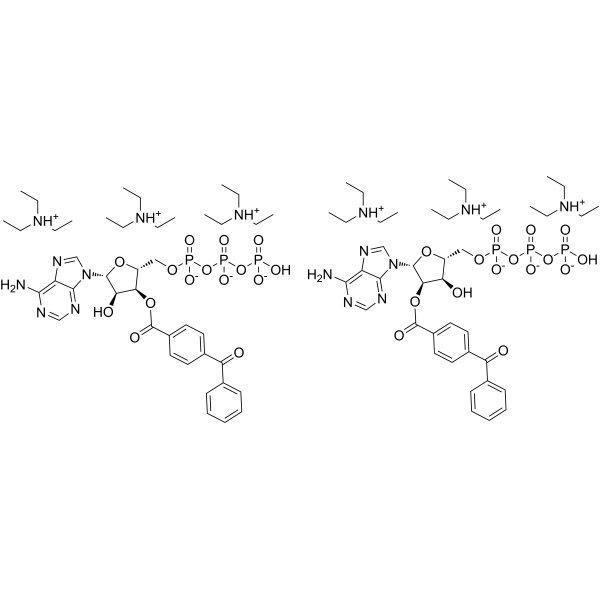
    BzATP triethylammonium salt acts as a P2X receptor agonist with pEC50s of 8.74, 5.26, 7.10, 7.50, 6.19, 6.31, 5.33 for P2X1, P2X2, P2X3, P2X2/3, P2X4 and P2X7, respectively . BzATP triethylammonium salt is potent at P2X7 receptors with EC50s of 3.6 μM and 285 μM for rat P2X7 and mouse P2X7, respectively .
    BzATP triethylammonium salt
  • HY-50697
    A-740003
    15+ Cited Publications

    P2X Receptor Neurological Disease
    A-740003 is a potent, selective and competitive P2X7 receptor antagonist with IC50 values are 18 and 40 nM for rat and human P2X7 receptors, respectively.
    A-740003
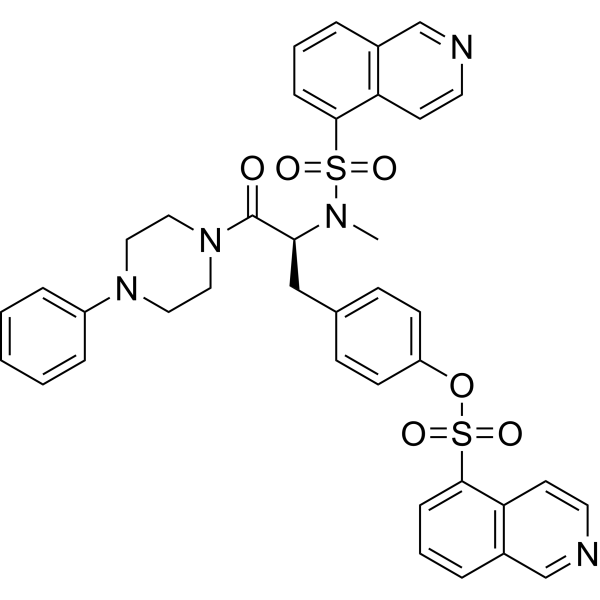
  • HY-13290
    KN-62
    10+ Cited Publications

    CaMK P2X Receptor Metabolic Disease Cancer
    KN-62 is a selective and reversible inhibitor of calmodulin-dependent protein kinase II (CaMK-II) with a Ki of 0.9 μM for rat brain CaMK-II. KN-62 directly binds to the calmodulin binding site of CaMK-II. KN-62 displays noncompetitive antagonism at P2X7 receptors in HEK293 cells, with an IC50 value of approximately 15 nM.
    KN-62
  • HY-15488
    A 438079
    Maximum Cited Publications
    26 Publications Verification

    P2X Receptor Neurological Disease
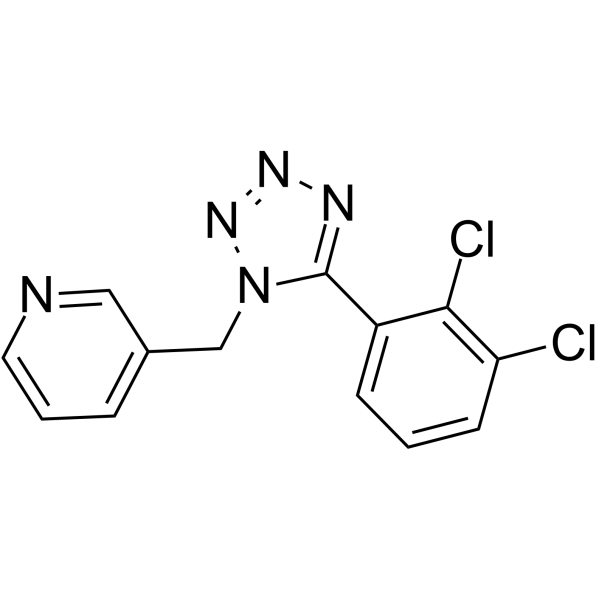
    A 438079 is a potent, and selective P2X7 receptor antagonist with pIC50 of 6.9.
    A 438079
  • HY-15488A
    A 438079 hydrochloride
    Maximum Cited Publications
    26 Publications Verification

    P2X Receptor Neurological Disease
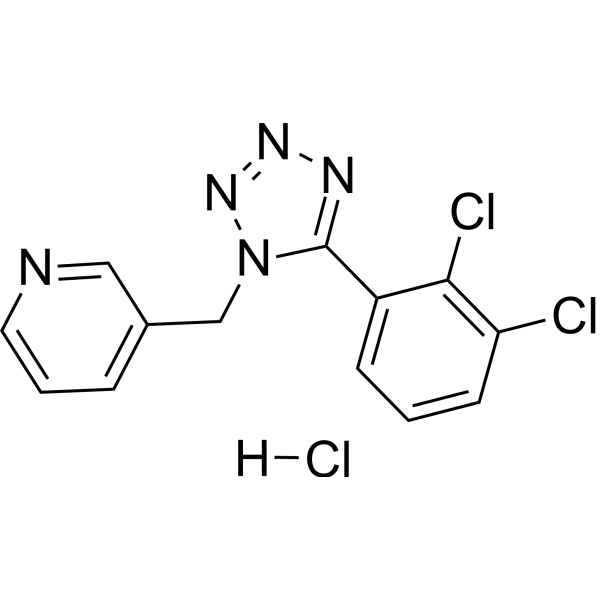
    A 438079 (hydrochloride) is a potent, and selective P2X7 receptor antagonist with pIC50 of 6.9.
    A 438079 hydrochloride
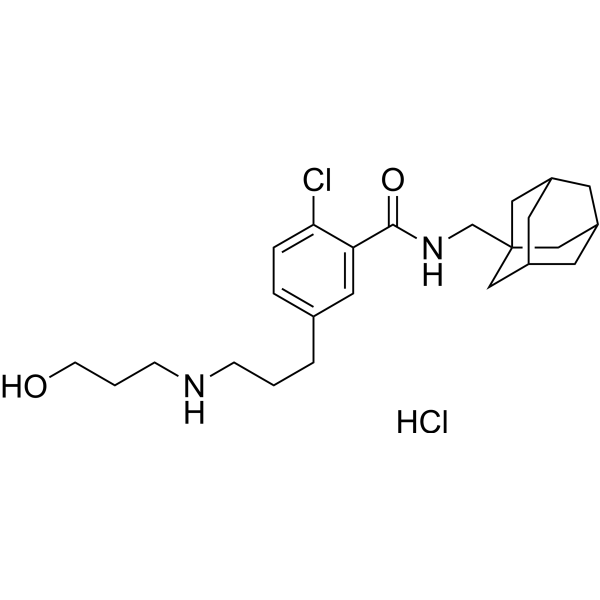
  • HY-19427A
    AZD9056 hydrochloride
    5+ Cited Publications

    P2X Receptor Inflammation/Immunology
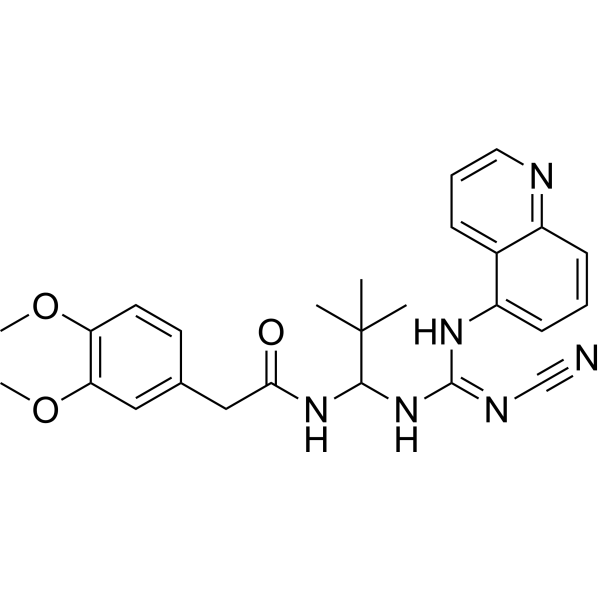
    AZD9056 hydrochloride is a selective orally active inhibitor of P2X7 which plays a significant role in inflammation and pain-causing diseases.
    AZD9056 hydrochloride
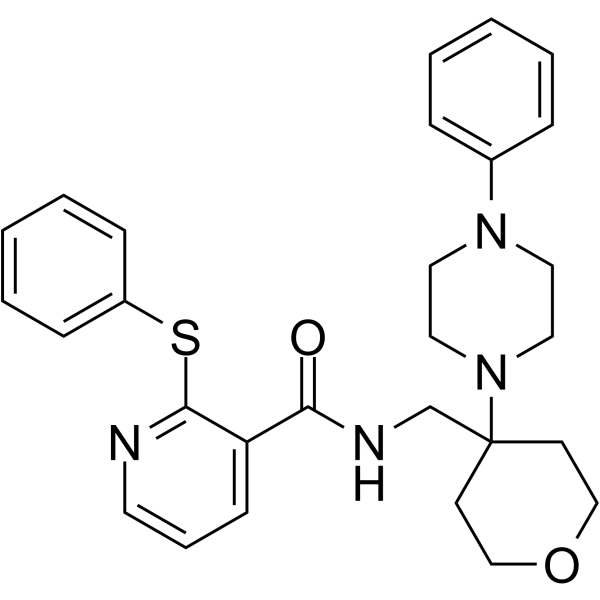
  • HY-123857
    JNJ-55308942
    2 Publications Verification

    P2X Receptor Neurological Disease Inflammation/Immunology
    JNJ-55308942 is a high-affinity, selective, brain-penetrant P2X7 functional antagonist (hP2X7: IC50=10 nM, Ki=7.1 nM; rP2X7: IC50=15 nM, Ki=2.9 nM). JNJ-55308942 is orally bioavailable, binds to brain P2X7 and blocks IL-1β release from adult rodent brain .
    JNJ-55308942
  • HY-101418
    JNJ-47965567
    5 Publications Verification

    P2X Receptor Neurological Disease
    JNJ-47965567 is a centrally permeable, high-affinity, selective P2X7 antagonist, with pKis of 7.9 and 8.7 for human and rat P2X7, respectively. JNJ-47965567 can be used to probe the role of central P2X7 in rodent models of CNS pathophysiology .
    JNJ-47965567
  • HY-108669
    AZ10606120 dihydrochloride
    2 Publications Verification

    P2X Receptor Neurological Disease Cancer
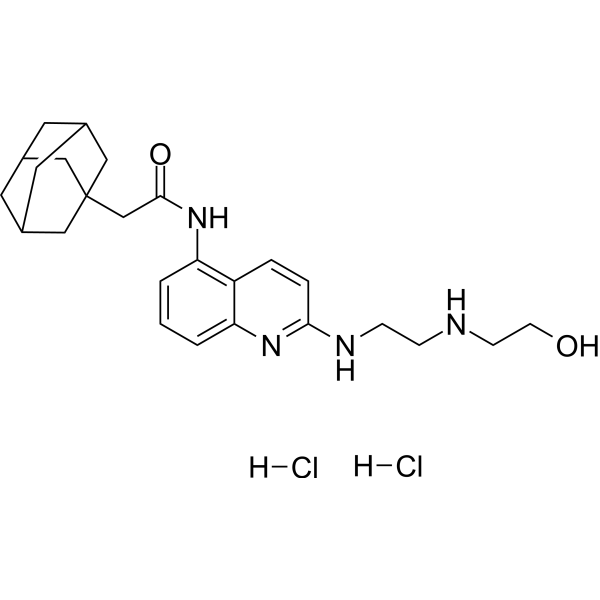
    AZ10606120 dihydrochloride is a selective, high affinity antagonist for P2X7 receptor (P2X7R) at human and rat with an IC50 of about 10 nM. AZ10606120 dihydrochloride is little or no effect at other P2XR subtypes. AZ10606120 dihydrochloride has anti-depressant effects and reduces tumour growth .
    AZ10606120 dihydrochloride
  • HY-B1901

    (±)-Eperisone hydrochloride

    P2X Receptor Neurological Disease
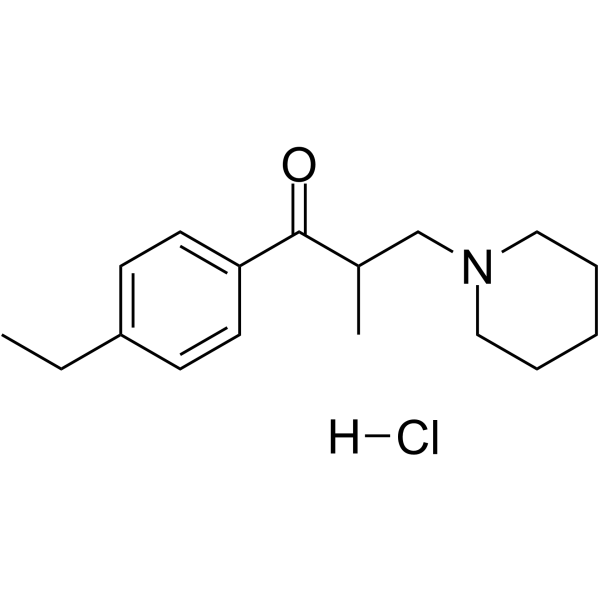
    Eperisone Hydrochloride ((±)-Eperisone hydrochloride) is an orally active antispastic agent with a vasodilator effect, used for the research of muscle stiffness and pain. Eperisone Hydrochloride is a potent and selectively P2X7 receptor antagonist, also shows antagonism for human P2X3. Eperisone Hydrochloride works by relaxing both skeletal muscles and vascularsmooth muscles, demonstrating a variety of effects such as reduction ofmyotonia, improvement of circulationand and suppression of the pain reflex .
    Eperisone hydrochloride
  • HY-P1137
    10Panx
    1 Publications Verification

    Gap Junction Protein Others
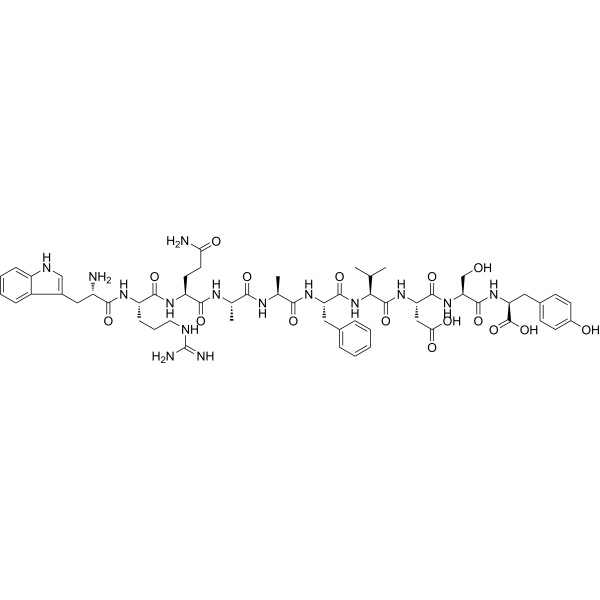
    10Panx is a competitive inhibitor of selective Pannexin 1 (PANX1) channels. 10Panx blocks the opening of PANX1 channels, inhibits ATP release and downstream P2X7 receptor-mediated signaling pathways, thereby reducing cell death and inflammatory responses. 10Panx can be used in the study of diseases such as neuropathic pain, inflammatory bowel disease, and Clostridioides difficile infection. 10Panx can effectively reduce mechanical hyperalgesia and enhanced C-reflexes, and inhibit the expression of pro-inflammatory factors such as IL-6[1][2][3].
    10Panx
  • HY-100483
    A-804598
    3 Publications Verification

    P2X Receptor Neurological Disease Cancer
    A-804598 is a BBB penetrant, competitive and selective P2X7 receptor antagonist with IC50s of 9 nM, 10 nM and 11 nM for mouse, rat and human P2X7 receptors, respectively .
    A-804598
  • HY-150059

    P2X Receptor Neurological Disease Inflammation/Immunology
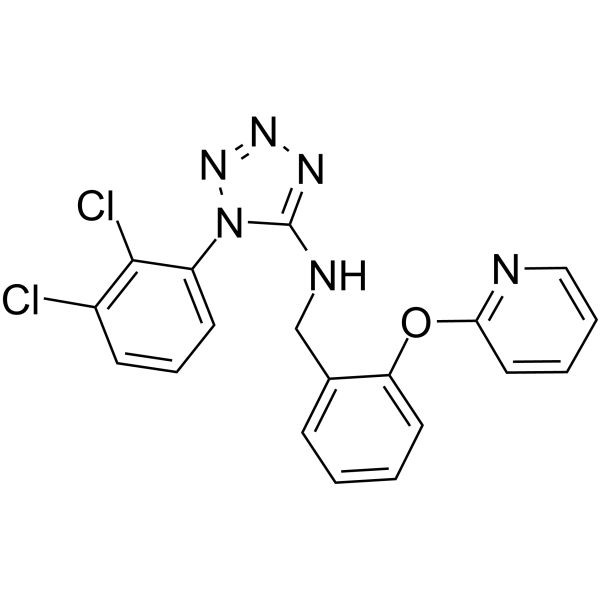
    P2X7 receptor antagonist-2 is a potent P2X7 receptor antagonist with a pIC50 value of 6.5-7.5. P2X7 receptor antagonist-2 has efficacy of combating neuroinflammation .
    P2X7 receptor antagonist-2
  • HY-123205

    KW-4354

    Histamine Receptor P2X Receptor 5-HT Receptor Apoptosis PERK p38 MAPK COX Inflammation/Immunology
    Oxatomide (KW-4354) is an orally active dual antagonist of the H1-histamine receptor and the P2X7 receptor, as well as an inhibitor of serotonin. Oxatomide possesses antihistaminic, antiallergic and anti-inflammatory activities. Oxatomide can be used in the research of allergic diseases .
    Oxatomide
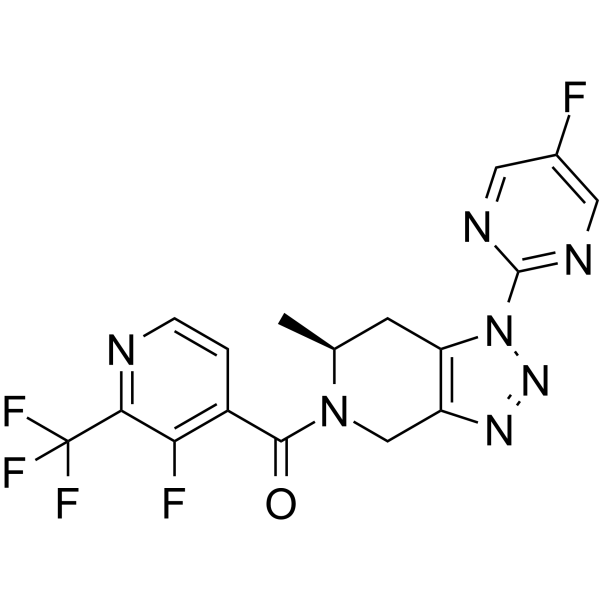
  • HY-117508

    P2X Receptor Neurological Disease
    JNJ-54175446 is a potent and selective brain penetrant P2X7 receptor antagonist, with pIC50s of 8.46 and 8.81 for hP2X7 receptor and rP2X7 receptor, respectively.
    JNJ-54175446
  • HY-N1478
    Gardenoside
    2 Publications Verification

    P2X Receptor Reactive Oxygen Species (ROS) Neurological Disease Inflammation/Immunology
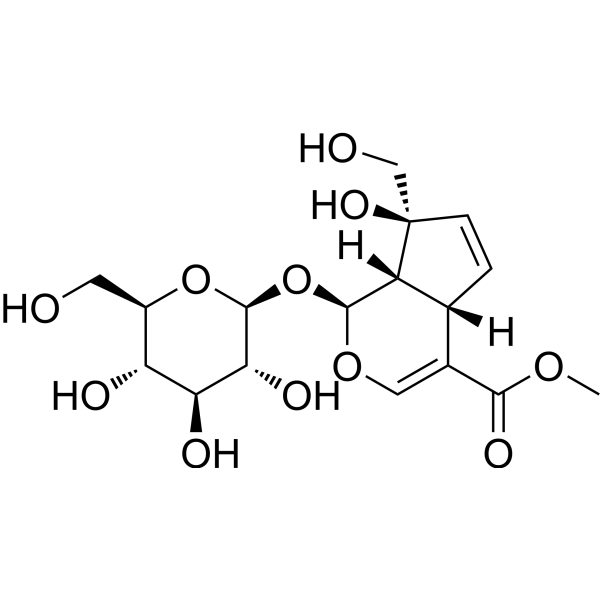
    Gardenoside is an orally active natural compound found in Gardenia fruits. Gardenoside reliefs chronic constriction injury (CCI)-induced neuropathic pain by regulating the P2X3 and P2X7 receptors. Gardenoside has an inhibitory effect on free fatty acids (FFA)-induced cellular steatosis. Gardenoside reduces reactive oxygen species (ROS). Gardenoside can be used for anti-inflammatory, antinociceptive and hepatoprotective study .
    Gardenoside
  • HY-N9182

    Physalien

    Adiponectin Receptor P2X Receptor Autophagy Inflammation/Immunology
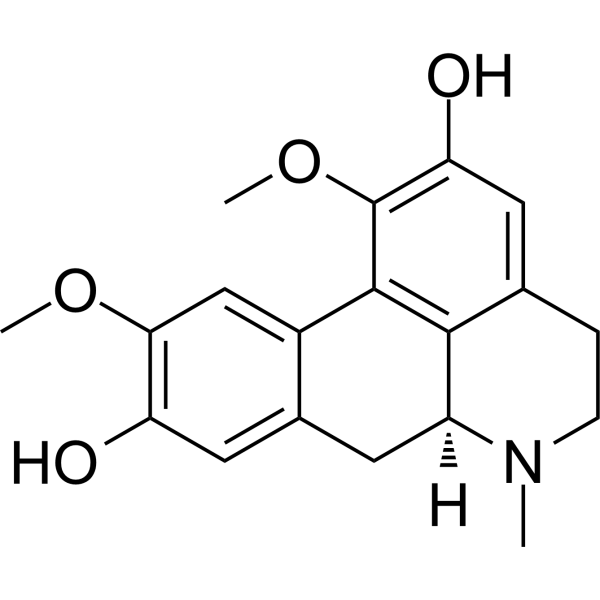
    Zeaxanthin dipalmitate (Physalien) is a wolfberry-derived carotenoid, has anti-inflammatory and anti-oxidative stress effects. Zeaxanthin dipalmitate directly interact with p2X7 receptor (Kd=81.2 nM) and adiponectin receptor 1 (AdipoR1; Kd=533 nM) in a positive dose-dependent manner. Zeaxanthin dipalmitate restores mitochondrial autophagy functions suppressed by ethanol intoxication. Zeaxanthin dipalmitate can be used in the research of alcoholic fatty liver disease (AFLD) and retinitis pigmentosa (RP) .
    Zeaxanthin dipalmitate
  • HY-13954
    A 839977
    1 Publications Verification

    P2X Receptor Neurological Disease Inflammation/Immunology
    A 839977 is a P2X7 selective antagonist; it blocks BzATP-evoked calcium influx at recombinant human, rat and mouse P2X7 receptors (IC50 values are 20 nM, 42 nM and 150 nM respectively) and reduces inflammatory and neuropathic pain in animal models; the antihyperalgesic effects of P2X7 receptor blockade are mediated by blocking the release of IL-1beta .
    A 839977
  • HY-137888A

    oATP trisodium salt

    P2X Receptor NOD-like Receptor (NLR) Inflammation/Immunology
    Oxidized ATP (oATP) trisodium salt is a broad-spectrum P2 receptor inhibitor. Oxidized ATP trisodium salt irreversibly antagonizes P2X7R activation. Oxidized ATP trisodium salt inhibits c-reactive protein (CRP)-induced NLRP3 inflammasome activation. Oxidized ATP trisodium salt can be used for research of atherosclerosis .
    Oxidized ATP trisodium salt
  • HY-N5025

    P2X Receptor Apoptosis ERK p38 MAPK c-Myc NF-κB Reactive Oxygen Species (ROS) Neurological Disease Inflammation/Immunology Cancer
    Bullatine A, a diterpenoid alkaloid, is a potent P2X7 antagonist. Bullatine A possesses anti-rheumatic, anti-inflammatory and anti-nociceptive effects. Bullatine A inhibits ATP-induced BV-2 cell death/apoptosis and P2X receptor-mediated inflammatory responses. Bullatine A suppresses glioma cell growth by targeting SIRT6. Bullatine A specifically attenuates pain hypersensitivity in rats. Bullatine A attenuates LPS (HY-D1056)-induced systemic inflammatory response by inhibiting the ROS/JNK/NF-κB pathway in mice. Bullatine A improves despair behavior in Chronic chronic social defeat stress (CSDS) mice. Bullatine A can be used for the study of inflammation, glioblastoma (GBM) and depression .
    Bullatine A
  • HY-15487

    PF-04905428

    P2X Receptor Neurological Disease
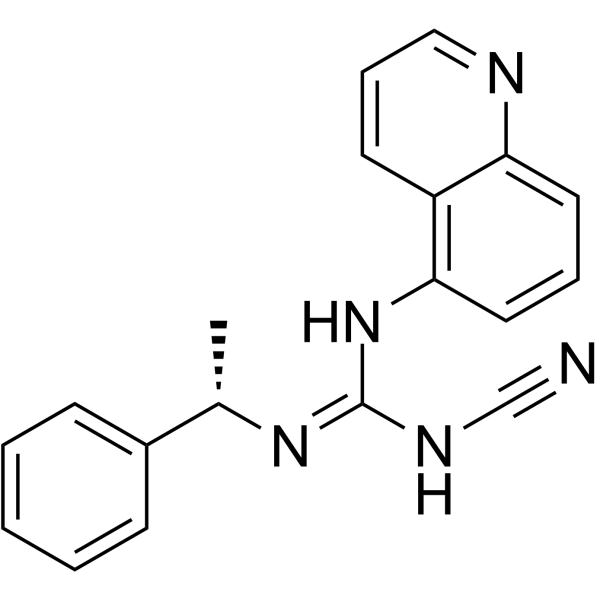
    CE-224535 is a selective P2X7 receptor antagonist.
    CE-224535
  • HY-132981

    P2X Receptor Neurological Disease
    Lu AF27139 is a potent, selective, and orally active antagonist of P2X7 receptor (IC50s of 12 and 2.4 nM for human and rat, Kis of 22, 54, and 13 nM for mouse, human, and rat, respectively). Lu AF27139 has rodent-active and CNS-penetrant character. Lu AF27139 has the potential for the research of CNS diseases .
    Lu AF27139
  • HY-124857

    7-Desacetoxy-6,7-dehydrogedunin

    PERK Prokineticin Receptor P2X Receptor Caspase NOD-like Receptor (NLR) Pyroptosis Tyrosinase Neurological Disease Metabolic Disease Inflammation/Immunology
    7DG (7-Desacetoxy-6,7-dehydrogedunin) is a PKR inhibitor, P2X7 purinergic receptor inhibitor, and skin-lightening agent. 7DG binds outside the ATP-catalytic domain of PKR, blocks the kinase activity-independent protein-protein interactions of PKR, inhibits the phosphorylation and activity of PKR, disrupts ASC assembly and caspase-1 activation, and suppresses the activation of the NLRP1 inflammasome. 7DG inhibits pyroptosis, suppresses the ATP-P2X7 signaling pathway, and abolishes ATP-induced increases in the expression levels of MITF, tyrosinase, PMEL/gp100, and melanin content. 7DG exerts skin-lightening effects in cultured skin in vitro. 7DG can be used in research related to chronic obstructive pulmonary disease, gout, type 2 diabetes, Alzheimer's disease, and hyperpigmentary skin disorders .
    7DG
  • HY-164426
    HEI3090
    1 Publications Verification

    P2X Receptor Interleukin Related IFNAR Inflammation/Immunology Cancer
    HEI3090 is a P2X7R activator. HEI3090 stimulates dendritic cells expressing P2X7R to produce IL-18, which subsequently promotes Natural Killer cells and CD4 T cells within tumors to produce IFN-γ, leading to a sustained antitumor response. HEI3090 can be used to enhance the efficacy of αPD-1 therapy in non-small cell lung cancer (NSCLC) .
    HEI3090
  • HY-B1901R

    (±)-Eperisone hydrochloride (Standard)

    P2X Receptor Reference Standards Neurological Disease
    Eperisone (hydrochloride) (Standard) is the analytical standard of Eperisone (hydrochloride). This product is intended for research and analytical applications. Eperisone Hydrochloride ((±)-Eperisone hydrochloride) is an orally active antispastic agent with a vasodilator effect, used for the research of muscle stiffness and pain. Eperisone Hydrochloride is a potent and selectively P2X7 receptor antagonist, also shows antagonism for human P2X3. Eperisone Hydrochloride works by relaxing both skeletal muscles and vascularsmooth muscles, demonstrating a variety of effects such as reduction ofmyotonia, improvement of circulationand and suppression of the pain reflex .
    Eperisone hydrochloride (Standard)
  • HY-18745

    Benzoylbenzoyl-ATP triethylammonium

    P2X Receptor Inflammation/Immunology Cancer
    BzATP triethylammonium acts as a P2X receptor agonist with pEC50s of 8.74, 5.26, 7.10, 7.50, 6.19, 6.31, 5.33 for P2X1, P2X2, P2X3, P2X2/3, P2X4 and P2X7, respectively . BzATP triethylammonium is potent at P2X7 receptors with EC50s of 3.6 μM and 285 μM for rat P2X7 and mouse P2X7, respectively .
    BzATP triethylammonium
  • HY-19888

    P2X Receptor Interleukin Related Neurological Disease Inflammation/Immunology
    GSK-1482160 is an orally active and blood-brain barrier penetrant P2X7 receptor (P2X7R) negative allosteric modulator with pIC50s of 8.5 (human) and 6.5 (rat). GSK-1482160 reduces the efficacy of ATP at the P2X7 receptor without affecting its affinity, thereby inhibiting the release of IL-1β. GSK-1482160 is an effective radioligand and can be labeled with radioactive isotopes like 11C or 18F to image P2X7R. GSK-1482160 can be used for the studies of chronic joint pain and chronic constriction injury (CCI) .
    GSK-1482160
  • HY-148558

    P2X Receptor Neurological Disease
    P2X7 receptor antagonist-3 is a potent P2X7 receptor antagonist with P2X7R IC50 values of 4.2 nM in humans and 6.8 nM in rats .
    P2X7 receptor antagonist-3
  • HY-175196

    P2X Receptor Infection Neurological Disease Inflammation/Immunology Cancer
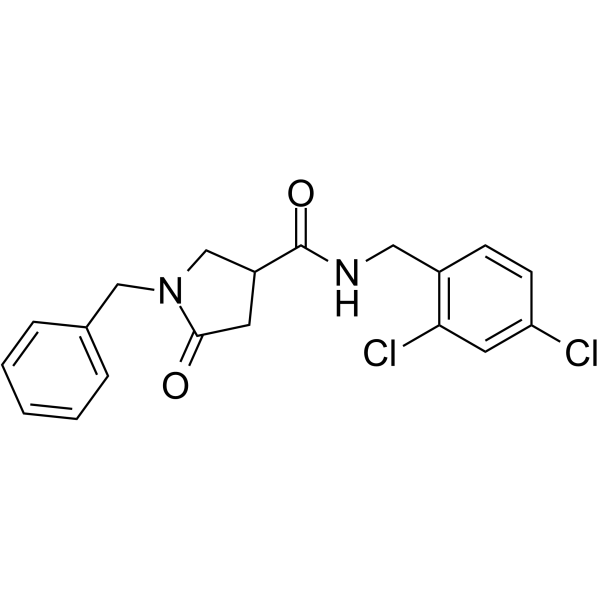
    P2X7 receptor antagonist-6 (Compound 2g) is a negative allosteric P2X7 receptor antagonist with an IC50 of 1.31  μM for hP2X7. P2X7 receptor antagonist-6 can be used for cancer, neurodegenerative, inflammatory, and infectious diseases research .
    P2X7 receptor antagonist-6
  • HY-145466

    P2X Receptor Neurological Disease
    EVT-401 (P2X7 receptor antagonist-1) is a purinergic P2X7 receptor antagonist. EVT-401 has efficacy of combating neuroinflammation .
    EVT-401
  • HY-162951

    P2X Receptor Cancer
    P2X7 receptor antagonist-5 (compund 13a) is a potent, orally active and long-lasting P2X7 receptor antagonist .
    P2X7 receptor antagonist-5
  • HY-18725

    P2X Receptor Interleukin Related Cardiovascular Disease Inflammation/Immunology
    P2X7-IN-2 (compound 58) is a P2X7 receptor inhibitor. P2X7-IN-2 inhibits IL-Iβ release with an IC50 value of 0.01 nM. P2X7-IN-2 can be used for the research of autoimmunity, inflammation and cardiovascular disease .
    P2X7-IN-2
  • HY-108670

    P2X Receptor Inflammation/Immunology
    AZ11645373 is a highly selective and potent antagonist at human but not rat P2X7 receptors,AZ11645373 inhibits ATP-evoked IL-1β release from lipopolysaccharide-activated THP-1 cells , with an IC50 value of 90 nM .
    AZ 11645373
  • HY-15469
    GW791343 dihydrochloride
    1 Publications Verification

    P2X Receptor Neurological Disease
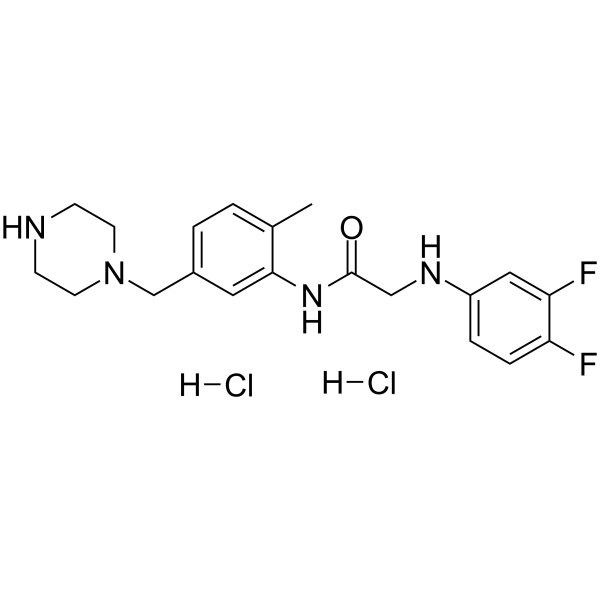
    GW791343 dihydrochloride is a potent human P2X7 receptor negative allosteric modulator (exhibits species-specific activity), produces a non-competitive antagonist effect on human P2X7 receptor, with a pIC50 of 6.9-7.2. GW791343 dihydrochloride can enhance ATP rhythm. GW791343 dihydrochloride can be used in study of neurological disease .
    GW791343 dihydrochloride
  • HY-123481

    P2X Receptor Metabolic Disease
    JNJ-42253432 is a CNS-penetrant, high-affinity and orally active P2X7 antagonist, with pKi values of 9.1 and 7.9 for rat and human P2X7 channels, respectively .
    JNJ-42253432
  • HY-128891

    P2X Receptor Neurological Disease
    Eperisone ((±)-Eperisone) is an antispasmodic agent and centrally acting muscle relaxant useful in the study of diseases characterized by muscle stiffness and pain. Eperisone acts by relaxing skeletal and vascular smooth muscle, resulting in vasodilation, decreased muscle tone, improved circulation, and inhibition of pain reflexes. Eperisone is also a potent P2X7 receptor antagonist .
    Eperisone
  • HY-179373

    P2X Receptor Cardiovascular Disease Neurological Disease Cancer
    UB-MBX-46 is a potent and selective P2X7 receptor antagonist with IC50s of 0.514 nM (hP2X7R), 40.6 nM (rP2X7R), and 4.52 nM (mP2X7R), respectively. UB-MBX-46 interacts with the classical allosteric pocket of the human P2X7 receptor. UB-MBX-46 can be used for cancer, atherosclerosis, and neurode generation research .
    UB-MBX-46
  • HY-18725A
    P2X7-IN-2 TFA
    1 Publications Verification

    P2X Receptor Interleukin Related Cardiovascular Disease Inflammation/Immunology
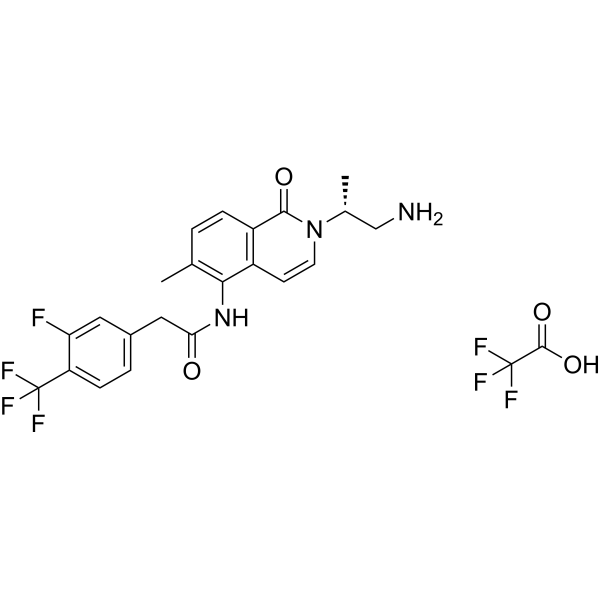
    P2X7-IN-2 TFA (compound 58) is a P2X7 receptor inhibitor. P2X7-IN-2 TFA inhibits IL-Iβ release with an IC50 value of 0.01 nM. P2X7-IN-2 TFA can be used for the research of autoimmunity, inflammation and cardiovascular disease .
    P2X7-IN-2 TFA
  • HY-156986

    P2X Receptor Neurological Disease
    ITH15004 is a CNS-penetrated P2X7 antagonist, used for the study of neurodegenerative diseases .
    ITH15004
  • HY-15470

    P2X Receptor Neurological Disease
    GW791343 trihydrochloride is a potent human P2X7 receptor negative allosteric modulator (exhibits species-specific activity), produces a non-competitive antagonist effect on human P2X7 receptor, with a pIC50 of 6.9-7.2. GW791343 trihydrochloride can enhance ATP rhythm. GW791343 trihydrochloride can be used in study of neurological disease .
    GW791343 trihydrochloride
  • HY-W015627

    Drug Intermediate Inflammation/Immunology Cancer
    3,5-dichloropyridine is a drug intermediate that can be used to synthesize metal-organic framework (MOF) materials and P2X7 receptor antagonists .
    3,5-Dichloropyridine
  • HY-RS09912

    Small Interfering RNA (siRNA) Others

    P2rx7 Mouse Pre-designed siRNA Set A contains three designed siRNAs for P2rx7 gene (Mouse), as well as a negative control, a positive control, and a FAM-labeled negative control.

    P2rx7 Mouse Pre-designed siRNA Set A
    P2rx7 Mouse Pre-designed siRNA Set A
  • HY-124300

    P2X Receptor Others
    JNJ-54166060 is a potent and selective P2X7 receptor antagonist, with IC50s of 4/115/72 nM for human/rat/mouse P2X7 receptor, respectively .
    JNJ-54166060
  • HY-124300A

    P2X Receptor Neurological Disease
    (S)-JNJ-54166060 is an enantiomer of JNJ 54166060. JNJ 54166060 is a potent P2X7 antagonist .
    (S)-JNJ-54166060
  • HY-N1478R

    Reference Standards P2X Receptor Reactive Oxygen Species (ROS) Neurological Disease Inflammation/Immunology
    Gardenoside is an orally active natural compound found in Gardenia fruits. Gardenoside reliefs chronic constriction injury (CCI)-induced neuropathic pain by regulating the P2X3 and P2X7 receptors. Gardenoside has an inhibitory effect on free fatty acids (FFA)-induced cellular steatosis. Gardenoside reduces reactive oxygen species (ROS). Gardenoside can be used for anti-inflammatory, antinociceptive and hepatoprotective study .
    Gardenoside (Standard)
  • HY-123382

    Drug Isomer Neurological Disease Inflammation/Immunology
    GSK-1482160 isomer is the isomer of GSK-1482160 (HY-19888). GSK-1482160 is an orally active and blood-brain barrier penetrant P2X7 receptor (P2X7R) negative allosteric modulator with pIC50s of 8.5 (human) and 6.5 (rat). GSK-1482160 reduces the efficacy of ATP at the P2X7 receptor without affecting its affinity, thereby inhibiting the release of IL-1β. GSK-1482160 is an effective radioligand and can be labeled with radioactive isotopes like 11C or 18F to image P2X7R. GSK-1482160 can be used for the studies of chronic joint pain and chronic constriction injury (CCI).
    GSK-1482160 (isomer)
  • HY-19427

    P2X Receptor Cancer
    AZD9056 is a P2X7 purinergic receptor antagonist with anticancer activity. AZD9056 can inhibit the invasion and metastasis of cancer stem cells .
    AZD9056
  • HY-15488AR

    P2X Receptor Neurological Disease
    A 438079 (hydrochloride) (Standard) is the analytical standard of A 438079 (hydrochloride). This product is intended for research and analytical applications. A 438079 (hydrochloride) is a potent, and selective P2X7 receptor antagonist with pIC50 of 6.9.
    A 438079 hydrochloride (Standard)
  • HY-15488R

    P2X Receptor Neurological Disease
    A 438079 (Standard) is the analytical standard of A 438079. This product is intended for research and analytical applications. A 438079 is a potent, and selective P2X7 receptor antagonist with pIC50 of 6.9.
    A 438079 (Standard)
  • HY-123205R

    KW-4354 (Standard)

    Reference Standards Histamine Receptor P2X Receptor 5-HT Receptor Apoptosis PERK p38 MAPK COX Inflammation/Immunology
    Oxatomide (Standard) (KW-4354 (Standard)) is the analytical standard of Oxatomide (HY-123205). This product is intended for research and analytical applications. Oxatomide (KW-4354) is an orally active dual antagonist of the H1-histamine receptor and the P2X7 receptor, as well as an inhibitor of serotonin. Oxatomide possesses antihistaminic, antiallergic and anti-inflammatory activities. Oxatomide can be used in the research of allergic diseases .
    Oxatomide (Standard)

Inquiry Online

Your information is safe with us. * Required Fields.

Salutation


Country or Region *

Applicant Name *


Organization Name *

Department *


Email Address *


Product Name *

Cat. No.


Requested quantity *

Phone Number *


Remarks

Inquiry Online

Inquiry Information

Product Name:
Cat. No.:
Quantity:
MCE Japan Authorized Agent:

