Search Result
Results for "
PHD inhibitor
" in MedChemExpress (MCE) Product Catalog:
1
Isotope-Labeled Compounds
| Cat. No. |
Product Name |
Target |
Research Areas |
Chemical Structure |
-
- HY-13426
-
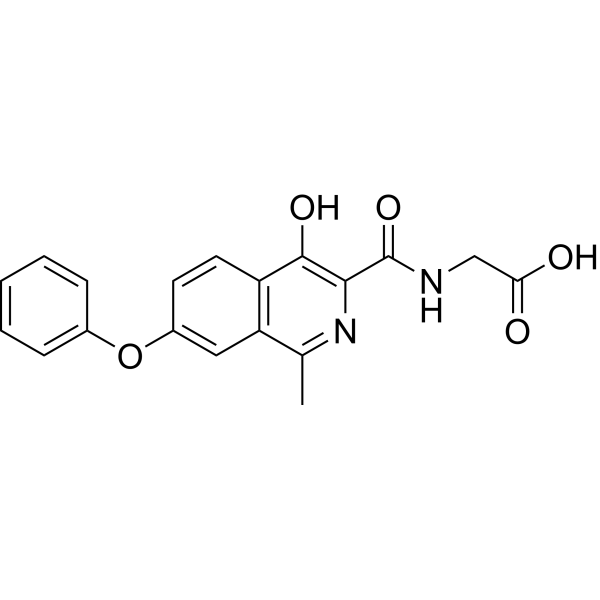
Roxadustat
Maximum Cited Publications
59 Publications Verification
FG-4592
|
HIF/HIF Prolyl-Hydroxylase
Ferroptosis
|
Infection
Cancer
|
|
Roxadustat is an orally active hypoxia-inducible factor prolyl-hydroxylase (PHD) inhibitor (HIF-PHI) that promotes erythropoiesis through increasing endogenous erythropoietin, improving iron regulation, and reducing hepcidin .
|
-
-
- HY-15468
-
|
|
HIF/HIF Prolyl-Hydroxylase
|
Cancer
|
|
IOX2, a chemical probe, is a specific prolyl hydroxylase-2 (PHD2) inhibitor with IC50 of 22 nM. IOX2 regulates platelet function and arterial thrombosis by upregulating HIF-1α expression and inhibiting ROS production. IOX2 can be used in the study of thrombotic diseases .
|
-
-
- HY-12654
-
|
BAY 85-3934
|
HIF/HIF Prolyl-Hydroxylase
|
Cardiovascular Disease
|
|
Molidustat (BAY 85-3934) is an orally active inhibitor of hypoxia-inducible factor prolyl hydroxylase (HIF-PH) with IC50 values of 480 nM, 280 nM, and 450 nM for PHD1, PHD2, and PHD3, respectively. Molidustat can elevate the levels of circulating erythropoietin (EPO) to near-normal physiological ranges. Molidustat can be utilized in the research of renal anemia .
|
-
-
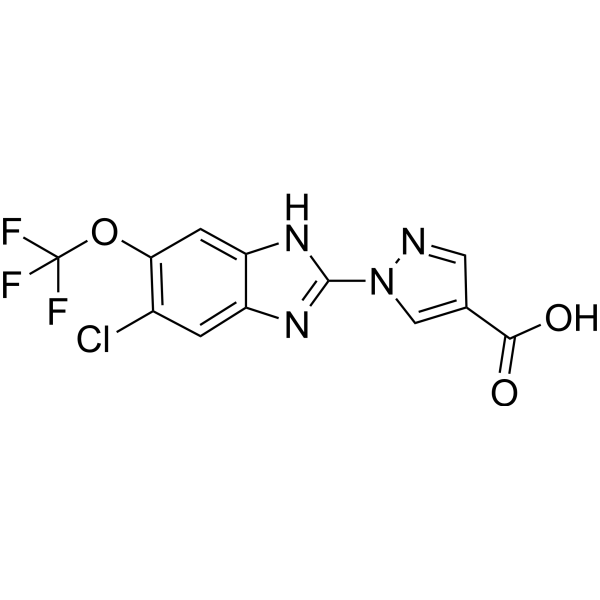
- HY-120110
-
-
-
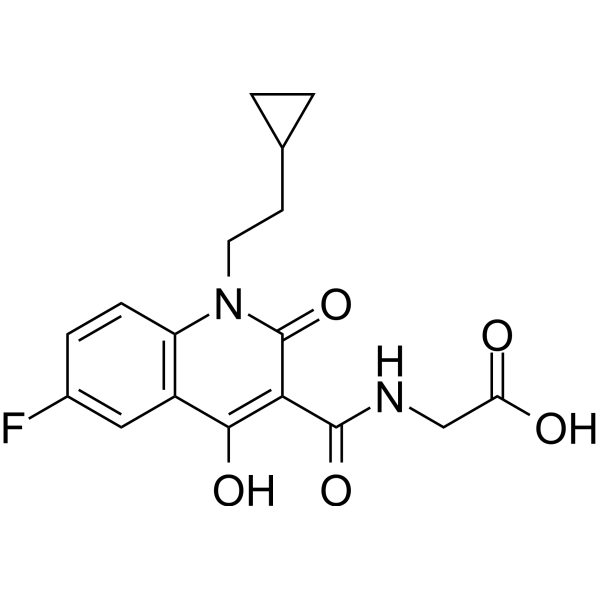
- HY-12832
-
-
-
- HY-101023
-
-
-
- HY-112144
-
|
|
HIF/HIF Prolyl-Hydroxylase
|
Metabolic Disease
Inflammation/Immunology
|
|
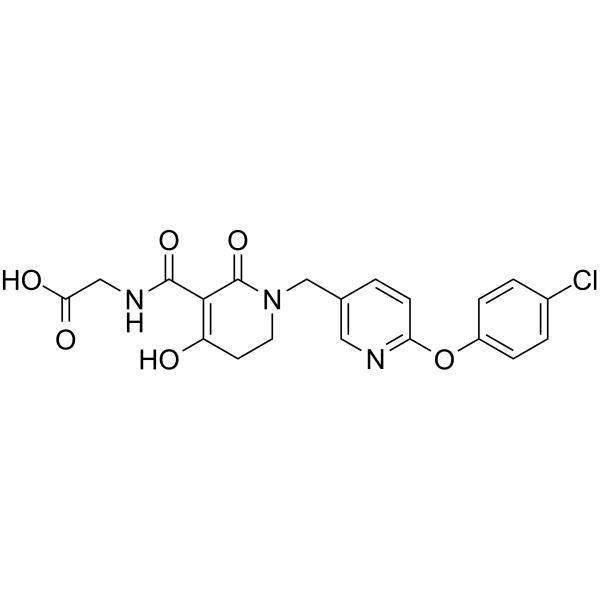
TP0463518 is an orally active, competitive pan-inhibitor of hypoxia-inducible factor prolyl hydroxylases PHD1/2/3. TP0463518 competitively inhibits human PHD1 (IC50=18 nM), PHD2 (Ki=5.3 nM), and PHD3 (IC50=63 nM), and targets monkey PHD2 with an IC50 of 22 nM. TP0463518 inhibits PHD-catalyzed hydroxylation to stabilize HIFα, thereby upregulating erythropoietin (EPO) expression and enhancing intestinal iron absorption (such as increased DMT-1 and dCYTb expression), improving anemia. TP0463518 is mainly used for the research of renal anemia and inflammatory anemia .
|
-
-
- HY-N1477
-
-
-
- HY-W016409
-
|
Protocatechuic acid ethyl ester
|
HIF/HIF Prolyl-Hydroxylase
Reactive Oxygen Species (ROS)
NO Synthase
Autophagy
Apoptosis
|
Metabolic Disease
Cancer
|
|
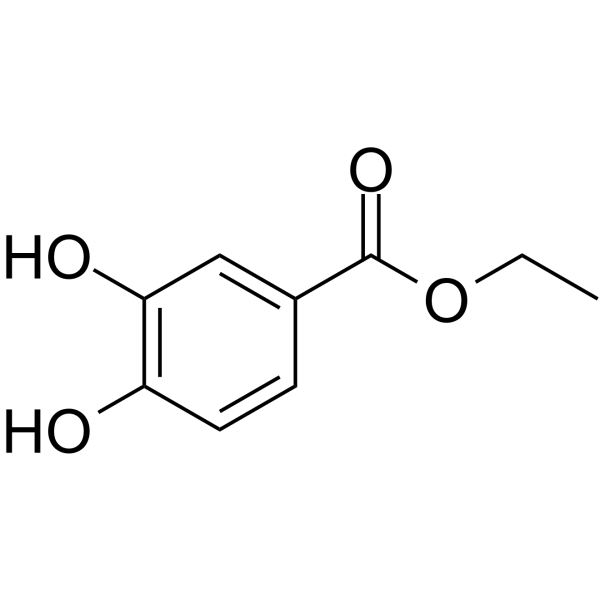
Ethyl 3,4-dihydroxybenzoate (Protocatechuic acid ethyl ester) is an orally effective, blood-brain barrier-permeable, competitive prolyl hydroxylase (PHD) inhibitor that inhibits the hydroxylation modification of hypoxia-inducible factor (HIF) by PHD. Ethyl 3,4-dihydroxybenzoate stabilizes HIF-1α by inhibiting PHD, activates downstream pathways to induce autophagy and apoptosis of tumor cells, and regulates inflammatory responses, inhibits the NF-κB pathway, improves vascular permeability, and promotes osteoblast differentiation. Ethyl 3,4-dihydroxybenzoate has anti-tumor, anti-hypoxic injury, and bone metabolism regulation effects. It can also be used in the research of cardiovascular protection (such as reducing myocardial ischemic damage), bone tissue engineering (promoting osteogenesis/inhibiting osteoclast differentiation), and prevention and treatment of high-altitude cerebral edema .
|
-
-
- HY-101449
-
-
-
- HY-15641
-
|
IOX3; YM311
|
HIF/HIF Prolyl-Hydroxylase
|
Metabolic Disease
|
|
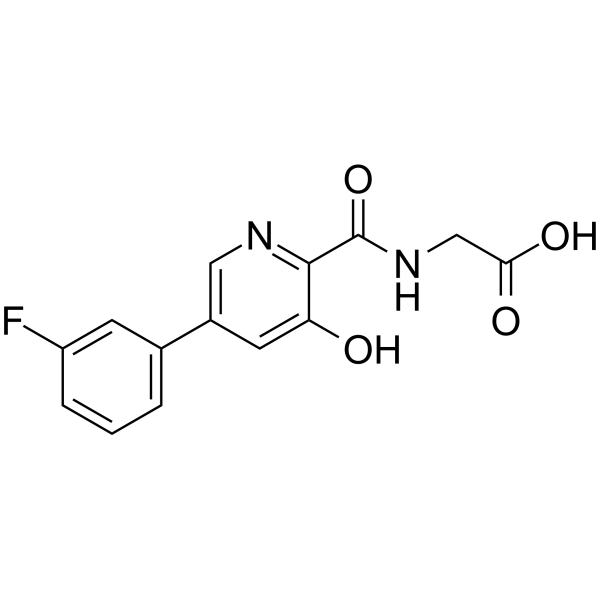
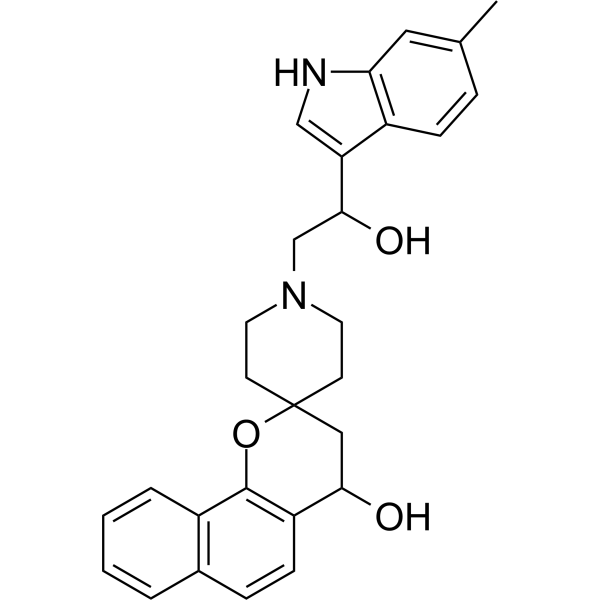
FG-2216 (IOX3) is a potent and orally active inhibitor of HIF prolyl hydroxylase-2 (PHD2), with an IC50 of 3.9 μM. FG-2216 induces robust erythropoietin and modest fetal hemoglobin in vivo .
|
-
-
- HY-12315
-
|
N-Oxaloglycine
|
Histone Demethylase
HIF/HIF Prolyl-Hydroxylase
|
Cancer
|
|
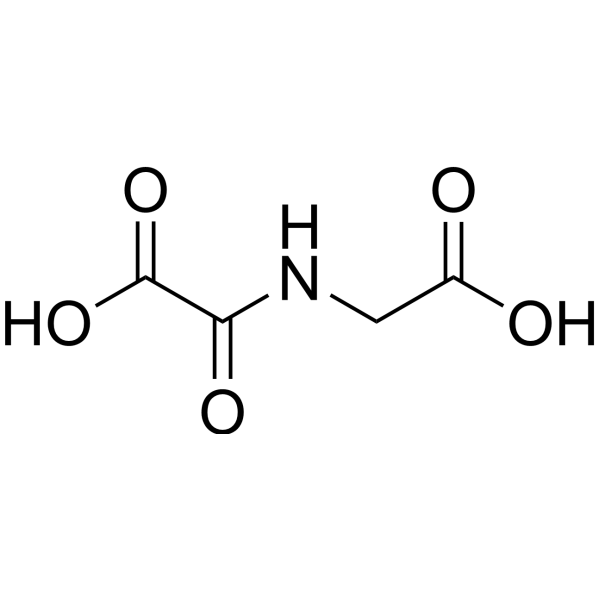
N-Oxalylglycine (N-Oxaloglycine) is a Jumonji C-domain-containing histone lysine demethylase inhibitor. N-Oxalylglycine inhibits JMJD2A, JMJD2C and JMJD2D. N-Oxalylglycine also inhibits HIF prolylhydroxylase domain-1 (PHD-1) and PHD-2, with an IC50 of 2.1 μM and 5.6 μM, respectively .
|
-
-
- HY-158341
-
|
|
HIF/HIF Prolyl-Hydroxylase
Apoptosis
|
Cancer
|
|
IOX5 is a selective prolyl hydroxylase (PHD) inhibitor with an IC50 of 0.19 μM for PHD2. IOX5 stabilizes HIF-1α in acute myeloid leukemia (AML) cells, inhibits cell proliferation and induces apoptosis. IOX5 has anti-leukemia activity .
|
-
-
- HY-139287
-
M1002
2 Publications Verification
|
HIF/HIF Prolyl-Hydroxylase
|
Cancer
|
|
M1002 is a hypoxia-inducible factor-2 (HIF-2) agonist, and can enhance the expression of HIF-2 target genes. M1002 shows synergy with prolyl-hydroxylase domain (PHD) inhibitors .
|
-
-
- HY-123422
-
|
|
HIF/HIF Prolyl-Hydroxylase
|
Cardiovascular Disease
|
|
GSK360A is a potent and orally active HIF-PHD inhibitor with IC50 values of 10, 100, and 126 nM for PHD1, PHD2, and PHD3, respectively. GSK360A activates the HIF-1 alpha pathway and protect the failing heart after myocardial infarction (MI) .
|
-
-
- HY-113649
-
|
|
HIF/HIF Prolyl-Hydroxylase
|
Cancer
|
|
AKB-6899, a prolyl hydroxylase domain 3 (PHD3) inhibitor, is a selective HIF-2α stabilizer. AKB-6899 also increases soluble form of the VEGF receptor (sVEGFR-1) production from GM-CSF-treated macrophages, and has antitumor and antiangiogenic effects .
|
-
-
- HY-170522
-
|
|
HIF/HIF Prolyl-Hydroxylase
|
Inflammation/Immunology
|
|
ISM012-042 is an orally active PHD1 and PHD2 inhibitor with IC50 values of 1.9 and 2.5 nM, respectively. ISM012-042 (2.5 μM) can protect Caco-2 cells from DSS-induced barrier disruption. In lipopolysaccharide (LPS)-induced mouse bone marrow-derived dendritic cells (BMDC), ISM012-042 has anti-inflammatory effects and can dose-dependently reduce the expression of IL-12 subunit IL-12p35 and TNF. ISM012-042 restores intestinal barrier function and alleviates intestinal inflammation in various experimental colitis models. ISM012-042 can be used for intestinal mucosal repair and research into immune diseases .
|
-
-
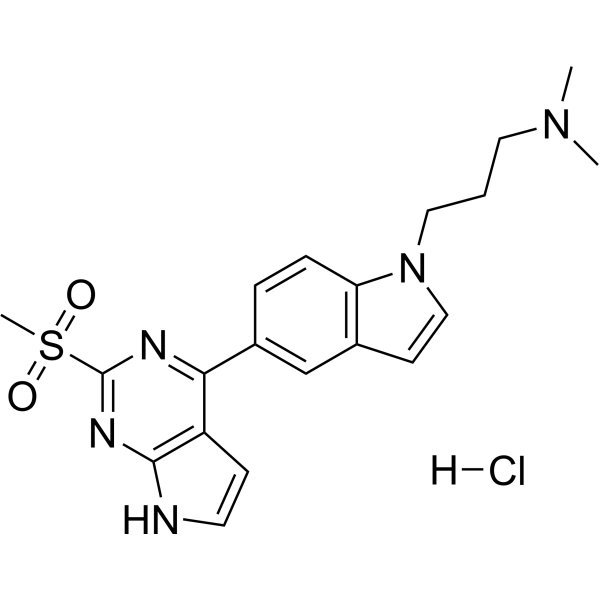
- HY-141703A
-
|
|
Epigenetic Reader Domain
|
Cancer
|
|
DC-BPi-11 hydrochloride is an inhibitor of bromodomain PHD finger transcription factor (BPTF), with an IC50 value of 698 nM. DC-BPi-11 hydrochloride shows remarkable inhibition against leukemia cell proliferation .
|
-
-
- HY-157891
-
|
|
Apoptosis
|
Cancer
|
|
JBC117 is a novel anticancer lead compound targeting Pygo2 PHD. JBC117 can effectively antagonize the cell effect of β-catenin-dependent activity and inhibit the migration and invasion of cancer cells. JBC117 can induce apoptosis .
|
-
-
- HY-128872
-
|
EHP-101; VCE-004.8
|
PPAR
Cannabinoid Receptor
HIF/HIF Prolyl-Hydroxylase
|
Metabolic Disease
Inflammation/Immunology
|
|
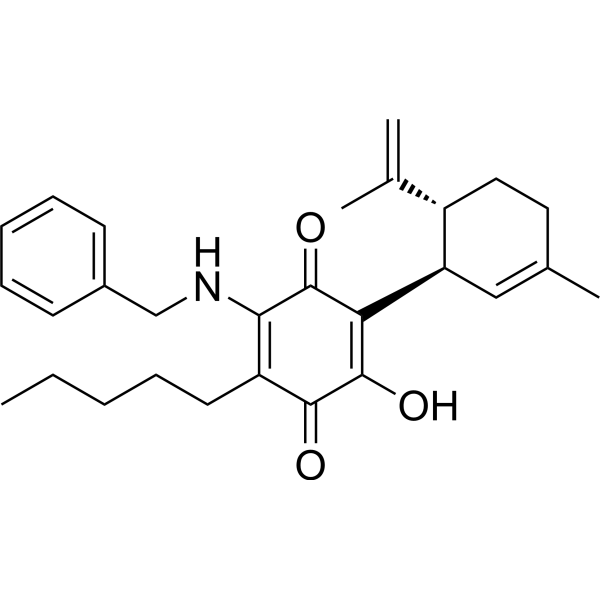
Etrinabdione (EHP-101; VCE-004.8) is an orally active, specific PPARγ and CB2 receptor dual agonist. Etrinabdione inhibits prolyl-hydroxylases (PHDs) and activates the HIF pathway. Etrinabdione, a semi-synthetic multitarget cannabinoquinoid, has potent anti-inflammatory activity. Etrinabdione attenuates adipogenesis and prevents diet-induced obesity .
|
-
-
- HY-168533
-
|
|
HIF/HIF Prolyl-Hydroxylase
|
Metabolic Disease
|
|
ZG-2305 is a potent, orally active and selective factor inhibiting hypoxia-inducible factor (FIH) inhibitor with Ki values of 79.6, 2786 nM for FIH, PHD2, respectively. ZG-2305 increases the expression of EGLN3 gene. ZG-2305 decreases the cellular triglycerides levels and reduces lipid accumulation. ZG-2305 has the potential for the research of obesity and fatty liver disease .
|
-
-
- HY-136300
-
-
-
- HY-119351
-
-
-
- HY-126299
-
|
|
Epigenetic Reader Domain
|
Others
|
|
NVS-BPTF-1, a chemical probe, is a selective inhibitor for bromodomain and PHD finger containing transcription factor (BPTF), with KD of 71 nM .
|
-
-
- HY-141703
-
|
|
Epigenetic Reader Domain
|
Cancer
|
|
DC-BPi-11 is an inhibitor of bromodomain PHD finger transcription factor (BPTF), with an IC50 value of 698 nM. DC-BPi-11 shows remarkable inhibition against leukemia cell proliferation .
|
-
-
- HY-151364
-
|
|
HDAC
|
Cancer
|
|
HDAC6/8/BRPF1-IN-1 is a dual inhibitor of both HDAC6/8 and the bromodomain and PHD finger containing protein 1 (BRPF1). HDAC6/8/BRPF1-IN-1 has inhibitory activity for HDAC1, HDAC6 and HDAC8 with IC50 values of 797 nM, 344 nM and 908 nM, respectively. HDAC6/8/BRPF1-IN-1 has inhibitory activity for BRPF1 with an Kd value of 175.2 nM. HDAC6/8/BRPF1-IN-1 can be used for the research of cancer .
|
-
-
- HY-112441
-
-
-
- HY-145431
-
|
|
Epigenetic Reader Domain
Parasite
|
Infection
|
|
(S)-GSK1379725A (compound AU1) is a selective bromodomain and PHD finger containing transcription factor (BPTF) bromodomain inhibitor with a Kd of 2.8 μM. (S)-GSK1379725A shows to be selective for BPTF over BRD4 bromodomain. (S)-GSK1379725A shows antimalarial activity .
|
-
-
- HY-W747868
-
|
|
HIF/HIF Prolyl-Hydroxylase
|
Cardiovascular Disease
|
|
Molidustat sodium is an orally active inhibitor of hypoxia-inducible factor prolyl hydroxylase (HIF-PH) with IC50 values of 480 nM, 280 nM, and 450 nM for PHD1, PHD2, and PHD3, respectively. Molidustat sodium can elevate the levels of circulating erythropoietin (EPO) to near-normal physiological ranges. Molidustat sodium can be utilized in the research of renal anemia .
|
-
-
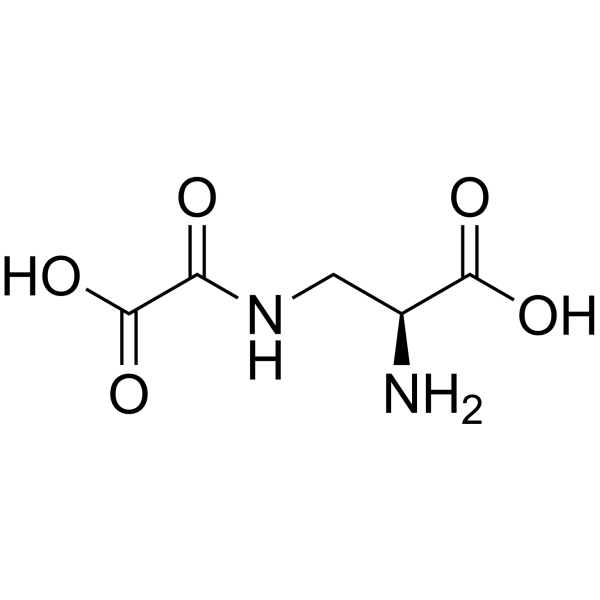
- HY-N6030
-
|
(Rac)-Dencichin; (Rac)-ODAP
|
HIF/HIF Prolyl-Hydroxylase
|
Others
|
|
(Rac)-Dencichine ((Rac)-Dencichin) is the racemate of Dencichin. Dencichin is a non-protein amino acid originally extracted from Panax notoginseng, and can inhibit HIF-prolyl hydroxylase-2 (PHD-2) activity .
|
-
-
- HY-403658
-
-
-
- HY-13426R
-
|
FG-4592 (Standard)
|
Reference Standards
HIF/HIF Prolyl-Hydroxylase
Ferroptosis
|
Cancer
|
|
Roxadustat (Standard) is the analytical standard of Roxadustat. This product is intended for research and analytical applications. Roxadustat is an orally active hypoxia-inducible factor (HIF) prolyl-hydroxylase (PHD) inhibitor (HIF-PHI) that promotes erythropoiesis through increasing endogenous erythropoietin, improving iron regulation, and reducing hepcidin .
|
-
-
- HY-15641R
-
|
IOX3 (Standard); YM311 (Standard)
|
HIF/HIF Prolyl-Hydroxylase
Reference Standards
|
Metabolic Disease
|
|
FG-2216 (Standard) is the analytical standard of FG-2216. This product is intended for research and analytical applications. FG-2216 (IOX3) is a potent and orally active inhibitor of HIF prolyl hydroxylase-2 (PHD2), with an IC50 of 3.9 μM. FG-2216 induces robust erythropoietin and modest fetal hemoglobin in vivo .
|
-
-
- HY-163148
-
-
-
- HY-170917
-
|
|
HIF/HIF Prolyl-Hydroxylase
|
|
|
PHD2-IN-4 (compound 1) is a PHD2 inhibitor. PHD2-IN-4 inhibits PHD2 with an IC50 of 4 nM. PHD2-IN-4 is potential for chronic kidney disease research .
|
-
-
- HY-15692
-
-
-
- HY-139993
-
-
-
- HY-176408
-
-
-
- HY-162438
-
|
|
HIF/HIF Prolyl-Hydroxylase
|
Metabolic Disease
|
|
PHD2-IN-2 (Compound 12) is a PHD2 inhibitor, with an IC50 of 34.3 nM. PHD2-IN-2 has high erythropoietin (EPO) inducing activity, with an EC50 of 6.79 μM. PHD2-IN-2 can be used for the research of anemia, ischemia, and hypoxia .
|
-
-
- HY-155009
-
|
|
HIF/HIF Prolyl-Hydroxylase
|
Others
|
|
PHD2-IN-1 is a potent and orally active inhibitor of HIF prolyl hydroxylase 2 (PHD2) with an IC50 of 22.53 nM. PHD2-IN-1 can be used for anemia research .
|
-
-
- HY-177271
-
|
|
HIF/HIF Prolyl-Hydroxylase
|
Inflammation/Immunology
|
|
PHD2-IN-6 (Example 89) is a HIF prolyl hydroxylase 2 (PHD2) inhibitor with an IC50 of 31.6 nM. PHD2-IN-6 stimulates encoding erythropoietin (EPO) production. PHD2-IN-6 can be used for inflammatory diseases like inflammatory bowel disease (IBD) and rheumatoid arthritis research .
|
-
-
- HY-144332
-
|
|
HDAC
HIF/HIF Prolyl-Hydroxylase
|
Cancer
|
|
PHD2/HDACs-IN-1 is a potent PHD2/HDACs hybrid inhibitor (IC50s of 1.15 μM, 19.75 μM, 26.60 μM and 15.98 μM for PHD2, HDAC1, HDAC2 and HDAC6, respectively). PHD2/HDACs-IN-1 is a low-toxicity renoprotective agent for research of cisplatin-induced acute kidney injury (AKI) .
|
-
-
- HY-131346
-
|
|
HIF/HIF Prolyl-Hydroxylase
|
Cardiovascular Disease
|
|
HIF-PHD-IN-1 is an orally active inhibitor of hypoxia-inducible factor prolyl hydroxylase domain (HIF-PHD), with an IC50 of 54 nM for hHIF-PHD2. HIF-PHD-IN-1 is promising therapeutic agents for renal anemia .
|
-
-
- HY-124133
-
|
|
HIF/HIF Prolyl-Hydroxylase
|
Cardiovascular Disease
|
|
JNJ-42905343 is an orally active and highly selective prolyl hydroxylase (PHD1/2/3) inhibitor with pKI values of 8.07, 7.48 and 7.27 for
PHD1, PHD2 and PHD3, respectively. JNJ-42905343 is promising for research of functional iron deficiency (FID) and anemia of chronic disease (ACD) .
|
-
-
- HY-172257
-
|
|
HIF/HIF Prolyl-Hydroxylase
|
Cancer
|
|
HIF-PHD-IN-4 (Compound 13) is an orally active PHD2 inhibitor with an IC50 of 100 nM. HIF-PHD-IN-4 can effectively enhance the mobilization of hematopoietic stem cells induced by G-CSF in mice at a dose of 2 mg/kg. HIF-PHD-IN-4 is suitable for research in the field of tumor therapy .
|
-
-
- HY-156526
-
|
|
HIF/HIF Prolyl-Hydroxylase
|
Others
|
|
PHD-IN-1 (compound 80) is a potent inhibitor of PHD2,with an IC50 value of ≤5 nM. PHD-IN-1 shows EC50s of 2.5 μM in EPO Elisa assay both in Caco2-HIFla-HiBiT-clone-1 cells and Hep3B cells,respectively .
|
-
-
- HY-12315R
-
|
N-Oxaloglycine (Standard)
|
Histone Demethylase
HIF/HIF Prolyl-Hydroxylase
Reference Standards
|
Cancer
|
|
N-Oxalylglycine (Standard) is the analytical standard of N-Oxalylglycine. This product is intended for research and analytical applications. N-Oxalylglycine (N-Oxaloglycine) is a Jumonji C-domain-containing histone lysine demethylase inhibitor. N-Oxalylglycine inhibits JMJD2A, JMJD2C and JMJD2D. N-Oxalylglycine also inhibits HIF prolylhydroxylase domain-1 (PHD-1) and PHD-2, with an IC50 of 2.1 μM and 5.6 μM, respectively .
|
-
-
- HY-170914
-
|
|
HIF/HIF Prolyl-Hydroxylase
|
Metabolic Disease
|
|
JPHM-2-167 (Compound 11) is a selective PHD (prolyl hydroxylase domain enzyme) inhibitor. JPHM-2-167 inhibits PHD2, PHD3 with IC50s of 0.253 μM and 3.95 μM, respectively. JPHM-2-167 can be used for chronic kidney disease .
|
-
-
- HY-12654R
-
|
BAY 85-3934 (Standard)
|
HIF/HIF Prolyl-Hydroxylase
Reference Standards
|
Cardiovascular Disease
|
|
Molidustat (Standard) is the analytical standard of Molidustat. This product is intended for research and analytical applications. Molidustat (BAY 85-3934) is an orally active inhibitor of hypoxia-inducible factor prolyl hydroxylase (HIF-PH) with IC50 values of 480 nM, 280 nM, and 450 nM for PHD1, PHD2, and PHD3, respectively. Molidustat can elevate the levels of circulating erythropoietin (EPO) to near-normal physiological ranges. Molidustat can be utilized in the research of renal anemia .
|
-
-
- HY-170915
-
|
|
HIF/HIF Prolyl-Hydroxylase
|
Others
|
|
DDO-3055 is an orally active PHD2 inhibitor that can be used in the research of anemia associated with chronic kidney disease .
|
-
- HY-161660
-
-
- HY-W778057
-
|
Protocatechuic acid ethyl ester-13C3
|
Reactive Oxygen Species (ROS)
|
Cancer
|
|
Ethyl 3,4-Dihydroxybenzoate- 13C3 (Protocatechuic acid ethyl ester- 13C3) is the 13C-labeled Ethyl 3,4-dihydroxybenzoate (HY-W016409). Ethyl 3,4-dihydroxybenzoate (Protocatechuic acid ethyl ester) is an orally effective, blood-brain barrier-permeable, competitive prolyl hydroxylase (PHD) inhibitor that inhibits the hydroxylation modification of hypoxia-inducible factor (HIF) by PHD. Ethyl 3,4-dihydroxybenzoate stabilizes HIF-1α by inhibiting PHD, activates downstream pathways to induce autophagy and apoptosis of tumor cells, and regulates inflammatory responses, inhibits the NF-κB pathway, improves vascular permeability, and promotes osteoblast differentiation. Ethyl 3,4-dihydroxybenzoate has anti-tumor, anti-hypoxic injury, and bone metabolism regulation effects. It can also be used in the research of cardiovascular protection (such as reducing myocardial ischemic damage), bone tissue engineering (promoting osteogenesis/inhibiting osteoclast differentiation), and prevention and treatment of high-altitude cerebral edema .
|
-
- HY-W016409R
-
|
Protocatechuic acid ethyl ester (Standard)
|
Reference Standards
HIF/HIF Prolyl-Hydroxylase
Reactive Oxygen Species (ROS)
NO Synthase
Autophagy
Apoptosis
|
Metabolic Disease
Cancer
|
|
Ethyl 3,4-dihydroxybenzoate (Standard) (Protocatechuic acid ethyl ester (Standard)) is the analytical standard of Ethyl 3,4-dihydroxybenzoate (HY-W016409). This product is intended for research and analytical applications. Ethyl 3,4-dihydroxybenzoate (Protocatechuic acid ethyl ester) is an orally effective, blood-brain barrier-permeable, competitive prolyl hydroxylase (PHD) inhibitor that inhibits the hydroxylation modification of hypoxia-inducible factor (HIF) by PHD. Ethyl 3,4-dihydroxybenzoate stabilizes HIF-1α by inhibiting PHD, activates downstream pathways to induce autophagy and apoptosis of tumor cells, and regulates inflammatory responses, inhibits the NF-κB pathway, improves vascular permeability, and promotes osteoblast differentiation. Ethyl 3,4-dihydroxybenzoate has anti-tumor, anti-hypoxic injury, and bone metabolism regulation effects. It can also be used in the research of cardiovascular protection (such as reducing myocardial ischemic damage), bone tissue engineering (promoting osteogenesis/inhibiting osteoclast differentiation), and prevention and treatment of high-altitude cerebral edema .
|
-
- HY-112678
-
|
|
HIF/HIF Prolyl-Hydroxylase
|
Cardiovascular Disease
|
|
TM6008 is a potent and orally active prolyl hydroxylase (PHD) inhibitor. TM6008 chelats transition metal (copper) and inhibits the autoxidation of ascorbic acid with an IC50 value is 0.57 μM. TM6008 exerts organ protection against ischemia in vivo and can be used for cerebrovascular disease research .
|
-
- HY-15468A
-
|
|
HIF/HIF Prolyl-Hydroxylase
|
Cardiovascular Disease
Cancer
|
|
IOX2 sodium is a specific prolyl hydroxylase-2 (PHD2) inhibitor with IC50 of 22 nM. IOX2 sodium regulates platelet function and arterial thrombosis by upregulating HIF-1α expression and inhibiting ROS production. IOX2 sodium can be used in the study of thrombotic diseases .
|
-
- HY-163839
-
|
|
HIF/HIF Prolyl-Hydroxylase
|
Metabolic Disease
|
|
DS-1093a is an orally active hypoxia-inducible factor prolyl hydroxylase (HIF-PHD) inhibitor, with an EC50 of 0.49 μM in Hep3B cell EPO production. DS-1093a can be used in the research of renal anemia .
|
-
- HY-118543
-
|
|
HIF/HIF Prolyl-Hydroxylase
|
Cardiovascular Disease
|
|
TM6089 is a unique Prolyl Hydroxylase (PHD) inhibitor which stimulates HIF activity without iron chelation and induces angiogenesis and exerts organ protection against ischemia. Local administration of TM6089 enhances angiogenesis, and oral administration stimulates HIF activity in transgenic rats expressing a hypoxia-responsive reporter vector .
|
-
- HY-153513
-
-
- HY-153512
-
|
|
HIF/HIF Prolyl-Hydroxylase
|
Others
|
|
PHD-1-IN-3 is an orally active PHD-1 inhibitor with an IC50 of 0.09 μM. PHD-1-IN-3 acts via monodentate binding interaction with active site Fe 2+ ion .
|
-
- HY-153510
-
|
|
HIF/HIF Prolyl-Hydroxylase
|
Neurological Disease
Inflammation/Immunology
|
|
PHD-1-IN-2 is an orally active inhibitor of hypoxia-inducible factor prolyl hydroxylase domain 1 (PHD-1) with an IC50 of 0.07 μM. PHD-1-IN-2 acts as a substrate of MDR1 in MDR1-MDCK cell monolayer assays. PHD-1-IN-2 can be used in the research of ischemia, inflammatory responses and neurodegenerative diseases, such as inflammatory bowel disease and ischemia-reperfusion injury .
|
-
- HY-114726
-
-
- HY-180560
-
-
- HY-101023R
-
|
|
HIF/HIF Prolyl-Hydroxylase
Reference Standards
|
Inflammation/Immunology
|
|
MK-8617 (Standard) is the analytical standard of MK-8617 (HY-101023). This product is intended for research and analytical applications. MK-8617 is an orally active pan-inhibitor of hypoxia-inducible factor prolyl hydroxylase 1-3 (HIF PHD1-3) with an IC50 of 1 nM for PHD2.
|
-
- HY-180164
-
-
- HY-101449R
-
-
- HY-183654
-
|
|
HIF/HIF Prolyl-Hydroxylase
|
Cardiovascular Disease
Neurological Disease
|
|
Vadadustat prodrug-1 is a near-infrared activated photocaged, blood-brain barrier-permeable neuroprotective prodrug of Vadadustat. Vadadustat prodrug-1 masks the acidic pharmacophore of Vadadustat, and releases active Vadadustat upon irradiation at 650 nm to inhibit PHD2. Vadadustat prodrug-1 reduces cell damage, infarct volume and cerebral edema, and promotes neurological function recovery. Vadadustat prodrug-1 can be used for the research of ischemic stroke .
|
-
- HY-179647
-
|
|
HIF/HIF Prolyl-Hydroxylase
|
Metabolic Disease
Endocrinology
|
|
ZG-2686 is a potent and selective HIF-2α agonist with an EC50 of 0.25 µM. ZG-2686 exhibits selectivity over PHD2. ZG-2686 binds to a specific internal cavity of HIF-2α, forming hydrogen bonds via structural water molecules, which stabilizes the HIF-2α/β heterodimer and enhances transcriptional activity. ZG-2686 synergizes with Vadadustat (HY-101277) to upregulate HIF-2α-dependent EPO gene expression both in vitro and in vivo. ZG-2686 can be used for the research of renal anemia .
|
-
| Cat. No. |
Product Name |
Category |
Target |
Chemical Structure |
-
- HY-N1477
-
-
-
- HY-W016409
-
|
Protocatechuic acid ethyl ester
|
Arachis hypogaea L.
Classification of Application Fields
Leguminosae
Phenols
Polyphenols
Metabolic Disease
Plants
Disease Research Fields
Source Classification
|
HIF/HIF Prolyl-Hydroxylase
Reactive Oxygen Species (ROS)
NO Synthase
Autophagy
Apoptosis
|
|
Ethyl 3,4-dihydroxybenzoate (Protocatechuic acid ethyl ester) is an orally effective, blood-brain barrier-permeable, competitive prolyl hydroxylase (PHD) inhibitor that inhibits the hydroxylation modification of hypoxia-inducible factor (HIF) by PHD. Ethyl 3,4-dihydroxybenzoate stabilizes HIF-1α by inhibiting PHD, activates downstream pathways to induce autophagy and apoptosis of tumor cells, and regulates inflammatory responses, inhibits the NF-κB pathway, improves vascular permeability, and promotes osteoblast differentiation. Ethyl 3,4-dihydroxybenzoate has anti-tumor, anti-hypoxic injury, and bone metabolism regulation effects. It can also be used in the research of cardiovascular protection (such as reducing myocardial ischemic damage), bone tissue engineering (promoting osteogenesis/inhibiting osteoclast differentiation), and prevention and treatment of high-altitude cerebral edema .
|
-
-
- HY-N6030
-
-
-
- HY-W016409R
-
|
Protocatechuic acid ethyl ester (Standard)
|
Structural Classification
Arachis hypogaea L.
Leguminosae
Phenols
Polyphenols
Plants
Source Classification
|
Reference Standards
HIF/HIF Prolyl-Hydroxylase
Reactive Oxygen Species (ROS)
NO Synthase
Autophagy
Apoptosis
|
|
Ethyl 3,4-dihydroxybenzoate (Standard) (Protocatechuic acid ethyl ester (Standard)) is the analytical standard of Ethyl 3,4-dihydroxybenzoate (HY-W016409). This product is intended for research and analytical applications. Ethyl 3,4-dihydroxybenzoate (Protocatechuic acid ethyl ester) is an orally effective, blood-brain barrier-permeable, competitive prolyl hydroxylase (PHD) inhibitor that inhibits the hydroxylation modification of hypoxia-inducible factor (HIF) by PHD. Ethyl 3,4-dihydroxybenzoate stabilizes HIF-1α by inhibiting PHD, activates downstream pathways to induce autophagy and apoptosis of tumor cells, and regulates inflammatory responses, inhibits the NF-κB pathway, improves vascular permeability, and promotes osteoblast differentiation. Ethyl 3,4-dihydroxybenzoate has anti-tumor, anti-hypoxic injury, and bone metabolism regulation effects. It can also be used in the research of cardiovascular protection (such as reducing myocardial ischemic damage), bone tissue engineering (promoting osteogenesis/inhibiting osteoclast differentiation), and prevention and treatment of high-altitude cerebral edema .
|
-
| Cat. No. |
Product Name |
Chemical Structure |
-
- HY-W778057
-
|
|
|
Ethyl 3,4-Dihydroxybenzoate- 13C3 (Protocatechuic acid ethyl ester- 13C3) is the 13C-labeled Ethyl 3,4-dihydroxybenzoate (HY-W016409). Ethyl 3,4-dihydroxybenzoate (Protocatechuic acid ethyl ester) is an orally effective, blood-brain barrier-permeable, competitive prolyl hydroxylase (PHD) inhibitor that inhibits the hydroxylation modification of hypoxia-inducible factor (HIF) by PHD. Ethyl 3,4-dihydroxybenzoate stabilizes HIF-1α by inhibiting PHD, activates downstream pathways to induce autophagy and apoptosis of tumor cells, and regulates inflammatory responses, inhibits the NF-κB pathway, improves vascular permeability, and promotes osteoblast differentiation. Ethyl 3,4-dihydroxybenzoate has anti-tumor, anti-hypoxic injury, and bone metabolism regulation effects. It can also be used in the research of cardiovascular protection (such as reducing myocardial ischemic damage), bone tissue engineering (promoting osteogenesis/inhibiting osteoclast differentiation), and prevention and treatment of high-altitude cerebral edema .
|
-
Your information is safe with us. * Required Fields.
Inquiry Information
- Product Name:
- Cat. No.:
- Quantity:
- MCE Japan Authorized Agent:

