1. Search Result
Search Result
Results for "

Plant Inducers

" in MedChemExpress (MCE) Product Catalog:

391

Inhibitors & Agonists

1

Fluorescent Dyes

22

Biochemical Assay Reagents

10

Peptides

1

Inhibitory Antibodies

195

Natural
Products

65

Isotope-Labeled Compounds

2

Oligonucleotides

Cat. No. Product Name Target Research Areas Chemical Structure
  • HY-107324
    β-Elemene
    5+ Cited Publications

    (-)-β-Elemene; Levo-β-elemene

    Apoptosis Cancer
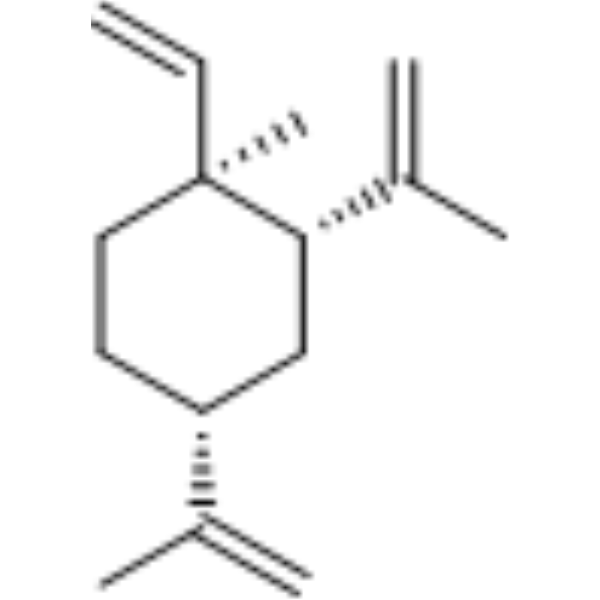
    β-Elemene ((-)-β-Elemene; Levo-β-elemene) is isolated from natural plant Curcuma aromatica with an antitumor activity. β-Elemene can induce cell apoptosis.
    β-Elemene
  • HY-N6810
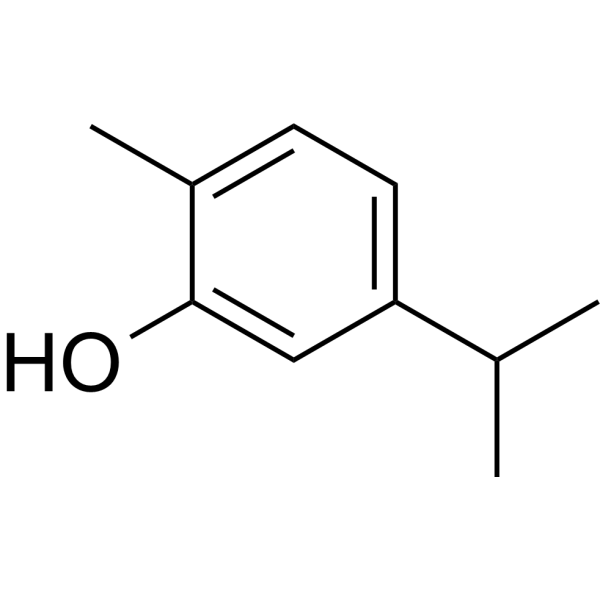
    Thymol
    4 Publications Verification

    Environmental Pollutants Apoptosis Bacterial Fungal Infection Inflammation/Immunology Cancer
    Thymol is a TRPA1 agonist. Thymol induces cancer cell apoptosis. Thymol is the main monoterpene phenol occurring in essential oils isolated from plants belonging to the Lamiaceae family, and other plants such as those belonging to the Verbenaceae, Scrophulariaceae, Ranunculaceae and Apiaceae families. Thymol has antioxidant, anti-inflammatory, antibacterial and antifungal effects .
    Thymol
  • HY-P1568
    Flagelin 22
    5 Publications Verification

    Flagellin 22

    Bacterial Infection
    Flagelin 22 (Flagellin 22), a fragment of bacterial flagellin, is an effective elicitor in both plants and algae .
    Flagelin 22
  • HY-N0823
    Lithospermic acid
    5+ Cited Publications

    (+)-Lithospermic acid

    NO Synthase AMPK Keap1-Nrf2 Xanthine Oxidase Apoptosis Cardiovascular Disease Inflammation/Immunology
    Lithospermic acid ((+)-Lithospermic acid) is a plant-derived polycyclic phenolic carboxylic acid isolated from Salvia miltiorrhiza, and has the anti-oxidative and hepatoprotective activity on carbon tetrachloride (CCl4)-induced acute liver damage in vitro and in vivo .
    Lithospermic acid
  • HY-N0706
    Gracillin
    2 Publications Verification

    Apoptosis Autophagy Cancer
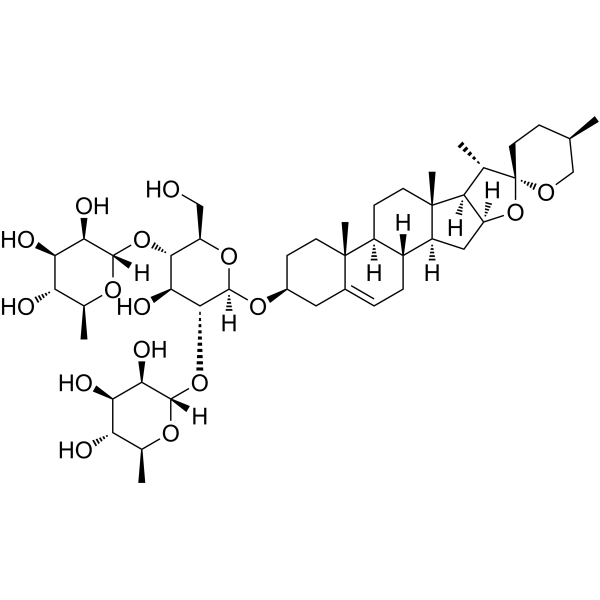
    Gracillin is a steroidal saponin that can be extracted from the roots of the plant and has anti-tumor properties. Gracillin can induce cancer cell apoptosis and autophagy .
    Gracillin
  • HY-N0428
    Obacunone
    4 Publications Verification

    Apoptosis Cancer
    Obacunone is a highly oxidized triterpenoid limonoid isolated from citrus plants. Obacunone exerts its anticancer effects by inducing apoptosis. Obacunone also protects retinal pigment epithelial (RPE) cells from ultraviolet (UV) radiation (UVR)-induced oxidative damage .
    Obacunone
  • HY-B1897A

    Menadione sodium bisulfite; Vitamin K3 sodium bisulfite

    Endogenous Metabolite Others
    Menadione bisulfite (sodium) is used as an agent to induce acute oxidative stress, and to function as a plant-defense activator against several pathogens.
    Menadione bisulfite sodium
  • HY-N0848
    Epibrassinolide
    15+ Cited Publications

    24-Epibrassinolide; B1105; BP55

    Environmental Pollutants Apoptosis Cancer
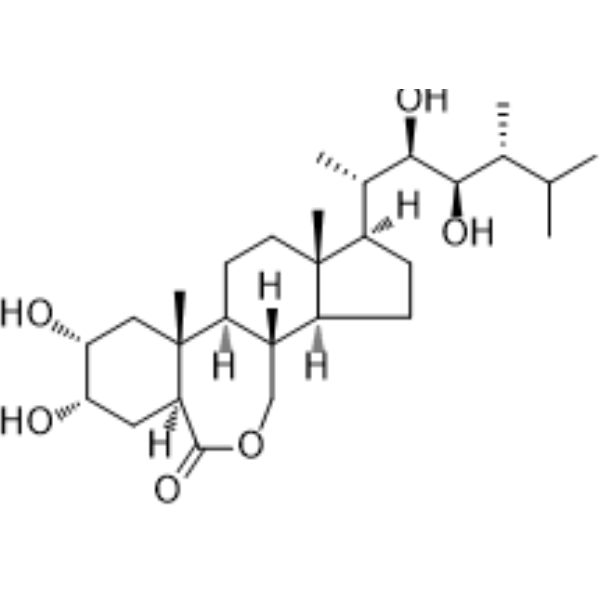
    Epibrassinolide (24-Epibrassinolide) is a ubiquitously occurring plant growth hormone which shows great potential to alleviate heavy metals and pesticide stress in plants . Epibrassinolide is a potential apoptotic inducer in various cancer cells without affecting the non-tumor cell growth .
    Epibrassinolide
  • HY-N11420

    Bacterial Phytohormone Others
    Coronatine is a plant growth regulator that mimicks the jasmonic acid-isoleucine conjugate (JA-Ile), targets the jasmonic acid receptor COI1, activates the jasmonic acid signaling pathway, thereby inhibiting salicylic acid (SA)-dependent defense responses. Coronatine antagonizes the stomatal closure, induces plant cell necrosis and chlorosis, interfers with plant hormone balance, thereby promoting pathogen infection .
    Coronatine
  • HY-19700
    trans-Zeatin
    3 Publications Verification

    Environmental Pollutants Endogenous Metabolite MEK ERK Others
    trans-Zeatin is a plant cytokinin, which plays an important role in cell growth, differentiation, and division; trans-Zeatin also inhibits UV-induced MEK/ERK activation.
    trans-Zeatin
  • HY-147092
    Oryzalin
    1 Publications Verification

    Environmental Pollutants Microtubule/Tubulin Herbicide Infection
    Oryzalin is a dinitroaniline herbicide with antimitotic and antileishmanial activities. Oryzalin can bind to plant tubulin, inhibit the polymerization of microtubules in plant cells, and affect chromosome migration. Oryzalin can also be used to induce chromosome doubling .
    Oryzalin
  • HY-N7378
    N-Hydroxypipecolic acid
    5 Publications Verification

    1-Hydroxy-2-piperidinecarboxylic acid; NHP

    Bacterial Inflammation/Immunology
    N-Hydroxypipecolic acid (1-Hydroxy-2-piperidinecarboxylic acid), a plant metabolite and a systemic acquired resistance (SAR) regulator, orchestrates SAR establishment in concert with the immune signal salicylic acid. N-Hydroxypipecolic acid accumulates systemically in the plant foliage in response to pathogen attack. N-Hydroxypipecolic acid induces SAR to bacterial and oomycete infection .
    N-Hydroxypipecolic acid
  • HY-W127709

    Environmental Pollutants Biochemical Assay Reagents Others
    Chlorophyll b is an orally active tetrapyrrole derivative and pigment. Chlorophyll b can be obtained from photosynthetic organisms such as plants and algae. Chlorophyll b acts as a hydrogen donor and increases Glutathione levels. Chlorophyll b has antioxidant activity and functionally replaces chlorophyll a in photosystem II to participate in photosynthesis. Chlorophyll b reduces Cisplatin (HY-17394)-induced DNA damage, chromosome instability, and oxidative stress. Chlorophyll b is mainly used in the study of plant photosynthesis mechanism .
    Chlorophyll b
  • HY-B0853
    Paclobutrazol
    2 Publications Verification

    Environmental Pollutants Fungal Infection
    Paclobutrazol is a triazole-containing plant growth retardant that is known to inhibit the biosynthesis of gibberellins. Paclobutrazol also has antifungal activities. Paclobutrazol, transported acropetally in plants, can also suppress the synthesis of abscisic acid and induce chilling tolerance in plants. Paclobutrazol is typically used to support research on the role of gibberellins in plant biology .
    Paclobutrazol
  • HY-N6253
    Pinoresinol
    1 Publications Verification

    (+)-Pinoresinol

    Apoptosis Cancer
    Pinoresinol is a lignol of plant origin serving for defense in a caterpillar. Pinoresinol drastically sensitizes cancer cells against TNF-related apoptosis-inducing ligand (TRAIL) -induced apoptosis .
    Pinoresinol
  • HY-N9497

    Galectin Fungal Infection
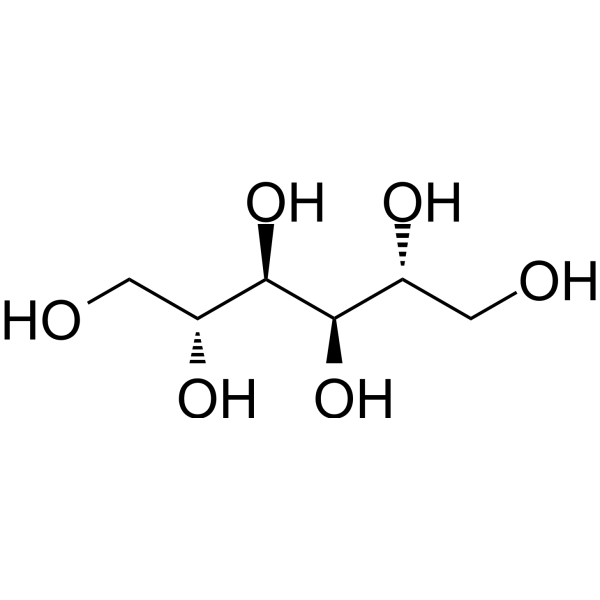
    Galactinol is a disaccharide carbohydrate serving as a galactosyl donor, which belongs to the raffinose family oligosaccharide pathway and acts as an important osmoprotectant. Galactinol not only induces disease resistance in plants against fungal and bacterial pathogens, but also significantly enhances plant tolerance to abiotic stresses such as drought, high salinity, low temperature and oxidative damage. In addition, Galactinol has the ability to scavenge hydroxyl radicals, can act as a signaling component for root colonization-induced systemic resistance, and is positively correlated with seed longevity in various crops, making it a potential biomarker for evaluating seed vigor. Therefore, Galactinol can be used in the research of various plant diseases including fungal leaf spot, bacterial angular leaf spot, gray mold and soft rot .
    Galactinol
  • HY-P1568A
    Flagelin 22 TFA
    5 Publications Verification

    Flagellin 22 TFA

    Bacterial Infection
    Flagelin 22 TFA (Flagellin 22 TFA), a fragment of bacterial flagellin, is an effective elicitor in both plants and algae .
    Flagelin 22 TFA
  • HY-18570B

    NAA

    Biochemical Assay Reagents Others
    1-Naphthaleneacetic acid,suitable for plant cell culture (NAA) is a plant growth hormone. 1-Naphthaleneacetic acid,suitable for plant cell culture promotes plant growth and induces root cluster formation. Naphthaleneacetic acid,suitable for plant cell culture is applicable for plant cell culture .
    1-Naphthaleneacetic acid,suitable for plant cell culture
  • HY-113486
    Lathosterol
    2 Publications Verification

    Endogenous Metabolite SOD Lactate Dehydrogenase Metabolic Disease
    Lathosterol is a plant sterol and cholesterol-like molecule. Lathosterol increases antioxidant enzymes (such as SOD, CAT, and GSH) and decreases LDH. Lathosterol has a hepatoprotective effect on mice with acetaminophen (HY-66005)-induced liver injury [1] .
    Lathosterol
  • HY-N7058

    Environmental Pollutants Insecticide Others
    Cis-Jasmone is a plant-derived natural product. Cis-Jasmone is constitutively released by many flowers and sometimes by leaves as an attractant for pollinators or as a chemical cue for host location by insect flower herbivores. Cis-Jasmone treatment of crop plants not only induces direct defense against herbivores, but also induces indirect defense by releasing VOCs that attract natural enemies .
    cis-​Jasmone
  • HY-N1373
    Sophoridine
    5+ Cited Publications

    Apoptosis Cancer
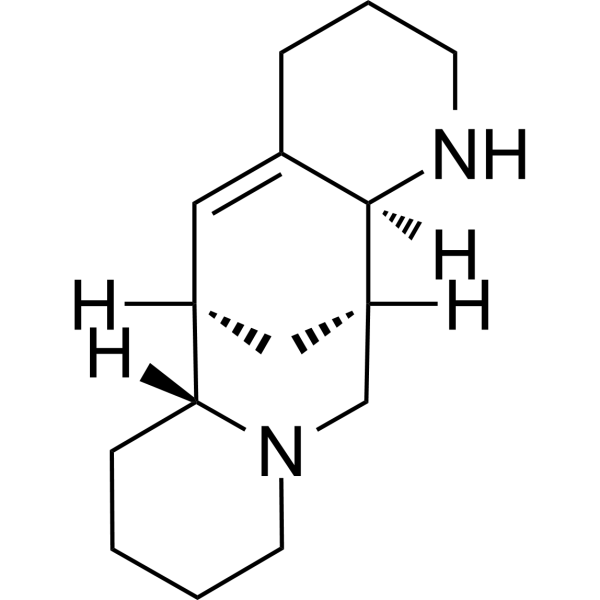
    Sophoridine is a quinolizidine alkaloid isolated from Leguminous plant Sophora flavescens. Sophoridine induces apoptosis. Sophoridine has the potential to be a novel, potent and selective antitumor agent candidate for pancreatic cancer with well-tolerated toxicity .
    Sophoridine
  • HY-W075256

    Environmental Pollutants Bacterial Others
    Isotianil is a plant defense inducer that has no direct antimicrobial effect but instead activates typical plant defense responses. Isotianil can be used as a plant protection agent for controlling rice blast .
    Isotianil
  • HY-P10396

    Bacterial Infection Inflammation/Immunology
    Elf18 is a peptide fragment of bacterial translation elongation factor Tu (EF-Tu). Elf18 can be recognized by plant pattern recognition receptors, thereby inducing an immune response. Elf18 can enhance plants' resistance to pathogens and can be used in research related to plant immune responses .
    Elf18
  • HY-N7698B

    Glycosidase Inflammation/Immunology Cancer
    Hexa-N-acetylchitohexaose is an inducer of disease resistance in crop plants, which could elicit an increase of lignification-related and antioxidative enzymes in soybean plants. Hexa-N-acetylchitohexaose is a substrate of lysozyme. Hexa-N-acetylchitohexaose shows antitumor effect .
    Hexa-N-acetylchitohexaose
  • HY-W016477

    Bacterial Infection
    Phenazine is an electron shuttles, which modulates the redox state of cells and the downstream gene expression related to biofilm formation and bacterial survival. Phenazines is a biocontrol agents, which affects the growth of plants and induces the systemic resistance in plants. Phenazine maintains NAD+/NADH balance .
    Phenazine
  • HY-18569S3

    Indole-3-acetic acid-d7; 3-IAA-d7

    Isotope-Labeled Compounds Endogenous Metabolite Metabolic Disease
    3-Indoleacetic acid-d7 is the deuterium labeled 3-Indoleacetic acid (HY-18569). 3-Indoleacetic acid (Indole-3-acetic acid) is the most common natural plant growth hormone of the auxin class. It can be added to cell culture medium to induce plant cell elongation and division .
    3-Indoleacetic acid-d7
  • HY-18569S4

    Indole-3-acetic acid-13C6; 3-IAA-13C6

    Isotope-Labeled Compounds Endogenous Metabolite Metabolic Disease
    3-Indoleacetic acid- 13C6 is the 13C labeled 3-Indoleacetic acid (HY-18569). 3-Indoleacetic acid (Indole-3-acetic acid) is the most common natural plant growth hormone of the auxin class. It can be added to cell culture medium to induce plant cell elongation and division .
    3-Indoleacetic acid-13C6
  • HY-128075

    Environmental Pollutants Herbicide Cancer
    Acifluorfen, a protoporphyrinogen oxidase (PROTOX) inhibitor herbicide, promotes the accumulation of protoporphyrin IX (PPIX), and induces tumors in the rodent liver. Acifluorfen causes strong photooxidative destruction of pigments and lipids in sensitive plant species .
    Acifluorfen
  • HY-14620A

    Fungal CDK Others
    Farnesene (mixture of isomers) is a farnesene with mixture of isomers. Farnesene is a herbivore-induced plant volatile (HIPV). Farnesene has an important effect on insect resistance in many plant species .
    Farnesene (mixture of isomers)
  • HY-B0941A

    Benzyladenine, suitable for Plant cell culture; 6-BAP, suitable for Plant cell culture; N6-Benzyladenine, suitable for Plant cell culture

    Biochemical Assay Reagents Others
    6-Benzylaminopurine,suitable for plant cell culture is a cytokinin that induces plant growth and development by stimulating cell division, and prolongs the freshness of green vegetables through inhibiting respiratory kinases .
    6-Benzylaminopurine, suitable for plant cell culture
  • HY-E70119

    Fungal Infection
    Pectate Lyase is an enzyme that exists in microorganisms, plants and animals. Pectate Lyase degrades pectic acid via the β-elimination mechanism. Pectate Lyase induces plant immune responses and participates in virulence. Pectate Lyase is applied in fields such as plant fiber degumming and fruit and vegetable processing .
    Pectate Lyase
  • HY-126558

    Phytohormone Others
    GA3-AM is a cell permeable analog of the plant hormone gibberellic acid that acts as a chemical dimerizer or chemical inducer of dimerization .
    GA3-AM
  • HY-114979

    Antibiotic Fungal Apoptosis Infection Cancer
    Pyoluteorin is an antibiotic that inhibits Oomycete fungi, including the plant pathogen Pythium ultimum, and suppresses plant diseases caused by this fungus . Pyoluteorin induces human triple-negative breast cancer MDA-MB-231 cells apoptosis in vitro. Pyoluteorin can be used for the research of human triple-negative breast cancer .
    Pyoluteorin
  • HY-119737
    Chlorsulfuron
    1 Publications Verification

    Environmental Pollutants Acetolactate Synthase (ALS) Metabolic Disease
    Chlorsulfuron blocks the biosynthesis of the amino acids valine and isoleucine in plants. Chlorsulfuron completely alleviates herbicide-induced growth inhibition. The site of action of Chlorsulfuron is the enzyme acetolactate synthase .
    Chlorsulfuron
  • HY-18569S2

    Indole-3-acetic acid-2,2-d2; 3-IAA-2,2-d2

    Isotope-Labeled Compounds Endogenous Metabolite Metabolic Disease
    3-Indoleacetic acid-2,2-d2 is the deuterium labeled 3-Indoleacetic acid (HY-18569). 3-Indoleacetic acid (Indole-3-acetic acid) is the most common natural plant growth hormone of the auxin class. It can be added to cell culture medium to induce plant cell elongation and division .
    3-Indoleacetic acid-2,2-d2
  • HY-B2008

    DPX-JE874

    Environmental Pollutants Fungal Infection
    Famoxadone is a fungicide active against various oomycetes. Famoxadone induces rapid lysis of zoospores of P. viticola and P. infestans, and inhibits sporangial differentiation, zoospore release, sporangial germination and mycelial growth. Famoxadone exerts a preventive control effect on plant diseases. Famoxadone can be used in research related to grape downy mildew, potato late blight, tomato late blight and plant oomycete diseases .
    Famoxadone
  • HY-N6810R

    Reference Standards Bacterial Fungal Apoptosis Infection Inflammation/Immunology Cancer
    Thymol (Standard) is the analytical standard of Thymol. This product is intended for research and analytical applications. Thymol is a TRPA1 agonist. Thymol induces cancer cell apoptosis. Thymol is the main monoterpene phenol occurring in essential oils isolated from plants belonging to the Lamiaceae family, and other plants such as those belonging to the Verbenaceae, Scrophulariaceae, Ranunculaceae and Apiaceae families. Thymol has antioxidant, anti-inflammatory, antibacterial and antifungal effects .
    Thymol (Standard)
  • HY-116541

    ASM

    Environmental Pollutants Fungal Bacterial Infection
    Acibenzolar-S-methyl (ASM) is a plant resistance inducer that mimics pathogen-host interactions and leads to systemic acquired resistance in plants. Acibenzolar-S-methyl helps reduce the use of pesticides and can be used in research to prevent plant diseases .
    Acibenzolar-S-methyl
  • HY-N7659A

    Phytohormone Microtubule/Tubulin Apoptosis Others
    Glucobrassicin potassium is an indole-based anticancer agent and plant growth-regulating hormone. Glucobrassicin potassium exerts its biological activity by disrupting the integrity of microtubule networks in both plant and mammalian cells. At high concentrations, Glucobrassicin potassium inhibits seed germination and root growth; it can also specifically induce apoptosis in mammalian cancer cells and interfere with the intercellular transmission of viruses that rely on microtubules. In plants, Glucobrassicin potassium can be catalyzed by myrosinase to release growth-regulating substances, exhibiting a concentration-dependent growth-regulating effect .
    Glucobrassicin potassium
  • HY-N7659

    Phytohormone Apoptosis Microtubule/Tubulin Cancer
    Glucobrassicin is an indole-based anticancer agent and plant growth-regulating hormone. Glucobrassicin exerts its biological activity by disrupting the integrity of microtubule networks in both plant and mammalian cells. At high concentrations, Glucobrassicin inhibits seed germination and root growth; it can also specifically induce apoptosis in mammalian cancer cells and interfere with the intercellular transmission of viruses that rely on microtubules. In plants, Glucobrassicin can be catalyzed by myrosinase to release growth-regulating substances, exhibiting a concentration-dependent growth-regulating effect .
    Glucobrassicin
  • HY-16569B

    Biochemical Assay Reagents Microtubule/Tubulin Inflammation/Immunology Cancer
    Colchicine,suitable for plant cell culture, an orally active alkaloid, is a potent tubulin inhibitor and a microtubule disrupting agent. Colchicine inhibits microtubule polymerization with an IC50 of 3 nM. Colchicine is also a competitive antagonist of the α3 glycine receptors (GlyRs). Colchicine prevents non-steroidal anti-inflammatory drug (NSAID)-induced small intestinal injury by inhibiting activation of the NLRP3 inflammasome. Colchicine,suitable for plant cell culture can be used for plant cell culture .
    Colchicine,suitable for plant cell culture
  • HY-139351

    GA4+7

    Environmental Pollutants Endogenous Metabolite Others
    Gibberellins A4/A7 induces stimulation of tracheid production in the terminal shoot of intact plants is mediated through an increase in the IAA level in the cambial region .
    Gibberellins A4/A7
  • HY-B0853R

    Reference Standards Fungal Infection
    Paclobutrazol (Standard) is the analytical standard of Paclobutrazol. This product is intended for research and analytical applications. Paclobutrazol is a triazole-containing plant growth retardant that is known to inhibit the biosynthesis of gibberellins. Paclobutrazol also has antifungal activities. Paclobutrazol, transported acropetally in plants, can also suppress the synthesis of abscisic acid and induce chilling tolerance in plants. Paclobutrazol is typically used to support research on the role of gibberellins in plant biology .
    Paclobutrazol (Standard)
  • HY-N3619
    Conophylline
    1 Publications Verification

    Apoptosis Neurological Disease Endocrinology
    Conophylline is a vinca alkaloid extracted from leaves of a tropical plant Ervatamia microphylla. Conophylline is a differentiation inducer of for pancreatic cells. Conophylline suppresses HSC and induces apoptosis .
    Conophylline
  • HY-N0848R

    24-Epibrassinolide (Standard); B1105 (Standard); BP55 (Standard)

    Reference Standards Apoptosis Cancer
    Epibrassinolide (Standard) is the analytical standard of Epibrassinolide. This product is intended for research and analytical applications. Epibrassinolide (24-Epibrassinolide) is a ubiquitously occurring plant growth hormone which shows great potential to alleviate heavy metals and pesticide stress in plants[1]. Epibrassinolide is a potential apoptotic inducer in various cancer cells without affecting the non-tumor cell growth[2].
    Epibrassinolide (Standard)
  • HY-162467

    Proton Pump Others
    Opabactin is an agonist for abscisic acid (ABA) receptor, which regulates the water use of plants by mimicking the effects of ABA with an IC50 of 7 nM. Opabactin inhibits the seed germination of Arabidopsis with an IC50 of 62 nM. Opabactin induces anti-transpiration response in plant tissue, and improves crop drought tolerance .
    Opabactin
  • HY-135258

    Galectin Fungal Others
    Galactinol dihydrate is a disaccharide carbohydrate serving as a galactosyl donor, which belongs to the raffinose family oligosaccharide pathway and acts as an important osmoprotectant. Galactinol dihydrate not only induces disease resistance in plants against fungal and bacterial pathogens, but also significantly enhances plant tolerance to abiotic stresses such as drought, high salinity, low temperature and oxidative damage. In addition, Galactinol dihydrate has the ability to scavenge hydroxyl radicals, can act as a signaling component for root colonization-induced systemic resistance, and is positively correlated with seed longevity in various crops, making it a potential biomarker for evaluating seed vigor. Therefore, Galactinol dihydrate can be used in the research of various plant diseases including fungal leaf spot, bacterial angular leaf spot, gray mold and soft rot .
    Galactinol dihydrate
  • HY-N7523

    DNA/RNA Synthesis Apoptosis Cancer
    Neoxanthin is a major xanthophyll carotenoid and a precursor of the plant hormone abscisic acid in dark green leafy vegetables. Neoxanthin is a potent antioxidant and light-harvesting pigment. Neoxanthin induces apoptosis and has anticancer actions .
    Neoxanthin
  • HY-N15245

    Phytohormone Others
    (+)-Sorgomol is the plants hormone that can be isolated from Sorghum bicolor. (+)-Sorgomol is the germination stimulant for plants, which induces seed germination of root parasites .
    (+)-Sorgomol
  • HY-17517

    Fungal Biochemical Assay Reagents Infection
    Tiadinil is a systemic acquired resistance (SAR) inducer, plant elicitor and antifungal agent. Tiadinil promotes the production of herbivore-induced plant volatiles in Camellia sinensis (tea plant). Tiadinil inhibits mycelial growth, spore germination and germ tube elongation of Stagonosporopsis citrulli in vitro. Tiadinil can be used in studies related to vine blight .
    Tiadinil

Inquiry Online

Your information is safe with us. * Required Fields.

Salutation


Country or Region *

Applicant Name *


Organization Name *

Department *


Email Address *


Product Name *

Cat. No.


Requested quantity *

Phone Number *


Remarks

Inquiry Online

Inquiry Information

Product Name:
Cat. No.:
Quantity:
MCE Japan Authorized Agent:

